70 years later, Torrance High standout Aramis Dandoy still holds a Rose Bowl game record

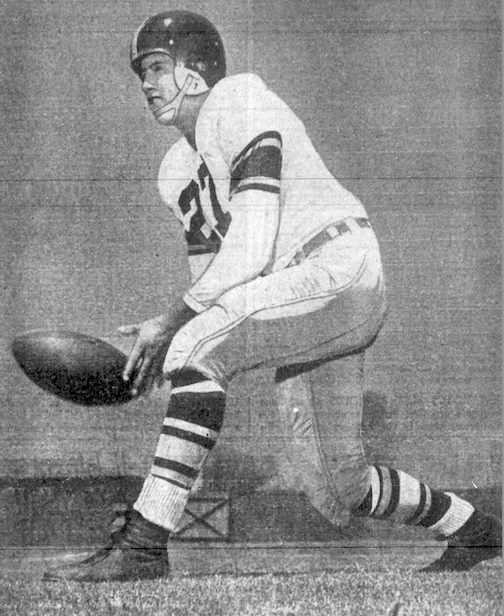
Aramis Dandoy publicity photo from his time at USC. Los Angeles Daily News, Sept. 3, 1953, Page 25. (Credit: Los Angeles Daily News archives)

Aramis Dandoy was born in Long Beach on Oct. 21, 1932 to Ernest G. Dandoy and Esther M.  Gingrich. Soon afterward, the family, which included his brothers, Ernest and Dale, moved to 235th St. in Torrance, where Dandoy grew up.

He started attending Torrance High School in the fall of 1947, and it quickly became apparent that he was a gifted natural athlete. He participated and excelled not only in football and basketball, but also in baseball and track and field. He set several track and field school records during his days at Torrance High.

He garnered the most attention for his exploits on the gridiron. He quickly established himself as a star running back for the Tartars. As a junior, he was named the Bay League’s outstanding football player of the year by the Scholastic Sports Association sportswriters group.
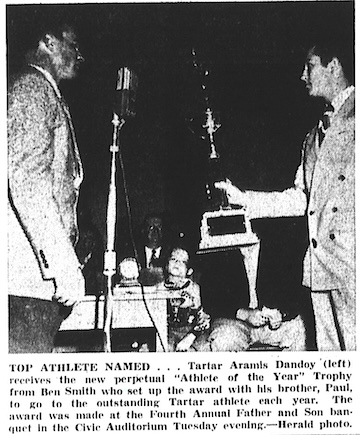
Torrance Herald, May 24, 1951, Page 4. (Credit: Torrance Historical Newspaper and Directories Archive database, Torrance Public Library)

During his athletic career at Torrance High, Dandoy won a total of 11 letters in football, baseball and track and field, in addition to several all-league honors in those sports.

As his high school career was coming to an end, Dandoy received one final honor from the school in May 1951 when he became the first-ever recipient of the Torrance High Athlete of the Year award. His name was the first one etched on a large trophy, an honor that is still given out annually at the school.

The USC Trojans recruited Dandoy successfully, and he played in his first game for their JV team in late September 1951. Already a third-string halfback as a sophomore, he got into the 1953 Rose Bowl and played very well.

On July 25, 1953, he married former Miss Torrance contestant Maureen Matthews at Nativity Catholic Church in Torrance. He would remain married to her for the rest of his life.

The feat for which Dandoy is most remembered happened during the 1955 Rose Bowl, featuring USC and heavily favored Ohio State. Pasadena was being drenched by a driving rainstorm that day, which had soaked the morning Rose Parade and kept the game crowd down to about 90,000 instead of the usual 102,000.

It was only the tenth time it had rained in the city on New Year’s Day in the game’s history, and it remains the most recent time rain has fallen on the Jan. 1 festivities. Parking lots around the stadium became a muddy mess, much like the field itself during the game; Dandoy’s wife Maureen was among those caught in the resulting traffic mess.
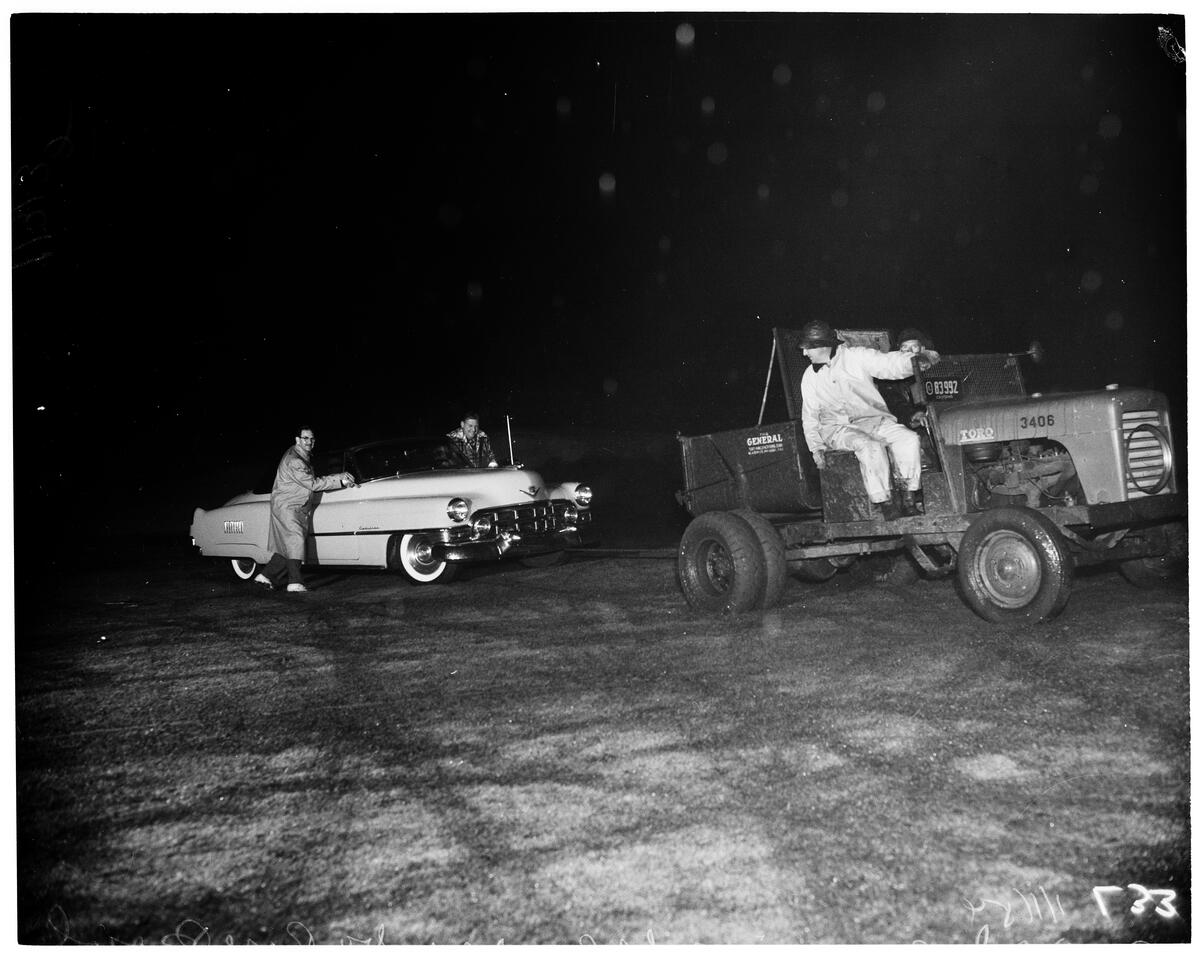
A tractor helps pull out a car stuck in the mud in a Rose Bowl parking lot in Pasadena following the Rose Bowl game on Jan. 1, 1955. (Credit: USC Digital Library)

Legendary coach Woody Hayes was coaching in his first Rose Bowl, and he was appalled by the field’s condition. After the game, he exploded in anger to reporters over the marching bands being allowed to tear up the field even more during halftime.

Future L.A. Rams star running back Jon Arnett rushed for 123 yards for the Trojans, but became a footnote to Aramis Dandoy, even though Dandoy rushed for no yards from scrimmage during the game.

With the rain pelting the field during the second quarter, Dandoy was sent in to return a punt. The kick hit the 14-yard line with a splat, and Dandoy picked it up out of the mud. He eluded a couple of Buckeye tacklers, then saw that he had one last man to beat.

He couldn’t tell until getting closer to the smiling man that it was his teammate, Eddie Fouch, and he knew he would safely score. It would end up being the only touchdown USC scored during the team’s 20-7 loss.
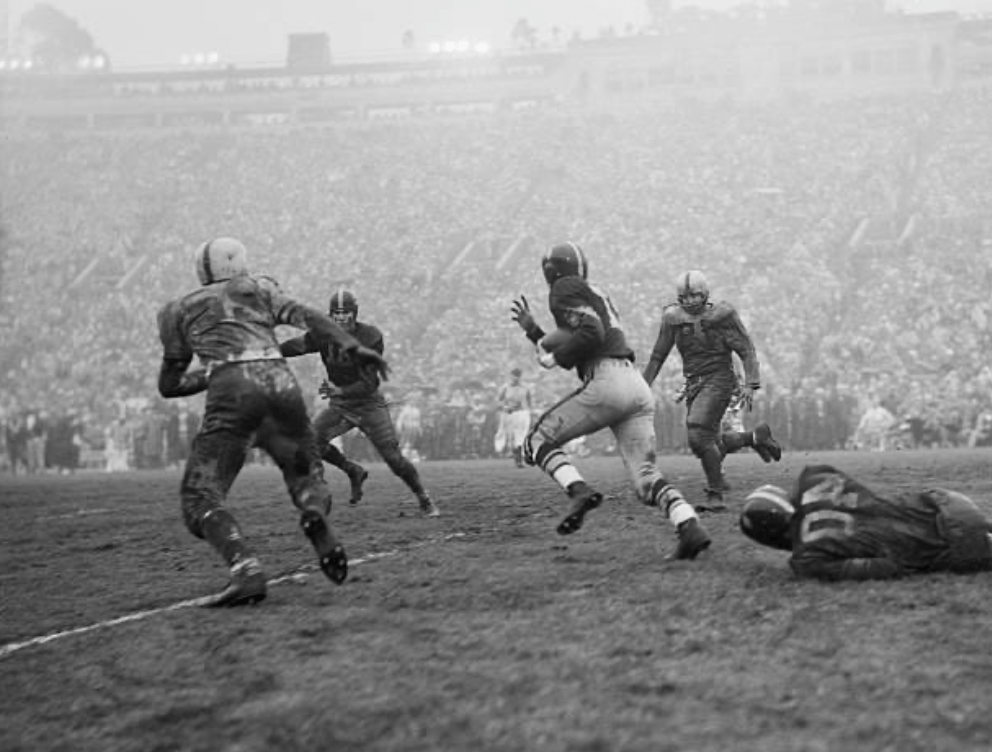
USC’s Aramis Dandoy, center with ball, outruns Ohio State defenders in white helmets during his rain-soaked, record-setting 86-yard punt return on Jan. 1, 1955 at the Rose Bowl game. (Credit: Ohio State Buckeyes Facebook page)

The 86-yard scoring play was a Rose Bowl record, and it’s one that still stands 70 years later as the longest punt return in the annual bowl game’s 111-game history.

After his successful USC career ended, Dandoy was drafted by the Cleveland Browns of the NFL, but failed to secure a permanent slot on the team. In 1956, he played for the Calgary Stampeders of the Canadian Football League until a broken collarbone ended his stint there.

He continued to be involved in sports locally, playing for various semipro teams and coaching a variety of youth sports teams.

He settled in Lomita in the late 1960s. He and his brother Ernest had worked for the family glass firm, Dandoy Glass, which his brother Dale began running on Arlington Ave. in Torrance in March 1948. Aramis and Ernest later decided to start their own firm, A & E Brothers Glass, on Western Ave. in Lomita.
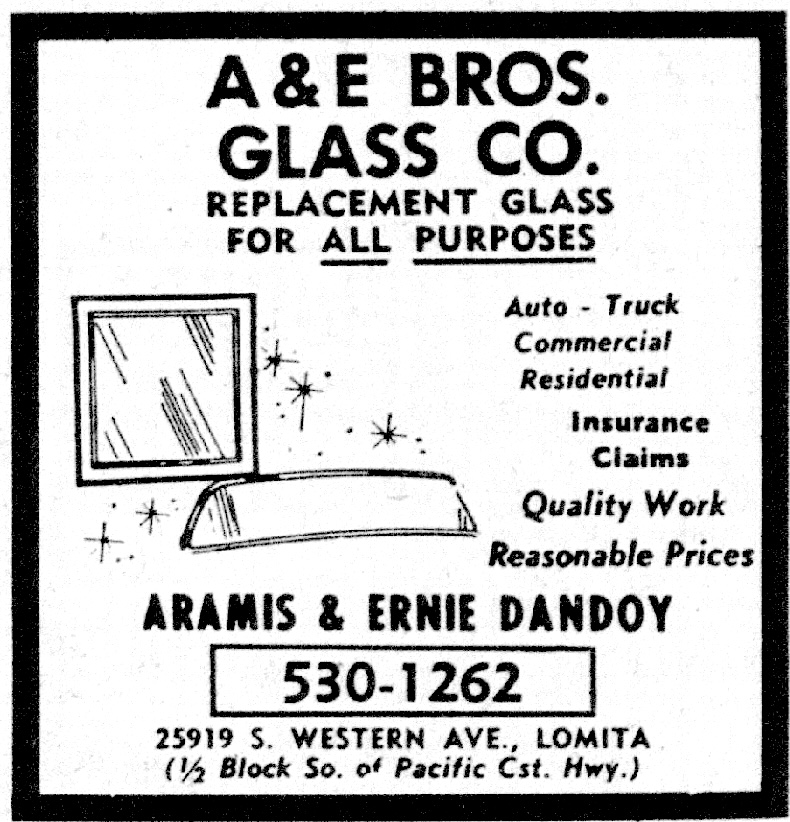
Ad from 1975 Torrance City Directory. (Credit: Torrance Historical Newspaper and Directories Archive database, Torrance Public Library)

His life changed when doctors discovered a 95 percent blockage on the left side of his heart. He underwent surgery in April 1973, which saved his life.

He lived in Lomita for almost two more decades. On the night of Oct. 1, 1992, he was driving his pickup truck when he apparently suffered a heart attack and collided with several parked vehicles near Cabrillo Ave. and 220th St. in Torrance.

He died from his injuries later that night at Little Company of Mary Hospital in Torrance. He was 59. His funeral was held at St. Margaret Mary Church in Lomita.

Dandoy was survived by his wife, Maureen, four sons and a daughter, seven grandsons, four brothers and a sister. And a Rose Bowl record that has stood the test of time.
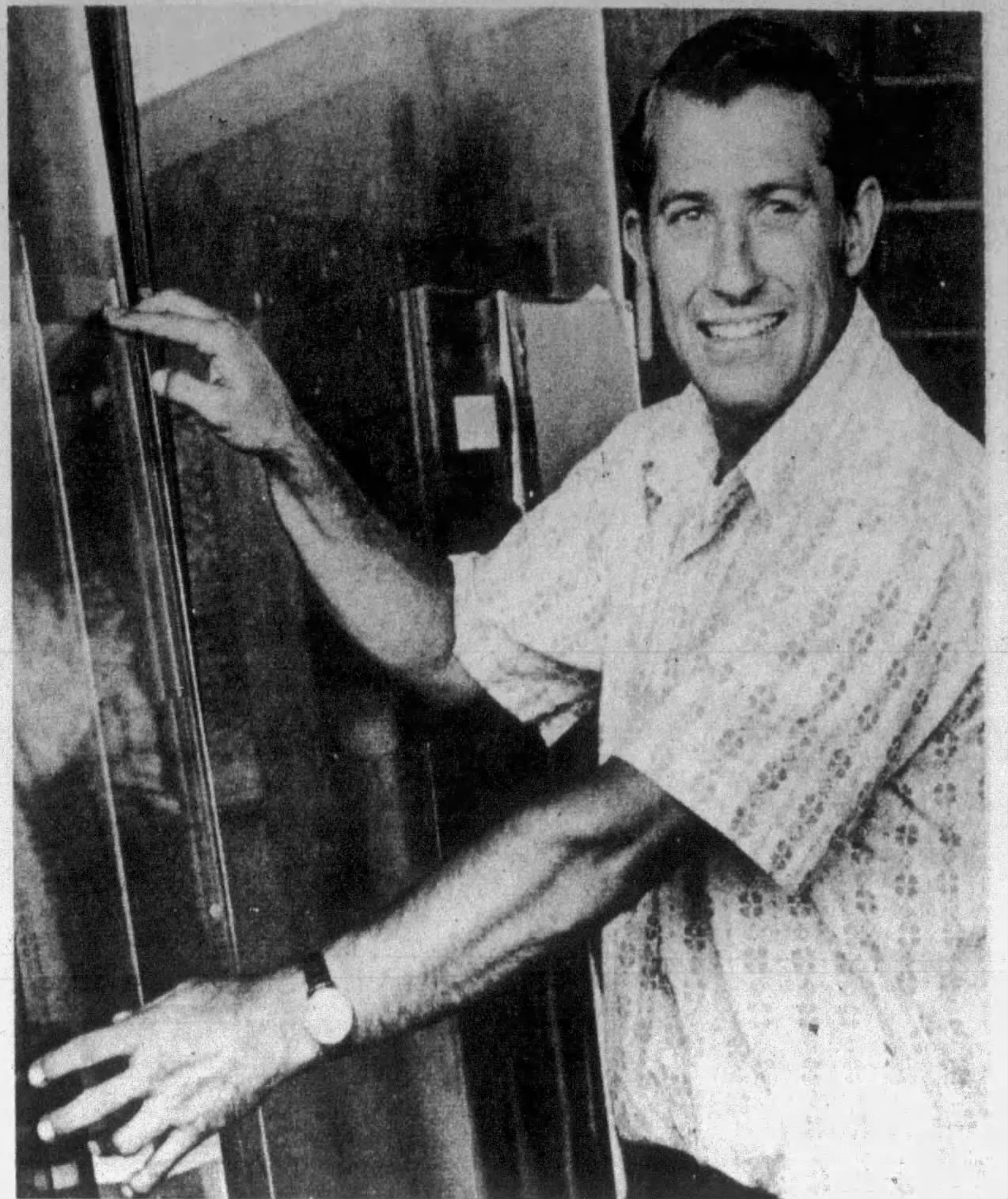
Aramis Dandoy in 1973 at his Lomita glass shop. Daily Breeze, Sept. 23, 1973, Page 25. (Credit: Daily Breeze archives)

Sources:

Daily Breeze archives.

Los Angeles Times archives.

Torrance City Directories database, Torrance Public Library.

Torrance Herald archives.
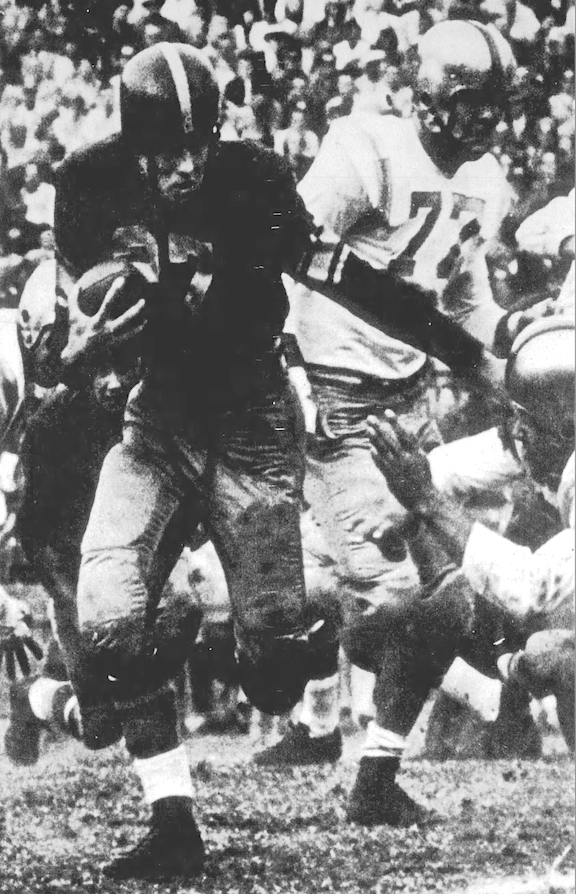
Aramis Dandoy carries the ball for USC in this undated action photo circa 1951-55. Daily Breeze, Sept. 23, 1973, Page 25. (Credit: Daily Breeze archives)

Seaside Ranchos development rises on former Ellinwood Ranch property in Torrance

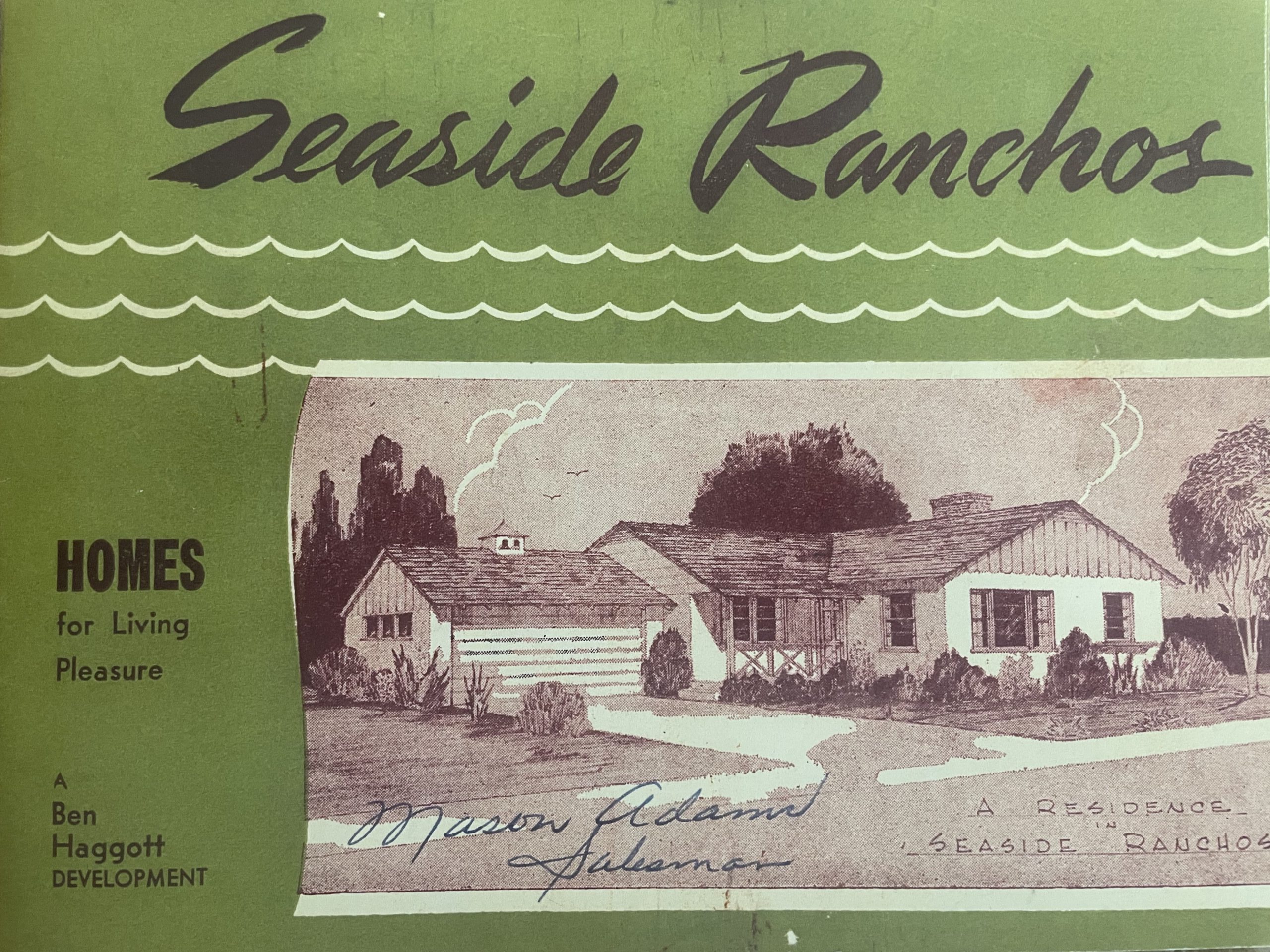
Cover of sales brochure for Seaside Ranchos homes, circa 1946. (Credit: Seaside Neighborhood Association website)

The area that would become the Seaside Ranchos development in Torrance, one of the city’s most desirable residential areas in which to live, was originally part of the Sepulveda family’s Rancho Los Palos Verdes Spanish land grant.

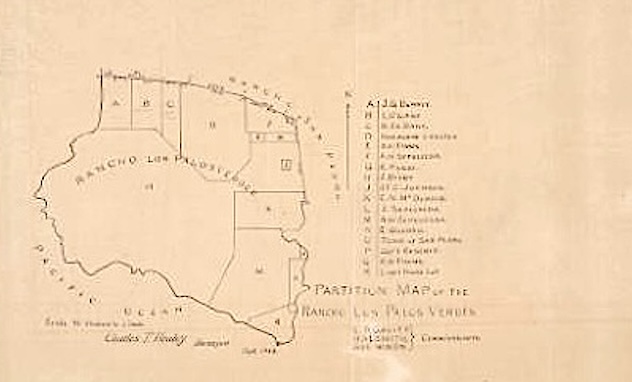
The land grant included the Palos Verdes Peninsula and areas of San Pedro on the east and present-day Torrance on the west. A partition map from 1882 shows how the land was divided into smaller pieces, including a Parcel B.

Rancho Los Palos Verdes partition map from 1882 shows Parcel B, upper left. Dr. L.C. Lane is listed as its owner, at right. (Credit: Huntington Library)

Dr. Charles Norman Ellinwood, a prominent San Francisco physician who had served as a surgeon for the Union Army during the Civil War, ended up inheriting Parcel B from his friend and colleague, Dr. Levi Cooper Lane, following Lane’s death in 1902. (Lane’s name is shown as the parcel’s owner on the partition map.)

The parcel became known as the Ellinwood Ranch property, though Ellinwood himself never lived or even spent much time there. He died in the Bay Area on Jan. 4, 1917.

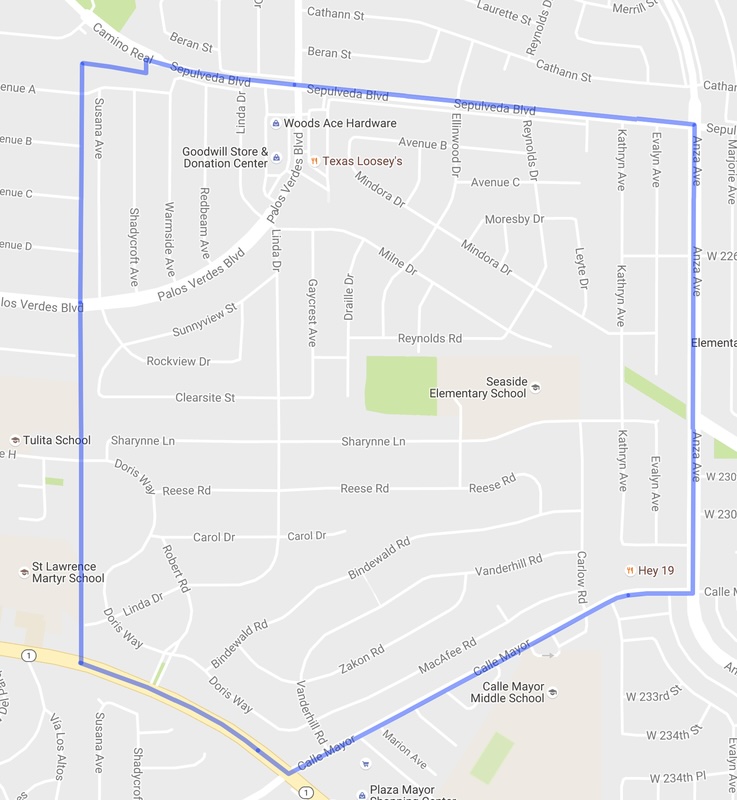
Its present-day boundaries stretch from Anza Ave. on the east to the Torrance/Redondo Beach  city limit just east of Prospect Ave. on the west, and from Sepulveda Blvd. on the north to Pacific Coast Highway and Calle Mayor on the south.

Blue outline on map shows the borders of the Seaside Ranchos development. (Credit: Seaside Neighborhood Association website)

His daughter, Charlotte, sold the first 207 acres of the 800-acre plus Ellinwood Ranch parcel on Dec. 19, 1945. Real estate developers at the time were actively seeking land for housing developments following the end of World War II.

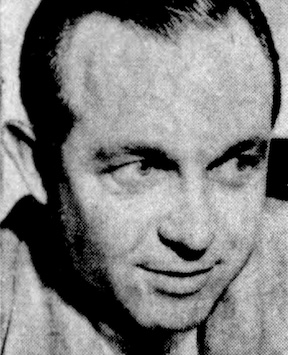
Ben Haggott in 1949. (Credit: L.A. Street Names database)

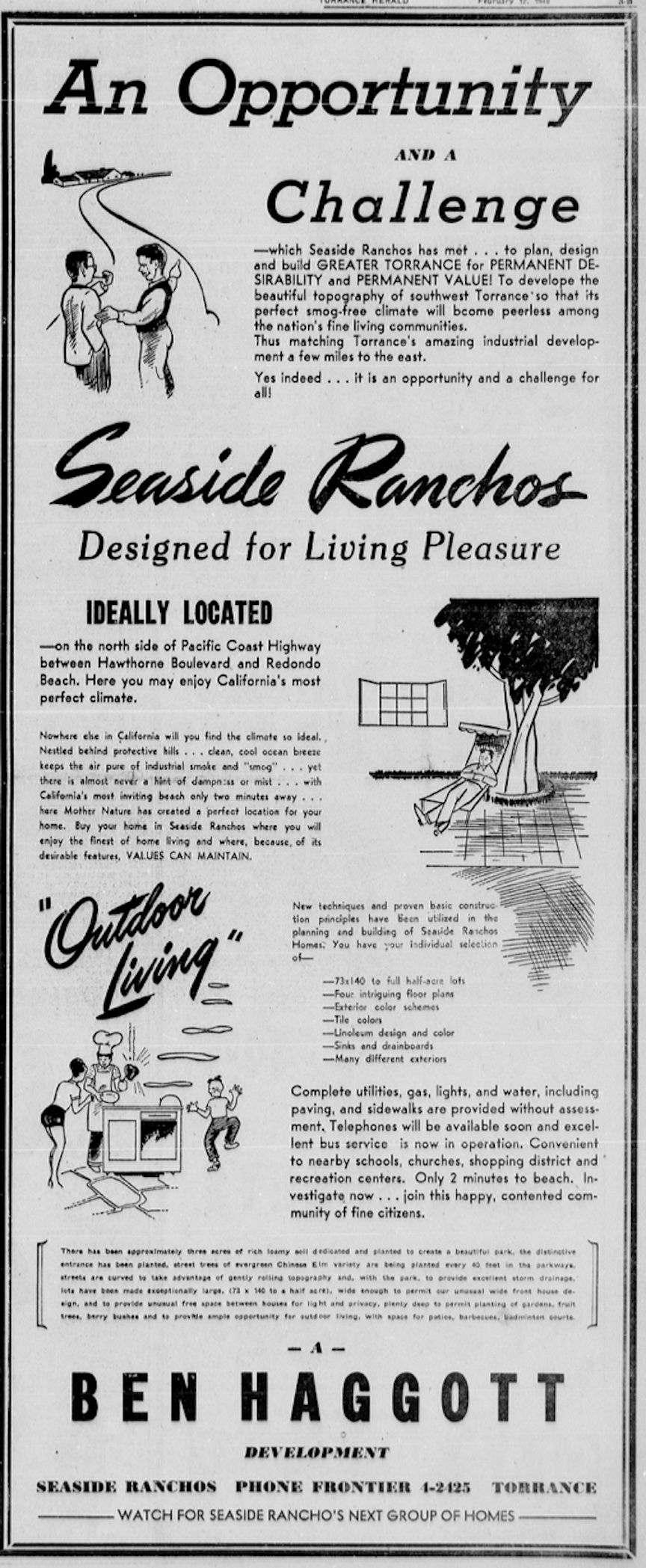
The buyer was Los Angeles attorney Roy P. Dolley, who turned over development of the land to Torrance real estate man Ben Haggott. In May 1946, Haggott got permission from the city of Torrance to begin building the first homes on the land.

Dolley and Haggott memorialized their own children with some of the street names in the Ranchos. Dolley named Doris Way, Robert Road and Linda Drive after his offspring, while Haggott did the same with Reese Road, Sharynne Lane, and Dennis Road. (Ranch owner Charles Ellinwood also got a street named for him posthumously, Ellinwood Drive.)

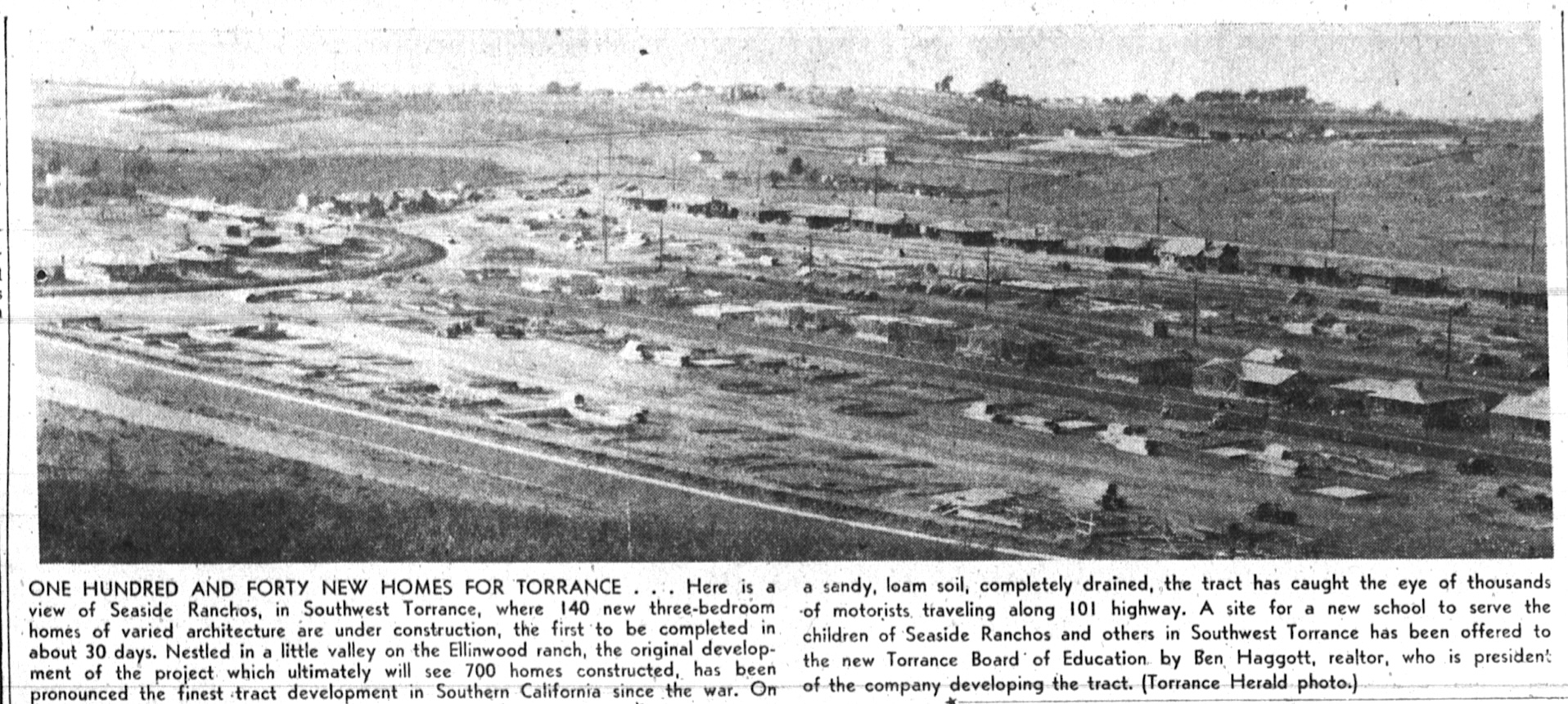
By June 15, 1947, the first 15 houses had been erected and sold, and Haggott told the Torrance Herald that they were selling as fast as his crews could put them up. Ultimately, nearly 200 were built in the first phase, with an additional 450 being planned that year.

Torrance Herald, March 13, 1947, Page 3-A. (Credit: Torrance Historical Newspaper and Directories Archive database, Torrance Public Library)

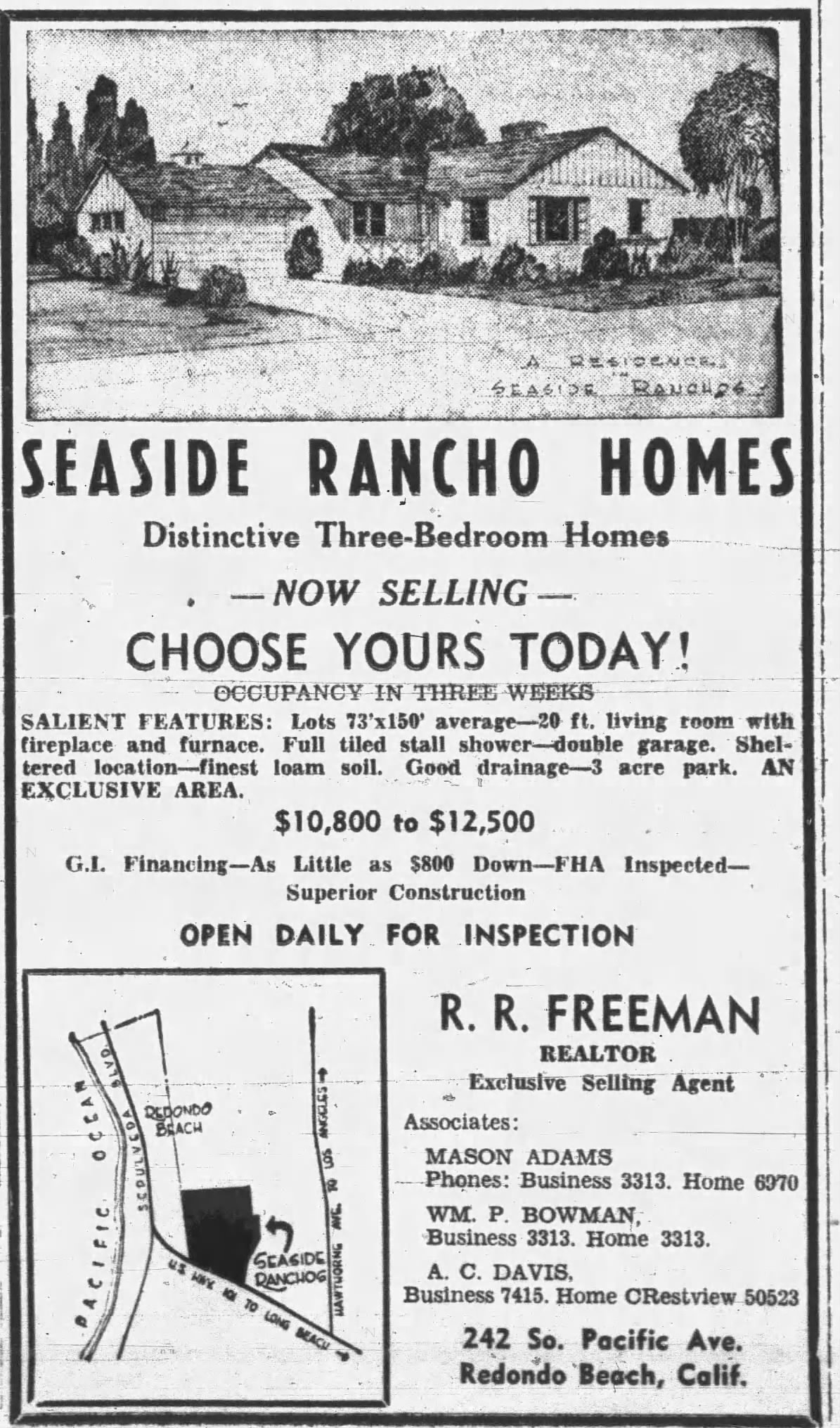
At 1,200 square feet, the single-family ranch-style three-bedroom homes were small by modern standards. They included modern kitchens, fireplaces, tiled showers. Prices started at $10,800 for 1,200 square feet, with G.I. Bill financing welcome.

Approximately 1,700 new homes eventually were built in the Seaside Ranchos area. Realizing that such a large development would result in a correspondingly large number of children, Haggott set aside land for the Torrance Unified School District to use for a new elementary school, the newly formed district’s first school project. 

Torrance Herald ad, May 8, 1947, Page 4-B. (Credit: Torrance Historical Newspaper and Directories Archive database, Torrance Public Library)

On Sept. 12, 1949, eight classrooms opened at  Seaside Elementary on Sharynne Lane. By 1950, overcrowding had already become a problem. A much-needed new addition was built in 1954.

After several delays, South High School opened at 4801 Pacific Coast Highway, on the southern edge of the Seaside Ranchos development, on Jan. 6, 1958. It was the third of Torrance’s four high schools to be built.

The Seaside Ranchos area also includes a unique Torrance feature; Sea-Aire Golf Course, located just west of Seaside Elementary. The city’s only public golf course, the small, lushly vegetated nine hole pitch and putt course opened on Sept. 2, 1957.

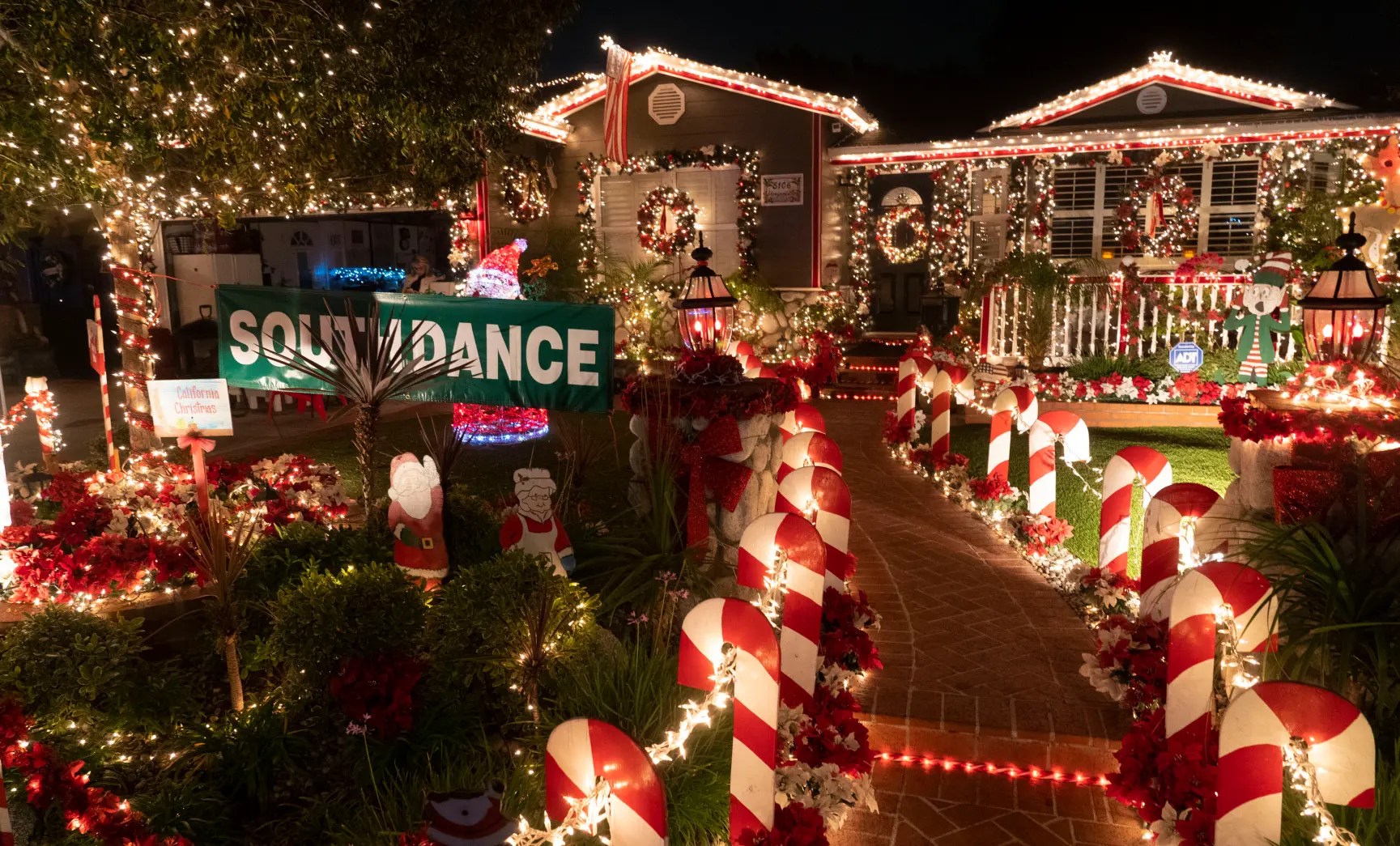
Seaside Ranchos may be most well-known for its annual spectacular outdoor Christmas lights and decorations displays. The tradition began in 1984 in the Sleepy Hollow area. Houses on Sharynne Lane, Doris Way, and Reese and Robert roads participate in the annual extravaganza, which draws thousands of visitors.

Some of the homes decorated with Christmas lights in the Sleepy Hollow neighborhood in Torrance on Thursday, Dec. 13, 2018. (Daily Breeze staff file photo by Scott Varley)

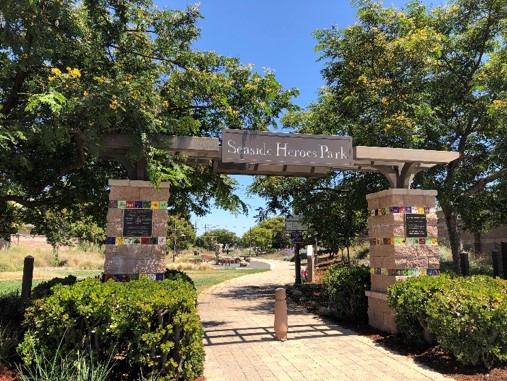
A newer feature of Seaside Ranchos, Seaside Heroes Park, was dedicated on Jan. 22, 2011. The small park on Anza Ave. honors three local men, Cpl. Joseph Anzack Jr., Capt. Matthew Ferrara, and Cpl. Micah Gifford, who died while serving in the military in Iraq and Afghanistan. All three attended South High School.

Ben Haggott and his wife, Mikko, lived in his Seaside Ranchos house on Robert Road until his death at 78 on Jan. 15,1982; Mikko died in 2022. In addition to his real estate development activities, he served for decades on water company boards. At the time of his death, he was vice chairman of the Metropolitan Water District.

No explanation has been given for the fact that despite its name, Seaside Ranchos is a good two miles away from the ocean, other than the name probably was a marketing move meant to evoke the development’s relative proximity to the coast.

Entrance to Seaside Heroes Park at Anza Ave. and Lomita Blvd.. (Credit: City of Torrance)

Sources:

Daily Breeze archives.

“The Ellinwood Riviera Legacy,” by Elizabeth A. Spatz, Hollywood Riviera Homeowners Association website.

Find A Grave website.

L.A. Street Names website.

LAist website.

Seaside Neighborhood Association website.

Torrance Herald archives.

Torrance Herald, Feb. 17, 1948, Page 3-B. (Credit: Torrance Historical Newspaper and Directories Archive database, Torrance Public Library)

Author and Renaissance man Leonard Wibberley spent much of his life in Hermosa Beach

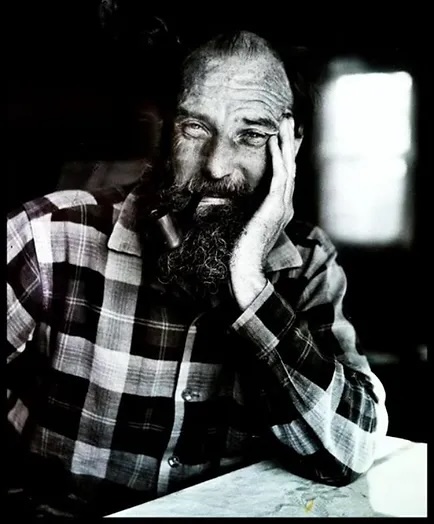
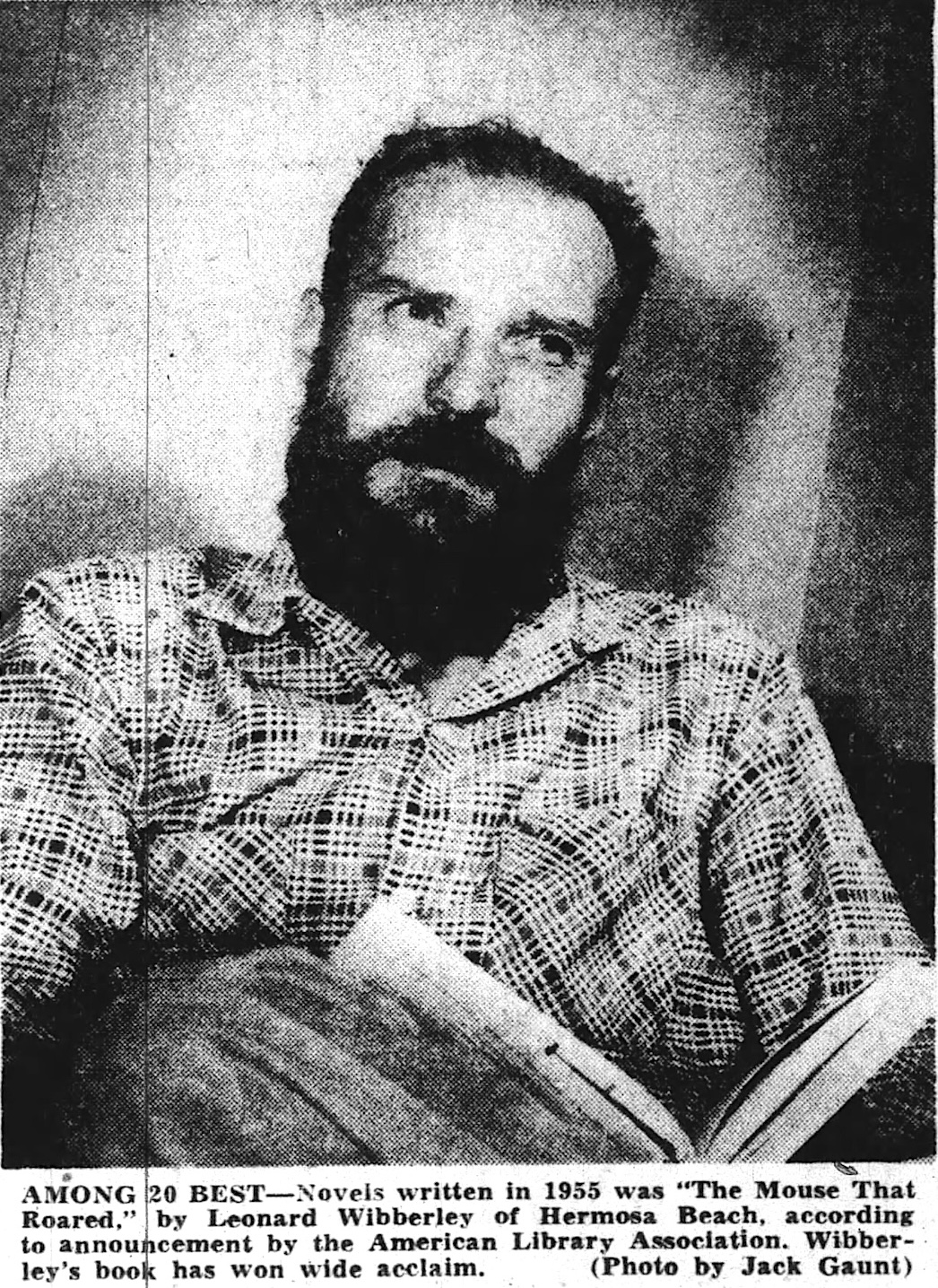
Leonard Wibberley. Undated. (Credit: Our Lady of Guadalupe Catholic Church website)

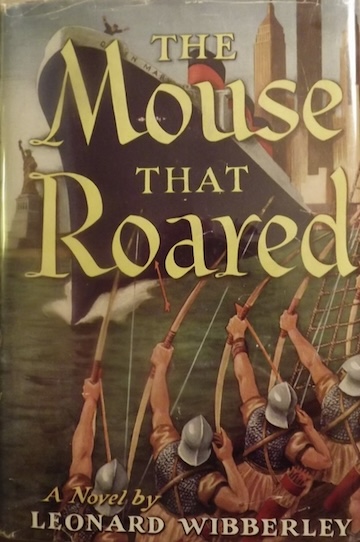
By the time his most famous novel, The Mouse That Roared, was published in 1955, Irish-born Leonard Wibberley already had lived and worked in a variety of jobs at a variety of locations all over the world.

Born on April 9, 1915  in Dublin, he was the youngest of six children. After his early years in Ireland, the family moved to England. His father, Thomas, was a professor of agricultural  science at various universities in Ireland and England.

In addition to his regular school studies, Leonard’s father made sure he was schooled in classical violin, which the young Wibberley would continue to play throughout his life.

When he was 15, his father died suddenly at age fifty, leaving his mother to support the six children. Leonard was forced to leave school. After a succession of odd  jobs, he turned to journalism, securing his first newspaper job as a copy boy with the Sunday Dispatch in London in 1931.

It would be the start of his twenty-plus years in journalism. He worked for several London newspapers as a reporter and a copy editor during the early 1930s.

In 1936 he moved to Trinidad, where he continued to work in journalism as well as putting in a stint as an oilfield worker. He also met and married his first wife, Olga Maynard, there in 1938. They had one child together.

Wibberley’s fanciful 1955 novel became a best seller and a successful film.

Wibberley and family moved to New York City in 1943. He initially worked at a shipyard before returning to journalism again, taking jobs as an editor with the Associated Press and as New York City bureau chief for the London Evening News.

In 1947, Wibberley moved to California, where he would live for the rest of his life. He had divorced his first wife Olga a year earlier. In 1948, he met and married Katherine Hazel Holton, who went by Hazel, and with whom he had six children.

He worked for newspapers in Turlock and San Rafael before securing work as a copy editor and reporter for the Los Angeles Times in 1950. He was working at the Times when his first novel, the historical adventure tale The King’s Beard, was published in 1952.

After several more of his books were published, Wibberley decided to pursue his career as an author on a full-time basis. He had settled the family in Hermosa Beach, buying a house on 31st Street, and in 1954, he quit his job at the Times. He would live in Hermosa for the rest of his life.

That life would change immeasurably with the publication of his eighth book, The Mouse That Roared, in 1955 by Little, Brown and Co. The book’s contents originally appeared in six installments in the Saturday Evening Post during December and January 1955.

The whimsical political satire told the story of the fictional European country of the Grand Duchy of Fenwick, the world’s tiniest country, which was located in the Alps somewhere between France and Switzerland. 

Beset by a financial crisis, its leaders decide to declare war on the United States, which they hope their tiny army, armed only with bows and arrows, will lose so that the Duchy would  become the recipients of financial aid from the U.S. as a result. (Both Japan and Germany had received aid from the U.S. following World War II.)

Fictional flag of the fictional country of Grand Fenwick, from Wibberley’s 1955 novel The Mouse That Roared. (Credit: Wikimedia Commons)

In 1959, Peter Sellers starred in the film adaptation of Mouse. He played three different roles in the farcical comedy and his performance was widely praised by critics.

The novel became a best seller, inspiring Wibberley to write three sequels to it, none of which matched the original’s popularity, though one of them, The Mouse on the Moon, also was made into a film in 1963.

The book cemented Wibberley’s reputation as an author. He would go on to write more than 100 books covering a wide range of subjects and genres, from juvenile fiction to detective stories, nature studies and even a four-volume examination of the life of Thomas Jefferson.

He also wrote newspaper columns for the San Francisco Chronicle, and in his later years, for the Daily Breeze. His Breeze columns ran from November 1978 right up until his death in November 1983.

He carried on with a busy writing career while helping to raise a family of seven in Hermosa Beach and fully participating in community activities. The family was active in Our Lady of Guadalupe church in Hermosa, where Hazel taught in the church’s school for a time.

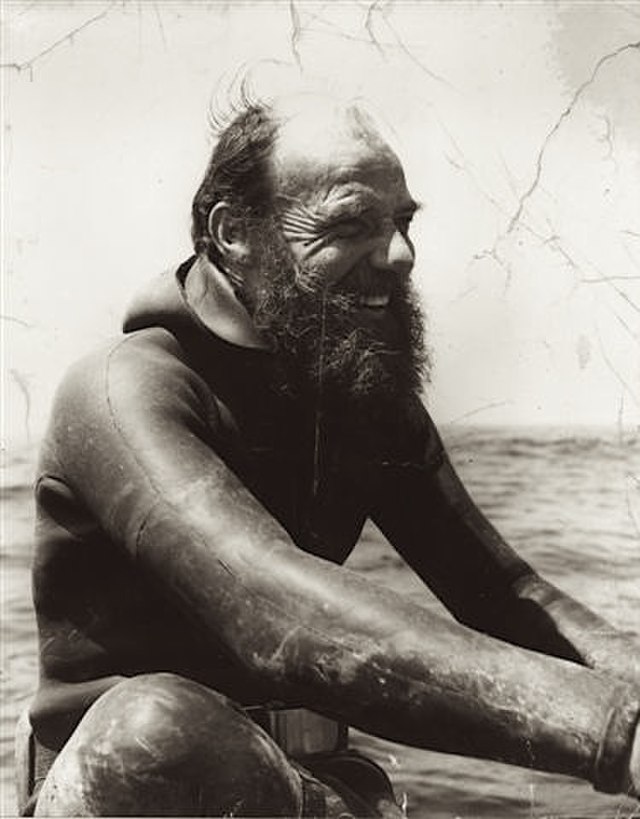
Family photo of Leonard Wibberley in one of his favorite places, the open sea. He was an accomplished sailor as well as a bestselling author. Undated photo by permission of family. (Credit: Wikimedia Commons)

Wibberley became a regular speaker at Southwest Manuscripters Club meetings, a community group founded in 1949 focused on recognizing and developing aspiring writers that met monthly at the Clark Building in Hermosa Beach.

He also had wide-ranging interests that went beyond writing. He never stopped trying to improve as an amateur classical musician, playing violin with a variety of local community orchestras over the years. He also appeared in various local theater productions. In addition, he was an accomplished sailor who took regular trips in his 40-foot sailboat, the Bahia.

On Nov. 22, 1983, he was stricken with a heart attack while on his way to an art lesson in Santa Monica. He died at 2 p.m. that day at Santa Monica Hospital. His death was mourned by many of his faithful readers in the pages of the Breeze. His funeral took place at Our Lady of Guadalupe church.

A memorial portrait of him was hung at the Hermosa Beach Public Library, where he often could be found doing research for his books.

Sources:

“Bibliography,” Leonard Wibberley website.

Daily Breeze archives.
Footnotes on the Sand: An Incomplete Compendium, an Arbitrary Selection of Events, Rumor, Speculation, Some Fact and Some Fiction About Hermosa Beach, by Patricia A. Gazin, self-published, 1991.

Los Angeles Times archives.
New York Times archives.
Wikipedia.

Daily Breeze, Feb. 3, 1956, Page 16. (Credit: Daily Breeze archives)

The Great White Steamship delighted millions before meeting its ignominious end

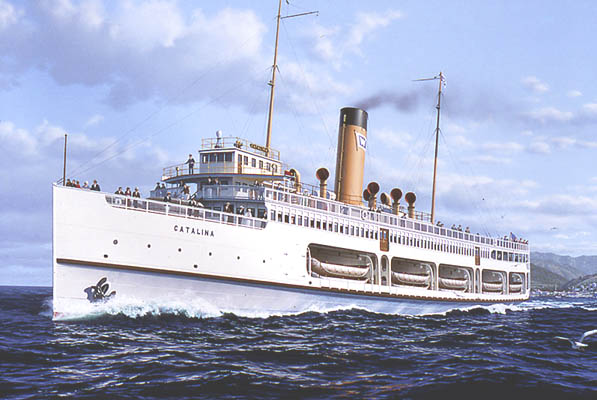
The S.S. Catalina in her prime. Undated 1950s postcard.

The S.S. Catalina was one popular ship in its heyday. During its fifty-plus years of operation beginning in 1924, she carried an estimated 25 million passengers from the Port of Los Angeles to Santa Catalina Island and back again.

The Catalina wasn’t the first ship built specifically for transporting tourists across the sea to Avalon, the island’s capital. In the late 1800s, the Banning family operated several small ships under the banner of its Wilmington Transportation Co.

After chewing gum baron William Wrigley Jr. purchased the island in 1919, Wilmington Transportation bought the SS Virginia from the Boston Navy Yard, and brought the ship west. She was renamed the Avalon, refitted and put into service on the Catalina run in 1920.

The Avalon was efficient, capable of carrying 1,625 passengers, but was workmanlike in design and lacked the glamour that Wrigley envisioned for his seaside resort.

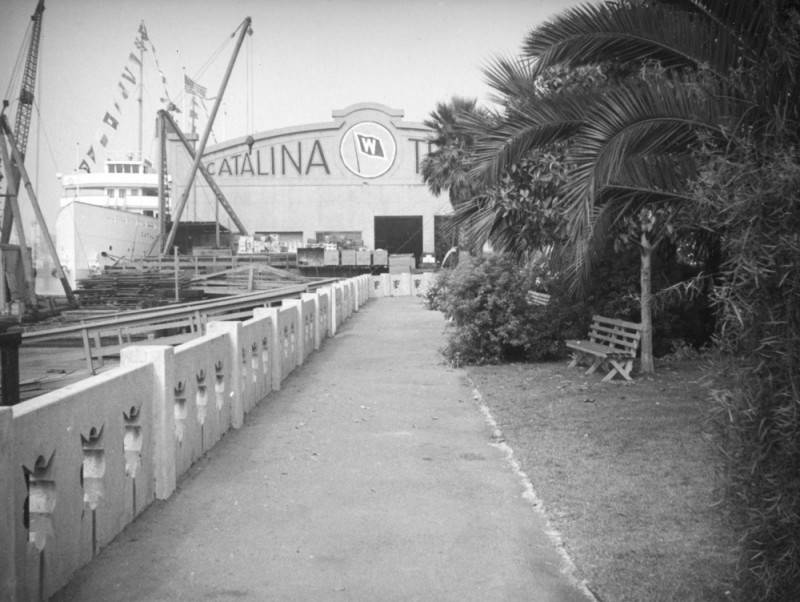
The Catalina Terminal in Wilmington with the S.S. Catalina docked at left. 1938 photo. (Credit: Los Angeles Public Library Photo Collection)

In the prosperous early 1920s, the Wrigley family commissioned Los Angeles Shipbuilding & Drydock Co. in San Pedro to build a larger and more luxurious ship that would give passengers the feeling of being on a luxury cruise, if briefly, for the 26-mile trip.

Popularly referred to as the Great White Steamer or the Great White Steamship, the gleaming white S.S. Catalina cost $1 million to construct and measured just over 300 feet in length. She was powered by two 3,600-horsepower Canadian-built steam engines. 

Originally, the ship could accommodate 1,964 passengers, and later was expanded to carry 2,197. It included fourteen above-deck staterooms, a glass-enclosed saloon deck and a small ballroom with a promenade deck where orchestras and dance bands would play.

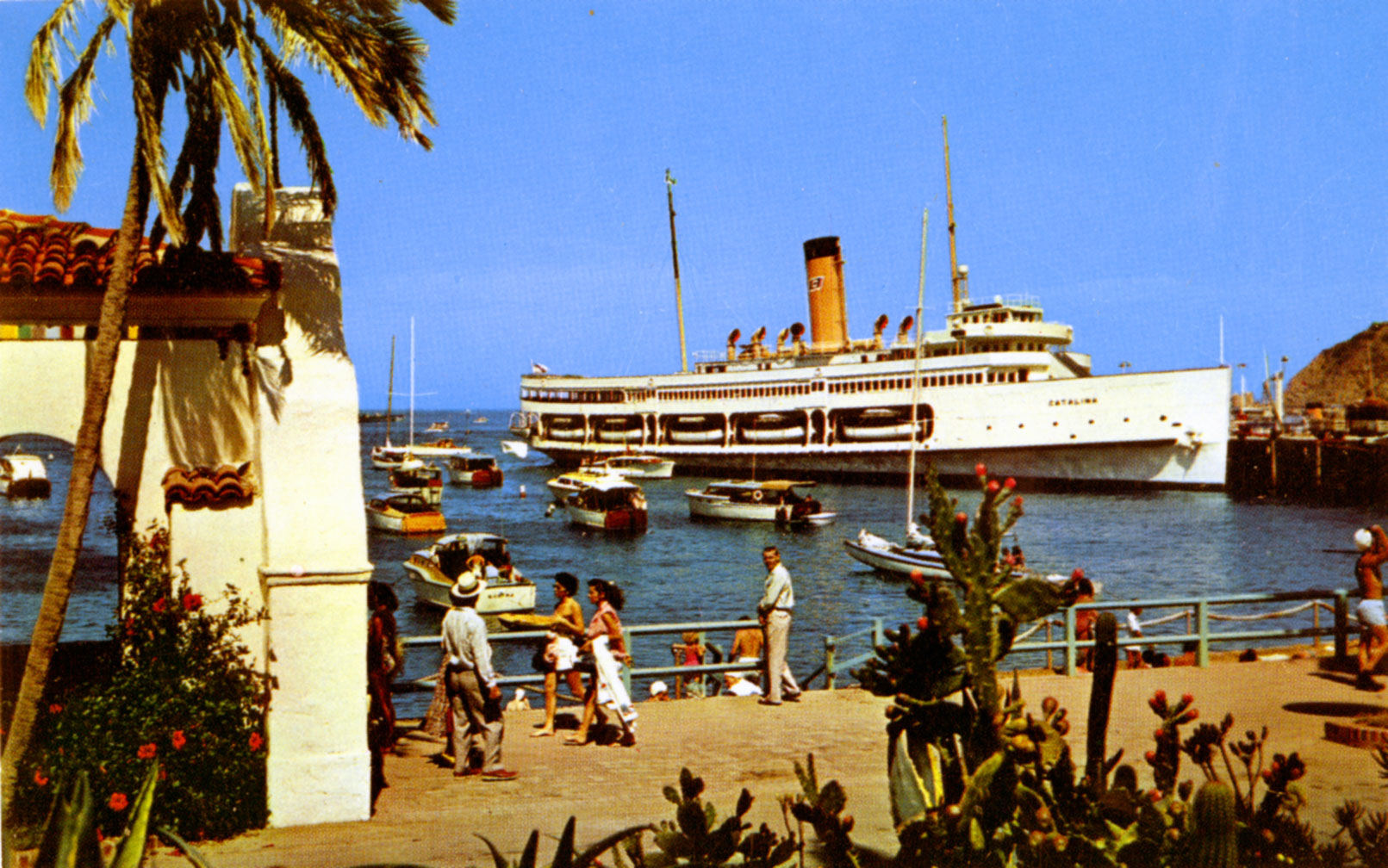
The S.S. Catalina docked at the Avalon pier at Santa Catalina Island. Undated postcard circa 1960s. (Credit: Pepperdine University Library, Special Collections)

The S.S. Catalina was christened and officially  launched on May 3, 1924, and her first island voyage with passengers took place on June 30, 1924. Initially costing $2.00, the two-and-one half hour steamship  voyage was incredibly popular from the first. During the 1920s, Presidents Calvin Coolidge and Herbert Hoover were among its passengers, along with many movie and stage performers of the day.

The outbreak of World War II led to the immediate closure of Catalina Island, which was transformed temporarily into a military outpost. 

In April 1942, the S.S. Catalina was temporarily recommissioned as a military transport ship and sent to San Francisco Bay. During the war, the ship ferried 820,199 soldiers from various bases around the bay to their final points of embarkation overseas. She was returned to civilian duty four years later in April 1946.

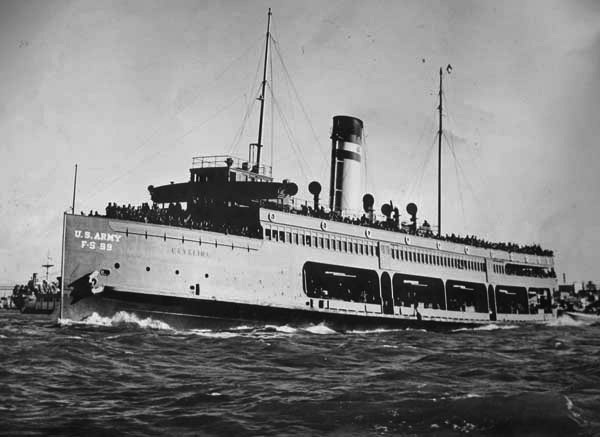
The repurposed S.S .Catalina as the US Army troop ferry ship FS-99 in 1943. (Credit: Wikimedia Commons)

The ship returned to its original purpose, shuttling large groups of tourists and sightseers from its terminal in Wilmington to Catalina Island. The vocal singing group the Four Preps immortalized the voyage with their #2 1958 pop hit, “26 Miles (Santa Catalina).”

Growing weary of financial and labor issues involving the ship’s operation, Phillip K. Wrigley sold it to M.G.R.S., a group of investors, in 1960. It continued to operate during the 1960s, but its popularity began to wane as smaller, faster boats brought passengers to Catalina more quickly.

The Great White Steamer didn’t operate at all in 1971 and 1972 due to labor troubles. Service resumed in 1973, but the aging ship’s days were numbered. It made its final Catalina voyage on Sept. 14,1975, having completed the trip 9,807 times.

In 1976, the dormant ship became Los Angeles Historic Landmark #213, was named a California historic landmark, and was listed on the National Register of Historic Places..

A succession of owners had tried their hand at reviving the ship’s fortunes, with little luck. On Feb. 16, 1977, Newport Beach real estate developer Hymie Singer bought the Catalina at auction for $70,000 as a Valentine’s Day gift for his wife.

For the remainder of its existence, the Catalina lived a nomadic life. The Singers leased the ship to Gene Webber, who moved the ship from place to place after she was evicted from the Port of Los Angeles for non-payment of fees.

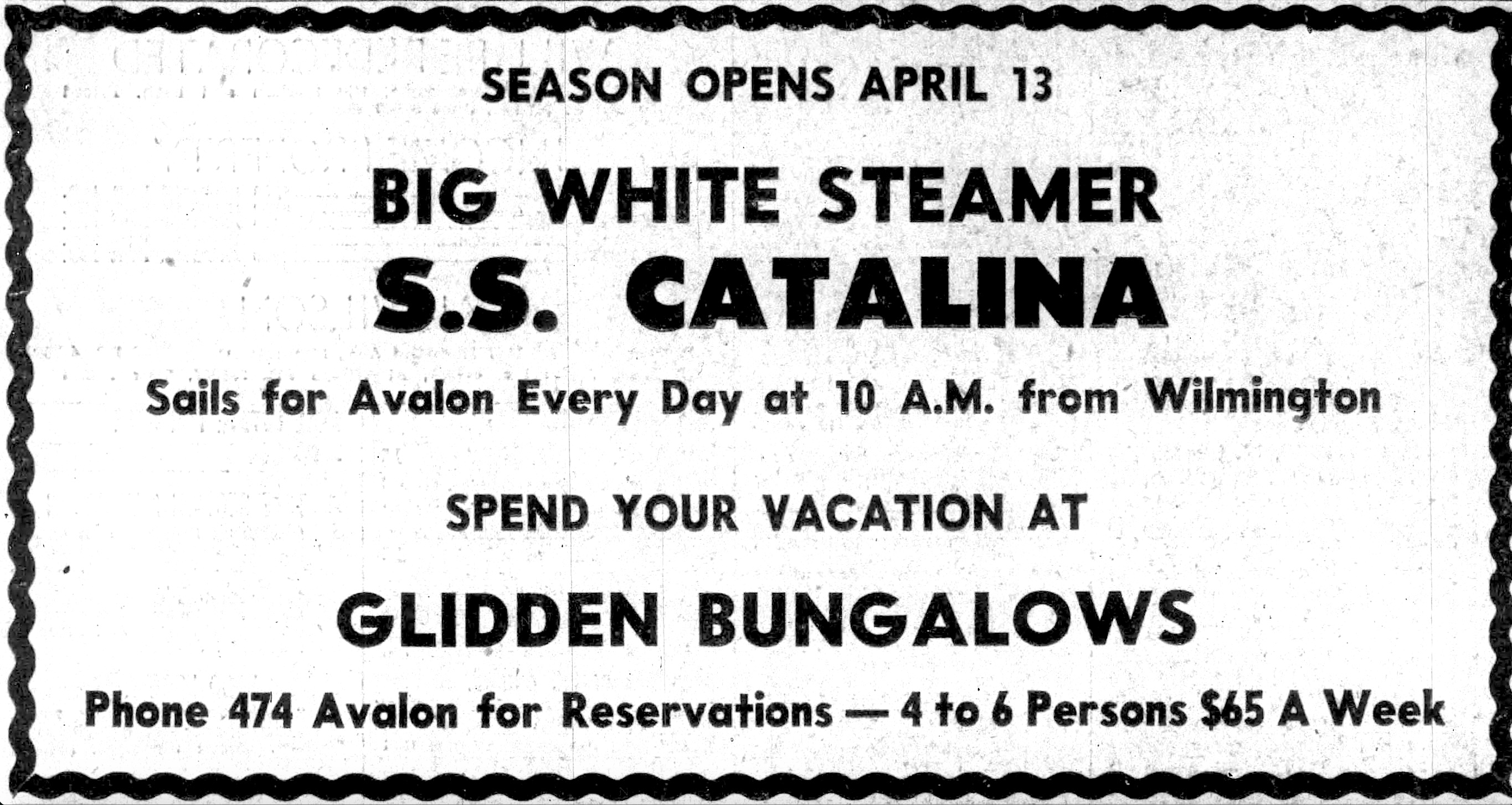
Daily Breeze ad, April 10, 1957, Page 2. (Daily Breeze archives)

Webber sought a home for the ship in various locales, from Newport Harbor to Santa Monica and Long Beach. An idea was even floated to move the boat to King Harbor in Redondo Beach at one point. The thought was to renovate the ship and turn it into a restaurant and entertainment attraction, but it never quite came together.

On March 3, 1985, Webber tried the resort town of Ensenada, Mexico, towing the Catalina to a moorage three miles offshore. She would never return to California. Singer filed a lawsuit and retook control of the ship, investing money to convert it into the floating Catalina Bar and Grill restaurant and disco.

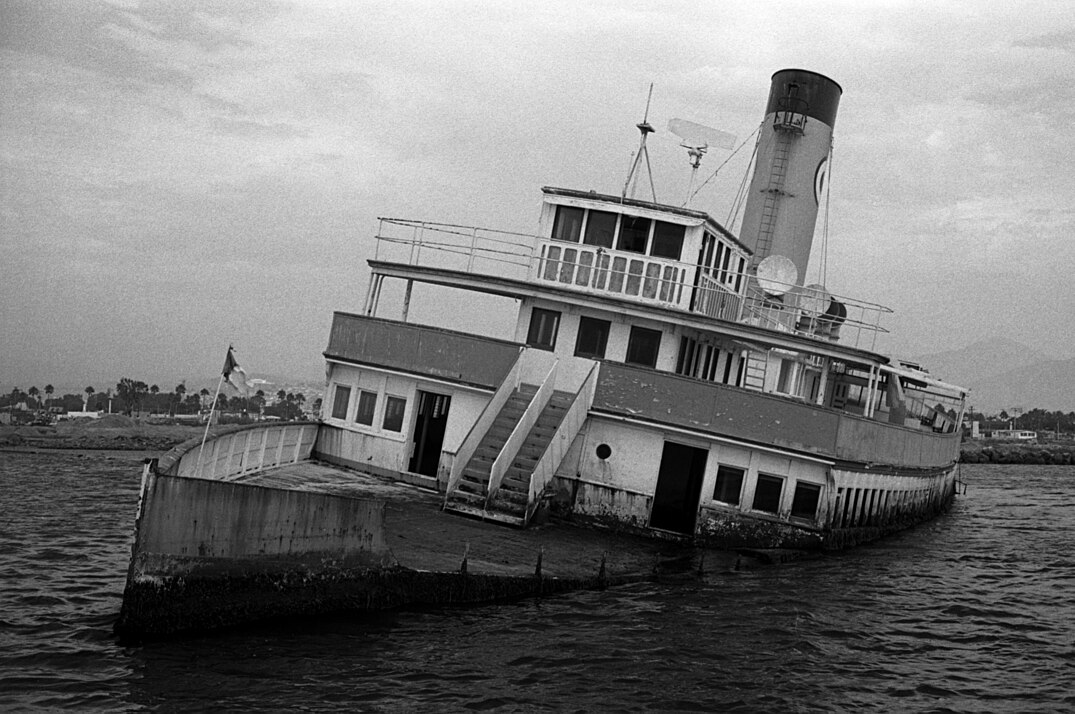
The venture failed, and the Singers finally gave up on the project in 1996. By then, the Catalina had begun to take on water and had been looted by vandals. Attempts by preservationists to save the foundering ship failed, and the S.S. Catalina was broken up and sold for scrap in beginning in 2009.

The foundering S.S. Catalina takes on water at her Ensenada moorage in the late 1990s. (Credit: Wikimedia Commons)

Sources:

The Catalina Story, by Alma Overholt, Catalina Island Museum Society, Inc., 1962.

Daily Breeze archives.
Islapedia.com

Los Angeles Times archives.
San Pedro News Pilot archives.
“The S.S. Catalina: The First 75 Years of a Great White Steamer,” by Shawn W. Dake (website).

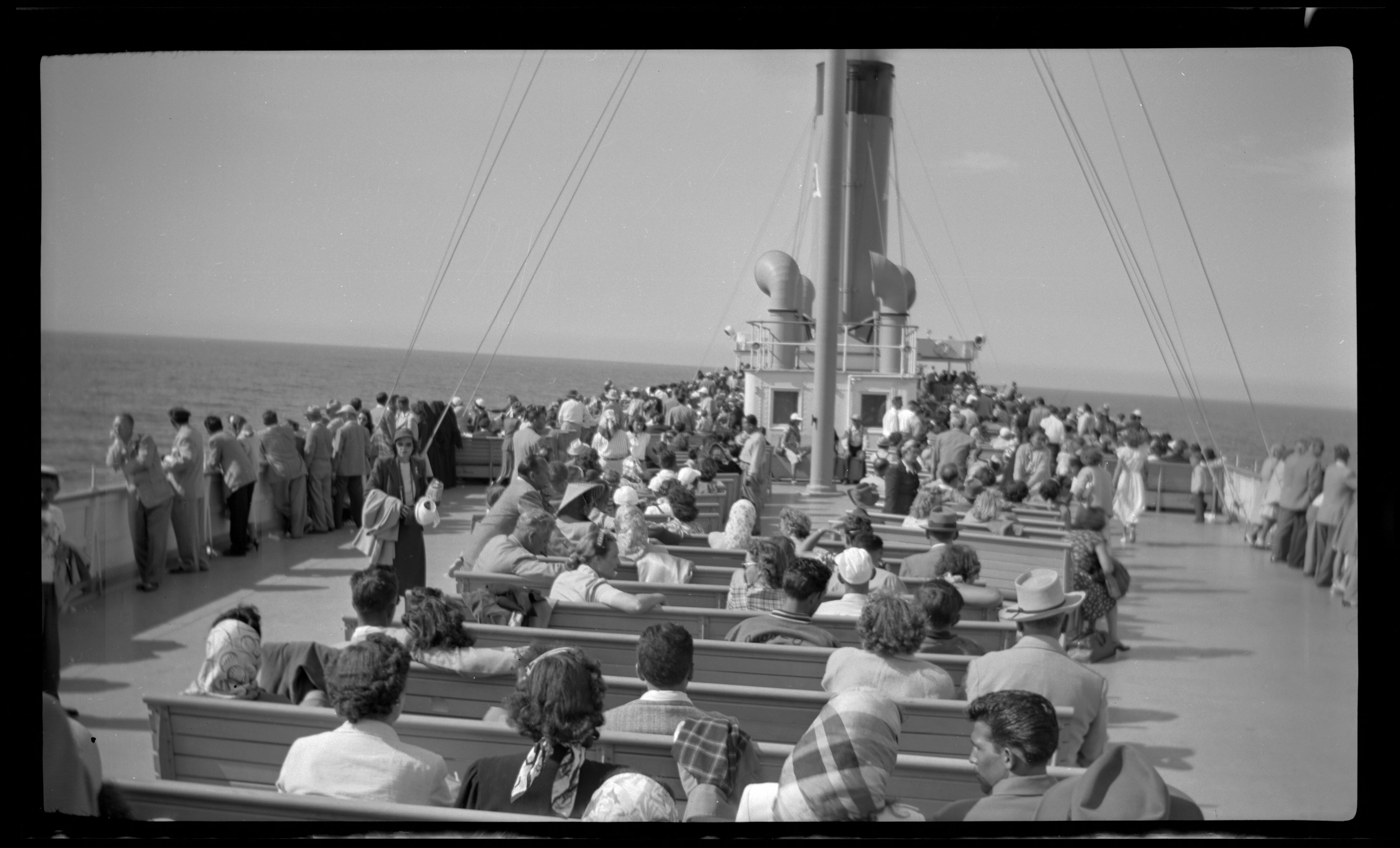
Passengers enjoy the ride on the S. S. Catalina’s open air deck in 1948. (Credit: UCLA Library, Dept. of Special Collections)

Portions of the 1967 imitation beach party film “Catalina Caper” were shot aboard the S.S. Catalina:

(Warning: This film received a 2.3 user rating on the Internet Movie Database.)

Peafowl come to the Palos Verdes Peninsula, but not everyone is happy

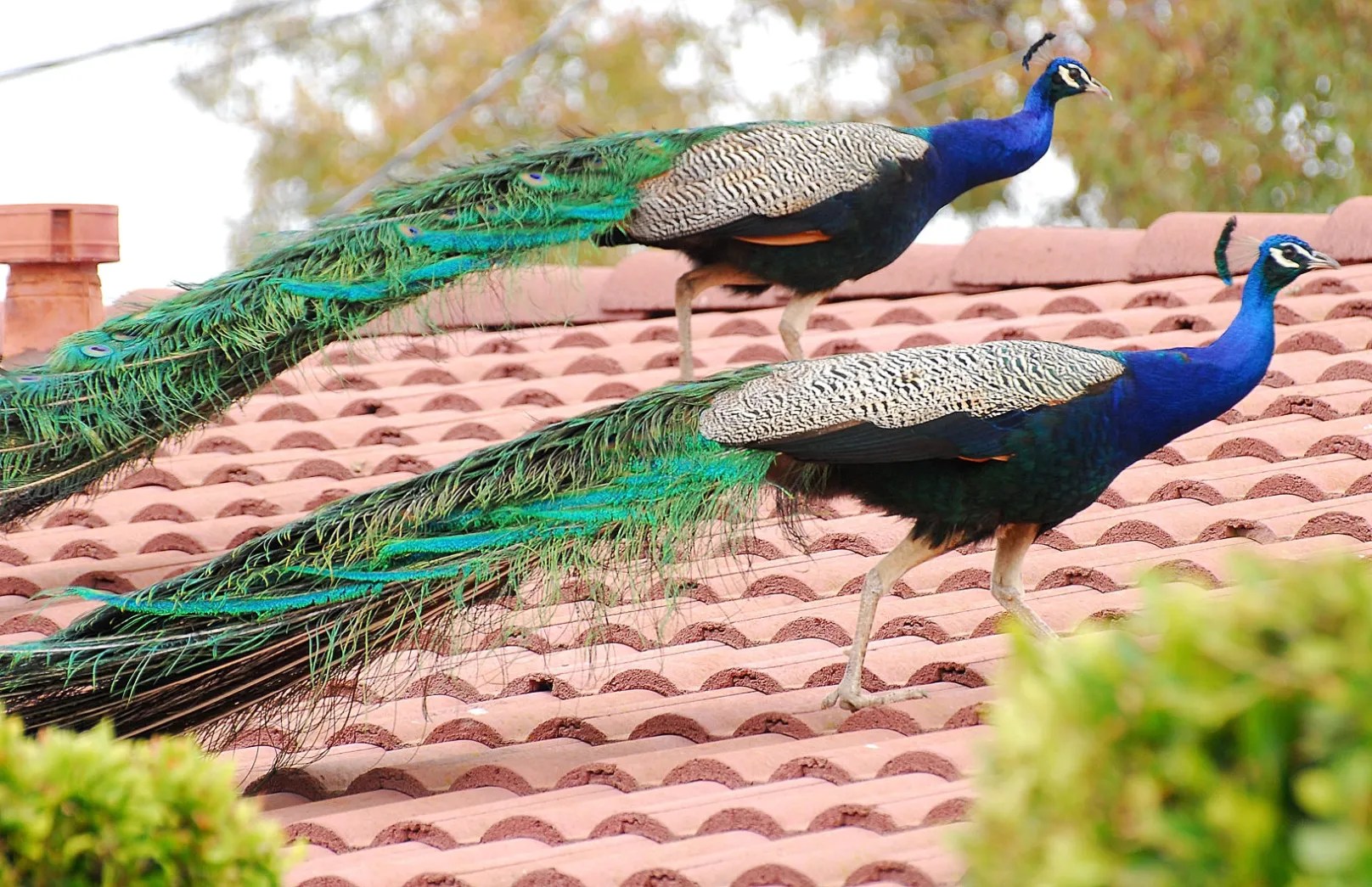
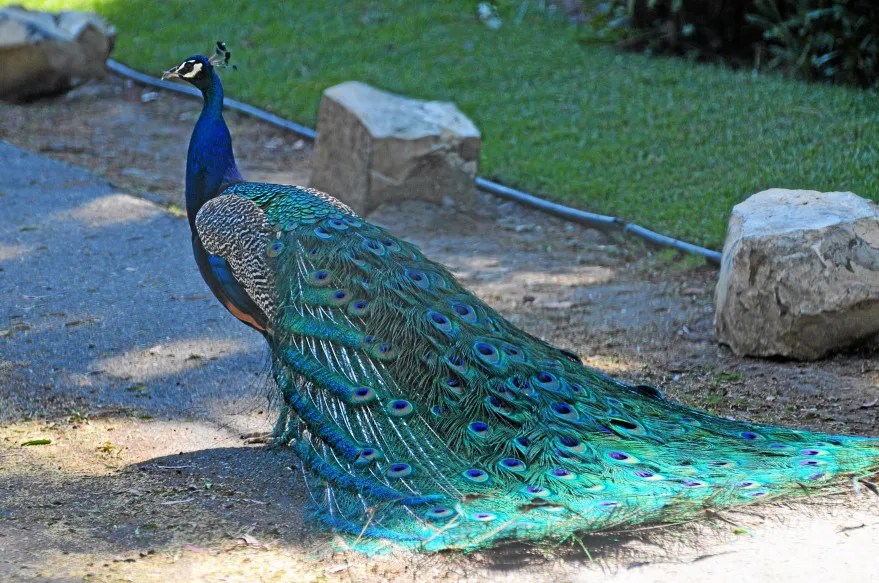
Two peacocks explore the roof of a Palos Verdes Estates house. Undated post-2000 photo. (Credit: Daily Breeze staff file photo)

Several theories have been put forth regarding the origin of the peafowl population on the Palos Verdes Peninsula. The term peafowl refers to both the male (peacock) and female (peahen) of the species.

It’s safe to credit investment banker Frank Vanderlip, who bought the Peninsula in 1913, with bringing the birds to his new estate.

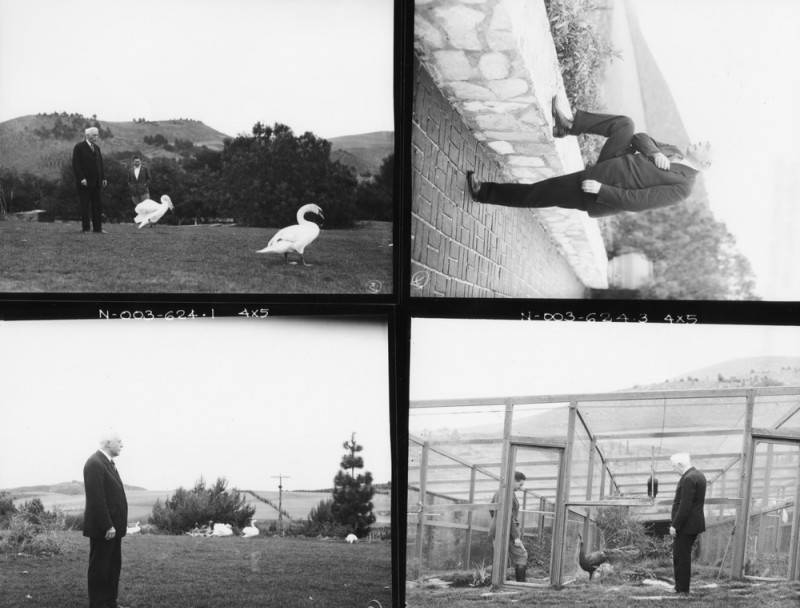
A bird fancier, Vanderlip had built an aviary on his property and stocked it with various avian species, including peafowl. The question is, where did he get them?

Views of the landscape around Frank Vanderlip’s estate and photos of him with his birds, Palos Verdes Peninsula, circa 1930’s. (Credit: Los Angeles Public Library Photo Collection)

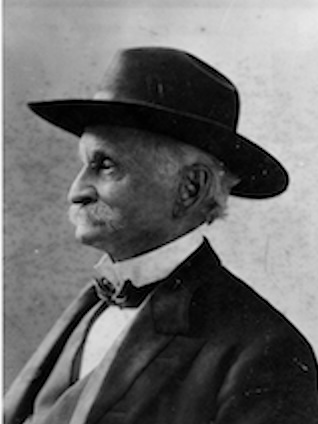
Here’s one theory. Eccentric Arcadia-area landowner Lucky Baldwin is credited with importing some of the colorful but notoriously noisy birds from India years earlier. So perhaps Baldwin gifted his fellow landowner Vanderlip with a few pairs of the birds.

The problem with that theory? Baldwin died at age 80 in 1909, four years before Vanderlip bought the Peninsula and seven years before he built his mansion there.

Lucky Baldwin in 1905. (Credit: Arcadia Public Library

A more credible theory is that Baldwin’s daughter, Anita, gave the birds to Vanderlip after her father’s death.

Others suggest that the birds actually were a gift from the daughter of chewing gum magnate Phillip Wrigley, taken from the family’s large bird farm on Catalina Island.

.However they got there, the exotic birds soon became a fixture on the Vanderlip estate. 

According to the Palos Verdes Peninsula News, Vanderlip’s aviary was closed down in the late 1920s, and the birds were rounded up and packed off to Wrigley’s larger Catalina aviary. In the process, some birds escaped capture.

The City of Palos Verdes Estates website suggests that the birds were released following Vanderlip’s death in 1937.

At that time, they had freedom of movement and a variety of natural nesting and feeding places. Most residents seemed to find the peacocks a tolerable and beautiful novelty during this era.

During the 1950s, however, real estate and commercial developers rapidly began filling in those empty spaces with new developments. As a result, the number of natural habitats for peafowl began to be reduced greatly.

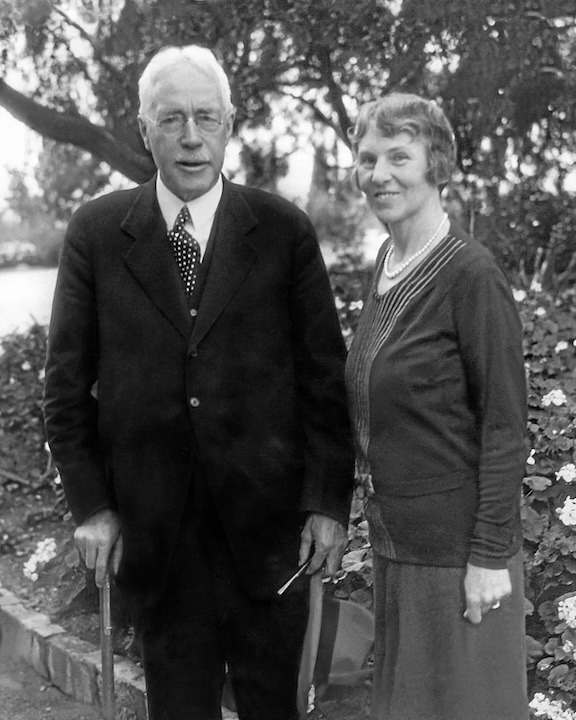
Frank Vanderlip and his wife, Narcissa, at their home in Palos Verdes circa 1931. (Credit: Daily Breeze file photo)

So the birds instead began to settle in the neighborhoods, finding the often lush foliage in backyards in Palos Verdes Estates and Rancho Palos Verdes very much to their liking. Since they had no natural predators to speak of, their numbers also increased.

In the late 1950s, the first negative-tinged news stories appeared in the Peninsula News and the Los Angeles Times indicating that not all residents were happy about the presence of peafowl roosting in their backyard gardens. The Times headline from Aug. 25, 1958: “Spreading Peacocks Ruffle Palos Verdes.”

Many residents loved the peafowl, but others were turned off by their loud squawking at all hours and the destructive activities the birds wreaked on their property. The birds left droppings indiscriminately and seemed to enjoy perching on top of cars and poking holes in roofs and hot tub covers.

By July 1971, the peafowl problem had become pervasive enough to reach the Palos Verdes Estates City Council, which considered various options and chose contacting the Humane Society for possible solutions.

A peacock shows its plumage on Buckskin Lane in Rolling Hills Estates in 2012. (Credit: Daily Breeze staff file photo by Steve McCrank)

The debate only intensified over the next couple of decades, with angry face-offs between wildlife lovers and peafowl haters becoming regular occurrences at council meetings in the Peninsula cities.

Though trapping or killing the birds by private citizens is illegal, that didn’t prevent outbreaks of peafowl killings as the debates over the birds grew more heated and bitter.

In November 1985, at least eight peafowl in Palos Verdes Estates were found by the Southern California Humane Society to have died from arsenic poisoning. Five birds died of poisoning by the insecticide diazinon in the city in 2005.

A larger spate of poisonings beginning in 2012 in Rolling HIlls Estates had claimed 47 victims by May 2014. Eleven of the deaths were from unknown causes. Of the remainder, one was shot by an arrow, five were poisoned, 15 were run over vehicles, and the remainder had been shot either by BBs or pellets.

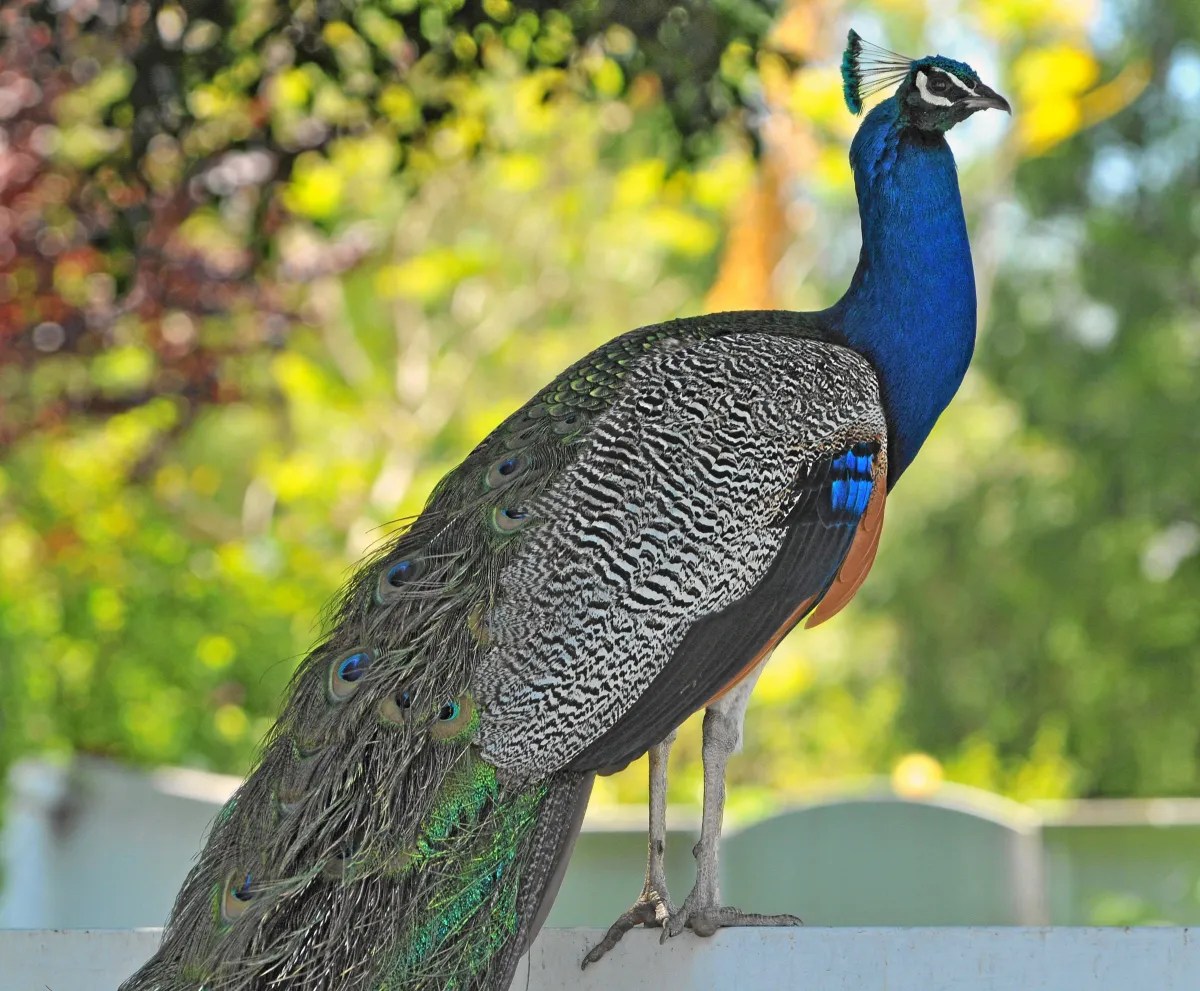
A peacock rests on atop a fence on Strawberry Lane in Rolling Hills Estates in this undated photo. (Credit: Daily Breeze staff file photo)

Over the years, city officials struggled to come up with solutions caused by the burgeoning peafowl population. Most involved attempting to remove excess birds when the population becomes too large. The Peafowl Management Plan adopted by Rancho Palos Verdes in 2015 seems to have worked reasonably well.

The PMP involves taking regular counts of the peafowl population that are measured against a predetermined baseline level, 134 birds in RPV’s case. When the number exceeds the standard, the excess birds are humanely trapped and exported to a different location.

In May 2025, RPV announced it would begin trimming the peafowl population again on Sept. 1.

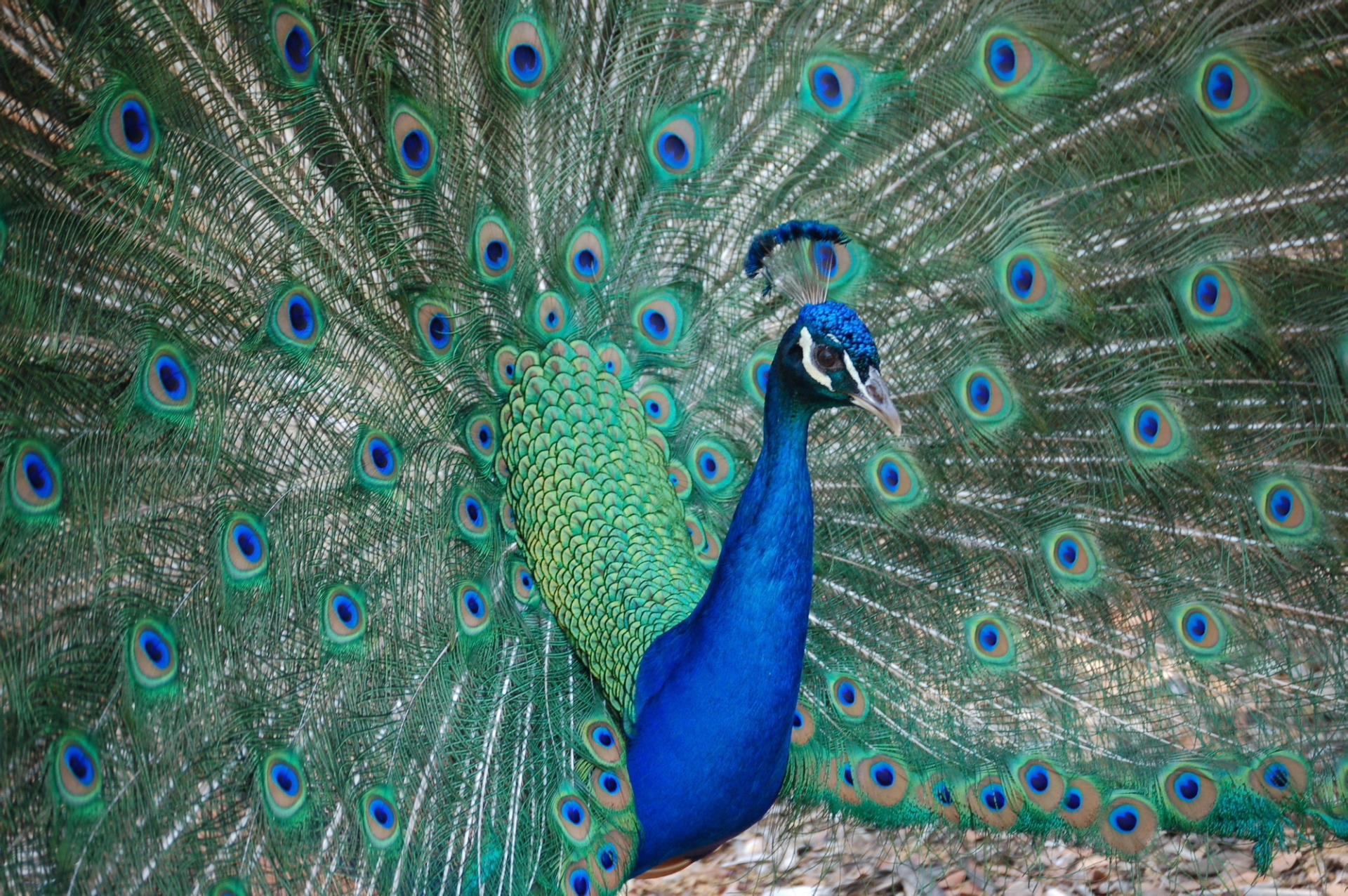
A peacock in full display mode. Undated. (Credit: City of Palos Verdes Estates website)

Sources:

City of Palos Verdes Estates website.

City of Rancho Palos Verdes website.

Daily Breeze archives.
“Here’s Who’s Really to Thank/Blame for L.A.’s Peacocks,” by Ben Sanders, Los Angeles Magazine, Dec. 21, 2015.

Los Angeles Times archives.
Palos Verdes Peninsula News archives.
“The Peacocks,” by Bruce and Maureen Megowan, Palos Verdes Magazine, April 23, 2021.
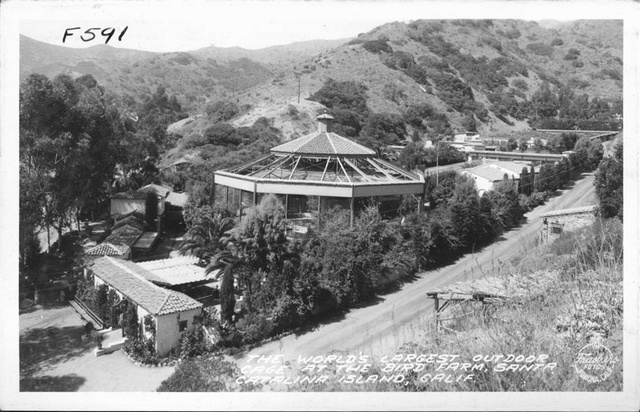
Postcard shows the Catalina Island aviary. Undated, 1930-1945. (Credit: UC San Diego Library. Dept of Special Collections)

Note: Thanks to a sharp-eyed reader named Russell who noticed that a photo from the Los Angeles Public Library collection that originally ran with this blog post that purported to be an aerial view of the Vanderlip estate on the Palos Verdes Peninsula actually was a photo of the Pacific Military Academy near Culver City. It has been replaced with the 1931 portrait of Frank Vanderlip and his wife Narcissa at the estate.

The USS California served as flagship of the U.S. Navy’s Pacific Fleet for nearly two decades

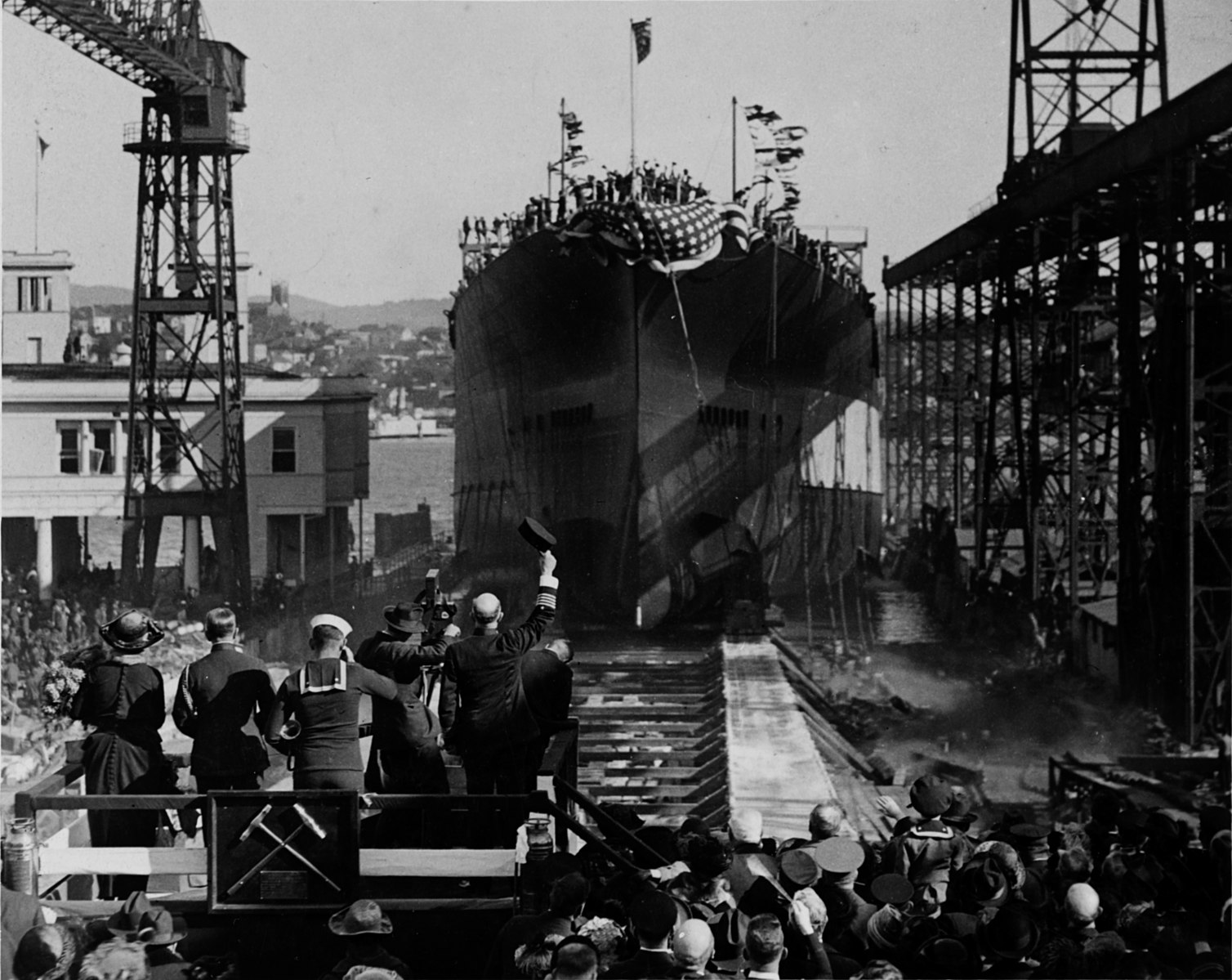
The newly minted USS California slides down toward the water during her launching ceremony at the Mare Island Navy Yard in Vallejo on Nov. 20, 1919. (Credit: Naval History and Heritage Command website)

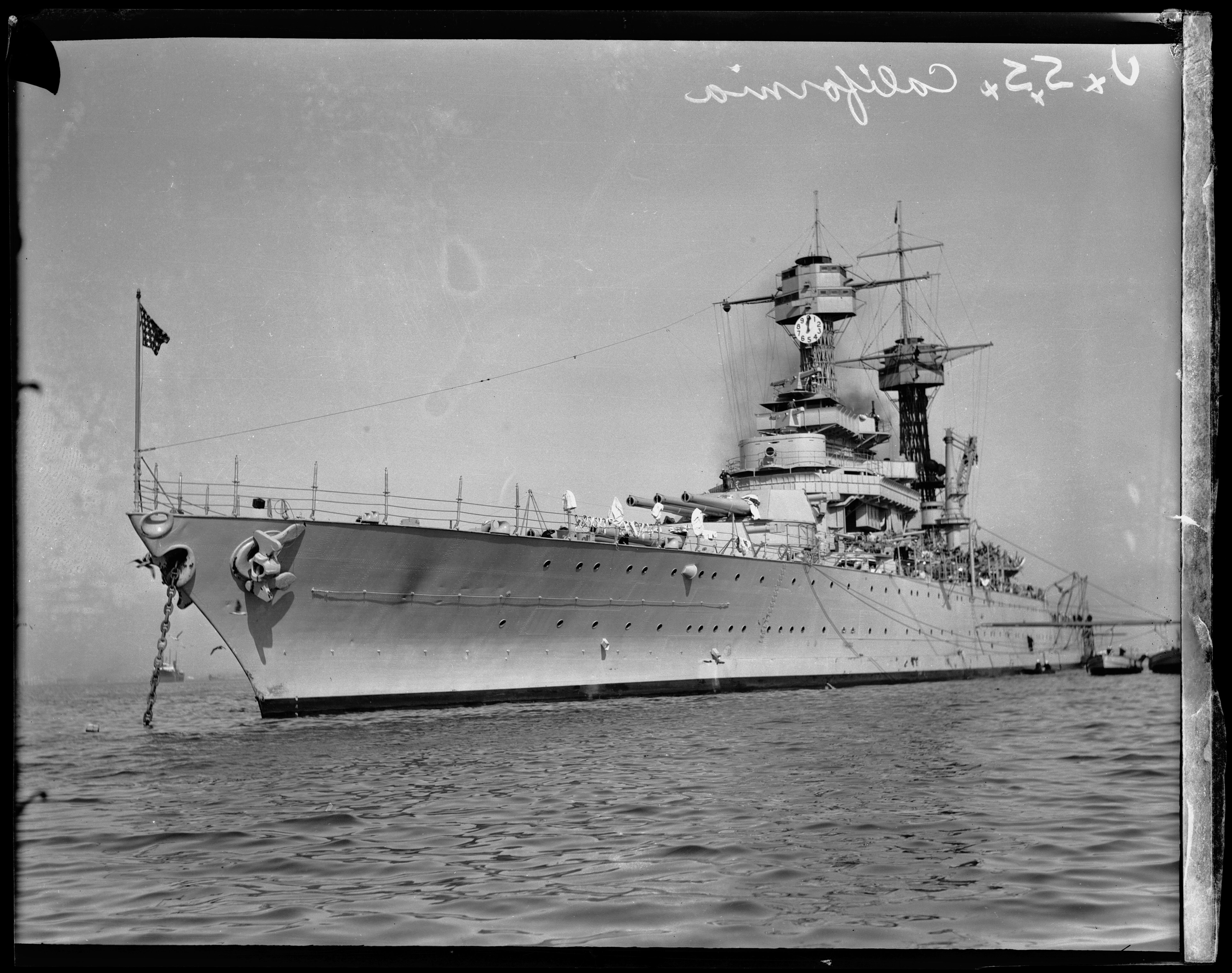
Seven U.S. Navy vessels have been named the USS California since 1867. Perhaps the most famous is the fifth one, the Tennessee-class battleship given the identification number BB-44 (“Battleship #44”) by the Navy.

The ship got its official launch on Nov. 20, 1919 in Vallejo, California at the Mare Island Navy Yard where it was built. The state-of-the-art vessel was officially commissioned on Aug. 10, 1921, with Capt. Henry J. Ziegemeier serving as its first commander.

The California was 624 feet long, with a top speed of 24 knots (27.6 mph). She was armed with four separate batteries of guns, and had two torpedo tubes. Her crew consisted of 57 officers and 1,026 enlisted men.

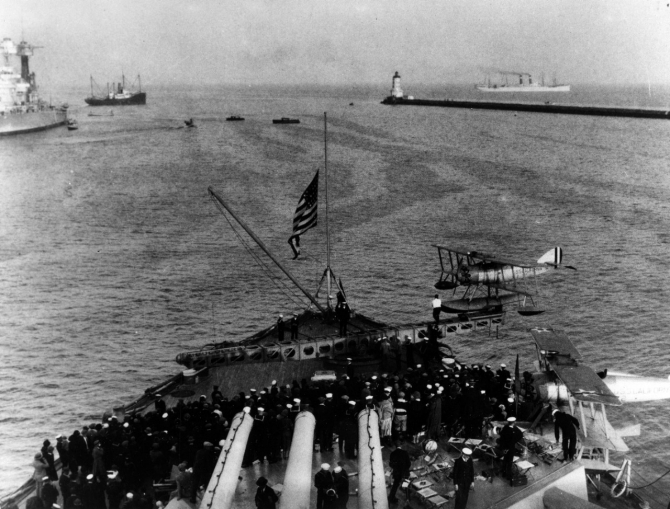
Though not an aircraft carrier, the California carried three floatplanes capable of being launched from pontoons, once they were dropped in the ocean. In 1926, a flight catapult for launching aircraft was installed on one of her gun batteries.

The USS California, flagship of the Pacific Fleet, anchored at the Port of Los Angeles, San Pedro. Undated photo circa 1921-1939. (Credit: UCLA Library, Department of Special Collections)

The versatile ship served as the flagship for the Pacific Fleet from 1921 to 1940. The San Pedro-based portion of the Fleet, also known as the Battle Force, consisted of battleships, aircraft carriers and heavy cruisers. San Diego’s growing naval base hosted the rest of the fleet, including light cruisers, destroyers and submarines.

Originally, the submarine base had been located in San Pedro until the Navy decided in January 1923 to close that facility and move the subs to a new base in San Diego.

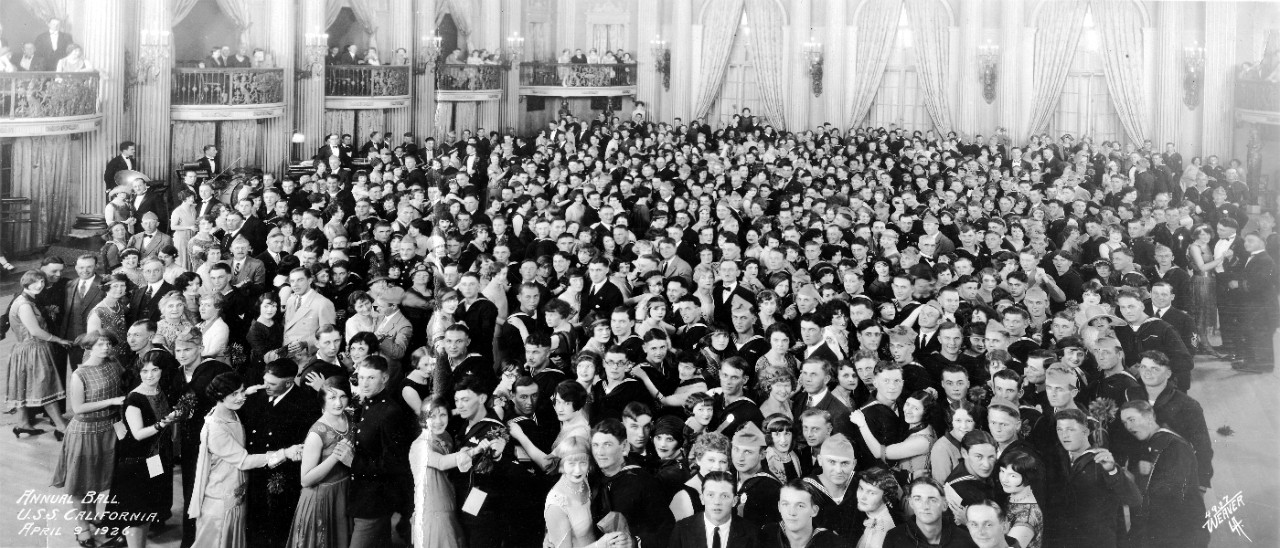
The Fleet in general and the California in particular played major roles in San Pedro community life during this era. Social events were held regularly onboard the ship, with dances and balls being particularly popular. 

Photo of the annual ball for the ship’s crew of the USS California (BB-44), on April 9, 1926. in San Pedro. (Credit: U.S. Naval History and Heritage Command website)

A farewell-to-the-Fleet ball drew 3,500 people in November 1923. In the midst of the Depression ten years later, another ball attracted 3,000 members of what the San Pedro News Pilot described as the “Southland elite.”

The ship also hosted tours for Boy Scouts and other community groups. Practicing Mason seamen on board regularly attended meetings at the Masonic Temple in San Pedro.

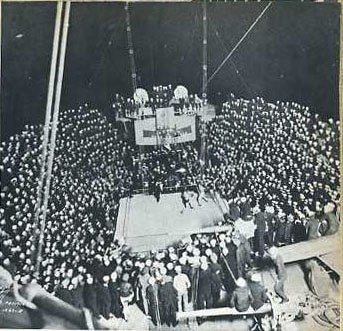
Navy men slug it out during a 1923 boxing match on board the USS California. (Credit: U.S. Naval History and Heritage Command website)

Seamen from the California also participated in area amateur sporting events, including the annual Pacific Fleet Meet track and field competition held at Long Beach Poly High School and motor boat races sponsored by the California Yacht Club.

The California also fielded its own baseball and football teams, which played in the area semipro leagues that were so popular at the time. The California also had a crew squad whose oarsmen traveled far and wide to compete.

Unfortunately, world events would bring an end to both the military and community activities involving both the California and the rest of the Pacific Fleet based in San Pedro.

In early 1940, alarmed by reports of the growth of aggressive Japanese expansion in Asia, President Franklin Delano Roosevelt and his military advisors in Washington, D.C. looked to consolidate U.S. naval power in the Pacific as a deterrent to a Japanese invasion.

They wanted to move the Pacific Fleet to Hawaii, specifically to the naval base at Pearl Harbor. Admiral James O. Richardson, the Pacific Fleet’s commander, strongly disagreed with the decision. Richardson felt that the move would leave the Fleet too vulnerable to a Japanese attack.

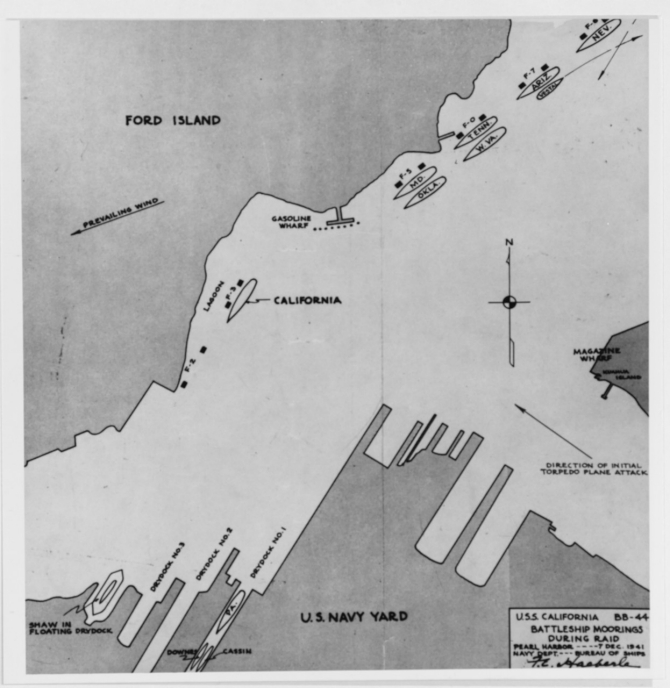
Partial Pearl Harbor map created after the attack shows the vulnerable position of the USS California, center left. (Credit: U.S. Naval History and Heritage Command website)

Richardson felt strongly enough about his position to go to Washington, D.C., to protest the move. For his troubles, he was quickly removed from his role and replaced by the more amenable Admiral Husband E. Kimmel. 

The move to Hawaii was made during the spring of 1940, and Kimmel was appointed head of the Fleet at its new location in Pearl Harbor.

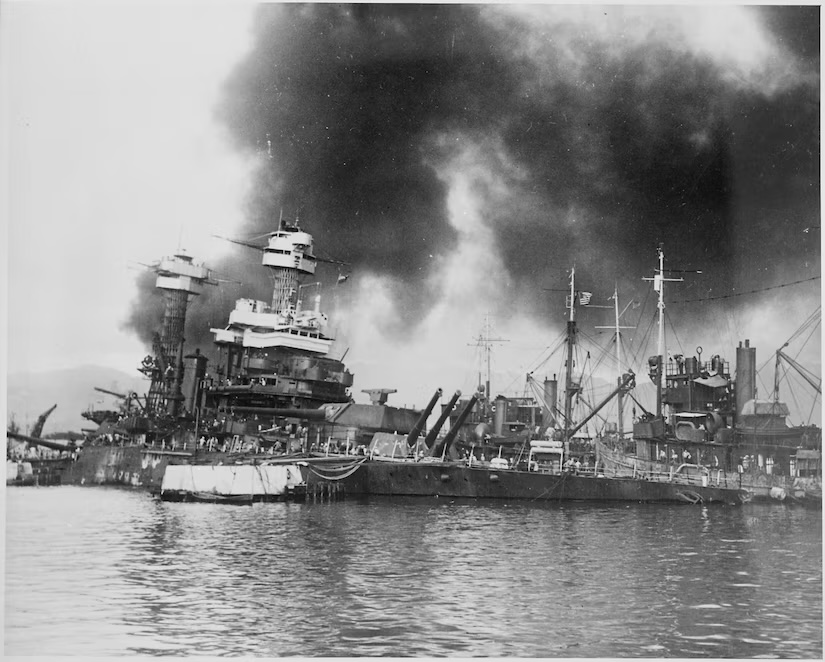
Shortly before 8:00 a.m. on Sunday morning, Dec. 7, 1941, the USS California became the first ship to be attacked at Pearl Harbor. The ship took incoming fire from two Japanese fighter planes. In addition to the strafing, two of the Japanese planes dropped torpedoes in the water.

They did their job, striking the broadside of the vulnerably positioned California at 8:05 am with devastating impact. A total of 104 men were killed and 61 more were wounded in the attack.

The USS California following the 1941 attack on Pearl Harbor. (Credit: U.S. Naval History and Heritage Command website)

The heavily damaged vessel — one of the torpedoes ripped a 40-foot-long hole in its hull — listed and finally sank into the harbor.

But all was not lost. The Navy determined that the ship was salvageable, and spent the next couple of years rehabilitating her. She was refloated on Oct. 10, 1942. After extensive repairs and modernization, the California returned to action in the Pacific Theater in 1944, seeing action in several battles before the end of the war.

Ultimately, the ship was decommissioned on Feb. 14, 1947. She never returned to active service, but remained listed in the Navy’s inventory until being removed on March 1, 1959. On July 10th of that year, the California was sold to the Bethlehem Steel Co. for scrapping. Her long journey had finally ended.

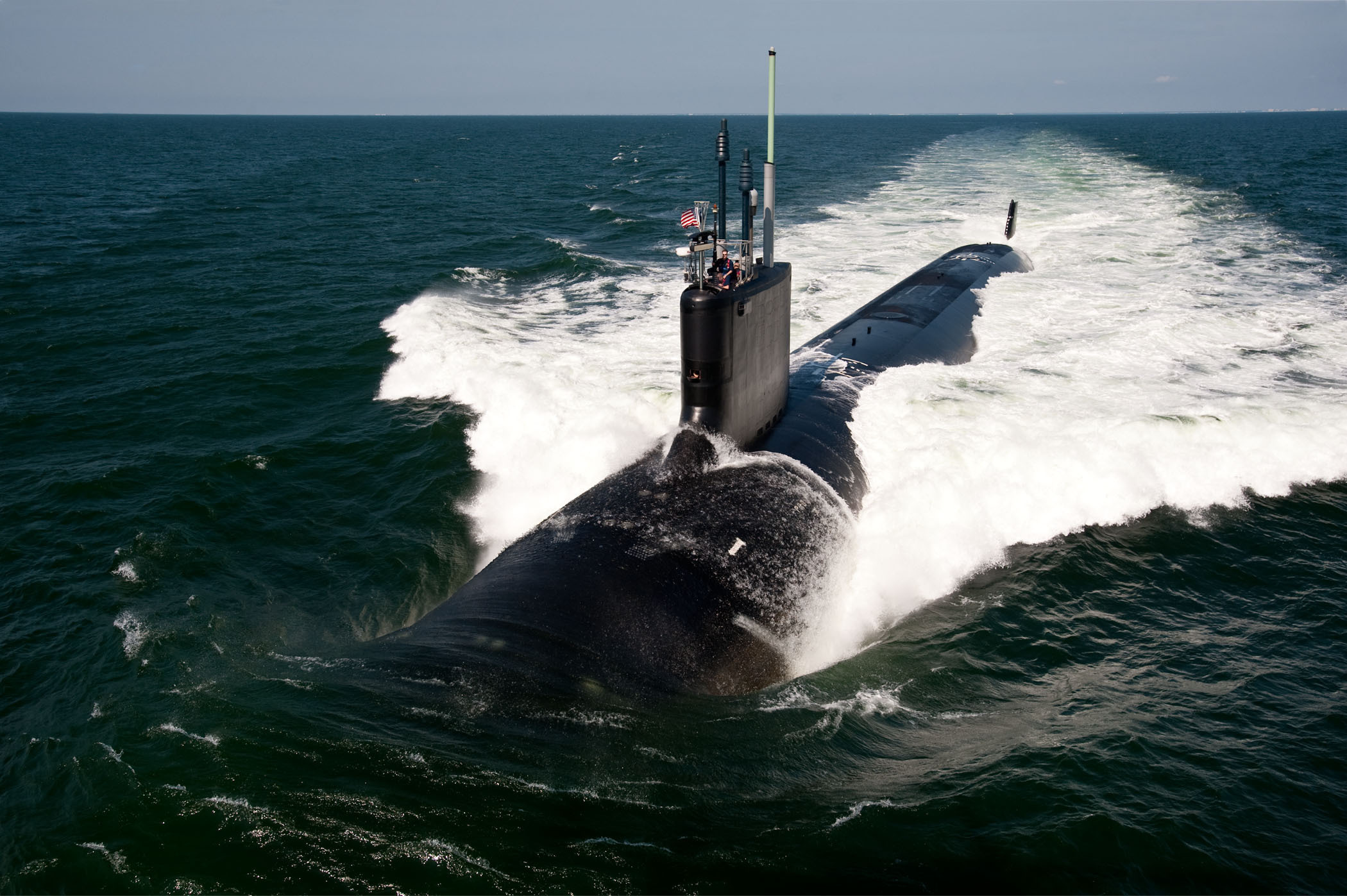
The seventh and most current bearer of the name USS California is a submarine commissioned by the U.S. Navy in 2011. Still active, it’s the first submarine ever named after the state.

The Virginia-class attack submarine USS California (SSN 781) gets underway during sea trials in 2011. (U.S. Navy photo by Chris Oxley).

Sources:

National WWII Museum website.

Naval HIstory and Heritage Command website.

San Pedro News Pilot archives.

U.S. Department of Defense website.

Sailors gather on the fantail of the USS California to watch the ship launch a Vought UO-1 or FU-1 during Navy Day festivities off Los Angeles, Calif., in the late 1920s. Note the ship’s colors at half-mast to honor fallen veterans. (Credit: U.S. Naval History and Heritage Command website)

Mira Costa High School was built on Francis Uyematsu’s last 40 acres of land

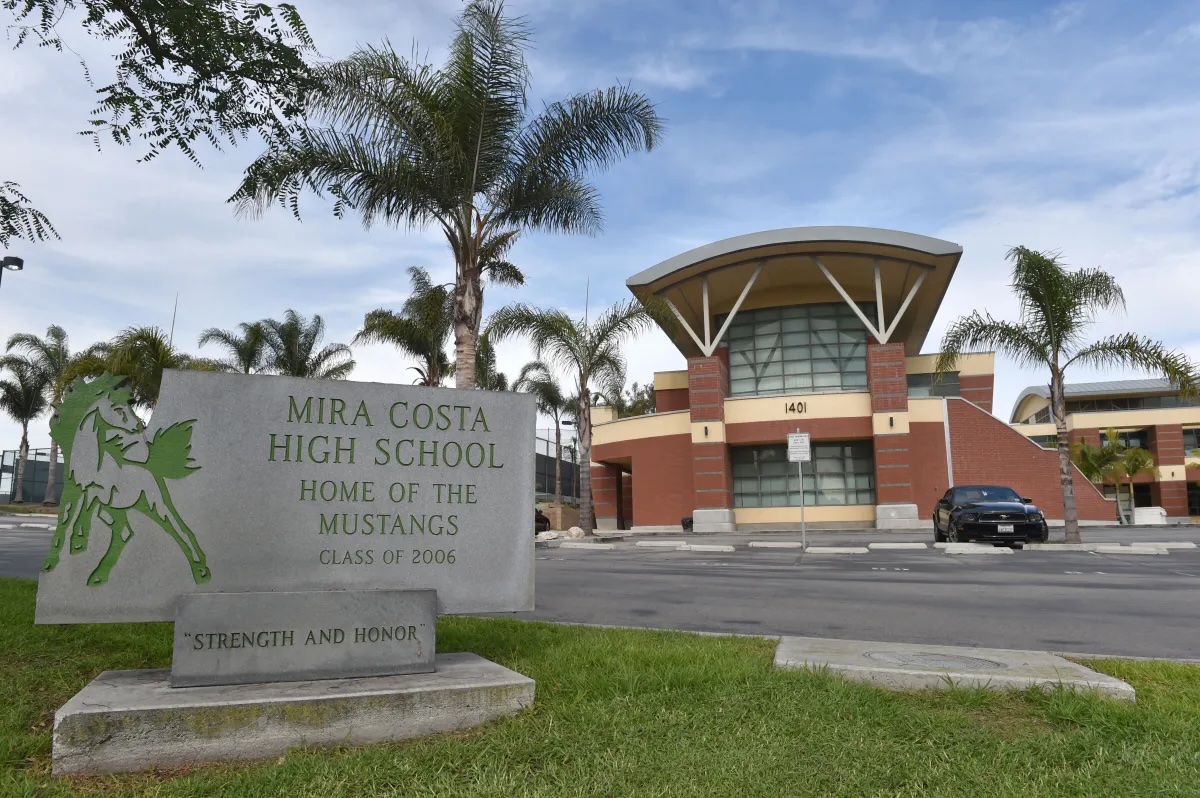
Mira Costa High School in 2014. (Daily Breeze staff file photo by Brad Graverson)

The sale of 40 acres of land to the Redondo Union High School District became final on Feb. 18, 1947. The location on Gould Ave. a few blocks east of Pacific Coast Highway was ideal for the district’s second high school, which was needed to accommodate the rapidly rising postwar enrollment at Redondo Union High.

The district had budgeted $100,000 for the purchase, but saved some money when the purchase price came in at $60,000.

The seller’s name was Francis Miyosaku Uyematsu, a Japanese farmer known as the “Camellia King.” But his story wouldn’t be told fully until decades later.

Planning for the new school began in earnest over the next few months. In January 1949, the district selected the name “Mira Costa” for the school, Spanish for “view of the coast,” from 85 suggestions from the community.

Daily Breeze, March 22, 1949, Page 1. (Credit: Daily Breeze archives)

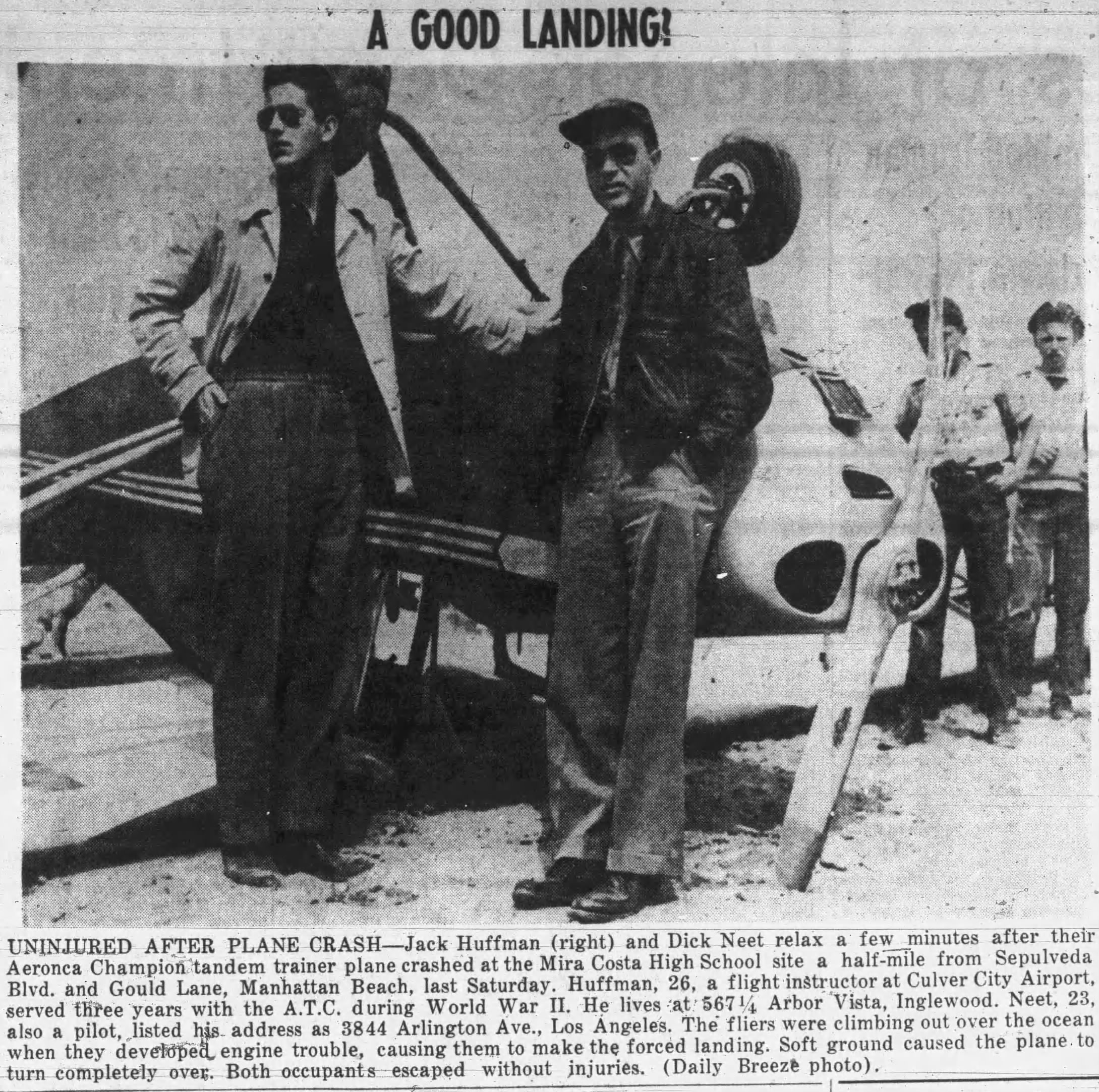
By that March, the school district had secured $1 million in funding for the new school, the bulk of which came from a state grant. By then, grading work was well underway at the site. In fact, it was flat enough to accommodate an emergency crash landing by a private plane on March 19.

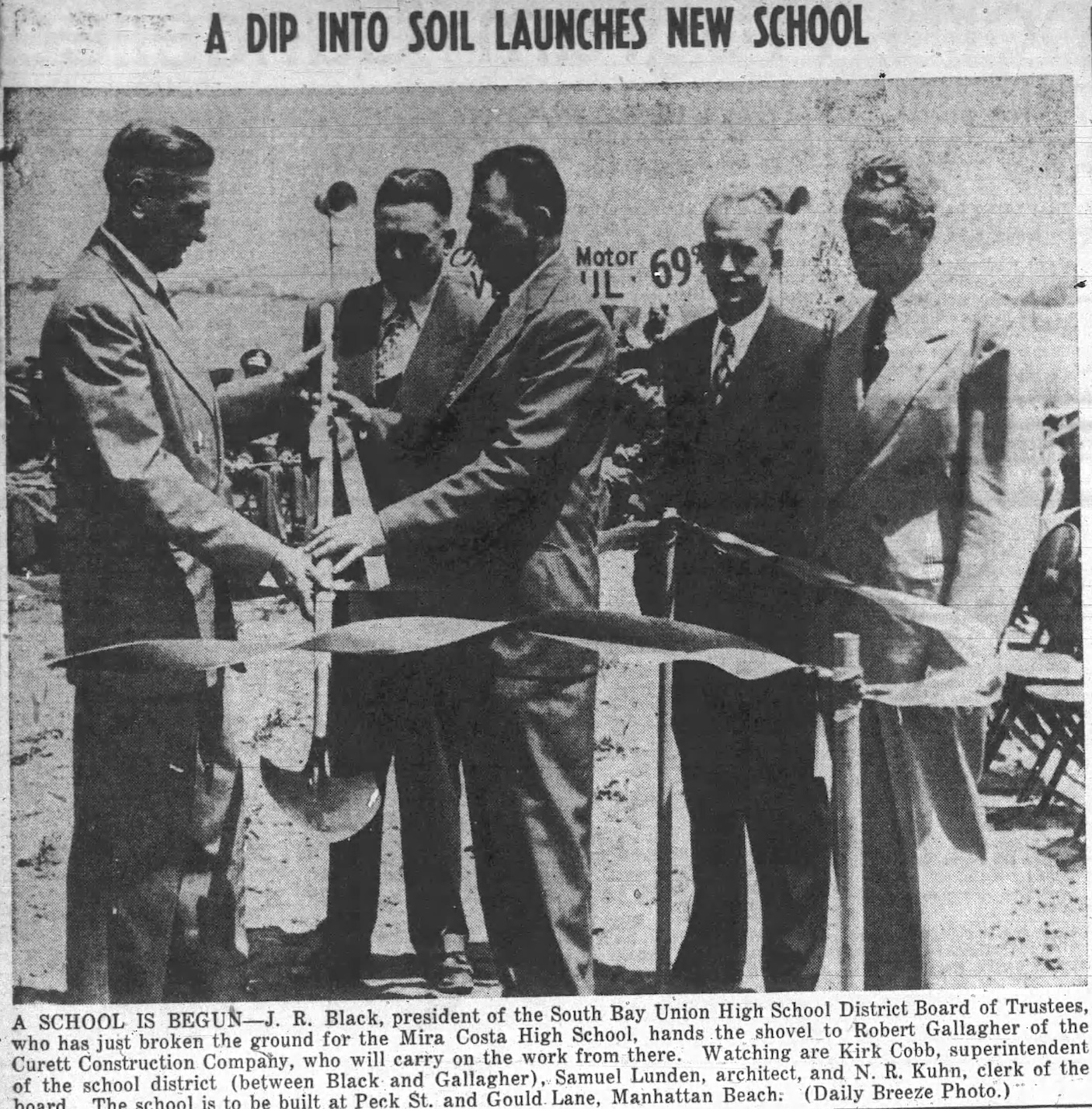
On May 24, 1949, school district officials and a representative from the Curett Construction Co., the firm selected to build the school, participated in the official groundbreaking ceremony for Mira Costa High.

After that, construction continued at a rapid pace, helped by a $1.49 million bond issue passed by voters on March 28, 1950. It provided funds for the addition of a girl’s gymnasium, cafeteria and a health administration unit to the school.

Daily Breeze, May 28, 1949, Page 1. (Credit: Daily Breeze archives)

Mira Costa High was completed in time for the start of the fall 1950 term. The school’s first principal, Lloyd Waller, welcomed approximately 700 students to introductory assemblies on Sept. 7, a few days before the school’s official first day of classes on Sept. 11, 1950.

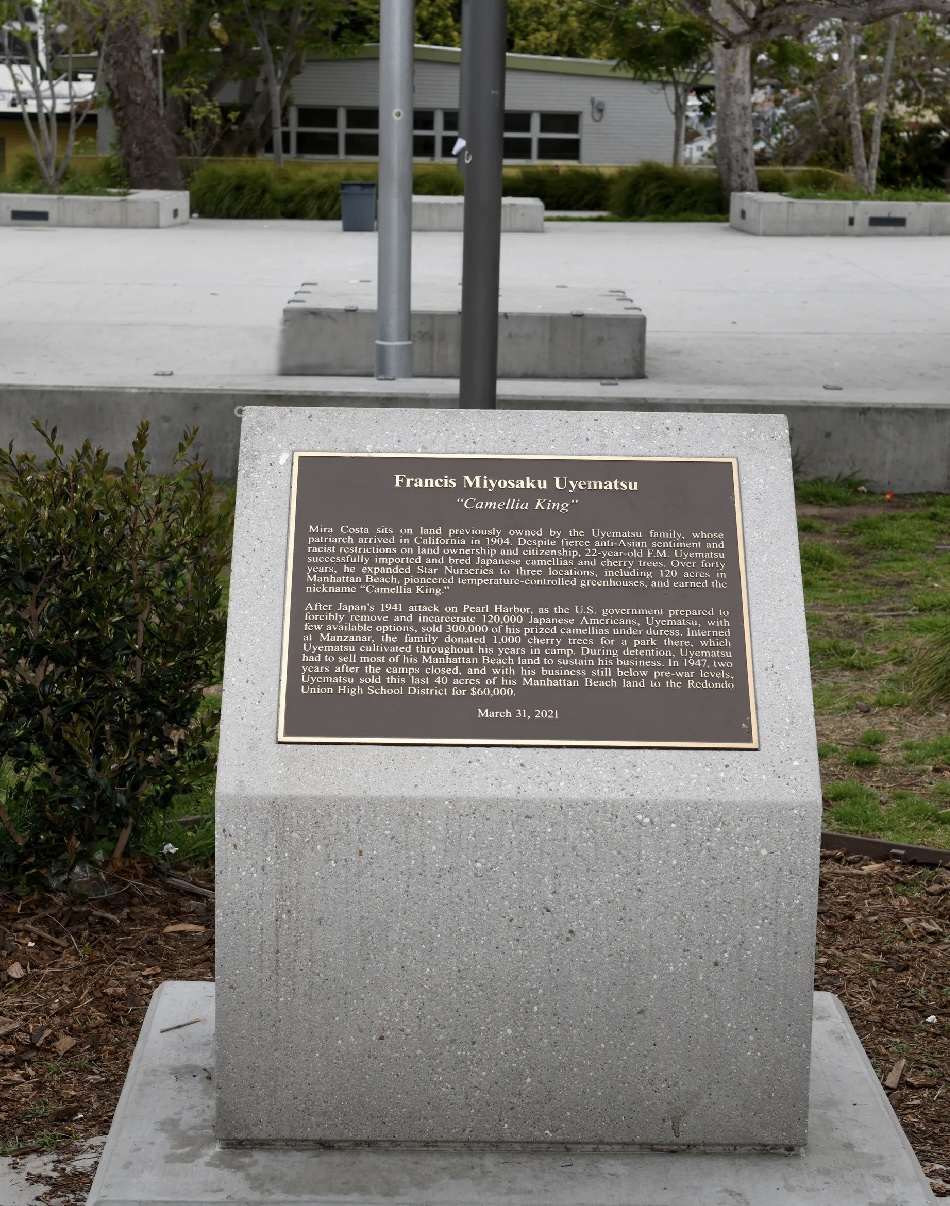
Some 71 years later, in October 2021, thanks to the efforts of Mira Costa alum and retired faculty member Chuck Currier and members of the Uyematsu family, a memorial plaque was dedicated on school grounds honoring Francis Uyematsu.

The Uyematsu memorial at Mira Costa High School. May 17, 2023. (Daily Breeze photo by Axel Koester, Contributing Photographer)

Currier had spent years researching the school’s origin and its link to Uyematsu, and convinced school district officials that his story should be told and remembered. They authorized $5,000 for the monument, which Currier designed. 

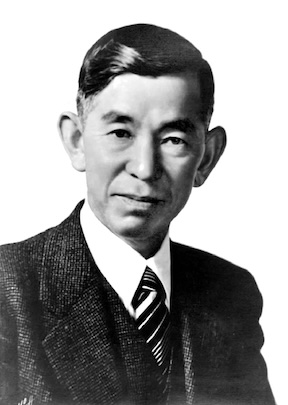
At age 22, Francis Uyematsu emigrated from Japan to the United States in 1904. After working at a farm in Salinas, he moved south to Los Angeles where he hoped to establish his own nursery business. 

Francis Uyematsu. Undated photo. (Courtesy of the F.M. and Kuni Uyematsu Family Collection)

He specialized in camellias and cherry trees, many of which he imported from Japan. By 1910, he’d begun his nursery business, where he innovated new methods of raising camellias in particular.

He discovered the flowers were popular; he made as much as $100 a day selling them on the streets of Los Angeles

Despite severe government restrictions on Japanese ownership of land in the U.S., Uyematsu managed to expand his business by acquiring more land for his operations, starting with small plots in Montebello and Sierra Madre.

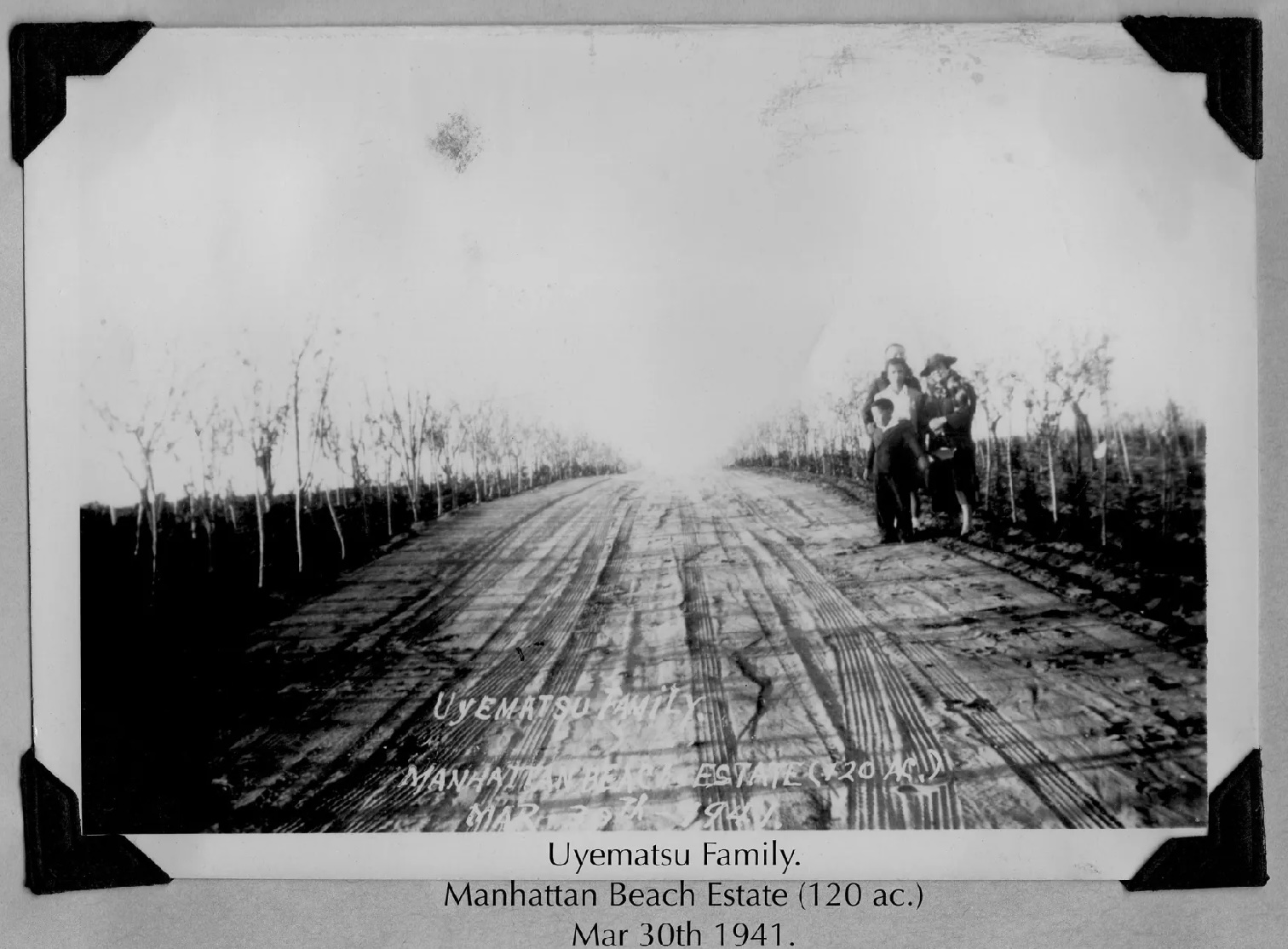
By 1940, he’d established three of his Star Nurseries and was in need of more land. He came across 120 acres for sale  in Manhattan Beach. Enamored with the location, he bought the land for $60,000.

Everything changed after the Pearl Harbor attack on Dec. 7, 1941. The writing was on the wall for Uyematsu even before President Roosevelt issued Executive Order 9066 on Feb. 19, 1942, which called for the removal of all Japanese people from the West Coast.

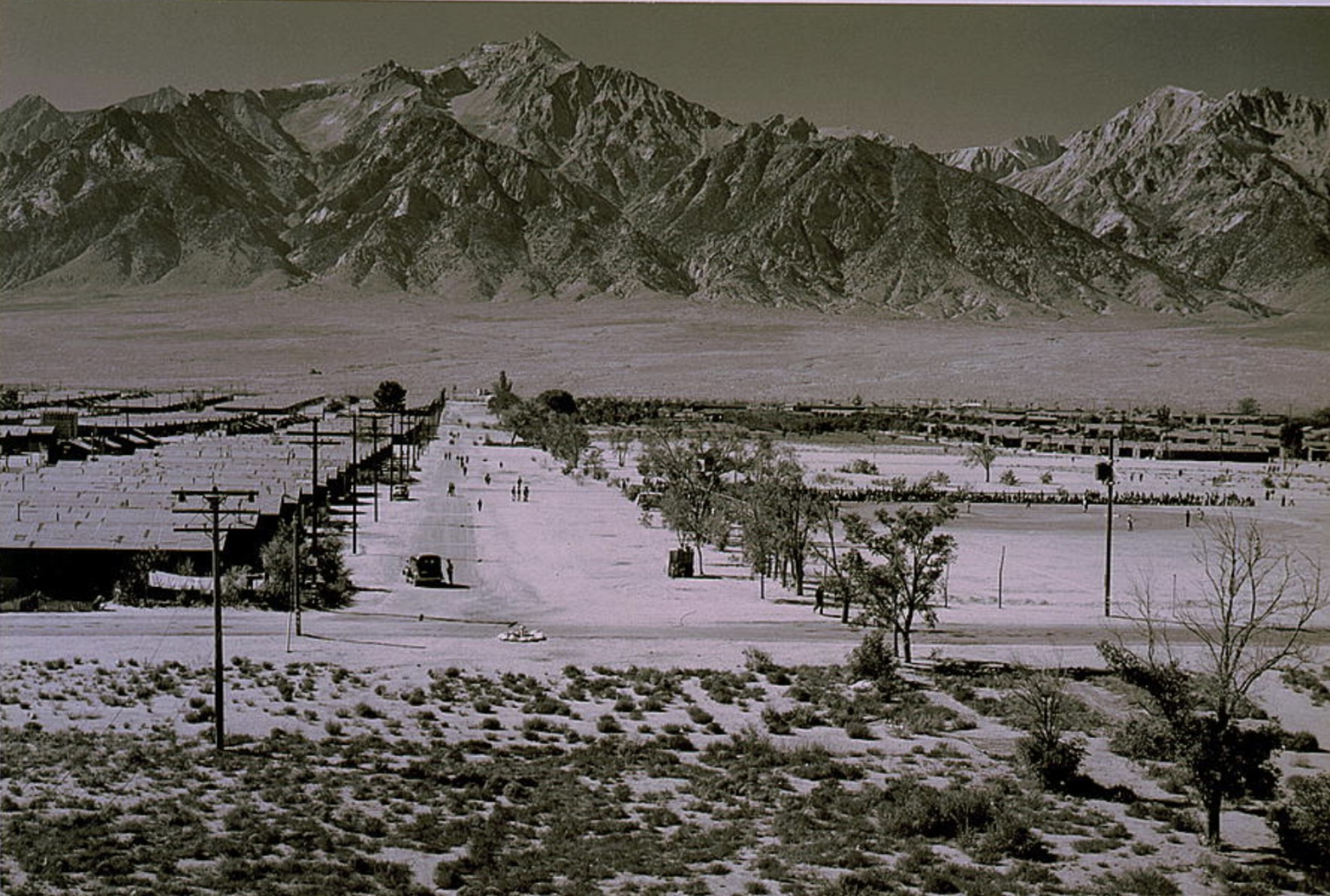
The Japanese-American internment camp at Manzanar in central California in 1943. Photo by Ansel Adams. (Credit: Library of Congress)

Uyematsu and his family ultimately were sent to the internment camp at Manzanar. Before leaving, he sold most of his beloved camellias, 300,000 of them, to collectors Charles Jones of Standard Oil and Los Angeles Daily News publisher Manchester Boddy.

Boddy brought the plants to his Rancho del Descanso estate in La Canada. The rancho would later become Descanso Gardens, and its camellia collection would become world famous.

Uyematsu spent the the next three years imprisoned at the Manzanar camp. While there, he was allowed to truck plants from Los Angeles and establish what became known as Japanese Cherry Park at the camp.

Members of the Uyematsu family on their Manhattan Beach land in 1941. (Courtesy of the F.M. and Kuni Uyematsu Family Collection)

Because of the financial hardship he faced, Uyematsu was forced to sell off pieces of the Manhattan Beach acreage that he loved so much. By the end of the war, the 120 acres had been reduced to the 40-acre site that he sold to the Redondo school district in 1947 for $60,000.

Uyematsu retired from the nursery business in 1950. His family continued to operate it until its final location in Ontario closed in 1988.

Uyematsu continued to work with plants for the rest of his long life. He donated cherry trees to Griffith Park in Los Angeles during the 1950s, but the city failed to keep them up.

Francis Uyematsu died at 96 in Riverside on May 19, 1978. But thanks to the efforts of his family, Chuck Currier and others, his legacy has been kept alive.

2023 film by Maddox Chen, then a Mira Costa High student:

Sources:

Daily Breeze archives, especially “This Japanese American was dubbed Camellia King, until he lost it all,” by Michael Hixon, May 22, 2023.

Los Angeles Times archives.

Rafu Shimpo archives.

Further reading: The History of Mira Costa High School: The First Decade, by Chuck Currier, Mary Uyematsu Kao, et al, Lulu Publishing, 2022.

President Jimmy Carter makes a campaign stop at North High in Torrance in 1980

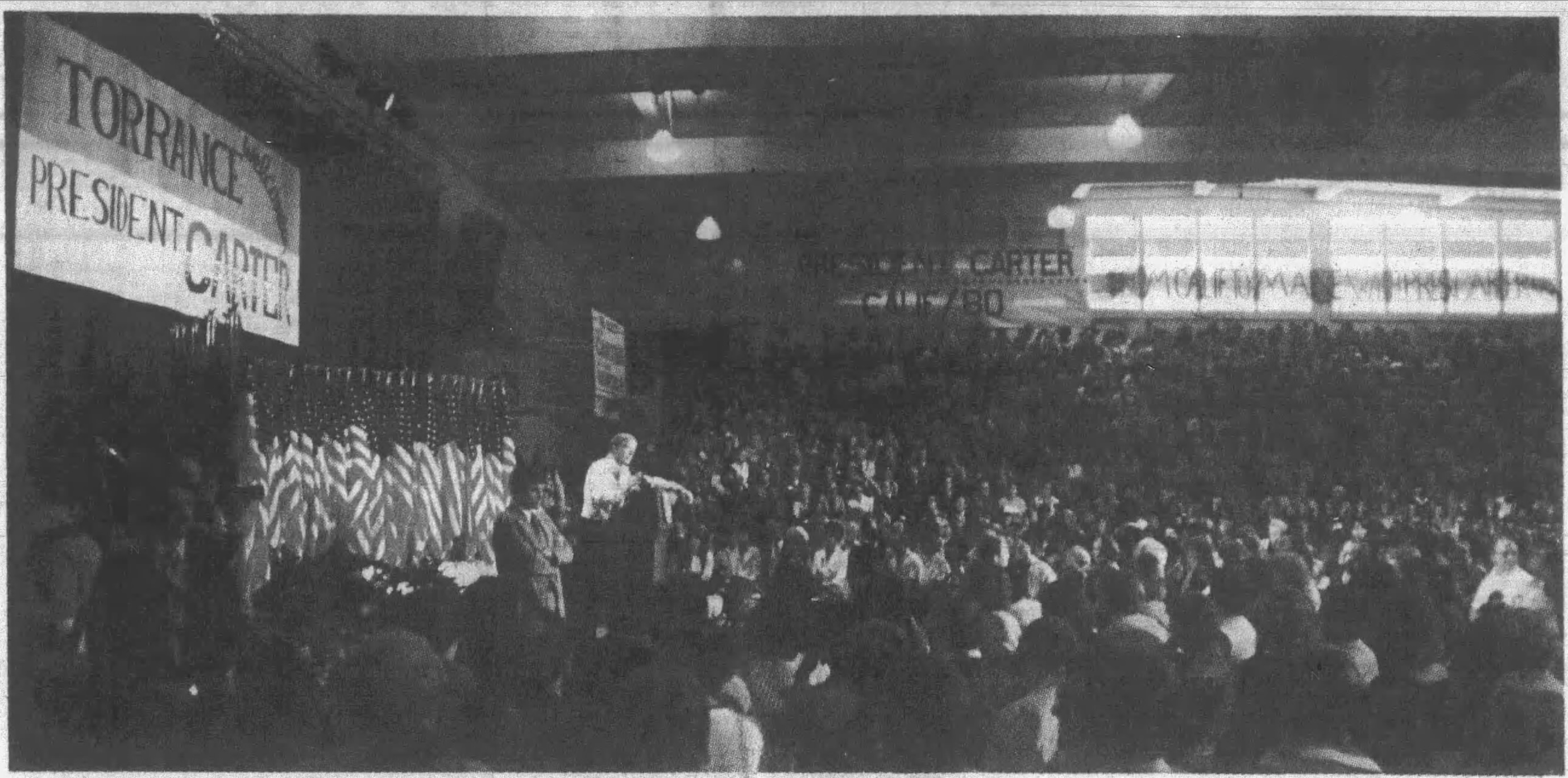
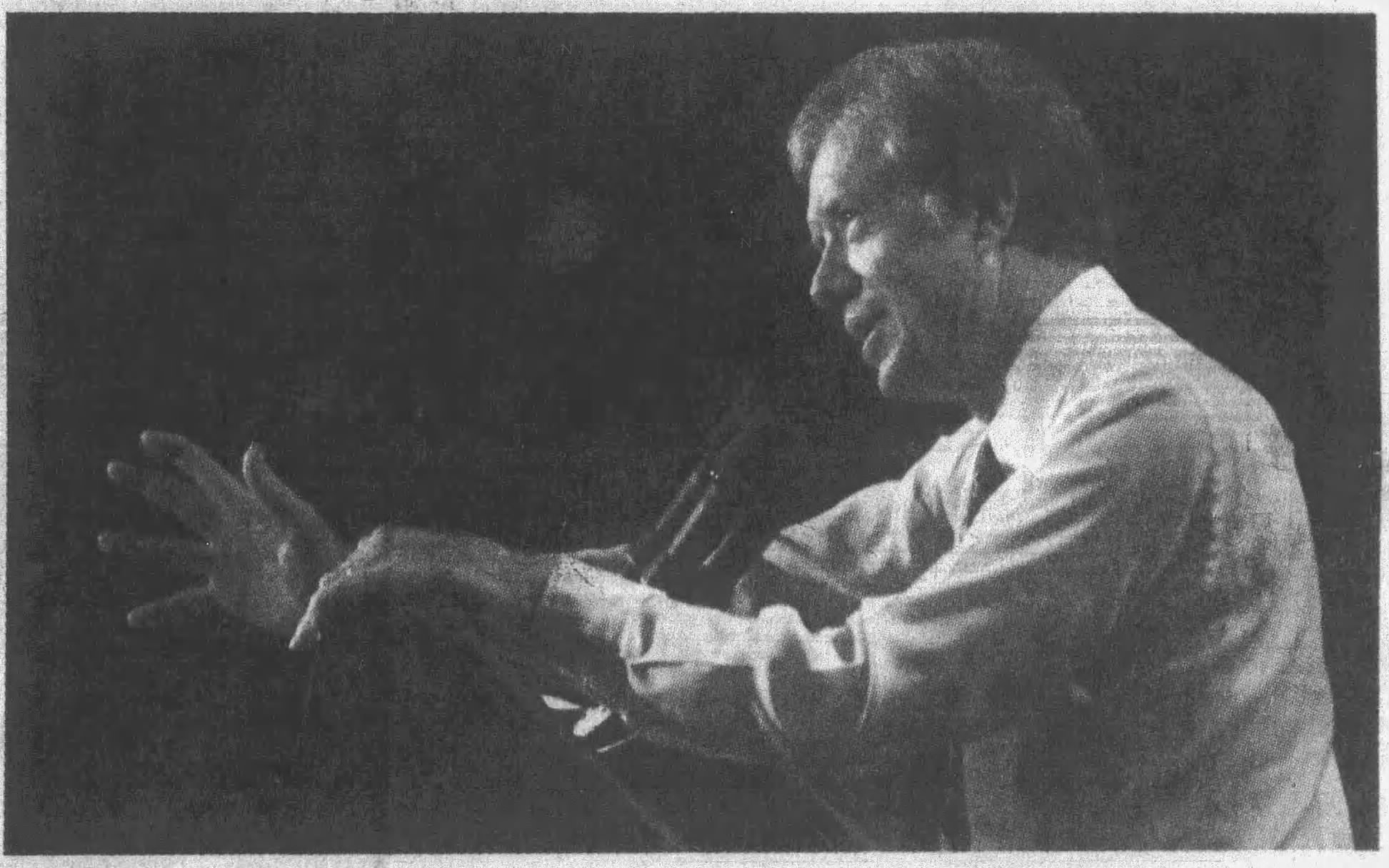
President Jimmy Carter addresses the audience at North High in Torrance on Sept. 22, 1980. (Credit: Daily Breeze staff photo by Jack Wyman)

When President Jimmy Carter’s re-election campaign advisers were planning a key West Coast swing through Washington, Oregon and California in mid-September 1980, they decided to hold the campaign’s 19th Town Hall meeting in Southern California.

The Town Halls were question and answer sessions with rank and file voters on topics of their choosing. Under the format, Carter would make brief introductory remarks, then take questions from the floor for about an hour.

Carter’s advisers sought a venue that was reasonably close to LAX and was in an area filled with diverse middle-class voters. They hoped to win back voters who had gone with Gerald Ford in 1976. Even though Carter won the general election, Ford won the state of California.

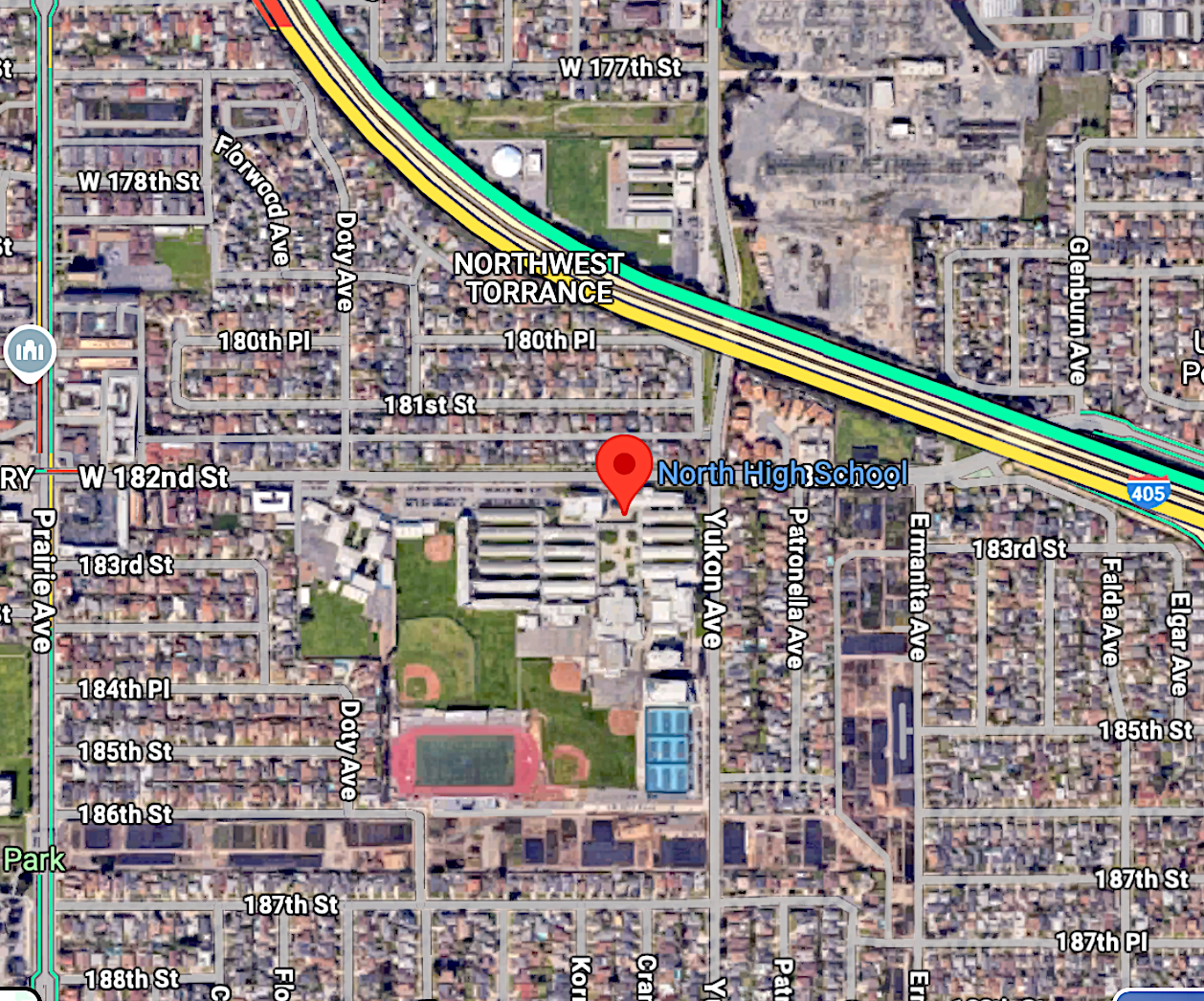
After considering sites from Santa Monica to Long Beach, they decided on North High School at 3620 W. 182nd St. in Torrance for the Sept. 22nd event, which would make him the first sitting U.S. president to visit a Torrance high school  

One reason North High was chosen was its proximity to the 405 Freeway. 2025 image. (Credit: Google Earth)

The North High band immediately began practicing not only “Hail to the Chief,” but also “Georgia on My Mind” and “Sweet Georgia Brown” to play at the event.

School district officials were surprised by the choice of venue. Opened in 1955 in response to the postwar baby boom, North High was considered the most utilitarian of the city’s four high schools.

Very little had been done to improve the school in the 25 years since it had opened. The school’s gym was anything but fancy, and was among the structures scheduled to be improved under a hard-won $6 million facilities upgrade program.

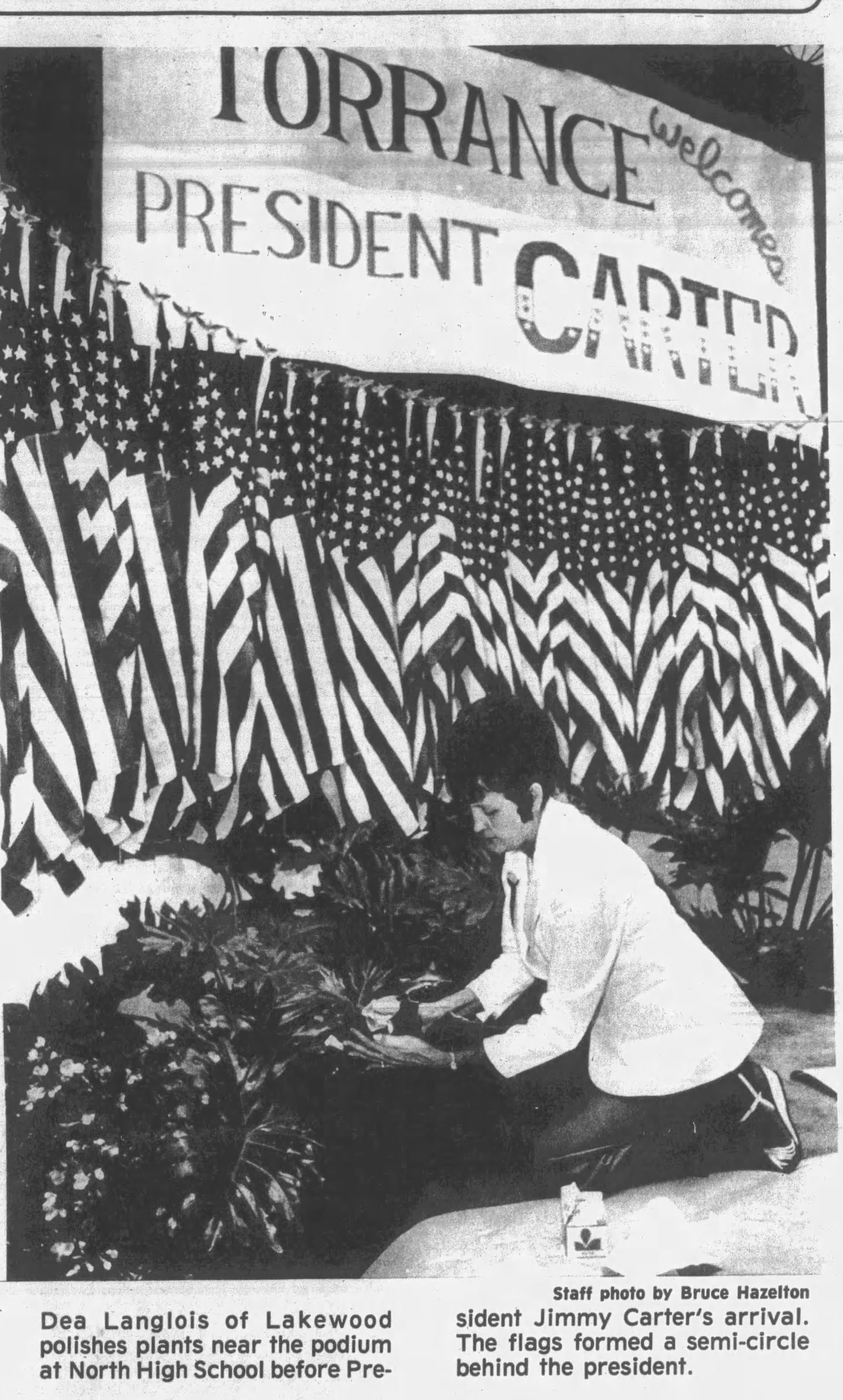
Daily Breeze, Sept. 22, 1980, Page 1. (Credit: Daily Breeze staff file photo by Bruce Hazelton)

The Town Hall came at a key point for Carter. The incumbent president had just withdrawn from a national debate with his Republican foe, former actor and California governor Ronald Reagan, the night before the Torrance appearance, in protest over the participation of third-party candidate John Anderson. The Torrance event was meant to counter criticism that Carter had ducked the debate.

In truth, Carter was in a weakened position in 1980. His inability to free Americans taken hostage by Iran in 1979 made him seem ineffective on foreign policy. A second gas shortage in 1979 had lingering negative economic effects. The U.S. economy also had become beset by “stagflation,” a combination of high unemployment, low economic growth and high inflation.

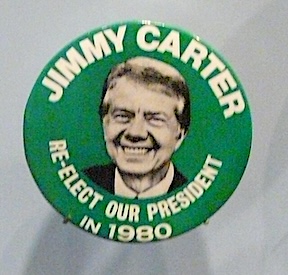
1980 Carter campaign button. (Credit: Wikimedia Commons)

Carter also had to beat back an attempt by Sen. Edward Kennedy, D-Mass., to wrest the  nomination from him at the Democratic National Convention a month earlier. So a lot was riding on events such as the North High Town Hall.

Students were dismissed early on Monday the 22nd ahead of the 1 p.m. event. Tickets for the 1,100 seats for Carter’s appearance had been made available to the community through a lottery conducted by the Daily Breeze. Seventy-five North High students also were chosen to attend, along with 25 city employees and 20 additional city officials.

Dignitaries in attendance included Gov. Edmund G. Brown Jr., former Lt. Gov. Mervyn Dymally, Congressman Glenn Anderson, Supervisor Kenny Hahn, State Treasurer Jesse Unruh, and Torrance Mayor James Armstrong along with the Torrance City Council.

Heavy security accompanied Carter’s motorcade from LAX, including helicopters and police protection. Sharpshooters already were in place on nearby rooftops, plainclothes officers were scattered among the attendees and police covered every inch of the campus.

President Carter delivers remarks to the North High Town Hall on Sept. 22, 1980. (Credit: Daily Breeze staff photographer Bruce Hazelton)

Daily Breeze reporter Rich Connell noted that the event began like a splashy campaign rally, but became more serious with President Carter’s opening remarks. 

The questions from the floor that followed covered a variety of issues and concerns, from the Iranian hostage crisis to taxing Social Security, from fair housing initiatives to Carter’s cancellation of the B-1 bomber program and its effect on the local aerospace industry. He also was asked why he had ducked out on the previous night’s debate.

Attendees from all sides of the political spectrum felt the President gave thoughtfully reasoned answers to their various questions. In a couple of instances where Carter didn’t know the answer to specific questions, he promised to find out and get back to the questioner.

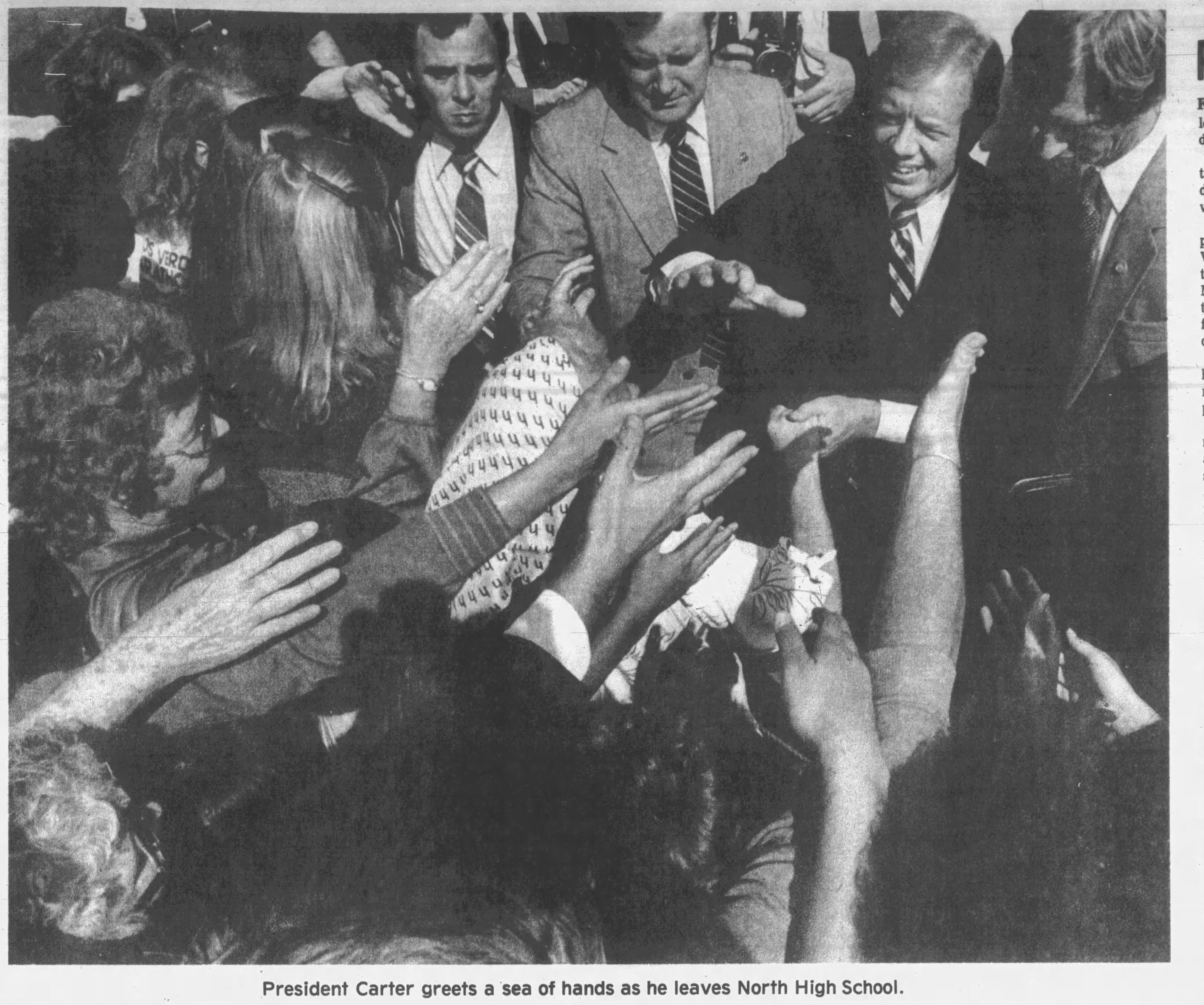
Daily Breeze, Sept. 23, 1980, Page 3. (Credit: Daily Breeze staff file photo)

The whole event ran like clockwork, ending at its scheduled time of 3:25 pm. Carter worked his way through the throngs of people inside and outside the North High gym. Those without tickets had been allowed to watch the arrival and departure of the President.

Carter’s motorcade left Torrance and headed for the next event on the campaign schedule, a posh Democratic fundraiser in Beverly HIlls that evening.

Carter’s re-election campaign hoped to gain ground against Ronald Reagan through appearances such as the one at North High, but Reagan’s home-state strength proved to be too strong.

The charismatic Reagan and his running mate George H.W. Bush carried the state by 17 percentage points in the general election, and soundly defeated Carter and his running mate Walter Mondale by nine percentage points in the national balloting that won him the presidency.

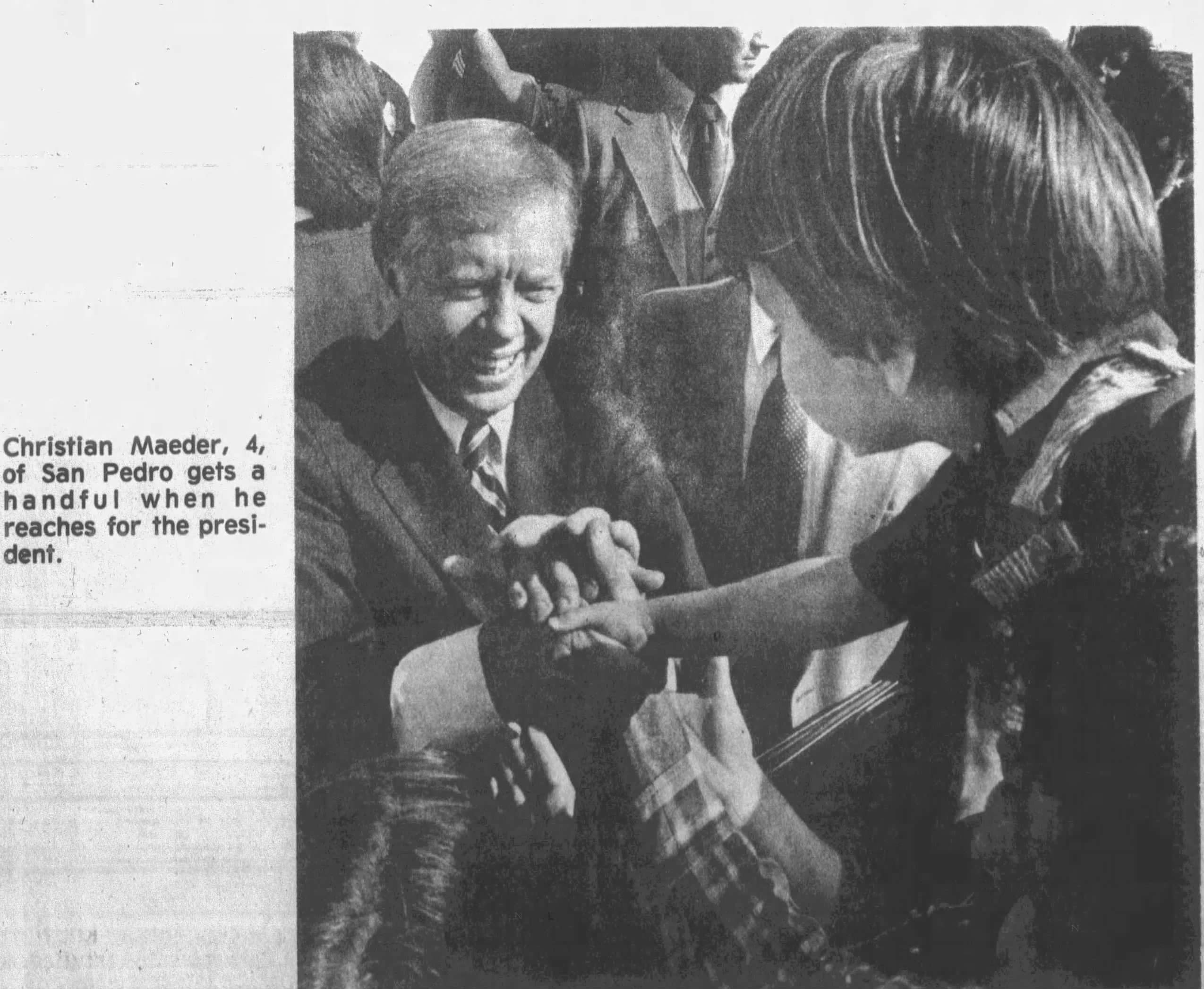
Daily Breeze, Sept. 23, 1980, Page 3. (Credit: Daily Breeze staff file photo)

Sources:

Daily Breeze archvies.

Los Angeles Times archives.

Wikipedia.

Reader comments:

I read with great interest your account of Jimmy Carter’s town hall gathering at North High some 45 years ago. Conspicuously absent from your account was the large number of protesters on 182nd St, in front of the administration building. I was there, and gladly so. There was a lot of noise, some fighting, and a memorable day. 

The “specific questions”: I remember one of them very distinctly, as it was asked by one of my school buddies from North.

John Cavanaugh

——————–

Your story is timely, I attended that meeting and was thinking about what impressed me most just a few weeks ago.  It was the security at the entry door.  The Secret Service agent asked me several inane questions as he stared at the Rollei flash unit attached to my 35mm SLR.  I offered to open the battery tube which looked like a stick of dynamite, but he declined.  My answer to his last question resulted in his reply, “with that and a quarter I can get a cup of coffee”.  I did so want to give him a quarter. Thanks for the flashback.

Lynn Lindhurst

South Bay History blog on hiatus

Hi everyone,
Just a quick note to let you know I’ll be taking a little time off from the blog while I recover from surgery. Everything went well, and I’m on the mend — I just need a bit of rest to get back to full strength. Thanks so much for your patience and support. I’m hoping to return by Friday, June 27th.

Sam Gnerre

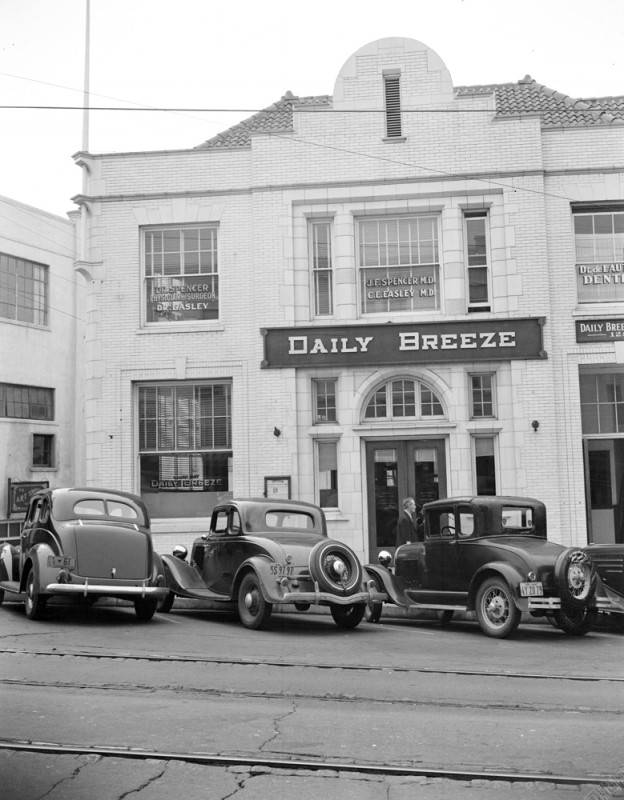
Exterior view of the South Bay Daily Breeze newspaper office on Pacific Avenue, Redondo Beach, on February 9, 1938. Doctors’ and dentists’ offices are on the second floor. (Credit: Los Angeles Public Library Photo Collection)

Wartime sabotage was a major concern at defense plants, key infrastructure locations

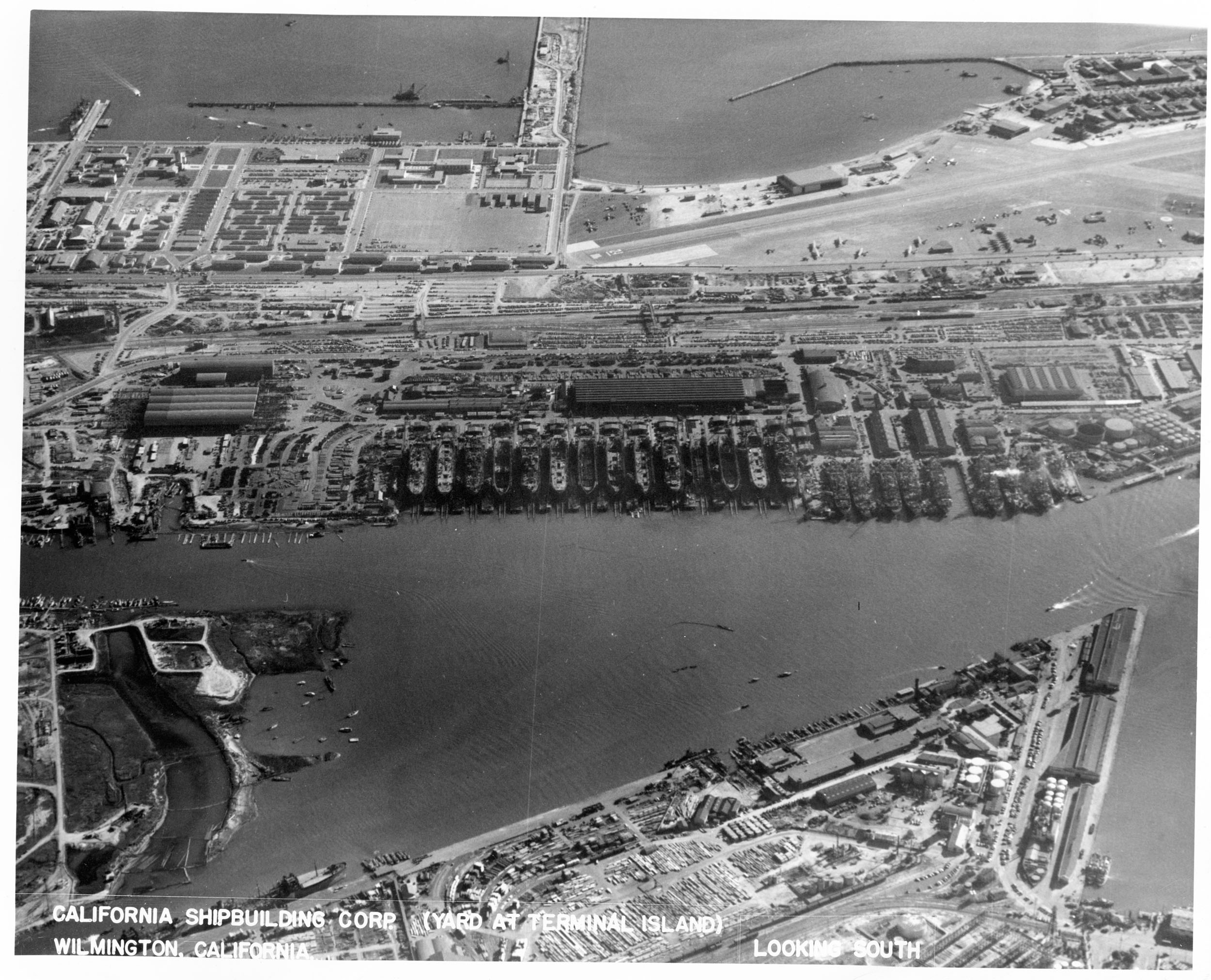
Ships under construction are lined up at the California Shipbuilding Corporation, center, on Terminal Island in 1944. (Credit: U.S. Navy)

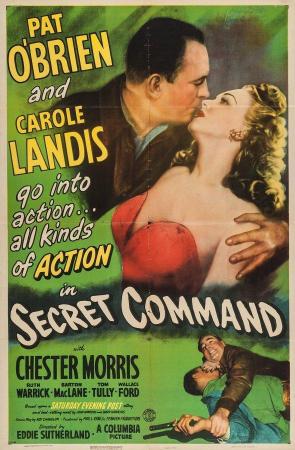
A recent viewing of the admittedly obscure 1944 film “Secret Command,” during which Pat O’Brien goes undercover in a defense plant to expose Nazi saboteurs, inspired this look at how the fear of sabotage was a major concern during the 1930s and 1940s.

The film is a routine thriller, but is of historic interest. Much of it was filmed at the California Shipbuilding Corp., a wartime defense plant on Terminal Island, giving the action scenes an authentic feel. It may not rise to the level of Alfred Hitchcock’s similar “Saboteur” from 1942, but it’s worth seeing.

By the time “Secret Command” was released, war-weary Americans had been well-schooled on the dangers of foreign infiltrators attempting to affect the outcome of the war by attacking and disabling key links in the defense industry’s supply chain.

Though the U.S. would not officially enter World War II until after the Pearl Harbor attack on Dec. 7, 1941, the country had been gearing up for war, and, through initiatives such as the Lend-Lease Act, providing weapons and supplies for the Allied forces already at war.

The German government was all too aware of this, and made the decision to try to stymie the Stateside supply line. Reports of active foreign saboteurs in the U.S. began to increase in the years following Hitler’s ascension to power in 1933. 

By the late 1930s, U.S. government authorities had begun taking steps to protect vital links in the supply chain. These included guarding such obvious targets such as shipyards and aircraft plants, and secondary ones such as oil and water pipelines and power plants.

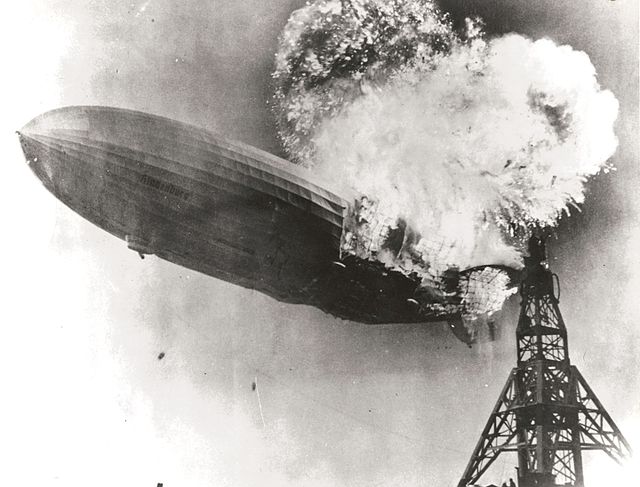
Justifiable government paranoia also increased. Sabotage began to be suspected for every man-made disaster that occurred, including the Hindenburg airship fire and crash in New Jersey in 1937. 

Sabotage was not responsible for the May 6, 1937 Hindenburg explosion and fire. (Credit: Wikimedia Commons)

Closer to home, an October 1940 explosion that killed two employees at the Torrance oil refinery, then owned by General Petroleum Co., immediately was investigated for sabotage. The fears were allayed when no such evidence was found.

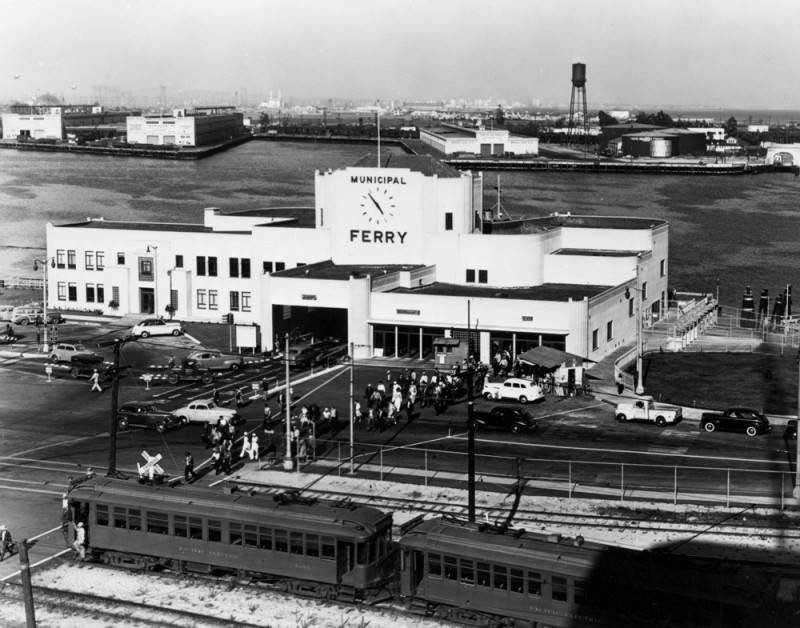
In September 1941, fears were raised that Terminal Island ferry boat engine failures had been caused by sabotage. The ferry service, later replaced by the Vincent Thomas Bridge, carried hundreds of workers to defense industry jobs. An investigation proved the fears unfounded.

Exterior view of Municipal Ferry building in 1944 looking towards Terminal Island, rear.The Pacific Electric Railroad also stopped close to the ferry building. (Credit: Los Angeles Public Library Photo Collection)

Increasingly violent labor disputes and strikes during the pre-war era also muddied the waters. A 1941 strike by a CIO (Congress of Industrial Organizations) union at the North American Aviation plant near then-Los Angeles Municipal Airport was construed by some as sabotage. 

President Roosevelt felt compelled to send in military troops to guard the factory during the dispute, but no evidence was offered that it was a deliberate sabotage attempt.

Calls to protect American assets from sabotage became more strident during 1941. According to the Daily Breeze, U.S. Navy Captain Richard Coffman told Los Angeles civil defense officials at a May 23 meeting that the L.A. area was very vulnerable to attack, especially the Harbor Area’s shipyards. 

He also noted that 40 percent of America’s aircraft manufacturing operations were located within a 40-mile radius in Los Angeles County.

Sabotage warning notice intended for use in defense plants during World War II. (Credit: Wikimedia Commons)

Japan’s Pearl Harbor attack and our subsequent entry into World War II made protecting American assets from sabotage even more of a life-and-death matter. 

Tensions were heightened by the Christmas Eve 1941 torpedo attack by a Japanese submarine that damaged the steamship Absaroka in the waters off Point Fermin. Civilian and military guards were posted at shipyards and other defense plants in the Harbor Area starting in January 1942.

The hysteria reached a peak at “The Battle of Los Angeles” on the night of Feb. 24, 1942, when anti-aircraft guns lit up the skies, triggered by an unknown source (perhaps a weather balloon) perceived to be invading Japanese aircraft. No invasion or trace of air attackers was determined.

Still, the presence of a large Japanese settlement on Terminal Island was considered a grave security danger. In February 1942, residents were rounded up and sent to internment camps and the village was leveled.

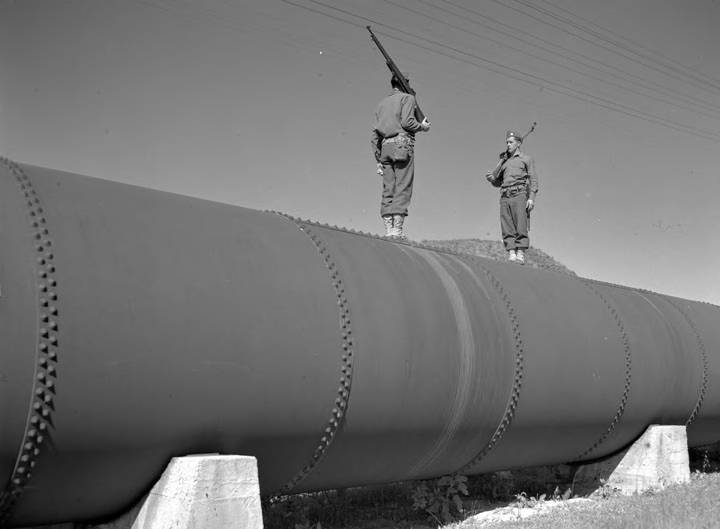
Vital points of the municipal water and electric systems are guarded against sabotage as two members of the California National Guard meet at the boundary of their posts along the Los Angeles Aqueduct in April 1942. (Credit: Historical Photo Collection of the Department of Water and Power, City of Los Angeles)

In April 1942, the Los Angeles Department of Water and Power began using soldiers from the California National Guard to guard its utility pipelines and power plants in the Los Angeles area from potential saboteurs. Troops kept watch along the Los Angeles Aqueduct and at dams and power plants operated by the DWP.

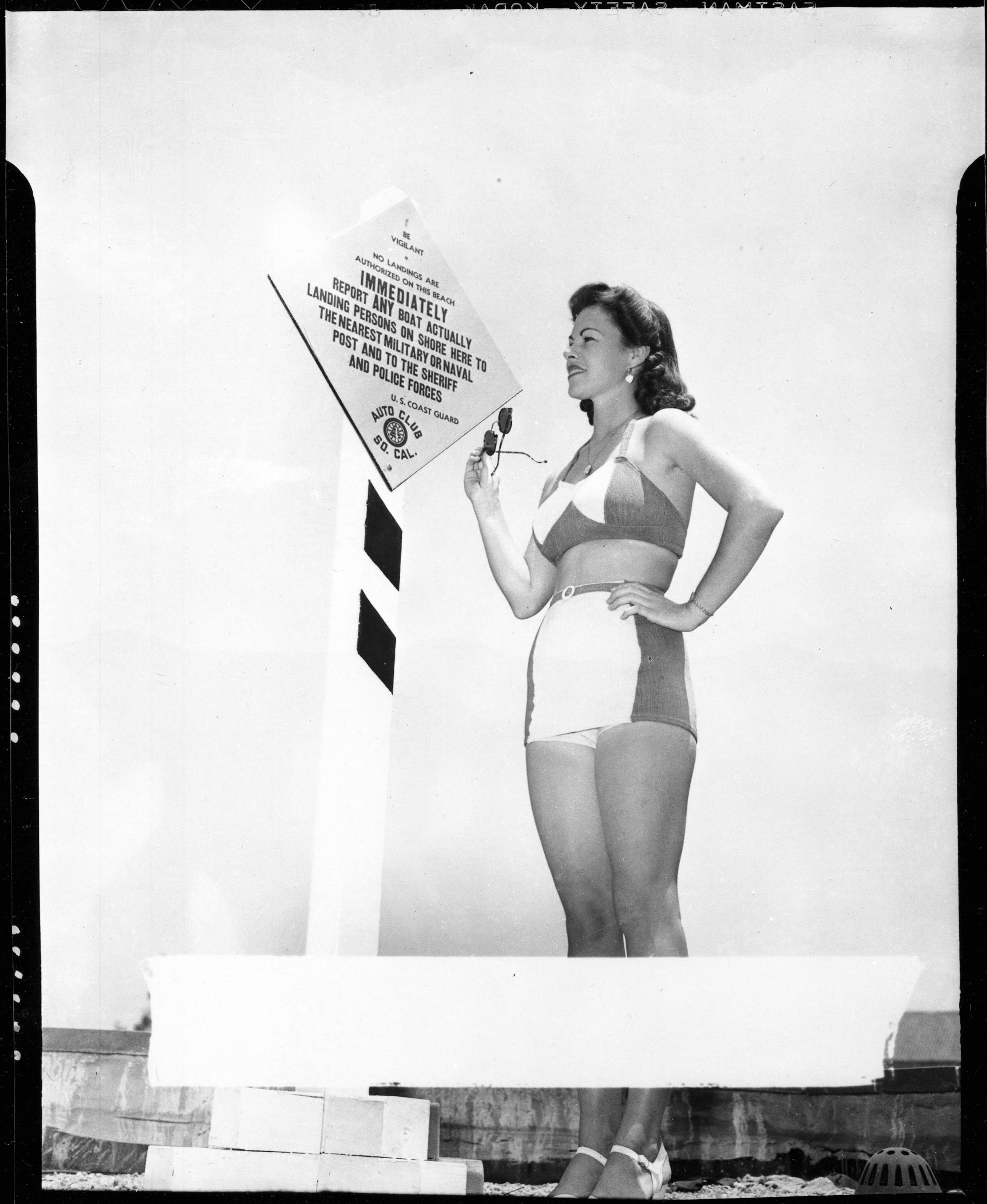
Vigilance at Los Angeles County beaches also increased. While the beaches were still open to the public, hours were restricted, lights  or fires after sundown were banned, and visitors were asked to report any vessels landing on beaches from the sea.

Unathorized landings turned out to be a greater problem on the East Coast. In June 1942, two separate incidents occurred where German infiltrators were apprehended after submarines dropped them off on beaches in New York and Florida with plans for sabotaging defense locations. 

Meanwhile, back at the defense plants, the government and plant owners redoubled their calls for hyper-vigilance concerning sabotage through posters, notices and regular meetings describing the methods and identifying the warning signs of potential saboteurs. The public also was well-advised to be on the lookout as well. The campaigns lasted until the end of the war in 1945.

A woman in a swimsuit stands next to a beach sign posted by the Auto Club of Southern California. The sign warns people to report anyone landing on the beach to the military or police. It reads: “Be Vigilant | No Landings Are Authorized On This Beach | Immediately Report Any Boat Actually Landing Persons On Shore Here To The Nearest Military or Naval Post And To The Sheriff And Police Forces.” (Credit: Huntington Library via Calisphere)

Sources:

Daily Breeze archives.

“History: Nazi Saboteurs and George Dasch,” FBI website.

Los Angeles Times archives.

San Pedro News Pilot archives.

World War II-era anti-sabotage poster. (Credit: Wikimedia Commons)

Is this your new site? Log in to activate admin features and dismiss this message
Log In