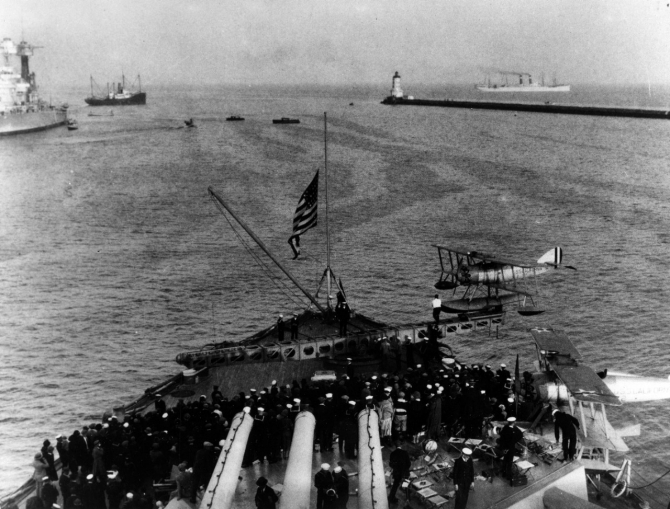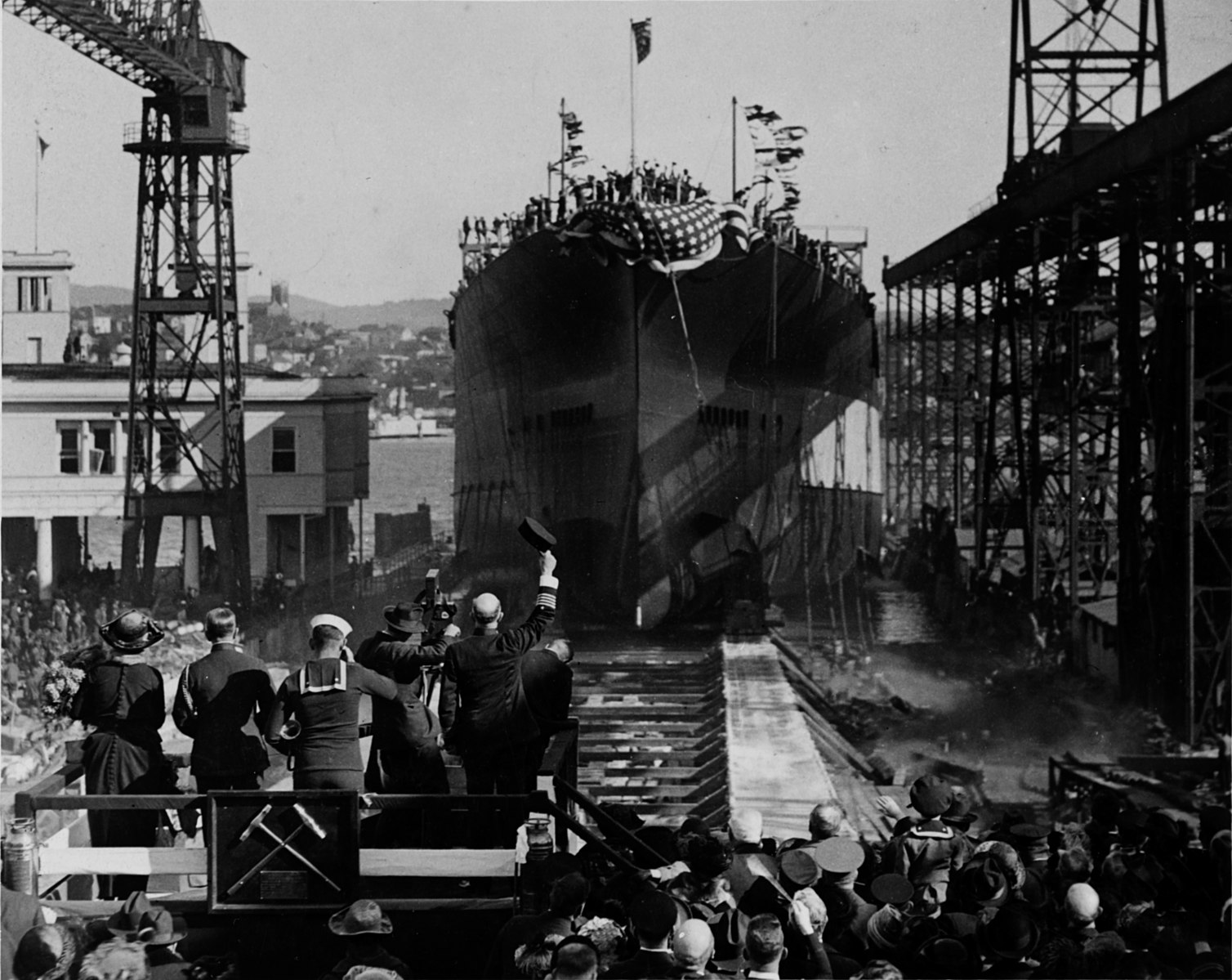
Seven U.S. Navy vessels have been named the USS California since 1867. Perhaps the most famous is the fifth one, the Tennessee-class battleship given the identification number BB-44 (“Battleship #44”) by the Navy.
The ship got its official launch on Nov. 20, 1919 in Vallejo, California at the Mare Island Navy Yard where it was built. The state-of-the-art vessel was officially commissioned on Aug. 10, 1921, with Capt. Henry J. Ziegemeier serving as its first commander.
The California was 624 feet long, with a top speed of 24 knots (27.6 mph). She was armed with four separate batteries of guns, and had two torpedo tubes. Her crew consisted of 57 officers and 1,026 enlisted men.
Though not an aircraft carrier, the California carried three floatplanes capable of being launched from pontoons, once they were dropped in the ocean. In 1926, a flight catapult for launching aircraft was installed on one of her gun batteries.
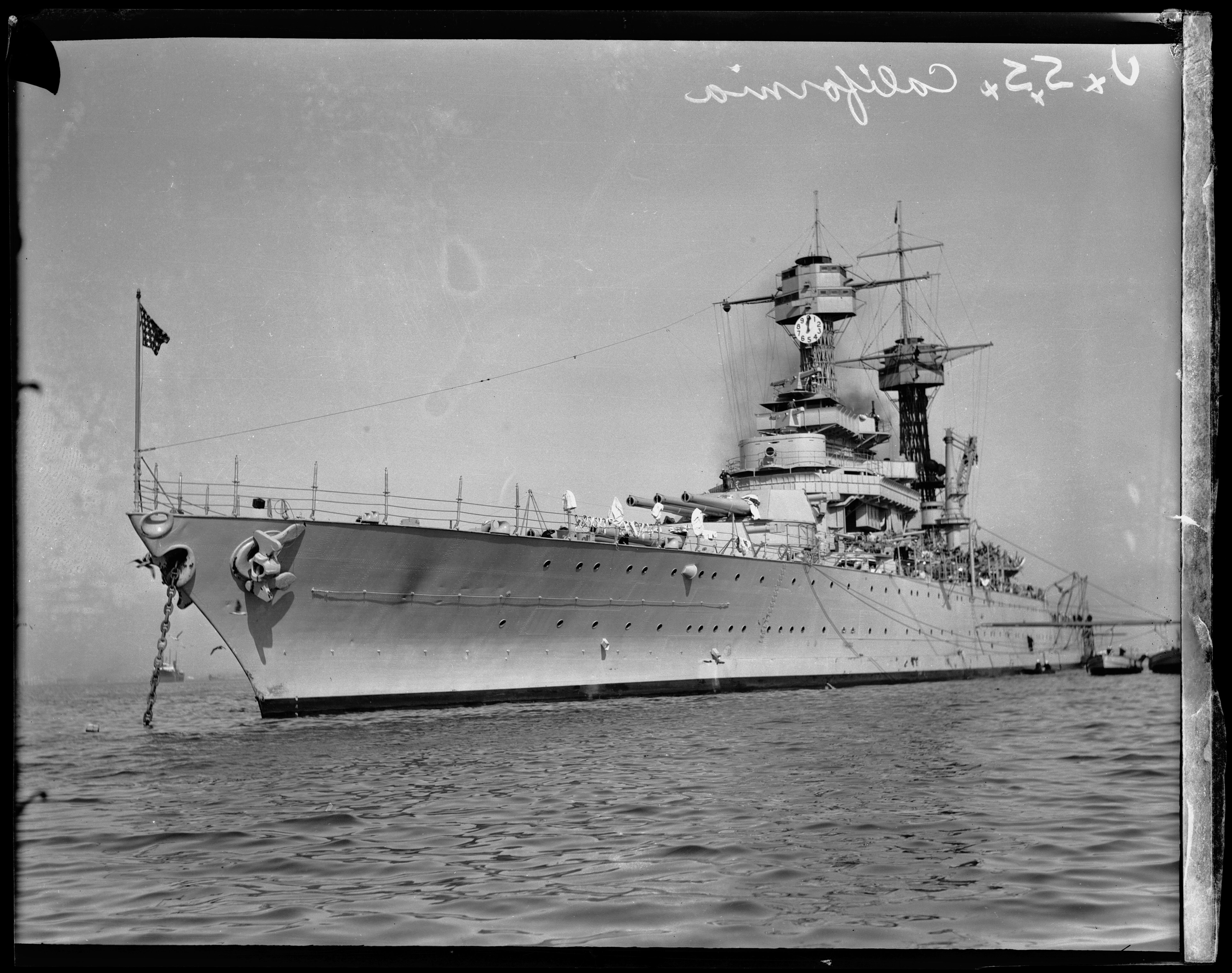
The versatile ship served as the flagship for the Pacific Fleet from 1921 to 1940. The San Pedro-based portion of the Fleet, also known as the Battle Force, consisted of battleships, aircraft carriers and heavy cruisers. San Diego’s growing naval base hosted the rest of the fleet, including light cruisers, destroyers and submarines.
Originally, the submarine base had been located in San Pedro until the Navy decided in January 1923 to close that facility and move the subs to a new base in San Diego.
The Fleet in general and the California in particular played major roles in San Pedro community life during this era. Social events were held regularly onboard the ship, with dances and balls being particularly popular.
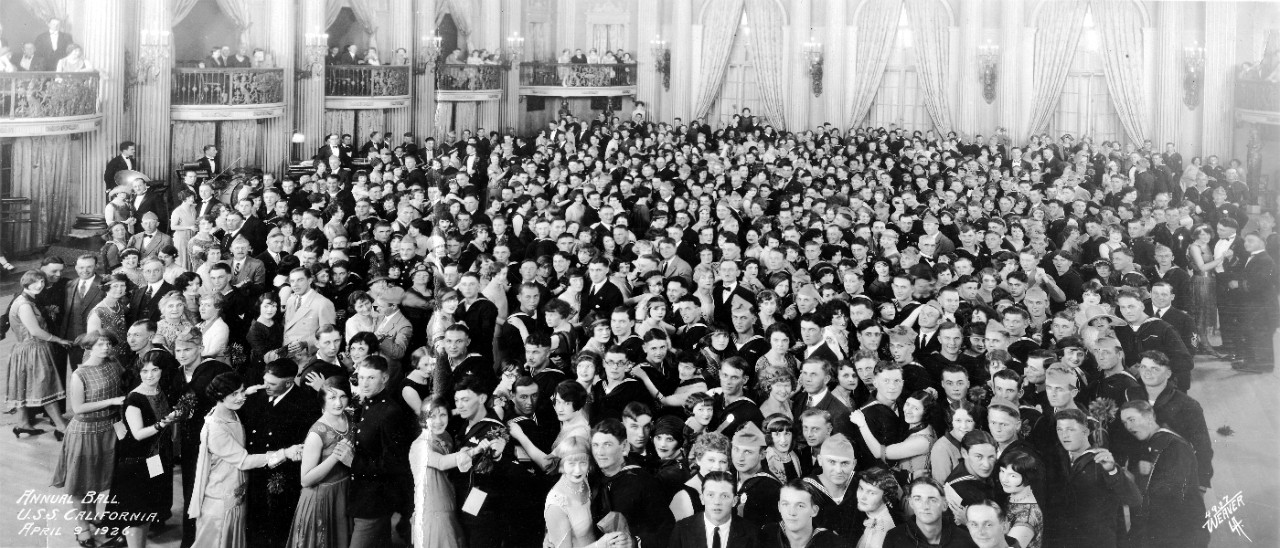
A farewell-to-the-Fleet ball drew 3,500 people in November 1923. In the midst of the Depression ten years later, another ball attracted 3,000 members of what the San Pedro News Pilot described as the “Southland elite.”
The ship also hosted tours for Boy Scouts and other community groups. Practicing Mason seamen on board regularly attended meetings at the Masonic Temple in San Pedro.
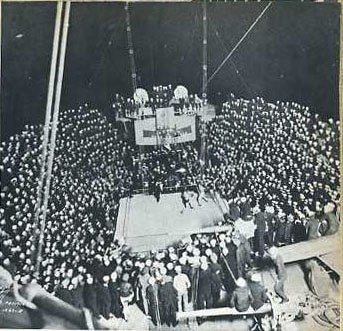
Seamen from the California also participated in area amateur sporting events, including the annual Pacific Fleet Meet track and field competition held at Long Beach Poly High School and motor boat races sponsored by the California Yacht Club.
The California also fielded its own baseball and football teams, which played in the area semipro leagues that were so popular at the time. The California also had a crew squad whose oarsmen traveled far and wide to compete.
Unfortunately, world events would bring an end to both the military and community activities involving both the California and the rest of the Pacific Fleet based in San Pedro.
In early 1940, alarmed by reports of the growth of aggressive Japanese expansion in Asia, President Franklin Delano Roosevelt and his military advisors in Washington, D.C. looked to consolidate U.S. naval power in the Pacific as a deterrent to a Japanese invasion.
They wanted to move the Pacific Fleet to Hawaii, specifically to the naval base at Pearl Harbor. Admiral James O. Richardson, the Pacific Fleet’s commander, strongly disagreed with the decision. Richardson felt that the move would leave the Fleet too vulnerable to a Japanese attack.
Richardson felt strongly enough about his position to go to Washington, D.C., to protest the move. For his troubles, he was quickly removed from his role and replaced by the more amenable Admiral Husband E. Kimmel.
The move to Hawaii was made during the spring of 1940, and Kimmel was appointed head of the Fleet at its new location in Pearl Harbor.
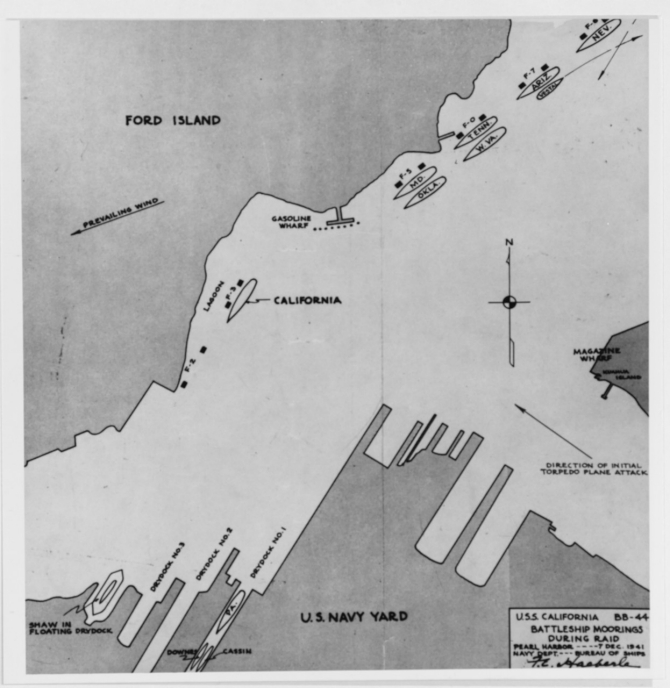
Shortly before 8:00 a.m. on Sunday morning, Dec. 7, 1941, the USS California became the first ship to be attacked at Pearl Harbor. The ship took incoming fire from two Japanese fighter planes. In addition to the strafing, two of the Japanese planes dropped torpedoes in the water.
They did their job, striking the broadside of the vulnerably positioned California at 8:05 am with devastating impact. A total of 104 men were killed and 61 more were wounded in the attack.
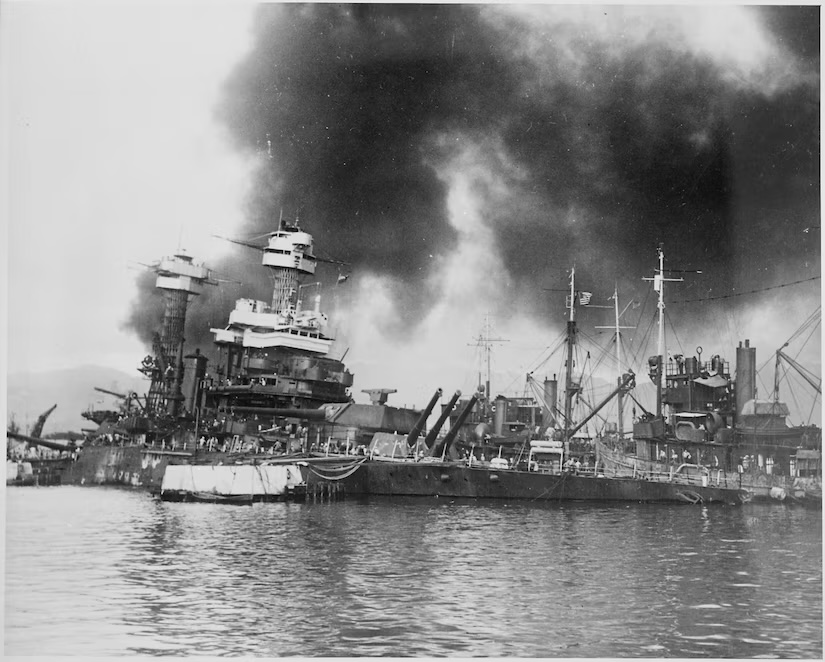
The heavily damaged vessel — one of the torpedoes ripped a 40-foot-long hole in its hull — listed and finally sank into the harbor.
But all was not lost. The Navy determined that the ship was salvageable, and spent the next couple of years rehabilitating her. She was refloated on Oct. 10, 1942. After extensive repairs and modernization, the California returned to action in the Pacific Theater in 1944, seeing action in several battles before the end of the war.
Ultimately, the ship was decommissioned on Feb. 14, 1947. She never returned to active service, but remained listed in the Navy’s inventory until being removed on March 1, 1959. On July 10th of that year, the California was sold to the Bethlehem Steel Co. for scrapping. Her long journey had finally ended.
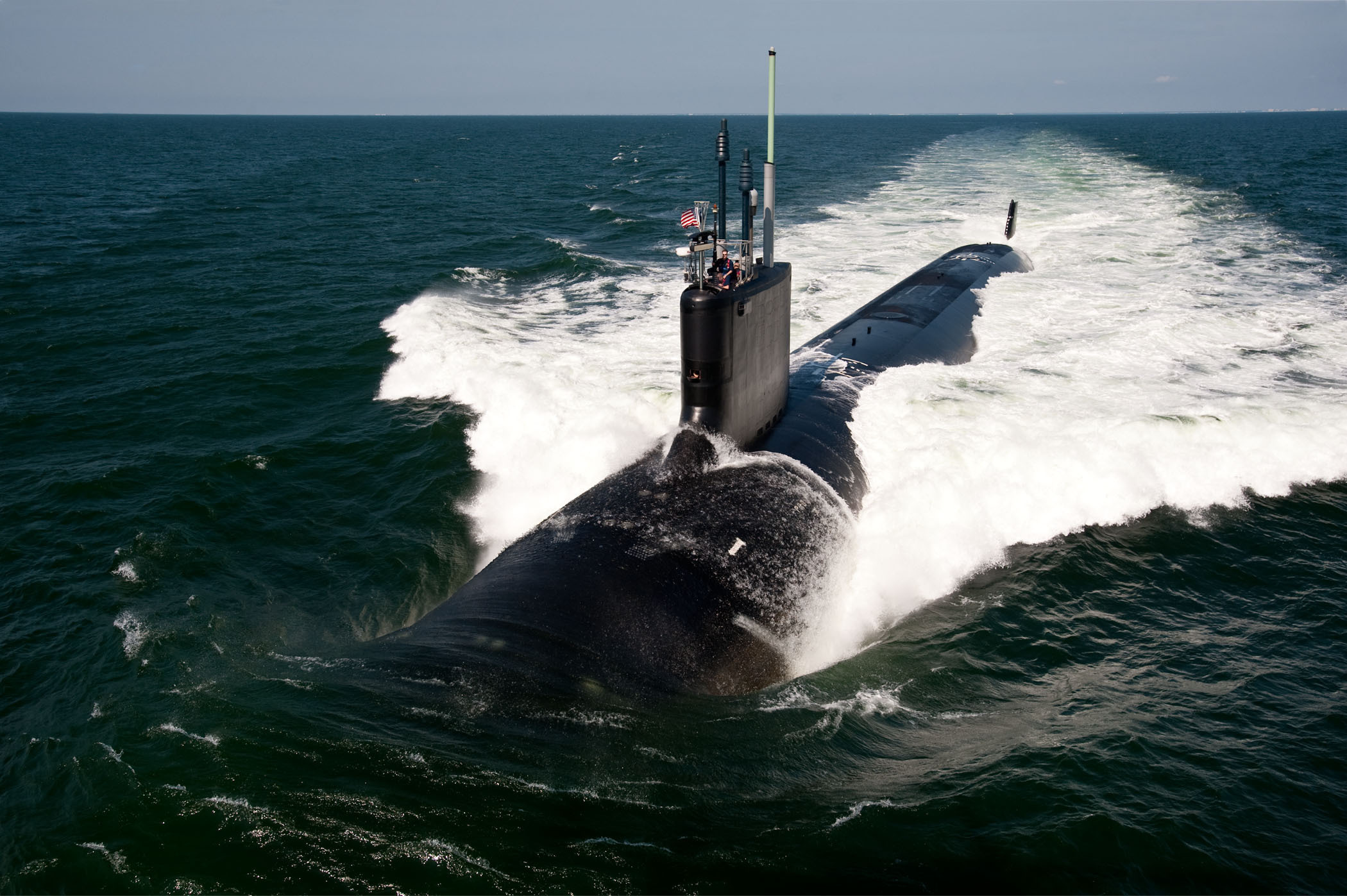
The seventh and most current bearer of the name USS California is a submarine commissioned by the U.S. Navy in 2011. Still active, it’s the first submarine ever named after the state.
Sources:
National WWII Museum website.
Naval HIstory and Heritage Command website.
San Pedro News Pilot archives.
U.S. Department of Defense website.