
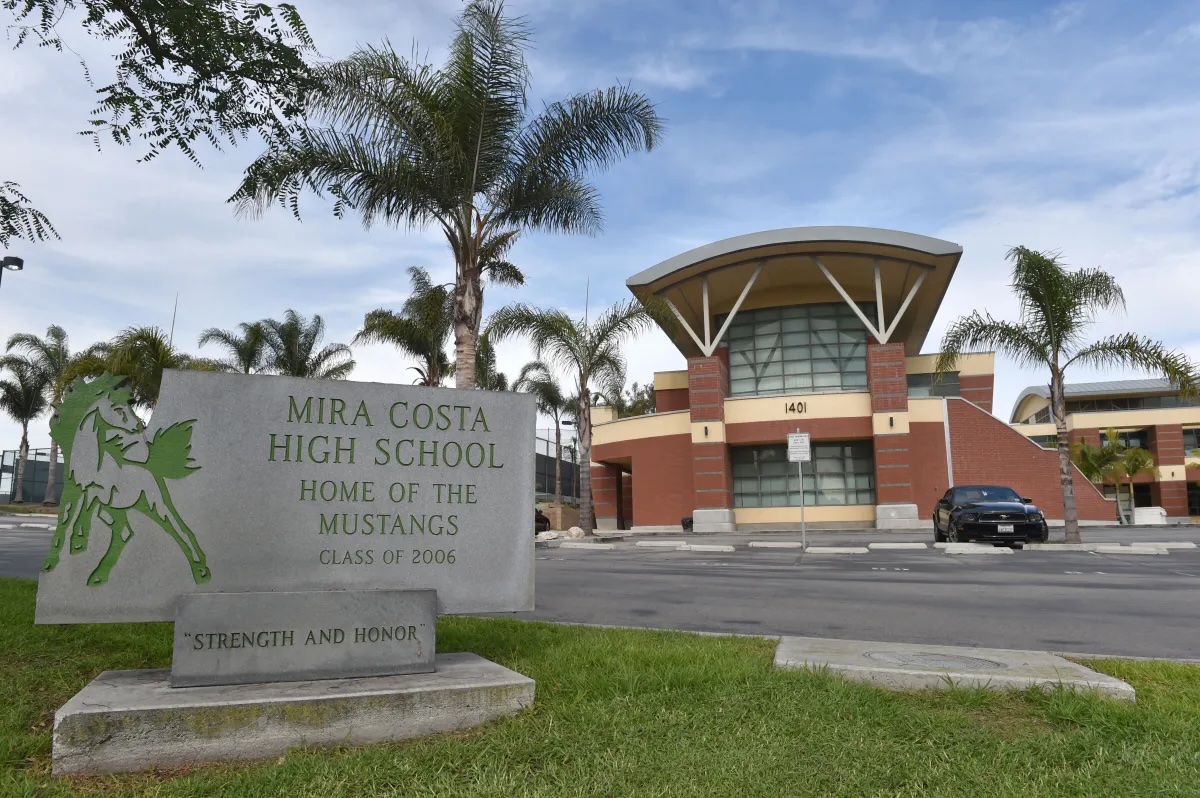
The sale of 40 acres of land to the Redondo Union High School District became final on Feb. 18, 1947. The location on Gould Ave. a few blocks east of Pacific Coast Highway was ideal for the district’s second high school, which was needed to accommodate the rapidly rising postwar enrollment at Redondo Union High.
The district had budgeted $100,000 for the purchase, but saved some money when the purchase price came in at $60,000.
The seller’s name was Francis Miyosaku Uyematsu, a Japanese farmer known as the “Camellia King.” But his story wouldn’t be told fully until decades later.
Planning for the new school began in earnest over the next few months. In January 1949, the district selected the name “Mira Costa” for the school, Spanish for “view of the coast,” from 85 suggestions from the community.
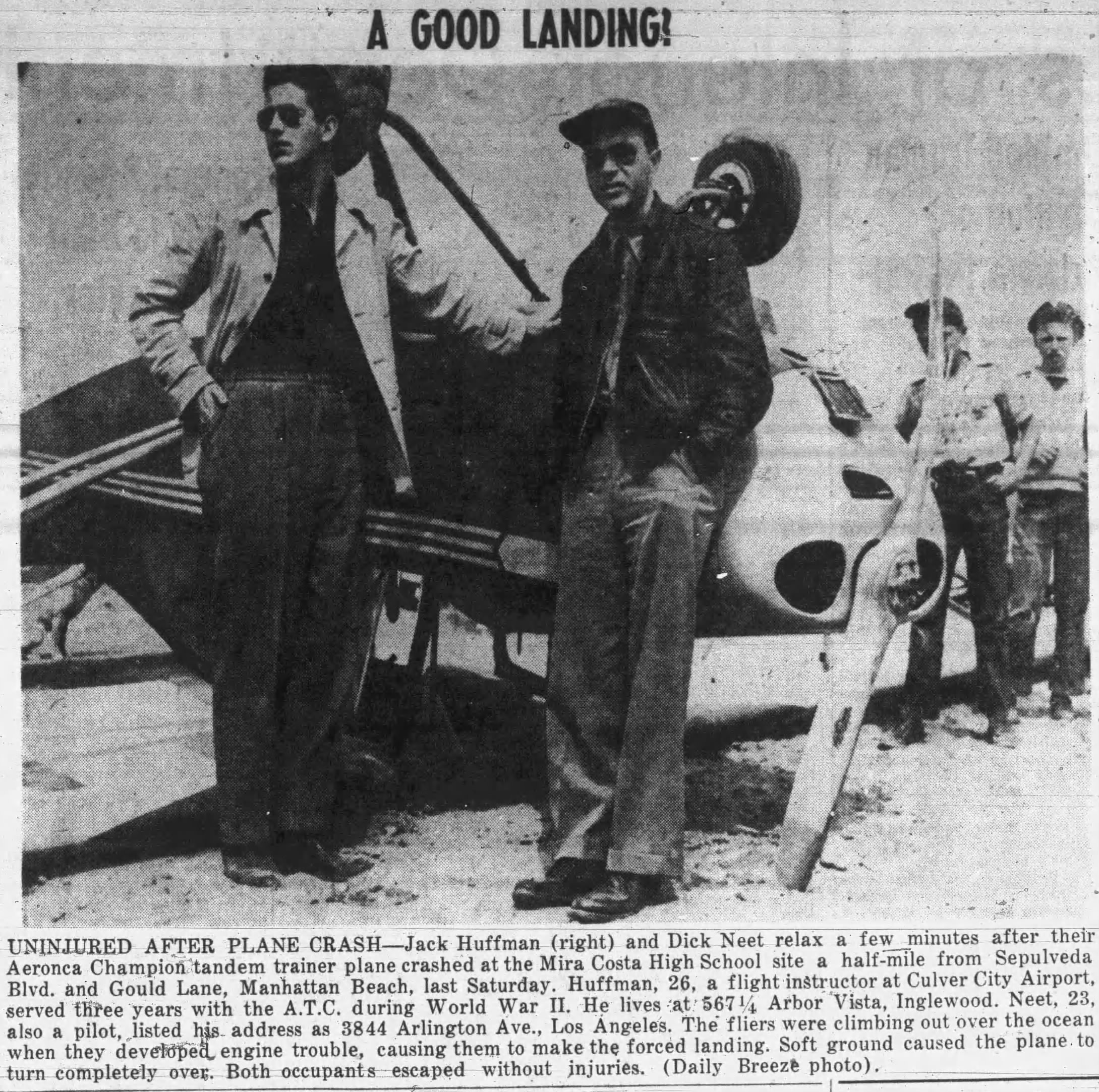
By that March, the school district had secured $1 million in funding for the new school, the bulk of which came from a state grant. By then, grading work was well underway at the site. In fact, it was flat enough to accommodate an emergency crash landing by a private plane on March 19.
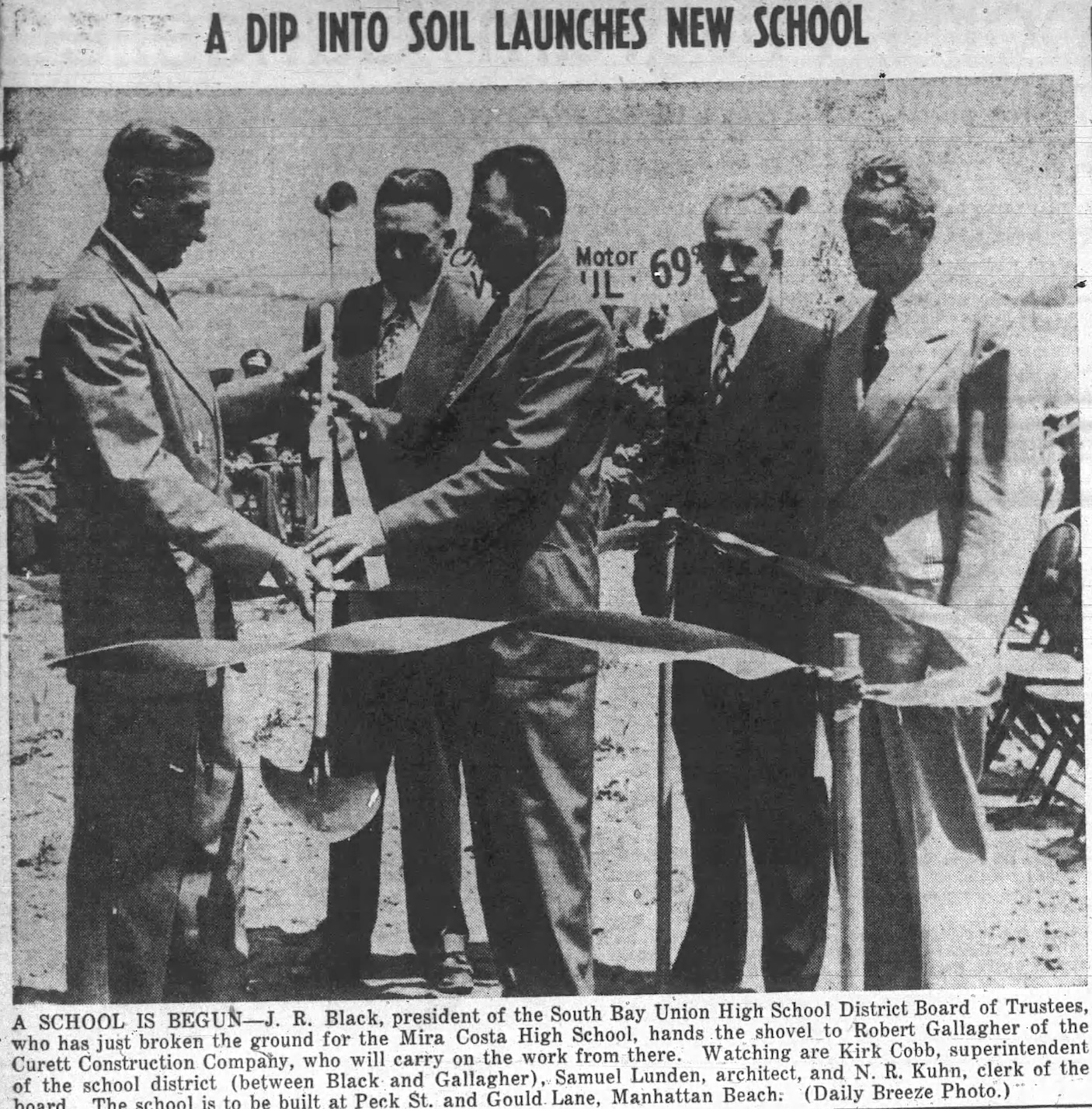
On May 24, 1949, school district officials and a representative from the Curett Construction Co., the firm selected to build the school, participated in the official groundbreaking ceremony for Mira Costa High.
After that, construction continued at a rapid pace, helped by a $1.49 million bond issue passed by voters on March 28, 1950. It provided funds for the addition of a girl’s gymnasium, cafeteria and a health administration unit to the school.
Mira Costa High was completed in time for the start of the fall 1950 term. The school’s first principal, Lloyd Waller, welcomed approximately 700 students to introductory assemblies on Sept. 7, a few days before the school’s official first day of classes on Sept. 11, 1950.
Some 71 years later, in October 2021, thanks to the efforts of Mira Costa alum and retired faculty member Chuck Currier and members of the Uyematsu family, a memorial plaque was dedicated on school grounds honoring Francis Uyematsu.
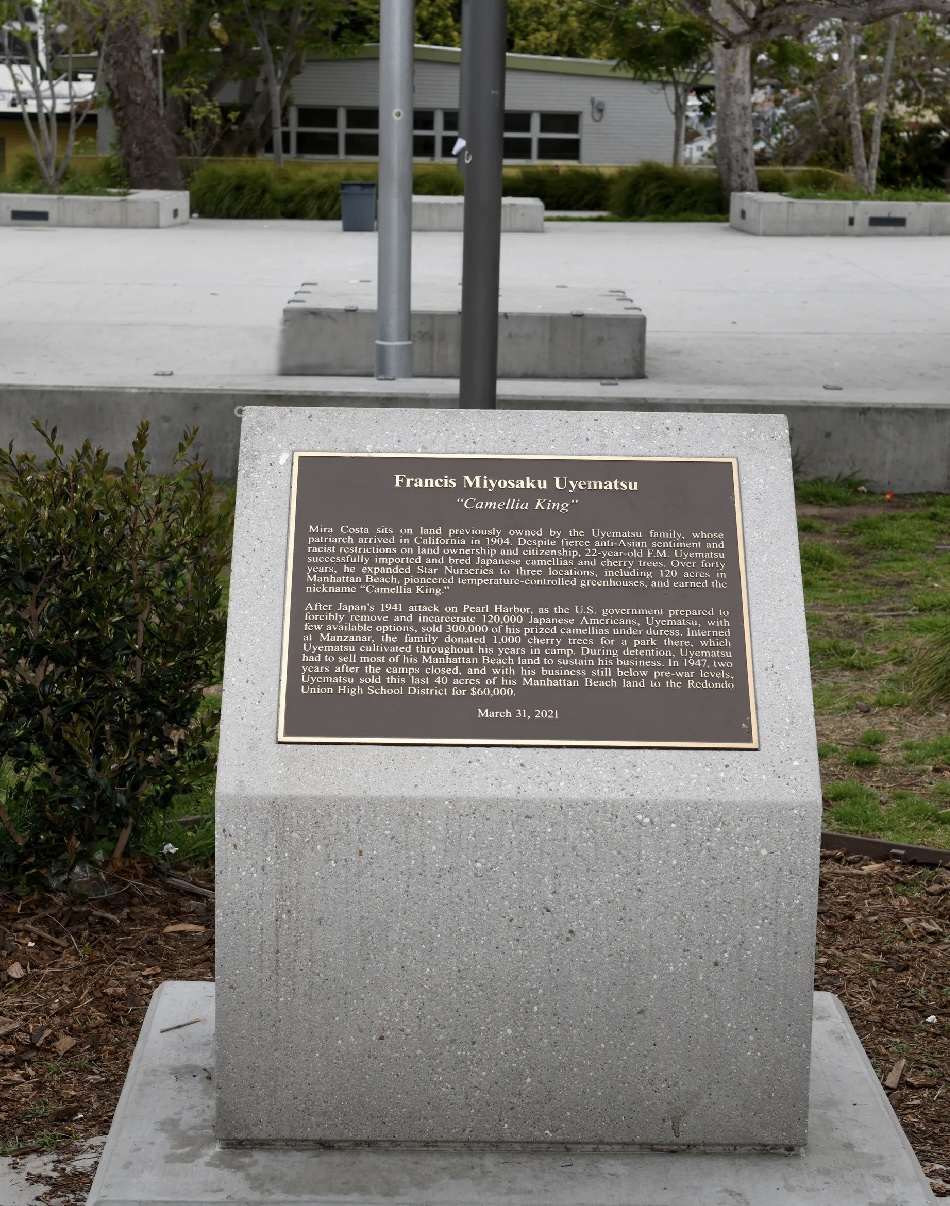
Currier had spent years researching the school’s origin and its link to Uyematsu, and convinced school district officials that his story should be told and remembered. They authorized $5,000 for the monument, which Currier designed.
At age 22, Francis Uyematsu emigrated from Japan to the United States in 1904. After working at a farm in Salinas, he moved south to Los Angeles where he hoped to establish his own nursery business.
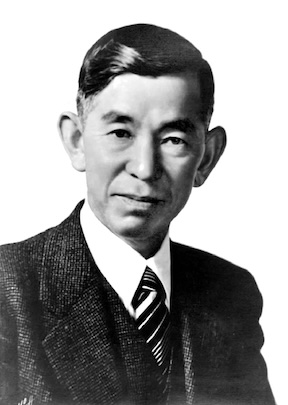
He specialized in camellias and cherry trees, many of which he imported from Japan. By 1910, he’d begun his nursery business, where he innovated new methods of raising camellias in particular.
He discovered the flowers were popular; he made as much as $100 a day selling them on the streets of Los Angeles
Despite severe government restrictions on Japanese ownership of land in the U.S., Uyematsu managed to expand his business by acquiring more land for his operations, starting with small plots in Montebello and Sierra Madre.
By 1940, he’d established three of his Star Nurseries and was in need of more land. He came across 120 acres for sale in Manhattan Beach. Enamored with the location, he bought the land for $60,000.
Everything changed after the Pearl Harbor attack on Dec. 7, 1941. The writing was on the wall for Uyematsu even before President Roosevelt issued Executive Order 9066 on Feb. 19, 1942, which called for the removal of all Japanese people from the West Coast.
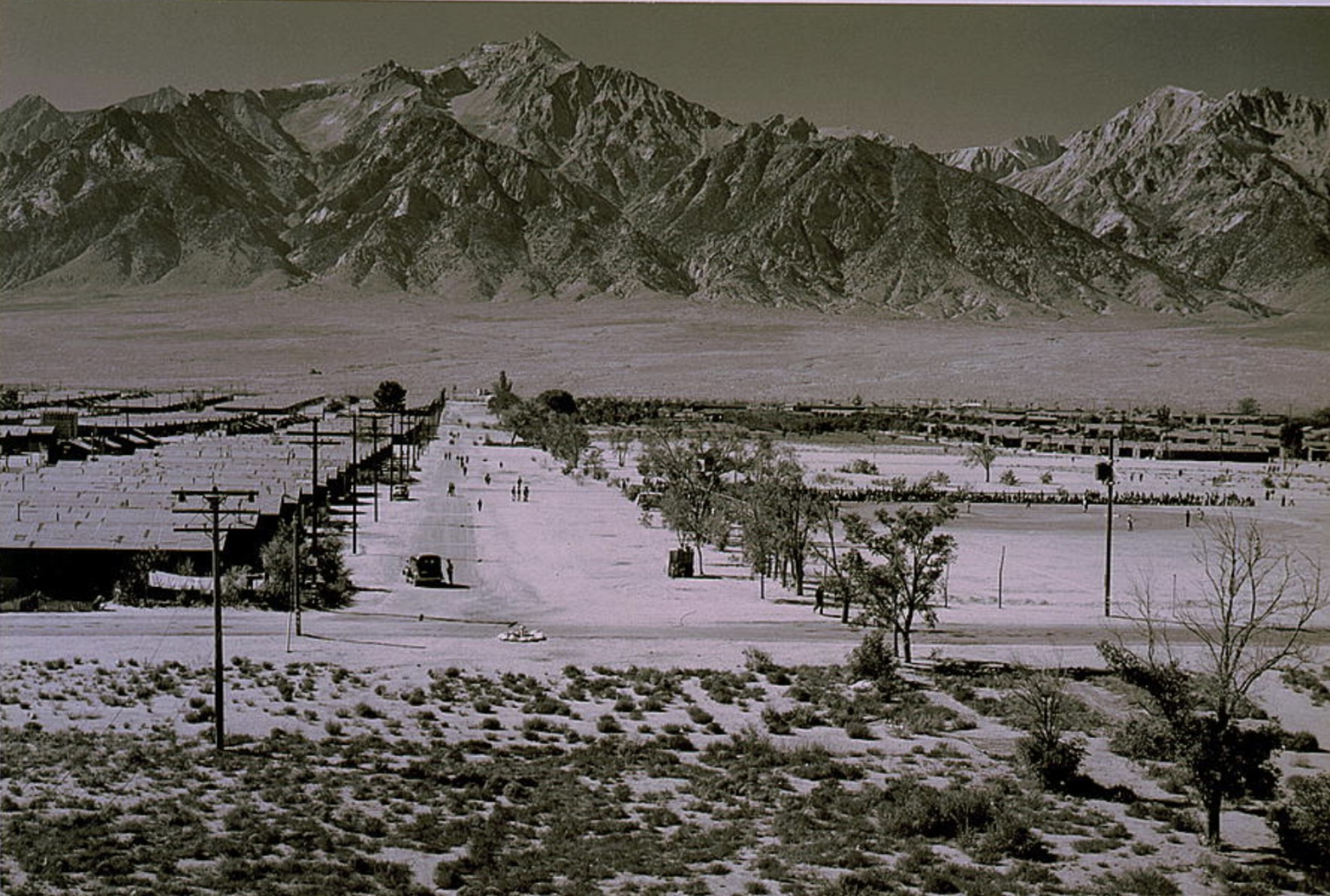
Uyematsu and his family ultimately were sent to the internment camp at Manzanar. Before leaving, he sold most of his beloved camellias, 300,000 of them, to collectors Charles Jones of Standard Oil and Los Angeles Daily News publisher Manchester Boddy.
Boddy brought the plants to his Rancho del Descanso estate in La Canada. The rancho would later become Descanso Gardens, and its camellia collection would become world famous.
Uyematsu spent the the next three years imprisoned at the Manzanar camp. While there, he was allowed to truck plants from Los Angeles and establish what became known as Japanese Cherry Park at the camp.
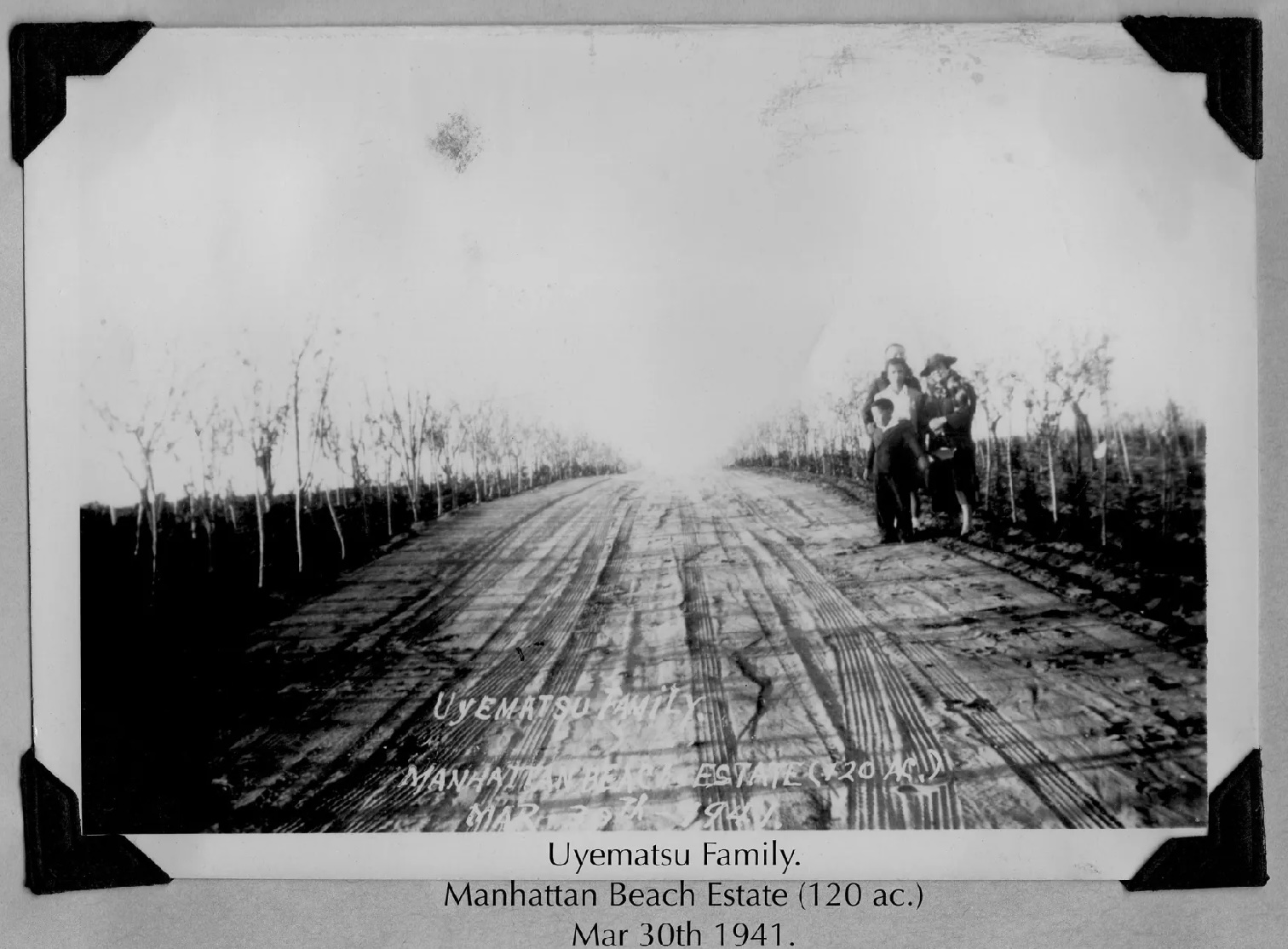
Because of the financial hardship he faced, Uyematsu was forced to sell off pieces of the Manhattan Beach acreage that he loved so much. By the end of the war, the 120 acres had been reduced to the 40-acre site that he sold to the Redondo school district in 1947 for $60,000.
Uyematsu retired from the nursery business in 1950. His family continued to operate it until its final location in Ontario closed in 1988.
Uyematsu continued to work with plants for the rest of his long life. He donated cherry trees to Griffith Park in Los Angeles during the 1950s, but the city failed to keep them up.
Francis Uyematsu died at 96 in Riverside on May 19, 1978. But thanks to the efforts of his family, Chuck Currier and others, his legacy has been kept alive.
2023 film by Maddox Chen, then a Mira Costa High student:
Sources:
Daily Breeze archives, especially “This Japanese American was dubbed Camellia King, until he lost it all,” by Michael Hixon, May 22, 2023.
Los Angeles Times archives.
Rafu Shimpo archives.
Further reading: The History of Mira Costa High School: The First Decade, by Chuck Currier, Mary Uyematsu Kao, et al, Lulu Publishing, 2022.

