
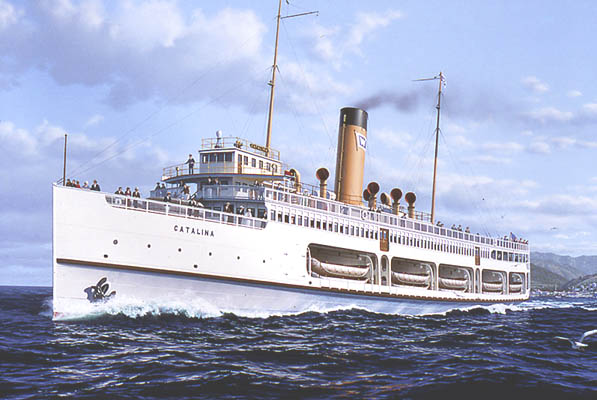
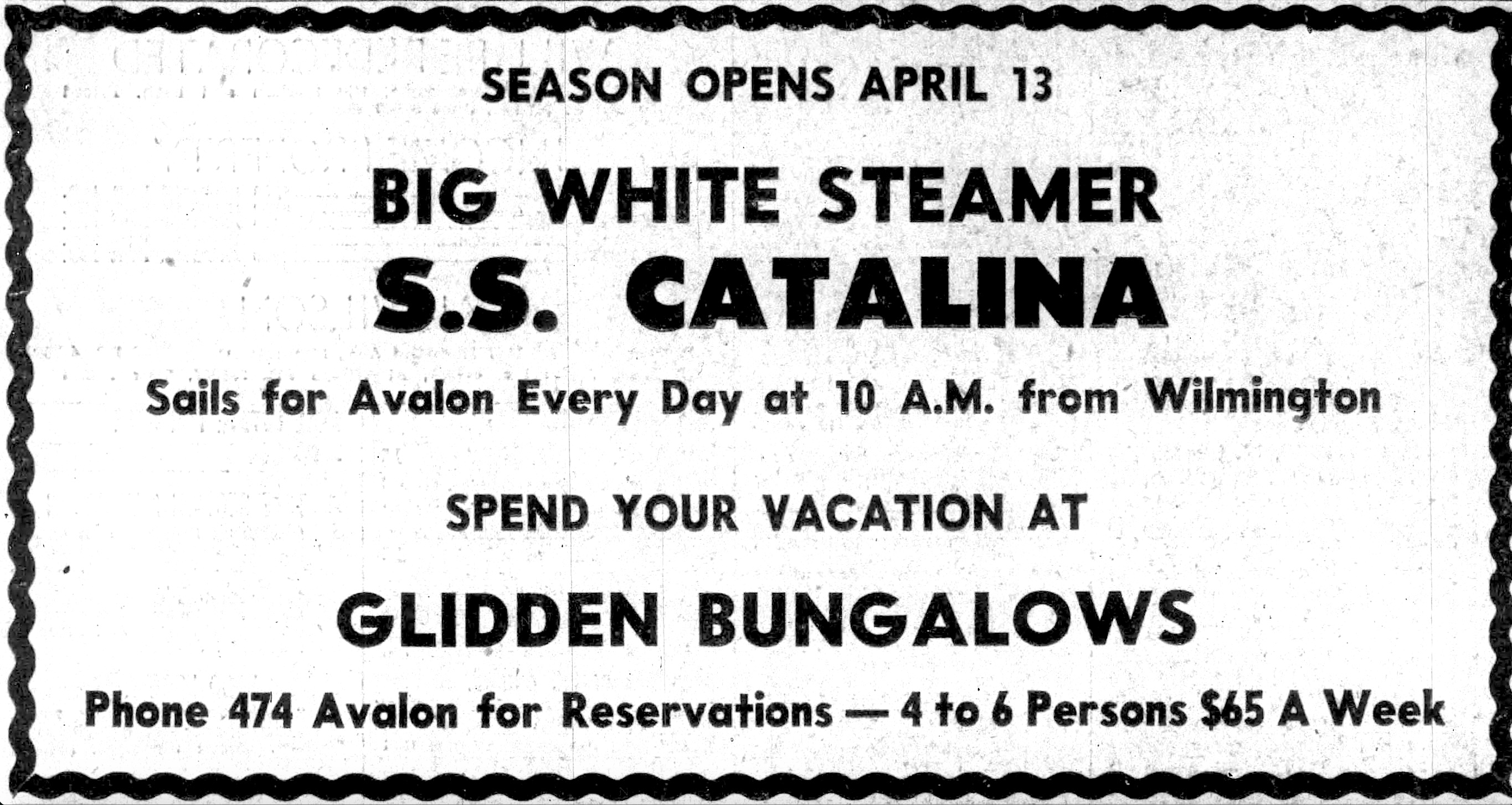
The S.S. Catalina was one popular ship in its heyday. During its fifty-plus years of operation beginning in 1924, she carried an estimated 25 million passengers from the Port of Los Angeles to Santa Catalina Island and back again.
The Catalina wasn’t the first ship built specifically for transporting tourists across the sea to Avalon, the island’s capital. In the late 1800s, the Banning family operated several small ships under the banner of its Wilmington Transportation Co.
After chewing gum baron William Wrigley Jr. purchased the island in 1919, Wilmington Transportation bought the SS Virginia from the Boston Navy Yard, and brought the ship west. She was renamed the Avalon, refitted and put into service on the Catalina run in 1920.
The Avalon was efficient, capable of carrying 1,625 passengers, but was workmanlike in design and lacked the glamour that Wrigley envisioned for his seaside resort.
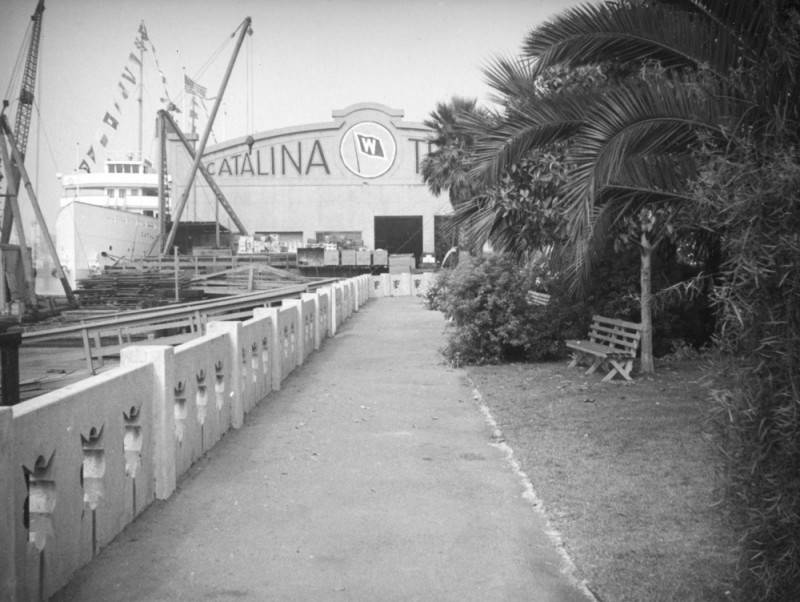
In the prosperous early 1920s, the Wrigley family commissioned Los Angeles Shipbuilding & Drydock Co. in San Pedro to build a larger and more luxurious ship that would give passengers the feeling of being on a luxury cruise, if briefly, for the 26-mile trip.
Popularly referred to as the Great White Steamer or the Great White Steamship, the gleaming white S.S. Catalina cost $1 million to construct and measured just over 300 feet in length. She was powered by two 3,600-horsepower Canadian-built steam engines.
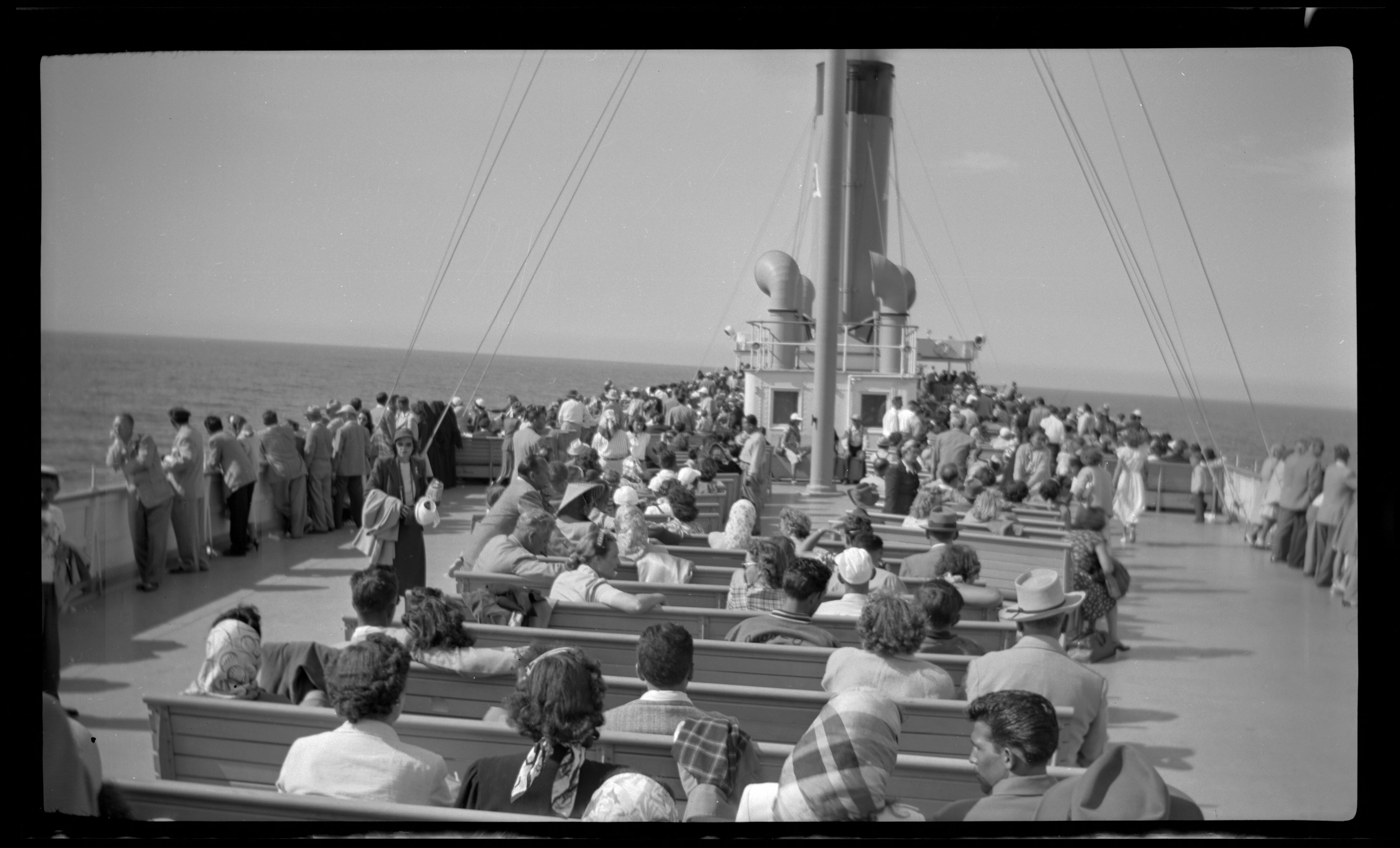
Originally, the ship could accommodate 1,964 passengers, and later was expanded to carry 2,197. It included fourteen above-deck staterooms, a glass-enclosed saloon deck and a small ballroom with a promenade deck where orchestras and dance bands would play.
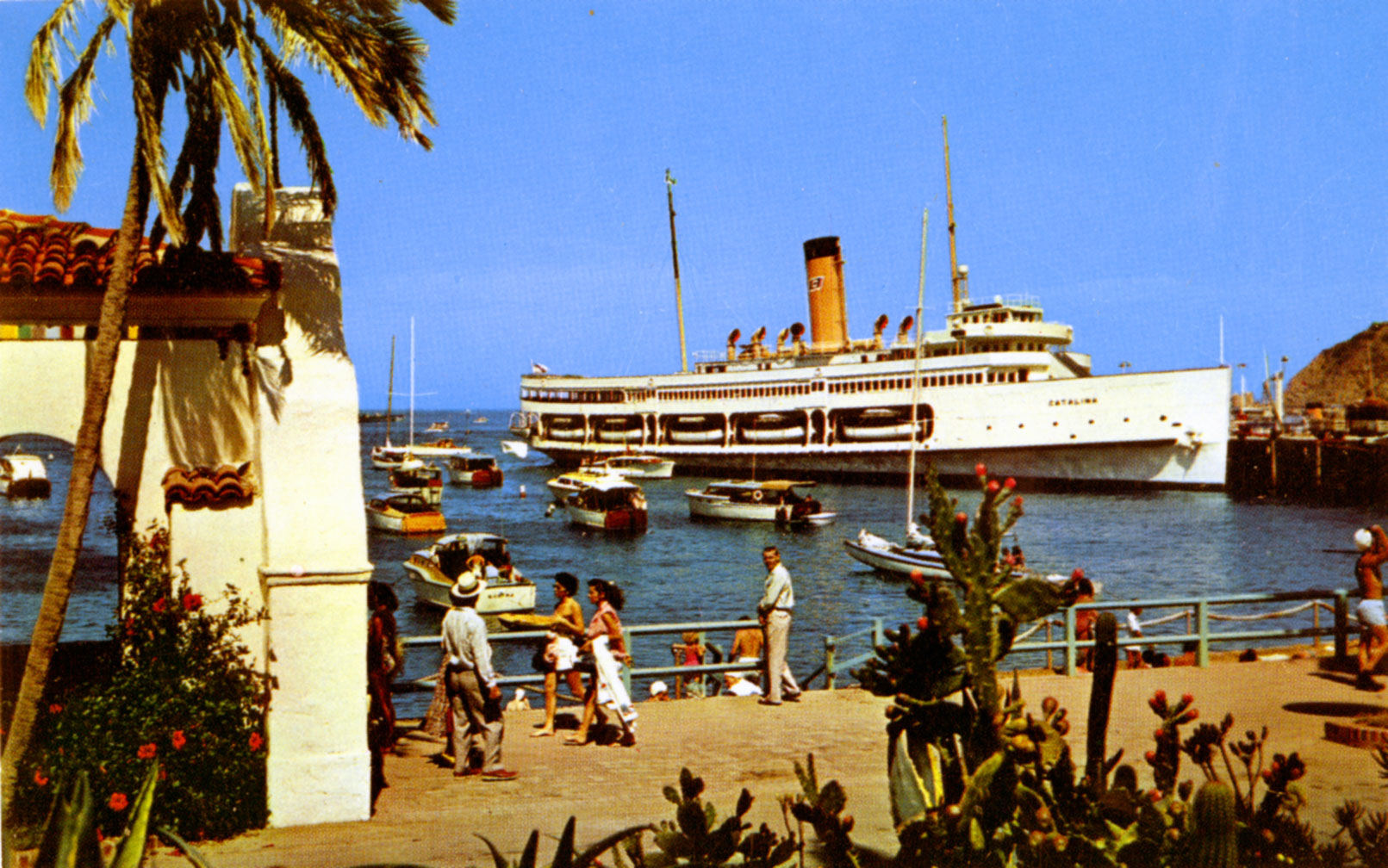
The S.S. Catalina was christened and officially launched on May 3, 1924, and her first island voyage with passengers took place on June 30, 1924. Initially costing $2.00, the two-and-one half hour steamship voyage was incredibly popular from the first. During the 1920s, Presidents Calvin Coolidge and Herbert Hoover were among its passengers, along with many movie and stage performers of the day.
The outbreak of World War II led to the immediate closure of Catalina Island, which was transformed temporarily into a military outpost.
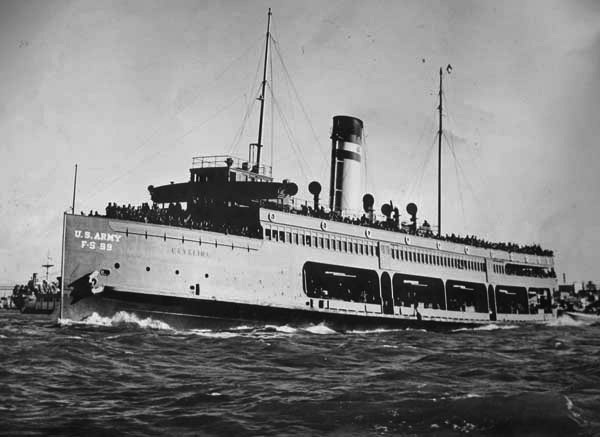
In April 1942, the S.S. Catalina was temporarily recommissioned as a military transport ship and sent to San Francisco Bay. During the war, the ship ferried 820,199 soldiers from various bases around the bay to their final points of embarkation overseas. She was returned to civilian duty four years later in April 1946.
The ship returned to its original purpose, shuttling large groups of tourists and sightseers from its terminal in Wilmington to Catalina Island. The vocal singing group the Four Preps immortalized the voyage with their #2 1958 pop hit, “26 Miles (Santa Catalina).”
Growing weary of financial and labor issues involving the ship’s operation, Phillip K. Wrigley sold it to M.G.R.S., a group of investors, in 1960. It continued to operate during the 1960s, but its popularity began to wane as smaller, faster boats brought passengers to Catalina more quickly.
The Great White Steamer didn’t operate at all in 1971 and 1972 due to labor troubles. Service resumed in 1973, but the aging ship’s days were numbered. It made its final Catalina voyage on Sept. 14,1975, having completed the trip 9,807 times.
In 1976, the dormant ship became Los Angeles Historic Landmark #213, was named a California historic landmark, and was listed on the National Register of Historic Places..
A succession of owners had tried their hand at reviving the ship’s fortunes, with little luck. On Feb. 16, 1977, Newport Beach real estate developer Hymie Singer bought the Catalina at auction for $70,000 as a Valentine’s Day gift for his wife.
For the remainder of its existence, the Catalina lived a nomadic life. The Singers leased the ship to Gene Webber, who moved the ship from place to place after she was evicted from the Port of Los Angeles for non-payment of fees.
Webber sought a home for the ship in various locales, from Newport Harbor to Santa Monica and Long Beach. An idea was even floated to move the boat to King Harbor in Redondo Beach at one point. The thought was to renovate the ship and turn it into a restaurant and entertainment attraction, but it never quite came together.
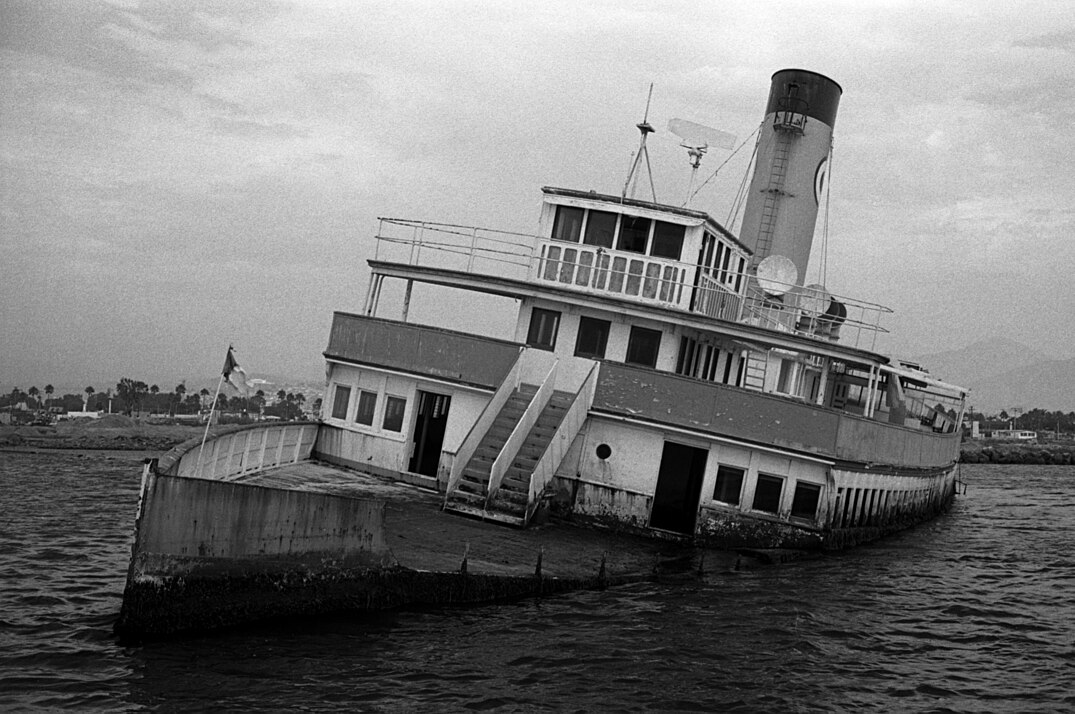
On March 3, 1985, Webber tried the resort town of Ensenada, Mexico, towing the Catalina to a moorage three miles offshore. She would never return to California. Singer filed a lawsuit and retook control of the ship, investing money to convert it into the floating Catalina Bar and Grill restaurant and disco.
The venture failed, and the Singers finally gave up on the project in 1996. By then, the Catalina had begun to take on water and had been looted by vandals. Attempts by preservationists to save the foundering ship failed, and the S.S. Catalina was broken up and sold for scrap in beginning in 2009.
Sources:
The Catalina Story, by Alma Overholt, Catalina Island Museum Society, Inc., 1962.
Daily Breeze archives.
Los Angeles Times archives.
San Pedro News Pilot archives.
“The S.S. Catalina: The First 75 Years of a Great White Steamer,” by Shawn W. Dake (website).
Portions of the 1967 imitation beach party film “Catalina Caper” were shot aboard the S.S. Catalina:
(Warning: This film received a 2.3 user rating on the Internet Movie Database.)

