Georgia Claessens transformed neglected land into an affordable amusement park

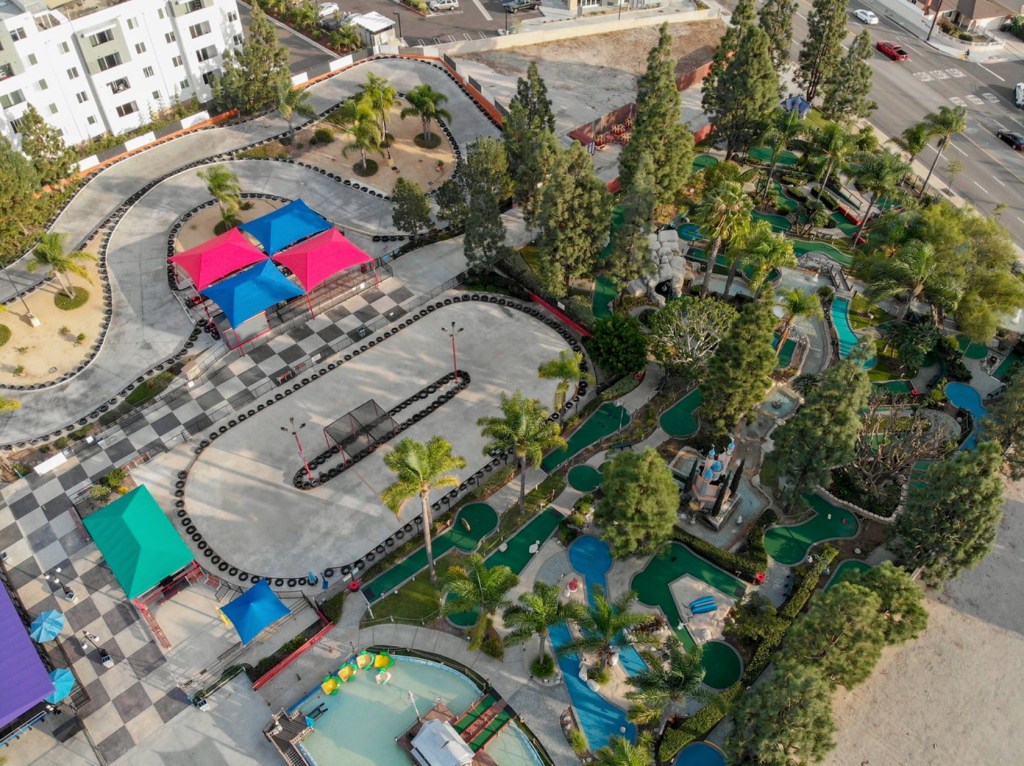
Aerial view of Mulligan Family Fun Center in Harbor Gateway shows go-kart tracks, left, miniature golf courses, right, and boat race, lower center. Sepulveda Blvd. is at top right. Feb. 17, 2020. (Daily Breeze file photo by Kaleb Tapp)

Walter Storm, the owner of Western Brass Industries and several other firms in Harbor Gateway, had purchased 15 vacant acres adjacent to his businesses in the early 1960s with an eye toward eventually expanding his operations.
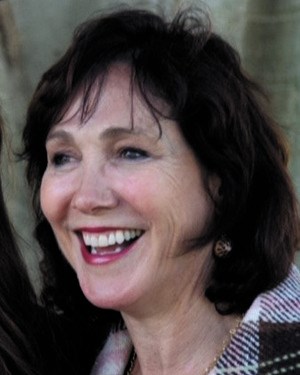
Georgia Claessens. (Credit: Legacy.com)

Born in Texas, the industrious Storm had moved to California as a 20-year-old in 1924, where he proceeded to start several businesses. He settled in Rolling Hills in 1956, where he and his wife Lisa raised a family of four daughters: Alexandra, Claudia, Georgia and Elizabeth. (A fifth daughter, Paula, died as a one-year-old in 1954.)

The Storm girls rode horses when they weren’t working at their father’s businesses, some of which manufactured riding equipment. They would go on to start businesses of their own.

Born on Nov. 22, 1995, Georgia graduated from Miraleste High in 1973 and went on to UC Santa Barbara, where she played volleyball for the highly regarded Gauchos team. She eventually earned her degree at the University of Colorado.

She met and married Dominique Claessens, moving with him to Holland in the early 1980s. After four years there, they moved back to Rolling Hills, where she would raise four children of her own.

She rejoined her father’s business, and, along with her sisters, started several of her own under the overall name of Storm Industries. All of them were based on the Storm property on Sepulveda Blvd. east of Western Ave., just beyond the Torrance city limit.
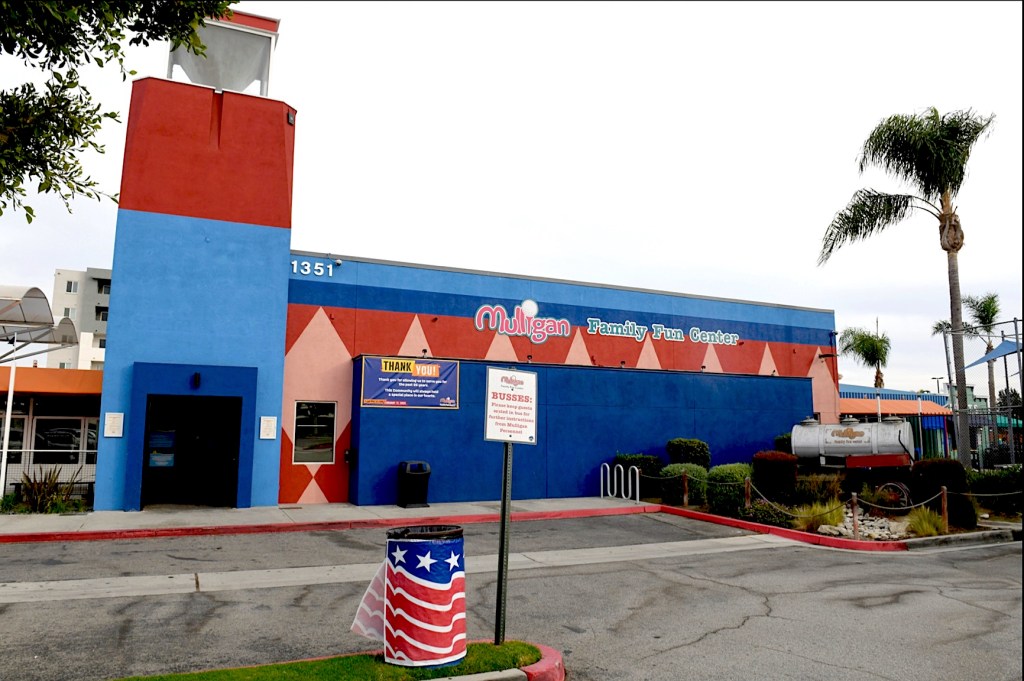
Mulligan Family Fun Center entrance and main building. November 2019. (Daily Breeze file photo by Axel Koester)

Meanwhile, the adjacent surplus property her father had bought for expansion never had been developed. It was being used as a storage lot for recreational vehicles and a dumping ground for old machine parts.

Wanting very much to start a new business of her own, Georgia began eyeing the land. “The property was being used to store RVs and people’s junk,” she told the Palos Verdes Peninsula News in 2006.
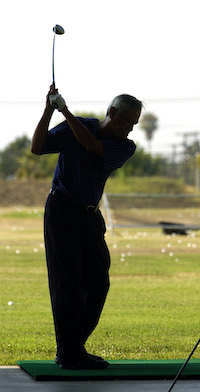
The driving range at Mulligan Family Fun Center. in 2006, before it closed in 2007. (Daily Breeze staff file photo)

Her first thought: build a mobile home park. But her lawyer disabused her of the notion, citing the complex legal thickets involved in owning and operating such a venture. An avid golfer, he suggested she  use the property to build a driving range instead.

Though not a golfer, she began researching the idea and determined there was a need for such a facility in the area. This led her, in partnership with her sisters, to begin brainstorming plans for a much broader entertainment complex.

They began to sketch out a family entertainment complex that both children and adults could enjoy without breaking the family budget. Marketing research revealed a dearth of such low-cost options. 

The driving range idea was retained. To it would be added practice greens for chipping and putting, a pro shop operated by Plaza Golf in Torrance, batting cages, a 50-game indoor arcade, two 15-hole miniature golf courses and a restaurant.

Unlike child-oriented businesses such as Chuck E. Cheese, which offered very little for parents, the complex aspired to have activities all members of the family could enjoy.

Taking the name from the golf term for getting a do-over stroke after a poor shot, they named their $2.5 million project Mulligan Family Fun Center. The center opened at 1351 Sepulveda Blvd. in Harbor Gateway on Dec. 26, 1993.
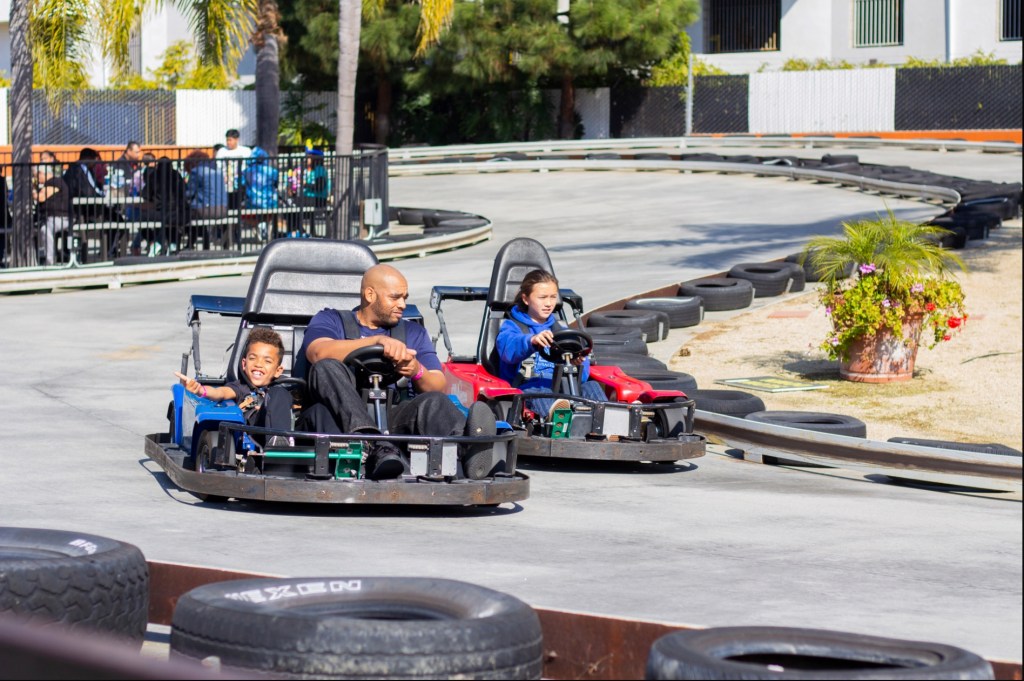
Electric go-kart drivers (and one passenger) enjoy the track at Mulligan Family Fun Center. Feb. 17, 2020. (Daily Breeze file photo by Hunter Lee)

It proved to be an immediate and enduring success. Its operators stressed providing a safe environment, hiring its own security personnel and going so far as to require teen boys to not wear baseball caps backwards while at the park.

Later additions to the center included two go-kart tracks eventually refitted to use electric cars, a Lazertag area and a rock climbing wall. The driving range closed in 2007, its place taken by industrial buildings.

Claessens spent many hours on operating, maintaining and expanding the business. She opened two additional Mulligan centers, one in Murrieta in 1996, the other in Palmdale in 2005. Both remain open.

Georgia Claessens’ death at age 60 on Feb. 27, 2016, following a horse riding accident, seemed to shake the Harbor Gateway operation. Three years later, in October 2019, the Mulligan Family Fun Center announced it would close on Feb. 17, 2020.
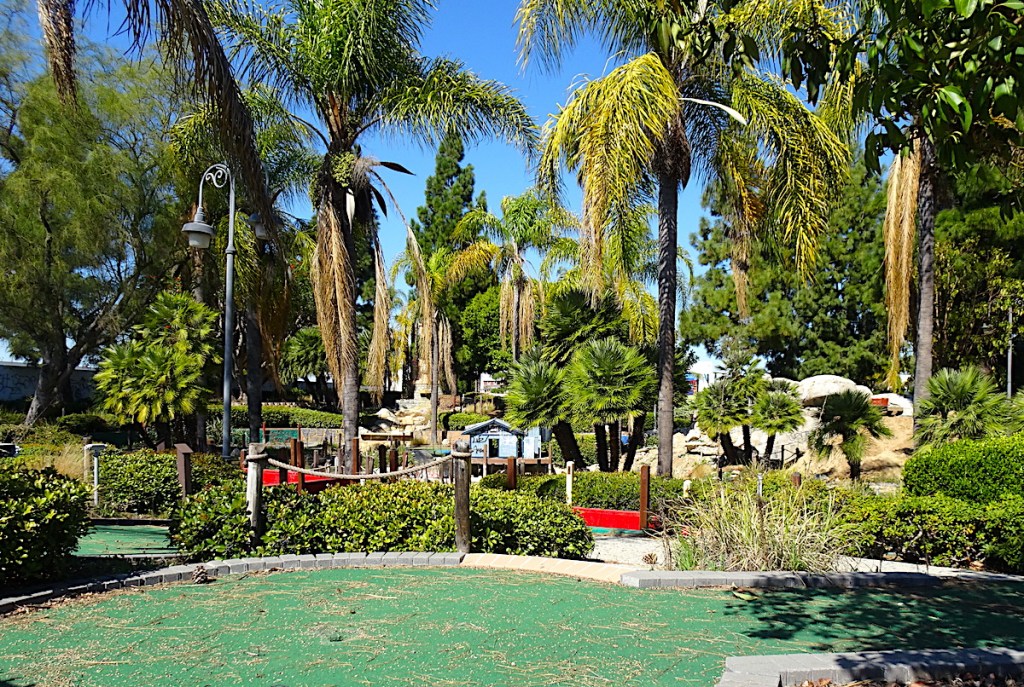
Now-vacant miniature golf course at former Mulligan Family Fun Center site. March 2021. (Photo by Sam Gnerre)

A message on its website announcing the closure stated: “Without her (Georgia’s) vision and love for the industry, it simply is not tenable to continue operating the Torrance Fun Center.” Its 75 employees lost their jobs, and families who had enjoyed the center over the years mourned.

Shutdowns related to the arrival of the COVID-19 pandemic probably would have hurt the business had it not closed. Its president, Robert Thomas, did tell the Daily Breeze’s Nick Green that the business was still doing “fine” at the time its closure was announced.
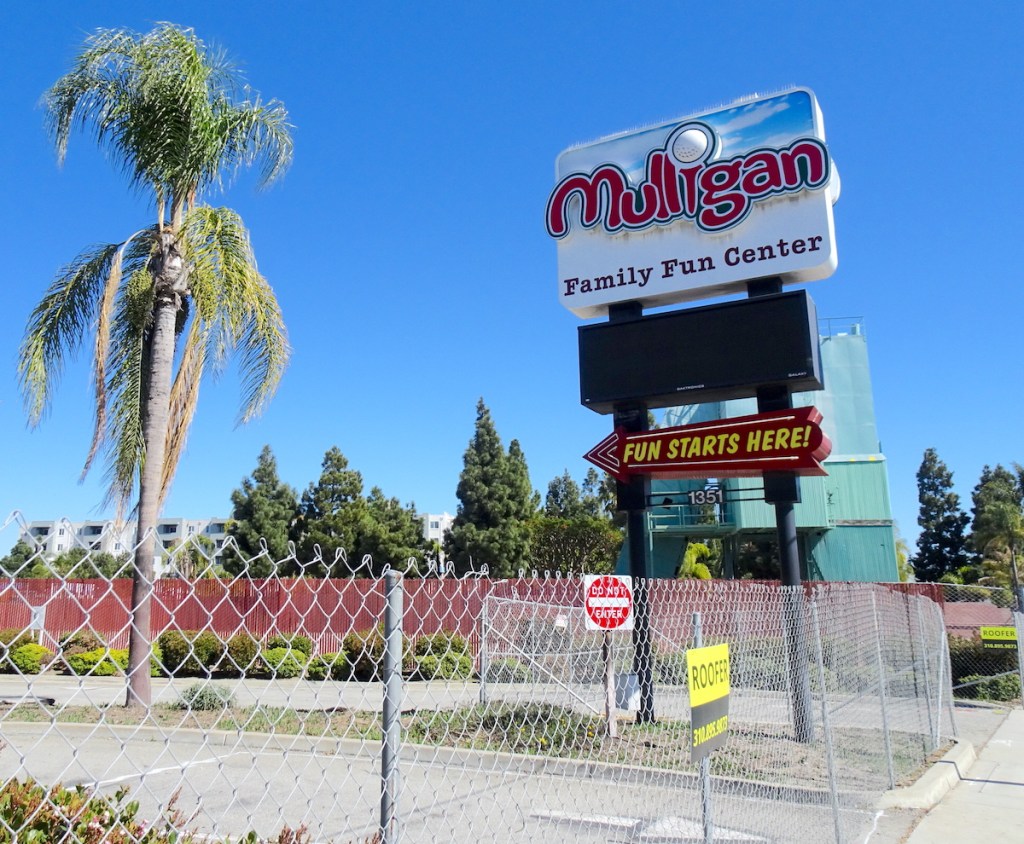
The closed street entrance to Mulligan Family Fun Center in March 2021. Abandoned cement plant can be seen behind sign. (Photo by Sam Gnerre)

Before her death, Claessens had obtained the defunct cement factory next to the Mulligan property with an eye toward developing it. Both the Fun Center and the factory now stand vacant on the property. Plans for its future development have yet to be disclosed.

On March 2, 2021, a fire broke out in the main building at the park, completely gutting it. Firefighters battled the flames for 90 minutes before extinguishing them. The cause of the blaze could not be determined immediately.
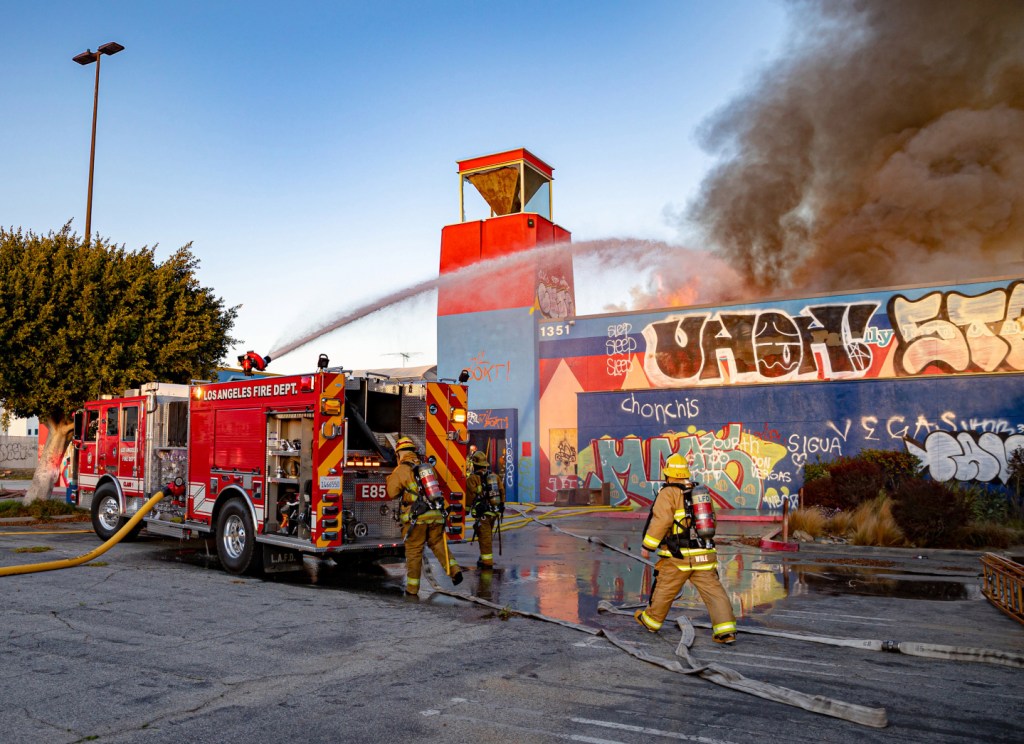
Firefighters battle flames at the shuttered Mulligan Family Fun Center at 1351 West Sepulveda Boulevard, in Harbor Gateway on Tuesday, March 2, 2021. Smoke was reported inside the building around 5 p.m. The blaze burned for about 90 minutes before 119 firefighters managed to extinguish it.
(Credit: Daily Breeze photo by Jerry Kelly)

Sources:

Daily Breeze files.

Findagrave.com website.

“Georgia Storm Claessens, 1955-2016,” Legacy.com website.

Los Angeles Times Files.

Palos Verdes Peninsula News files.
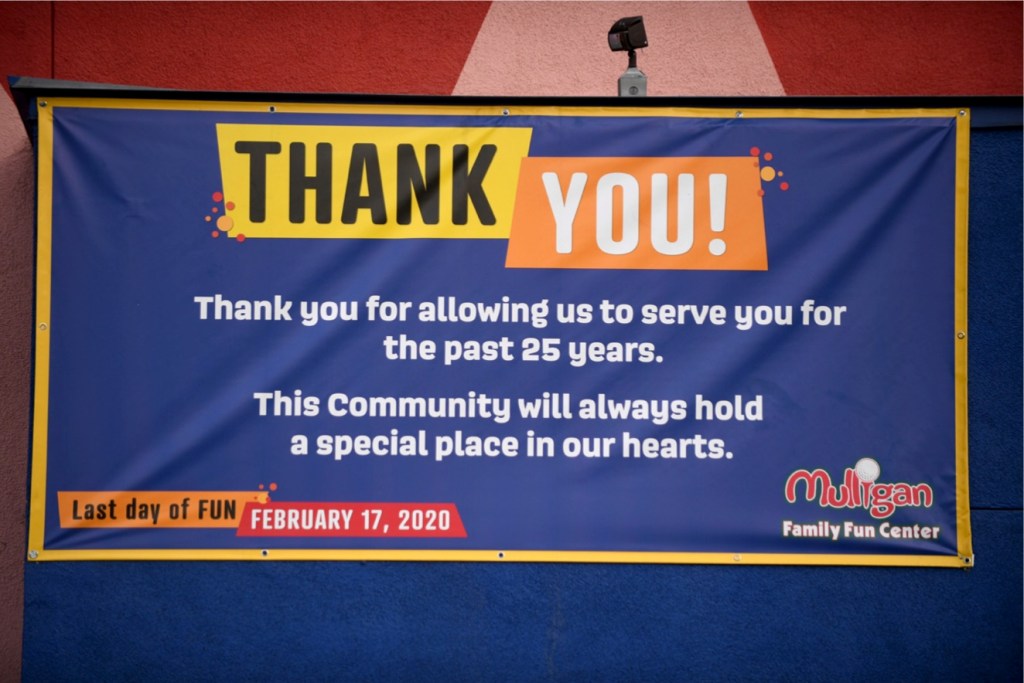
Sign posted after the announcement of the closure of Mulligan Family Fun Center. Nov. 2019 photo. (Daily Breeze file photo by Axel Koester)

U.S. Customs House a fixture in the Harbor Area, until circumstances led to its departure

The first U.S. Customs House building on Canal St. in Wilmington, circa June 1883. (Credit: California Historical Society via USC Digital Library)

Every large seaport requires a customs house to oversee the flow of goods in and out of its jurisdiction.

By the 1880s, the import/export trade at the harbor at Wilmington had grown significantly, thanks mainly to the development efforts of shipping magnate Phineas Banning. Banning built the first railroad connecting the port with the city of Los Angeles, which greatly boosted his shipping business.

The government took notice. On May 19, 1882, Congress passed a bill establishing the Customs District of Wilmington. By mid-1883, the area’s first U.S. Customs House had been built on Canal St. in Wilmington.

It remained there for several years, and the exact date at which it was moved to San Pedro proper is uncertain. But we can speculate that the selection of San Pedro as the official harbor of Los Angeles in 1899 and its subsequent development led to the relocation of the customs house in the early 1900s.

It moved its offices to the ground floor of the Perl Building at Seventh and Beacon streets in San Pedro. 

By 1912, talk already had begun about rapidly growing San Pedro getting a new federal government building to house its post office, with a bill aimed at starting the process being introduced in Congress. In addition to the new post office, several other federal offices could be consolidated into the new building.

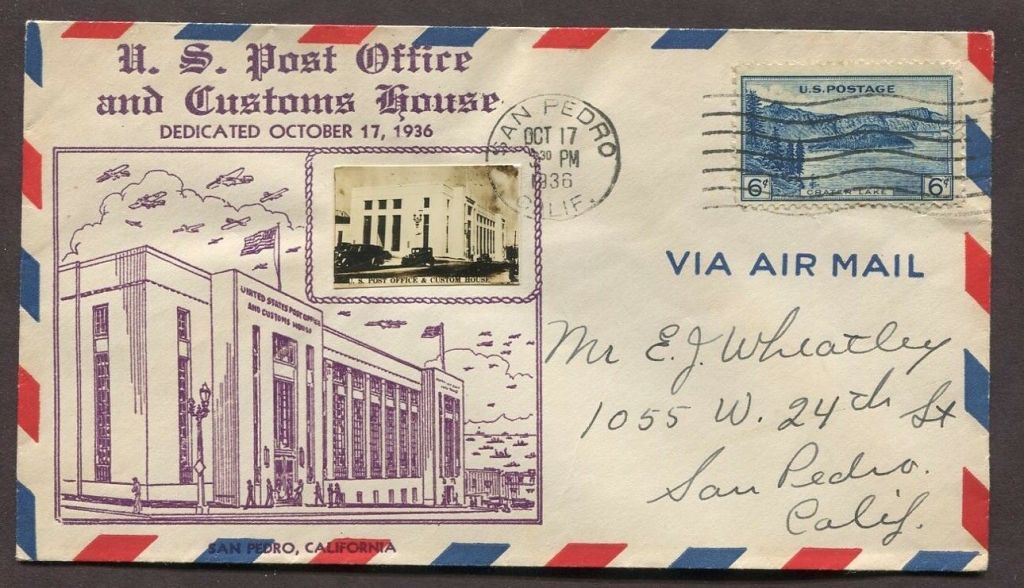
Postal cover commemorates the 1936 dedication of the new post office building in San Pedro, which also included the U.S. Customs House.

But the wheels of government sometimes grind slowly. A turf war of sorts between San Pedro and Los Angeles broke out in 1913, with the larger city to the north wanting to take over customs jurisdiction. Never mind that this made little sense, as it meant transporting goods all the way up to L.A. to be inspected and recorded at extra expense to the shippers.

At the same time, another spat developed when the big city insisted that the new San Pedro post office operate as an L.A. branch and not autonomously. Fortunately, San Pedrans battled back to defeat this idea.

All this squabbling hadn’t been settled by the outbreak of World War I, at which point the whole new building matter was tabled. At war’s end in Nov. 1918, discussions resumed.

But it would be another 18 years before the new federal building opened. In the meantime, the customs house moved into the Lippman Building at 366 W. Seventh St. in 1932. The post office then was located on its ground floor. The move came at the federal government’s direction in order to cut office space costs during the Great Depression.

The long-awaited new post office/government building at 839 S. Beacon St., between Eighth and Ninth streets opened for business on Oct. 19, 1936. The post office was, and still is, on the ground floor. The customs house took up the entire second floor, with additional government offices on the top floor.

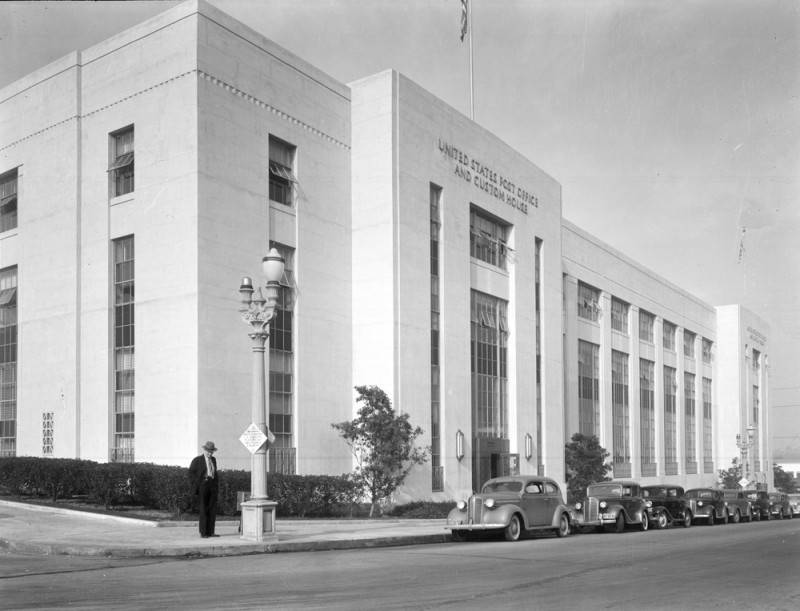
Exterior view of the United States Post Office and Custom House in San Pedro, May 3, 1939. (Credit: Los Angeles Public Library Photo Collection)

The customs house operated at the Beacon St. location for the next three decades. Its next move would come in 1967, as part of the ambitious $200 million World Trade Center complex on Terminal Island.

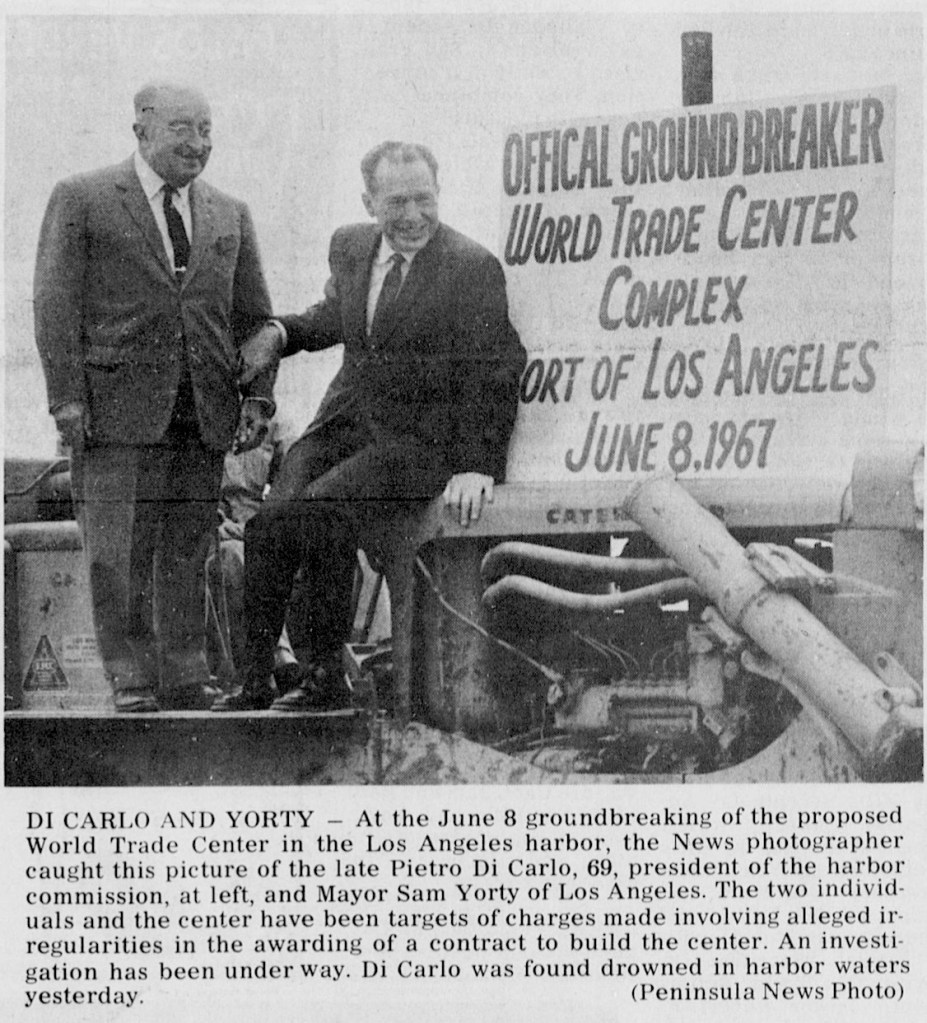
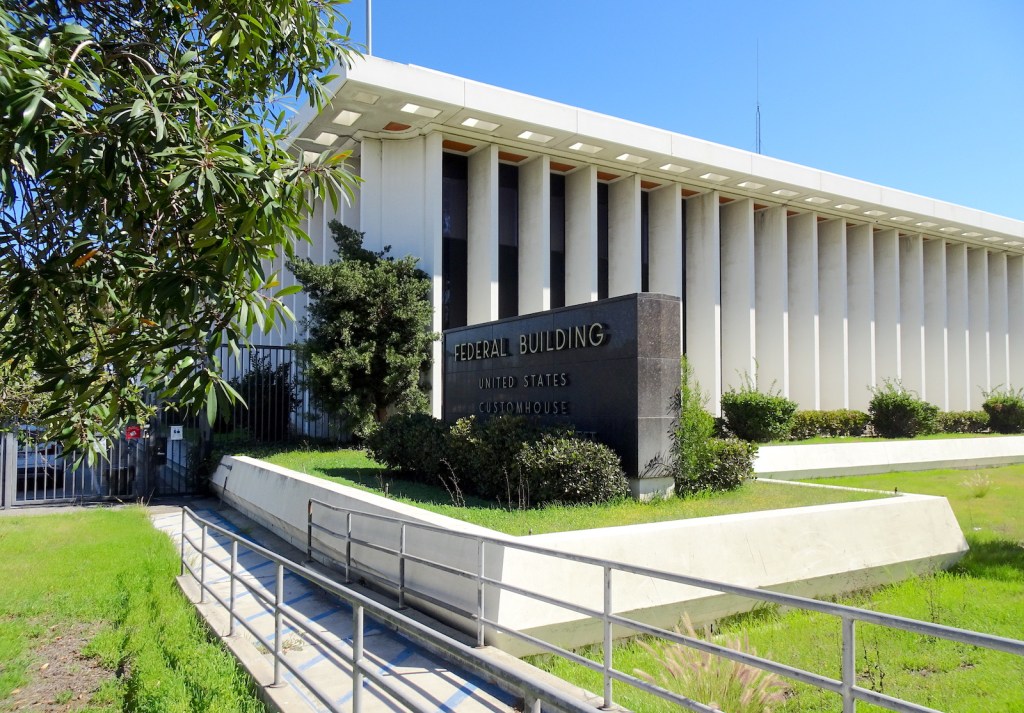
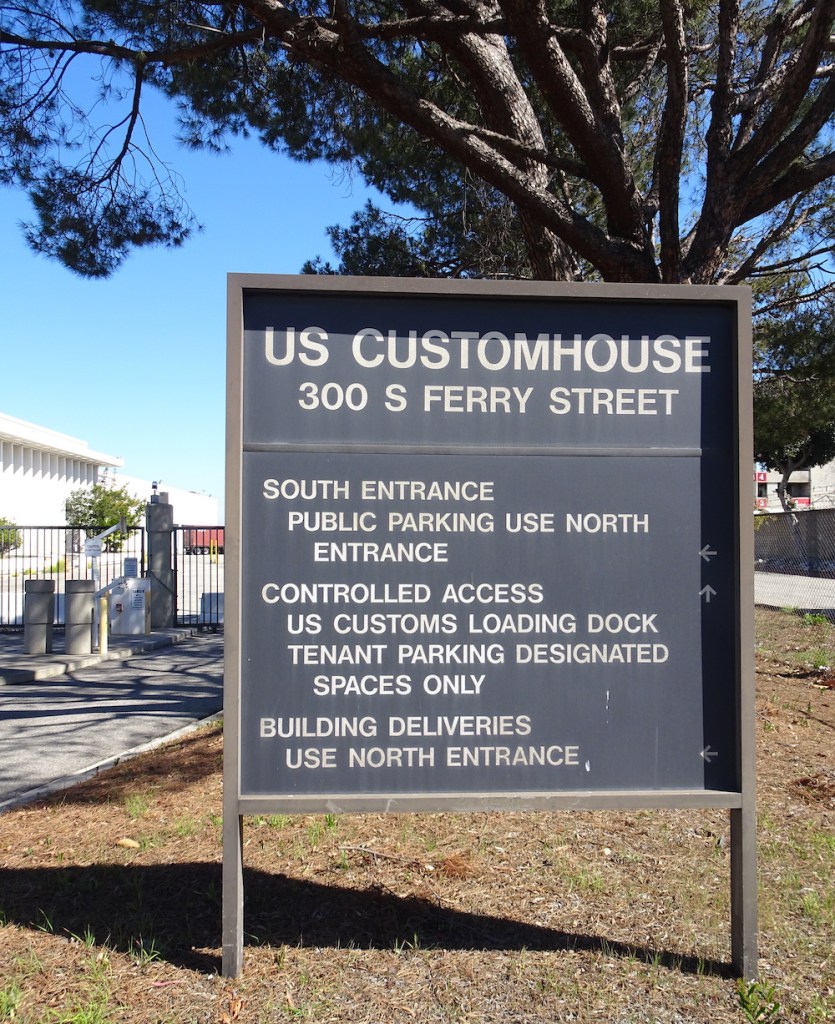
The U.S. Customs House building at 300 S. Ferry St. was completed in 1967, and its workers relocated there. It would be the only part of the plan to consolidate governmental port agencies into a central complex to become reality. A serious conflict of interest scandal involving the main contractor, Keith Smith, and the Los Angeles Harbor Commission scuttled the project, and its remaining components never were built.

Palos Verdes Peninsula News, June 11, 1967, Page 17. (Credit: Palos Verdes Peninsula News archives)

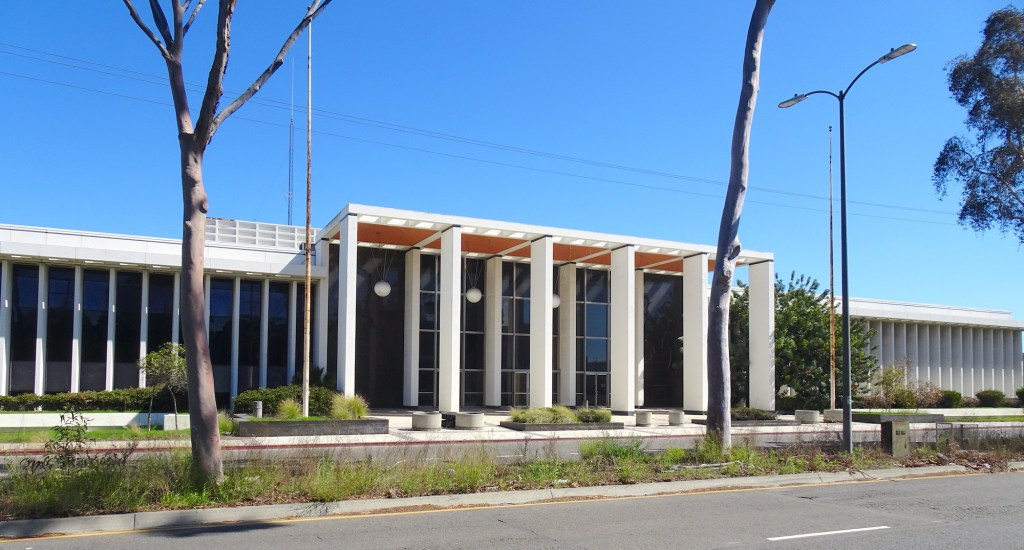
Architects Austin, Field & Fry designed the customs building. Modern observers have typed it  as a prime example of New Formalism, which applies classical styling to modern building design.

The customs house operated at the two-story building for another three decades. (A one-story adjoining annex now houses the Federal Maritime Commission’s local office.)

The U.S. Customs House building on Ferry St. on Terminal Island. February 2021. (Photo by Sam Gnerre)

Unfortunately, a combination of factors led to its latest move, which resulted in the agency leaving San Pedro completely. One factor was age. The building had not been modernized over the years, and had begun showing its age by the late 1990s.

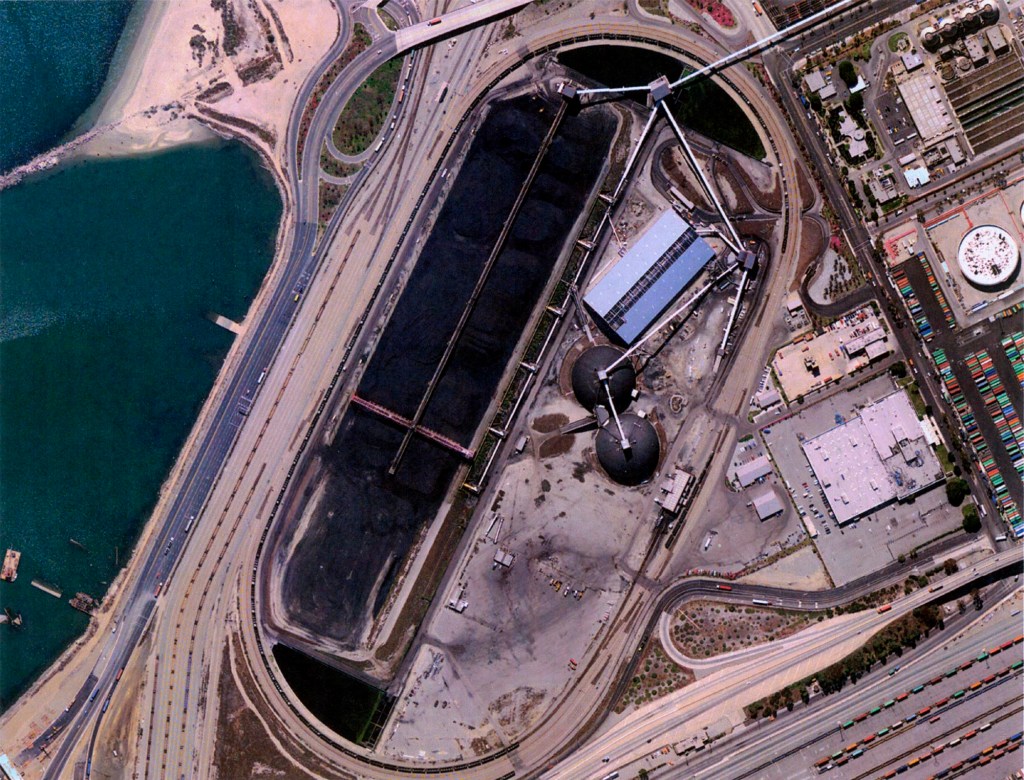
An even more compelling problem arose with the arrival of the Los Angeles Export Terminal (LAXT) in 1997. Located directly adjacent to the customs houses, the coal and coke processing plant’s open piles of petroleum coke dust were found to be a major source of port  air pollution. The piles were covered with 12-story domes in 1999, but that did little to allay the concerns of U.S. Customs Service officials.

LAXT plant and two coke domes, center, in direct proximity to the U.S. Customs House building and annex on Terminal Island, grey roofs to right of domes. Ferry St. runs diagonally at far right. (2003 Daily Breeze staff file photo)

Complaints from its 350 employees concerning the health risks factored into the government’s decision to choose Long Beach as the new home for the U.S. Customs and Border Protection’s Los Angeles/Long Beach Seaport Port of Entry operations. The move to the 20-story Shoreline Square tower at 301 E. Ocean Blvd. was announced in June 2001.

LAXT shut down in 2006, and removed the domes in 2008. Since then, no new tenants have occupied its former site.

The former customs house building on Ferry St. also remains empty.

The U.S. Customs House building at 300 S. Ferry St. on Terminal Island has been cited as an excellent example of the New Formalism architectural style. February 2021. (Photo by Sam Gnerre)

Sources:

Calisphere.org.

Daily Breeze files.

Los Angeles Herald files.

Los Angeles Times files.

Palos Verdes Peninsula News files.

Press-Telegram files.

San Pedro News Pilot files.

“U.S. Custom(s)(sic) House, Terminal Island, Port of Los Angeles,” Los Angeles Conservancy website.

“U.S. Customs Laboratory — GSA SLA 1,” Port of Los Angeles, June 2010.

The offices are no longer there, but the sign remains. February 2021. (Photo by Sam Gnerre)

Torrance Civic Auditorium filled an important need when it opened in 1936

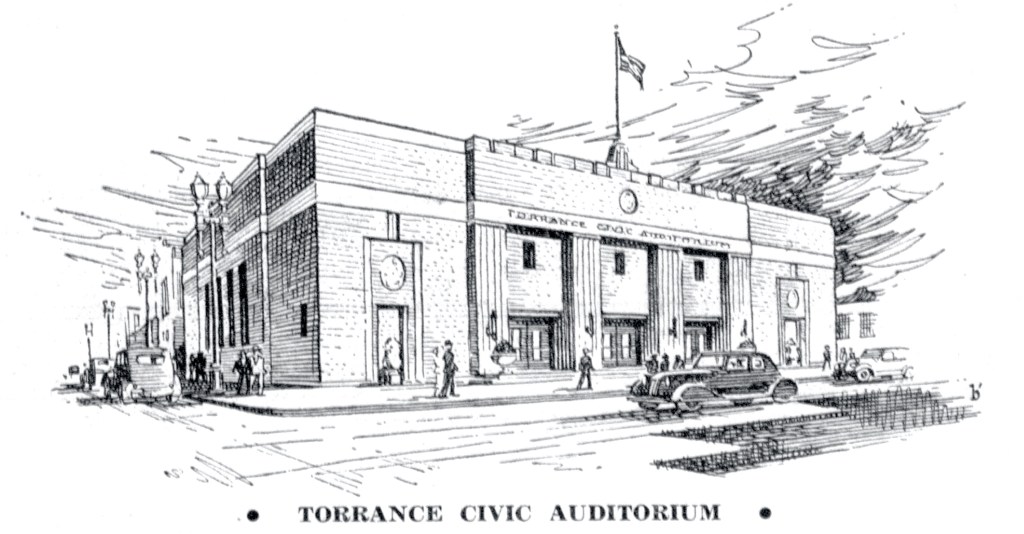
Artist rendition of the Torrance Civic Auditorium that opened in 1936. (Credit: Torrance in Review special edition, Torrance Herald, June 1936)

Businesses and factories began moving to Torrance not long after its founding was announced publicly in 1912. With them came a rapid increase in population, as their employees began moving to the hospitable area to be close to work.

By the time the city officially incorporated in 1921, its need for a large central public gathering place for civic, fraternal and cultural events had become acute.

The problem was solved temporarily by the construction of an auditorium at Torrance High School in 1924, whose iconic main building had opened in 1917.

For the next few years, the Torrance High auditorium hosted not only school assemblies, plays, band concerts and the like, but also community events of all different types.

The original Torrance High School auditorium opened in 1924. (Undated Daily Breeze file photo from Torrance Historical Society)

The city’s need for its own such structure gradually was becoming apparent, but was exacerbated by the Long Beach earthquake of March 10, 1933. The temblor severely damaged the high school’s auditorium, rendering it unusable. Both students and citizens were left without an assembly hall.

City officials stepped up the plans already underway in the early 1930s for the construction of several new civic buildings in downtown Torrance. These included a new city hall, library building, police headquarters and post office — and a new civic auditorium.

Following through on these plans would prove to be tricky in the midst of the Great Depression. Fortunately, the city was able to work with the Works Progress Administration (WPA) to secure financing.

The federal government paid for the post office in full ($52,279), and would end up paying for about 45 percent of the cost of the rest of the new buildings.

The Torrance Civic Auditorium was the largest of them. It could seat 1,100 people, and had a state-of-the-art (for the 1930s) speaker system. The total cost: $62,500, to be paid for with a combination of municipal and federal funds.

In August 1935, the WPA announced its full support for the projects, and the city scheduled a bond election for them for Sept. 27. Each building project could be voted on separately, with the auditorium measure denoted as Proposition 1.

All the measures passed easily. The city hired the downtown Los Angeles architectural firm of Walker & Eisen to design the buildings, and contractors W.W. Petley and C. Matcham to build the steel-framed structures. 

That November, the city purchased land owned by Antone Huber on the northeast corner of El Prado and Cravens Ave. for the auditorium, paying $6,500. Construction began shortly thereafter, and the building was completed on June 16, 1936.

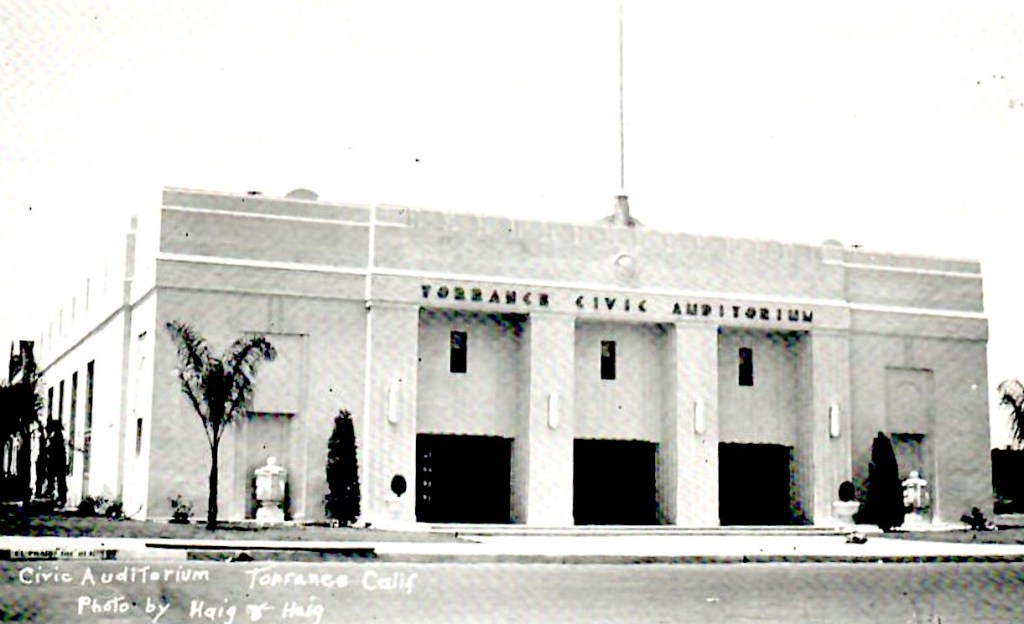
Undated photo of the Torrance Civic Auditorium, presumably circa 1936. (Credit: Historic Torrance: A Pictorial History of Torrance, California)

The auditorium, city hall and library buildings all were dedicated on the same day, June 27, 1936. Individual mini-ceremonies were held at each, with an overall formal dedication taking place that evening in the auditorium, the first official event held there.

It would be the first of many. One of the earliest events held there was the three-act comedy play, “Crashing Society,” which opened on June 29. Its all-Torrance cast included department store owner and local luminary Sam Levy in one of the roles.

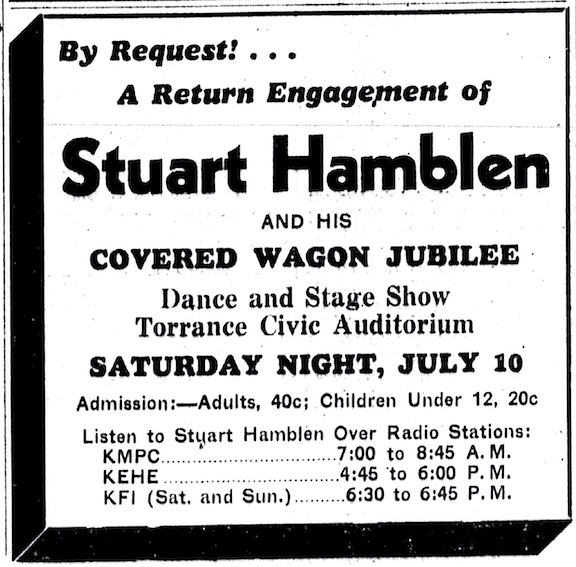
Torrance Herald ad, July 8, 1937, Page 5-B. (Credit: Torrance Historical Newspaper and Directories Archive database, Torrance Public Library)

In its first couple of years the building hosted dozens of formal dinners, galas and concerts. Singing cowboy radio star Stuart Hamblen appeared there in July 1937; a major ceremony honoring the completion of the new KNX broadcasting facility near 190th St. and Hawthorne Blvd. in present-day Columbia Park took place in September 1938.

Turnabout being fair play, the auditorium also became the temporary home of Torrance High School functions for a couple of years until the school’s new auditorium opened in 1938. 

The city’s tenfold increase in population from 9,950 in 1940 to 100,991 in 1960, along with wear and tear from the building’s heavy use, were two factors causing the city to begin thinking of replacing it.

City Hall already had been moved from its Old Torrance building to the larger present-day  Civic Center in 1956. The collection of newer city buildings on Torrance Blvd. between Madrona and Maple avenues eventually would include a new police headquarters, library, public swimming pool and county courthouse.

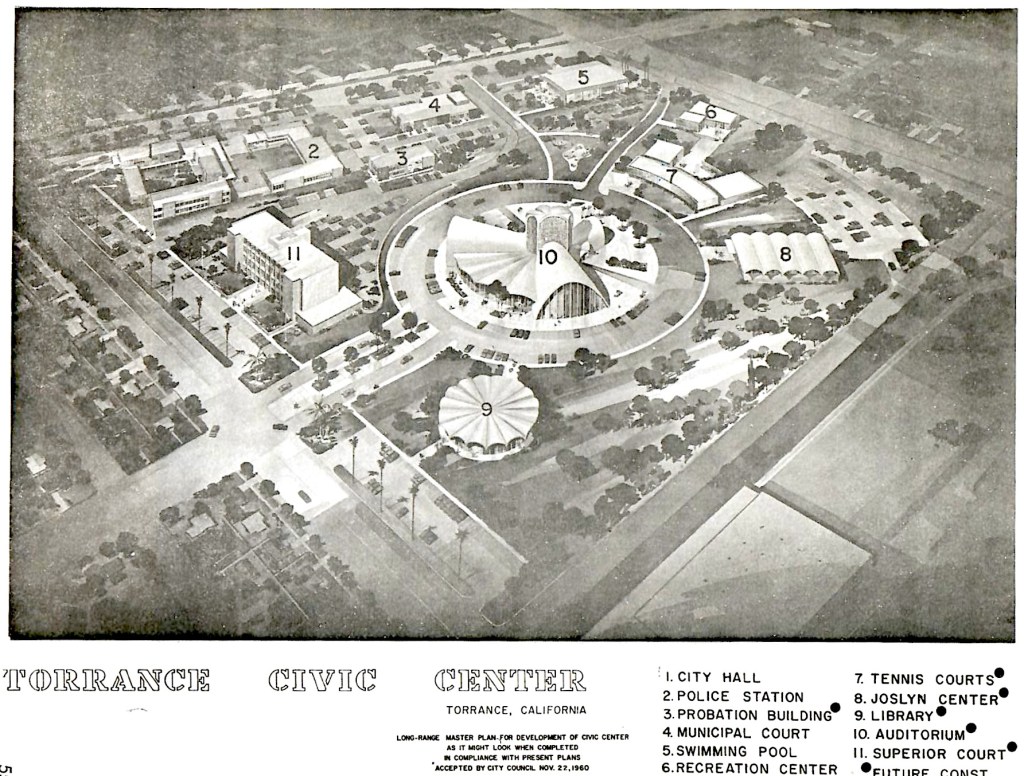
A long-range plan adopted by the city in 1960 called for an impressive new auditorium building that would serve as the centerpiece of the entire complex. Unfortunately, due to financial constraints, the auditorium as imagined then never became reality.

City of Torrance long-range plan for Civic Center, adopted 1960. Planned auditorium, center (#10). (Credit: History of Torrance: A Teacher’s Resource Guide)

The aging Torrance Civic Auditorium was demolished in 1971. (A large townhouse development now stands at the site.)

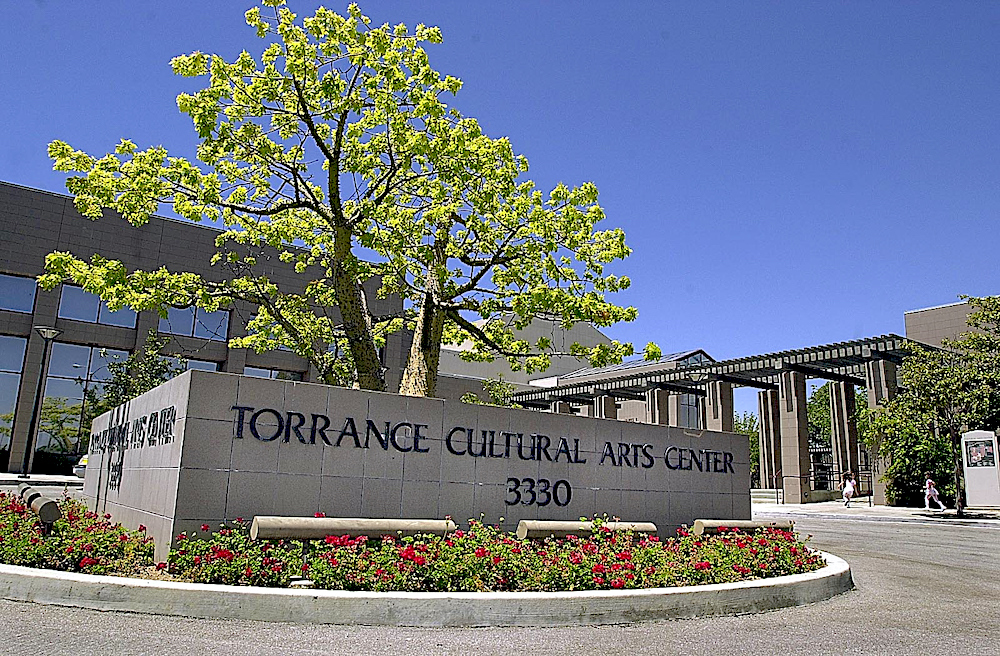
The city spent the next three decades attempting to bring its vision of a new auditorium complex into being. The long-awaited result, the Torrance Cultural Arts Center, finally opened in October 1991. 

The deluxe facility includes the James Armstrong Theatre, the smaller George Nakano Theatre, classrooms and meeting rooms and a Japanese garden.

The Torrance Cultural Arts Center. (Credit: Daily Breeze staff file photo)

Sources:

Daily Breeze files.

“General Population by City, Los Angeles County,” Los Angeles Almanac website.

Historic Torrance: A Pictorial History of Torrance, California, by Dennis F. Shanahan and Charles Elliott, Jr., Legends Press, 1984.

History of Torrance: A Teacher’s Resource Guide, Torrance Unified School District Publication No. 34, September 1964.

“Los Angeles Times files.

Torrance Press-Herald files.

Richard Henry Dana Jr.’s saga ‘Two Years Before the Mast’ describes early San Pedro

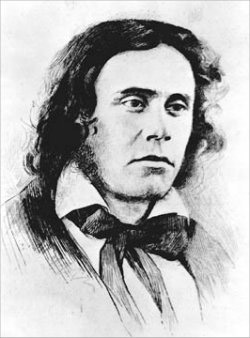
Richard Henry Dana

Born on Aug. 1, 1815, Richard Henry Dana Jr. grew up well-educated and privileged in Cambridge, Massachusetts. His father was a well-known poet and author and founder of the North American Review, the first literary journal in the U.S.

The young Dana entered Harvard in 1831, but his college days were interrupted during his junior year by a bout with measles that temporarily left him with impaired eyesight. In a move that must have seemed impetuous to Bostonian society types, the inexperienced 19-year-old decided to sign on as an ordinary  seaman aboard a merchant ship.

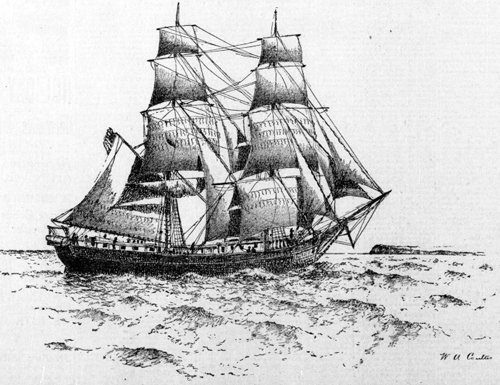
He landed on the Pilgrim, an 86.5-foot-long brig, a type of sailing ship with two square masts. Dana was a member of the ship’s small crew, along with its draconian Captain Thompson  and three officers. Its mission involved sailing around South America’s Cape Horn (the Panama Canal was still 80 years away from opening) and up the Pacific coast to California to sell and trade goods, and to pick up animal hides for transport back to the East Coast.

When he set out on his two-year journey on Aug. 14, 1834, California was 16 years away from becoming the 31st state in the U.S. The land still belonged to Mexico and with few exceptions, was sparsely populated. 

Sketch of the Pilgrim, by W.A. Coulter. (Credit: San Francisco Call, Dec. 8, 1896)

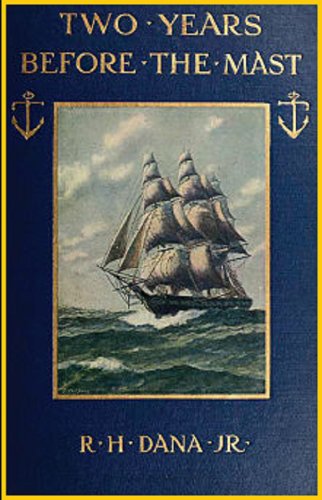
Four years after returning from his sea adventures, he fashioned his diary of the trip into the maritime classic Two Years Before The Mast, published by Harper & Brothers in 1840. His detailed, highly readable accounts of a sailor’s life at sea continue to fascinate readers to this day. (Its title refers to his two years lived on the ship in front of the mast, where the regular seamen bunked.)

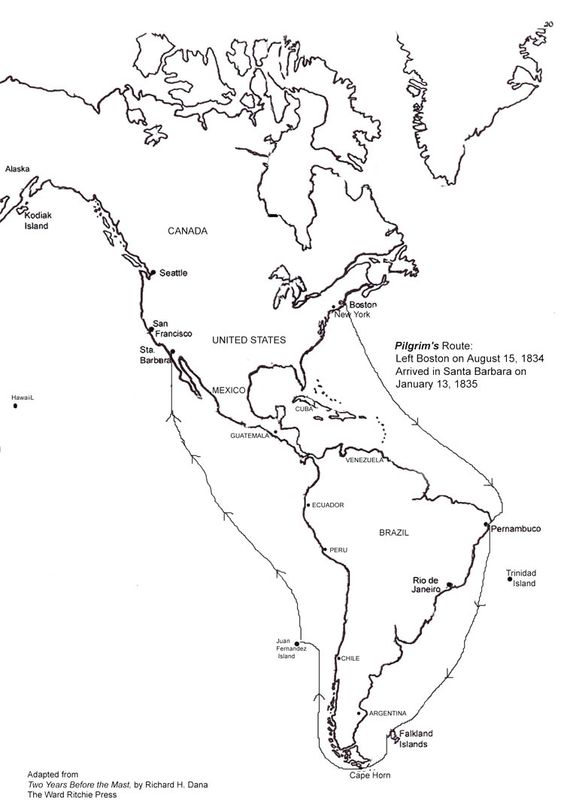
After surviving wild storms near Cape Horn and enjoying some idyllic days in the Juan Fernandez Islands off the Chilean coast where Daniel Defoe’s 1719 novel Robinson Crusoe was set, the Pilgrim headed for California.

Its first stop was Santa Barbara, which Dana describes as “a large bay without a vessel in it, the surf rolling and roaring in upon the beach; the white mission; the dark town and the high, treeless mountains.”

The voyage of the Pilgrim. (Credit: Two Years Before the Mast, Ward Ritchie Press, 1964 edition.)

During this part of the trip, the ship would make stops and do business in San Pedro, Monterey, San Francisco, what we now call Dana Point, and San Diego.

Here’s how Dana describes his first view of San Pedro in early 1835:

The land was of a clayey consistency, and, as far as the eye could reach, entirely bare of trees and even shrubs; and there was no sign of a town — not even a house to be seen. What brought us into such a place, we could not conceive.

The answer: animal hides brought down from what Dana calls “the Pueblo de Los Angelos,” the small community of Los Angeles some 22 miles north. “I also learned, to my surprise, that the desolate-looking place we were in was the best place on the whole coast for hides,” Dana wrote.

The 1911 edition.

Unfortunately, San Pedro’s then-muddy and dockless harbor proved mightily inconvenient for the loading of the cargo, which the crew had to walk to the ship by hand while maneuvering the rocky shores while barefoot. It was exhausting work. 

While they were anchored there, Captain Thompson brutally flogged two sailors on the Pilgrim for little or no reason, an incident which shook the young Dana and pointed up to him the harsh, often capricious nature of life on the high seas.

Dana also described one of the few structures at San Pedro, a small storehouse where three Englishmen then were living as caretakers. They told him of Dominguez Rancho, the only major settlement in the area, which lie a couple of miles north, accessible by horseback.

He goes on to provide detailed descriptions of the other California locales the Pilgrim visited, and recounts his hair-raising return home on a different vessel, the Alert. His book was an instant success upon publication, and heavily influenced Herman Melville’s 1851 whaling epic Moby Dick.

Dana finished work on his law degree after returning to Boston, and went on to a successful career as a writer, attorney and politician before his death in Rome, Italy on Jan. 6, 1882.

The enduring popularity of his book and its descriptions of early coastal California has led to him being honored posthumously in a variety of ways.

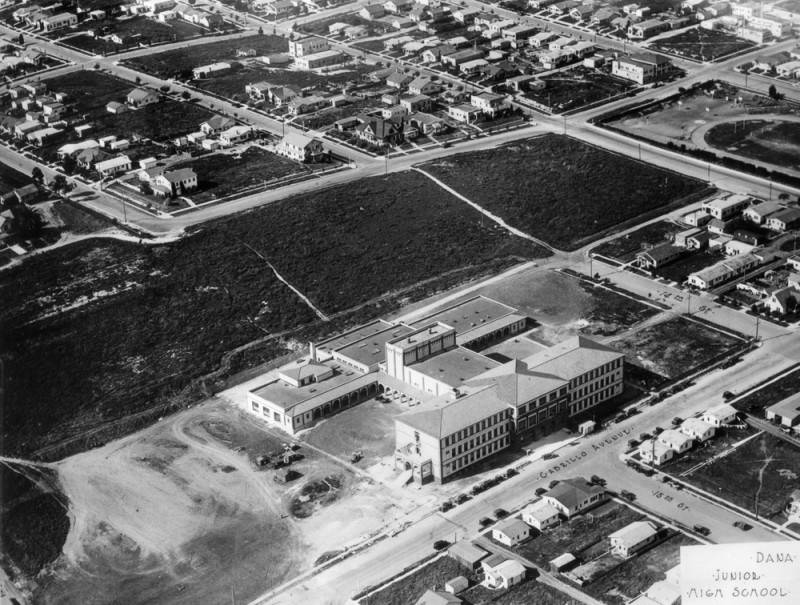
March 1928 aerial view of Dana Junior High School in San Pedro, looking southeast. (Credit: Los Angeles Public Library Photo Collection)

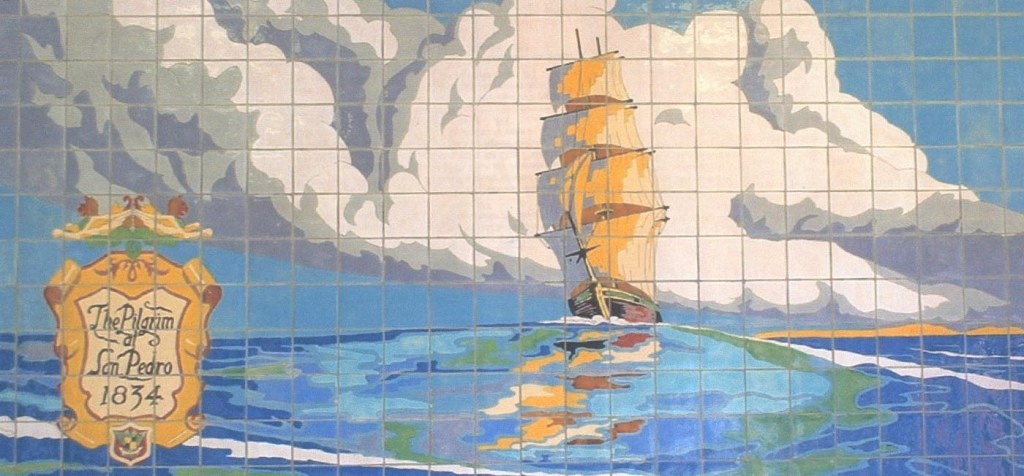
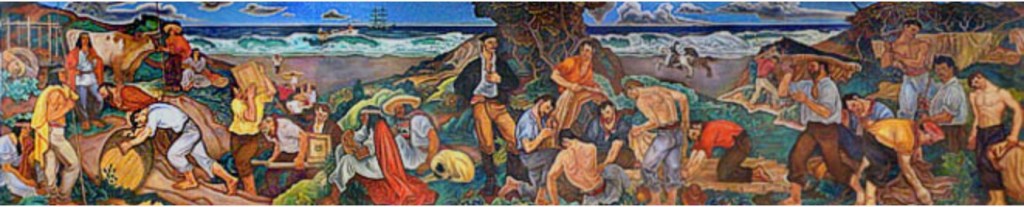
Richard Henry Dana Junior High School in San Pedro, now Dana Middle School, was named after the author. The school at 1501 S. Cabrillo Ave. opened on Feb. 6, 1928. Six years later, French artist Adrien Machefert completed two 8-by-42-foot oil-on-canvas murals inspired by Dana’s accounts as part of the Works Progress Administration’s Federal Art Project. They are mounted in the school cafeteria. Two other tile Dana murals adorn the school’s foyer.

Tile mural in the foyer of Dana Middle School in San Pedro celebrates the epic journey of Richard Henry Dana Jr. (Daily Breeze 2003 file photo)

Dana Point, the land feature, and Dana Point, the incorporated city, both are named for the author. In addition, the city commissioned and installed a large bronze sculpture of Dana on Dana Island in its marina in 1972. The harbor contained an operational replica of the Pilgrim for years until the tall ship sunk in March 2020.

Schools in Hawthorne, Arcadia, Dana Point and San Diego also have been named for Dana.

Two Years Before the Mast has remained in print essentially since its first publication, and remains one of the most entertaining true-life adventure accounts in all of American literature.

One of the two WPA cafeteria murals from 1934, Dana Middle School, San Pedro. (Credit: Dana Middle School)

Sources:

Daily Breeze files.

“Dana Middle School,” The Living New Deal website.

Los Angeles Times files.

Palos Verdes Peninsula News files.
“Richard Henry Dana,” Ship Passengers – Sea Captains website, Maritime Heritage Project.

San Pedro News Pilot files.

Two Years Before the Mast: A Personal Narrative of Life at Sea, by Richard Henry Dana Jr., 1840. (Modern Library Edition, 2001.)

Wikipedia.

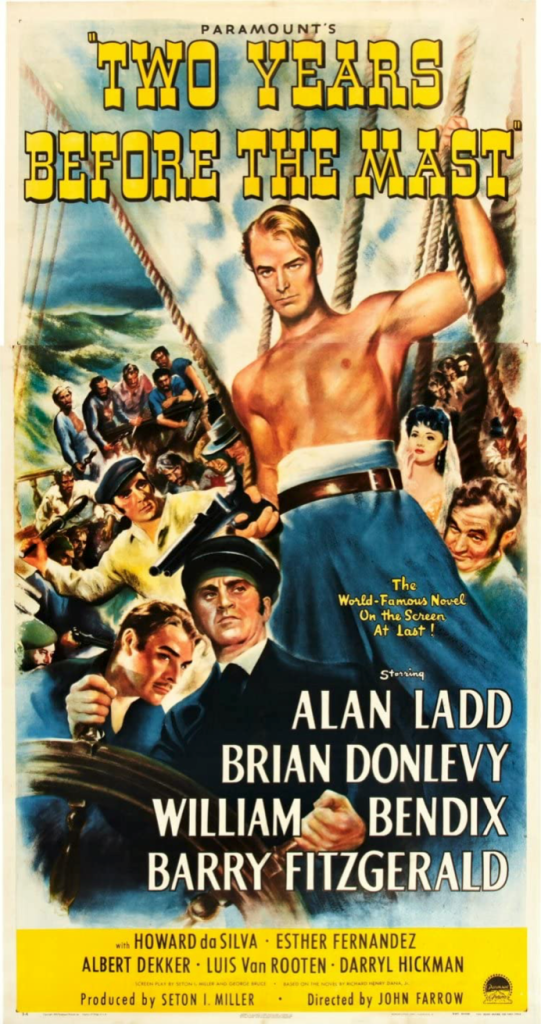
“Mast” became a Hollywood film in 1946. (“The world-famous novel” actually was a nonfiction work.)

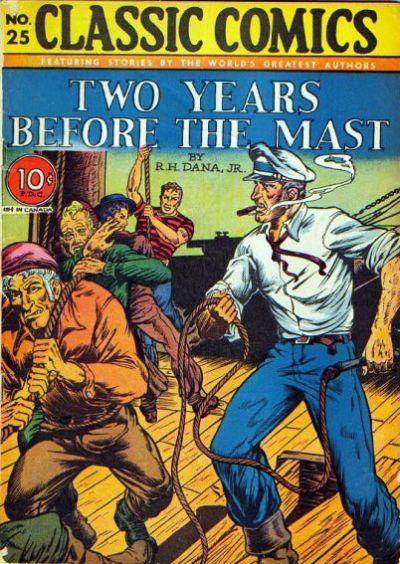
Comic book version, 1945.

Redondo Beach man among those who disappeared aboard the USS Cyclops in 1918

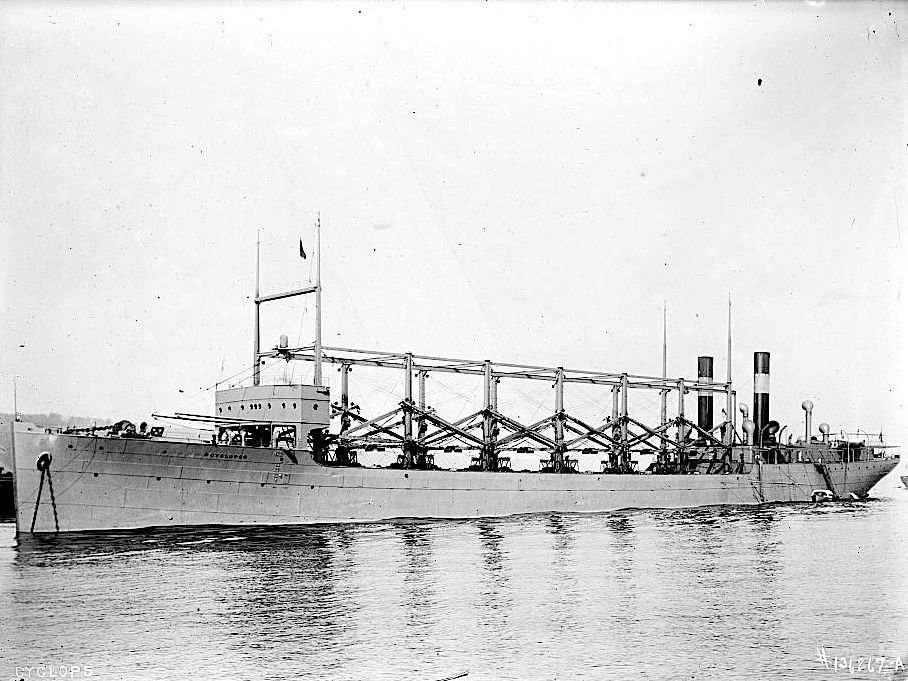
Undated photo of the collier USS Cyclops circa 1915-17. (Credit: Library of Congress, Prints and Photographs Division)

One of the greatest unsolved naval mysteries of the twentieth century involved the disappearance of the USS Cyclops in March 1918. On board were several Southern California seamen, including Harry M. Davis of Redondo Beach, who never were heard from again.

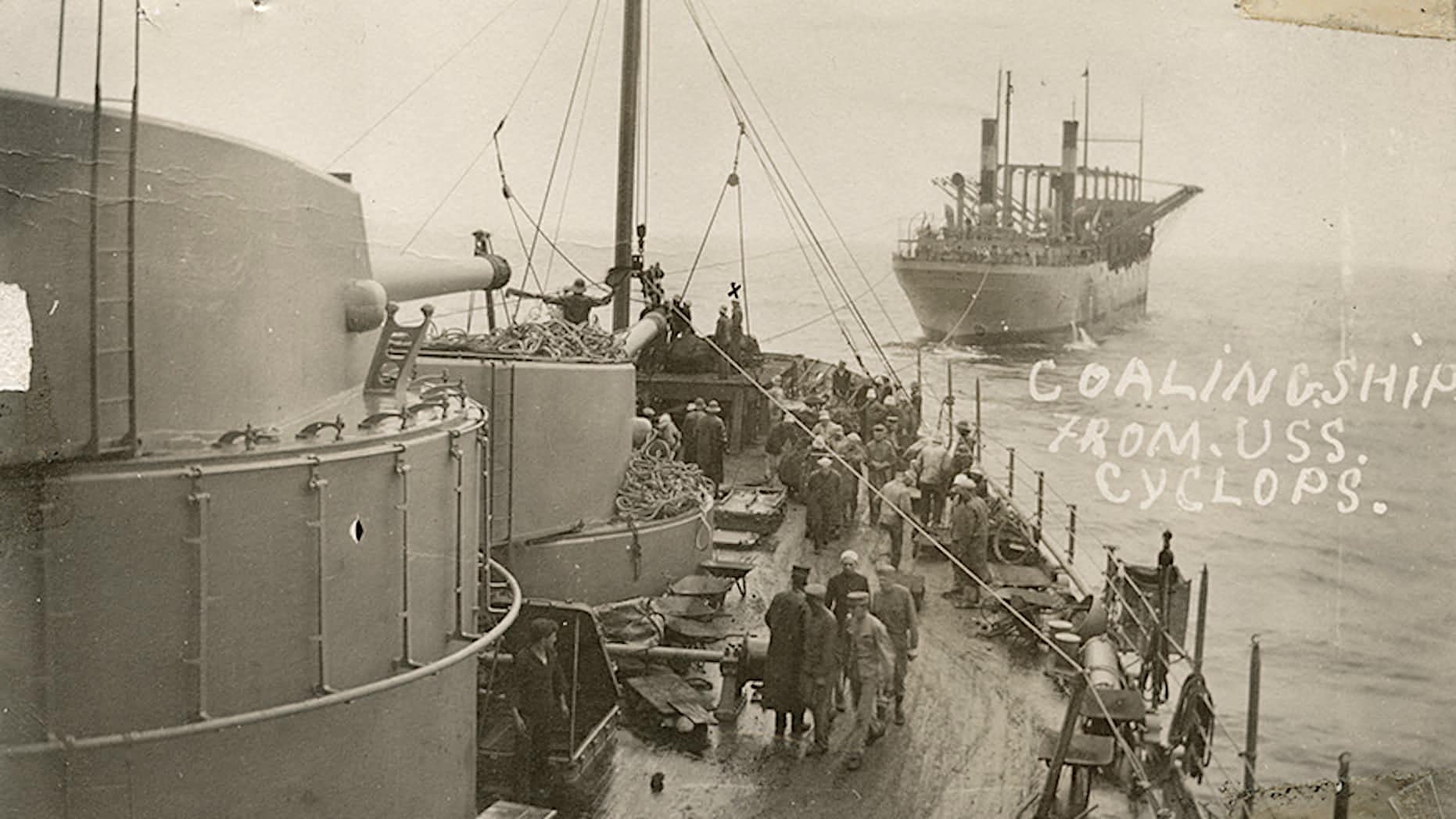
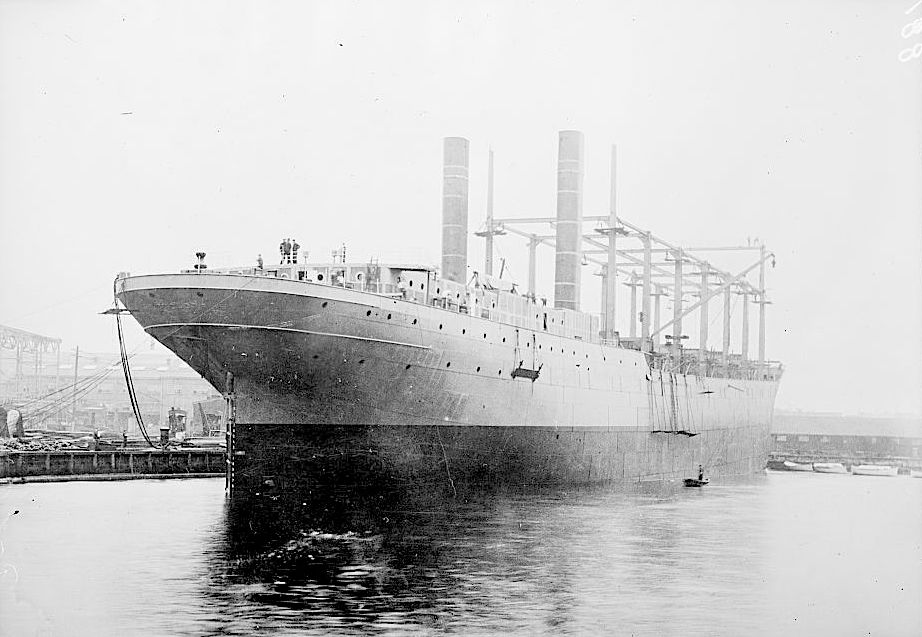
Built in Philadelphia and commissioned in 1910, the Cyclops was a collier, a ship that transported coal, especially for the purpose of supplying other coal-powered ships. Most Navy ships of the era ran on coal, and the Cyclops had a mechanism that transferred the material to other ships, much like the Air Force’s tanker planes refuel airborne aircraft.

The USS Cyclops, background, transfers coal to the USS South Carolina in 1914. (Credit: U.S. Naval History and Heritage Command)

At the time of America’s entry into World War I in 1917, the Navy was transitioning from coal-fired ships to oil-powered ones. On Jan. 8, 1918, the increasingly obsolete Cyclops set out on its final mission: to transport coal from her Norfolk, Virginia home port to Brazil, and to bring a load of manganese ore back to Baltimore, Maryland.

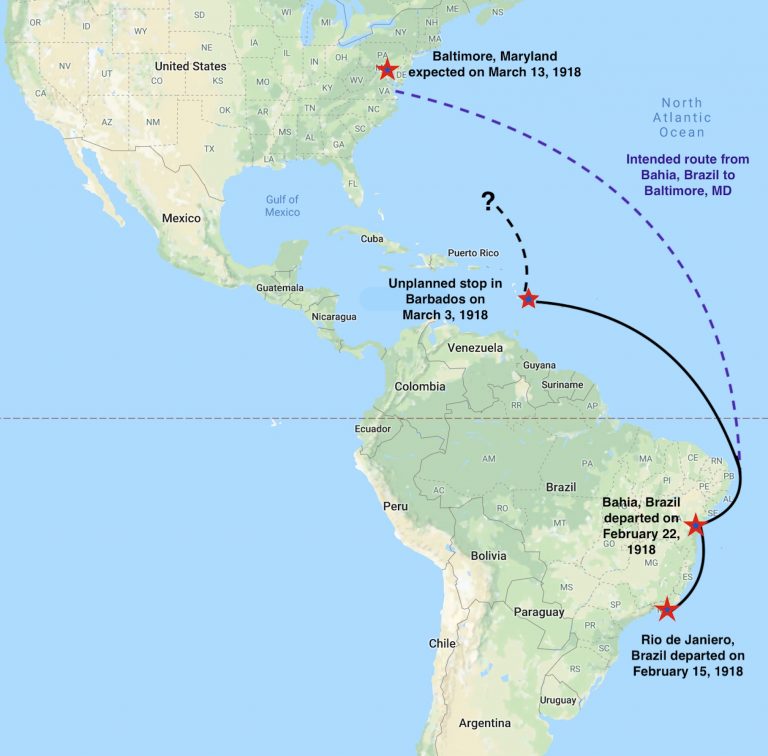
She arrived in Rio de Janeiro on Jan. 28, 1918 and made another scheduled stop in Bahia, Brazil on Feb. 15. On Feb. 22, the ship, with 309 people aboard departed for Maryland, where she was scheduled to arrive on March 13.

On March 3, the Cyclops made an unscheduled stop in Barbados in the West Indies, possibly to check on engine trouble caused by the large load of manganese she was carrying. After the ship was checked, she left for Baltimore the next day. She was never seen again. No trace of her or her crew ever was found. It remains the largest single loss of life ever aboard a U.S. Navy ship in a noncombat setting.

The intended and actual return trip of the USS Cyclops. (Credit: Google Maps, via U.S. Naval Institute website)

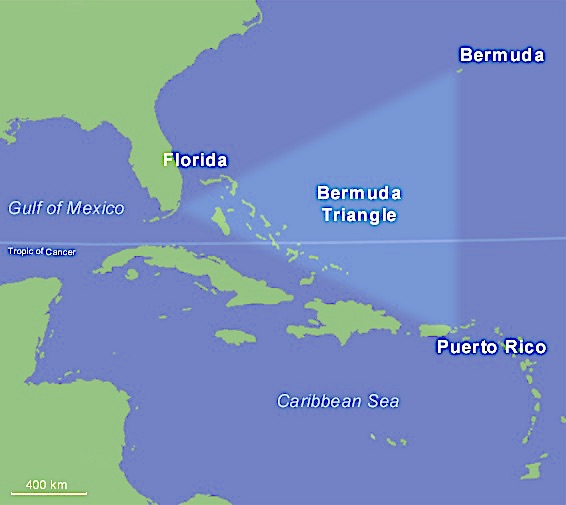
The area where the Cyclops disappeared without a trace would be christened “the Bermuda Triangle” starting in the 1950s. Writers and maritime experts began speculating about the western Atlantic Ocean region running roughly from Puerto Rico to Bermuda to southern Florida as a graveyard for ships that had vanished mysteriously over the years. The Cyclops was one of the best-known examples cited by Triangle enthusiasts.

Captained by Lt. Commander George W. Worley, its crew included Harry M. Davis, who lived with his wife Dora and their two children at 202 S. Catalina Ave. in Redondo Beach when not at sea. Davis, who had been in the Navy for 13 years, had fallen ill while aboard the USS Pittsburgh was in Brazil. He was transferred to the Cyclops so he could be taken to the naval hospital in Washington, D.C., for treatment.

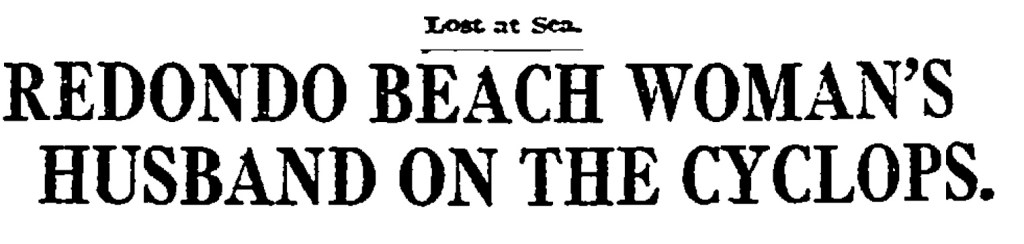
He never made it there. On April 14, a month after the Cyclops was scheduled to arrive in Baltimore, his wife Dora received a telegram from the Navy informing her of the ship’s unexplained disappearance. She told the Los Angeles Times, “I do not entertain great hopes for the safety of the ship.” Born Dora E. Campbell, Mrs. Davis was a prominent resident of Redondo whose family had lived in the city since 1904.

Los Angeles Times headline, April 16, 1918, Page 14. (Credit: Los Angeles Times archival database)

In addition to Davis, one San Pedro sailor, 23-year-old J. Rufus King, and three seamen from Long Beach, O.S. DeVoe, David Evans, and Guy Nowlins, also were on board the Cyclops.

On June 1, 1918, Assistant Secretary of the Navy Franklin D. Roosevelt officially declared the ship to be lost at sea, and all of those aboard were pronounced deceased on June 14. By then, a whirlwind of rumored causes already had begun swirling, and would continue to do so for the next 100 years or so.

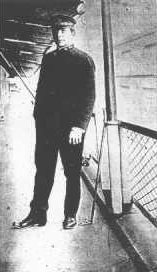
Some speculated on mismanagement by Worley, the ship’s captain. Conrad A. Nervig, an officer on the Cyclops who left the ship when it was in Rio, wrote about Worley in a July 1969 article in Proceedings, a journal of the U.S. Naval Institute. He described him as “a very indifferent seaman and a poor, overly cautious navigator. Unfriendly and taciturn, he was generally disliked by both his officers and men.” His indifference to the ship’s condition was cited as a possible cause of its being lost at sea.

George Worley aboard the Cyclops. Undated, ca. 1911-18.

Other rumors ran the gamut of possible causes. Early on, it was thought that the heavily laden, slow-moving ship had been boarded by enemy German agents and transported to Germany. The German government quickly disavowed this theory. Perhaps the enemy agents had set a time bomb to explode and sink the ship? No, this would have left evidence floating in the waters. None was found. Same for the possible torpedoing by a German U-boat, another explanation posited.

Others theorized that the non-combustible manganese ore had exploded, or that a giant octopus had dragged the large ship under.

Among the more credible explanations: the weighty load of ore had caused the ship to split in two and rapidly capsize, or mechanical and structural breakdowns aboard ship caused it to sink. Two of the Cyclops’ sister ships that also were transporting large loads of ore sank during World War II, giving some credence to the explanation.

The Bermuda Triangle idea first was posited in a Miami Herald article in 1950 and gathered steam over the years. A variety of reasons was given for the phenomenon, including paranormal and extraterrestrial factors, powerful ocean currents, unusual weather events and the like. 

(Credit: Wikipedia.org)

Its popularity waned after scientists and historians began poking holes in the theory, some noting that the area actually didn’t have a statistically higher than normal rate of ship accidents and providing logical explanations for many of those that had occurred there.

Note: Special thanks to Douglas Thompson of the Redondo Beach Public Library, who suggested the topic and provided research for this post.

Correction: Redondo Beach Cyclops crew member’s name corrected to Harry M. Davis.

The USS Cyclops during construction in Philadelphia, 1910. (Credit: Library of Congress, Prints and Photographs Division)

Sources:

“The Disappearance of the USS Cyclops, March 4, 1918,” compiled by Mary Kay Krogman for the Genealogy Trails website.

Los Angeles Times files.

Redondo Reflex files.

San Pedro News Pilot files.

“The Unanswered Loss of USS Cyclops — March 1918,” by Captain Lawrence B. Brennan, U.S. Navy (Ret.), Naval Historical Foundation website, June 13, 2013.

“USS Cyclops: The Deadliest Unsolved Mystery in the Navy,”  by Hannah Hirzel, Naval History Blog, U.S. Naval Institute website, June 14, 2018.

Wikipedia.

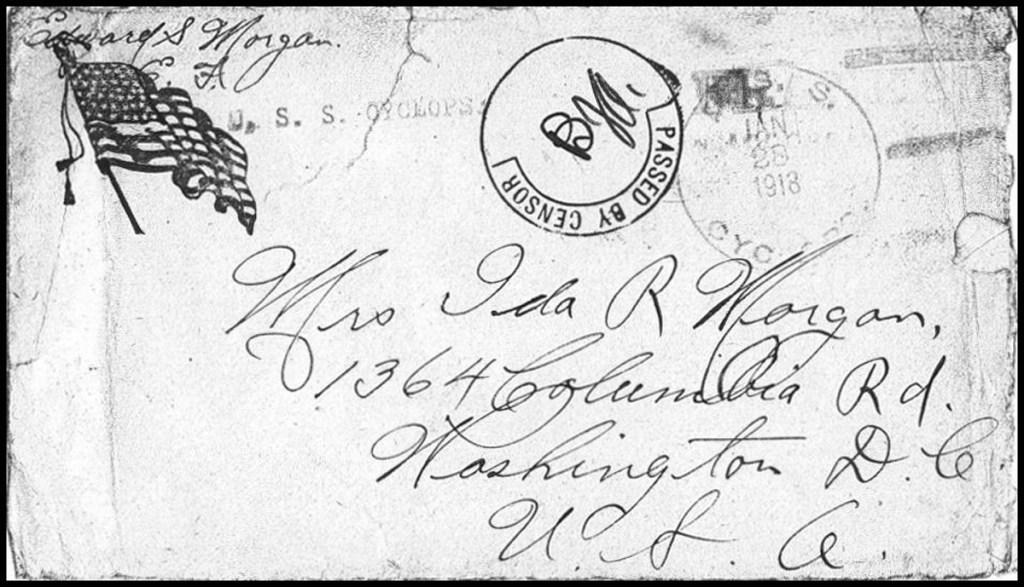
Letter sent from the USS Cyclops postmarked Jan. 28, 1918. (Credit: U.S. Naval Historical Foundation)

https://www.navalhistory.org/2018/06/14/uss-cyclops-the-deadliest-unsolved-mystery-in-the-navy

How whale fossils from the prehistoric Miocene era ended up atop The Hill

Raymond Spencer, head of Palos Verdes Rock Quarries, examines fossil remains of a 20-million-year old whale from the Miocene Era found in the Rolling Hills Estates area of the Palos Verdes Peninsula in June 1952. (Credit: USC Digital Library)

The headline writer for a 1923 story in the San Pedro News Pilot — “World’s Greatest Fossil Bed at Palos Verdes” — may have been guilty of hyperbole.

But the Palos Verdes Peninsula certainly has yielded a rich store of paleontological data to scientists over the years. Prehistoric fossils, beginning with finds made nearly 100 years ago on the Peninsula, have played a big role in expanding knowledge of life during past geologic eras.

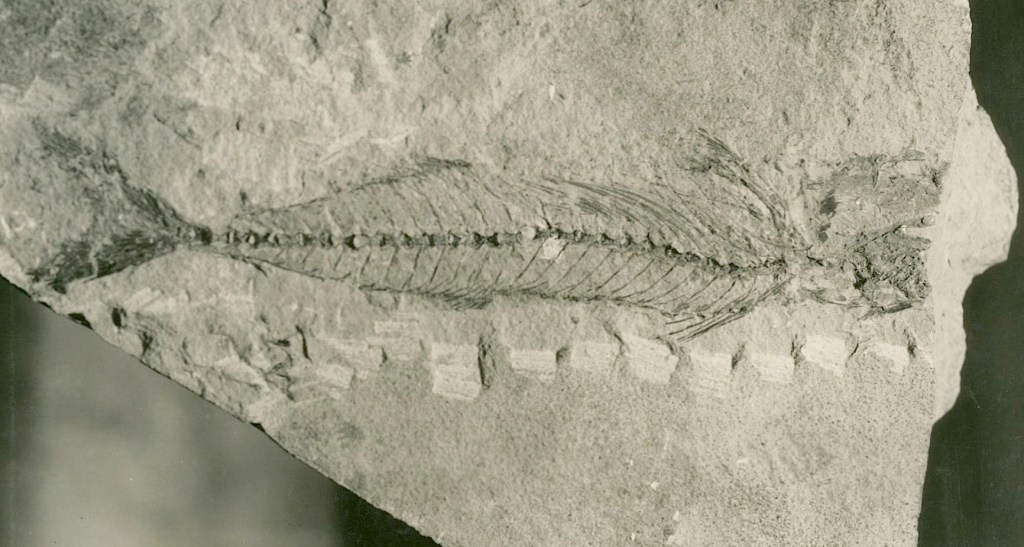
Why did so many of the actual fossil finds made on The Hill turn out to be the remains of prehistoric marine life? The answer begins during the Miocene geologic era, which ranged roughly from 23 million to five million years ago.

Stone with embedded fish fossil, found on the Palos Verdes Peninsula in April 1927. (Credit: PV Local History Center, Palos Verdes Library District)

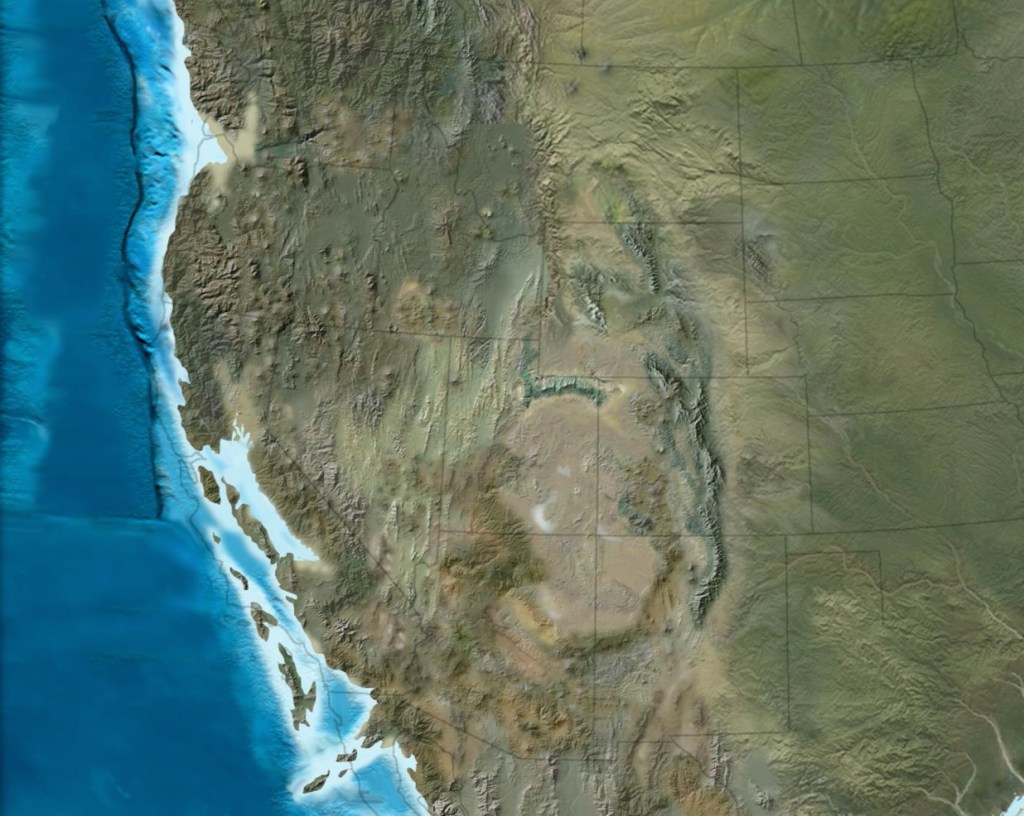
For much of this period, the Peninsula and a good portion of the South Bay, along with other Southern California coastal areas, lie submerged beneath the waters of the Pacific Ocean. Seismic forces pushed up the area’s transverse mountain ranges, those stretching east to west instead of north and south. These include the Santa Monica, San Gabriel and Santa Ana mountains.

Map imagines the California coast during the mid-Miocene Era, roughly 10 million years ago. Present-day coastline outlined in black. (Credit: From “Using Paleogeographic Maps to Portray Phanerozoic Geologic and Paleotectonic History of Western North America,” by Ron Blakey, Search and Discovery website, 2013)

Sediment eroding from them gradually formed a large marine basin beneath the mountains. More recently, roughly two millions years ago, another seismic thrust formed the smaller Palos Verdes Peninsula hills. The Peninsula then was an island, separated from the mountain ranges north of it by the ocean.

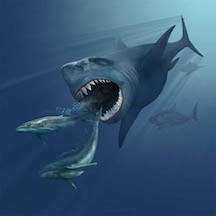
A megalodon hunts two Miocene baleen whales. Megalodon, now extinct, was a predatory ancestor of the great white shark. (Credit: Karen Carr via Wikipedia)

The waters eventually receded, forming the greater Los Angeles basin, and reconnecting the Peninsula hills on its landward side to what was now the mainland. Erosion formed canyons, which cut through the land terraces formed by the receding waters to reveal the fossils of marine life creatures who once called the area home. 

Development beginning in the 1920s brought more roads and people to the still-pristine coastal area. The construction of Palos Verdes Drive West and South in the 1920s made the area accessible not only to its new residents, but also to sightseers using their automobiles for scenic weekend outings.

Geologists both amateur and credentialed began to comb the beachside cliffs and interior hillsides and canyons. There, they found the kinds of fossils mentioned in that 1923 News Pilot article, many of which came from the base of the Palos Verdes hills in Torrance. Many more such discoveries were to come.

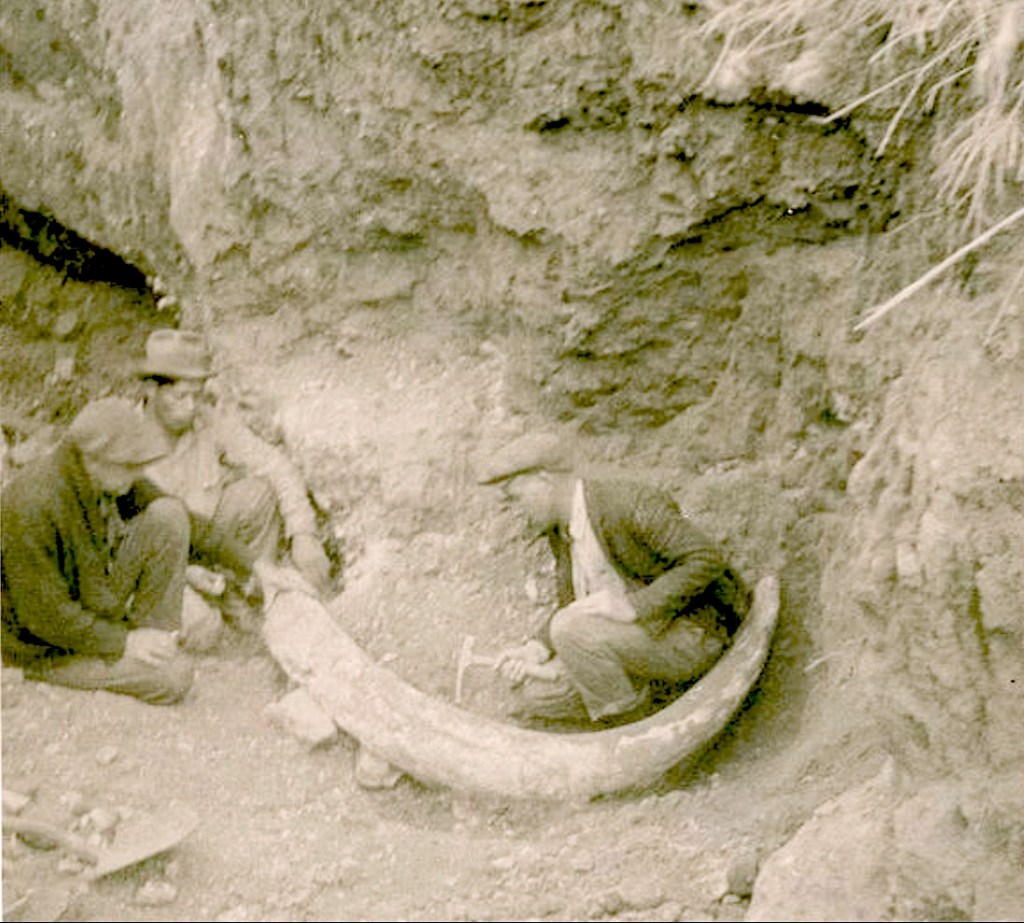
Three men dig out an eight-foot-long tusk of a mastodon, determined to be a large specimen of an Imperial Elephant.The fossil was discovered at the edge of the bluff just northwest of Malaga Cove School in April 1927. (Credit: PV Local History Center, Palos Verdes Library District)

The fossils uncovered weren’t limited to sea life. A giant mastodon tusk was unearthed at the edge of the bluff just northwest of Malaga Cove School in April of 1927 by Dr. F.H. Racer of Lomita.

But marine fossils seemed the most prevalent. A team of scientists from the Los Angeles County Natural History Museum spent weeks carefully recovering the head of a prehistoric baleen whale in the hills near Montemalaga Drive in Rancho Palos Verdes in the summer of 1956. The 50-foot-long whale’s skull alone measured five feet in width.

The whale skeleton, located at about the 1000-foot elevation, was found to be typical of the Miocene Era and estimated to be between 20 and 35 million years old. 

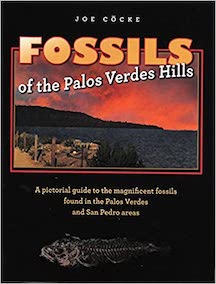
Many different varieties of shark teeth have been uncovered over the decades, inspiring fossil expert Joe Cocke, formerly of the County Natural History Museum, to write a guide to the various types.

The bison fossil Joe Cocke found has marks on it indicating human butchering and was dated at 13,500 years old. (2017 Daily Breeze staff file photo)

More recently, Cocke has authored Fossils of the Palos Verdes Hills (Lamna Books, 2015), which concentrates on remains found on the Peninsula.

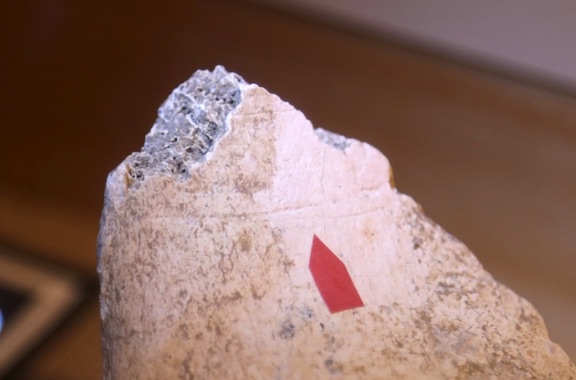
He was hiking and fossil hunting in Lunada Canyon in 2012 when he found a bone from an extinct bison species protruding from the bottom of a cliff face. It had cut marks on it indicating that humans had eaten the animal 13,500 years ago, putting it among the earliest indications of human life in California.

The discovery of an excellent sperm whale fossil specimen hiding in plain sight at Chadwick School on the Peninsula caused a major stir among fossil enthusiasts in January 2014. 

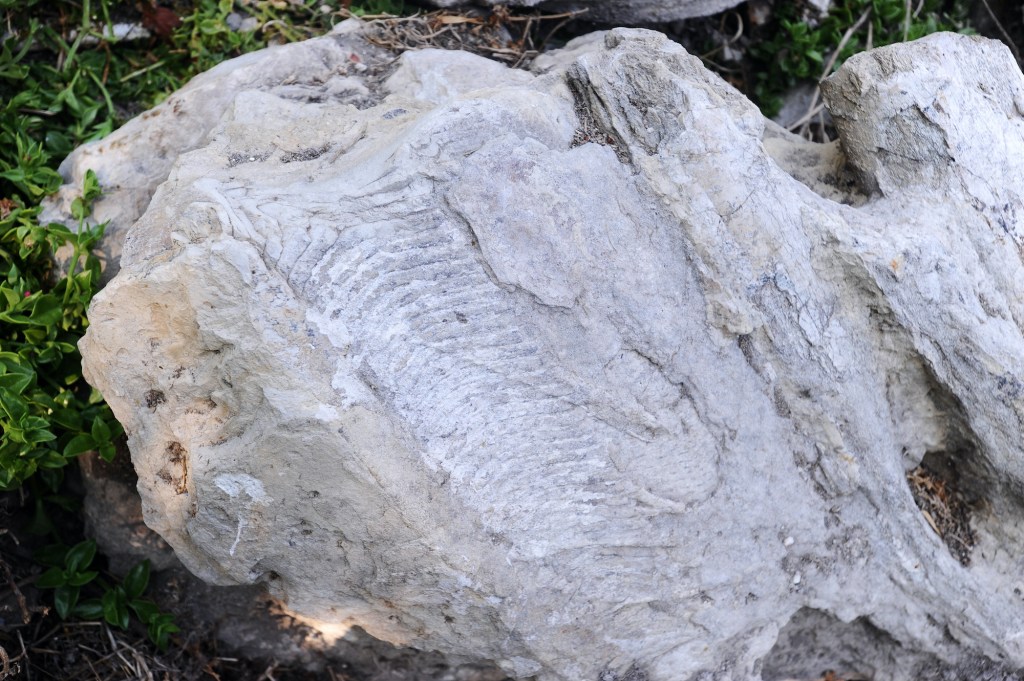
Many marine fossils embedded in rocks, most probably unearthed during the school’s construction in the 1930s, had been used to decorate the grounds of the campus. 

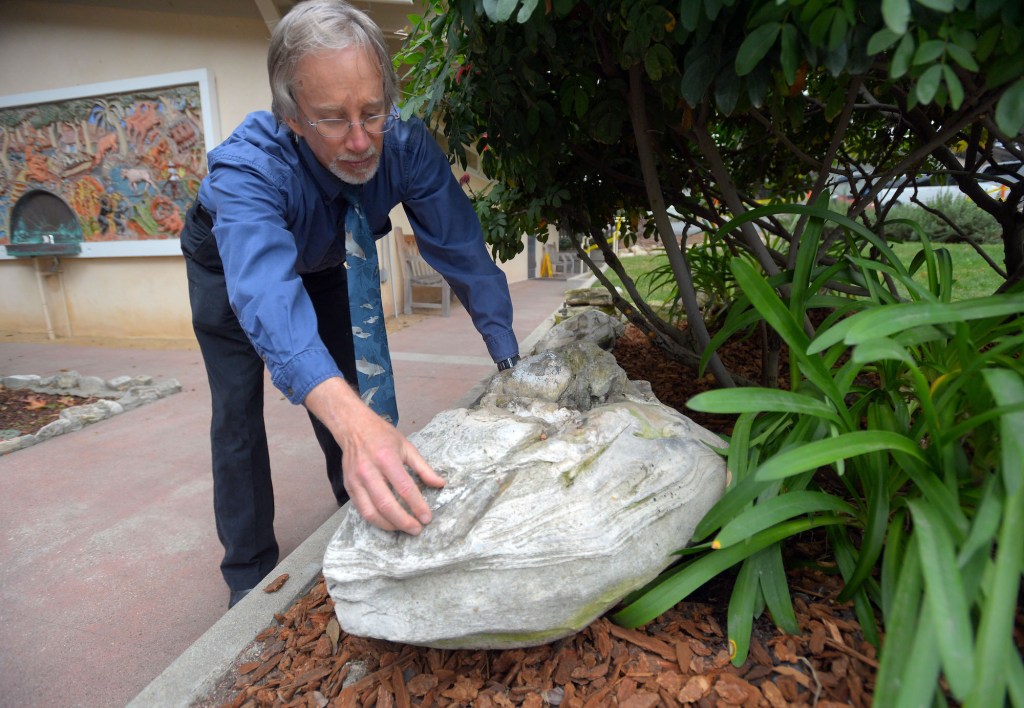
After Chadwick science teacher Martin Byhower decided to call the Natural History Museum in 2013 to evaluate the various fossils, the rare sperm whale fossil was identified. The 700-pound Altamira shale boulder containing the 12-million to 15-million-year-old artifact was transported to the museum for further study.

Chadwick science teacher Martin Byhower looks over the 12-million to 15-million-year-old whale fossil on the campus of Chadwick School in Rolling Hills Estates on Jan. 30, 2014. The skull fossil, which is embedded in stone, sat in a garden on campus for years before it was identified as an unknown type of sperm whale. (Daily Breeze staff file photo)

News of that find caused Gary Johnson, once a resident in the 4600 block of Browndeer Lane, just down the hill from Chadwick in Rolling Hills Estates, to ask the museum experts to evaluate a boulder he and some friends had found in a nearby ravine in 1978.

The 1,000-pound rock, kept in his backyard of a house now owned by Mike Keller, turned out to contain a rare baleen whale fossil estimated to be 16 million years old. In August 2014, it, too, was transported to the natural history museum for further study.

The 16 million-year-old baleen whale fossil in the backyard of Rolling Hills Estates homeowner Mike Keller on Aug. 1, 2014, before it was moved to the L.A. County Natural History Museum. it was originally found nearby by former resident Gary Johnson. (Daily Breeze staff file photo)

Additional reading:

Fossils of the Palos Verdes Hills, by Joe Cocke, Lamna Books, 2015.

Sources:

Daily Breeze files.

“Geology and Paleontology of Palos Verdes Hills, California,” by W.P. Woodring, M. N. Bramlette and W. S. W. Kew, Professional Paper 207, U.S. Department of the Interior, U.S. Government Printing Office, 1946.

Los Angeles Times files.

Palos Verdes Peninsula News files.
The Palos Verdes Story, by Delane Morgan, Review Publications, 1982.

Time and the Terraced Land, by Augusta Fink, Western Tanager Press, 1987.

“Using Paleogeographic Maps to Portray Phanerozoic Geologic and Paleotectonic History of Western North America,” by Ronald C. Blakey, Search and Discovery website, Article #30267, May 13, 2013.

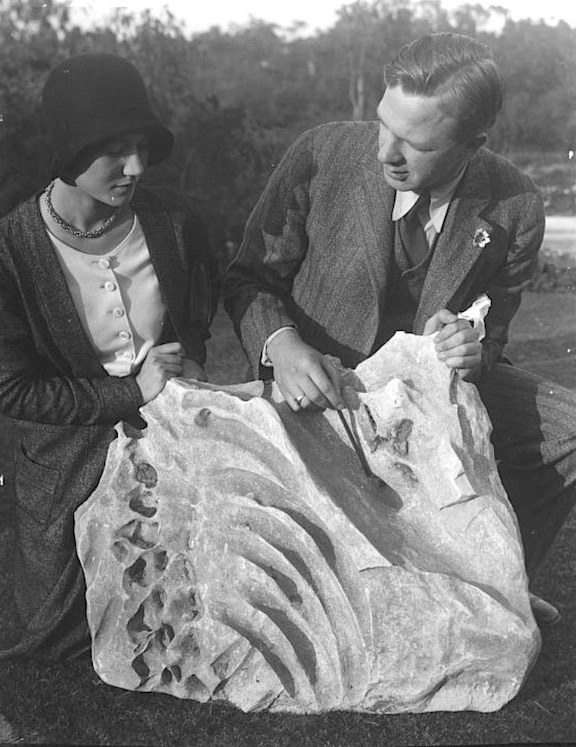
Unidentified man and woman pose with animal fossil in Palos Verdes Estates in 1930 or 1931. (Credit: UCLA Library, Dept. of Special Collections)

Torrance welcomed the arrival of Magnavox Research Laboratories with open arms

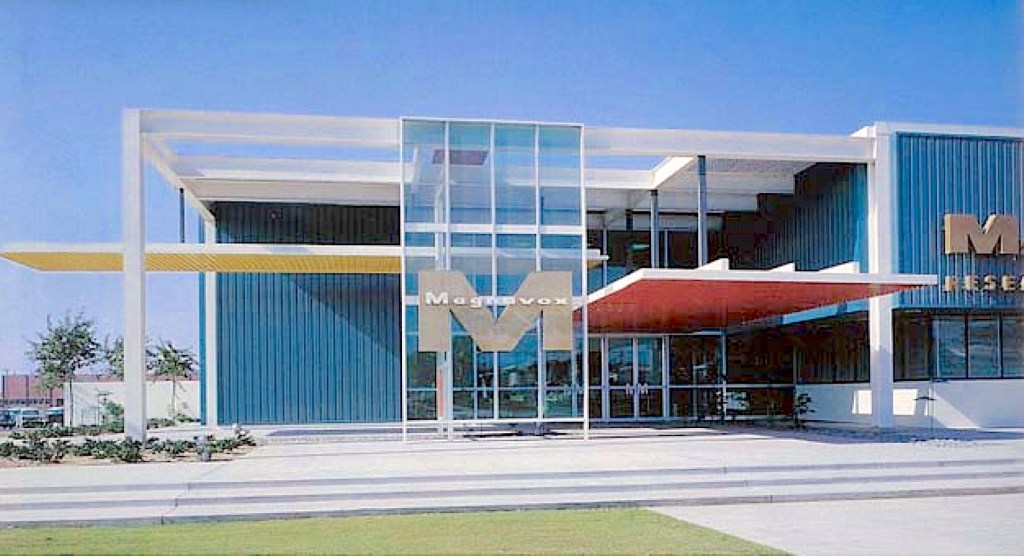
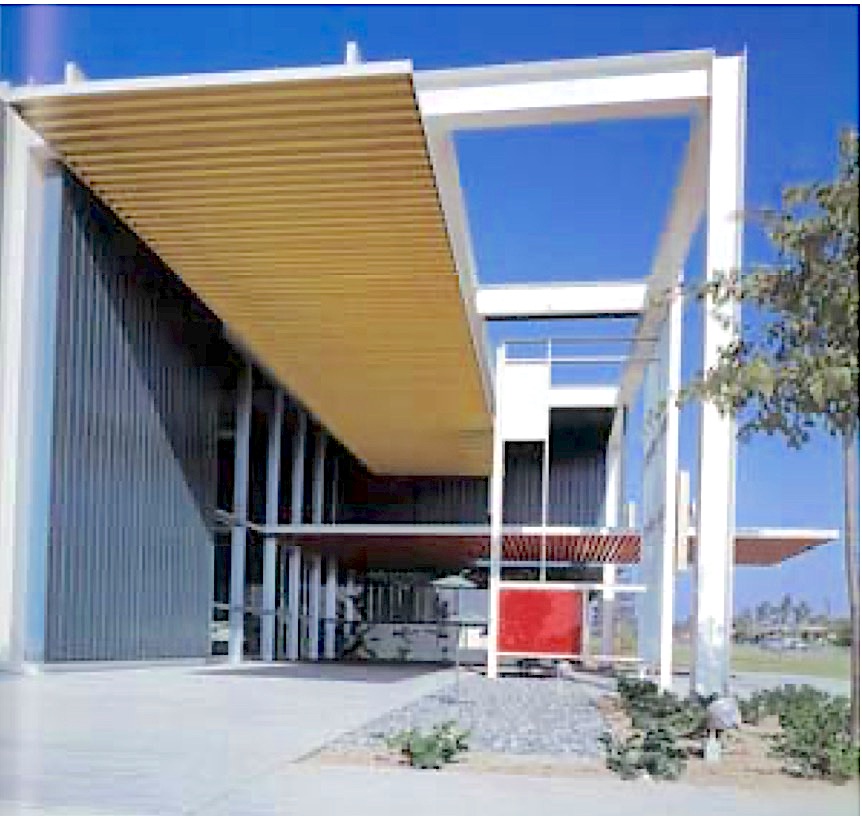
Magnavox Research Laboratories at 2829 Maricopa St. in Torrance. (Undated photo by Julius Shulman)

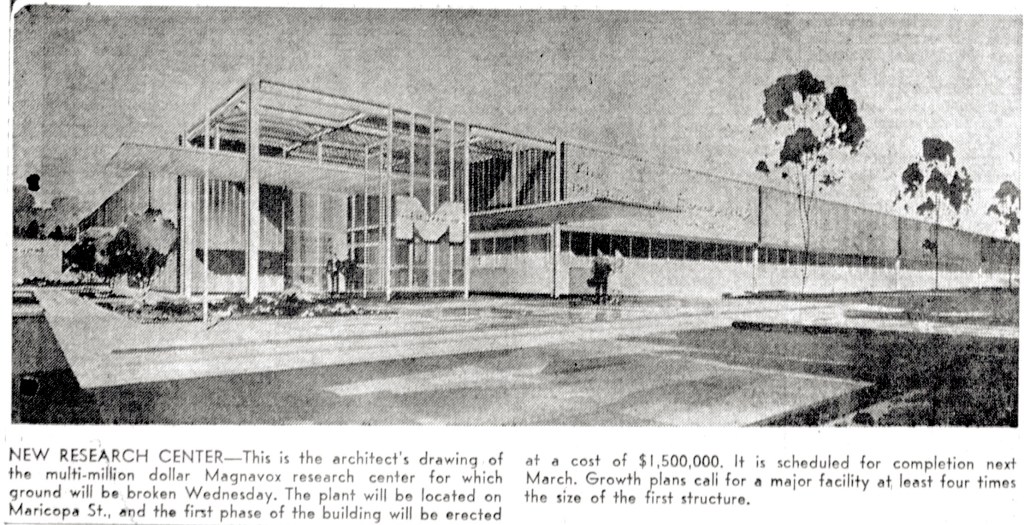
In late 1958, Torrance officials received the news that Magnavox had purchased ten acres of land on Maricopa St. in the heart of the city with great enthusiasm.

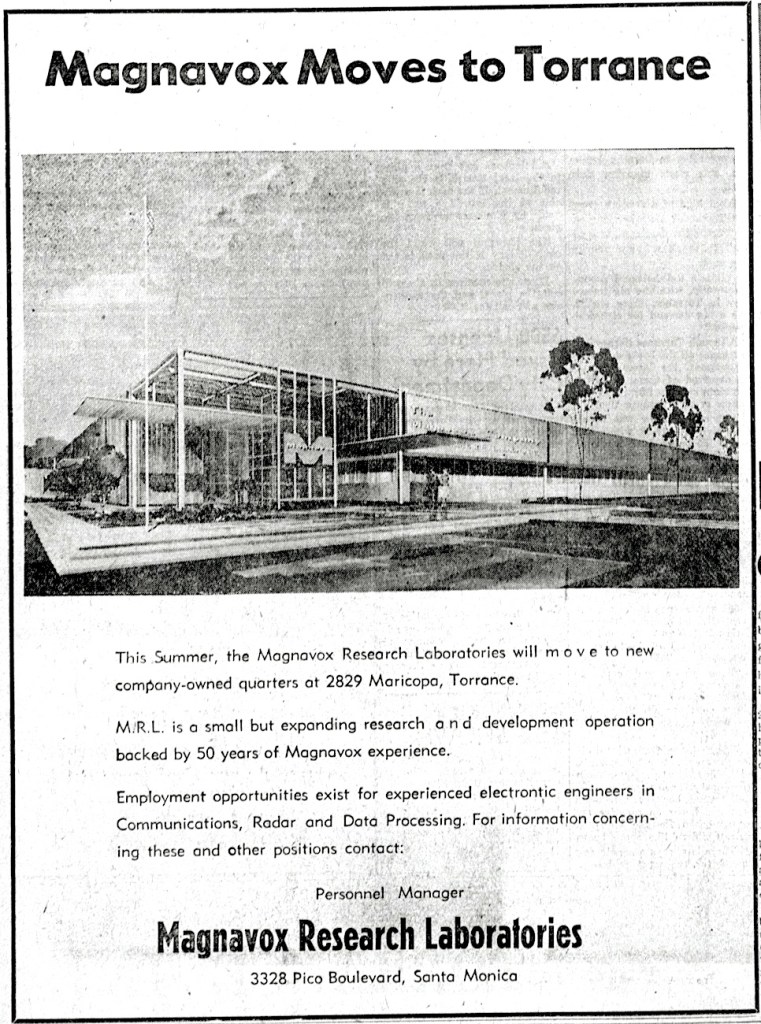
The Fort Wayne, Indiana-based electronics company, known to consumers for its radios, TVs and stereo equipment, planned to spend $1.5 million to build Magnavox Research Laboratories.  The new building at 2829 Maricopa near Hawaii Ave. was slated to open in 1960.

It would be the first of four buildings the company planned for the site. The new lab facility, part of the company’s Military and Industrial Division, would focus on research and development of communications, radar, anti-submarine, navigational and data processing equipment.

Torrance Press, Aug. 27, 1959, Page 7. 
(Credit: Torrance Historical Newspaper and Directories Archive database, Torrance Public Library)

Magnavox had built several research labs, including plants in Santa Monica and West Los Angeles, since starting the division in 1953. Employees from the West L.A. plant were slated for relocation to Torrance.

The company itself had been founded in Napa, California, in 1910, and is credited with developing the loudspeaker and the public address system in its earliest days.

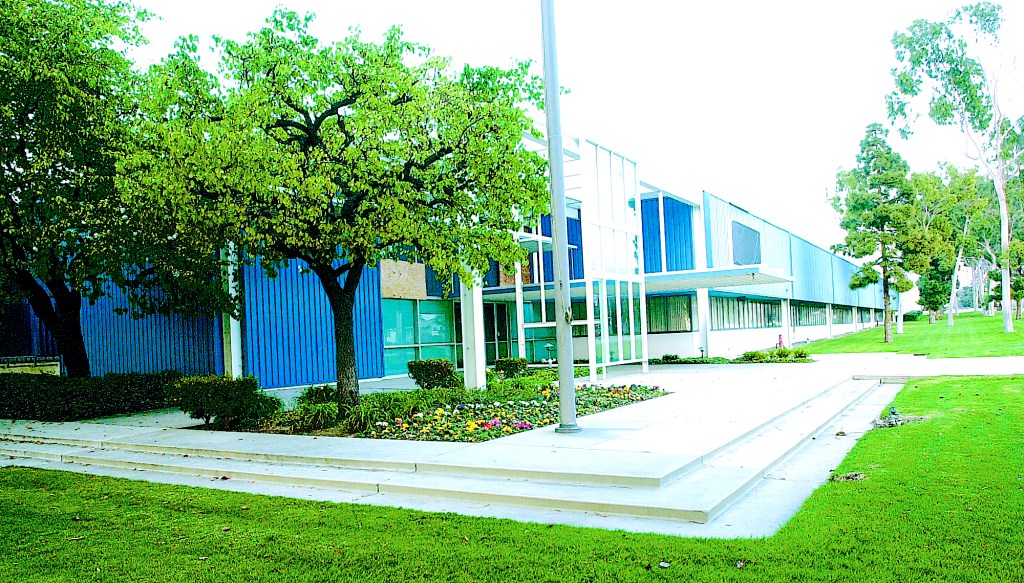
The Los Angeles architectural firm of Risley and Gould designed the new building, and it was built by the William Simpson Construction Co., also based in L.A. Its space-age modernist facade still has building buffs buzzing sixty years after the fact. Not bad for a structure that no longer exists.

Side view of the entrance to Magnavox Research Laboratories in Torrance. (Undated photo by Julius Shulman)

The main entrance drew most of the attention. Its sleek, angular glass and steel surfaces and creative use of colors felt like something out of “The Jetsons,” which wouldn’t appear on TV screens until 1962.

The 68,000-square-foot building featured innovative modular construction, with moveable panels accommodating future expansion. in addition, it had a complex air conditioning system that allowed for customized temperature and humidity controls for the various labs within the structure.

Torrance Herald, Sept. 3,, 1959, Page 45. 
(Credit: Torrance Historical Newspaper and Directories Archive database, Torrance Public Library)

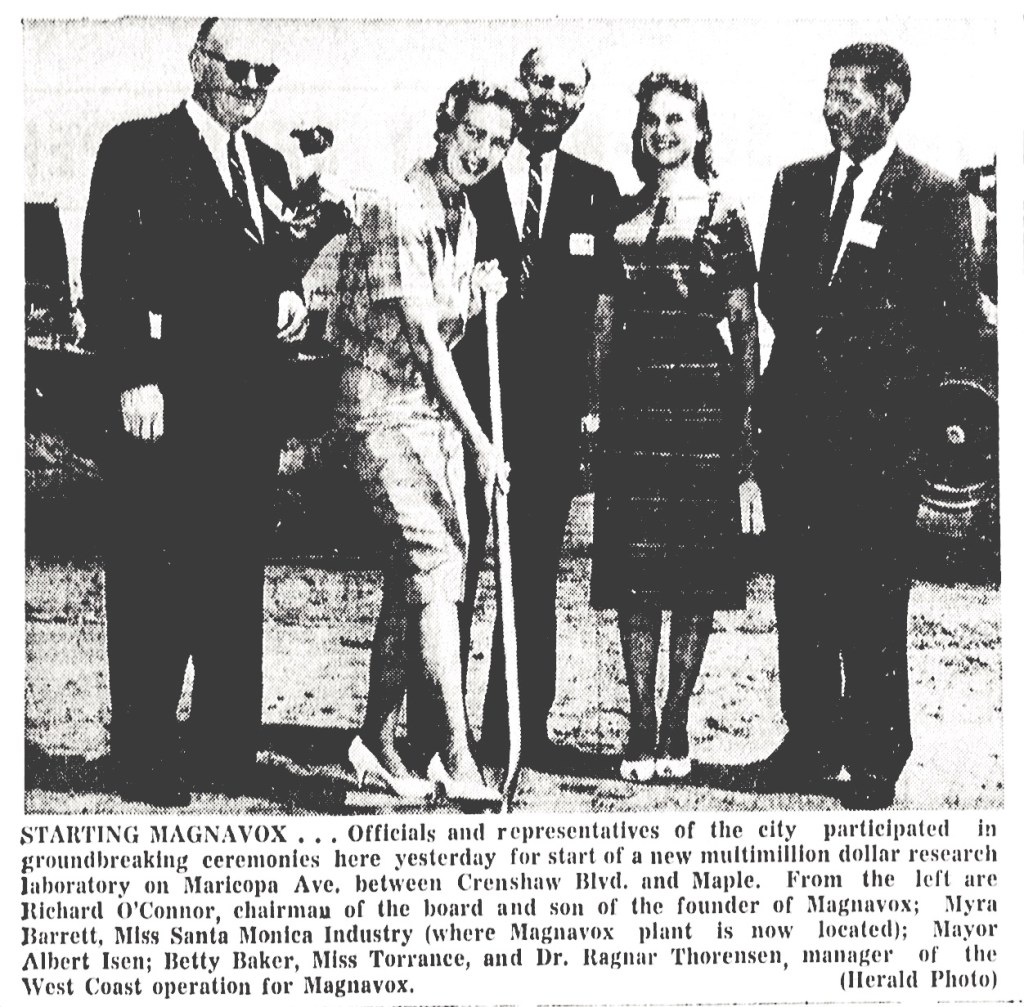
Groundbreaking ceremonies involving business and civic leaders and the odd beauty queen or two were held on Sept. 2, 1959. Torrance resident Dr. Ragnar Thorensen, director of research at the new facility, presided over the other shovel-wielders at the ceremony.

The dedication of the new building took place on Aug. 3, 1960. Within days, many of its initial workforce of 200 employees had occupied it and were hard at work on various aerospace and defense projects.

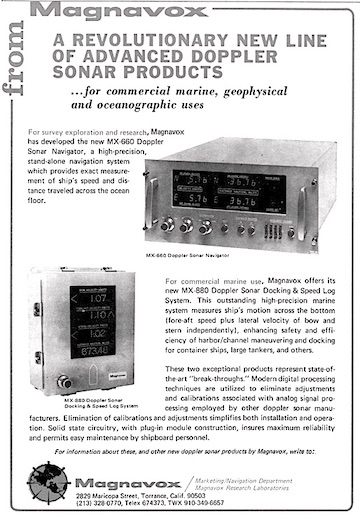
Magnavox adapts defense industry technology for commercial use. Ad from Maritime Reporter and Engineering News, June 1973, Page 42.

By the late 1960s, the company was thriving and regularly winning defense industry contracts. Its research work expanded into the rapidly developing fields of avionics, satellites and computer-aided marine navigation, often using new three-dimensional graphic modeling techniques. 

In the early 1970s, the division’s name was changed to Magnavox Advanced Products and Systems Co. In its later years, that was changed to the simpler Magnavox Electronic Systems.

The Dutch firm Philips Electronics acquired Magnavox’s consumer products operations in 1974, but the research arm remained independent until 1995, when it was acquired by Hughes Electronics.

By then, the aerospace industry decline had reduced the company’s Torrance work force to 350 employees, half the amount who had been employed there just two years earlier. The new owners renamed it Hughes Defense Electronics in 1996, and moved the remaining employees out of the Torrance building a year later.

The Maricopa St. building would remain vacant for the next several years.

Controversy erupted among nearby residents when the Church of the Harvest International, which had moved into the Magnavox property in 2001, announced early the next year its plans to build a video production company and a Bible college at the site. A revised plan from the megachurch calling for the construction of a 2,000-seat sanctuary also failed to mollify irate neighboring homeowners.

The abandoned Magnavox site where the Church of the Harvest International planned to put its headquarters. Feb. 28, 2002. (Daily Breeze staff file photo)

The dispute festered for several months until the church reached a financial agreement with the city that included abandoning plans for the Magnavox site and moving its operations out of the city entirely.

The move cleared the way for the next proposed use for the ten-acre parcel. 

After several months of negotiations, Torrance-based JCC Homes received approval from the Torrance City Council to build a gated 104-unit housing development on the site in October 2003.

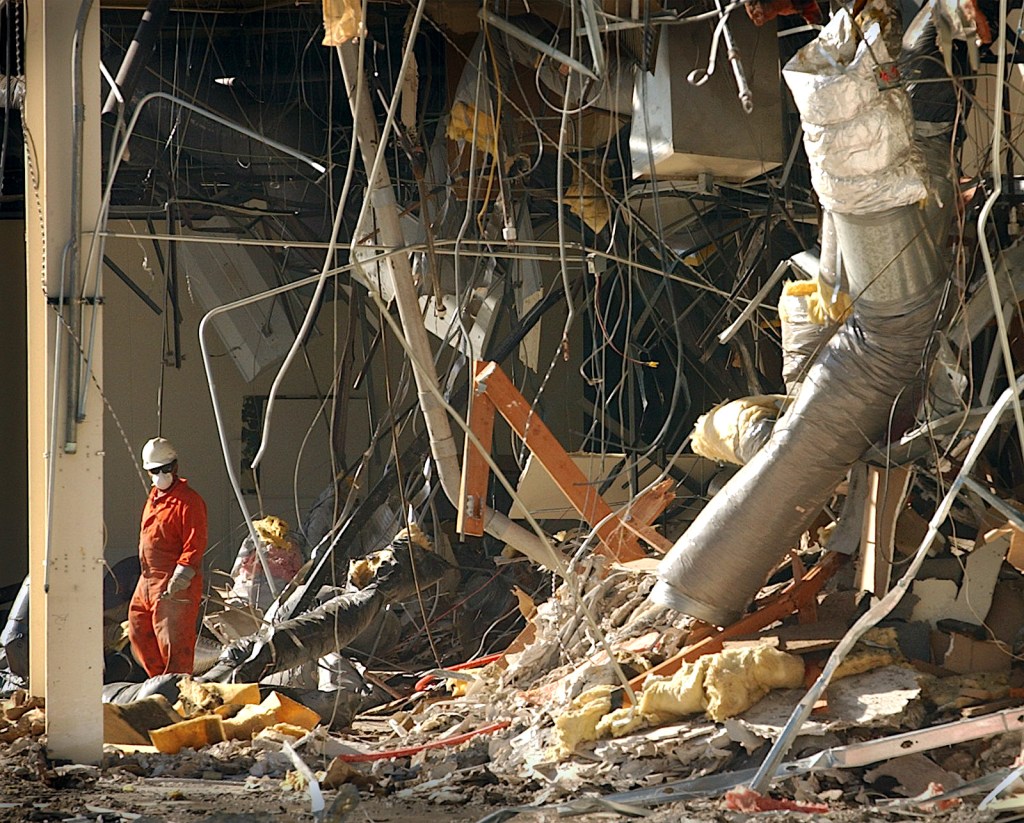
The Magnavox buildings finally were torn down in February 2004, clearing the way for the housing development which currently occupies the site. 

A member of a demolition crew is dwarfed by wreckage of the former Magnavox plant on Maricopa St. in Torrance. Feb. 10, 2004. (Credit: Daily Breeze staff file photo)

Sources:

Daily Breeze files.

Los Angeles Times files.
“Marine Integrated Navigational Systems,” by Robert J. Horne (website).

Torrance Press-Herald files.

Wikipedia.

Ad from Torrance Press, March 6, 1960, Page B-2. (Credit: Torrance Historical Newspaper and Directories Archive database, Torrance Public Library)

Railways and Red Cars boosted Redondo Beach development in its early years

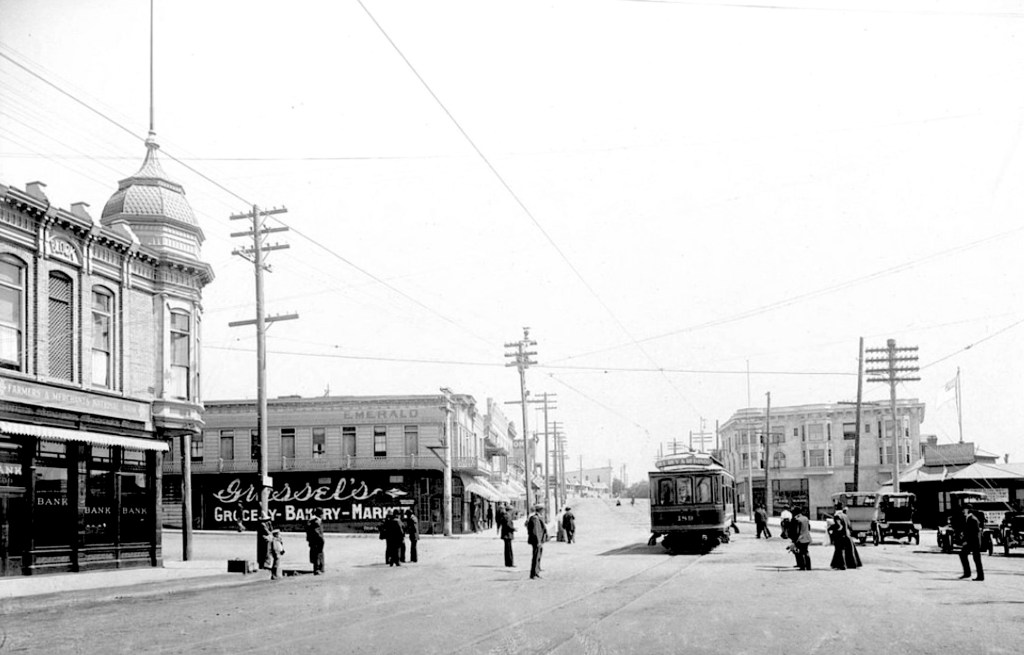
A Pacific Electric Red Car heads south through the intersection of Pacific Ave. and Emerald St. (cross street, left) in Redondo Beach in 1915. The Garland Hotel is at right. (Credit: Historical Photo Collection of the Department of Water and Power, City of Los Angeles)

It’s hard to imagine Redondo Beach as a sparsely populated area without any surrounding communities. But, until the late 1880s,  the resort town was considered an attractive but distant outpost.

In 1889, a couple of former Oregon riverboat captains, J.C. Ainsworth and R.R. Thompson, formed the Redondo Railway Co., the Redondo Hotel Co. and the Redondo Investment Co. All were part of their plan to monetize the seaside area’s vast tourist and real estate potential.

The Dominguez family granted the duo a 60-foot right-of-way through their land grants, allowing them to connect their steam-powered, narrow-gauge trains to existing Los Angeles rail lines in 1890.  This allowed visitors from L.A. to connect, eventually, to  a train that took them directly to the station behind the luxurious new Hotel Redondo, which opened on May 1, 1890.

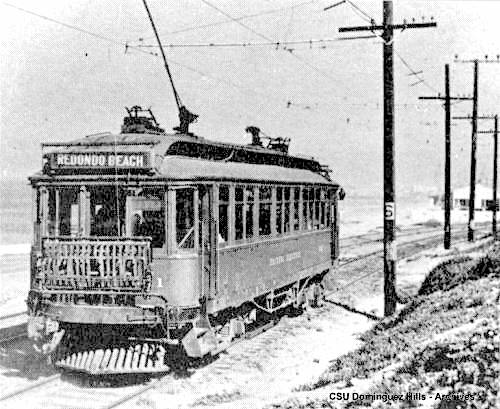
A Red Car travels along the Redondo Beach coast in 1920. (Credit: CUSDH Archives)

Just up the line from the hotel lie the main Redondo Beach railroad depot. It was built at the intersection of Pacific Ave. and Emerald St. in 1888, in the middle of Redondo’s growing tourist/entertainment district. (Pacific Ave. disappeared during the King Harbor redevelopment of the 1960s.)

The Atchison, Topeka & Santa Fe Railway company built the depot for its line from Inglewood to Redondo Beach. Its right-of-way ran along present-day Valley Drive through Hermosa and Manhattan Beach before cutting inland. Its path was transformed into the beach cities greenbelt in the 1990s. 

The Santa Fe line was the first railroad to carry passengers to Redondo when it opened in 1888, although  it carried as much freight as human cargo back in the days when Redondo aspired to be a major seaport.

The Redondo Railway’s passenger trains made the trip faster, and became an immediate success soon after being launched in 1890. Tourists began flocking to the area, inspiring Ainsworth’s company to build a pavilion with a dance hall and auditorium in 1892. (A much larger pavilion replacing it opened  in 1907.) Redondo Beach successfully incorporated that same year, by a vote of 177 to 10.

In 1896, the railroad was renamed the Los Angeles & Redondo Railway Co., and it continued to prosper until the end of the decade. As the new century dawned, the LA&RR plotted to consolidate its hold on Redondo Beach by switching its trains and routes from steam power to electric.

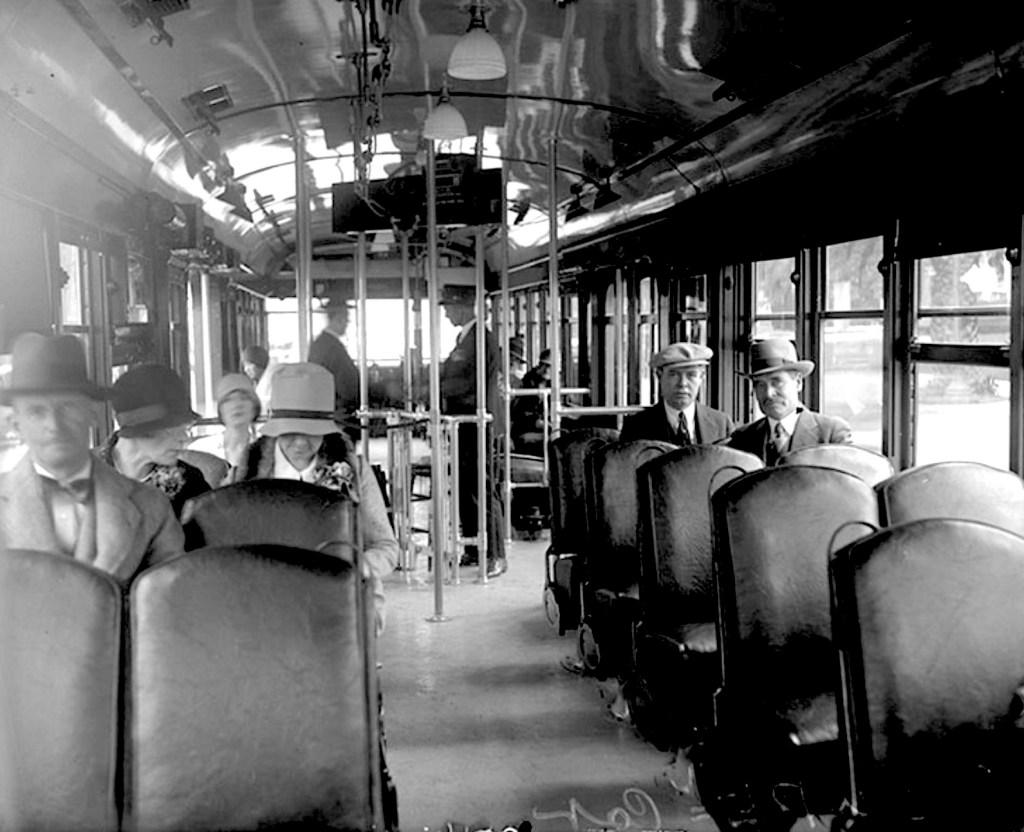
Interior of Pacific Electric Red Car. 1920 photo. (Credit: Historical Photo Collection of the Department of Water and Power, City of Los Angeles)

Two lines served the city. The Redondo via Gardena line ran inland from South Los Angeles to Redondo, while another line ran from Inglewood to Redondo. 

The conversion to electrification for both lines was completed by May 1903.

A rival company, the Los Angeles Pacific Co., operated the Redondo Del Rey line. It  ran from Culver City to Playa Del Rey, then south to Redondo, generally following the path of present-day Vista Del Mar.

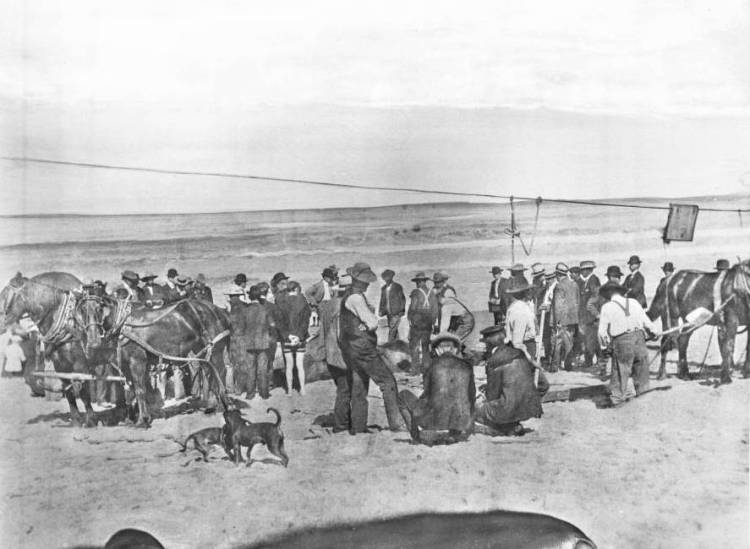
Photo taken on the first day of work on the Los Angeles Pacific’s Del Redondo via Del Rey trolley Line, circa 1900. A group of men gather near the beach in Playa Del Rey. (Credit: California Historical Society via USC Digital Library)

All of this activity attracted the attention of Henry Huntington, owner of the Southern Pacific Railroad Co. In 1901, he formed the Pacific Electric Railway. His plan: to consolidate all of the various Los Angeles rail transport companies under one umbrella. Along the way, the company’s Red Cars would become enduring symbols of the area’s beloved early 20th century rail transit system.

In 1905, Huntington’s firm first bought out the Redondo Investment Co., which controlled most of the city’s real estate inventory. Then, just four days later, he purchased the LA&RR. This gave him control of most of the city’s major business resources, with the exception of the Hotel Redondo. His actions brought about a short but frenzied land boom in the city.

Pacific Electric continued buying smaller operators for the next few years, including the Los Angeles Pacific Railway in 1906. Rail lines were expanded, including a 2.1-mile extension from the Redondo Beach terminus to Clifton By The Sea, the Redondo development where Huntington had built a residence for himself in 1906.

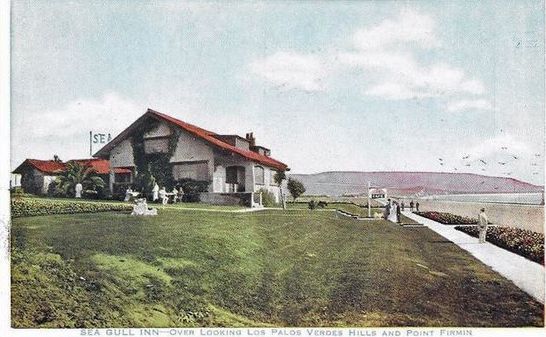
Undated postcard shows the Sea Gull Inn, which originally was Henry Huntington’s Redondo Beach residence before reopening as the Inn in 1914.

In addition to the city’s new Pavilion, Huntington also built the bathhouse and other attractions along El Paseo in the city’s entertainment district, as well as building the large $1.25 million steam-generated electric power plant used in part to power his trains. The plant opened in 1907.

In 1910, Huntington pulled out of Redondo. He decided to sell all of Pacific Electric’s operations to Southern Pacific, the company founded by his father, Collis Huntington. Southern Pacific reorganized in 1911, keeping the Pacific Electric name to operate the trolley system, and putting its freight operations under the SP banner.

For the next three decades, the Red Cars operated under the Pacific Electric name in the South Bay and Harbor Area, offering cheap, reliable transportation to tens of thousands of people every year.

A variety of factors brought about the system’s gradual decline. Road and highway improvements fueled by the growing popularity of automobiles, followed by the development of freeways dealt a blow to the Red Cars.

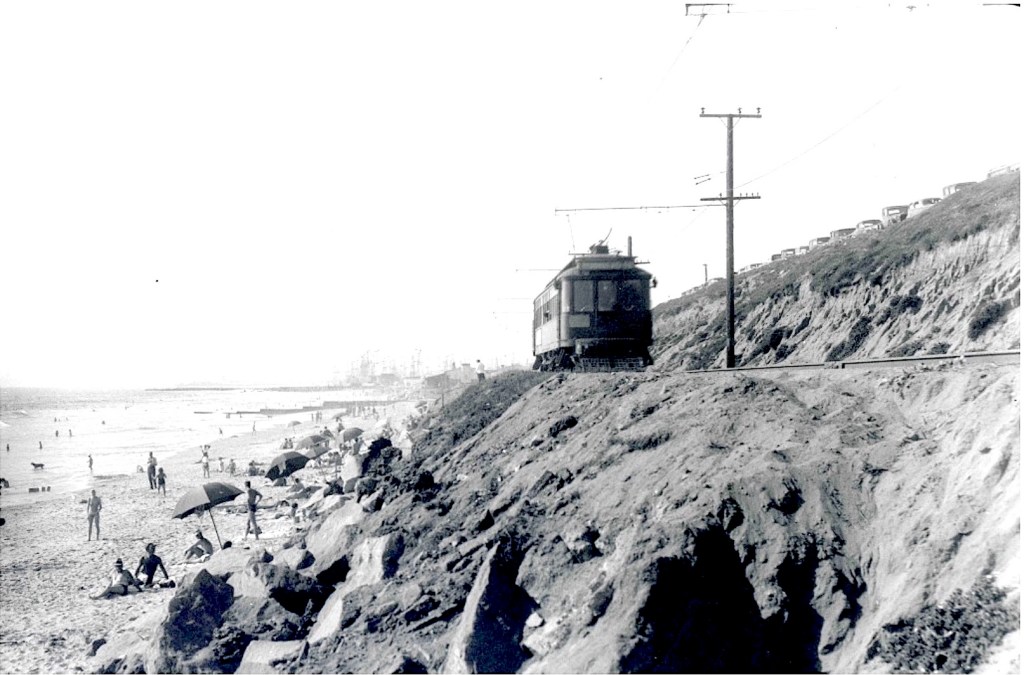
A Pacific Electric Red Car on the Redondo Beach via Del Rey route makes its way along the South Bay coastline in 1939.
(Credit: Historical Photo Collection of the Department of Water and Power, City of Los Angeles)

Conspiracy theorists also point to the decision in the 1940s to replace downtown trolleys with diesel-powered buses, which benefited the auto, oil and rubber industries. Lifestyle changes caused by the rise of suburbia and the inability of the trolley system to serve these new neighborhoods efficiently also contributed to their demise.

The last remaining Red Car line closed after a final trolley from Los Angeles to Long Beach completed its run on April 8, 1961. 

But the South Bay lines already had been abandoned two decades earlier. The Red Car lines serving Redondo Beach, Torrance, San Pedro and Gardena all closed during 1940. The last trolley to Redondo made its final run on Nov. 18, 1940.

Sources:

Daily Breeze files.
“The Los Angeles & Redondo Railway Company,” The Electric Railway Historical Association of Southern California website.

Los Angeles Times files.
Old Redondo: A Pictorial History of Redondo Beach, California, by Dennis Shanahan, Legends Press, 1982.

Pacific Coast Architecture Database.

The Pacific Electric Railway Historical Society website.

Pacific Electric Red Cars (unpublished manuscript), by Bob Petersen, Redondo Beach, 1992.

“Riding the Big Red Car: Work, Leisure, and Community in Multiethnic L.A.,” by Ryan Reft, Dec. 12, 2014, KCET website.

Wikipedia.

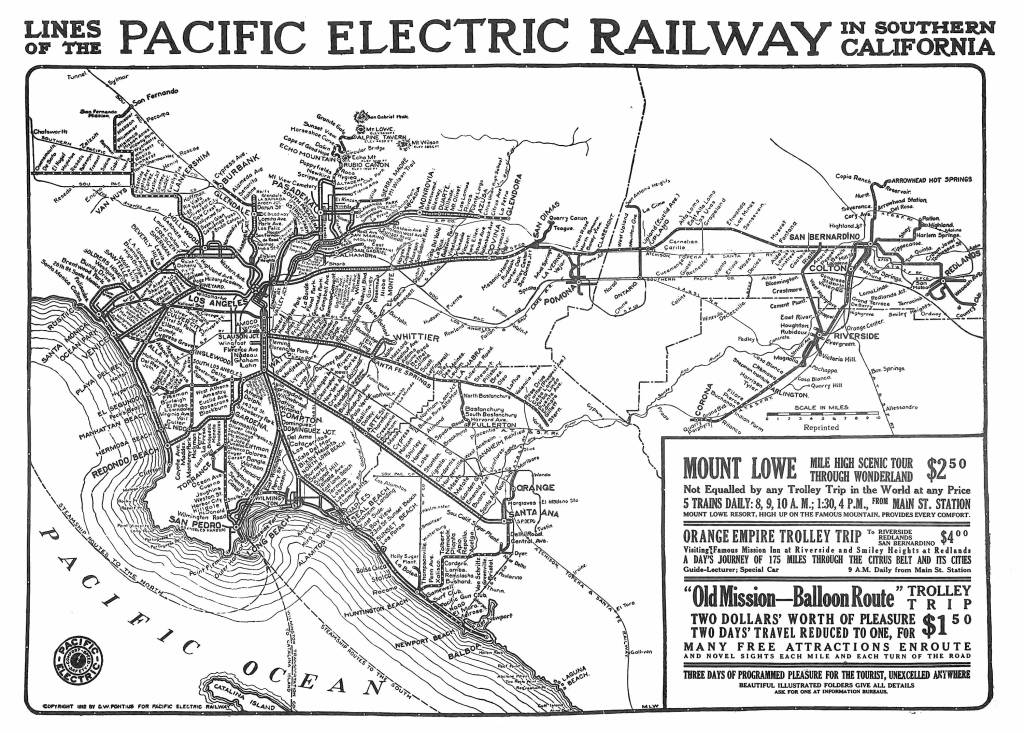
1912 map shows the location of Pacific Electric Railway routes in the Greater Los Angeles area. (Credit: Los Angeles Public Library Map Collection)

Roosevelt Memorial Park’s “mighty” pipe organ gradually grew quiet

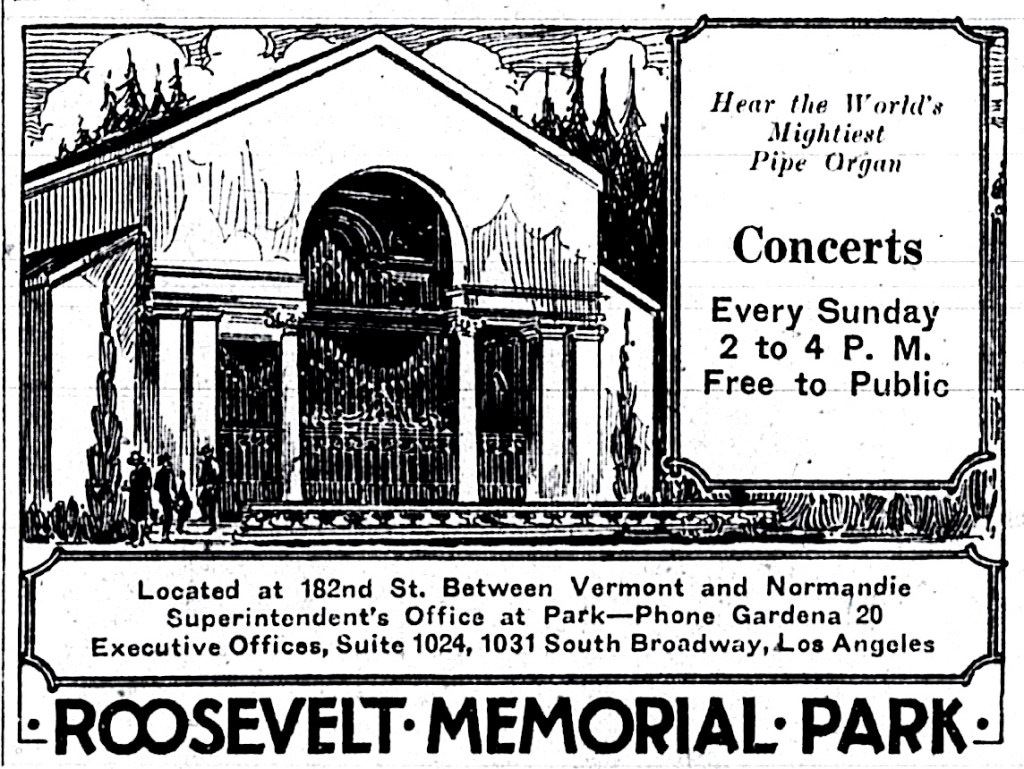
Torrance Herald ad, April 16, 1931, Page 3-A. (Credit: Torrance Historical Newspaper and Directories Archive database, Torrance Public Library)

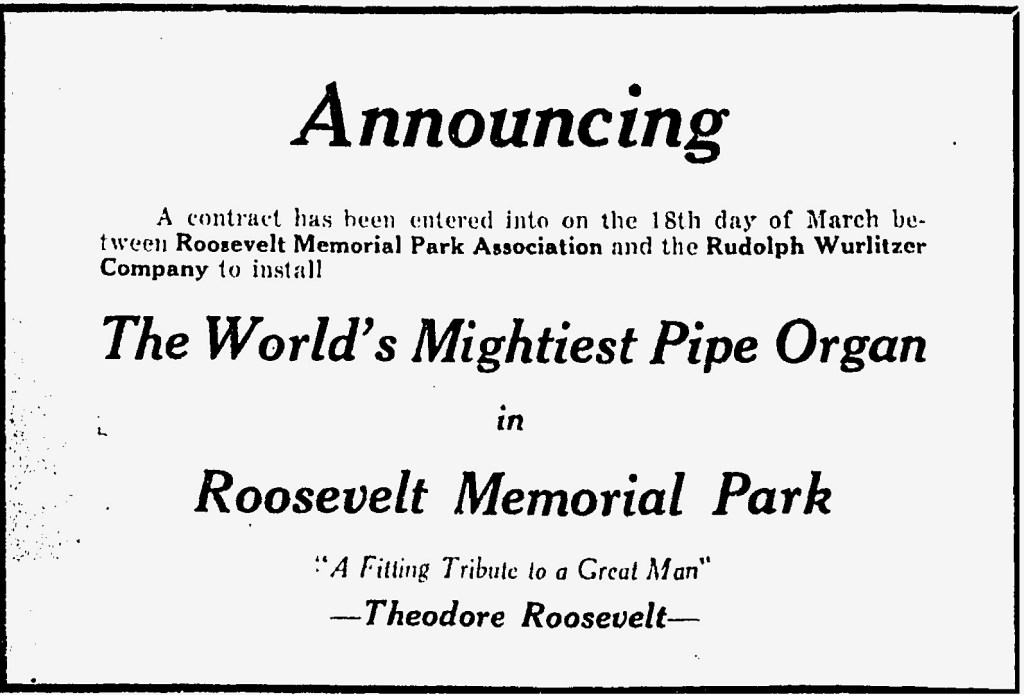
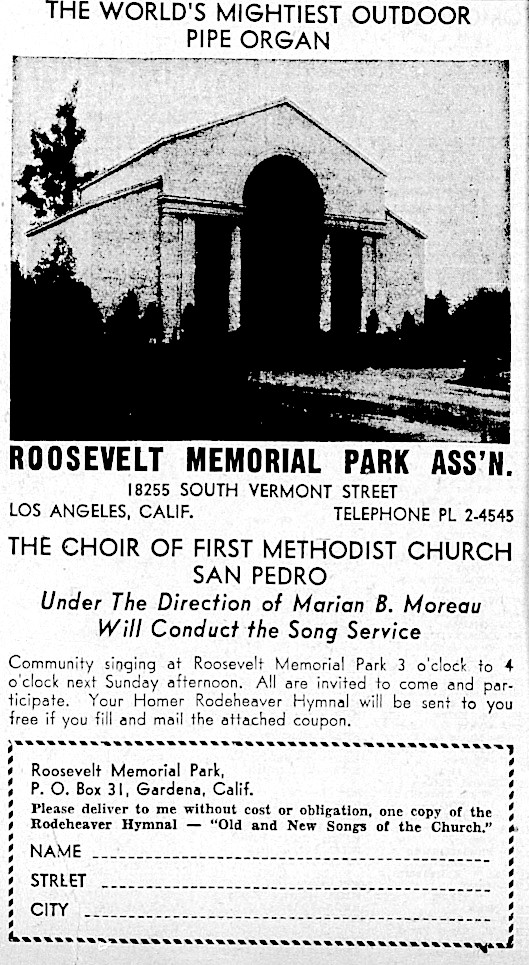
The governing board of Roosevelt Memorial Park cemetery and the Rudolph
Wurlitzer Co. of North Tonawanda, New York, recached a business agreement in March 1924. The newspaper ad announcing the news proclaimed that, as a result, the cemetery would be receiving “the world’s mightiest pipe organ.”

Indeed, the giant organ Wurlitzer would build would be touted as the world’s largest musical instrument, a distinction held since 1956 by the three-acre “Stalacpipe Organ” in Luray Caverns, Virginia.

Los Angeles Times ad, March 23, 1924, Page D16. (Credit: Los Angeles Times archives database)

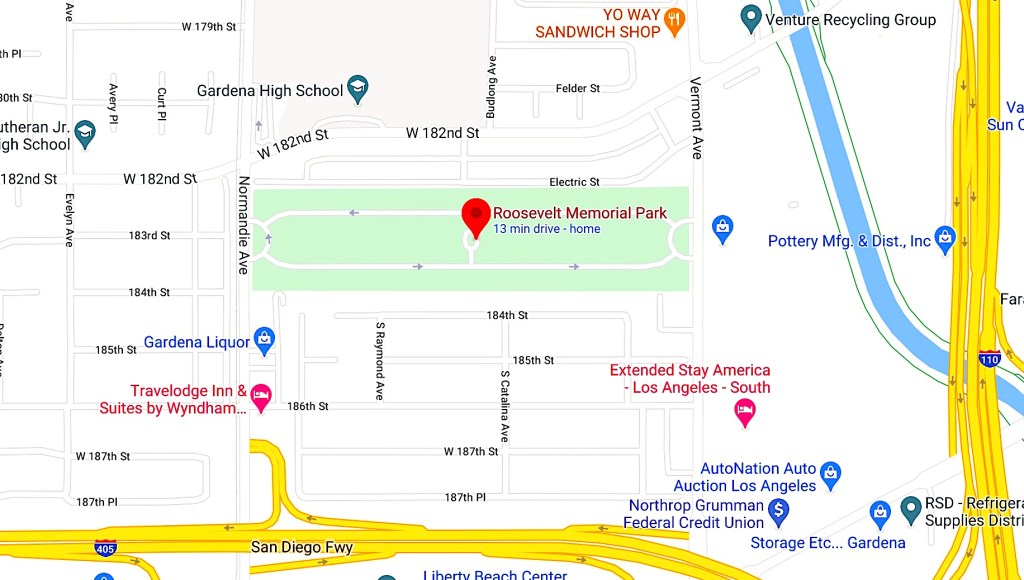
Roosevelt Memorial Park, located between Normandie and Vermont avenues just south of 182nd St. in Harbor Gateway, had opened for business in 1923, and its board felt the organ would help put the new facility on the map.

They decided to pay $150,000 to Wurlitzer to build it. About 2,000 employees worked on the massive and sophisticated instrument, identified by Wurlitzer as the Opus 998 model. They began working on it in 1924, and it took them just under a year to complete the job. It required a large 50-horsepower engine in order to operate properly.

(Credit: Google Maps.)

Pipe organs in the early twentieth century mostly were used in large churches and movie theaters. In theaters, their ability to replicate a wide variety of sound effects beyond the normal organ tones made them effective tools for accompanying silent films of the era.

The Opus 998 model built for Roosevelt Memorial Park was more of a concert performance model than a movie theater-oriented one.

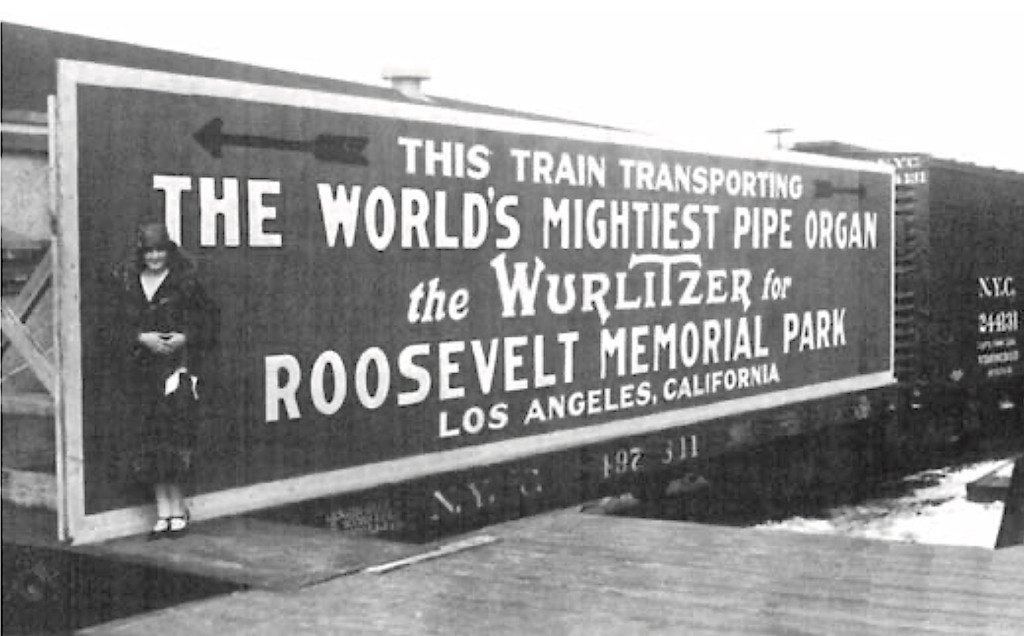
The monster organ had to be transported from New York by rail. Twelve train cars were needed for the job. Wurlitzer pulled out all the stops to publicize the trip, using a giant promotional sign announcing the special train’s cargo.

The train made many promotional stops along its way across the continent, including a full-on public exhibition in San Francisco, before arriving in Los Angeles in early March 1925. 

An unidentified woman stands next to a sign advertising the contents of the train carrying the Wurlitzer pipe organ from New York to California. 1924 photo. (Credit: Wurlitzer Co. publicity photo)

It had been hoped that it could be assembled and be ready to play at Roosevelt on Easter Sunday, but its complexity forced its debut to be delayed until May. After all, the instrument had more than 2,000 pipes alone, in addition to its other components.

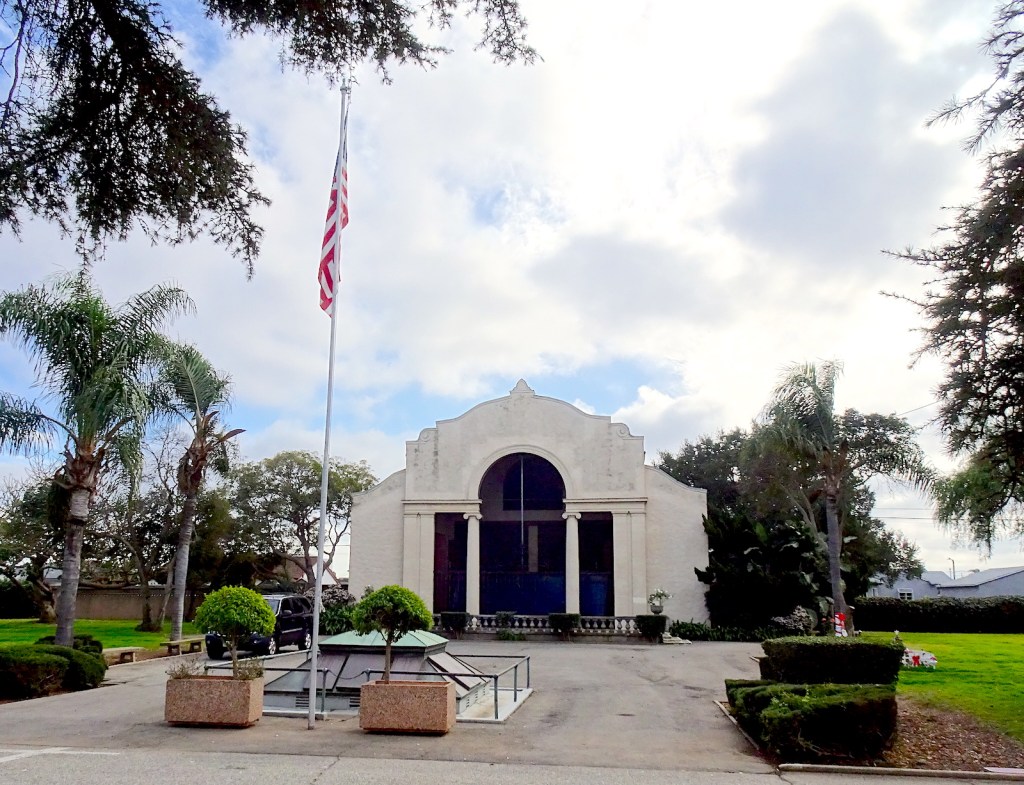
The cemetery had built a special $35,000 structure, the Organ Pavilion Building, to house the organ. Thanks to technical developments in the organ industry, it was possible at the time to house the console, including the keyboard, separately from the organ itself.

This became important at the Roosevelt installation. The new organ had an estimated range of from five to seven miles. During its lifetime, it even was claimed that its music could be heard ten miles away in downtown Los Angeles.
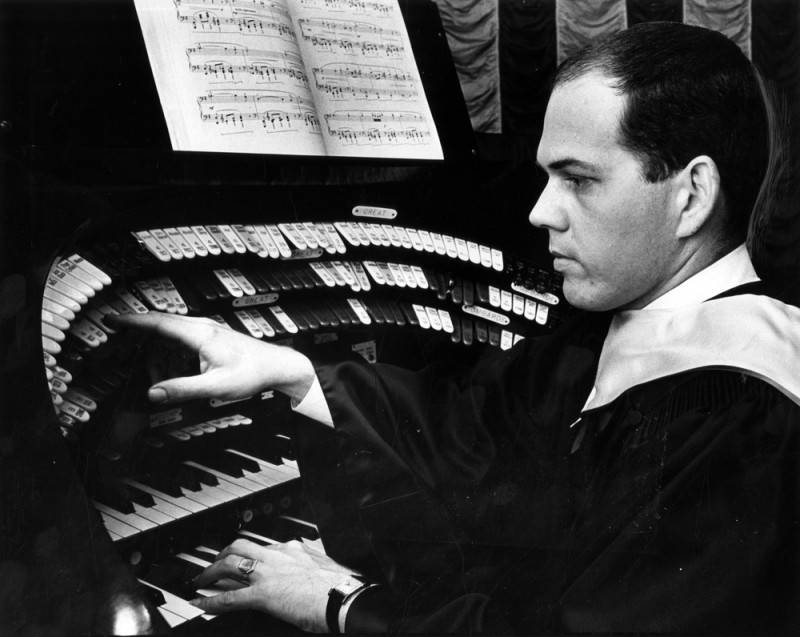
Paul Gladson of North Hollywood plays one of the most unusual musical instruments in Southern California. This giant console controls a massive pipe organ at Roosevelt Memorial Park. April 1963 photo. (Credit: Los Angeles Public Library Photo Collection)

So, a separate underground room for the console player was built 75 feet away and ten feet  below ground level in front of the building housing the organ, as it was feared that if the organist was situated too close to the instrument, damage to the player’s hearing was a very real possibility.

The cemetery board picked Clarence Reynolds, city organist for the Municipal Auditorium in Denver, to be its inaugural player at the organ’s dedication on May 30, 1925.

The Memorial Day ceremony drew a large crowd, with Los Angeles Mayor George Cryer and area Congressman Walter Lineberger among the attendees. Lineberger gave the keynote speech, and noted Irish tenor Joseph Conlin performed several organ-accompanied musical selections.
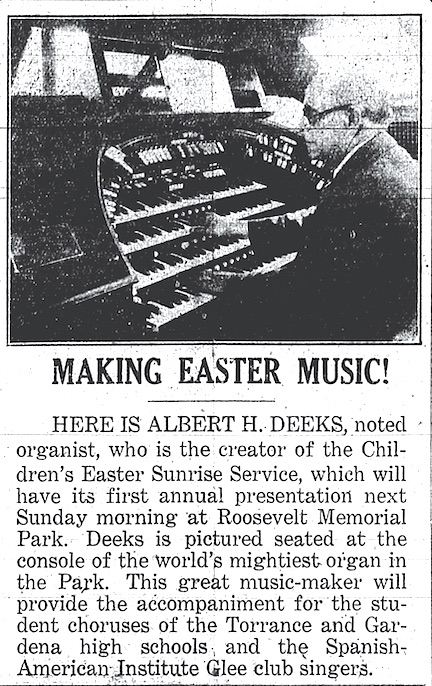
From then on, the organ helped draw large crowds at both Easter Sunrise and Memorial Day observances at Roosevelt Memorial Park for the next several decades. Weekly Sunday night organ recitals also were held at the cemetery for many years.

Torrance Herald, April 2, 1931, Page 1. (Credit: Torrance Historical Newspaper and Directories Archive database, Torrance Public Library)

In October 1926, a special ceremony commemorating the birth of President Theodore Roosevelt was held. Surviving members of the Rough Riders from the Spanish-American War attended, and musical selections hand-picked by Roosevelt’s widow were played on the big pipe organ.

The 1933 Long Beach earthquake damaged the organ when it caused some sections of the building’s roof to collapse, but it quickly was repaired and put back into service’.

The organ began losing its allure as an attraction over the years. Poor upkeep took its toll, and the organ stopped working in 1959. Hobbyists and volunteers stepped in to perform the necessary repairs to get it running again.

As recently as 2003, the organ was still being used for Memorial Day services, though the Roosevelt had ceased holding its annual Easter Sunrise ceremonies in the 1990s.

More recenlty, however, age and disrepair have rendered the organ unusable. A 2003 estimate put the cost of repairing the complex instrument at between $100,000 and $300,000, an expense the non-profit cemetery could not afford. 

So,in November 2008, the world’s mightiest pipe organ was removed from Roosevelt, and the gigantic instrument and its parts now are being stored offsite.

The cemetery has considered demolishing the Organ Pavilion Building itself, and replacing it with a new mausoleum. So far, that hasn’t come to pass.

The Organ Pavilion Building at Roosevelt Memorial Park cemetery in January 2021, former home of the giant pipe organ. The small windowed structure in front housed the below-ground console where the organist sat in order to avoid ear damage while playing. (Credit: Photo by Sam Gnerre)

Sources:

Daily Breeze files.

Nerdist website.

Los Angeles Times files.

“The Mightiest Wurlitzer,” by Joseph McCabe, Page 36, The Tracker, Journal of the Organ Historical Society, Vol. 53, No. 2, Spring 2009.

Pipe Organ Database: A project of the Organ Historical Society.

Roosevelt Memorial Park website.

Roosevelt Memorial Park, Gardena, California, Home of the Mighty Wurlitzer Outdoor Pipe Organ (website).

San Pedro News Pilot files.

Torrance Press-Herald files.

Wikipedia.

San Pedro News Pilot ad, Nov. 1, 1941, Page 2. (Credit: San Pedro News Pilot archives)

The San Pedro Hotel moved from the top to the bottom of Nob Hill during its existence

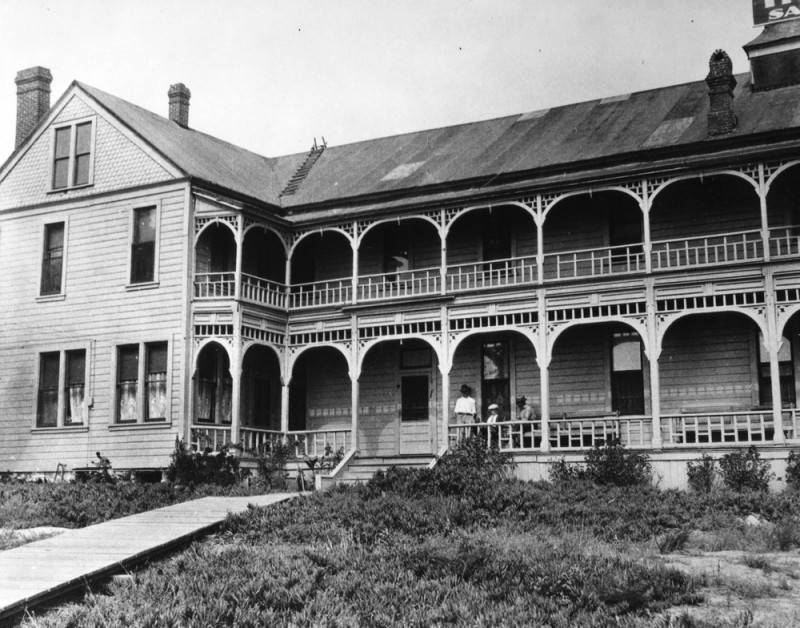
Exterior view of the San Pedro Hotel, a two-story building with porticoed patios. The hotel was later used as San Pedro Hospital. Undated, circa 1898. (Credit: Los Angeles Public Library Photo Collection)

The stately San Pedro Hotel was built atop the 75-foot-high Nob Hill in San Pedro in the late 1880s, in the community’s early days.

The first land deed for the Nob Hill area, located roughly between present-day First and Fourth streets near Harbor Blvd., was issued to shop owner John Malgren in 1882. Soon thereafter, many of the nascent town’s most influential business owners had moved to homes atop the hill.

Originally known as the Clarence Hotel, the deluxe hotel was one of the first in the area, and definitely one of the most elegant. Its balconies commanded a panoramic view of San Pedro Bay and its rapidly growing harbor, and the distinctive building itself could be seen atop Nob Hill from miles around.

In its early years, the hotel prospered, becoming one of the places to see and be seen in San Pedro.

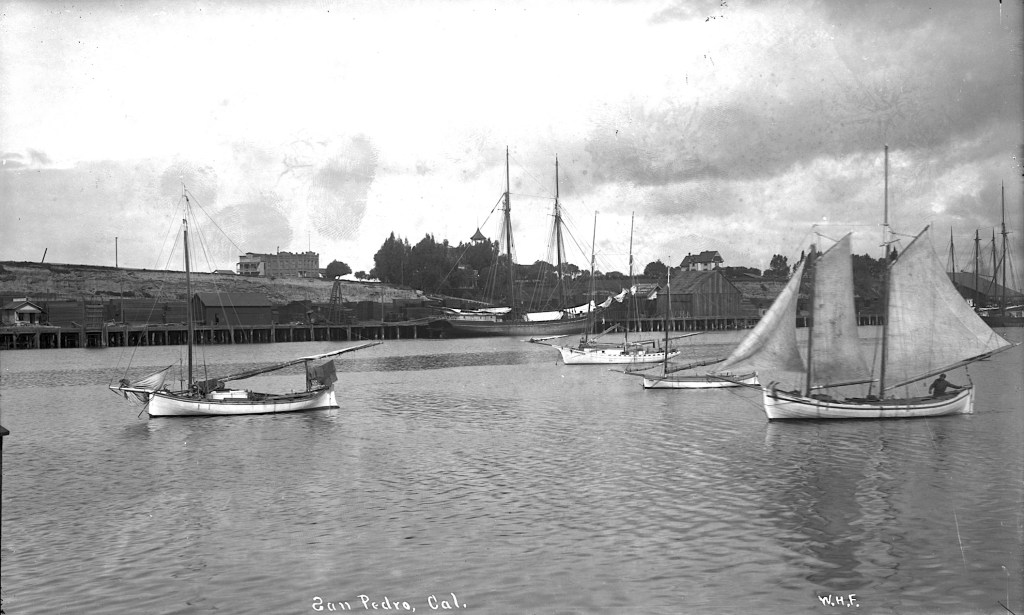
View from San Pedro Bay shows the sailboat “Clemente” in foreground, others at right, a large two-masted vessel at the pier, and, in background at left center, the San Pedro Hotel atop Nob Hill. Undated, circa 1895. (Credit: California State Library)

The harbor’s selection as the official site of the Port of Los Angeles brought a flurry of new development. Many newer hotels sprung up in the rapidly developing area, and as San Pedro’s  fortunes rose, those of the hilltop hotel seemed to have fallen.

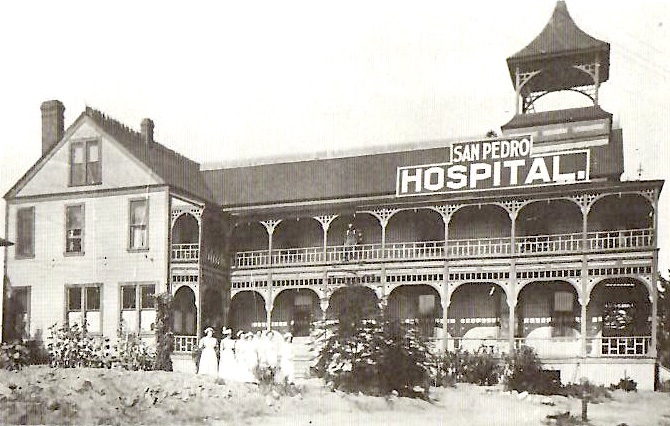
Lillian B. Mullen, owner of the Ideal Sanitarium in Santa Monica, began leasing the struggling hotel for $100 a month in April 1912 with the idea of starting a new hospital there. She moved the equipment from Santa Monica to the Nob Hill building.

The new San Pedro Hospital sported 48 beds and was staffed by ten employees. Supposedly, the staff also raised chickens on the side for its Sunday meals.

The San Pedro Hospital has moved into the San Pedro Hotel building in this undated photo circa 1912-1917. (Credit: San Pedro: A Pictorial History)

A February 1914 editorial in the San Pedro Daily News calling for the construction of a newer, more modern hospital facility praised Mrs. Mullen’s efforts at converting the dilapidated hotel into a hospital:

“The fact that the antiquated building [the San Pedro Hotel] has been successfully transformed into a hospital is a marvel of marvels and stands as an object lesson of what can be accomplished, under stress of adverse conditions, by a capable, and energetic, woman, fully equipped with experience and exact knowledge in her chosen vocation.”

The editorial goes on to give two reasons why a new hospital was a must. First, the imminent opening of the Panama Canal later that year would greatly increase shipping activities and jobs at the port. Also the harbor’s increasing strategic value as a military center would lead to more troops being stationed in the area.

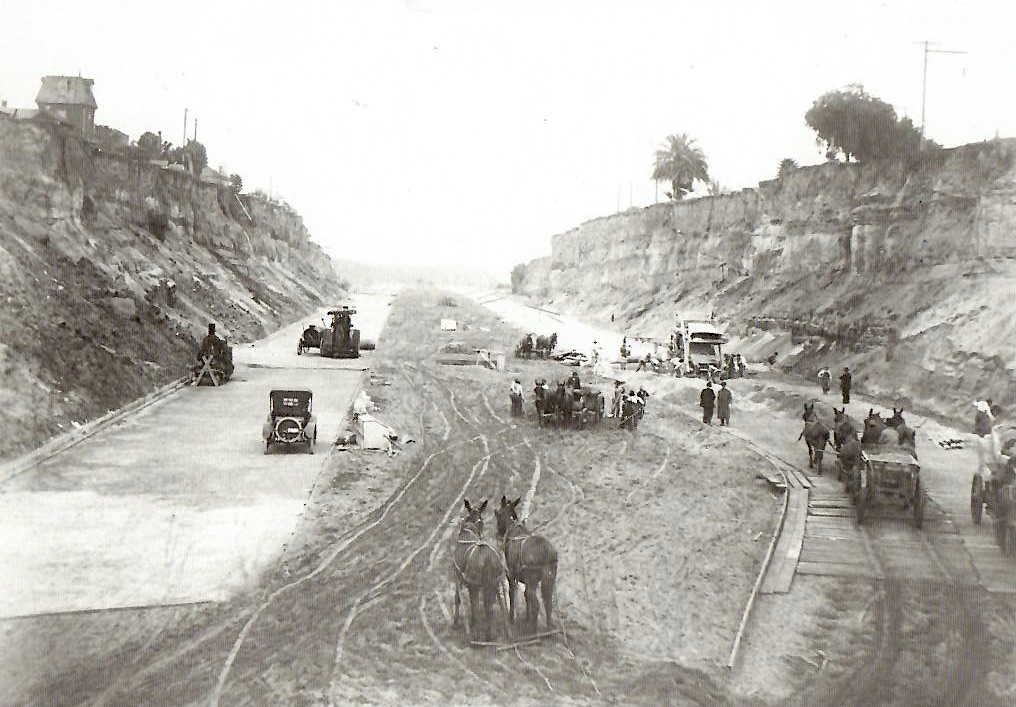
A third factor became even more persuasive in 1915, with the implementation of the plan to demolish Nob Hill itself to make way for the construction of Harbor Boulevard. It would serve to connect the Harbor Area to roads leading from downtown Los Angeles. Located as it was in the heart of downtown San Pedro, the hill was seen as an impediment to traffic and to business development.

A combination of horse-drawn and motor-driven machines work in the Harbor Boulevard Cut through Nob Hill in San Pedro on Jan. 3. 1917. View looks north from Fourth St. (Credit: San Pedro: A Pictorial History)

Over the next dozen years, most of the once-posh houses atop the hill would be razed. The U.S. military ordered the hospital moved for security reasons in 1915, and it subsequently moved to new  temporary quarters at Santa Cruz and Gaffey streets.

The hospital would find its permanent location in June 1925, when the brand new San Pedro General Hospital opened for business at the corner of Sixth St. and Patton Ave.

SPGH cost $19,000 to build. Room fees for patients ran $12 a day, or $4.50 for those in the worker’s ward. The much larger state-of-the-art San Pedro Medical Center, now known as the Providence Little Company of Mary Medical Center — San Pedro, would open next to the original hospital site in 1961.

As for the hotel building, it was re-transformed back into the more modest San Pedro Hotel, offering low-cost accommodations for workers at the community’s now-broad range of industrial operations.

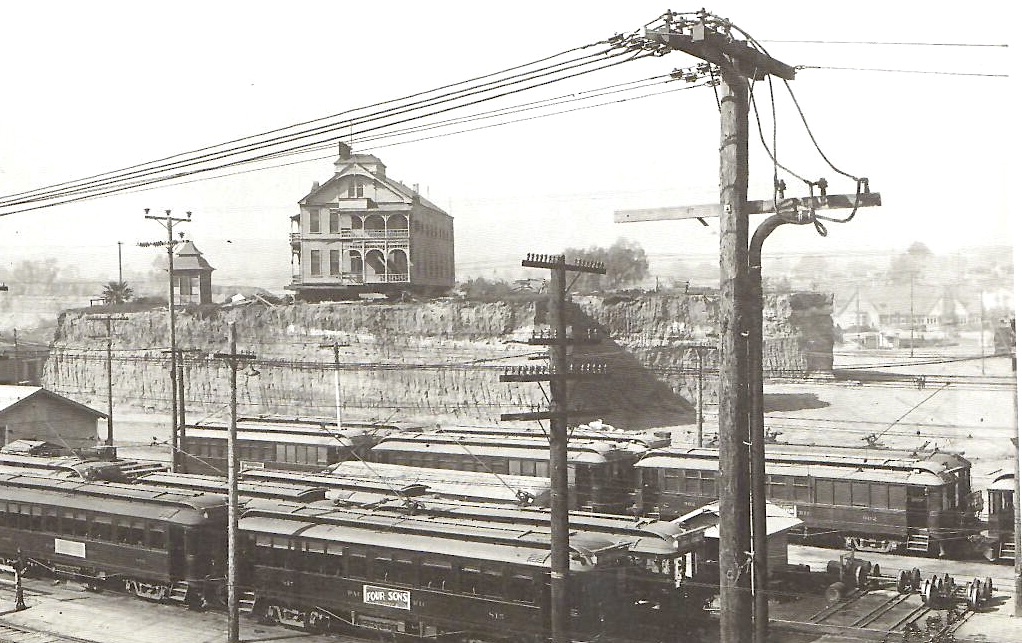
This view from Berth 90 at the Port of Los Angeles shows what’s left of Nob Hill, with the San Pedro Hotel seemingly running out of room beneath it, center. (Credit: San Pedro: A Pictorial History)

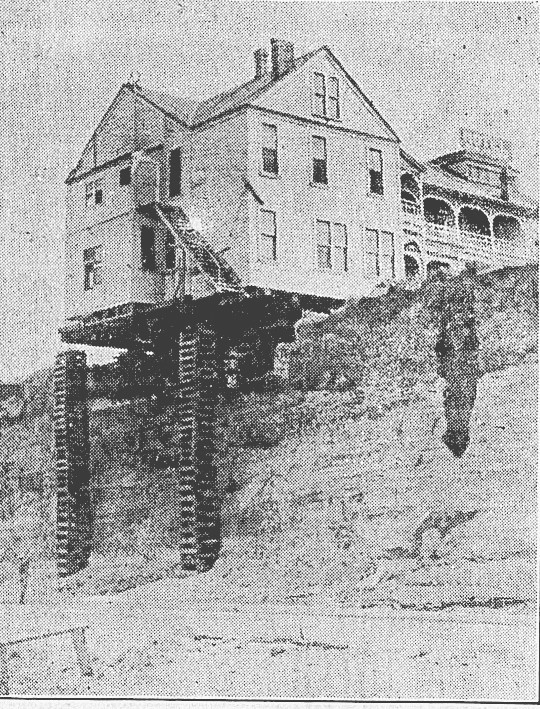
Meanwhile, the lowering of Nob Hill continued through the 1920s, with the old hotel pretty much the only structure left by 1928. The plan: to lower the hotel to street level as the hill beneath it was being removed.

The photo above/below taken from the front page of the San Pedro News Pilot edition of May 21, 1928, shows this process in action. Unfortunately, technical details on exactly how it was accomplished are scant.

San Pedro News Pilot, May 21, 1928, Page 1.
Accompanying text: “Typical of the difficulties surmounted in building a city on the site of San Pedro is this illustration of the work of lowering the old San Pedro hospital to a new level. It’s old site was in the aristocratic section of the city 25 years ago and known Nob Hill. Comprising many blocks,
Nob Hill has been reduced 75 feet below its old level and will become an Important business section. The work of leveling the site of San Pedro has equalled that of either Seattle or Kansas City, although it has received far less public notice.
“

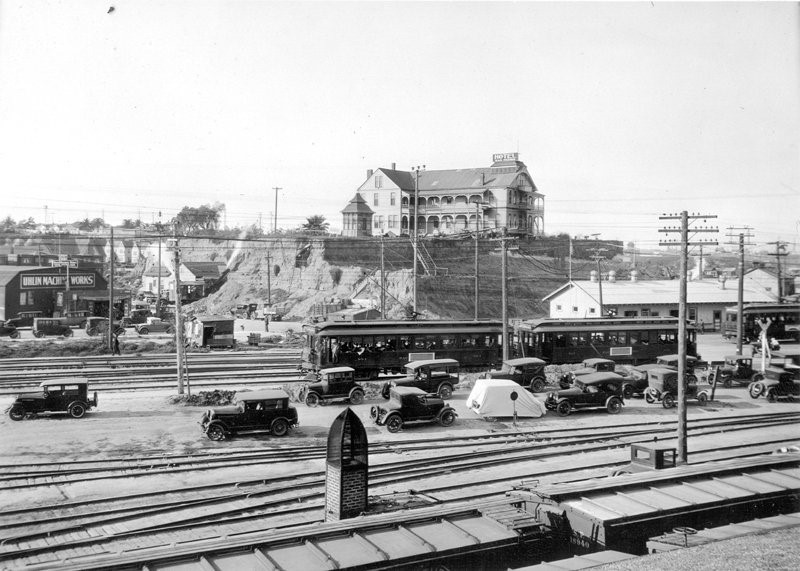
The San Pedro Hotel did land safely on the ground following its journey down from the top of Nob Hill. Afterward, it continued to operate in its low-budget fashion during the 1930s.

Eventually, though, the dilapidated building was abandoned. During the 1940s, it was destroyed after the Los Angeles Fire Department finished using it as a site for its firemen to practice fighting building fires.

Another view of the San Pedro Hotel in 1928 atop what’s left of Nob Hill. (Credit: Los Angeles Department of Water and Power archives)

Sources:

Daily Breeze files.

Los Angeles Herald files.

Los Angeles Times files.

San Pedro: A Pictorial History, by Henry Silka, San Pedro Bay Historical Society, 1984.

San Pedro News Pilot archives.