
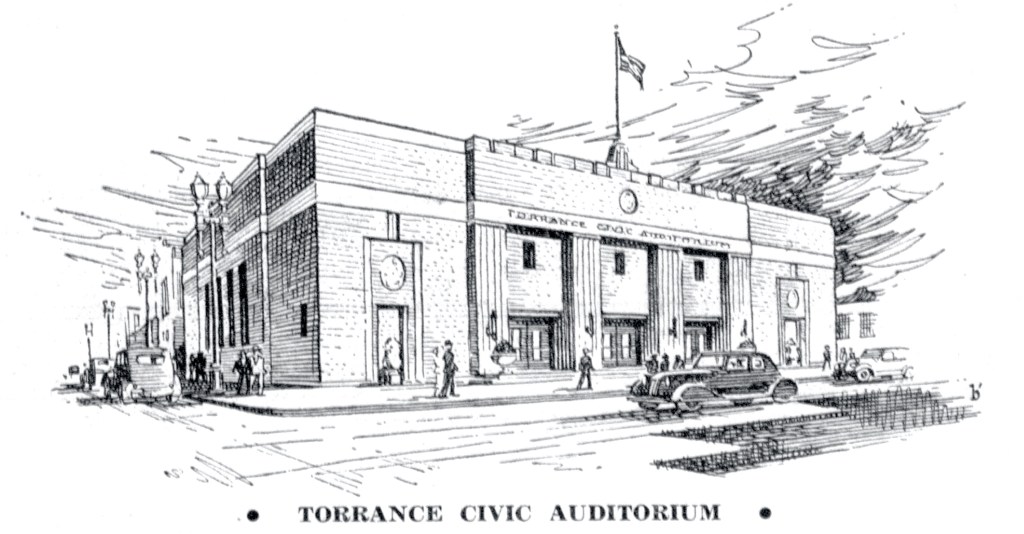
Businesses and factories began moving to Torrance not long after its founding was announced publicly in 1912. With them came a rapid increase in population, as their employees began moving to the hospitable area to be close to work.
By the time the city officially incorporated in 1921, its need for a large central public gathering place for civic, fraternal and cultural events had become acute.
The problem was solved temporarily by the construction of an auditorium at Torrance High School in 1924, whose iconic main building had opened in 1917.
For the next few years, the Torrance High auditorium hosted not only school assemblies, plays, band concerts and the like, but also community events of all different types.
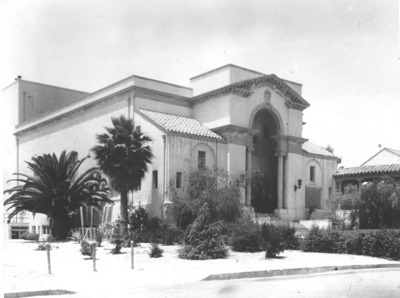
The city’s need for its own such structure gradually was becoming apparent, but was exacerbated by the Long Beach earthquake of March 10, 1933. The temblor severely damaged the high school’s auditorium, rendering it unusable. Both students and citizens were left without an assembly hall.
City officials stepped up the plans already underway in the early 1930s for the construction of several new civic buildings in downtown Torrance. These included a new city hall, library building, police headquarters and post office — and a new civic auditorium.
Following through on these plans would prove to be tricky in the midst of the Great Depression. Fortunately, the city was able to work with the Works Progress Administration (WPA) to secure financing.
The federal government paid for the post office in full ($52,279), and would end up paying for about 45 percent of the cost of the rest of the new buildings.
The Torrance Civic Auditorium was the largest of them. It could seat 1,100 people, and had a state-of-the-art (for the 1930s) speaker system. The total cost: $62,500, to be paid for with a combination of municipal and federal funds.
In August 1935, the WPA announced its full support for the projects, and the city scheduled a bond election for them for Sept. 27. Each building project could be voted on separately, with the auditorium measure denoted as Proposition 1.
All the measures passed easily. The city hired the downtown Los Angeles architectural firm of Walker & Eisen to design the buildings, and contractors W.W. Petley and C. Matcham to build the steel-framed structures.
That November, the city purchased land owned by Antone Huber on the northeast corner of El Prado and Cravens Ave. for the auditorium, paying $6,500. Construction began shortly thereafter, and the building was completed on June 16, 1936.
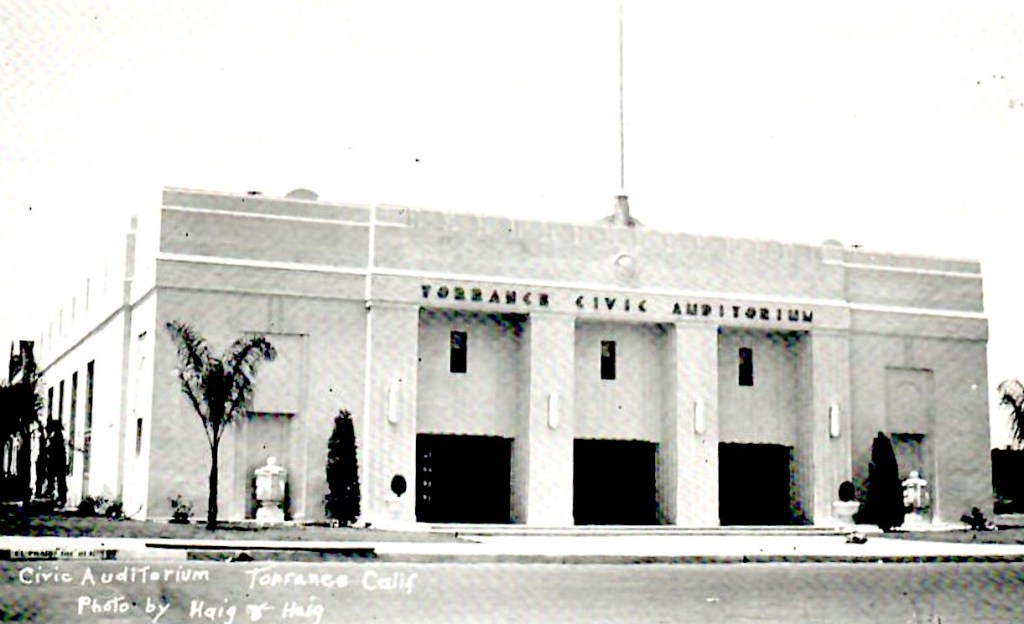
The auditorium, city hall and library buildings all were dedicated on the same day, June 27, 1936. Individual mini-ceremonies were held at each, with an overall formal dedication taking place that evening in the auditorium, the first official event held there.
It would be the first of many. One of the earliest events held there was the three-act comedy play, “Crashing Society,” which opened on June 29. Its all-Torrance cast included department store owner and local luminary Sam Levy in one of the roles.
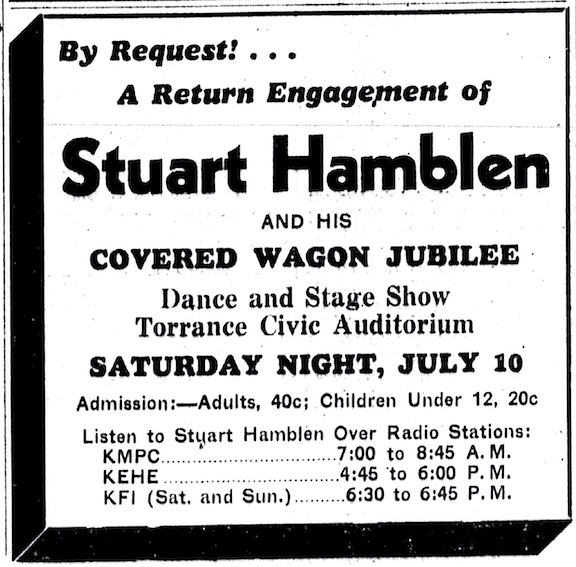
In its first couple of years the building hosted dozens of formal dinners, galas and concerts. Singing cowboy radio star Stuart Hamblen appeared there in July 1937; a major ceremony honoring the completion of the new KNX broadcasting facility near 190th St. and Hawthorne Blvd. in present-day Columbia Park took place in September 1938.
Turnabout being fair play, the auditorium also became the temporary home of Torrance High School functions for a couple of years until the school’s new auditorium opened in 1938.
The city’s tenfold increase in population from 9,950 in 1940 to 100,991 in 1960, along with wear and tear from the building’s heavy use, were two factors causing the city to begin thinking of replacing it.
City Hall already had been moved from its Old Torrance building to the larger present-day Civic Center in 1956. The collection of newer city buildings on Torrance Blvd. between Madrona and Maple avenues eventually would include a new police headquarters, library, public swimming pool and county courthouse.
A long-range plan adopted by the city in 1960 called for an impressive new auditorium building that would serve as the centerpiece of the entire complex. Unfortunately, due to financial constraints, the auditorium as imagined then never became reality.
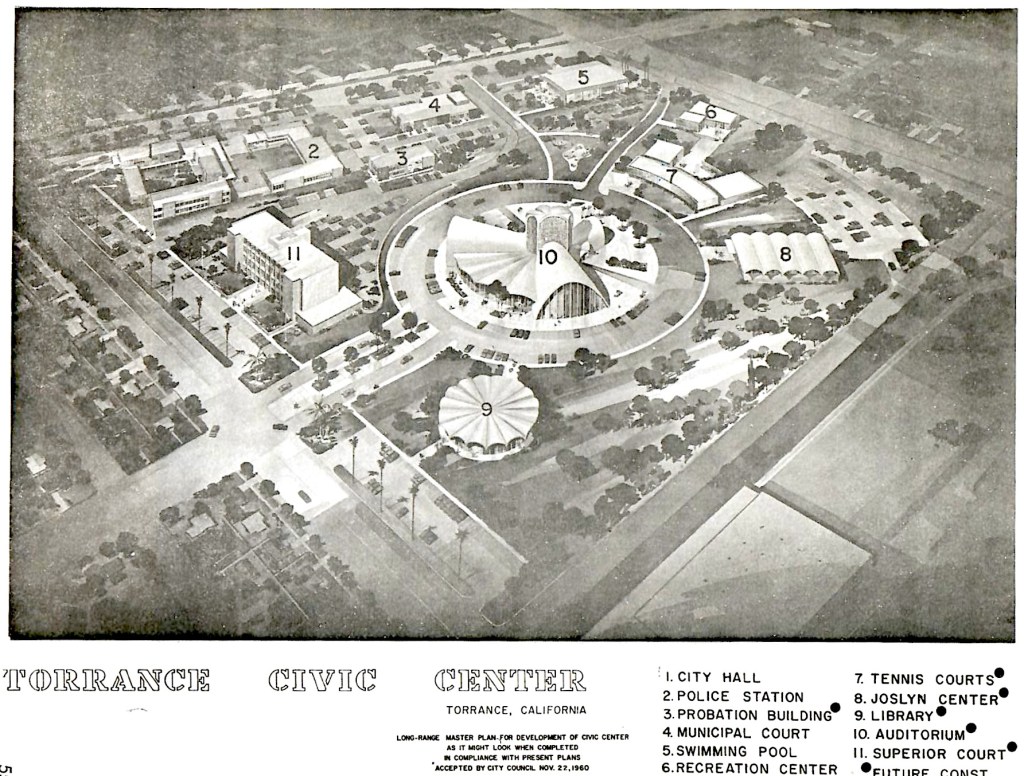
The aging Torrance Civic Auditorium was demolished in 1971. (A large townhouse development now stands at the site.)
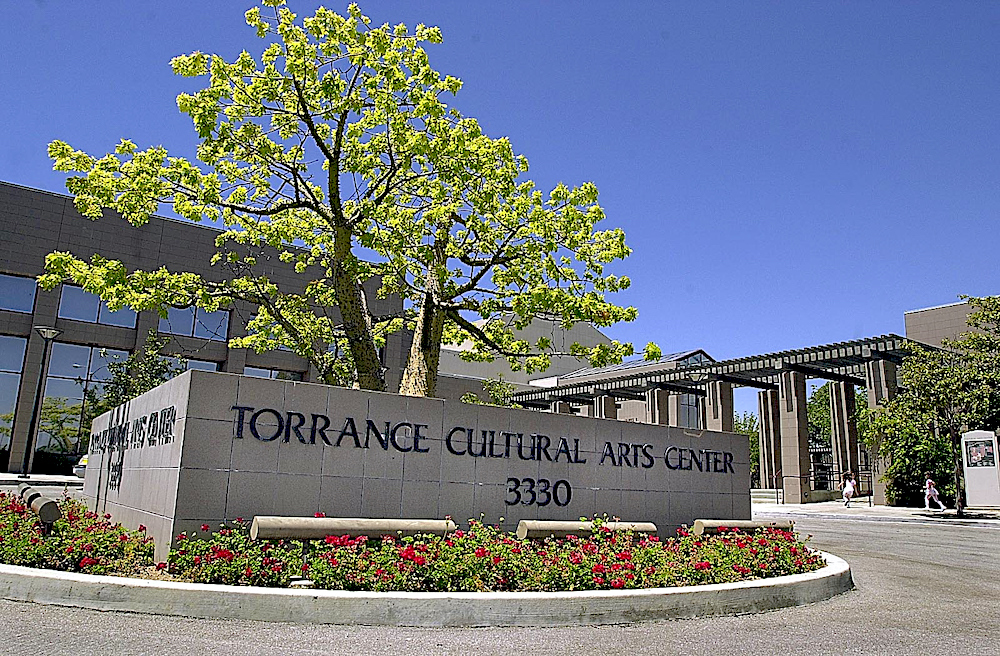
The city spent the next three decades attempting to bring its vision of a new auditorium complex into being. The long-awaited result, the Torrance Cultural Arts Center, finally opened in October 1991.
The deluxe facility includes the James Armstrong Theatre, the smaller George Nakano Theatre, classrooms and meeting rooms and a Japanese garden.
Sources:
Daily Breeze files.
“General Population by City, Los Angeles County,” Los Angeles Almanac website.
Historic Torrance: A Pictorial History of Torrance, California, by Dennis F. Shanahan and Charles Elliott, Jr., Legends Press, 1984.
History of Torrance: A Teacher’s Resource Guide, Torrance Unified School District Publication No. 34, September 1964.
“Los Angeles Times files.
Torrance Press-Herald files.


One thought on “Torrance Civic Auditorium filled an important need when it opened in 1936”