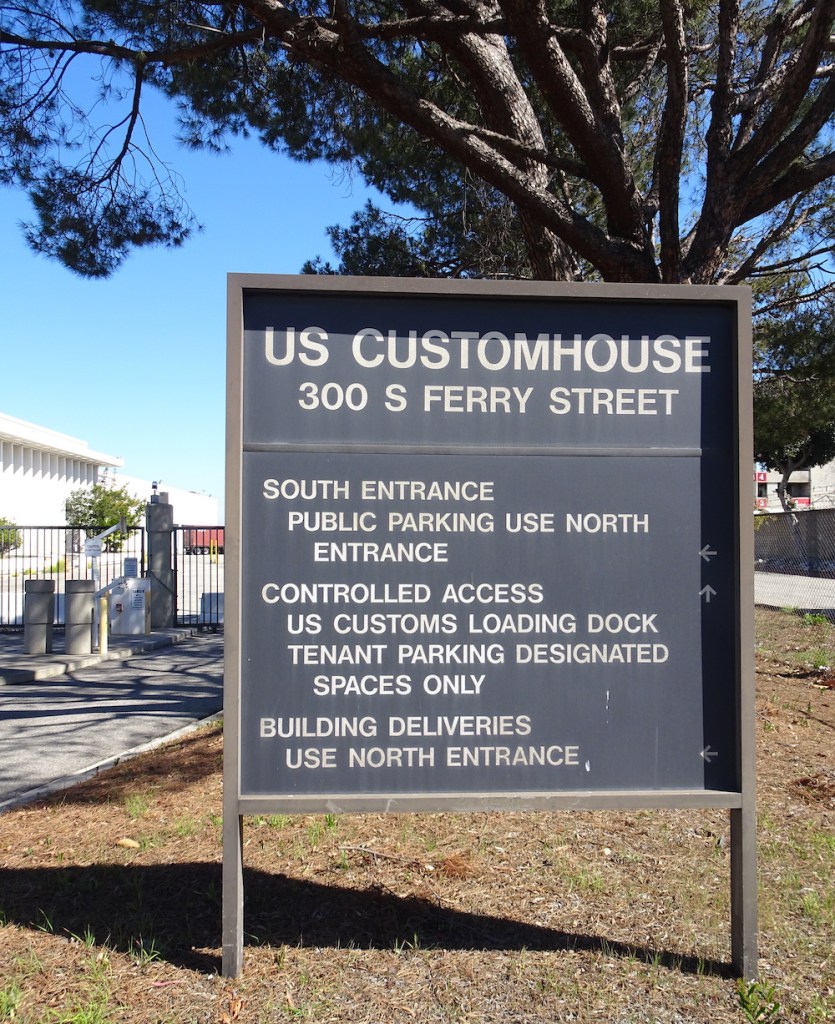
Every large seaport requires a customs house to oversee the flow of goods in and out of its jurisdiction.
By the 1880s, the import/export trade at the harbor at Wilmington had grown significantly, thanks mainly to the development efforts of shipping magnate Phineas Banning. Banning built the first railroad connecting the port with the city of Los Angeles, which greatly boosted his shipping business.
The government took notice. On May 19, 1882, Congress passed a bill establishing the Customs District of Wilmington. By mid-1883, the area’s first U.S. Customs House had been built on Canal St. in Wilmington.
It remained there for several years, and the exact date at which it was moved to San Pedro proper is uncertain. But we can speculate that the selection of San Pedro as the official harbor of Los Angeles in 1899 and its subsequent development led to the relocation of the customs house in the early 1900s.
It moved its offices to the ground floor of the Perl Building at Seventh and Beacon streets in San Pedro.
By 1912, talk already had begun about rapidly growing San Pedro getting a new federal government building to house its post office, with a bill aimed at starting the process being introduced in Congress. In addition to the new post office, several other federal offices could be consolidated into the new building.
But the wheels of government sometimes grind slowly. A turf war of sorts between San Pedro and Los Angeles broke out in 1913, with the larger city to the north wanting to take over customs jurisdiction. Never mind that this made little sense, as it meant transporting goods all the way up to L.A. to be inspected and recorded at extra expense to the shippers.
At the same time, another spat developed when the big city insisted that the new San Pedro post office operate as an L.A. branch and not autonomously. Fortunately, San Pedrans battled back to defeat this idea.
All this squabbling hadn’t been settled by the outbreak of World War I, at which point the whole new building matter was tabled. At war’s end in Nov. 1918, discussions resumed.
But it would be another 18 years before the new federal building opened. In the meantime, the customs house moved into the Lippman Building at 366 W. Seventh St. in 1932. The post office then was located on its ground floor. The move came at the federal government’s direction in order to cut office space costs during the Great Depression.
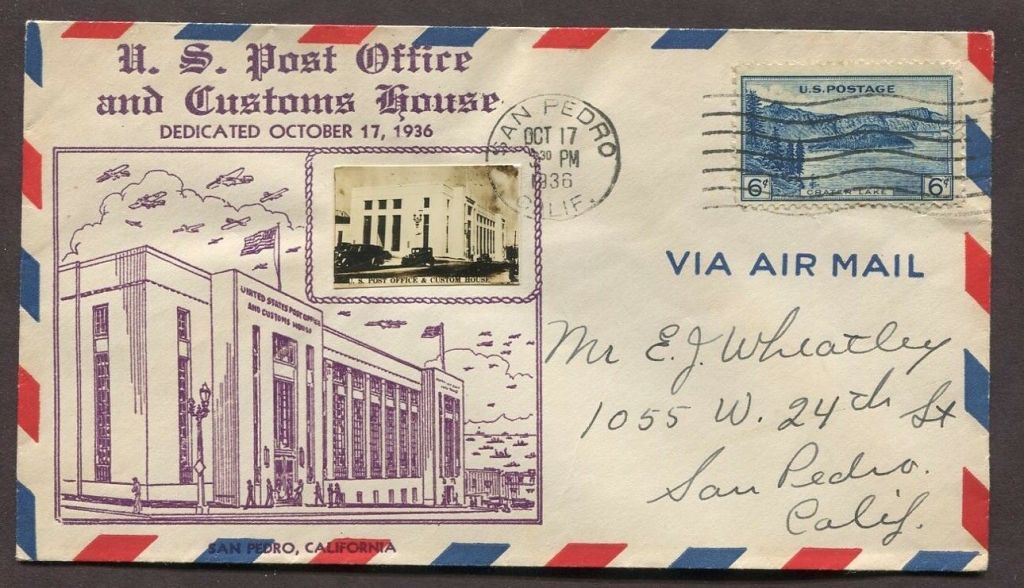
The long-awaited new post office/government building at 839 S. Beacon St., between Eighth and Ninth streets opened for business on Oct. 19, 1936. The post office was, and still is, on the ground floor. The customs house took up the entire second floor, with additional government offices on the top floor.
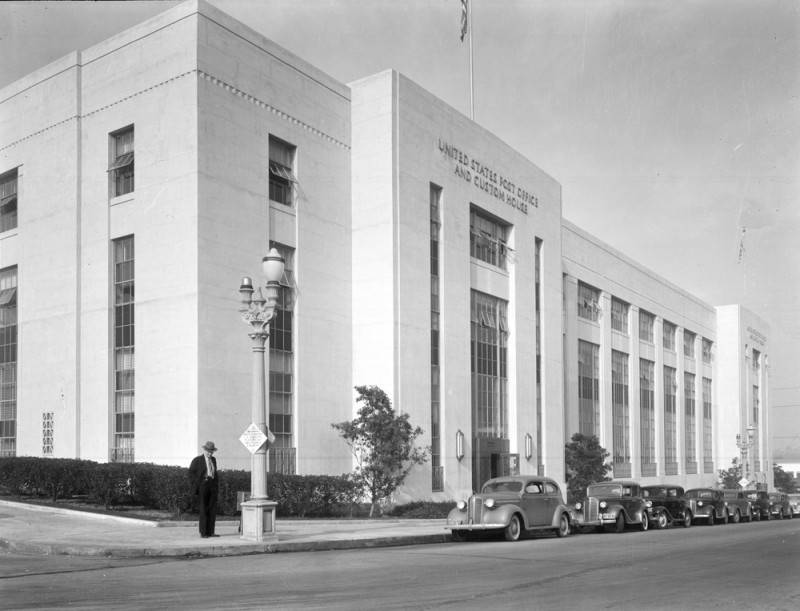
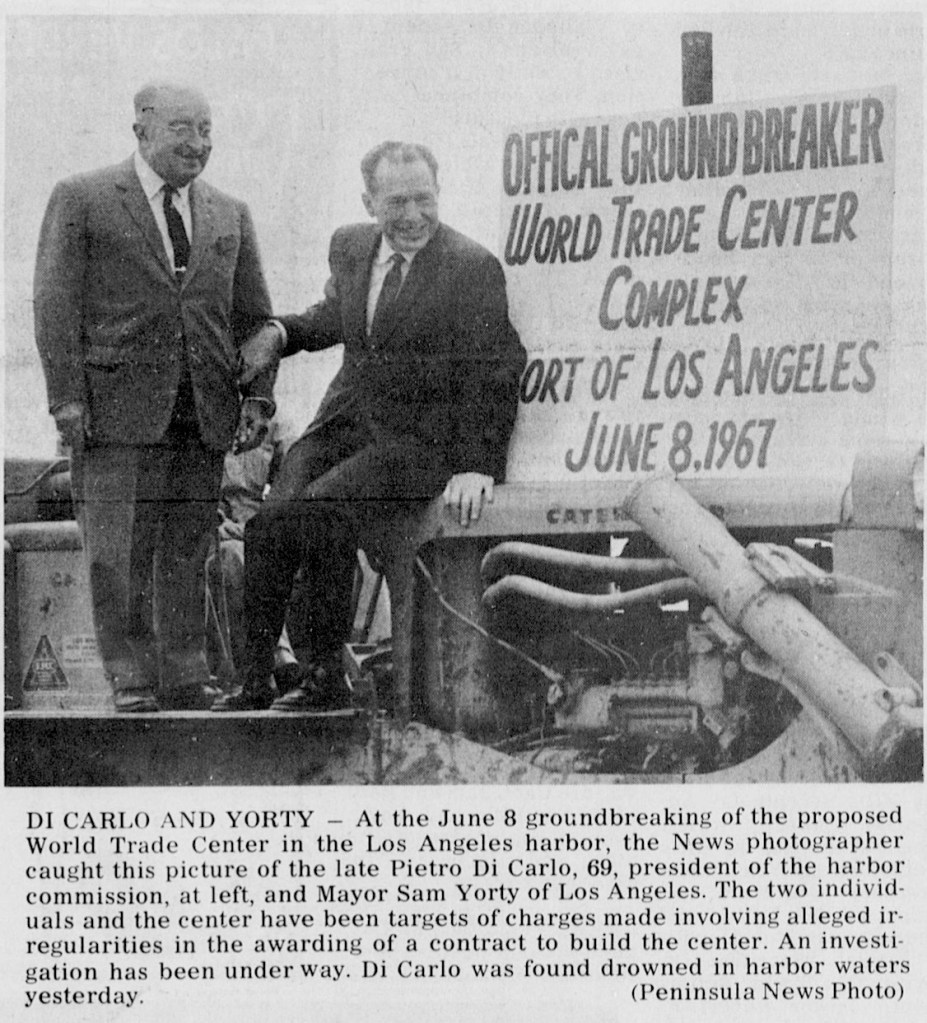
The customs house operated at the Beacon St. location for the next three decades. Its next move would come in 1967, as part of the ambitious $200 million World Trade Center complex on Terminal Island.
The U.S. Customs House building at 300 S. Ferry St. was completed in 1967, and its workers relocated there. It would be the only part of the plan to consolidate governmental port agencies into a central complex to become reality. A serious conflict of interest scandal involving the main contractor, Keith Smith, and the Los Angeles Harbor Commission scuttled the project, and its remaining components never were built.
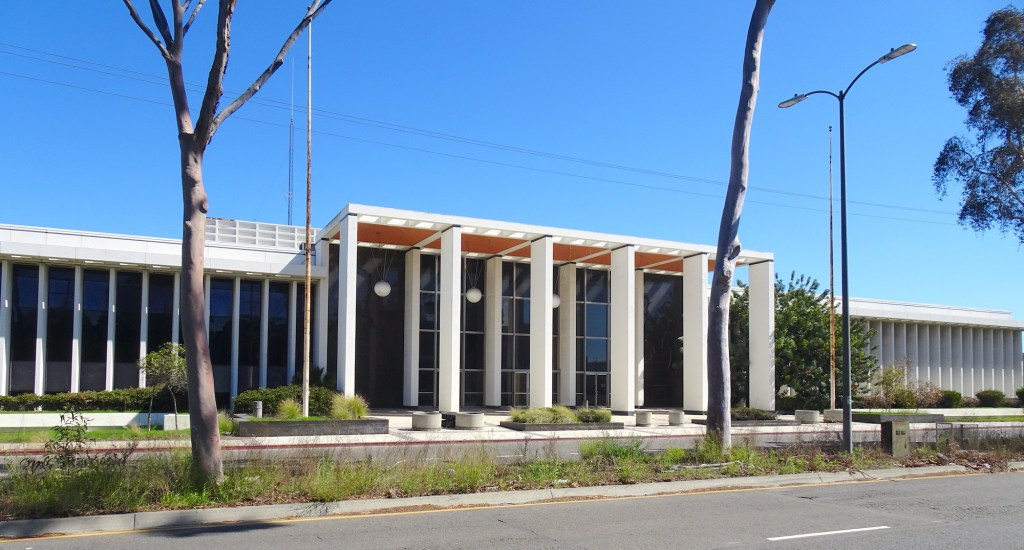
Architects Austin, Field & Fry designed the customs building. Modern observers have typed it as a prime example of New Formalism, which applies classical styling to modern building design.
The customs house operated at the two-story building for another three decades. (A one-story adjoining annex now houses the Federal Maritime Commission’s local office.)
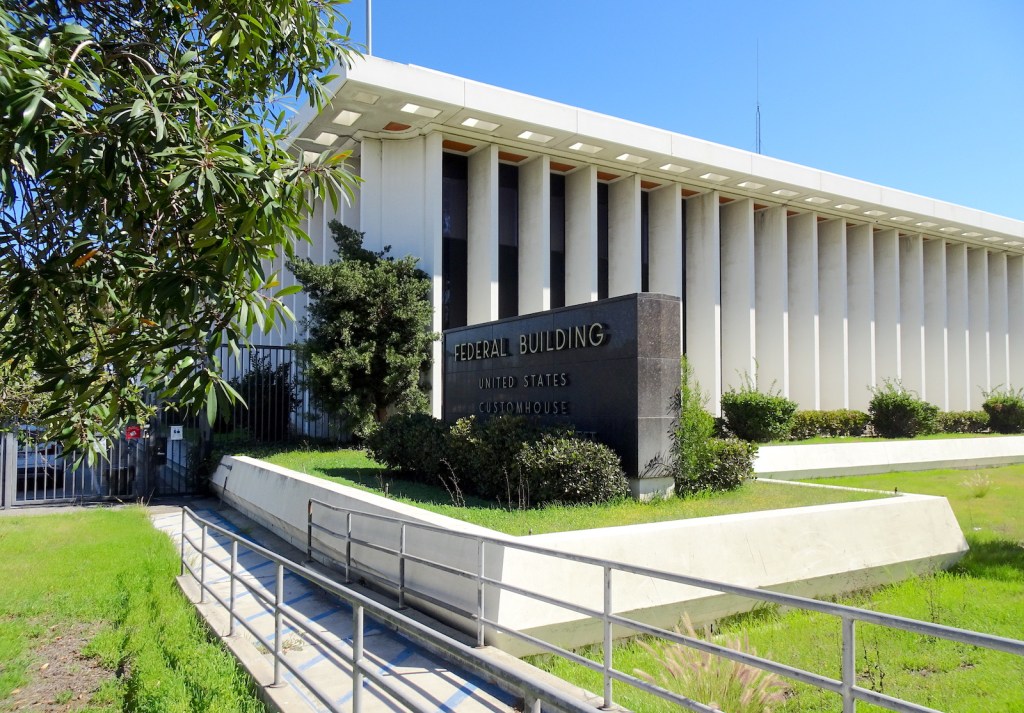
Unfortunately, a combination of factors led to its latest move, which resulted in the agency leaving San Pedro completely. One factor was age. The building had not been modernized over the years, and had begun showing its age by the late 1990s.
An even more compelling problem arose with the arrival of the Los Angeles Export Terminal (LAXT) in 1997. Located directly adjacent to the customs houses, the coal and coke processing plant’s open piles of petroleum coke dust were found to be a major source of port air pollution. The piles were covered with 12-story domes in 1999, but that did little to allay the concerns of U.S. Customs Service officials.
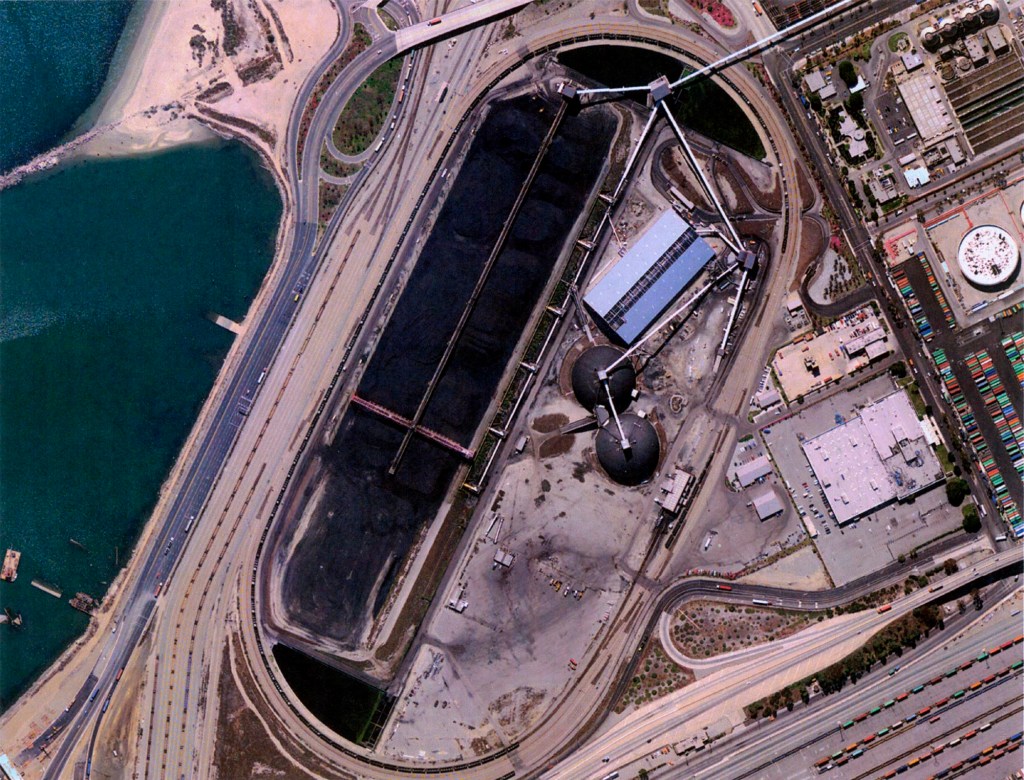
Complaints from its 350 employees concerning the health risks factored into the government’s decision to choose Long Beach as the new home for the U.S. Customs and Border Protection’s Los Angeles/Long Beach Seaport Port of Entry operations. The move to the 20-story Shoreline Square tower at 301 E. Ocean Blvd. was announced in June 2001.
LAXT shut down in 2006, and removed the domes in 2008. Since then, no new tenants have occupied its former site.
The former customs house building on Ferry St. also remains empty.
Sources:
Daily Breeze files.
Los Angeles Herald files.
Los Angeles Times files.
Palos Verdes Peninsula News files.
Press-Telegram files.
San Pedro News Pilot files.
“U.S. Custom(s)(sic) House, Terminal Island, Port of Los Angeles,” Los Angeles Conservancy website.
“U.S. Customs Laboratory — GSA SLA 1,” Port of Los Angeles, June 2010.