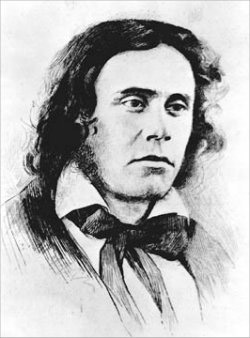
Born on Aug. 1, 1815, Richard Henry Dana Jr. grew up well-educated and privileged in Cambridge, Massachusetts. His father was a well-known poet and author and founder of the North American Review, the first literary journal in the U.S.
The young Dana entered Harvard in 1831, but his college days were interrupted during his junior year by a bout with measles that temporarily left him with impaired eyesight. In a move that must have seemed impetuous to Bostonian society types, the inexperienced 19-year-old decided to sign on as an ordinary seaman aboard a merchant ship.
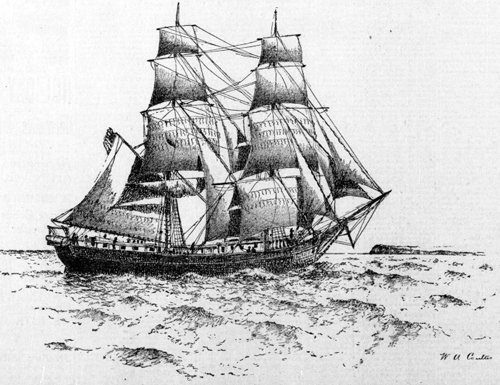
He landed on the Pilgrim, an 86.5-foot-long brig, a type of sailing ship with two square masts. Dana was a member of the ship’s small crew, along with its draconian Captain Thompson and three officers. Its mission involved sailing around South America’s Cape Horn (the Panama Canal was still 80 years away from opening) and up the Pacific coast to California to sell and trade goods, and to pick up animal hides for transport back to the East Coast.
When he set out on his two-year journey on Aug. 14, 1834, California was 16 years away from becoming the 31st state in the U.S. The land still belonged to Mexico and with few exceptions, was sparsely populated.
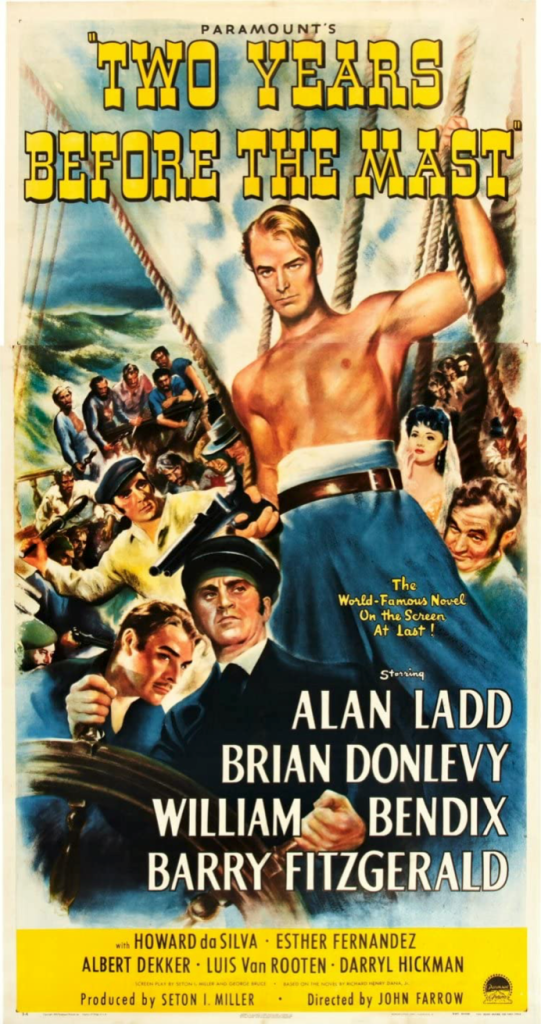
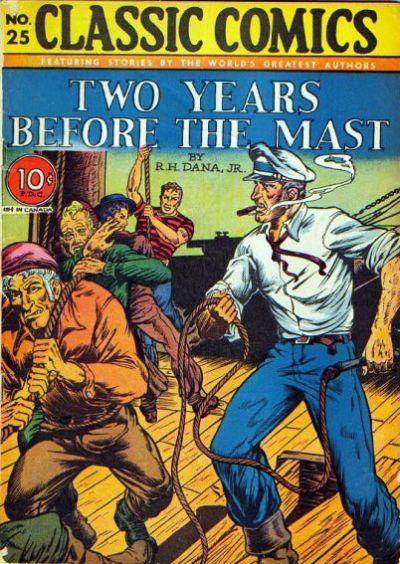
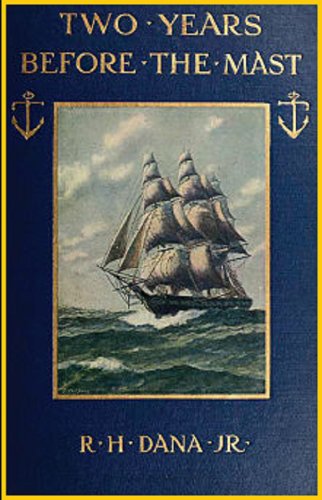
Four years after returning from his sea adventures, he fashioned his diary of the trip into the maritime classic Two Years Before The Mast, published by Harper & Brothers in 1840. His detailed, highly readable accounts of a sailor’s life at sea continue to fascinate readers to this day. (Its title refers to his two years lived on the ship in front of the mast, where the regular seamen bunked.)
After surviving wild storms near Cape Horn and enjoying some idyllic days in the Juan Fernandez Islands off the Chilean coast where Daniel Defoe’s 1719 novel Robinson Crusoe was set, the Pilgrim headed for California.
Its first stop was Santa Barbara, which Dana describes as “a large bay without a vessel in it, the surf rolling and roaring in upon the beach; the white mission; the dark town and the high, treeless mountains.”
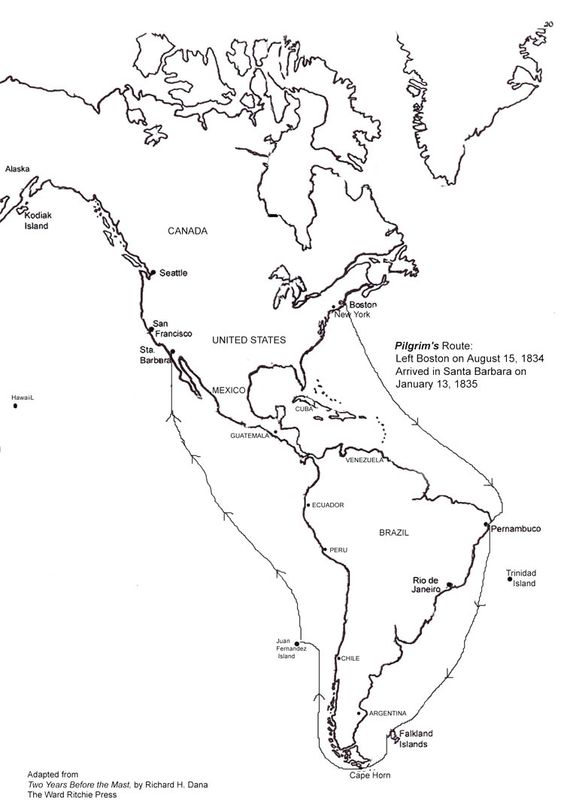
During this part of the trip, the ship would make stops and do business in San Pedro, Monterey, San Francisco, what we now call Dana Point, and San Diego.
Here’s how Dana describes his first view of San Pedro in early 1835:
The land was of a clayey consistency, and, as far as the eye could reach, entirely bare of trees and even shrubs; and there was no sign of a town — not even a house to be seen. What brought us into such a place, we could not conceive.
The answer: animal hides brought down from what Dana calls “the Pueblo de Los Angelos,” the small community of Los Angeles some 22 miles north. “I also learned, to my surprise, that the desolate-looking place we were in was the best place on the whole coast for hides,” Dana wrote.
Unfortunately, San Pedro’s then-muddy and dockless harbor proved mightily inconvenient for the loading of the cargo, which the crew had to walk to the ship by hand while maneuvering the rocky shores while barefoot. It was exhausting work.
While they were anchored there, Captain Thompson brutally flogged two sailors on the Pilgrim for little or no reason, an incident which shook the young Dana and pointed up to him the harsh, often capricious nature of life on the high seas.
Dana also described one of the few structures at San Pedro, a small storehouse where three Englishmen then were living as caretakers. They told him of Dominguez Rancho, the only major settlement in the area, which lie a couple of miles north, accessible by horseback.
He goes on to provide detailed descriptions of the other California locales the Pilgrim visited, and recounts his hair-raising return home on a different vessel, the Alert. His book was an instant success upon publication, and heavily influenced Herman Melville’s 1851 whaling epic Moby Dick.
Dana finished work on his law degree after returning to Boston, and went on to a successful career as a writer, attorney and politician before his death in Rome, Italy on Jan. 6, 1882.
The enduring popularity of his book and its descriptions of early coastal California has led to him being honored posthumously in a variety of ways.
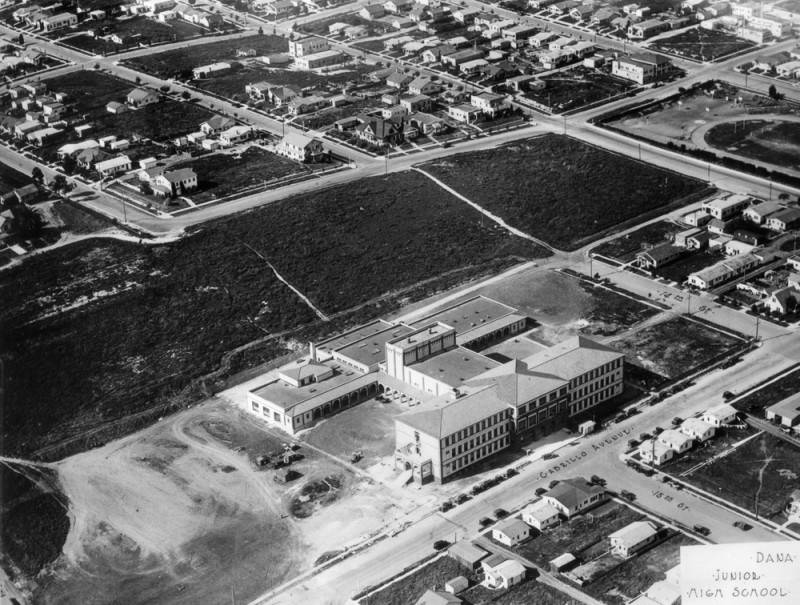
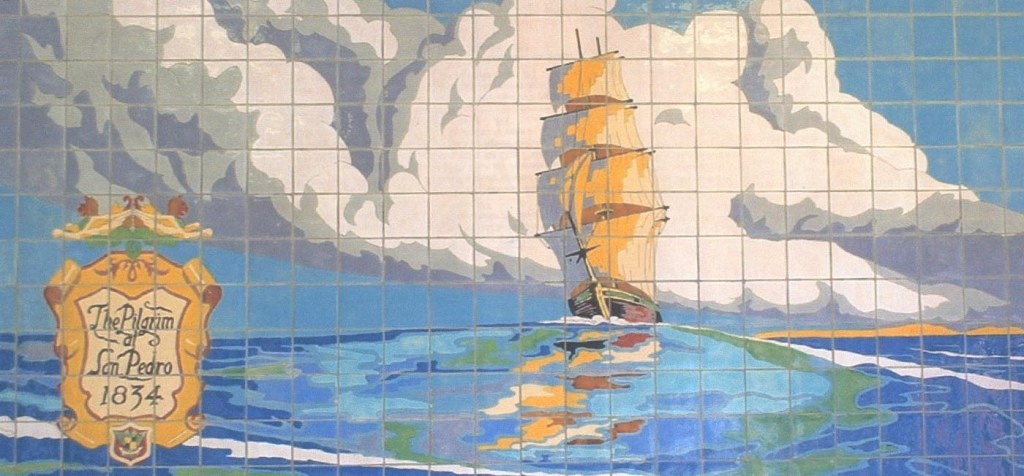
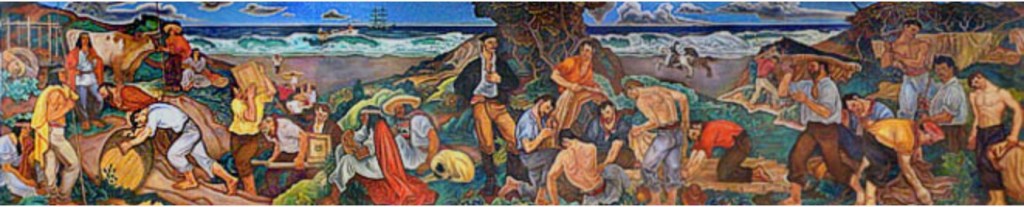
Richard Henry Dana Junior High School in San Pedro, now Dana Middle School, was named after the author. The school at 1501 S. Cabrillo Ave. opened on Feb. 6, 1928. Six years later, French artist Adrien Machefert completed two 8-by-42-foot oil-on-canvas murals inspired by Dana’s accounts as part of the Works Progress Administration’s Federal Art Project. They are mounted in the school cafeteria. Two other tile Dana murals adorn the school’s foyer.
Dana Point, the land feature, and Dana Point, the incorporated city, both are named for the author. In addition, the city commissioned and installed a large bronze sculpture of Dana on Dana Island in its marina in 1972. The harbor contained an operational replica of the Pilgrim for years until the tall ship sunk in March 2020.
Schools in Hawthorne, Arcadia, Dana Point and San Diego also have been named for Dana.
Two Years Before the Mast has remained in print essentially since its first publication, and remains one of the most entertaining true-life adventure accounts in all of American literature.
Sources:
Daily Breeze files.
“Dana Middle School,” The Living New Deal website.
Los Angeles Times files.
Palos Verdes Peninsula News files.
“Richard Henry Dana,” Ship Passengers – Sea Captains website, Maritime Heritage Project.
San Pedro News Pilot files.
Two Years Before the Mast: A Personal Narrative of Life at Sea, by Richard Henry Dana Jr., 1840. (Modern Library Edition, 2001.)