
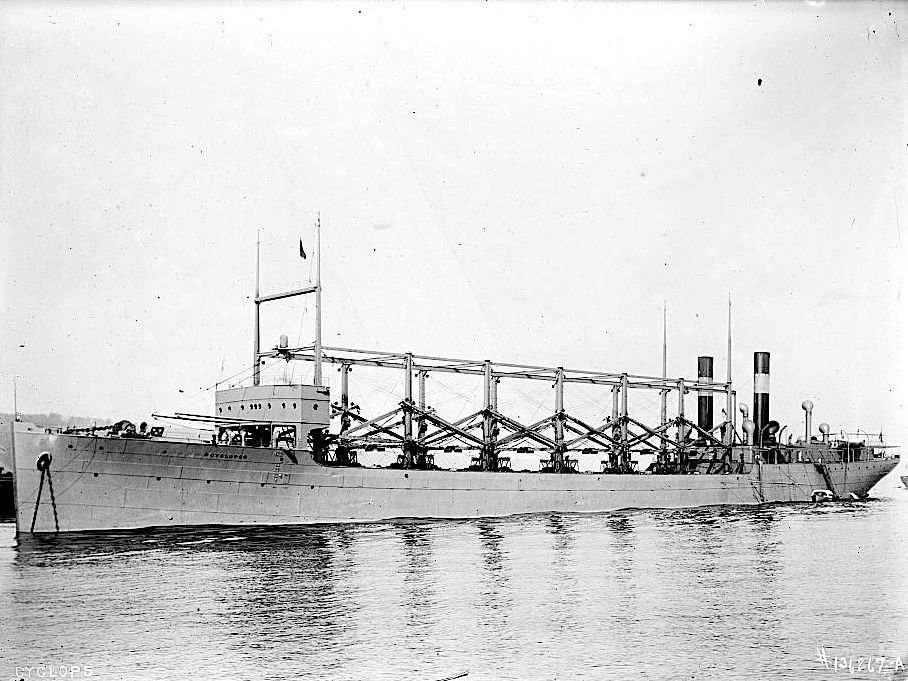
One of the greatest unsolved naval mysteries of the twentieth century involved the disappearance of the USS Cyclops in March 1918. On board were several Southern California seamen, including Harry M. Davis of Redondo Beach, who never were heard from again.
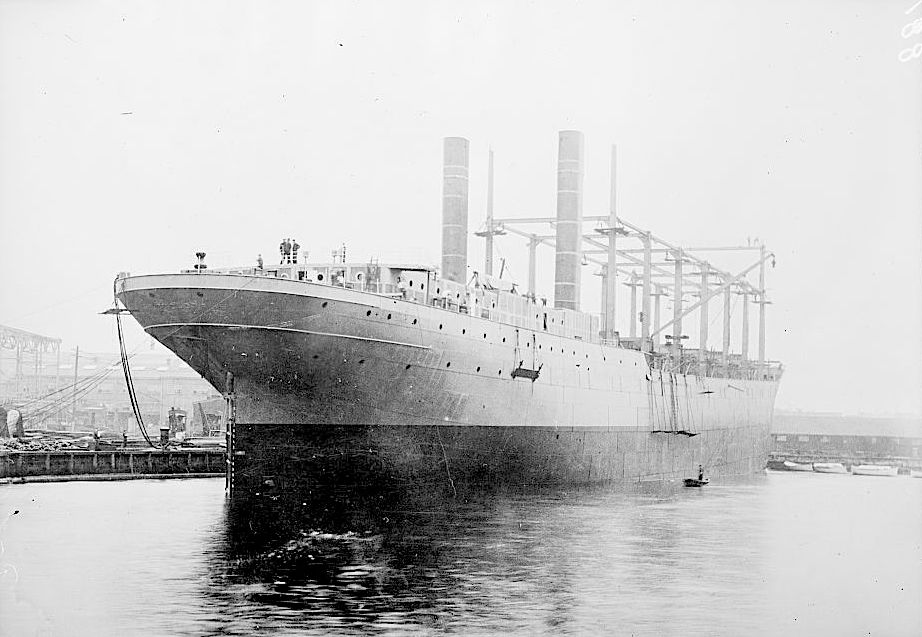
Built in Philadelphia and commissioned in 1910, the Cyclops was a collier, a ship that transported coal, especially for the purpose of supplying other coal-powered ships. Most Navy ships of the era ran on coal, and the Cyclops had a mechanism that transferred the material to other ships, much like the Air Force’s tanker planes refuel airborne aircraft.
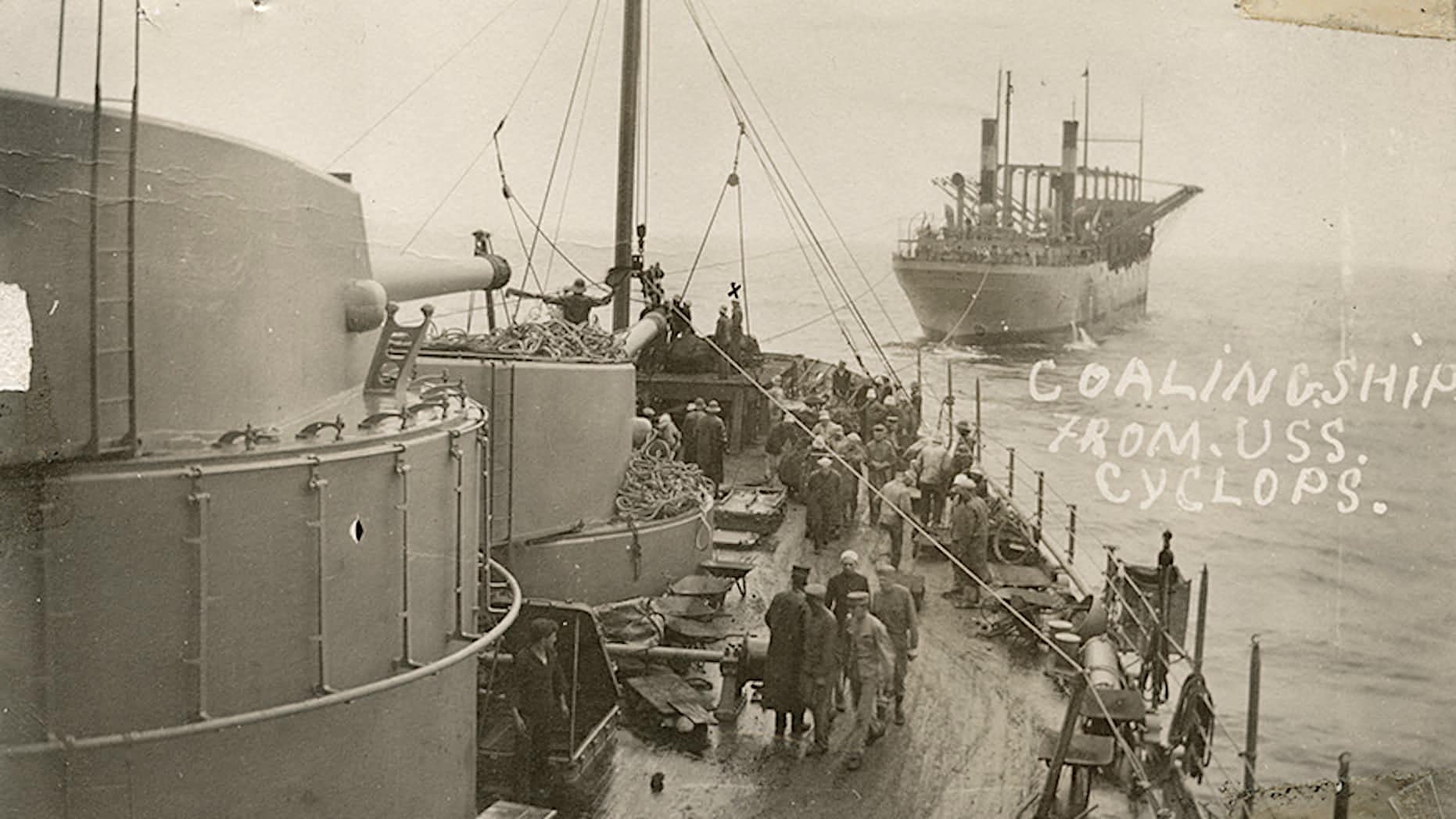
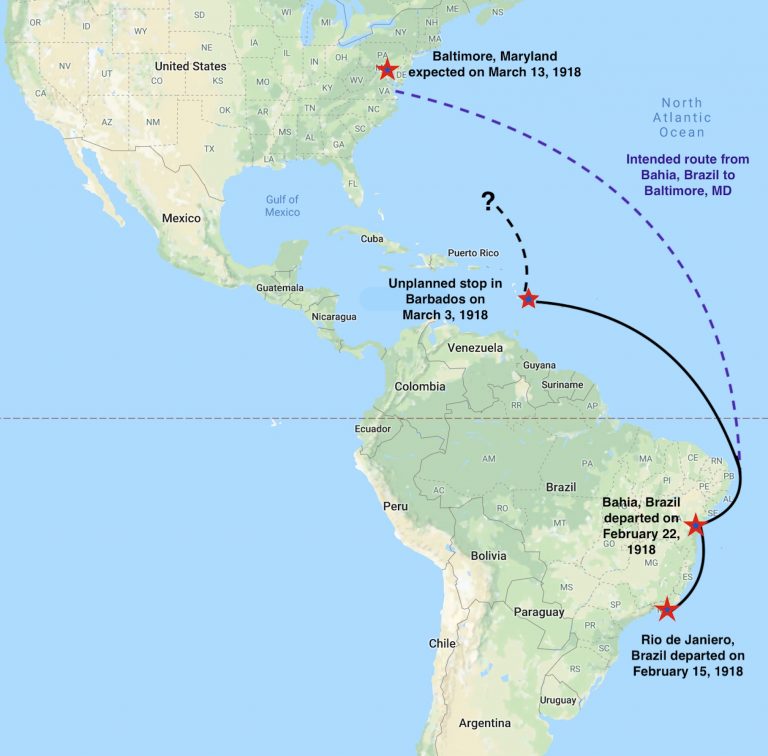
At the time of America’s entry into World War I in 1917, the Navy was transitioning from coal-fired ships to oil-powered ones. On Jan. 8, 1918, the increasingly obsolete Cyclops set out on its final mission: to transport coal from her Norfolk, Virginia home port to Brazil, and to bring a load of manganese ore back to Baltimore, Maryland.
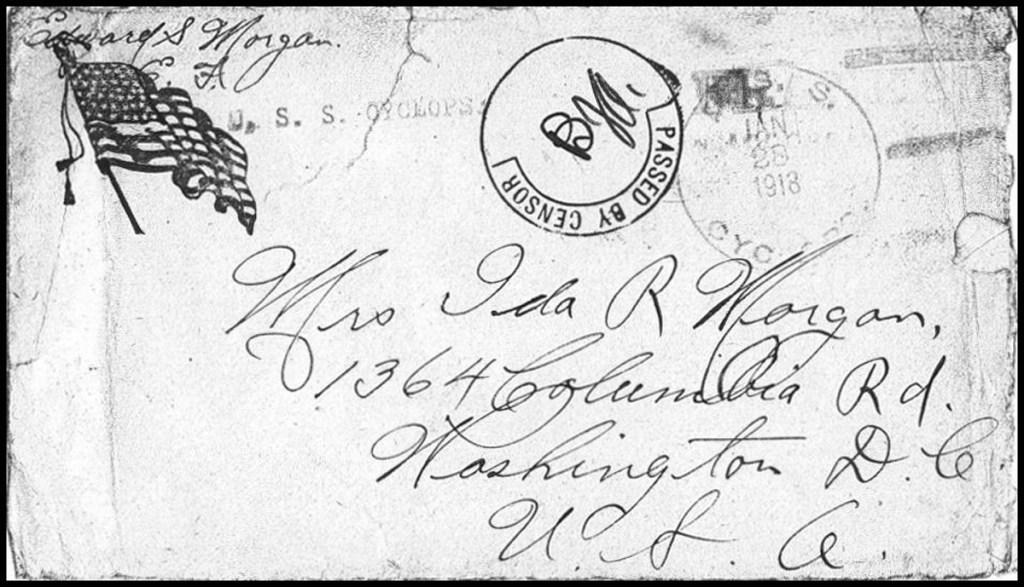
She arrived in Rio de Janeiro on Jan. 28, 1918 and made another scheduled stop in Bahia, Brazil on Feb. 15. On Feb. 22, the ship, with 309 people aboard departed for Maryland, where she was scheduled to arrive on March 13.
On March 3, the Cyclops made an unscheduled stop in Barbados in the West Indies, possibly to check on engine trouble caused by the large load of manganese she was carrying. After the ship was checked, she left for Baltimore the next day. She was never seen again. No trace of her or her crew ever was found. It remains the largest single loss of life ever aboard a U.S. Navy ship in a noncombat setting.
The area where the Cyclops disappeared without a trace would be christened “the Bermuda Triangle” starting in the 1950s. Writers and maritime experts began speculating about the western Atlantic Ocean region running roughly from Puerto Rico to Bermuda to southern Florida as a graveyard for ships that had vanished mysteriously over the years. The Cyclops was one of the best-known examples cited by Triangle enthusiasts.
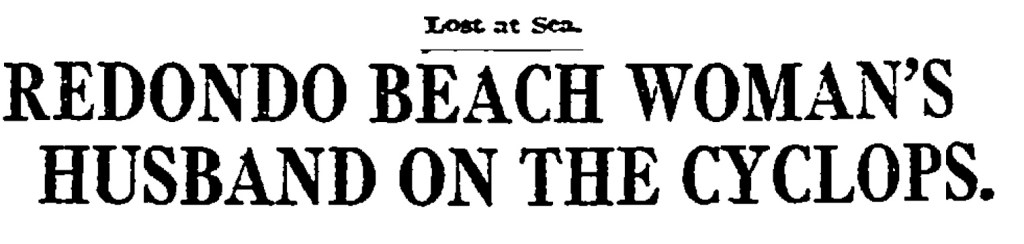
Captained by Lt. Commander George W. Worley, its crew included Harry M. Davis, who lived with his wife Dora and their two children at 202 S. Catalina Ave. in Redondo Beach when not at sea. Davis, who had been in the Navy for 13 years, had fallen ill while aboard the USS Pittsburgh was in Brazil. He was transferred to the Cyclops so he could be taken to the naval hospital in Washington, D.C., for treatment.
He never made it there. On April 14, a month after the Cyclops was scheduled to arrive in Baltimore, his wife Dora received a telegram from the Navy informing her of the ship’s unexplained disappearance. She told the Los Angeles Times, “I do not entertain great hopes for the safety of the ship.” Born Dora E. Campbell, Mrs. Davis was a prominent resident of Redondo whose family had lived in the city since 1904.
In addition to Davis, one San Pedro sailor, 23-year-old J. Rufus King, and three seamen from Long Beach, O.S. DeVoe, David Evans, and Guy Nowlins, also were on board the Cyclops.
On June 1, 1918, Assistant Secretary of the Navy Franklin D. Roosevelt officially declared the ship to be lost at sea, and all of those aboard were pronounced deceased on June 14. By then, a whirlwind of rumored causes already had begun swirling, and would continue to do so for the next 100 years or so.
Some speculated on mismanagement by Worley, the ship’s captain. Conrad A. Nervig, an officer on the Cyclops who left the ship when it was in Rio, wrote about Worley in a July 1969 article in Proceedings, a journal of the U.S. Naval Institute. He described him as “a very indifferent seaman and a poor, overly cautious navigator. Unfriendly and taciturn, he was generally disliked by both his officers and men.” His indifference to the ship’s condition was cited as a possible cause of its being lost at sea.
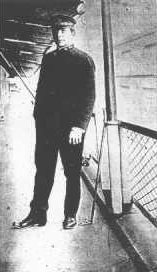
Other rumors ran the gamut of possible causes. Early on, it was thought that the heavily laden, slow-moving ship had been boarded by enemy German agents and transported to Germany. The German government quickly disavowed this theory. Perhaps the enemy agents had set a time bomb to explode and sink the ship? No, this would have left evidence floating in the waters. None was found. Same for the possible torpedoing by a German U-boat, another explanation posited.
Others theorized that the non-combustible manganese ore had exploded, or that a giant octopus had dragged the large ship under.
Among the more credible explanations: the weighty load of ore had caused the ship to split in two and rapidly capsize, or mechanical and structural breakdowns aboard ship caused it to sink. Two of the Cyclops’ sister ships that also were transporting large loads of ore sank during World War II, giving some credence to the explanation.
The Bermuda Triangle idea first was posited in a Miami Herald article in 1950 and gathered steam over the years. A variety of reasons was given for the phenomenon, including paranormal and extraterrestrial factors, powerful ocean currents, unusual weather events and the like.
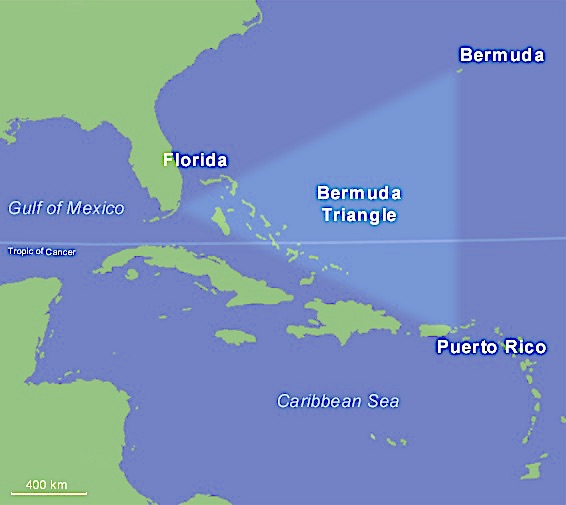
Its popularity waned after scientists and historians began poking holes in the theory, some noting that the area actually didn’t have a statistically higher than normal rate of ship accidents and providing logical explanations for many of those that had occurred there.
Note: Special thanks to Douglas Thompson of the Redondo Beach Public Library, who suggested the topic and provided research for this post.
Correction: Redondo Beach Cyclops crew member’s name corrected to Harry M. Davis.
Sources:
“The Disappearance of the USS Cyclops, March 4, 1918,” compiled by Mary Kay Krogman for the Genealogy Trails website.
Los Angeles Times files.
Redondo Reflex files.
San Pedro News Pilot files.
“The Unanswered Loss of USS Cyclops — March 1918,” by Captain Lawrence B. Brennan, U.S. Navy (Ret.), Naval Historical Foundation website, June 13, 2013.
“USS Cyclops: The Deadliest Unsolved Mystery in the Navy,” by Hannah Hirzel, Naval History Blog, U.S. Naval Institute website, June 14, 2018.
https://www.navalhistory.org/2018/06/14/uss-cyclops-the-deadliest-unsolved-mystery-in-the-navy

