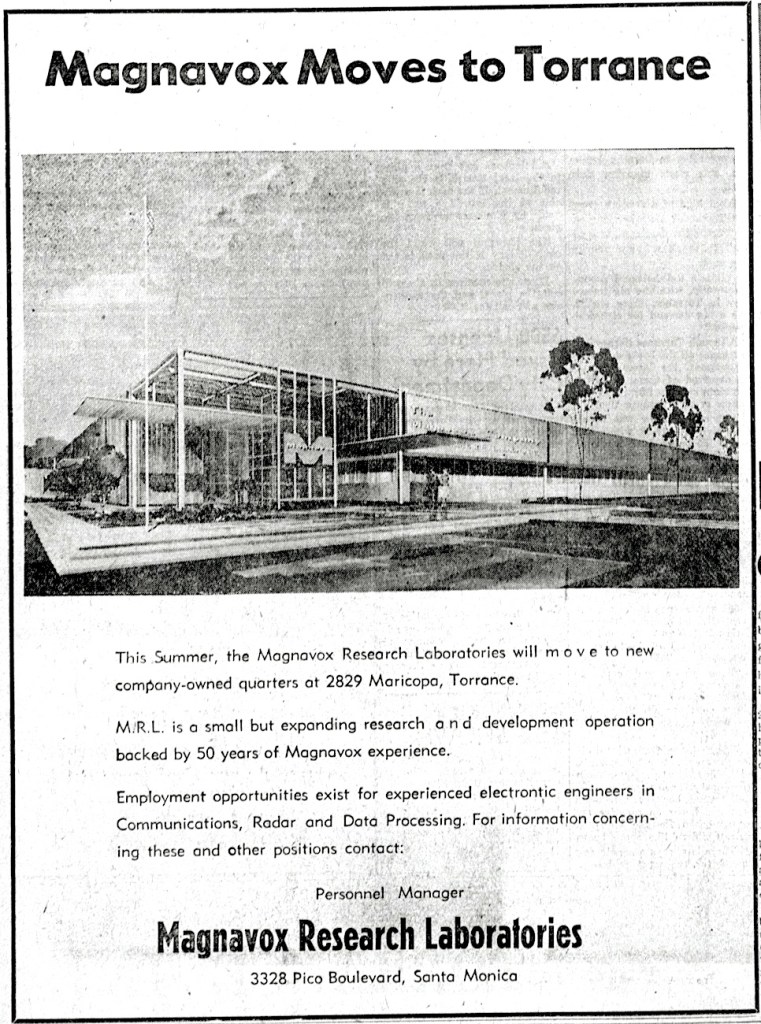
In late 1958, Torrance officials received the news that Magnavox had purchased ten acres of land on Maricopa St. in the heart of the city with great enthusiasm.
The Fort Wayne, Indiana-based electronics company, known to consumers for its radios, TVs and stereo equipment, planned to spend $1.5 million to build Magnavox Research Laboratories. The new building at 2829 Maricopa near Hawaii Ave. was slated to open in 1960.
It would be the first of four buildings the company planned for the site. The new lab facility, part of the company’s Military and Industrial Division, would focus on research and development of communications, radar, anti-submarine, navigational and data processing equipment.
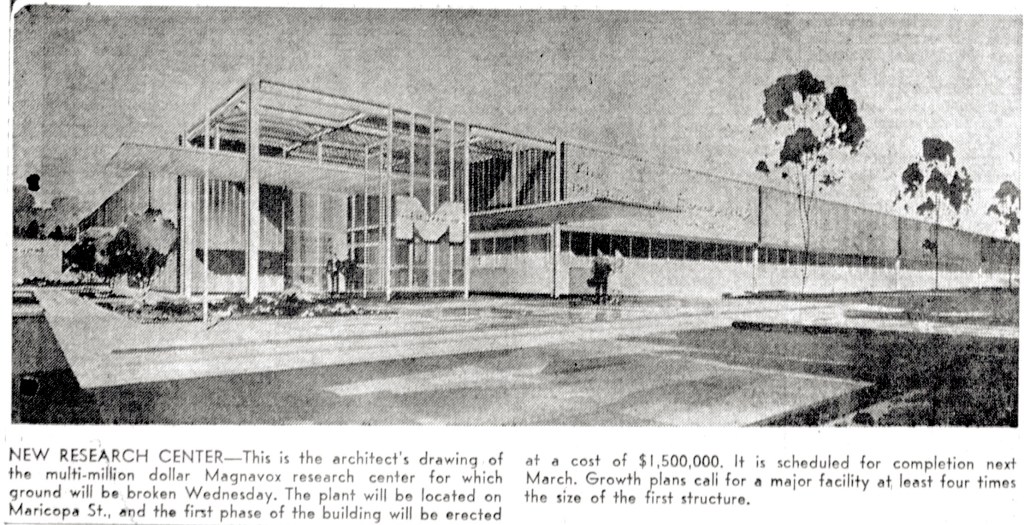
(Credit: Torrance Historical Newspaper and Directories Archive database, Torrance Public Library)
Magnavox had built several research labs, including plants in Santa Monica and West Los Angeles, since starting the division in 1953. Employees from the West L.A. plant were slated for relocation to Torrance.
The company itself had been founded in Napa, California, in 1910, and is credited with developing the loudspeaker and the public address system in its earliest days.
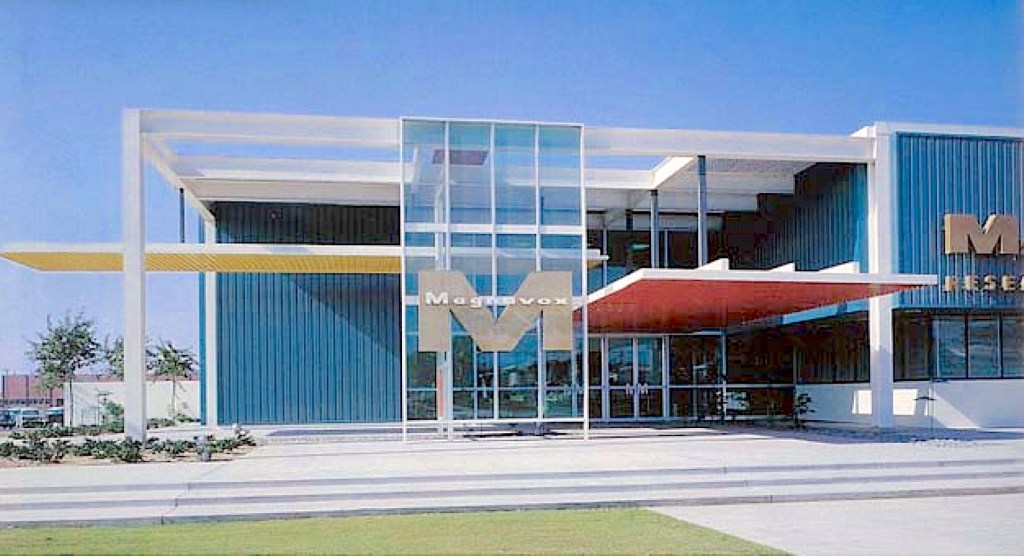
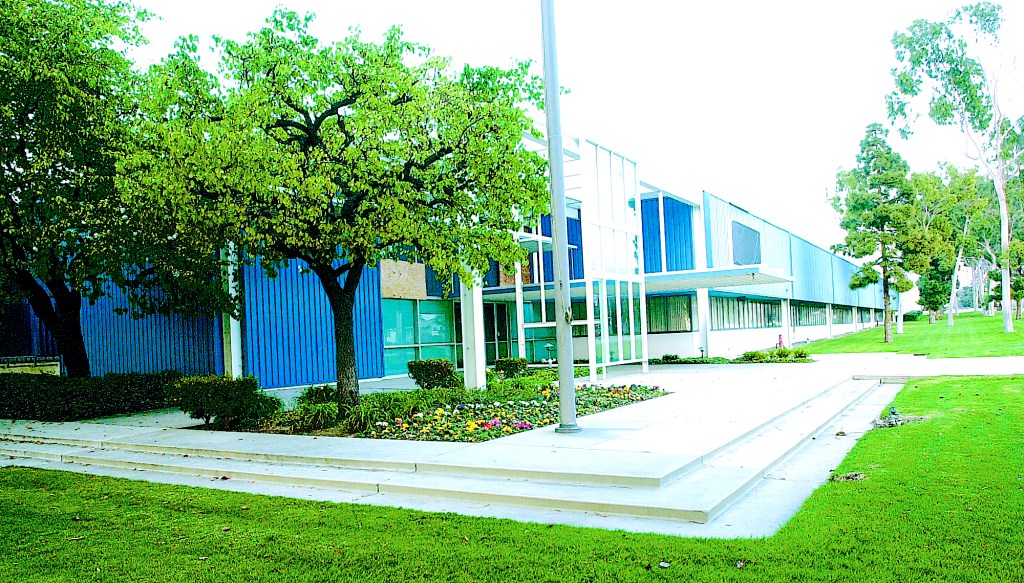
The Los Angeles architectural firm of Risley and Gould designed the new building, and it was built by the William Simpson Construction Co., also based in L.A. Its space-age modernist facade still has building buffs buzzing sixty years after the fact. Not bad for a structure that no longer exists.
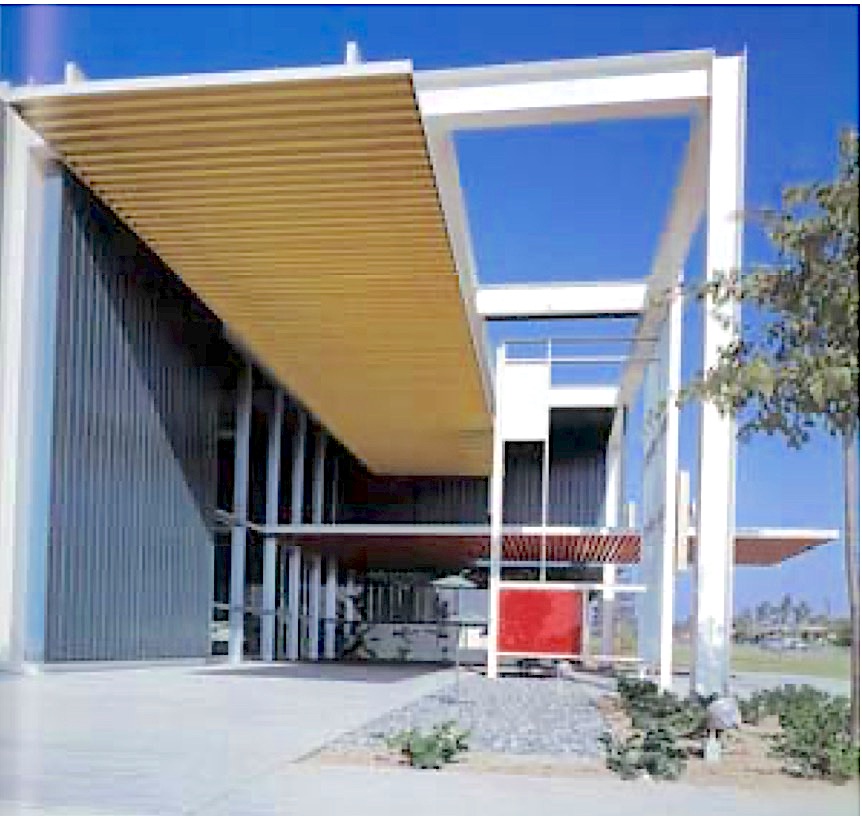
The main entrance drew most of the attention. Its sleek, angular glass and steel surfaces and creative use of colors felt like something out of “The Jetsons,” which wouldn’t appear on TV screens until 1962.
The 68,000-square-foot building featured innovative modular construction, with moveable panels accommodating future expansion. in addition, it had a complex air conditioning system that allowed for customized temperature and humidity controls for the various labs within the structure.
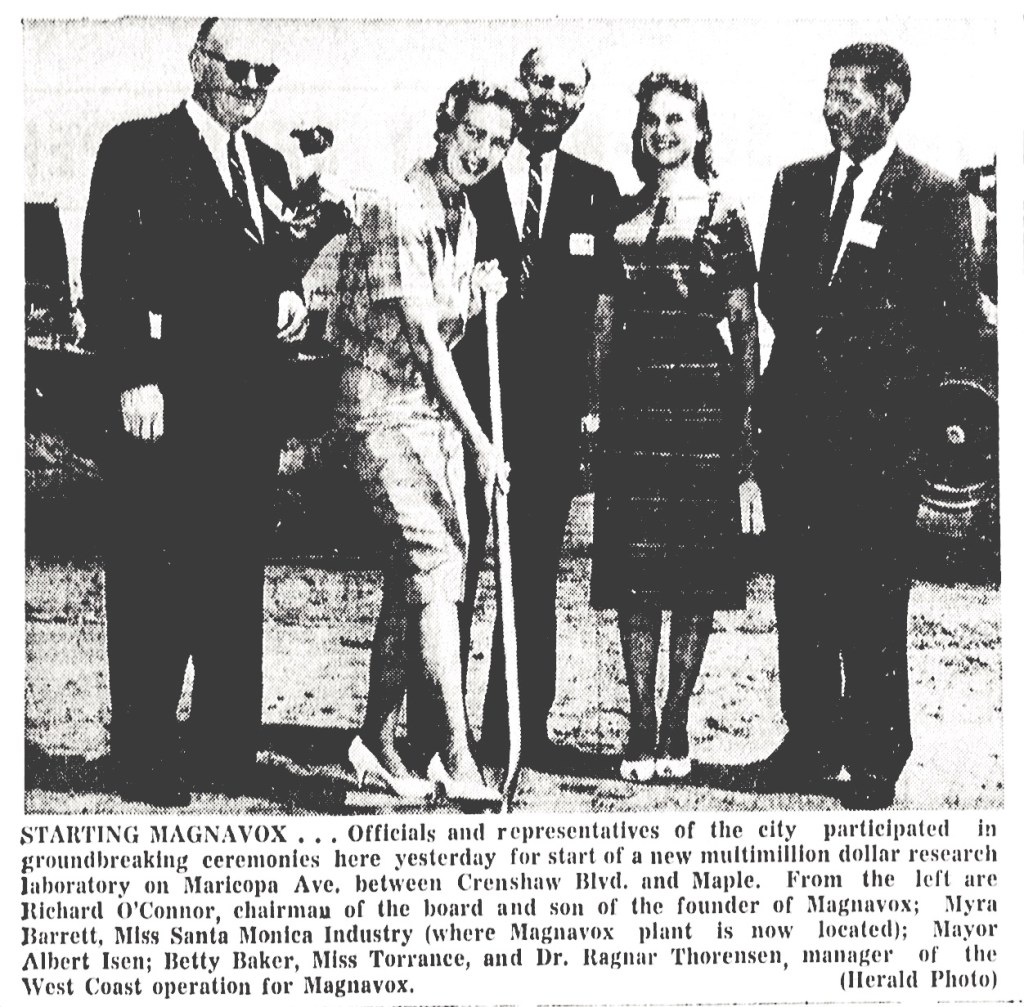
(Credit: Torrance Historical Newspaper and Directories Archive database, Torrance Public Library)
Groundbreaking ceremonies involving business and civic leaders and the odd beauty queen or two were held on Sept. 2, 1959. Torrance resident Dr. Ragnar Thorensen, director of research at the new facility, presided over the other shovel-wielders at the ceremony.
The dedication of the new building took place on Aug. 3, 1960. Within days, many of its initial workforce of 200 employees had occupied it and were hard at work on various aerospace and defense projects.
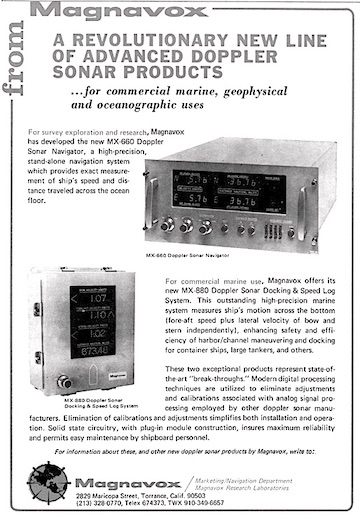
By the late 1960s, the company was thriving and regularly winning defense industry contracts. Its research work expanded into the rapidly developing fields of avionics, satellites and computer-aided marine navigation, often using new three-dimensional graphic modeling techniques.
In the early 1970s, the division’s name was changed to Magnavox Advanced Products and Systems Co. In its later years, that was changed to the simpler Magnavox Electronic Systems.
The Dutch firm Philips Electronics acquired Magnavox’s consumer products operations in 1974, but the research arm remained independent until 1995, when it was acquired by Hughes Electronics.
By then, the aerospace industry decline had reduced the company’s Torrance work force to 350 employees, half the amount who had been employed there just two years earlier. The new owners renamed it Hughes Defense Electronics in 1996, and moved the remaining employees out of the Torrance building a year later.
The Maricopa St. building would remain vacant for the next several years.
Controversy erupted among nearby residents when the Church of the Harvest International, which had moved into the Magnavox property in 2001, announced early the next year its plans to build a video production company and a Bible college at the site. A revised plan from the megachurch calling for the construction of a 2,000-seat sanctuary also failed to mollify irate neighboring homeowners.
The dispute festered for several months until the church reached a financial agreement with the city that included abandoning plans for the Magnavox site and moving its operations out of the city entirely.
The move cleared the way for the next proposed use for the ten-acre parcel.
After several months of negotiations, Torrance-based JCC Homes received approval from the Torrance City Council to build a gated 104-unit housing development on the site in October 2003.
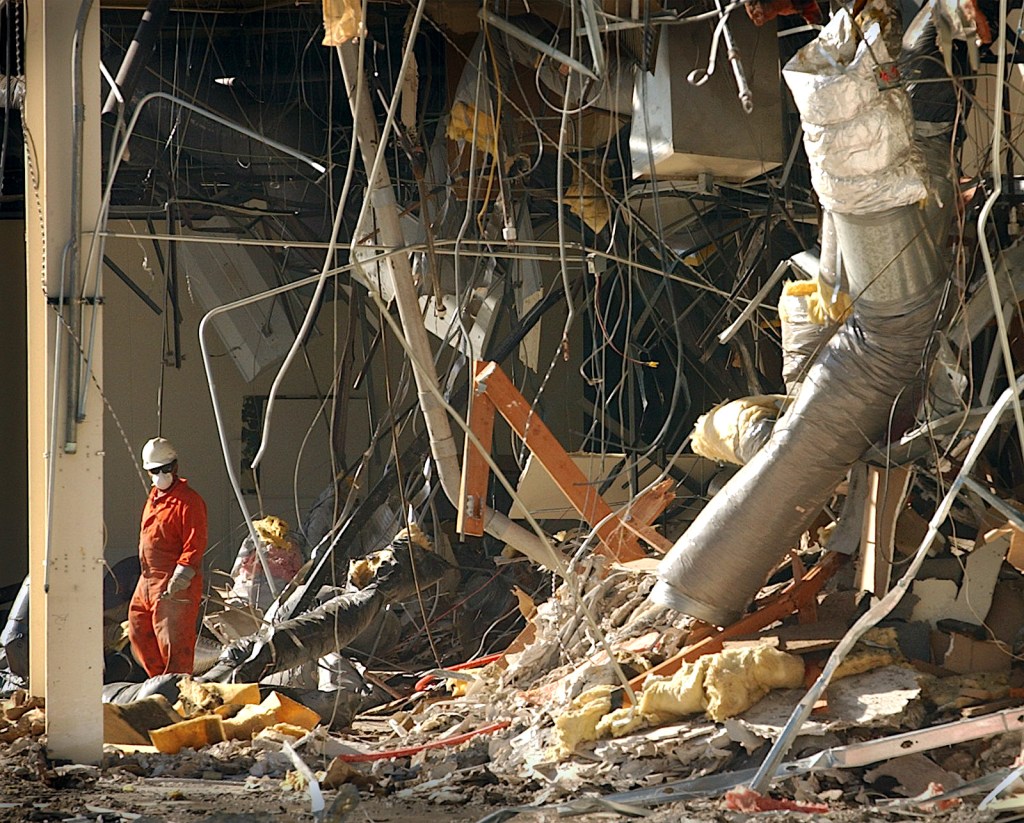
The Magnavox buildings finally were torn down in February 2004, clearing the way for the housing development which currently occupies the site.
Sources:
Daily Breeze files.
Los Angeles Times files.
“Marine Integrated Navigational Systems,” by Robert J. Horne (website).
Torrance Press-Herald files.