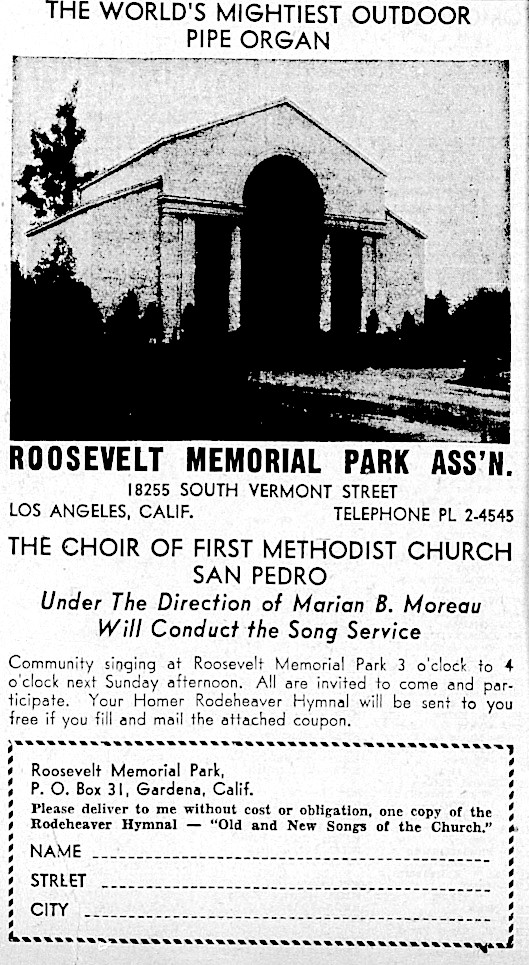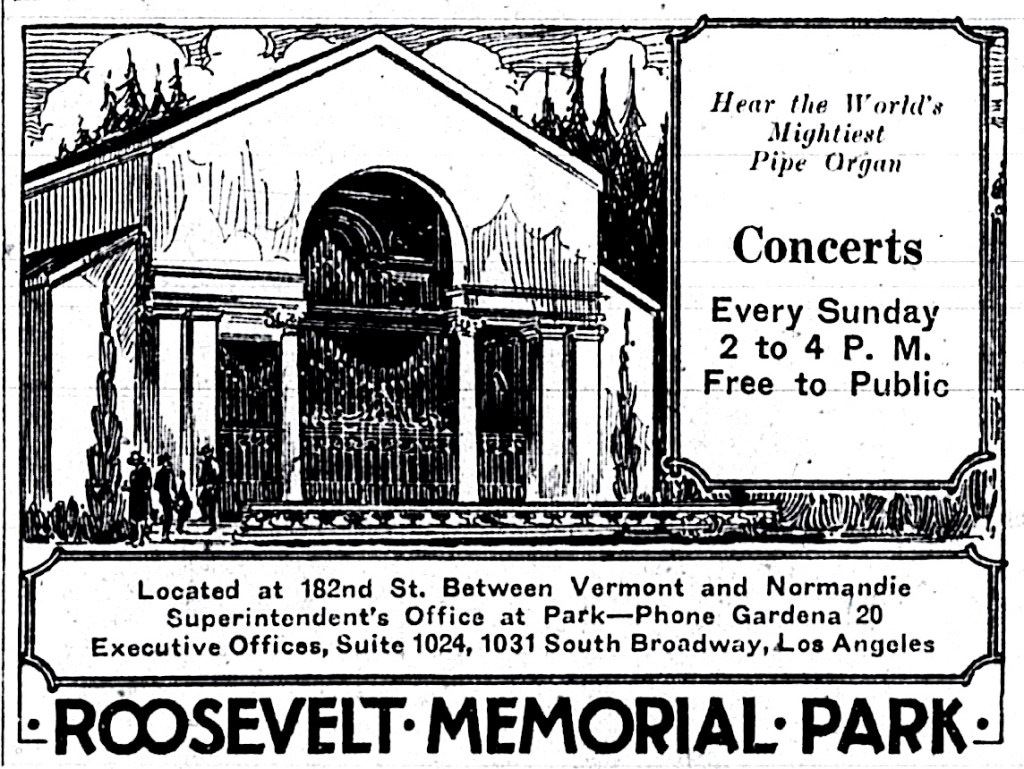
The governing board of Roosevelt Memorial Park cemetery and the Rudolph
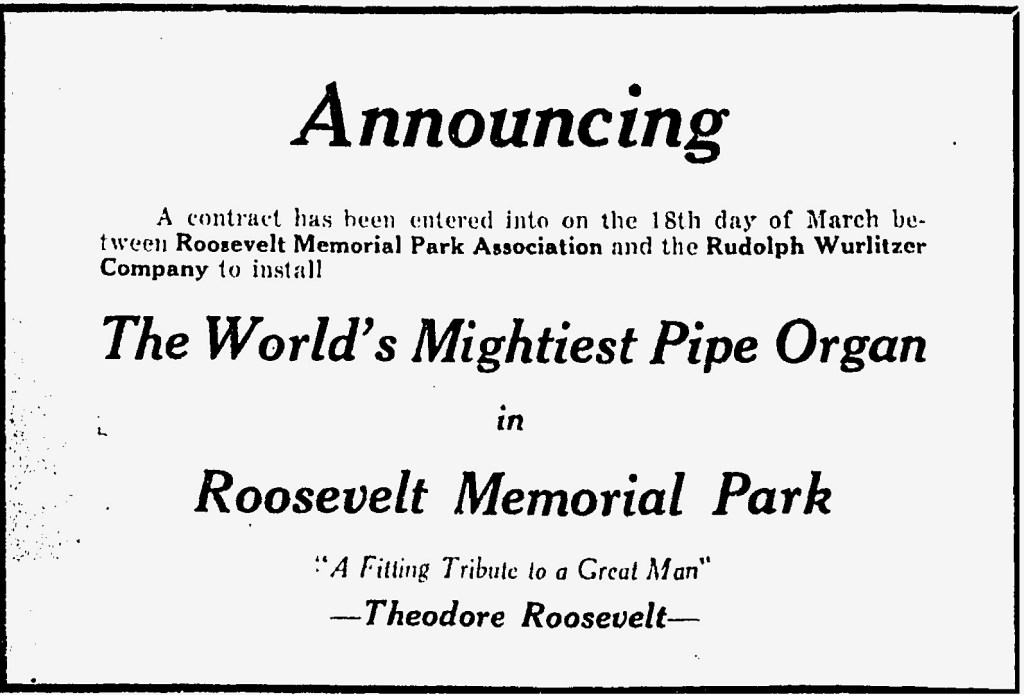
Wurlitzer Co. of North Tonawanda, New York, recached a business agreement in March 1924. The newspaper ad announcing the news proclaimed that, as a result, the cemetery would be receiving “the world’s mightiest pipe organ.”
Indeed, the giant organ Wurlitzer would build would be touted as the world’s largest musical instrument, a distinction held since 1956 by the three-acre “Stalacpipe Organ” in Luray Caverns, Virginia.
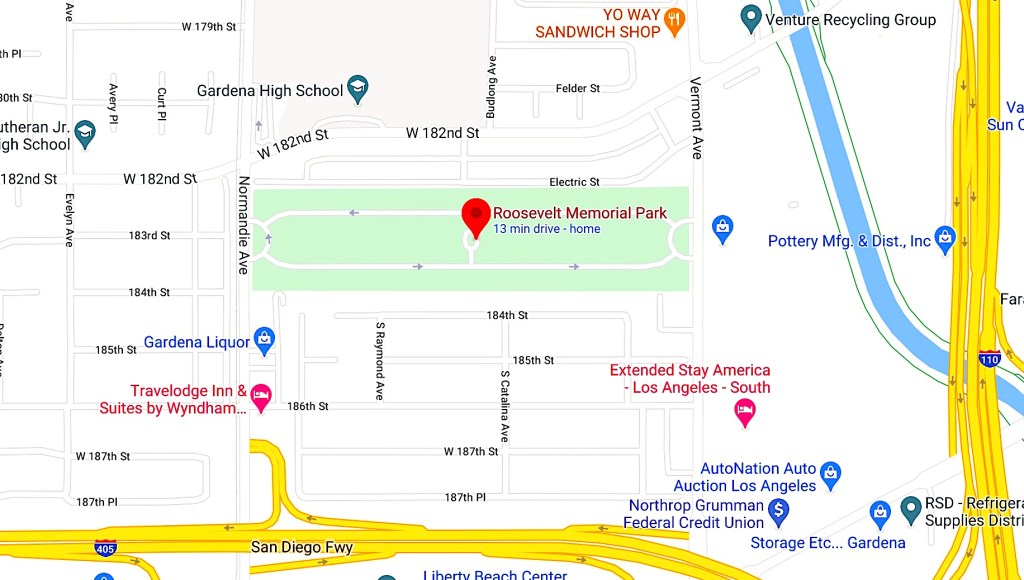
Roosevelt Memorial Park, located between Normandie and Vermont avenues just south of 182nd St. in Harbor Gateway, had opened for business in 1923, and its board felt the organ would help put the new facility on the map.
They decided to pay $150,000 to Wurlitzer to build it. About 2,000 employees worked on the massive and sophisticated instrument, identified by Wurlitzer as the Opus 998 model. They began working on it in 1924, and it took them just under a year to complete the job. It required a large 50-horsepower engine in order to operate properly.
Pipe organs in the early twentieth century mostly were used in large churches and movie theaters. In theaters, their ability to replicate a wide variety of sound effects beyond the normal organ tones made them effective tools for accompanying silent films of the era.
The Opus 998 model built for Roosevelt Memorial Park was more of a concert performance model than a movie theater-oriented one.
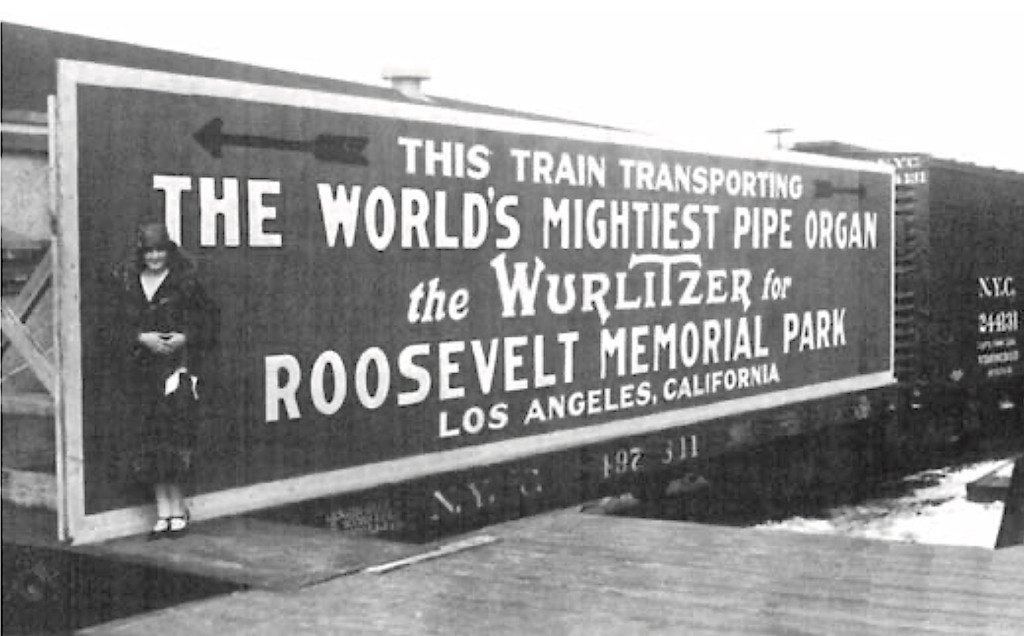
The monster organ had to be transported from New York by rail. Twelve train cars were needed for the job. Wurlitzer pulled out all the stops to publicize the trip, using a giant promotional sign announcing the special train’s cargo.
The train made many promotional stops along its way across the continent, including a full-on public exhibition in San Francisco, before arriving in Los Angeles in early March 1925.
It had been hoped that it could be assembled and be ready to play at Roosevelt on Easter Sunday, but its complexity forced its debut to be delayed until May. After all, the instrument had more than 2,000 pipes alone, in addition to its other components.
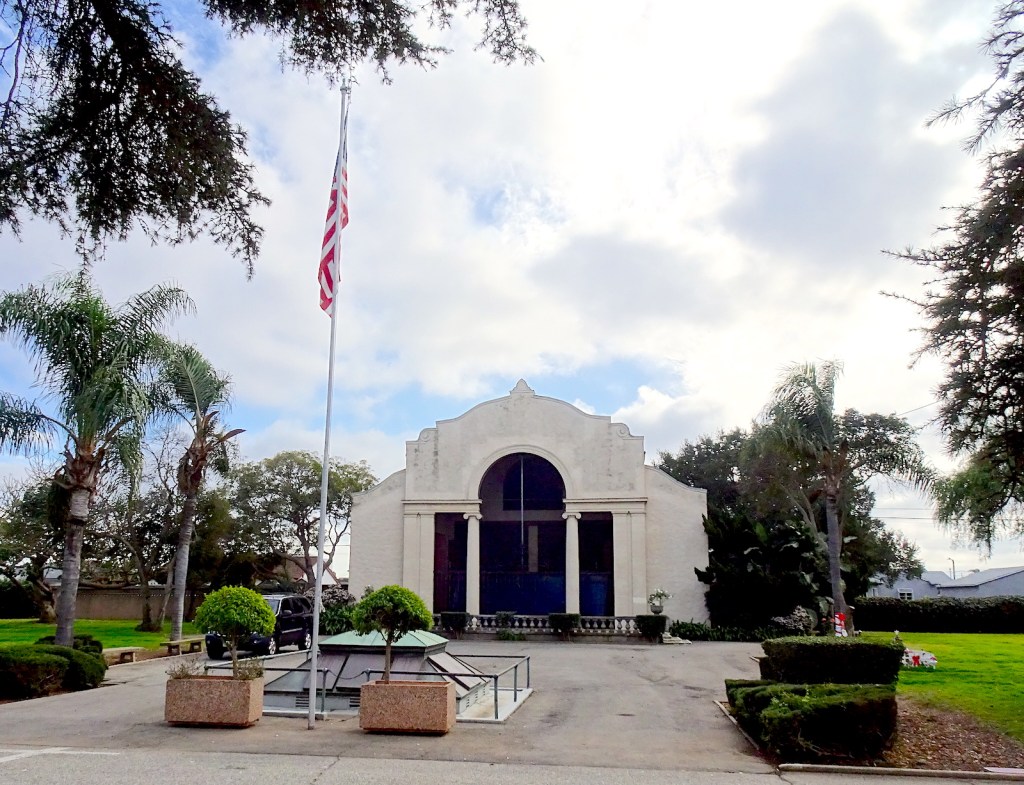
The cemetery had built a special $35,000 structure, the Organ Pavilion Building, to house the organ. Thanks to technical developments in the organ industry, it was possible at the time to house the console, including the keyboard, separately from the organ itself.
This became important at the Roosevelt installation. The new organ had an estimated range of from five to seven miles. During its lifetime, it even was claimed that its music could be heard ten miles away in downtown Los Angeles.
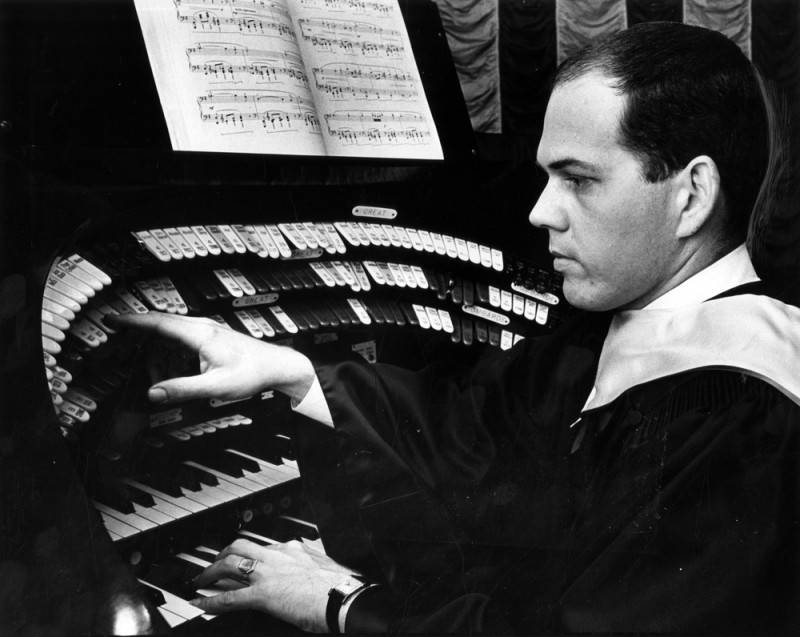
So, a separate underground room for the console player was built 75 feet away and ten feet below ground level in front of the building housing the organ, as it was feared that if the organist was situated too close to the instrument, damage to the player’s hearing was a very real possibility.
The cemetery board picked Clarence Reynolds, city organist for the Municipal Auditorium in Denver, to be its inaugural player at the organ’s dedication on May 30, 1925.
The Memorial Day ceremony drew a large crowd, with Los Angeles Mayor George Cryer and area Congressman Walter Lineberger among the attendees. Lineberger gave the keynote speech, and noted Irish tenor Joseph Conlin performed several organ-accompanied musical selections.
From then on, the organ helped draw large crowds at both Easter Sunrise and Memorial Day observances at Roosevelt Memorial Park for the next several decades. Weekly Sunday night organ recitals also were held at the cemetery for many years.
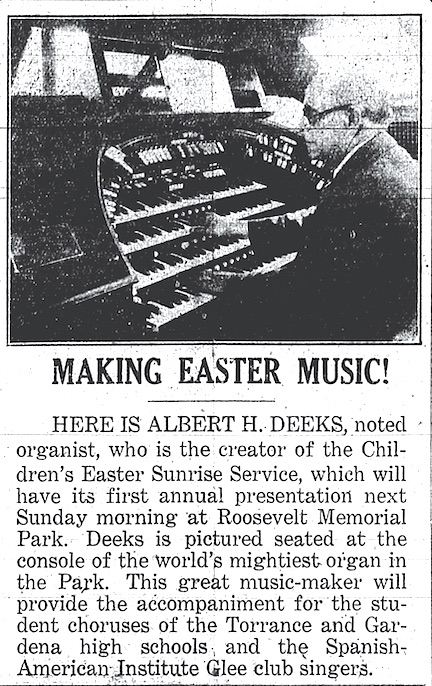
In October 1926, a special ceremony commemorating the birth of President Theodore Roosevelt was held. Surviving members of the Rough Riders from the Spanish-American War attended, and musical selections hand-picked by Roosevelt’s widow were played on the big pipe organ.
The 1933 Long Beach earthquake damaged the organ when it caused some sections of the building’s roof to collapse, but it quickly was repaired and put back into service’.
The organ began losing its allure as an attraction over the years. Poor upkeep took its toll, and the organ stopped working in 1959. Hobbyists and volunteers stepped in to perform the necessary repairs to get it running again.
As recently as 2003, the organ was still being used for Memorial Day services, though the Roosevelt had ceased holding its annual Easter Sunrise ceremonies in the 1990s.
More recenlty, however, age and disrepair have rendered the organ unusable. A 2003 estimate put the cost of repairing the complex instrument at between $100,000 and $300,000, an expense the non-profit cemetery could not afford.
So,in November 2008, the world’s mightiest pipe organ was removed from Roosevelt, and the gigantic instrument and its parts now are being stored offsite.
The cemetery has considered demolishing the Organ Pavilion Building itself, and replacing it with a new mausoleum. So far, that hasn’t come to pass.
Sources:
Daily Breeze files.
Nerdist website.
Los Angeles Times files.
“The Mightiest Wurlitzer,” by Joseph McCabe, Page 36, The Tracker, Journal of the Organ Historical Society, Vol. 53, No. 2, Spring 2009.
Pipe Organ Database: A project of the Organ Historical Society.
Roosevelt Memorial Park website.
Roosevelt Memorial Park, Gardena, California, Home of the Mighty Wurlitzer Outdoor Pipe Organ (website).
San Pedro News Pilot files.
Torrance Press-Herald files.