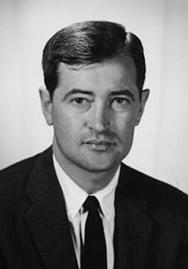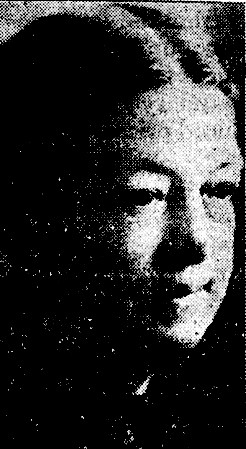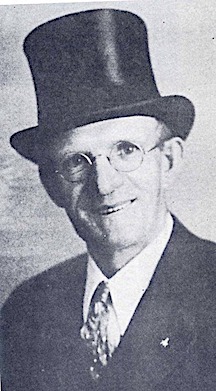
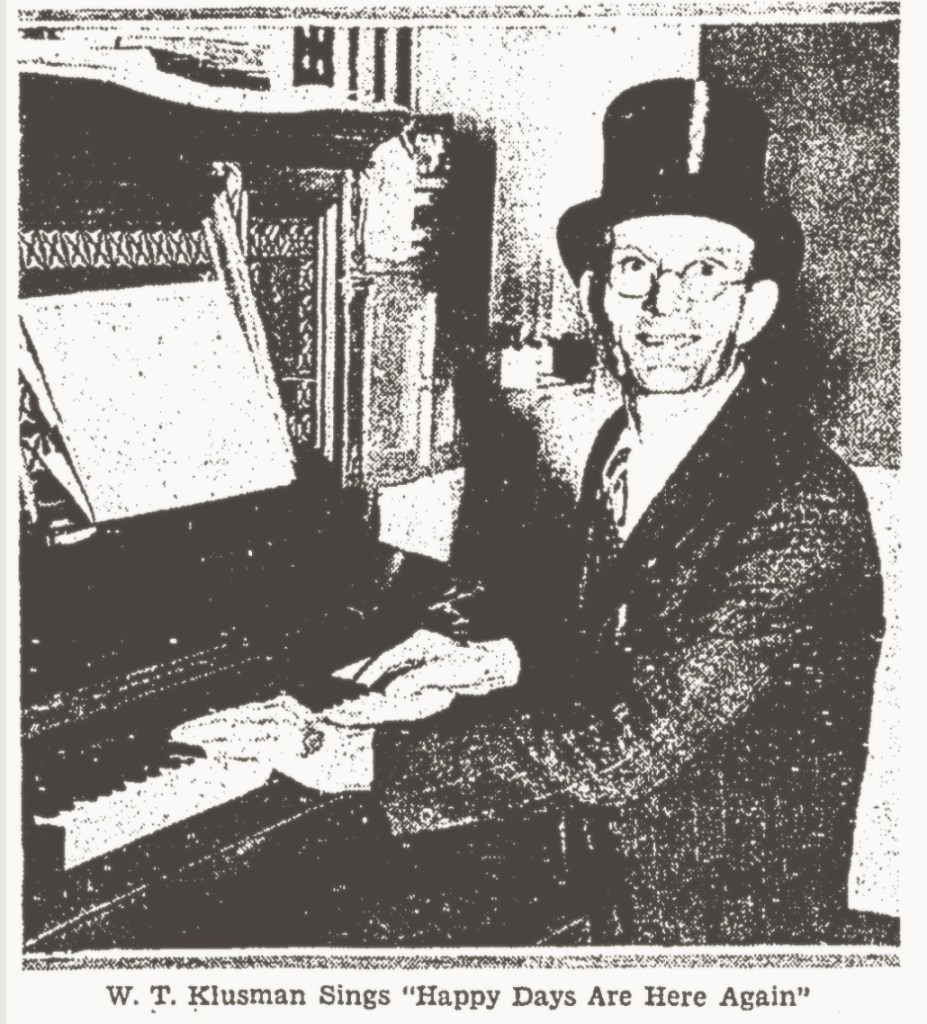
William T. Klusman won the silk top hat that would become his trademark in an election bet with Torrance Herald editor Grover Whyte in April 1932. He regularly wore it to City Council meetings, where he was a vocal gadfly from the 1920s into the 1940s.
He was born in Oldendburg, Germany, in 1870, and became an engineer for the National Supply Co. after migrating to the United States in 1884. He moved to Torrance in 1918, where lived with his wife in a house on Carson St.
Klusman had a gift for gab. His 1922 speech before the local Chautauqua group in Torrance that he chaired “was enjoyed by all present,” according to the San Pedro News Pilot.
Klusman started to become a persistent presence in local Torrance politics during the 1920s, though his strident socialist/populist persepective on the issues of the day didn’t always endear him to city fathers.
Herald publisher Whyte in particular had been outraged by Klusman’s views by July 1928, when he wrote a lengthy front-page editorial detailing Klusman’s character deficiencies in his newspaper headlined, “Klusmanisnm: The Menace.” Klusman printed his own newspaper from time to time, the Torrance Independent, to espouse his views.
By my calculation, Klusman ran for city council 6 times between 1928 and 1940. He mostly suffered resounding defeats, with one exception: a landslide victory in 1932. During that campaign, his views, and his vow to bring reform and change to local government, caught the imagination of Torrance voters.
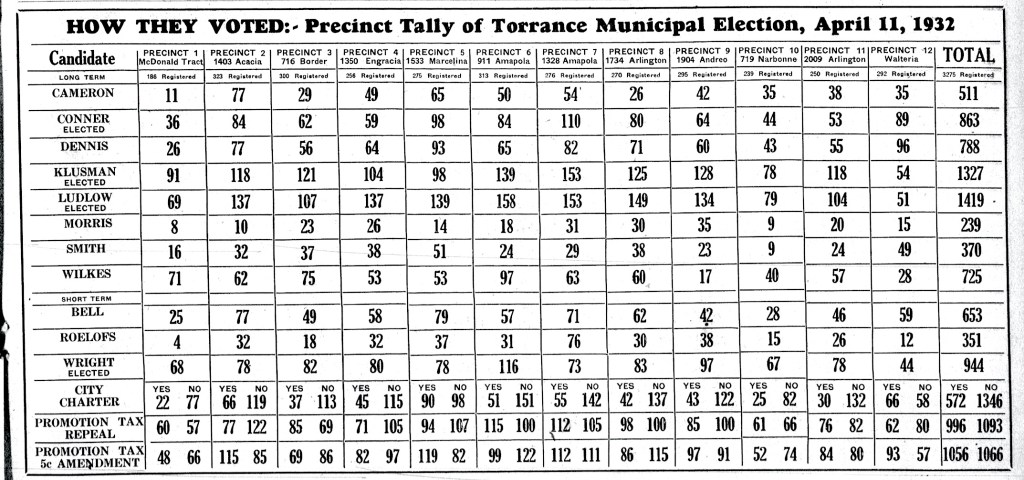
He vigorously opposed the proposal that Torrance charter its own school district, maintaining that its schools remain part of the Los Angeles Unified School District, which they ultimately did until the formation of the Torrance Unified School District in 1947.
He defended that position before hundreds of Torrance residents in a debate with Judge C.T. Rippy in April 1932. The packed house enjoyed Klusman’s oratory. He proved to be “a showman who from his first speech had the audience with him, his wit and logic being punctuated by gales of laughter and rounds of applause,” according to the News Pilot.
Klusman would go on to win election to the council by a decisive margin along with three other newcomers, and on April 19, 1932, the new council voted to make him the city’s next mayor.
A post-election meeting promised a peaceful transition of power to the new administration. Boy, were they wrong.
Six days after being named mayor, Klusman demanded the resignations of the chief of police, the city engineer and the head of the streets department in a cost-cutting move that took the city – and the department heads – by surprise.
Klusman’s first salvo as mayor proved unsuccessful at the following special council session on the matter when his motion to fire the employees was met with stony silence by his colleagues. G.A.R. Steiner, soon to become a bitter enemy of Klusman’s, declared the motion defeated due to the lack of a seconding vote for it.
For the next meeting, Klusman dug up a conditional resignation letter Steiner had written two years earlier and demanded that the council enforce it. Councilman J. Manter Wright proposed returning the letter to Steiner, which the council, minus Klusman, voted to do. So far, two meetings, two angry controversies, and two defeats for Klusman.
Next, he demanded Steiner’s resignation as public works director over his alleged misuse of funds. It turned out Steiner’s actions had been lawful, and Klusman had to retract the demand.
After that, he got into an old-school “cussing match” with Assistant Fire Chief Allen Stevenson, who hurled epithets at Klusman after claiming Klusman had verbally attacked him in public meetings.
His council colleagues grew increasingly fed up with Klusman’s antics. Councilman Wright began the first of several attempts to recall the mayor in July 1932. Klusman beat back each attempt, and his outbursts and attacks continued into 1933.
Councilman Wright started another recall petition against him in March 1933. According to the Los Angeles Times, Klusman was charged with “lack of dignity, secretiveness, untruthfulness, harboring destructive policies, creating class prejudice and undermining the morale of city employees and conducting himself in such a manner that he is unable to render proper and efficient service to the city.”
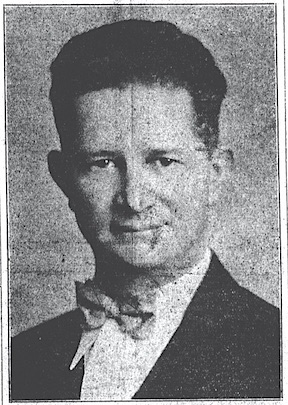
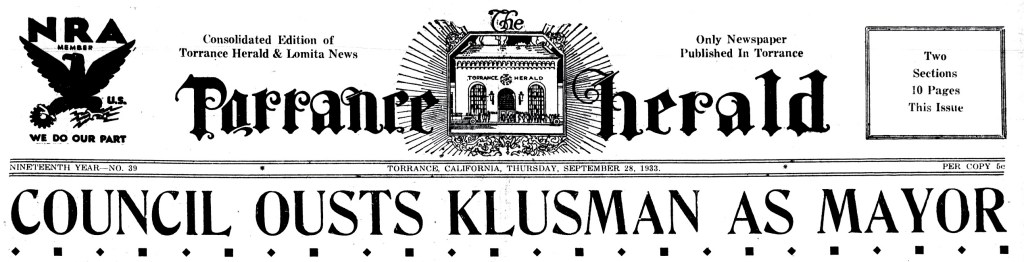
Wright’s recall faltered also, in part due to his own health problems. Finally, the council reached its breaking point on Sept. 26, 1933, when it voted 4-1 to remove Klusman from the mayor’s office and replace him with C. Earl Conner. Klusman verbally assailed his colleagues after the vote, but members of the public in attendance cheered the move.
City parks custodian, disabled war veteran and Klusman critic Tommy Bowker was among those Klusman lambasted in his farewell remarks as mayor. Two days later, Bowker and Klusman’s verbal sparring match outside of the county welfare office on Cabrillo Ave. ended with Bowker sending Klusman to the pavement with a right hand that knocked him out cold. Fortunately, Klusman was not seriously hurt.
Though he’d been removed as mayor, Klusman remained on the council for the rest of his term, which ended in 1936. He ran again for the council in 1938 and 1940, but garnered very few votes.
His death by suicide at his chicken ranch on 253rd St. in Lomita on Nov. 17, 1944, ends his chaotic tale with a tragic twist. After struggling with illness for several months, the 74-year-old Klusman first tried running a hose from his exhaust pipe into his automobile. When that failed, he shot himself with a revolver. He was buried at Pacific Crest Cemetery in Redondo Beach.
Sources:
Historic Torrance: A Pictorial History of Torrance, California, by Dennis F. Shanahan and Charles Elliott, Jr., Legends Press, 1984.
Los Angeles Times archives.
“Mayor Klusman – ‘Forgotten Man’”, by Michael George, LINK logs, Torrance Public Library, July 11, 2009.
San Pedro News Pilot archives.
Torrance Press-Herald archives.