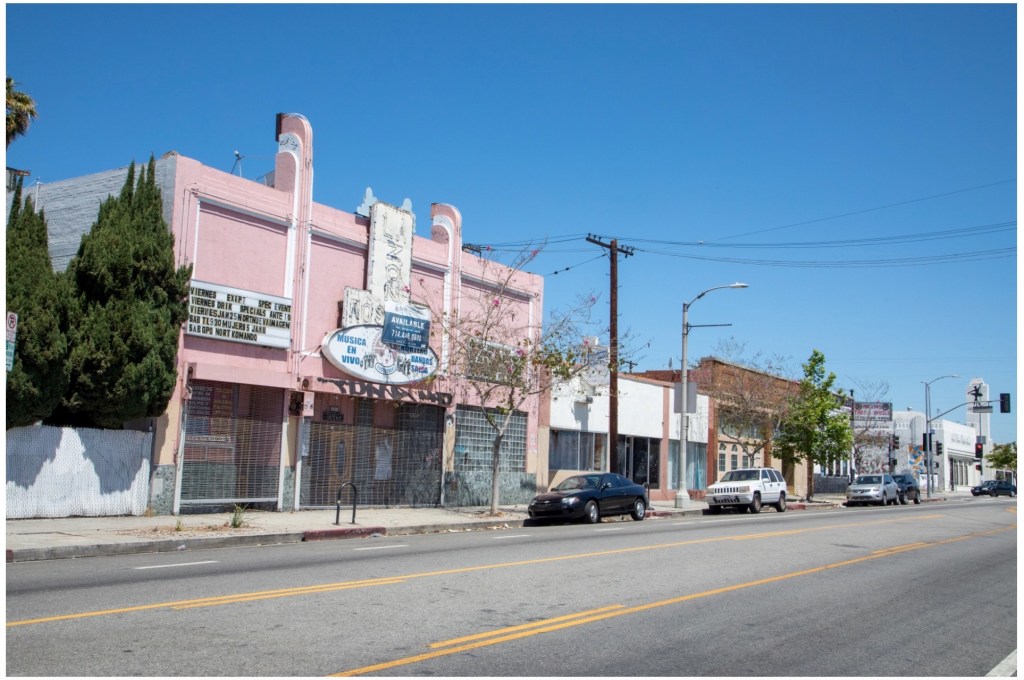
The San Pedro nightclub Dancing Waters took its name from an indoor waterfall that was installed by its owner when he converted the former bowling alley into a night spot in 1969.
The Streamline Moderne structure designed by architect William Durr at 1331 S. Pacific Ave. first opened in 1940 as the Pacific Bowling Center. The lot’s owner, Nick Pericich, took out a permit that August to erect a $19,000 building on the site. (A Nov. 1 story in the San Pedro News Pilot set the cost for the new facility at $60,000.)
The eight-lane bowling alley was owned and operated by Louis Pesce and Joe Ivelia, who were also the proprietors of the 20th Century lanes at 476 W. Fifth St. In fact, Pesce’s five-year-old son Richard rolled the first ball down the new alleys at the Pacific Bowling Center’s grand opening, held on Nov. 2, 1940.
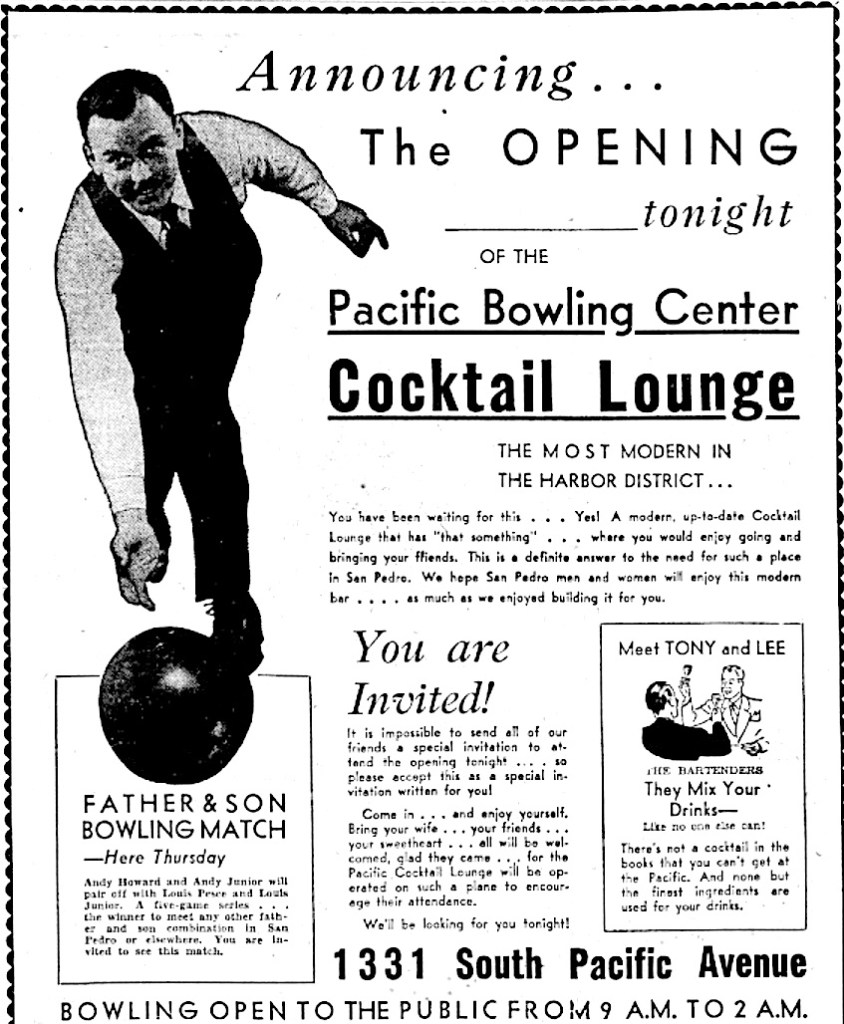
According to the News Pilot, more than 2,000 people jammed the building for the opening day, which featured a match between a local bowling team and a visiting team sponsored by cowboy movie star Roy Rogers. (The locals won.)
The bowling alley operated until 1969, when new owner Al Cordiero took over, converting the building into a dance club. His plans included a 16-foot-high, 22-foot-long wall over which an indoor waterfall would cascade down onto artificial rocks, often highlighted by colored lights. He named his new club Dancing Waters.
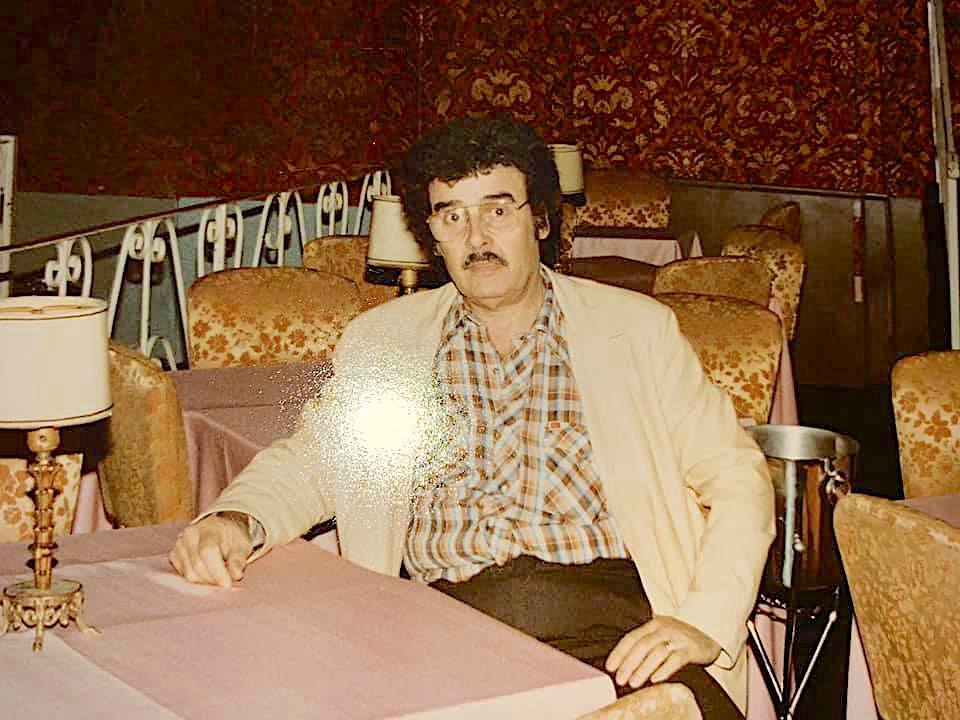
From the beginning, the club featured live music, most often popular Mexican acts such as Los Freddy’s and Los Yonic’s playing banda music, though mainstream big bands also appeared.
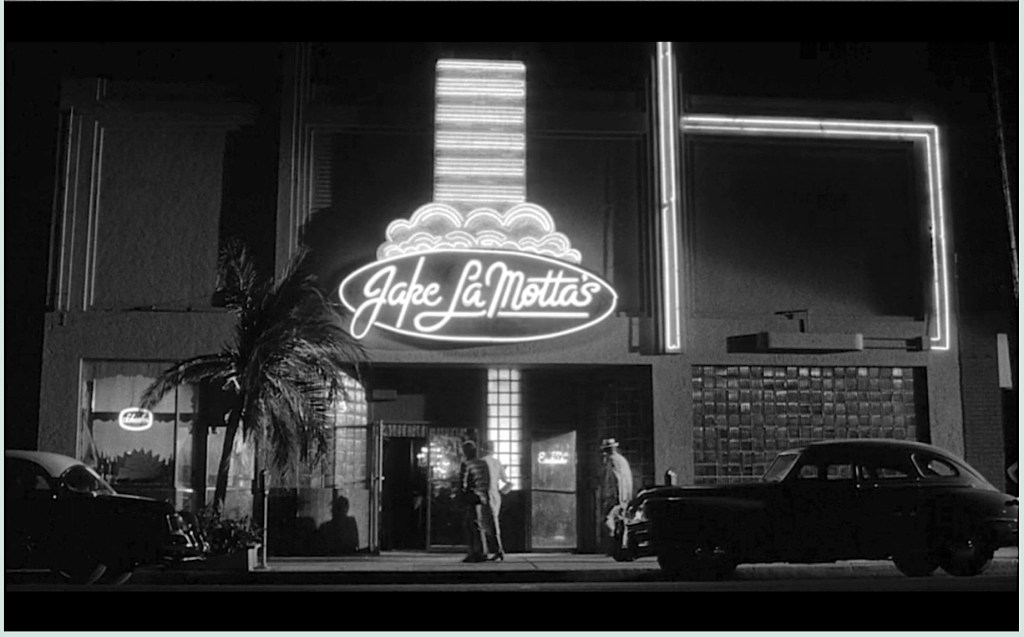
Cordiero tried several different formats, even converting the club into a roller disco at some point in the late 1970s. The scenes from Martin Scorsese’s 1980 film involving Jake LaMotta’s nightclub were filmed at Dancing Waters.
According to Craig Ibarra’s essential A Wailing of a Town: An Oral History of Early San Pedro Punk and More 1977-1985 (End Fwy Press, 2015), music promoter Dennis McBride approached Cordiero in 1981 with the idea of producing “new music” shows at his club.
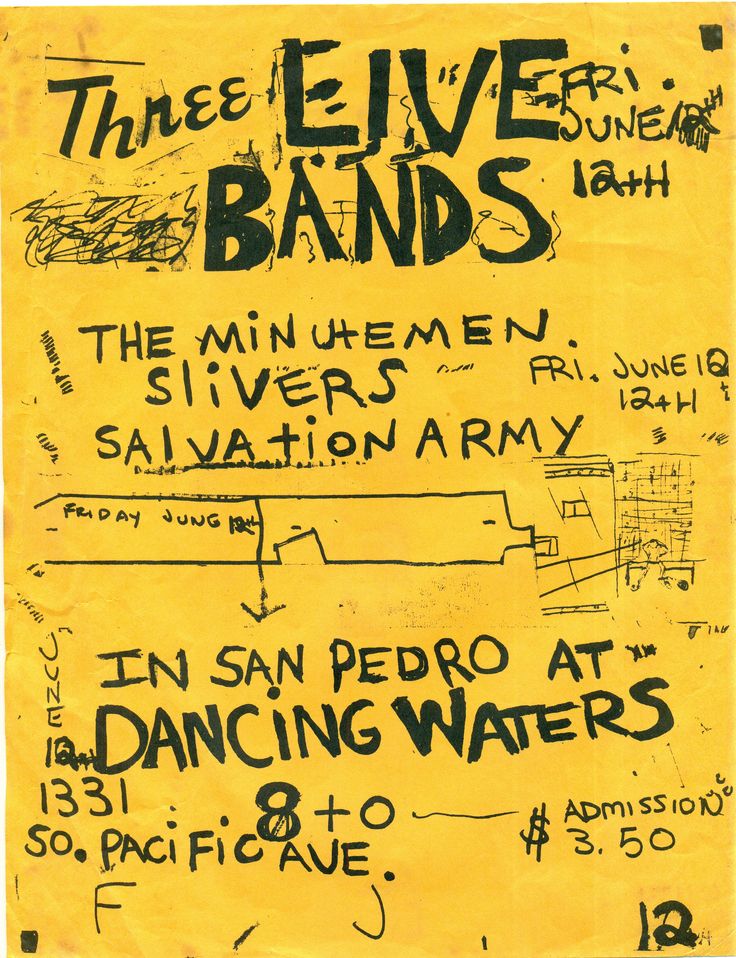
Cordiero took him up on the idea, and the first such show took place on June 12, 1981, headlined by San Pedro’s own The Minutemen, with Salvation Army and the Slivers also on the bill.
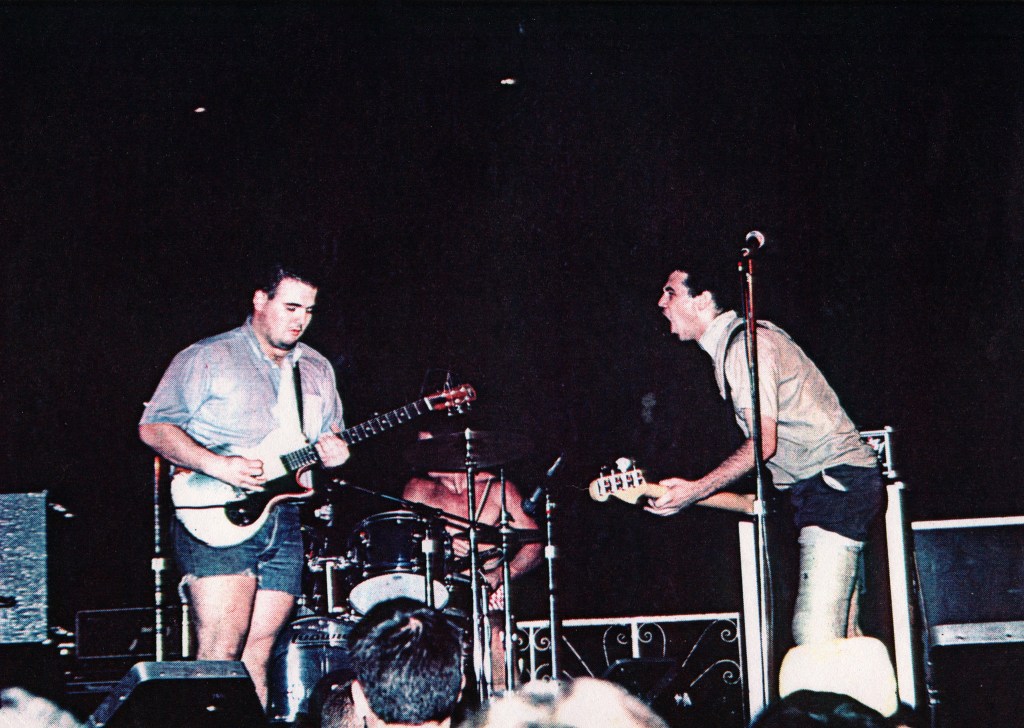
Regular punk concerts didn’t start to be scheduled at the club until early 1982. The Minutemen returned in February, followed by Wasted Youth and Social Distortion.
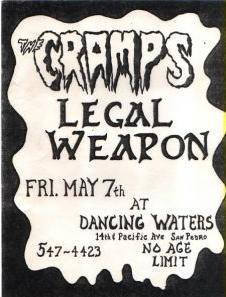
When the Cramps, Legal Weapon and the Meat Puppets played Dancing Waters on May 7, 1982, Cordiero began to realize that this “new music” was drawing large and often unruly crowds. Hundreds of people began to descend upon his club, and he had to increase security.
As spring turned into summer, the roster of bands playing at the club began to read like a who’s who of early 1980s punk rock: TSOL, the Vandals, Fear, Suicidal Tendencies, the Descendents, the Last, 45 Grave and heavyweights Bad Religion, Black Flag and Minor Threat all performed there during that time.
But neighbors weren’t happy with the attendant problems brought by some of the music’s fans. Local homeowners complained about the out-of-hand crowds, graffiti, underage drinking and general chaos that surrounded the wild and woolly shows.
A benefit for the Harbor Free Clinic featuring the Blasters, Salvation Army and the Minutemen on Aug. 21, 1982, seems to have been the last show of its ilk to be held at Dancing Waters. Cordiero had grown weary of the troubles associated with the bands and their fans, and announced plans to change Dancing Waters into a country-western bar called Country Falls.
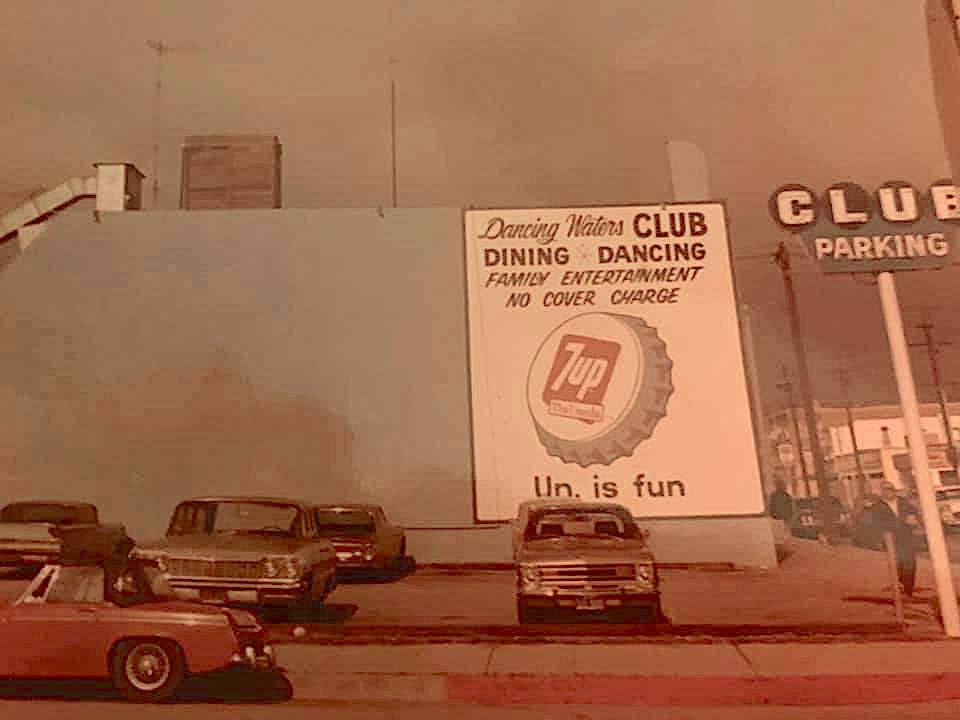
That never happened, but the club did stop booking punk-rock acts after 1982, though they continued to book pop and metal bands and host special events. Guns N’ Roses, Megadeth, Stryper, Blue Oyster Cult and Armored Saint all played there.
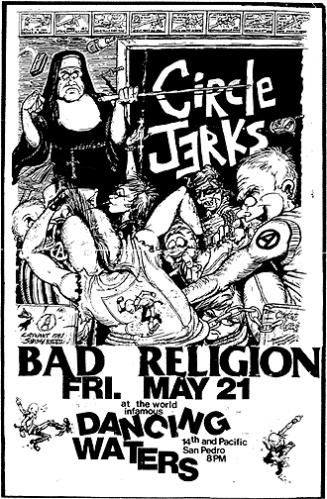
In more recent years, the club, which changed its name to The Waters Club, returned its emphasis to banda, norteno and other popular forms of Mexican dance music. The Cordiero family sold the club, renamed La Zona Rosa, in 2000. On Jan. 29, 2020, a tribute to Al Cordiero was held at Godmother’s Saloon in San Pedro.
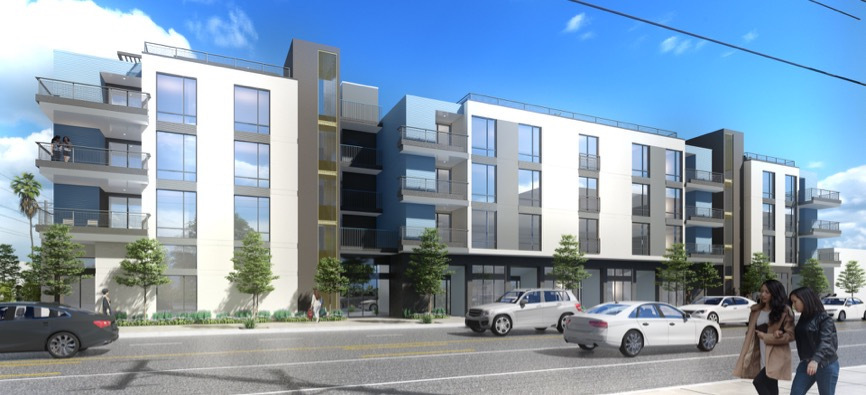
In June 2021, the Los Angeles City Council granted approval to the development firm of Burns and Bouchard to move forward to build a four-story, 102-unit apartment building on the block where the now-vacant club building has stood since 1940.
Neighborhood groups complained to the Council that the proposed development went against the character of the neighborhood and that its scale would increase traffic and parking woes in the area. The council unanimously denied the appeal, setting the developer’s plan into motion.
The firm hasn’t set a timetable for the demolition yet, but the wrecking ball is most definitely on its way.
Sources:
Daily Breeze archives.
Dancing Waters Facebook page.
Los Angeles Times archives.
“Pacific Bowling Center/Dancing Waters Club, 1331 S. Pacific Ave.,” by Nathan Marsak, RIP Los Angeles website, Sept. 4, 2019.
Random Lengths archives.
San Pedro News Pilot archives.
A Wailing of a Town: An Oral History of Early San Pedro Punk and More 1977-1985, by Craig Ibarra, End Fwy Press, 2015.
“Waters Club San Pedro Concert Setlists,” Setlist.fm website.