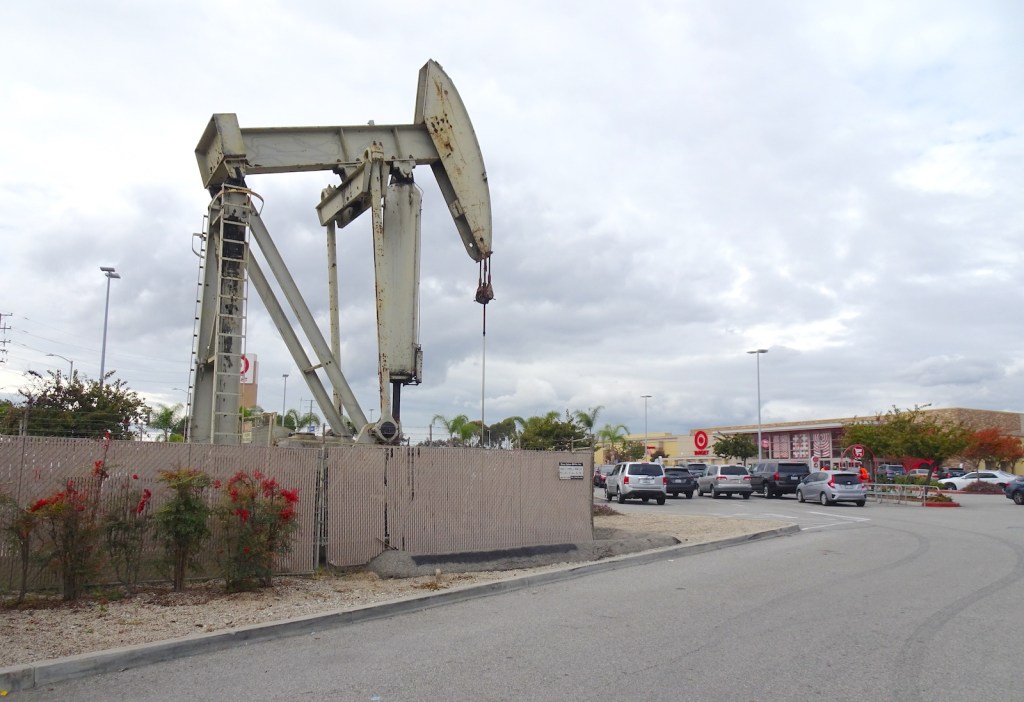
Grasshoppers, strippers, horsehead pumps, nodding donkeys, rocking horse pumps, dinosaur pumps, thirsty birds. Everyone seems to have a different pet nickname for the oil pumping devices still strewn about the Southern California landscape. The oil industry calls them pumpjacks.
Pumpjacks help extract oil from below ground when the pressure in the well isn’t high enough to bring the liquid to the surface. They’re commonly used to extract oil, generally a few barrels a day, from low-producing wells and are powered mostly by electric motors, though some use internal combustion engines.
One can still find them scattered about the southwest Los Angeles County landscape, reminders that the area once sported hundreds of oil wells. Major oil strikes were big news during the 1920s, from the massive Inglewood oil field to the Del Amo field in Torrance, and west to Signal Hill in the Long Beach area.
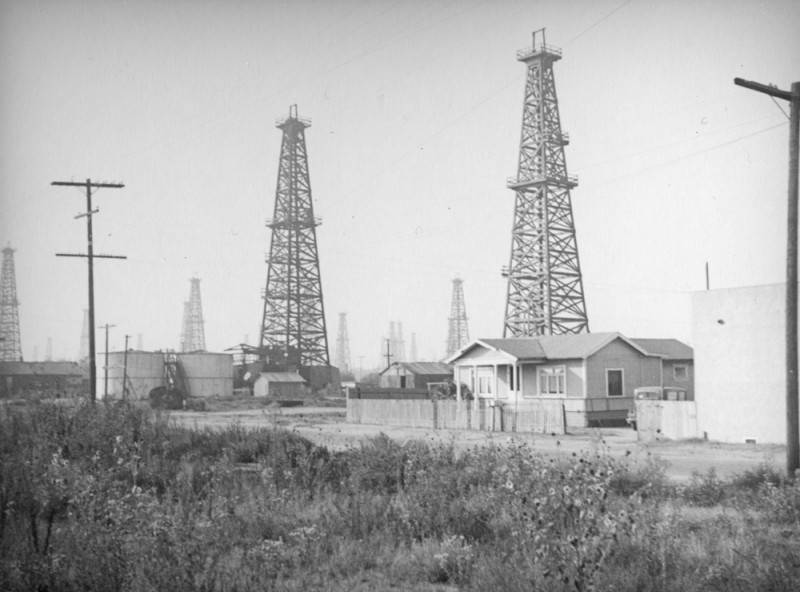
The oil boom continued through the 1930s before dying out. At its peak, Torrance had more than 2,000 wells. Many of the boom-or-bust companies abandoned their operations, leaving the unsightly wooden and metal derricks to pockmark the landscape.
The housing boom following the end of World War II magnified the problems posed by the abandoned wells. In addition to their unsightliness, they were dangerous, causing ground pollution, trash and litter accumulation and serious safety issues, especially involving children. But mostly they were just in the way, standing on land needed for development.
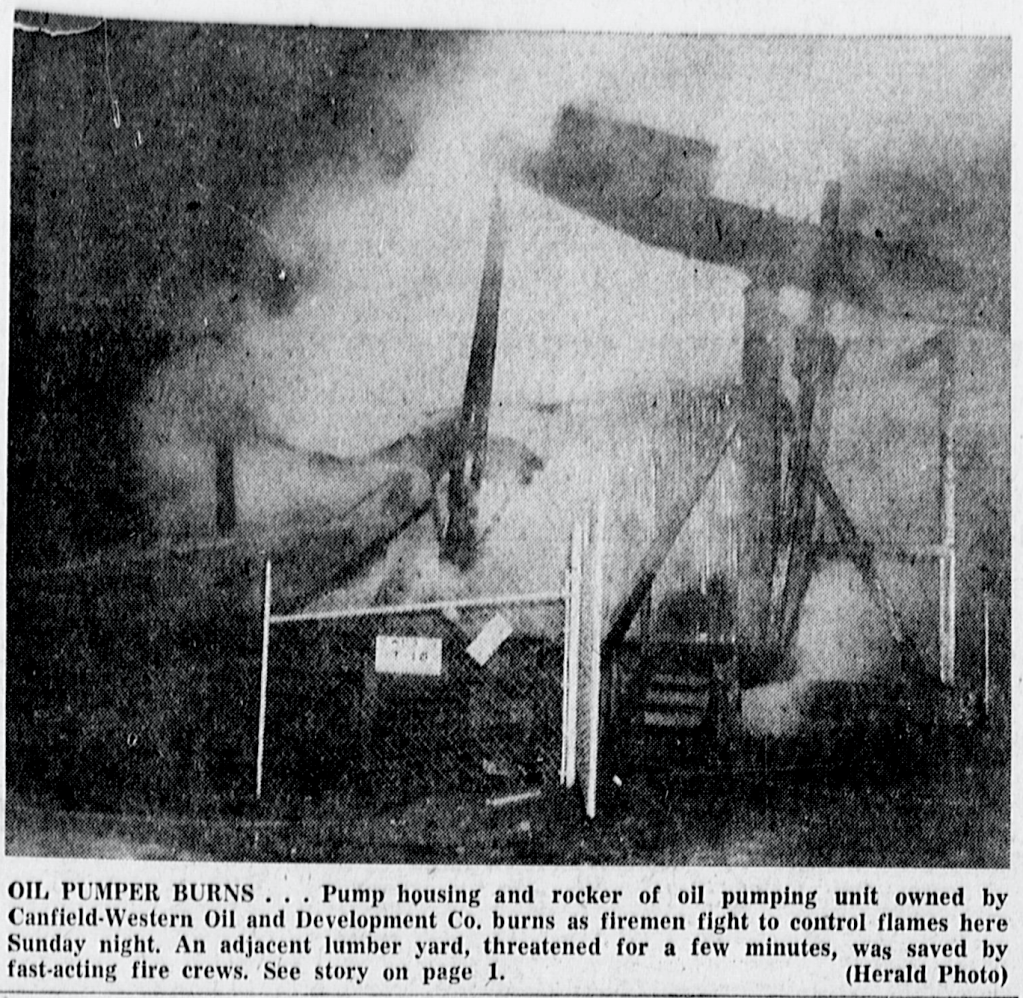
Those that remained active posed dangers. Four men were injured in two separate oil well explosions in Torrance on Jan. 4, 1949, one at 190th and Beryl streets, the other near 229th St. and Crenshaw Blvd.
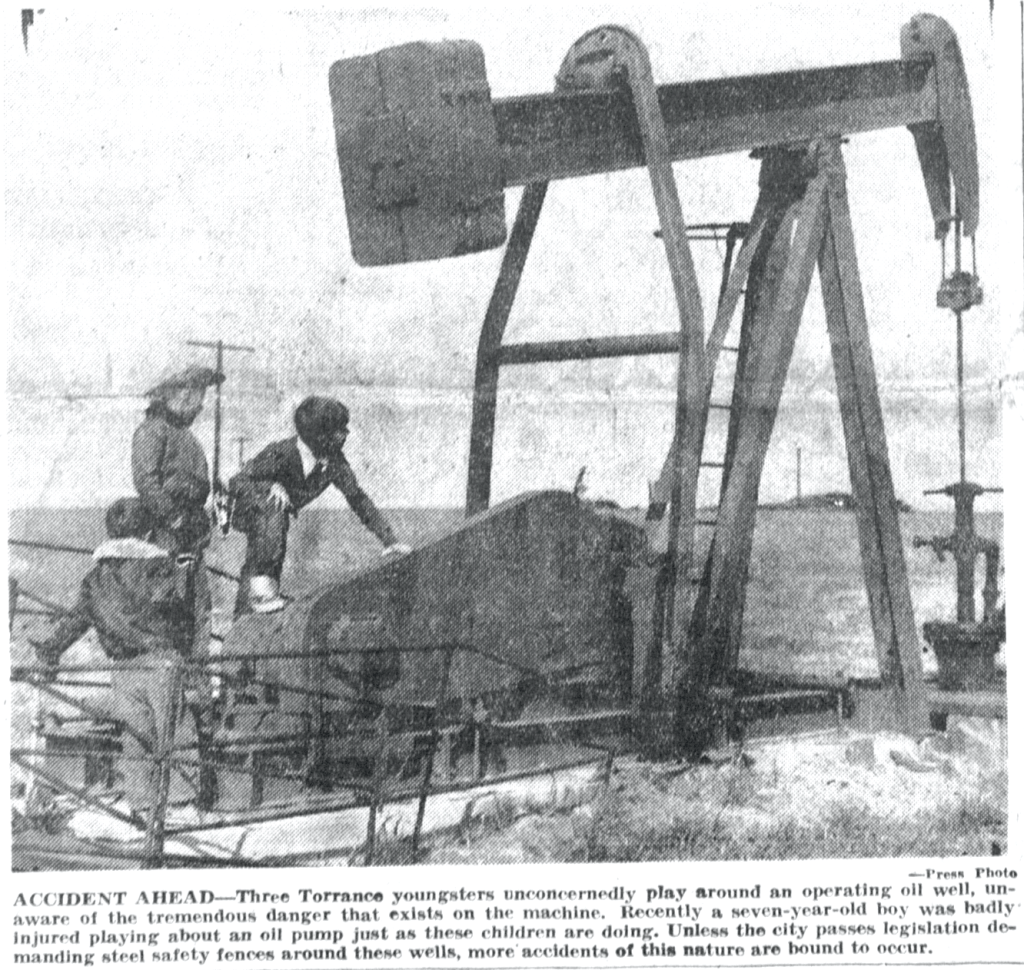
Hundreds of wells were still standing at the time, many of them inactive, and many of those were inadequately protected from unwanted explorers. The Torrance Press and Torrance Herald newspapers reported several different instances of children being injured, some seriously, while climbing around and into the unfenced structures during the 1950s.
In 1953, the city’s civil defense director, George Powell, issued a stern warning to 31 well operators in Torrance to fence their equipment off from the public or face prosecution under the city’s public safety laws. Powell had drafted an ordinance covering the issue in 1951, but it didn’t begin to be enforced until 1959.
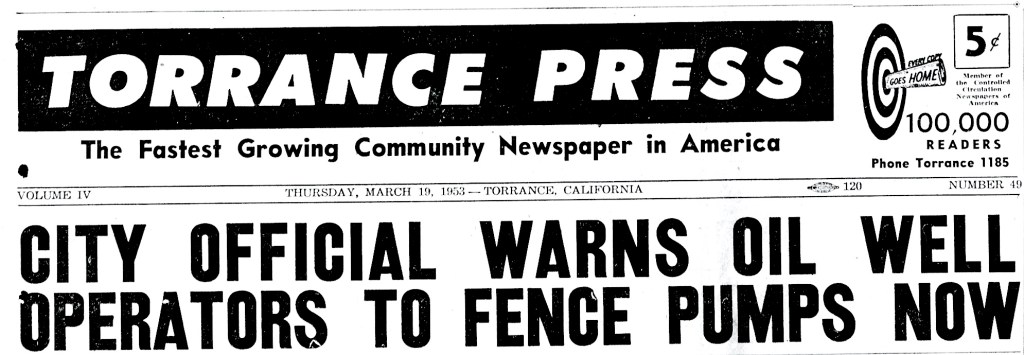
Cleanup efforts and protective fencing improved after the new law went into effect. By 1960, most of the city’s more than 500 wells had been made compliant with the city’s safety standards.
But Torrance wasn’t done. Mayor Albert Isen was determined to eliminate the unsightly wells that hadn’t either been closed or replaced by pumpjacks. By July 1, 1961, all wooden oil derricks had been taken down, and the final steel derrick was removed on Sept. 11, 1963.
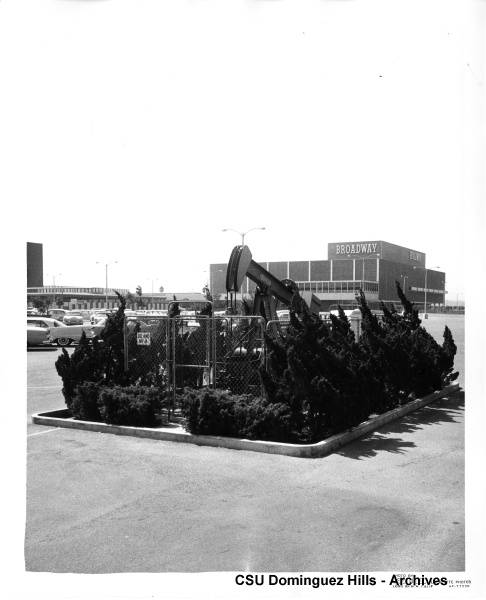
That still left dozens of pumpjacks, many producing less than five barrels a day. They were everywhere, in parks, behind houses, and in shopping center parking lots. Torrance had attempted to ban oil drilling altogether, but the effort failed to pass in July 1964 after a lengthy battle.
The city continued to attempt to police oil well operators in the city over the next few decades.
An ordinance enacted by the city council in May 1978 gave the city the power to shutter and remove wells not meeting certain standards of production. By 1995, Kelt Energy, one of the more active companies working the area, had only seven pumpjack wells remaining in Torrance.
Of course, surrounding areas still had plenty of oil activity. The oil wells in Los Angeles County — both on- and offshore — produced 11.7 million barrels of oil in 2019, making L.A. the second-largest oil-producing county in the state. Kern County produced more than 110 million barrels, according to the California Geologic Energy Management Division (CalGEM), which regulates the oil and gas industry.
The 1,000-acre Inglewood Oil Field, situated in the south end of Baldwin Hills, remained a bustling oil producing site for decades. Drivers along La Cienega Blvd. through the hills could see dozens of pumpjacks along the route, with many more working out of view from the road.
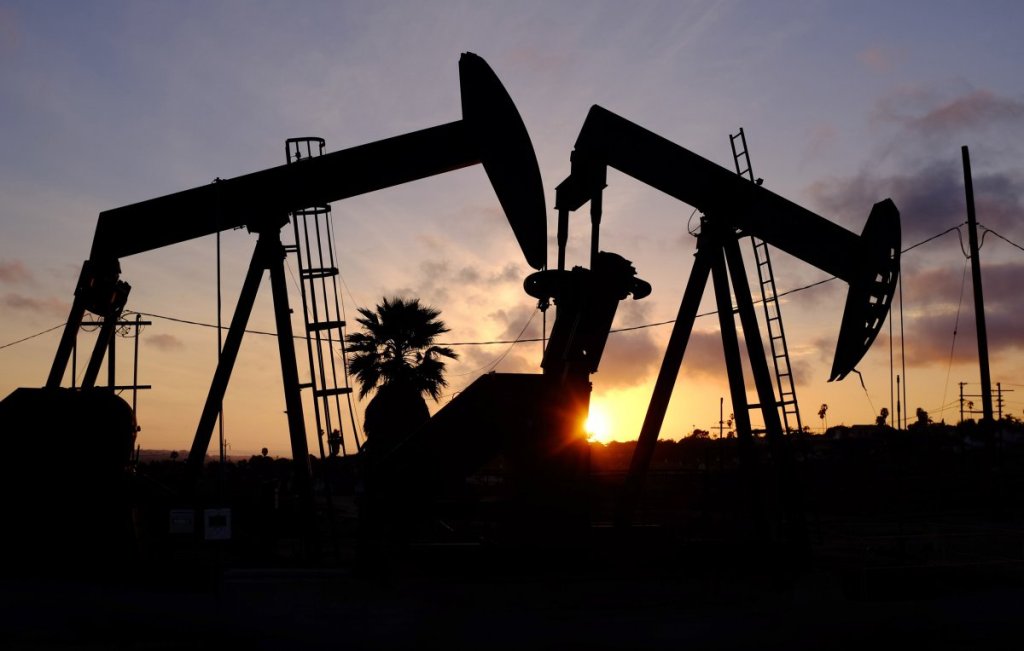
In September 2021, the Los Angeles County Board of Supervisors voted 5-0 to begin phasing out oil drilling operations in all unincorporated county areas. The wells affected would include about 870 operated by Sentinel Peak Resources in the Inglewood Oil Field. The county is now working to set a timetable for the phaseout.
In December 2021, Los Angeles officials joined U.S. Department of the Interior Secretary Deb Haaland to discuss opportunities through the Biden administration’s infrastructure bill to fund the remediation of Los Angeles’ roughly 1,400 idle oil wells. Available funds will be used to close and cap wells, as well as cleaning up any environmental damage left behind.
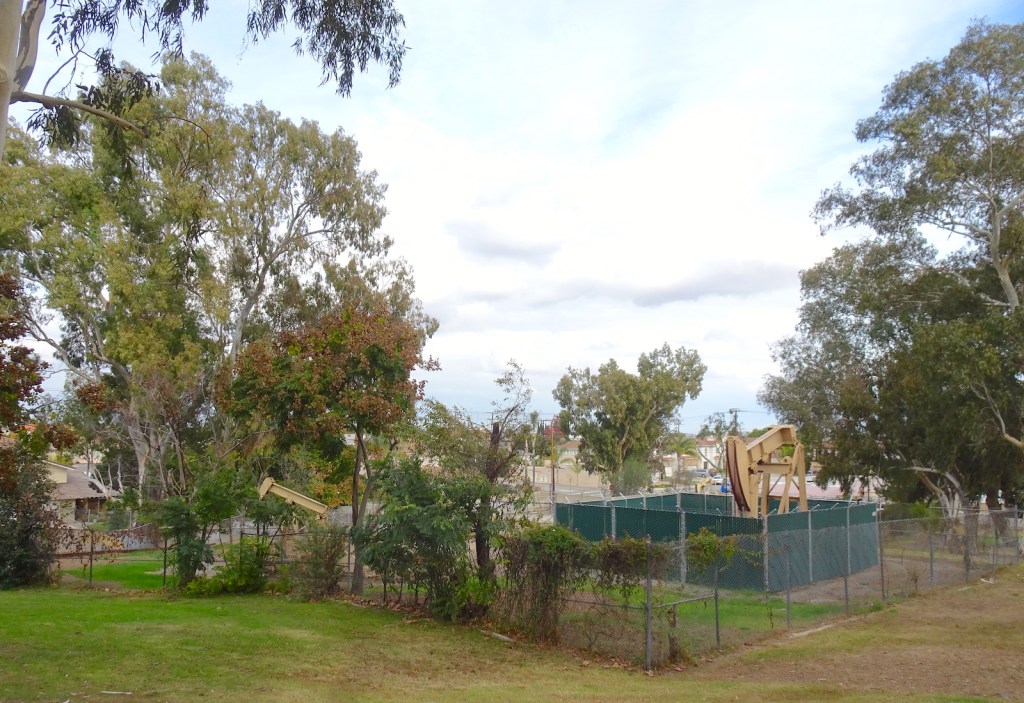
In the meantime, the last remaining pumpjacks continue to operate here and there throughout the county, including in the South Bay and Harbor Area, reminders of a distant time when the area’s rich oil reserves played a key role in its economy – and its appearance.
Sources:
Daily Breeze archives.
“Los Angeles County votes to phase out oil and gas drilling,” by Drew Costley, The Associated Press, Sept. 15, 2021.
Los Angeles Times archives.
“Mapping the Long History of Oil Drilling in L.A.,” by Elijah Chiland, Curbed Los Angeles website, Nov. 4, 2019.
“The Oil Fields of the Los Angeles Basin Coast and the South Bay,” The Center for Land Use Interpretation (CLUI) website.
Torrance Press-Herald archives.
Wikipedia.