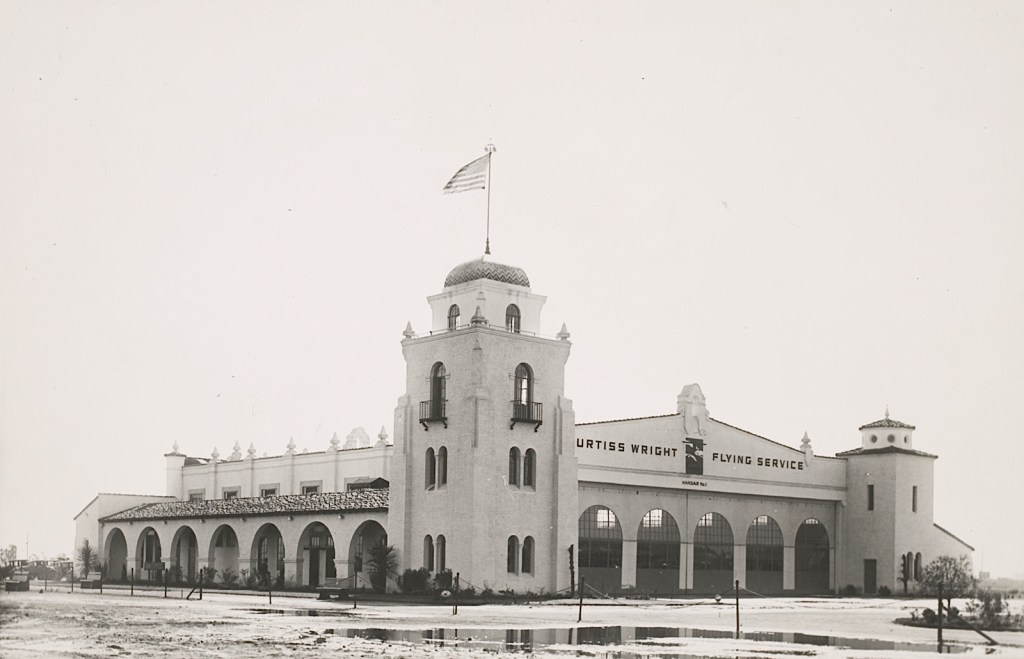
Hangar One, the first building erected at Mines Field, now Los Angeles International Airport, has managed to survive as the last remaining link to the airport’s earliest days during the golden age of aviation.
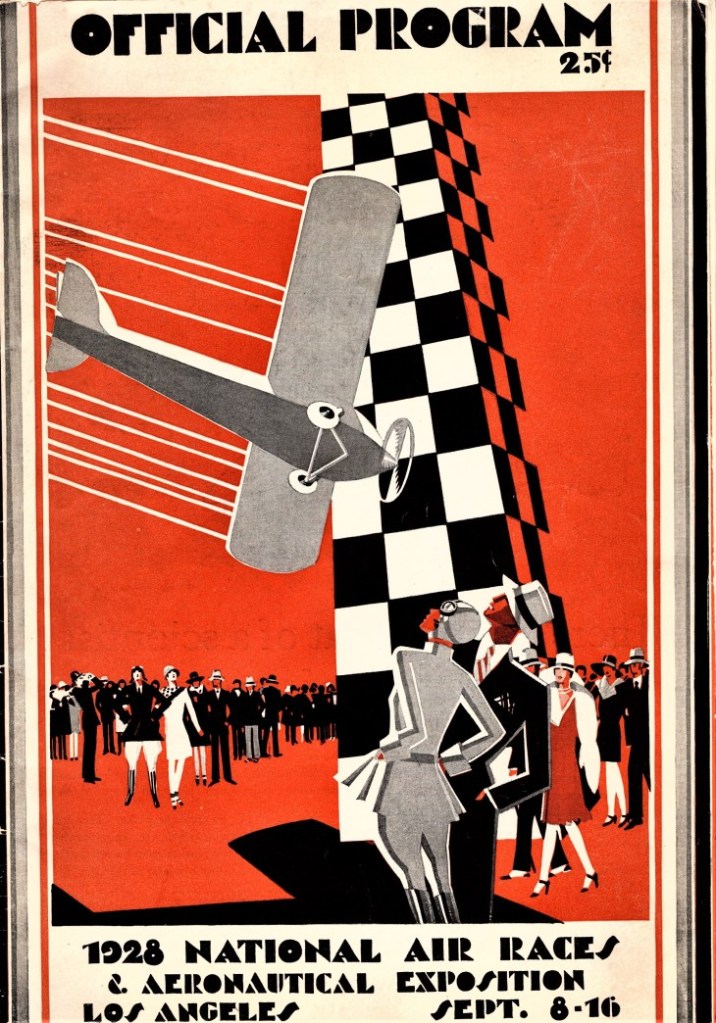
Mines Field was named for real estate agent William Mines, who leased the former beanfield land to boosters of the airport. Mines also convinced them to push for the crude airfield to become the site of the 1928 National Air Races, one of the most popular sporting events of its day. The push was helped by publicity from an unexpected stopover at the field by Charles Lindbergh and Will Rogers in 1927.
Its selection for that overwhelmingly successful event that September led to Mines Field being chosen on July 25, 1928, by the City of Los Angeles as the site for Los Angeles Municipal Airport over two other contending locations. At first, most of the employees of the city’s new Dept. of Airports worked at City Hall in downtown L.A., as there was little office space at the airfield.
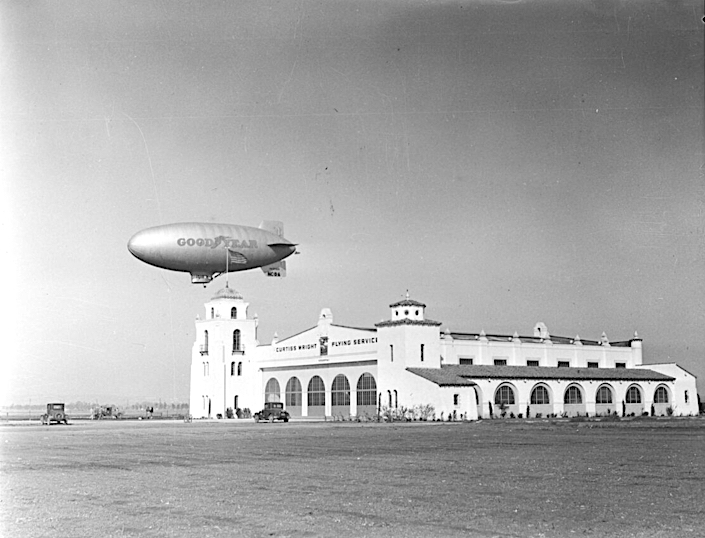
The early aviation firm Curtiss Wright came to the rescue, enlisting the architectural firm Gable and Wyatt to design the $65,000 Spanish Colonial Revival building then known as Hangar No. 1. It was completed in June 1929. Curtiss Wright based its civilian flight school and many of its planes at the site.
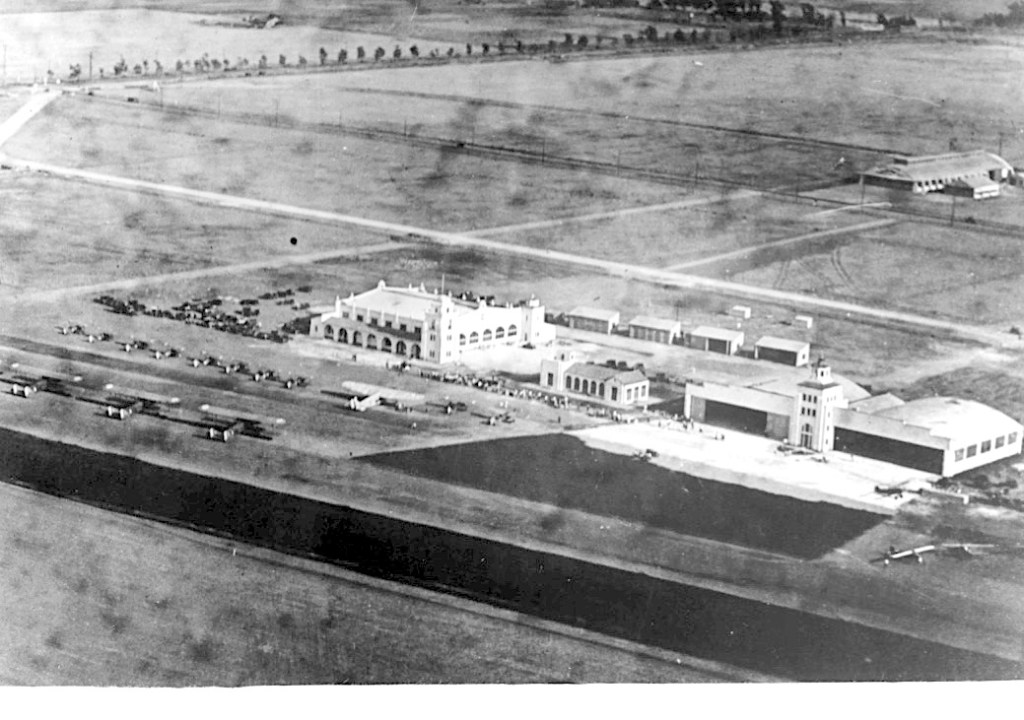
Hangar One was the first permanent structure built at the airport, predating even the control tower, erected in 1930, and two other buildings built shortly afterward. Before the airport’s first control tower was built, takeoffs and landings were managed by a flagman signalling the planes.
Another hugely popular event took place later in 1929, when the gigantic German dirigible the Graf Zeppelin made a stop at Mines, attracting an estimated 300,000 spectators to the airfield on Aug. 26. The airship’s size dwarfed the Goodyear blimp; the Graf was over four times as long and twice as wide as modern blimps.
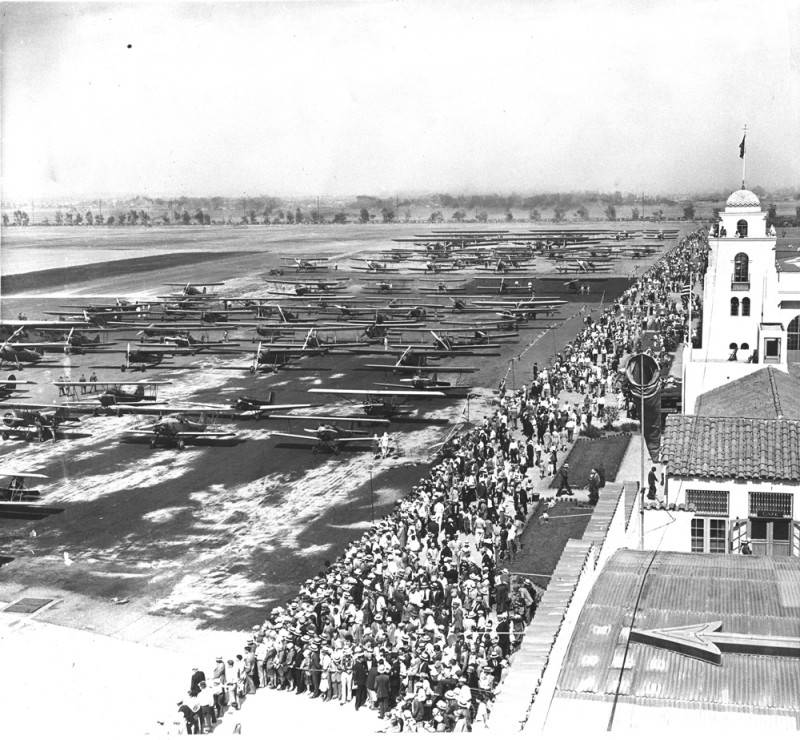
The next big wingding at the airport was its official dedication as Los Angeles Municipal Airport, a two-day event held directly in front of Hangar One on June 7-8, 1930.
Commercial passenger flights weren’t a part of its early operations; most of those flew out of Burbank and Glendale. Private pilots and flight schools provided most of the business, and parachute jumping also became popular during the 1930s.
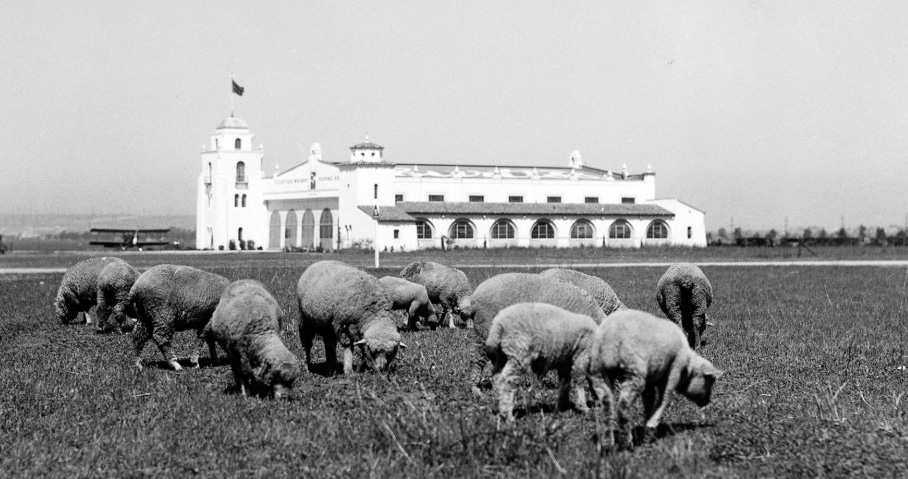
The U.S. Army took over the airport after the start of World War II, using camouflage to hide the Douglas and North American Aviation plants located there from potential prying airborne eyes.
Everything changed for the airport following the war. The Army returned control of the field to the Dept. of Airports, which immediately set about to make improvements based on a master development plan it had created in 1943.
A $12 million bond issue that passed in 1945 allowed for the building of temporary new structures for passenger terminals and administrative offices. Also, the airline companies had realized the importance of Los Angeles in their plans, and began building their own hangars onsite.
The first commercial flight departed from the airport on Dec. 5, 1946. The airport officially got its new name, Los Angeles International Airport, on Oct. 11, 1949.
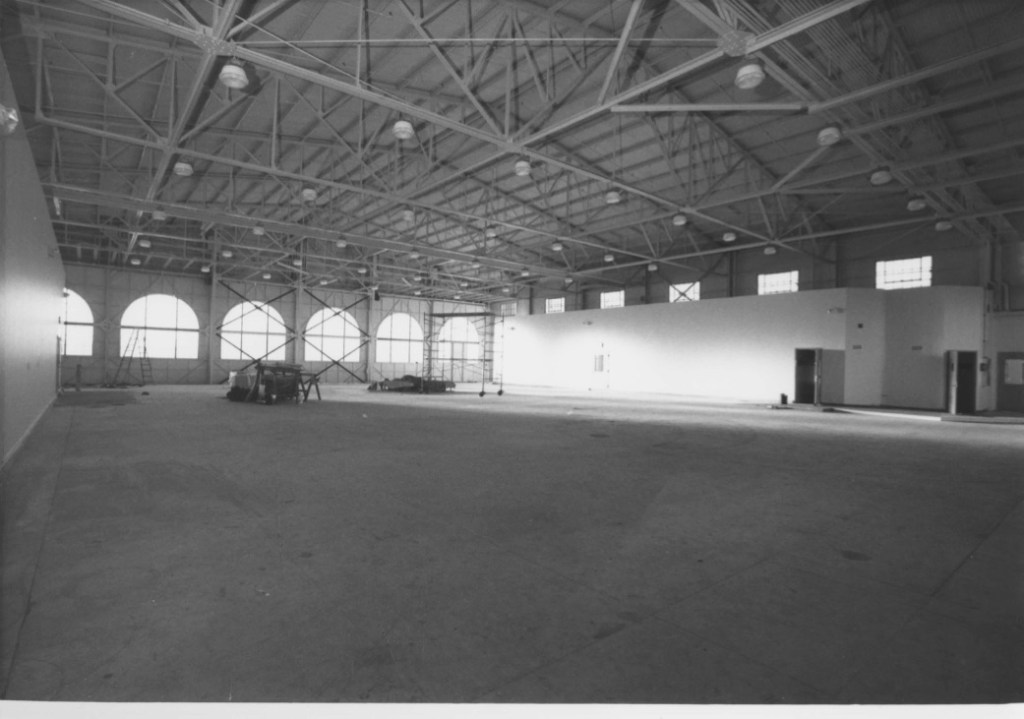
All of these rapid changes took away functions that had been centered in Hangar One and the cluster of buildings surrounding it. Also, the planes were growing in size. When it first opened, the hangar could hold about 18 aircraft, but its capacity shrank with each new and bigger commercial airliner.
The building was leased to a succession of businesses, including North American Aviation, Rockwell International, Golden West Airlines and the helicopter passenger airline company Los Angeles Airways.
By the early 1980s, the empty, now dilapidating building was padlocked and under threat of demolition, having been deemed unsafe for use a decade earlier. The airport’s first control tower already had been torn down in December 1974.
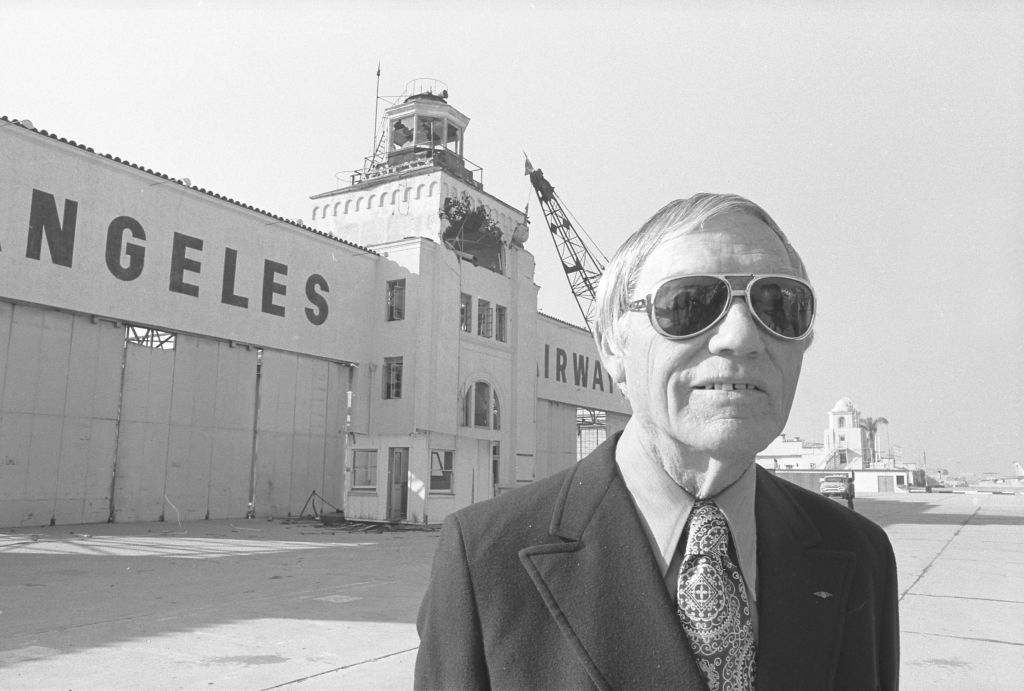
Initially, preservationists had called for the hangar to be moved to Westchester and transformed into an aviation museum, but the Dept. of Airports chose instead to begin a $2 million renovation of the building at its current site in 1990.
This allowed for new tenants to use the building, which had been designated as a Los Angeles Historic-Cultural Monument in 1966. In July 1992, the National Register of Historic Places recognized its significance as an aviation landmark, assuring that its future would be secure.
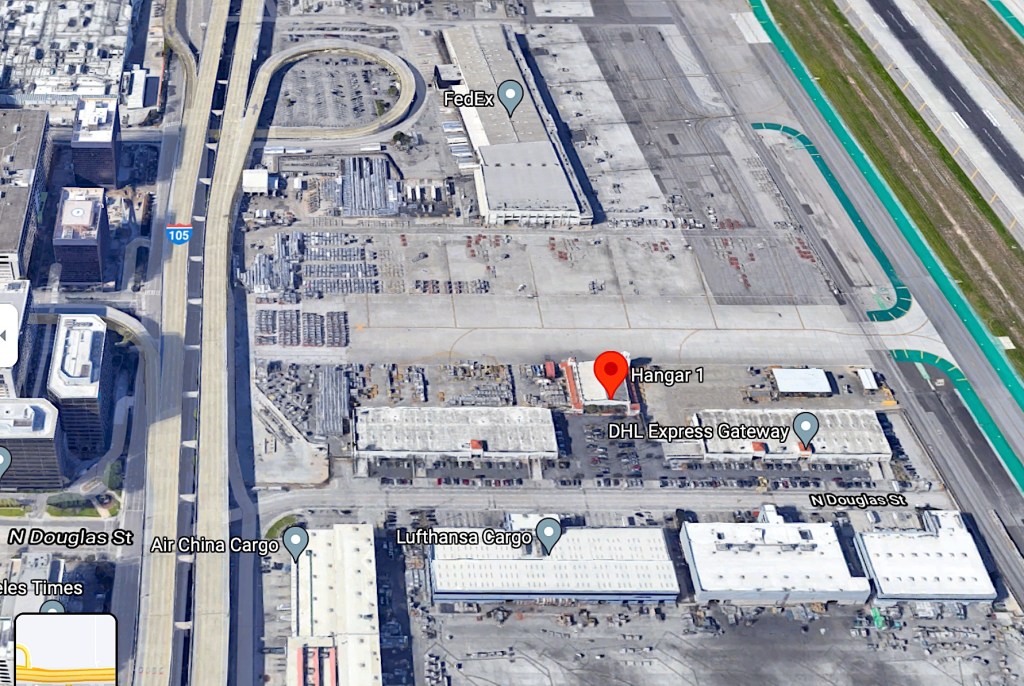
Though its address is listed as 5701 W. Imperial Hwy., the building actually sits on N. Douglas St., just below the DHL cargo facility. It’s currently occupied by the cargo services company Menzies Aviation.
Sources:
“California SP Hangar One,” National Register of Historic Places.
Daily Breeze archives.
“From Point A to Point B: The National Air Races at Mines Field, Los Angeles, 8-16 September 1928,” by Paul R. Spitzzeri, The Homestead Blog, Sept. 15, 2018.
“LAX History,” Los Angeles World Airports website.
LAX: Los Angeles International Airport: From Lindbergh’s Landing Strip to World Air Center, by Tom Moran, CCA Publications, 1993.
Los Angeles Times archives.