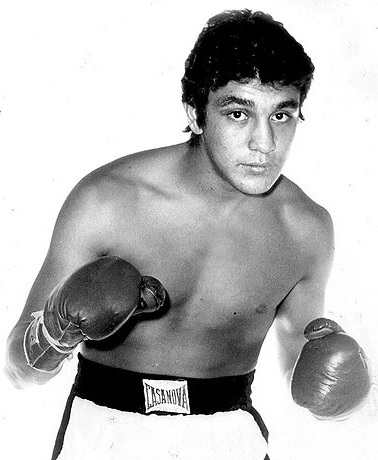
For a while during the late 1960s and early 1970s, two-time lightweight boxing champion Mando Ramos had the world at his feet. The hard-hitting fighter became a sensation in Los Angeles, celebrated by its sports media and entertainment celebrities alike, until it all came crashing down.
He was born Armando Ramos in Long Beach on Nov. 15, 1948. His father Raymond had dreams of becoming a professional boxer that never came to fruition, and he channeled his frustrations onto his sons, Emmanuel, Mando and Andrew.
His older brother, Emmanuel, became a Golden Gloves champion and won 11 straight bouts before his promising career was derailed by alcoholism and heroin addiction. Alcoholism ran in the family; both Mando’s father and his mother, Maggie, were alcoholics, as were both of their parents.
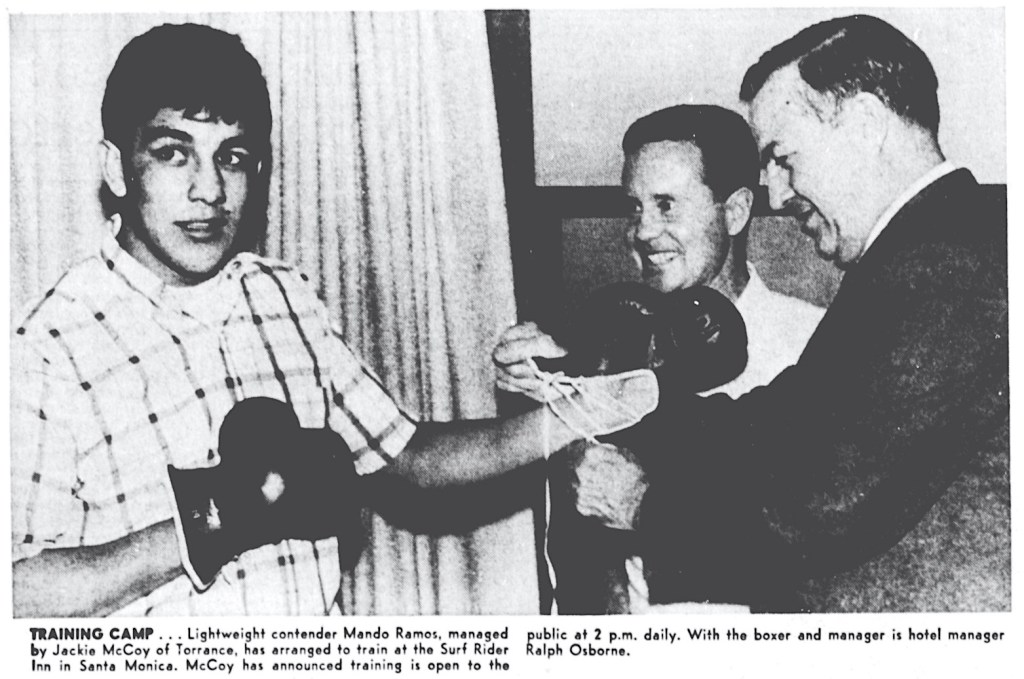
Ramos learned how to box at a very young age, training at youth centers in Wilmington and, later, at the 78th Street Gym in South Los Angeles. At the urgings of his father and fight manager Jackie McCoy of Torrance, he began to train seriously for the Golden Gloves at age 16. He won the tournament and turned pro at 17, thanks to a forged birth certificate.
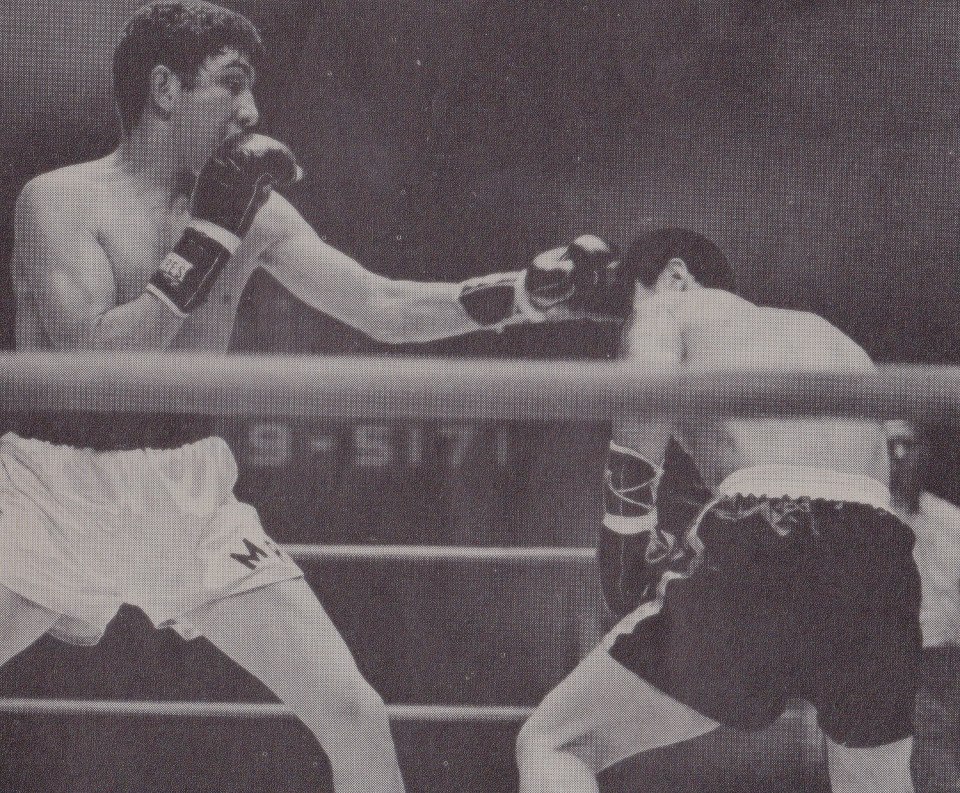
He outpointed Berlin Roberts to win his first pro fight at the Olympic Auditorium in Los Angeles on Nov. 18, 1965, and he was on his way. Ramos had a flashy style, but also possessed a powerful knockout punch. He won his first 17 bouts in a row, 11 of them by knockout or TKO. All but one of them were at the Olympic.
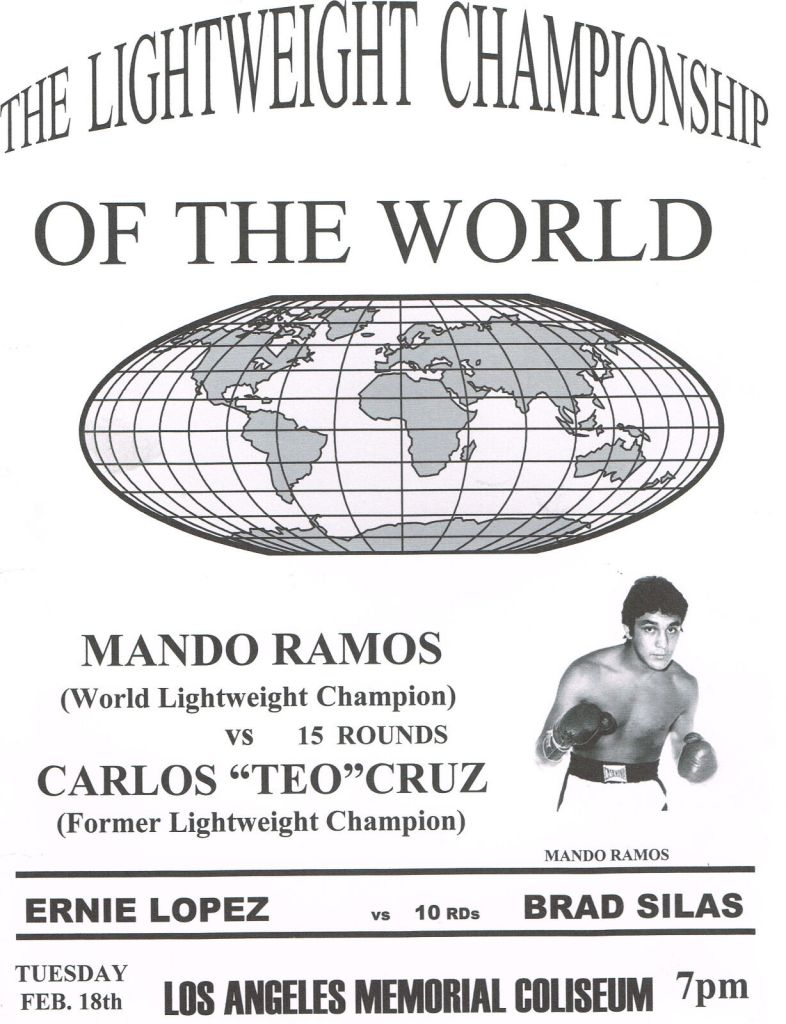
The fast-rising boxing star had only two losses when he got his first shot at the lightweight title against champion Carlos Teo Cruz in September 1968. He lost the highly publicized match at the Coliseum, but defeated Cruz in a rematch to win the title on Feb. 18, 1969. He was 20 years old when he became the youngest boxer ever to win the lightweight crown.
As a result, he became the toast of the town. Los Angeles Times boxing writer Sid Ziff called him “the Elvis Presley of the boxing ring.” Crowds chanted “Mando! Mando! Mando!” when he entered the arena, and soon he began indulging in the fast-lane lifestyle that came along with the success and adulation.
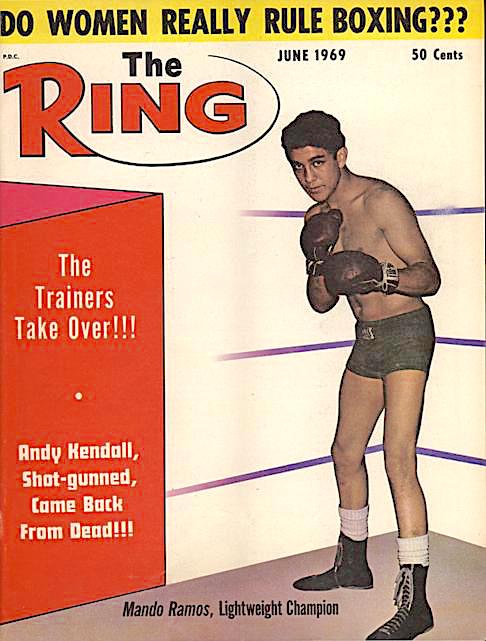
Ramos already had a drinking problem, which began at the age of 12. Now he began taking marijuana to his training camp and dabbling with cocaine and other drugs. His training regimen suffered. His fights often had to be postponed and rescheduled due to “health reasons.”
He held the title for just over a year before losing it on a TKO to Ismael Laguna. He went to Spain in 1971, where he defeated Pedro Carrasco to regain the title, only to be disqualified when amphetamines were discovered in his system.
He beat Carrasco for the title in a rematch at the old Los Angeles Sports Arena in February 1972. This time, he only held the belt for seven months. That September, journeyman Chango Carmona delivered a brutal beat-down that left Ramos battered. Ramos lost the title, and would never be the same boxer again.
The man who once commanded $100,000 a fight found himself broke and living on the streets by 1974.
He continued boxing until 1975, winning a couple of fights as a light middleweight, but finally retired after losing to lightly regarded Wayne Beale in Las Vegas.
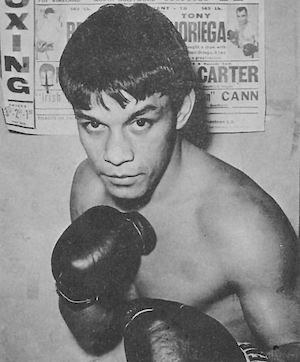
Fast living, substance abuse, hard knocks in the ring and alcoholism had taken their toll, and a new demon – heroin addiction – became part of Ramos’ life by the late 1970s. His brother Emmanuel died of a heroin overdose in 1978.
With the help of his wife, Sylvia Van Hecke, Ramos managed to recover from his addiction and turn his life around. In 1981, she got him into a recovery program run by the longshoreman’s union in San Pedro. Ramos worked sporadically at the Port of Los Angeles between bouts with drugs and alcohol.
“I got clean of alcohol,” he told Daily Breeze sports reporter Jerry Reigel in 1986, “but I still was using everything else: cocaine, speed, pills, weed. I got busted in Wilmington for cocaine on my birthday and then I got popped again in December, and that’s finally when I surrendered.”
Ramos stopped using drugs and alcohol for good on June 12, 1983. Determined to help others avoid his mistakes, he started the nonprofit group BAAD, Boxers Against Alcohol and Drugs. He would spend hours at the Wilmington Teen Center working with young children and teenagers, teaching them boxing skills and relating some of the hard life lessons he had learned during his career.
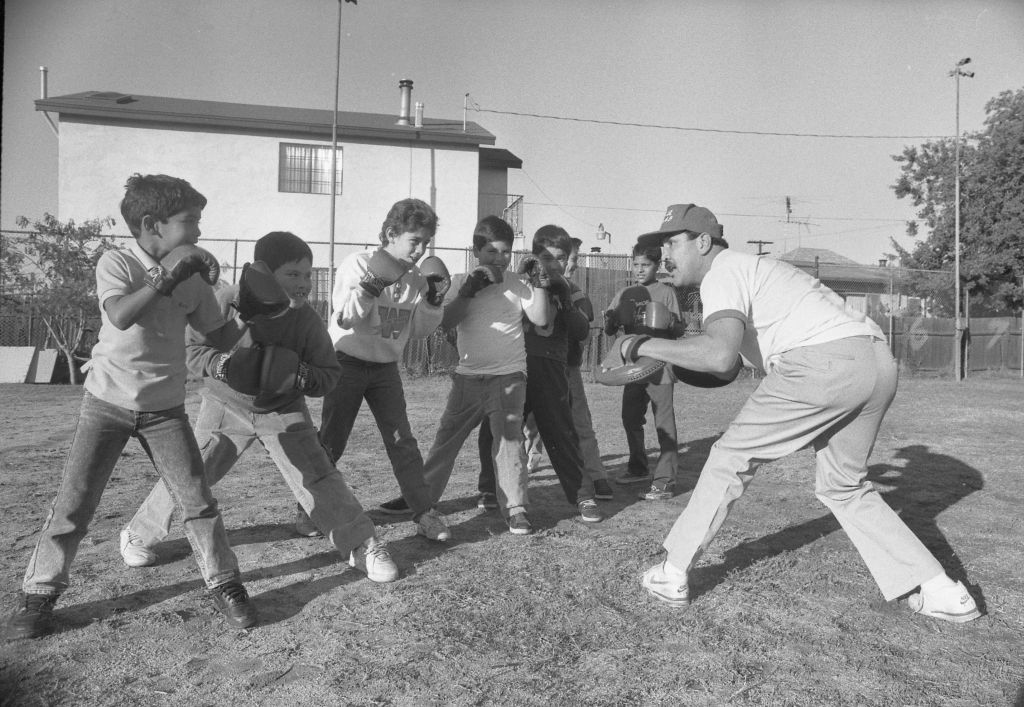
(Credit: UCLA Library Special Collections)
He was inducted into the San Pedro Sportswalk in 1989, his plaque installed along with those of Roy Campanella, Jerry West and Jackie Robinson. “This is a great honor for me,” he said at the ceremony, according to the Daily Breeze. “I grew up in Long Beach, but I lived in San Pedro and Wilmington and I fought in Wilmington. This means a lot.”
Ramos continued working tirelessly with youths through his BAAD program, mostly at the Wilmington Teen Center and at Mahar House in east Wilmington, using boxing and athletics as a way to steer them away from gangs and drugs.
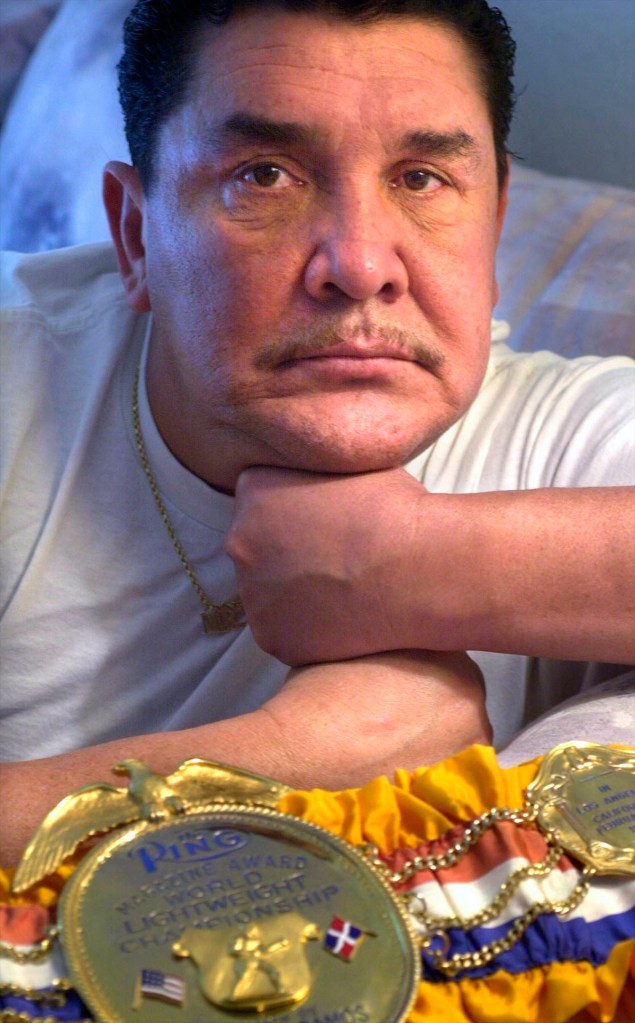
He died of respiratory arrest at home in San Pedro on July 6, 2008, just two weeks after being inducted into the California Boxing Hall of Fame.
“He was the complete fighter,” former welterweight champion Carlos Palomino told the Associated Press at the induction ceremony. “He could box, he could brawl, he could do it all.”
Sources:
“Boxer Mando Ramos dies at 59,” Associated Press, July 7, 2008.
Daily Breeze archives.
Los Angeles Times archives.
“Mando Ramos,” BoxRec website.
Torrance Press-Herald archives.
Wikipedia.