Downtown Torrance building has housed just three different eateries since 1940

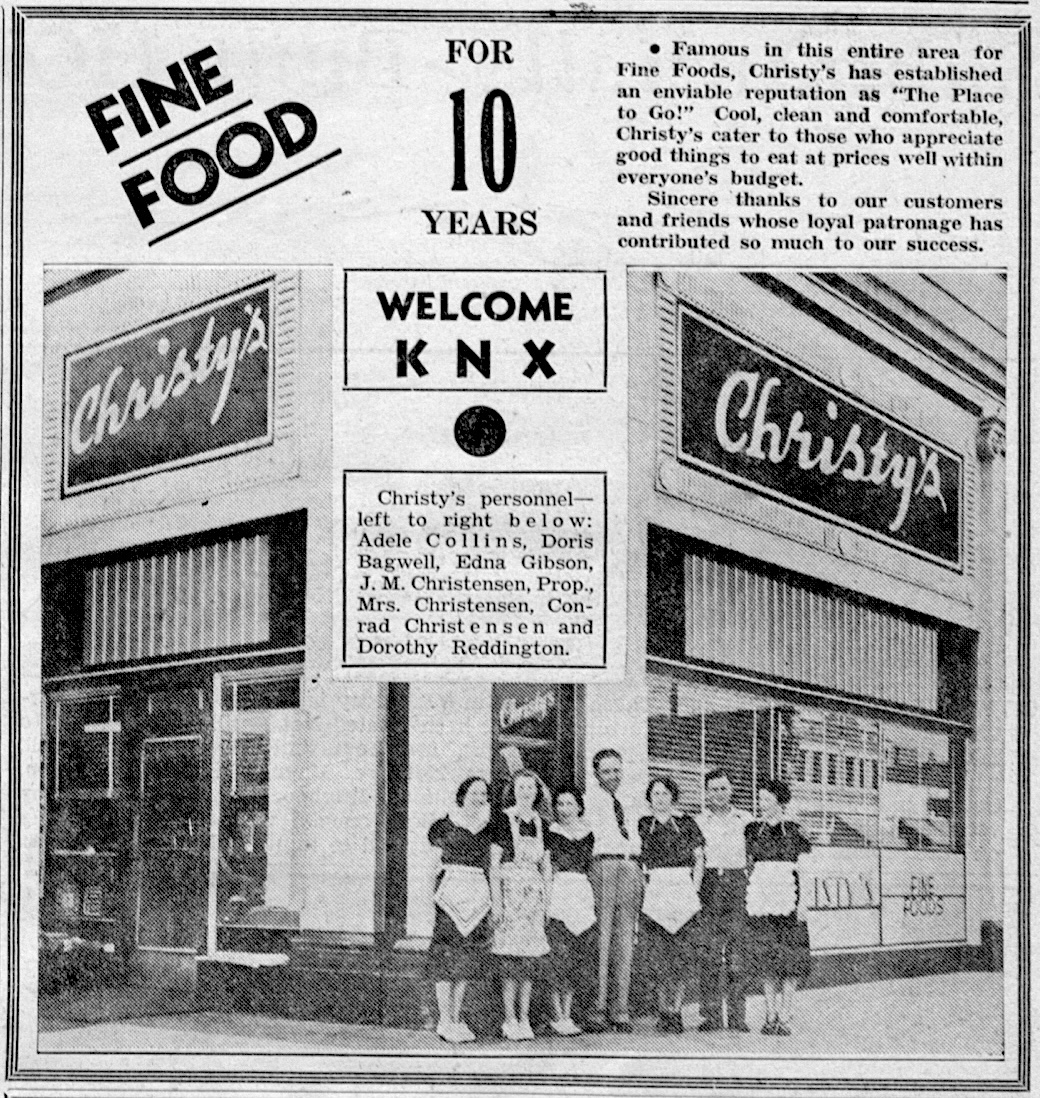
Ad for Christy’s Cafe at 1401 Sartori Ave. in Torrance on the occasion of its 10th anniversary at the location. Torrance Herald, Sept. 15, 1938, Page 23. (Credit: Torrance Historical Newspaper and Directories Archive database, Torrance Public Library)

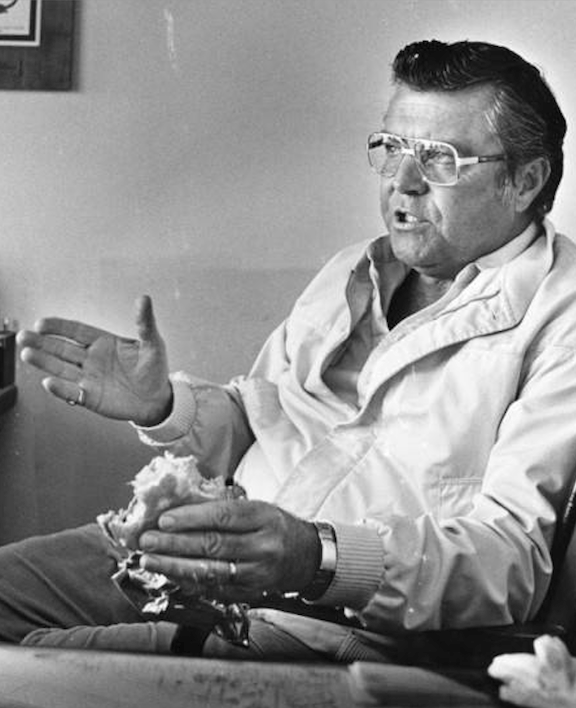
Old Torrance has more than its share of long-standing restaurants. But it turns out that one of its more modern-looking buildings, the current home of Keegan’s Sports Bar and Grill at 1434 Marcelina Ave., has a longer history than one might expect.

The building has been remodeled several times since John M. Christensen and his wife Selma opened Christy’s Cafe there on Dec. 13, 1940. The new location was situated directly across from the city’s post office, which had opened in 1935.

The Christensens already had a history of running a food service business in downtown Torrance. They opened their first cafe and soda fountain at 1405 Sartori Ave. in 1924. It proved popular enough for the couple to move the business to a larger location at 1401 Sartori, on the southwest corner of Sartori and Marcelina, in 1928.

During their twelve years at that spot, the Christensens built Christy’s Cafe into a popular local gathering place. In August 1940, the couple announced that construction had begun on the site of a new, expanded Christy’s Cafe just down Marcelina across from the post office.
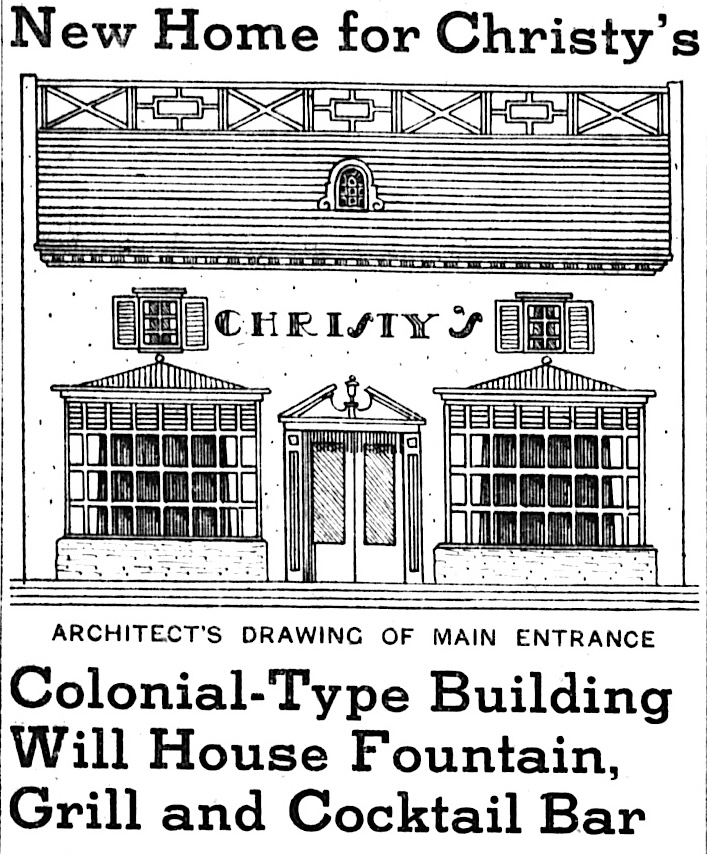
Torrance Herald, Aug. 22, 1940, Page 1. (Credit: Torrance Historical Newspaper and Directories Archive database, Torrance Public Library)

The new $20,000 building contained a fountain, grill, cocktail bar and a mezzanine banquet area  for larger groups. The 34-by-84-foot restaurant and cafe had a Colonial-style facade. It opened for business on Dec. 13, 1940.

Unfortunately for the Christensens, the advent of World War II a year later slowed their business, and made recouping their investment in the new building problematic. Christy’s Cafe struggled on for almost five years at its Marcelina location, but its owners regretfully announced its permanent closure for financial reasons on Sept. 22, 1945.

Enter William Vurpillat. The Hermosa Beach businessman had opened the Vurpillat Hotel at 840 The Strand in Hermosa in June 1923, right on the beach. (The still-operating hotel celebrated its 100th anniversary last year.)
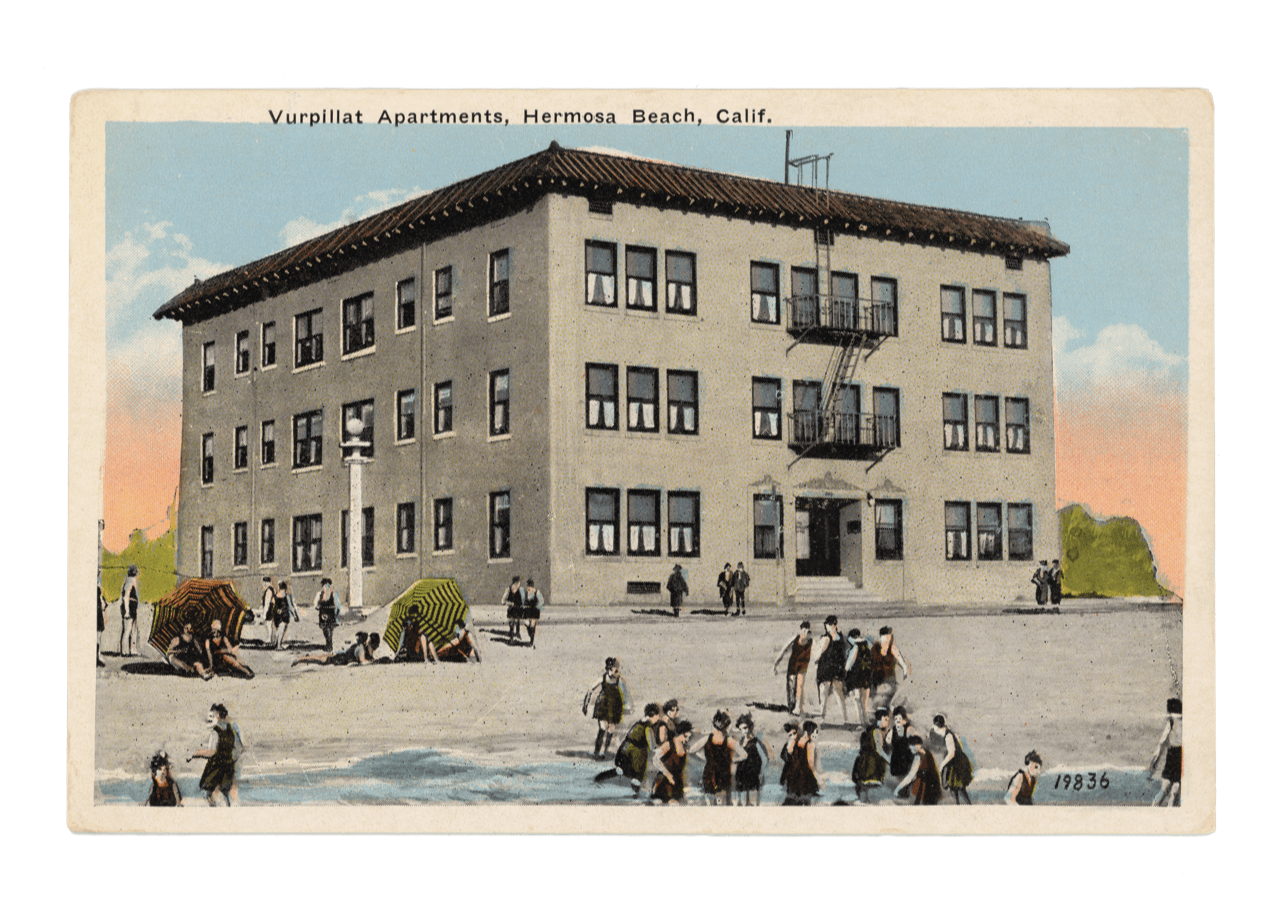
William Vurpillat’s hotel on Hermosa Beach. Undated color postcard circa 1920s .

After serving time in prison for mail fraud in 1925, Vurpillat turned his attention toward opening night clubs and cocktail lounges. He owned Vurpillat’s Cafe on Pier Ave. in Hermosa Beach before moving it to 1528 Cravens Ave. in Torrance in March 1941. In addition to the dining area, Vurp’s had an adjoining cocktail lounge.

It didn’t take Vurpillat long to move his Torrance operation into the former Christy’s Cafe site after the Christensens closed up shop. In fact, he announced plans to move in two days before Christy’s closed its doors for good.

His plans included a complete remodel of the restaurant which he estimated would cost $17,000. The remodel involved adding additional booths in the cafe and the cocktail lounge, lengthening the lounge bar to 40 feet and converting an upstairs storage room into a balcony with private dining.
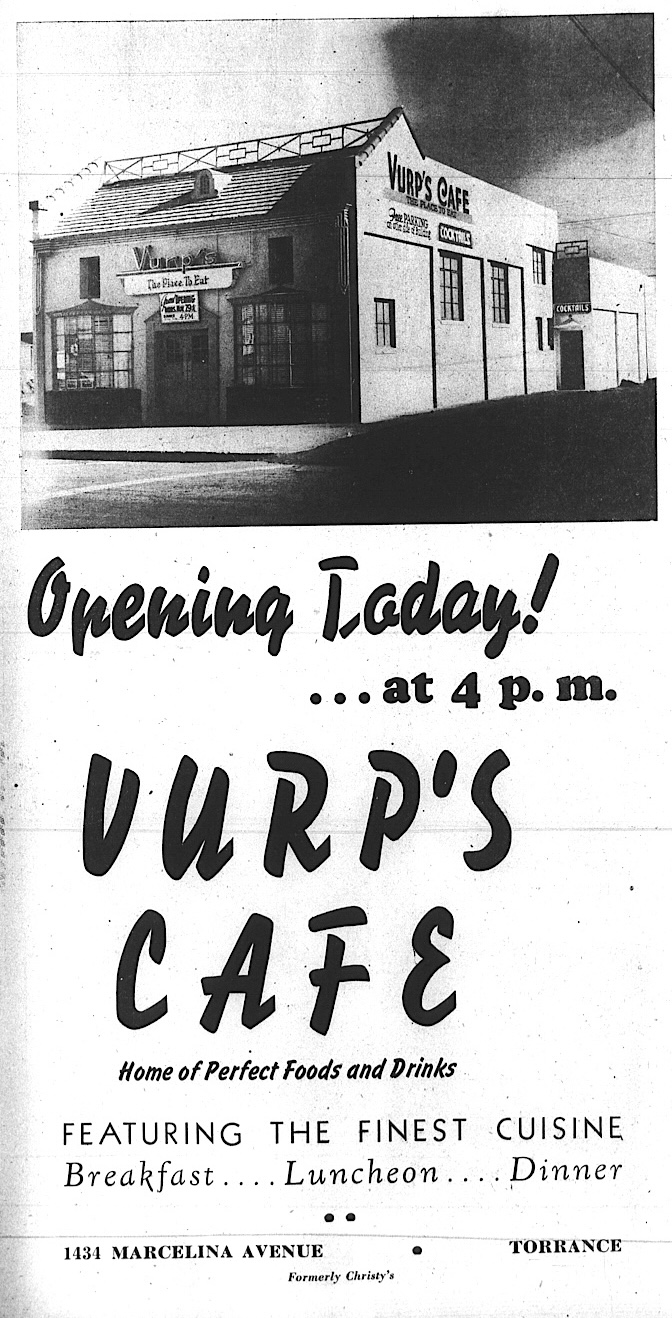
Grand opening ad for Vurp’s Cafe, Torrance Herald, Nov. 29, 1945, Page 6-B. (Credit: Torrance Historical Newspaper and Directories Archive database, Torrance Public Library)

Vurp’s had a capacity of 120 people, and 30 employees were hired to staff it. Its grand opening took place on Nov. 29, 1945. In 1946, the new eatery’s name was shortened to Vurp’s Cafe. 

The restaurant and cocktail lounge would operate under the same Vurp’s Cafe name for the next 50 years, though its management changed many times. During the 1950s and 1960s, the emphasis was on nightlife. Dancing to live music in the cocktail lounge was emphasized in Vurp’s advertising.
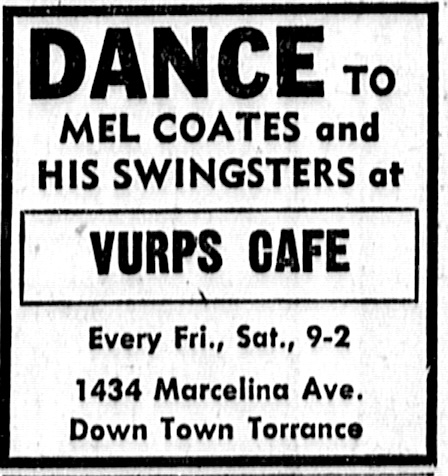
Torrance Herald ad, June 30, 1960, Page 35. (Credit: Torrance Historical Newspaper and Directories Archive database, Torrance Public Library)

By the 1980s, time had begun to take its toll on the Old Torrance downtown area. It had become run-down and attracted fewer and fewer customers to its shops and eateries. 

In 1992, the city began a downtown redevelopment program aimed at sprucing up its drab image and attracting new businesses to spark commerce. Gradually, the area began to turn around. By 1996, more than two dozen new businesses had opened there.

One businessman who noticed the trend was Ireland-born Matt Keegan. In May 1995, Keegan bought Vurp’s Cafe and announced plans to transform it into Keegan’s Irish Pub. He invested more than $150,000 into renovating the tired cafe and lounge from top to bottom.

Two years later, he got permission from the city to build a 2,400-square-foot outdoor patio dining area and beer garden where an alley once stood.

The revamped nightspot attracted customers with karaoke nights, ladies nights, live music Fridays and DJs on Saturday with Sunday. 

Keegan sold the bar to Sean Willett in 2001, who decided to keep the Keegan’s name. In recent years, the owners have begun to appeal to sports fans, renaming the business Keegan’s Sports Lounge and Grill and offering viewing amenities that include 35 television sets.

The building that houses Keegan’s has undergone many transformations since Christy’s Cafe first opened there in 1940, but it continues to serve hungry and thirsty customers – and sports fans – more than eight decades later.
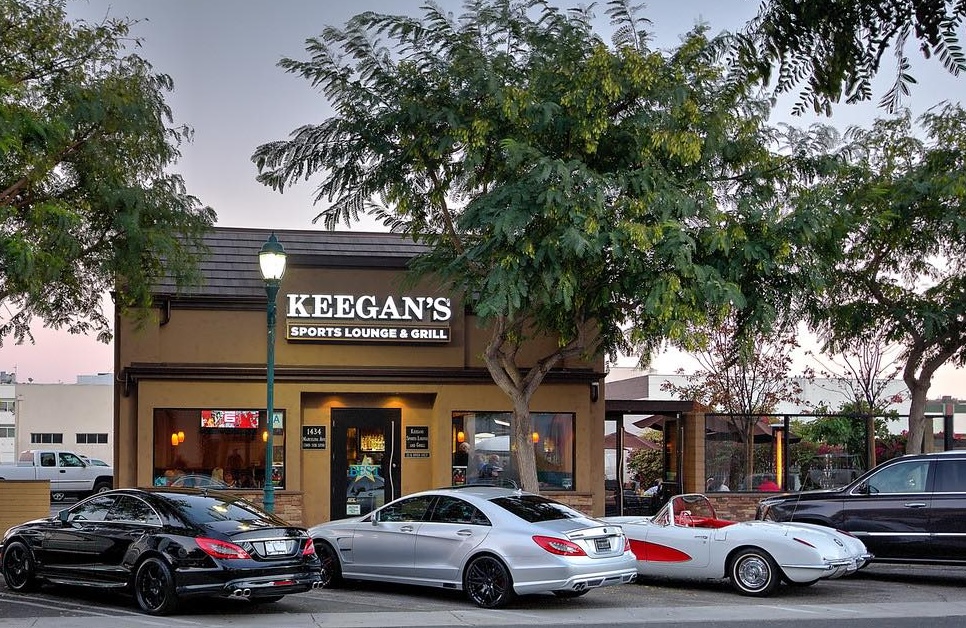
Keegan’s Sports Lounge & Grill at 1434 Marcelina Ave. in Old Torrance. 2016 photo. (Credit: Keegan’s Sports Lounge & Grill Facebook page)

Sources:

Daily Breeze archives.

Keegan’s Sports Lounge and Grill website.

Torrance Press-Herald archives.

“History,” Vurpillat Hotel website
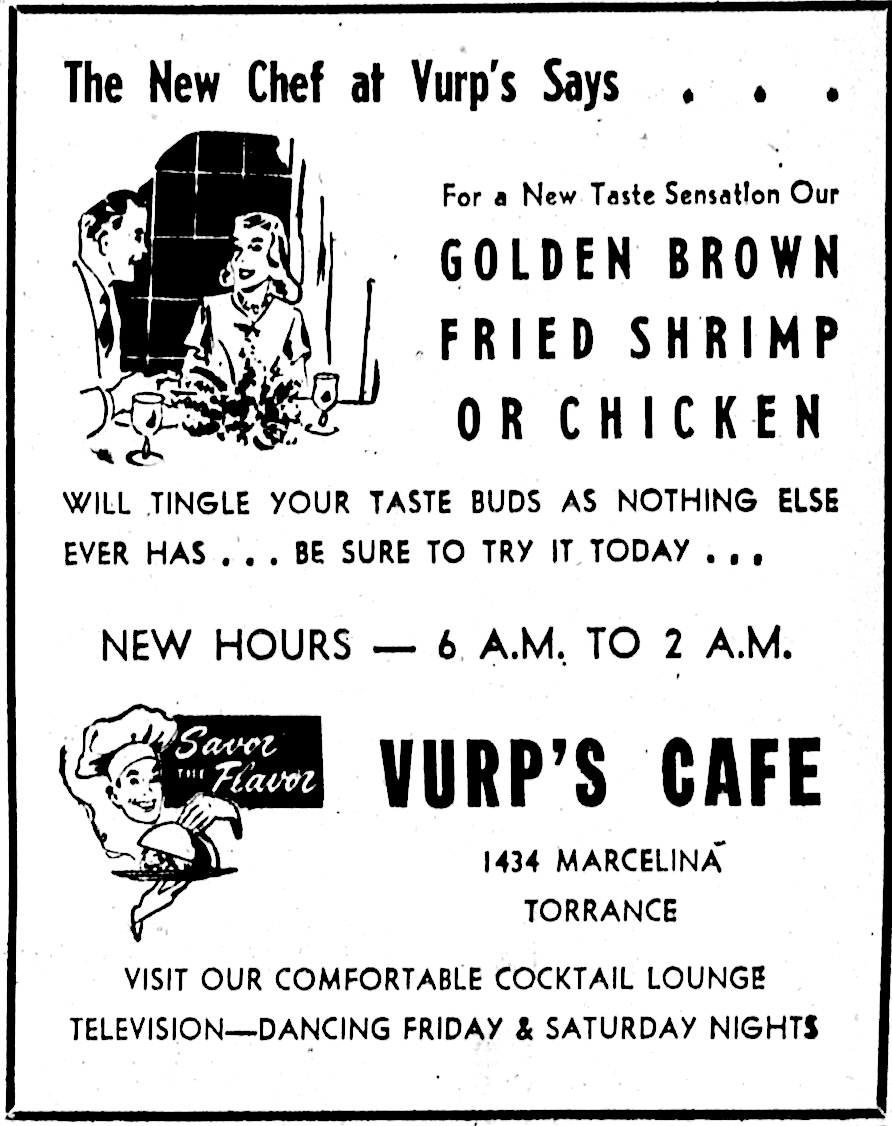
Torrance Herald ad, Feb. 10, 1949, Page 9. (Credit: Torrance Historical Newspaper and Directories Archive database, Torrance Public Library)

1924 Klan raid on San Pedro union hall included tarring and feathering, injuries to children

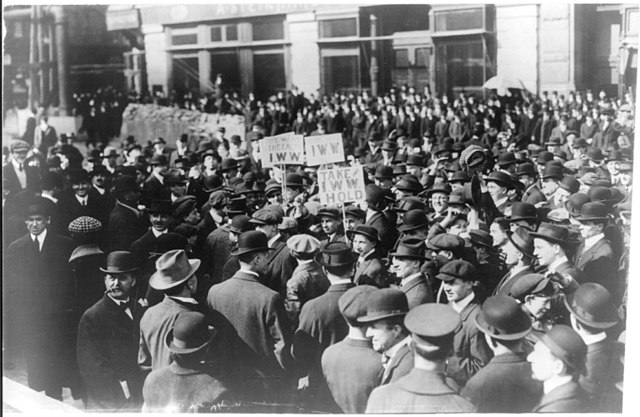
Members of the Industrial Workers of the World (I.W.W.) at a 1914 labor union demonstration in New York City. (Credit: Wikimedia Commons)

No one really knows the exact reason why members of the Industrial Workers of the World (I.W.W.) labor union members became known as “Wobblies.”

The union’s own website offers up four possible explanations. What is known about the IWW, founded in Chicago in 1905, is that it has always been controversial for its unabashedly socialist leanings. Its opponents in the early 1900s simplified matters by calling IWW members Communists.
So when the union began growing in influence among San Pedro dockworkers following the official establishment of Los Angeles Harbor in 1909, the businessmen who owned the shipping companies there grew increasingly alarmed.

The IWW favored the “closed shop” labor concept, under which companies were forced to hire workers who were union members. The business owners fought for “open shops,” where they could hire whomever they wanted without having to deal with the unions.

The IWW reached its peak membership during the World War I era. After the war, a wave of anti-Communist sentiment swept the country, fueled by fears of a Communist takeover similar to the Bolshevik revolution in Russia in 1917.

This resulted in often violent crackdowns on radical organizations, and the IWW became a major target. Law enforcement authorities based their actions on the Criminal Syndicalism Act of 1919, a state law barring the use of criminal acts to effect political or social change. (The vague law remained on the books until its repeal in 1968.)

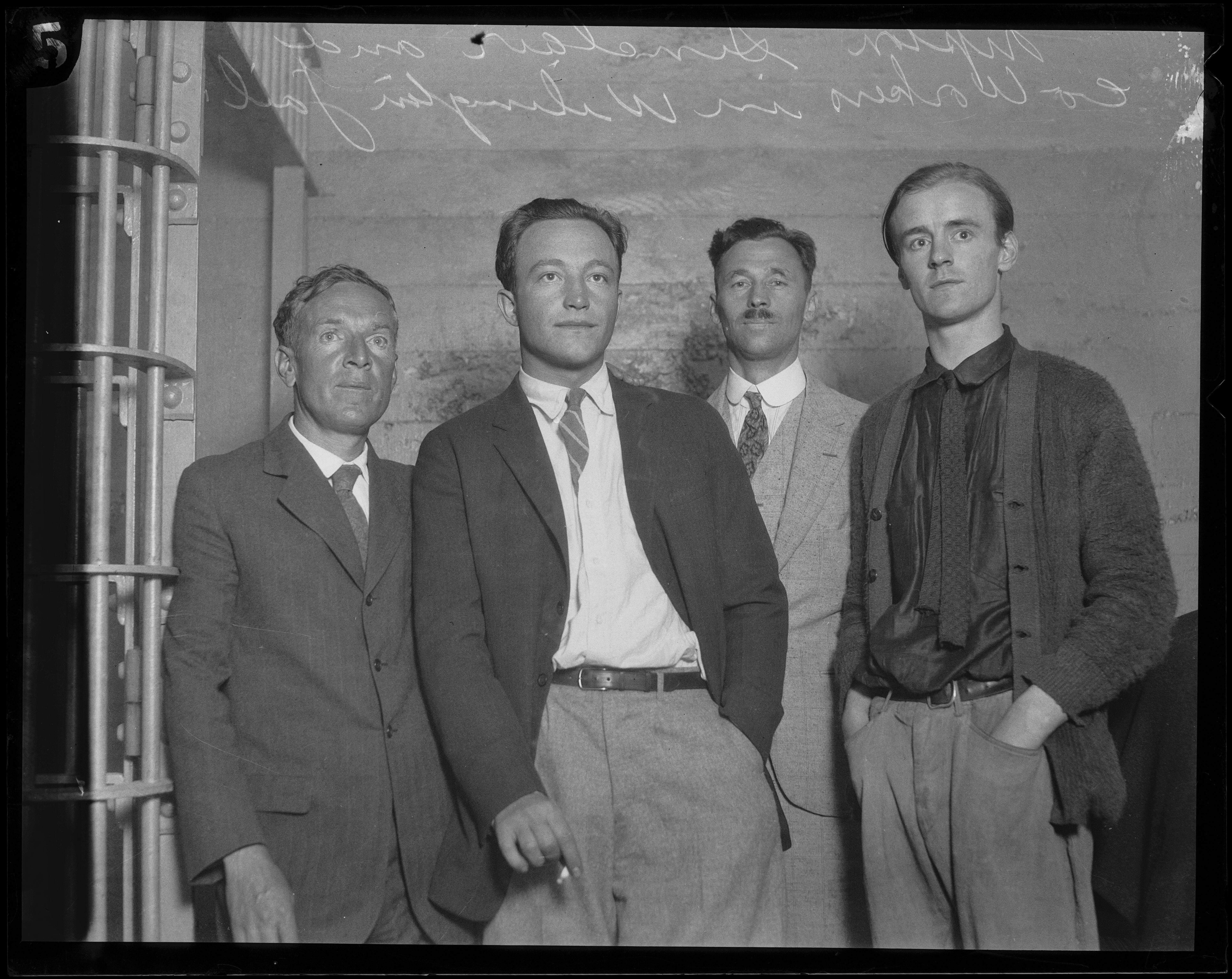
From left, Upton Sinclair, Hunter Kimbrough, Pryns Hopkins and Hugh Hardyman in jail shortly after they were arrested at the Liberty Hill protest in San Pedro on May 15, 1923. (Credit: UCLA Library, Dept. of Special Collections)

I’ve written before about the May 13, 1923 demonstration at Liberty Hill in San Pedro, where thousands of striking dockworkers and demonstrators assembled. Two days later, Upton Sinclair, author of the muckraking book The Jungle, read from the Bill of Rights to assembled protesters and promptly was arrested.

Sinclair was responding to LAPD raids on the Wobblies on March 14, where as many as a thousand IWW members were arrested, herded into Red Cars and taken to temporary stockades in Griffith Park.

The Los Angeles Police Department enlisted the usually violent help of vigilante forces such as strikebreaking expert John “Black Jack” Jerome and the newly resurgent Ku Klux Klan to help end the strike. Louis D. Oaks, the LAPD chief at the time of the 1923 strike, was a Klan member.

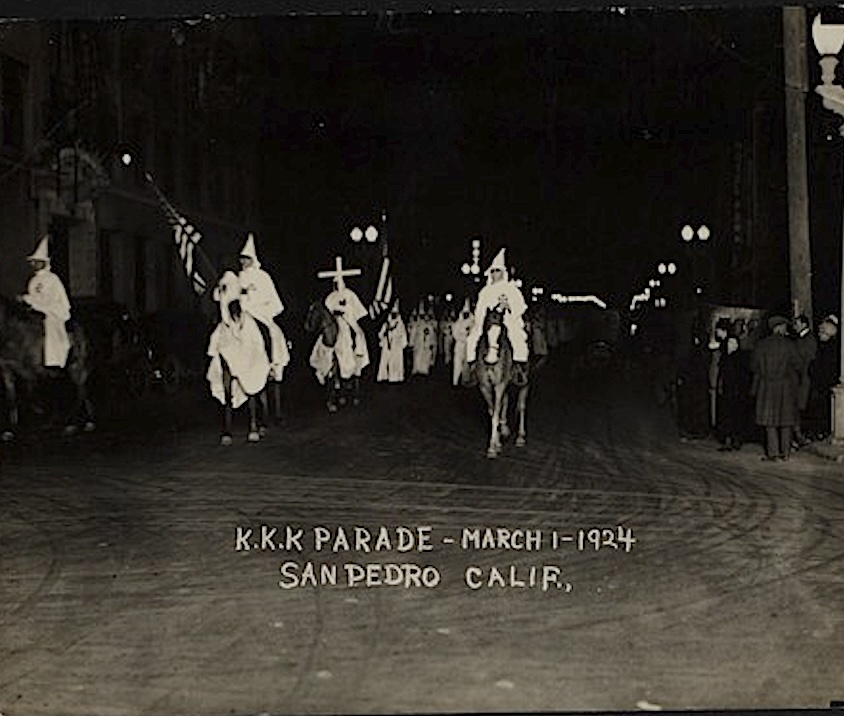
Hooded Klansmen on horseback lead a KKK march in San Pedro on March 1, 1924. (Credit: UC San Diego Library, Special Collections and Archives)

Unease and occasional violence continued for the next several months. It would culminate in a raid that went a long way toward diminishing the IWW’s influence in San Pedro.

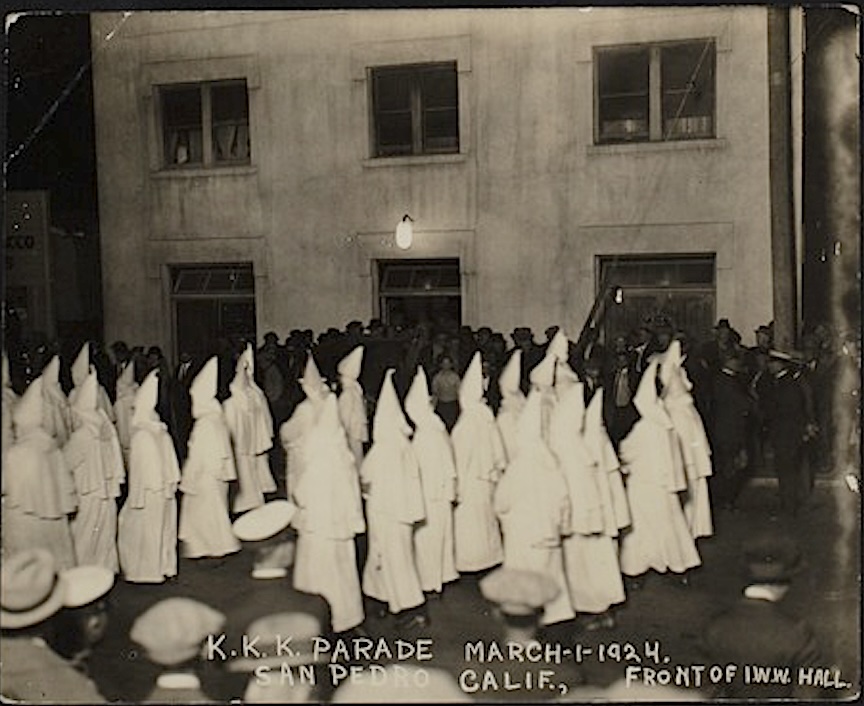
On March 1, 1924, the Ku Klux Klan staged a silent march through San Pedro that included the IWW meeting hall at Twelfth and Center streets among its destinations. Its purpose was intimidation, with as many as 2,000 Klansmen participating. A March 17 LAPD raid followed, during which several IWW leaders were arrested under the criminal syndicalism law.

Ku Klux Klan members march by the IWW union hall in San Pedro on March 1, 1924. (Credit: UC San Diego Library, Special Collections and Archives)

But the most violent raid was still to come. It occurred on June 14, 1924, when Ku Klux Klan members descended on an IWW gathering at its union hall. 

The event wasn’t a meeting, but a benefit entertainment program honoring two union members who had been killed in a recent railroad accident. About 300 people attended, including families and children of IWW members. 

During the event, approximately 150 Klan members arrived via automobiles at the hall, and immediately began attacking those in attendance with guns, clubs, blackjacks, pipes and brass knuckles. Several children were scalded by hot water from a coffee urn. 

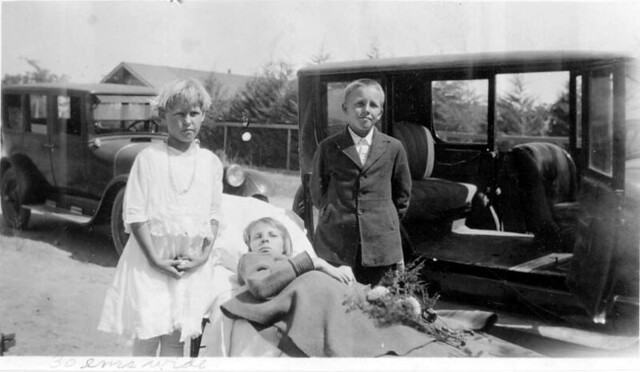
From left, Lilly, May and Elmer Sundstedt at the funeral for their mother, Elizabeth, in August 1924. (Credit: Industrial Workers of the World Photograph Collection: San Pedro, 1923-1924, University Libraries, University of Washington)

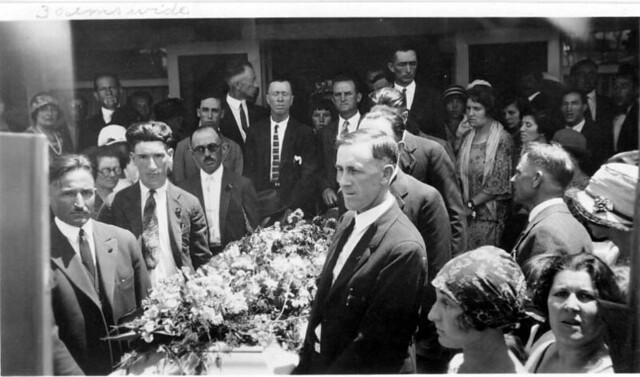
Among those burned were sisters May and Lilly Sundstedt. May’s burns were serious enough for her to be hospitalized. Their mother, Elizabeth, was even less fortunate. She was beaten and clubbed during the attack and died from her injuries six weeks later on Aug. 1.

Nine-year-old Alex Kruglis attempted to flee from the violence at the hall, but was chased down by a raider who then threw a pot of hot grease onto his legs. He also had to be hospitalized, but survived.

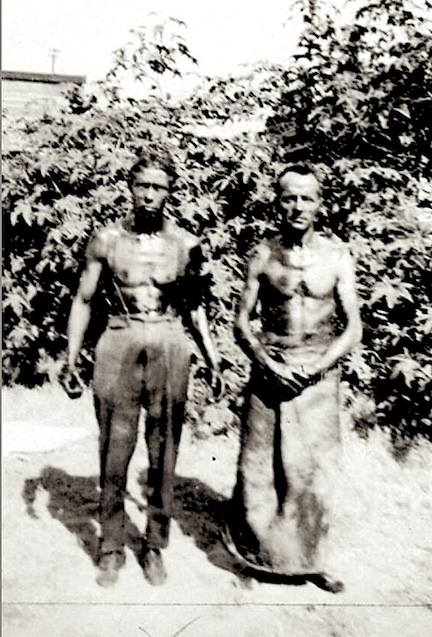
Several union leaders were kidnapped and driven to Santa Ana Canyon in Orange County, where six of them were tarred and feathered.

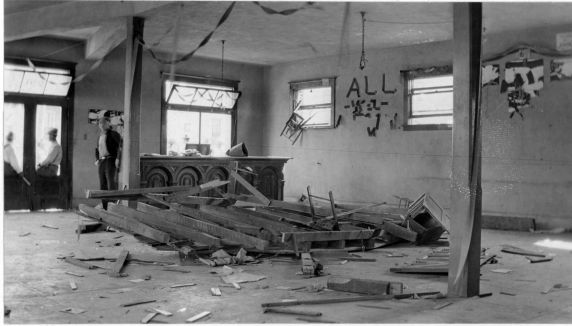
The interior of the I.W.W.’s San Pedro meeting hall after it was trashed during a raid by members of the KKK on June 14, 1924. (Credit: Walter P. Reuther Library, Wayne State University)

In addition, the union hall itself was destroyed, and the IWW’s ensuing influence in San Pedro was lessened dramatically.

Though it seemed to have worked, voices of outrage over the lawless raid began to grow, including that of Upton Sinclair. Justifying the raid became increasingly difficult, and port business owners tried to distance themselves from it, perhaps realizing that they had let the violence get out of hand.

The LAPD responded by replacing Chief Oaks with former Berkeley chief August Vollmer, a more moderate leader who was charged with reforming the department.

No record of prosecution for the death of Elizabeth Sunstedt could be found in contemporary news reports. Arrests were made in the tar-and-feathers incident and a grand jury reviewed the case, but again, no records of prosecution could be found. A damages suit brought by the owners of the property where the destroyed hall was located was thrown out of court in January 1926.

The IWW survived it all, including its near extinction during the second wave of anti-communist sentiment that swept the country during the 1950s. It currently has more than 12,000 members, down from its peak membership of nearly 60,000 in 1923.

Two unidentified tar and feathering victims following the 1924 KKK raid in San Pedro. (Credit: Industrial Workers of the World Photograph Collection: San Pedro, 1923-1924, University Libraries, University of Washington)

Sources:

Daily Breeze archives.

Endangered Dreams: The Great Depression in California, by Kevin Starr, Oxford University Press, 1997.

“Industrial Workers of the World Photograph Collection: 1923-1924,” University Library, University of Washington website.

Industrial Workers of the World website.

Los Angeles Times archives.

Port of Los Angeles: Conflict, Commerce and the Fight for Control, by Geraldine Knatz, Angel City Press and Huntington-USC Institute on California & the West, 2019.

San Pedro News Pilot archives.

Pallbearers carry Elizabeth Sundstedt’s casket at her August 1924 funeral in San Pedro. (Credit: Industrial Workers of the World Photograph Collection: San Pedro, 1923-1924, University Libraries, University of Washington)

For Torrance’s Roadium Drive-In, showing movies has been only part of its business

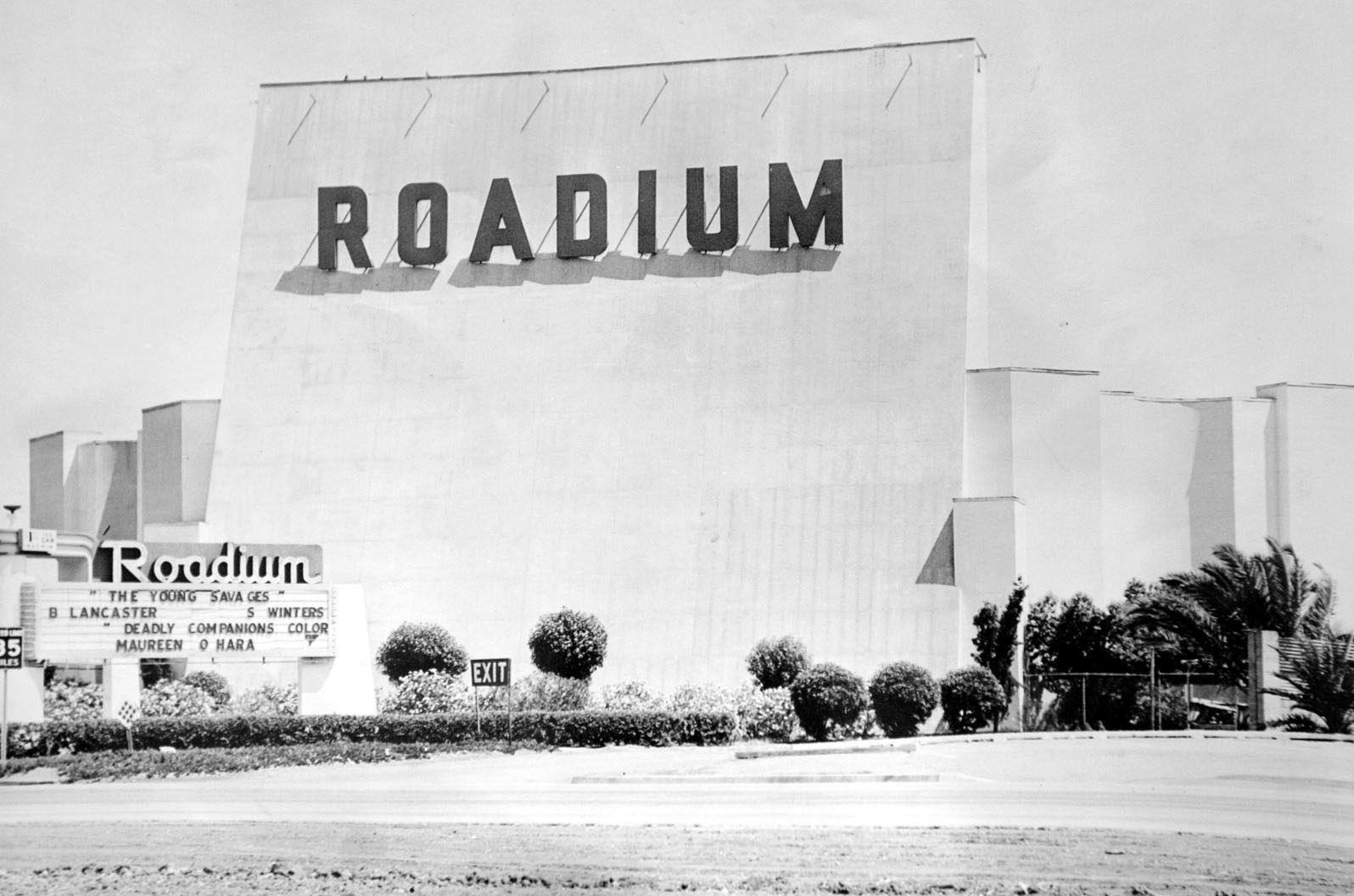
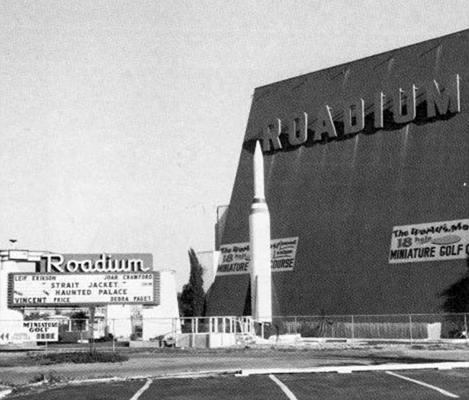
The Roadium drive-in theater in Torrance opened in 1950. Photo circa 1961, the year both films on the marquee were released. (Daily Breeze file photo)

Richard Hollingshead opened the first modern drive-in theater in New Jersey on June 6, 1933. In his advertisements, he described it as a place where “the whole family is welcome, regardless of how noisy the children are.”

The concept really took off during the post-World War II suburban boom, especially in places with mild weather and lots of open space to put the large establishments.

The South Bay fit those criteria well. Former FBI agent L. Dale Gasteiger opened Torrance’s first drive-in, The Roadium, at 2500 W. Redondo Beach Blvd. on a 14-acre plot of land in the far northeast corner of the city, on Friday, May 19, 1950. (The Torrance Drive-In across town on the city’s western edge opened in 1955.)

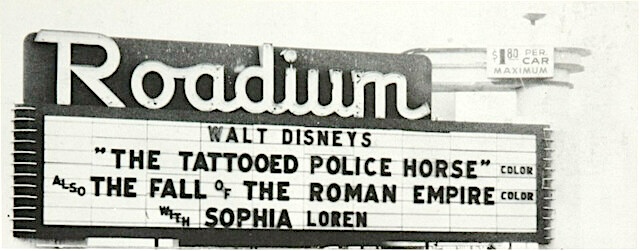
“$1.80 per car maximum.” From the 1965 (Torrance) West High yearbook. (Credit: Cinema Treasures website)

Gasteiger’s outdoor theater had space for 480 cars, and his grand opening ad in the Torrance Herald highlighted the snack bar, the latest in sound equipment, excellent close-up views, and free admission for children.

The Roadium was located just up the road from El Camino College and Alondra Park. (ECC had opened in 1948.) The land around it was filling up rapidly with tract houses being built in the El Camino Village area on the west, North Torrance to the south, and Gardena to the east.

Business was brisk at the Roadium, but the entrepreneurial Gasteiger didn’t sit still. In addition to screening films, he began looking at other sources of income.

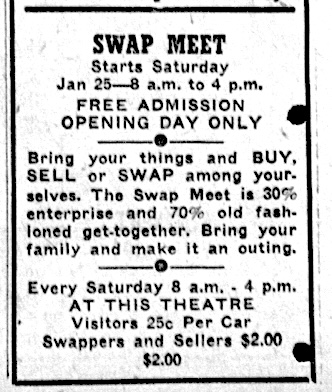
Part of Roadium ad for its first swap meet. Torrance Press, Jan. 20, 1958, Page 2. (Credit: Torrance Historical Newspaper and Directories Archive database, Torrance Public Library)

In October 1957, he petitioned the Torrance City Council to grant him a permit allowing him to operate swap meets on the theater grounds during the daytime on weekends. The council approved the proposal at its Nov. 6 meeting, and the Roadium held its first outdoor swap meet on Saturday, Jan. 25, 1958.

It would turn out to be a momentous decision that would end up saving the theater decades later.

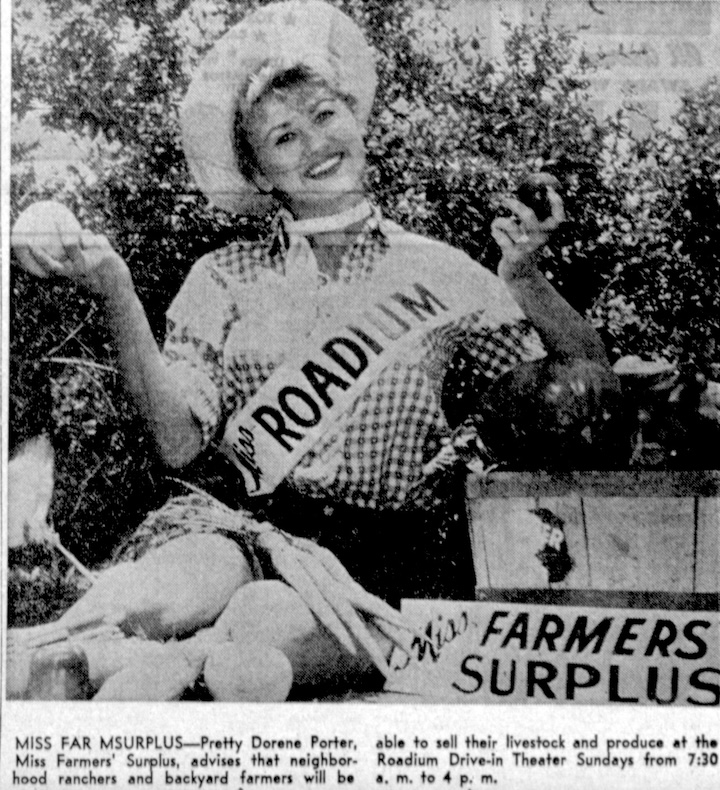
Gasteiger wasn’t done, however. Little more than a year later, on Sunday, May 10,1959, he began operating what he called the “Farmer’s Surplus Market,” where local food producers could sell directly to consumers.

The Torrance Press quoted Gasteiger describing the market as giving “the inflation-squeezed consumer a chance to lessen his food costs by buying at close-out prices directly from the growers and handlers here.” (Even in 1959, that should have been changed to “his and her food costs.”)

Torrance Press, May 10, 1959, Page 2. (Credit: Torrance Historical Newspaper and Directories Archive database, Torrance Public Library)

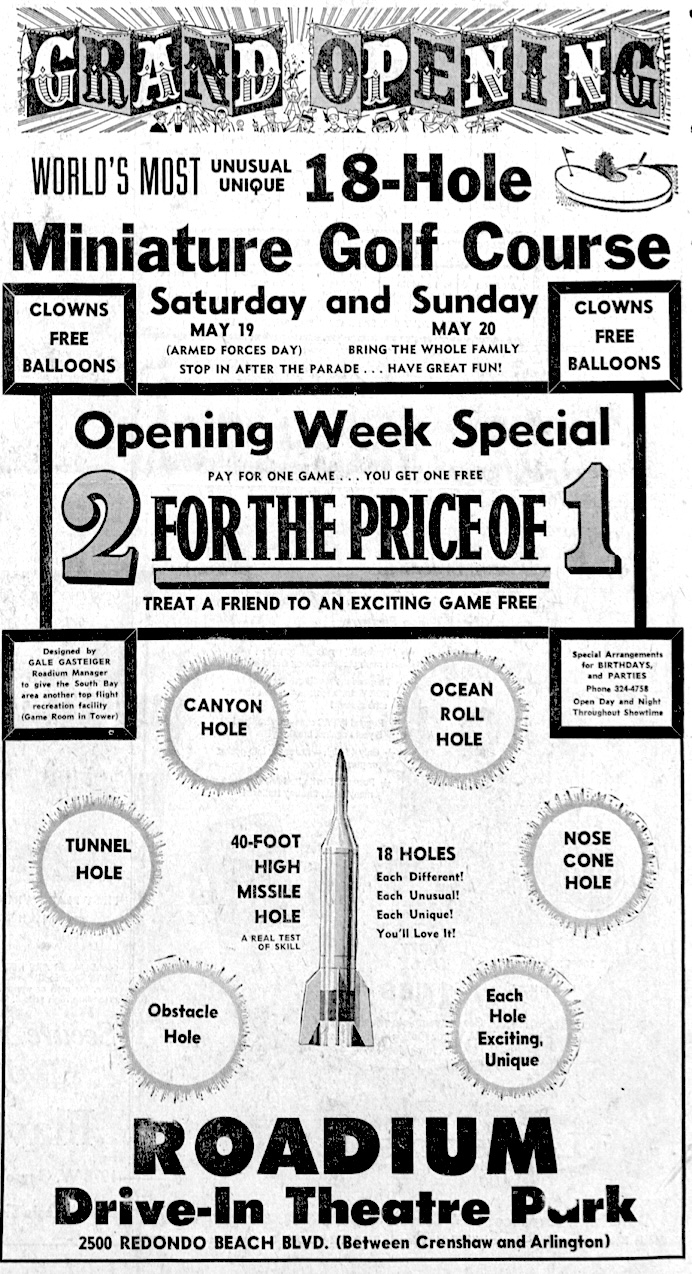
But he really outdid himself in 1962. On Saturday, May 19, he opened a full-on 18-hole miniature golf course built in the area around the theater’s movie screen. (In ads from the period, the Roadium is described quite grandly as the “Roadium Drive-In Theatre Park.”)

The golf course, designed by Gasteiger, sported a 40-foot-high missile in which was located an up-to-date game room as well as special theme holes secreted in the interior of the layout.

The missile facsimile and part of the miniature golf course can be seen in the 1964 photo. (Photo courtesy of Kenneth McIntyre via Cinema Treasures website)

So, by then, the Roadium was earning its name as a “theatre park,” by including a swap meet, a farmers market and a miniature golf course.

It’s unclear how long the miniature golf course lasted, but alas, it is no more. Elements of the farmer’s market eventually were incorporated into the swap meet as the Roadium soldiered on through the decades.

A variety of factors began spelling trouble for drive-ins beginning in the 1970s. Gasoline shortages began a trend toward smaller, more economical cars, which were less comfortable to take to the drive-in. Also, the large plots of land occupied by drive-ins – most require 15 acres or more – were becoming more desired by real estate developers.

The later rise of home video entertainment also hurt theater business. By the early 1980s, the Roadium was advertising its still-regular swap meets far more than its film screenings. 

Then owned by the Pioneer theater chain, Roadium management considered adding additional screens as other area drive-ins such as the Vermont in Gardena and the South Bay Six in Carson had done. But it decided economics didn’t favor the move.

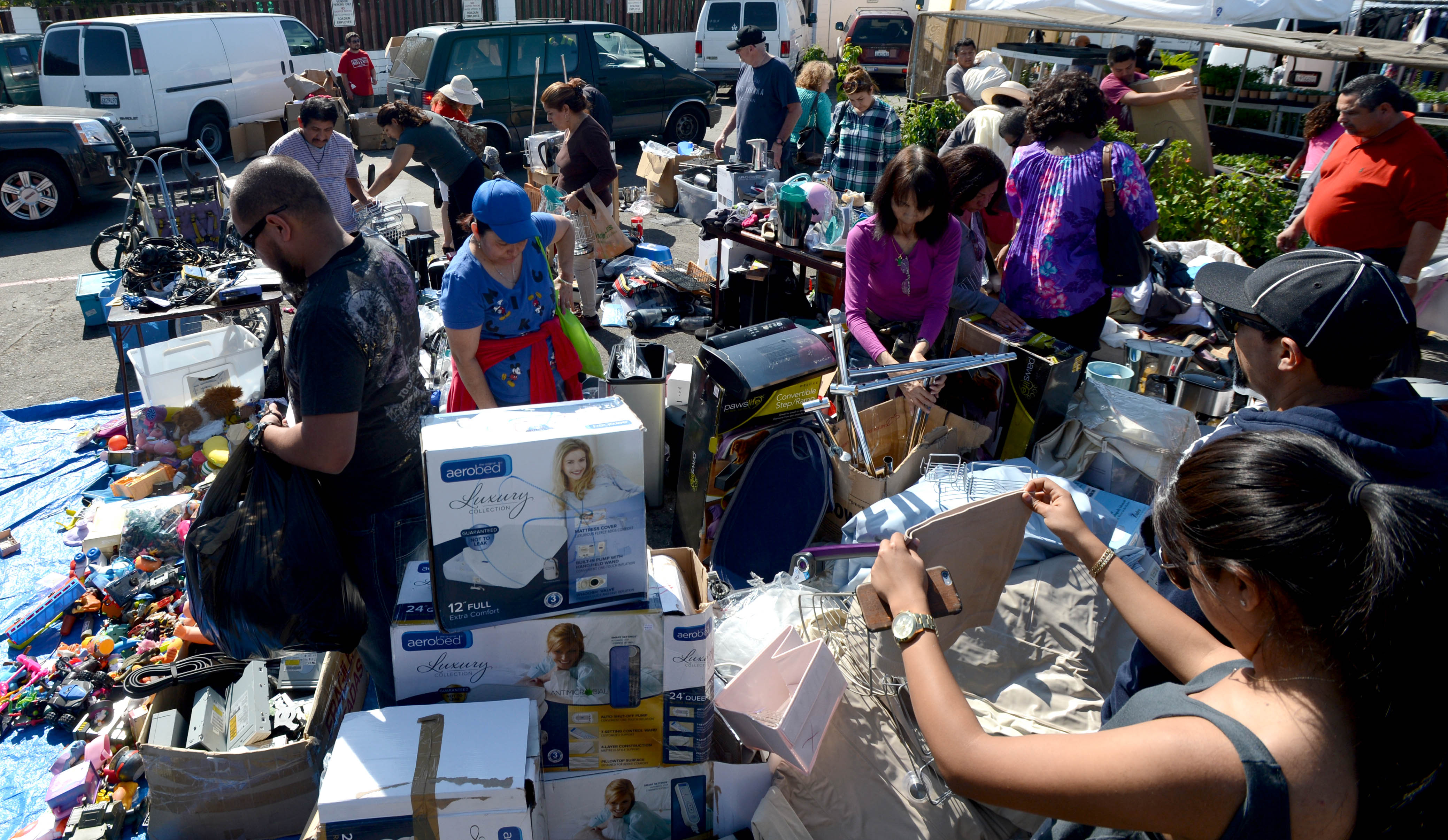
Customers search for bargains at the Roadium Swap Meet in Torrance on Feb. 14, 2016. (Daily Breeze file photo by Stephen Carr)

Finally, in 1986, the Roadium stopped showing movies altogether, deciding instead to concentrate on its swap meets, which by then were operating seven days a week. 

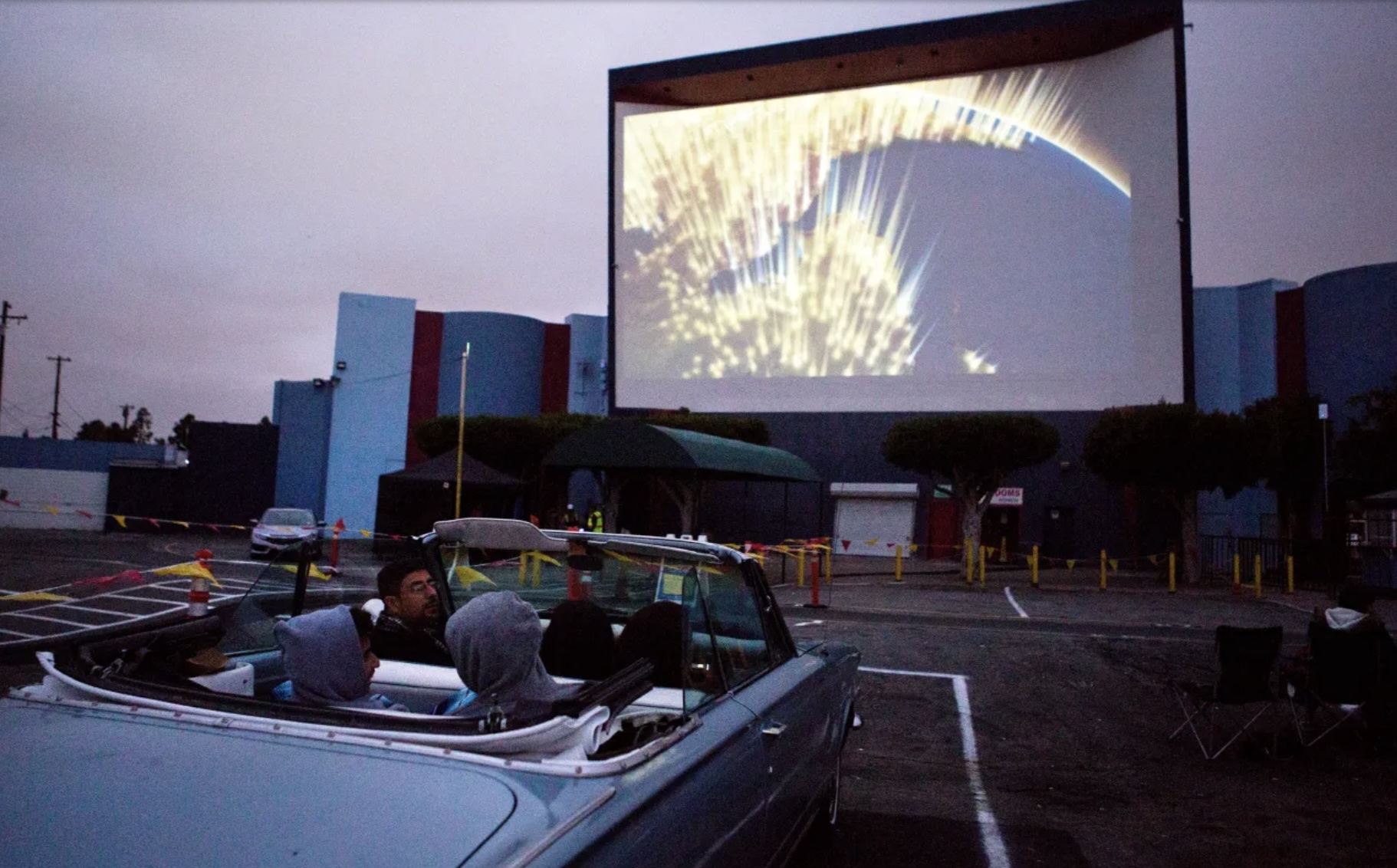
The 80-foot-square screen stood by mutely for more than three decades, until it was announced that movie screenings would return to the theater on Friday nights starting with a June 7, 2019 retro screening of “Back to the Future.”

The swap meet remains the venue’s primary business, but summer movie screenings and occasional special events still are offered. In 2021, the theater hosted the annual South Bay Surf Awards ceremony so it could be held outdoors during the coronavirus pandemic.

The Torrance Drive-In has been replaced by a housing development, a strip mall now stands where the San Pedro Drive-In once did, and the Vermont and Carson multiplex drive-ins have long since been demolished. But the Roadium remains active almost 75 years after it opened, even if its movie screenings remain only a secondary part of its business. 

Attendees at the Roadium Drive-In in Torrance watch “Back to the Future” on Friday, June 7, 2019. (Daily Breeze file photo by Drew A. Kelley)

Sources:

Daily Breeze archives.

“The History of Drive-In Movie Theaters (and where they are now),” New York Film Academy website, May 30, 2023.

Los Angeles Times archives.

The Roadium website.

“Roadium Drive-In,” Cinema Treasures website.

Torrance Press-Herald archives.

Note: Thanks to Santiago Carreras for correcting what replaced the San Pedro Drive-In.

Torrance Press ad, May 16, 1962, Page D-4. (Credit: Torrance Historical Newspaper and Directories Archive database, Torrance Public Library)

Actress Natalie Wood’s 1981 death near Catalina Island remains officially unsolved 

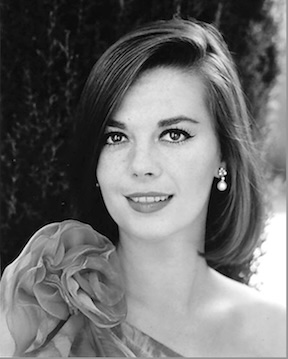
Natalie Wood. 1964 publicity photo.

Natalie Wood was four years old when she first appeared in a Hollywood film. She played a young girl who drops her ice cream cone and looks suitably sad about it in the 1943 drama “Happy Land.” Her nonspeaking role was uncredited; she was on screen for about 15 seconds.

She was born Natalia Nikolaevna Zacharenko in San Francisco on July 20, 1938, to Russian immigrant parents. The family bought a house in Santa Rosa in 1942, and the young girl caught the attention of the “Happy Land” film crew working nearby the following year.

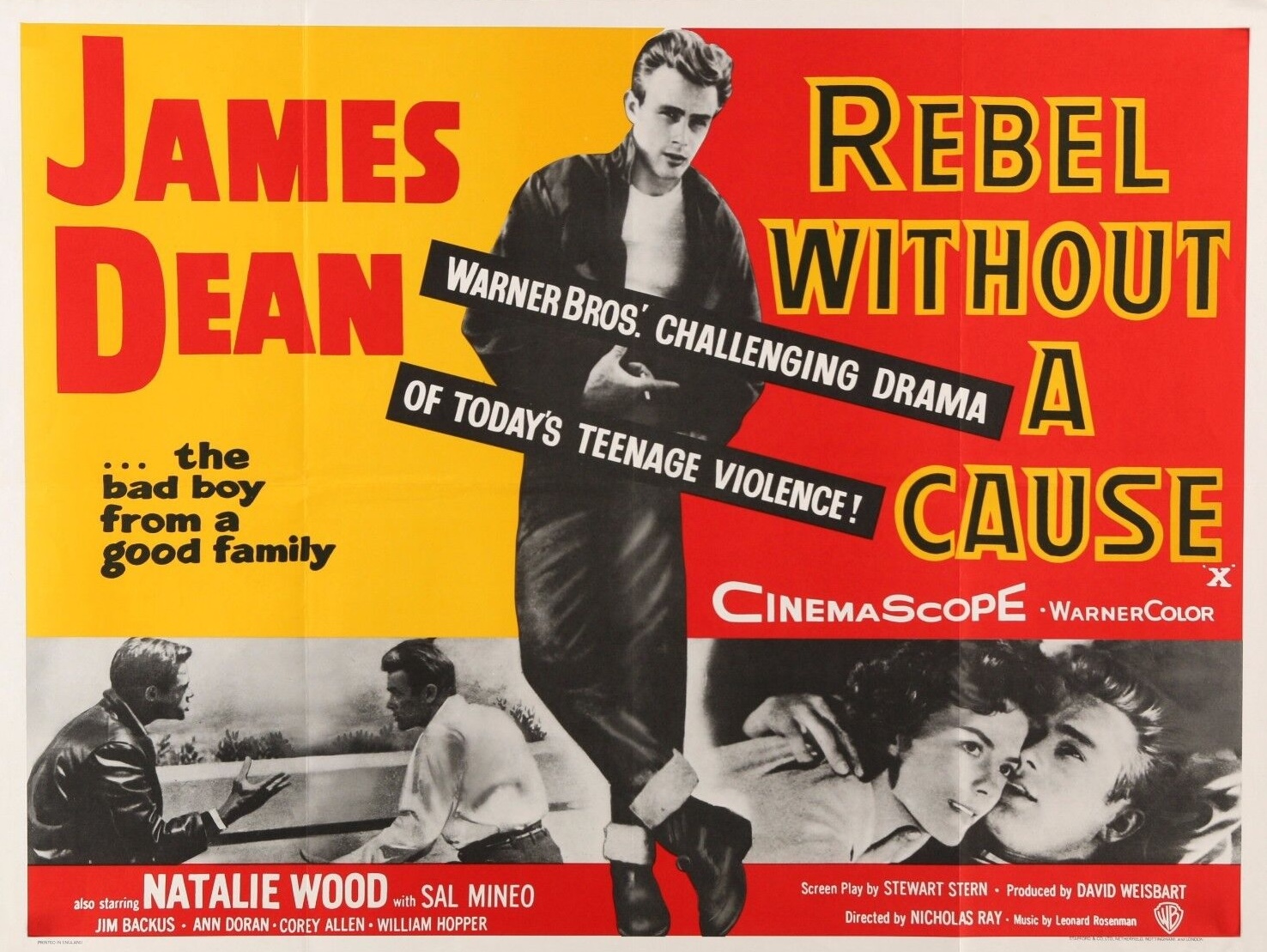
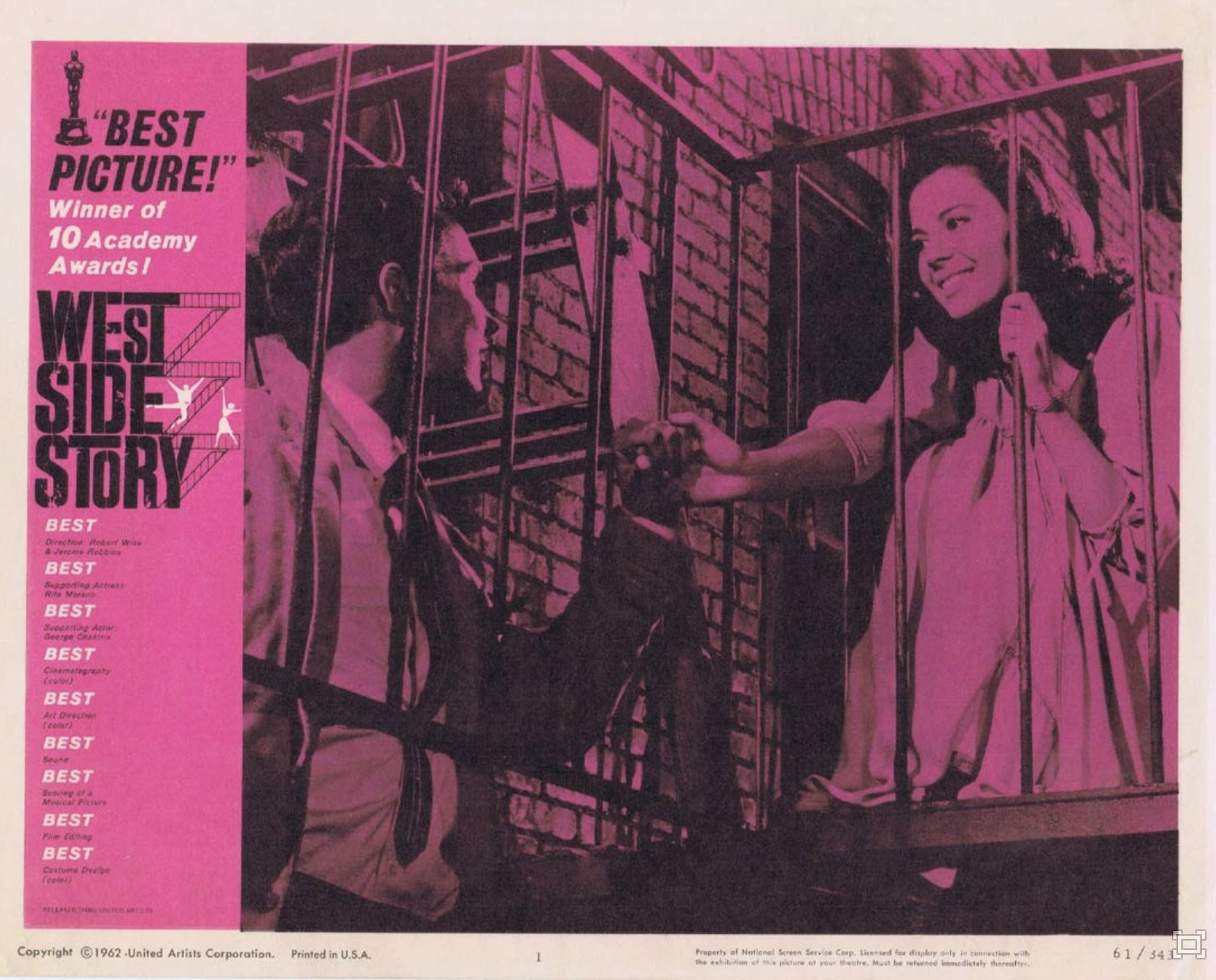
Her first major role came as an 8-year-old in the 1947 holiday classic “Miracle on 34th Street.” She would go on to earn three Academy Award nominations before turning 25, for “Rebel Without a Cause,” “Splendor in the Grass” and “Love With the Proper Stranger.” She also famously portrayed Maria in the film adaptation of the Broadway musical “West Side Story.”

Natalie Wood received her first Academy Award nomination, for Best Supporting Actress, in “Rebel Without a Cause” (1955).

She married actor Robert Wagner for the first time in 1957. They divorced in 1962. Each married and divorced other spouses, before reconciling and remarrying each other on a boat in Paradise Cove in Malibu in 1972.

Wood slowed her career during the 1970s while raising ahad family, appearing in just a few films.  She did make several television  appearances, winning a best-actress Golden Globe award for her work in the 1979 TV miniseries version of “From Here to Eternity.”

She had just finished location shooting for the sci-fi thriller “Brainstorm,” her final film, in late 1981 when she and husband Wagner, her co-star Christopher Walken, and boat captain Dennis Davern took a Thanksgiving weekend cruise to Catalina Island. 

After a family dinner on Thanksgiving Day in her Beverly Hills home, Wood and Wagner invited friends to come with them on the trip to Catalina Island, a favorite weekend boating destination of theirs, but most demurred due to stormy weather conditions.

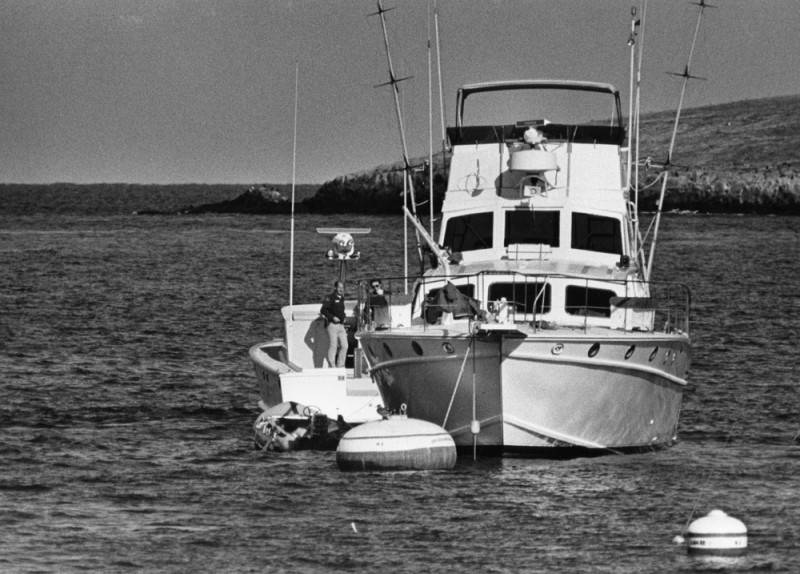
The Wagners’ 60-foot yacht, “Splendour,” in Catalina Island’s Isthmus Cove on Nov. 30, 1981. (Credit: Los Angeles Public Library Photo Collection)

Walken was the only one who decided to go along. They spent Friday night in Avalon before deciding to take the Splendour to their favorite part of the island, mooring the boat at the Isthmus/Two Harbors area about 21 miles west of Avalon.

The trio had dinner and drinks onshore on Saturday night, Nov. 28, 1981, at Doug’s Harbor Reef, the restaurant owned by Two Harbors general manager Doug Bombard. They returned to the Splendour, where Walken and Wagner had an argument with each other, with Wood retiring to the stateroom to sleep.

What happened next has been the subject of speculation for more than four decades now. Sometime during the middle of the night, probably at around 3 a.m., Wood got up and went onto the boat’s deck.

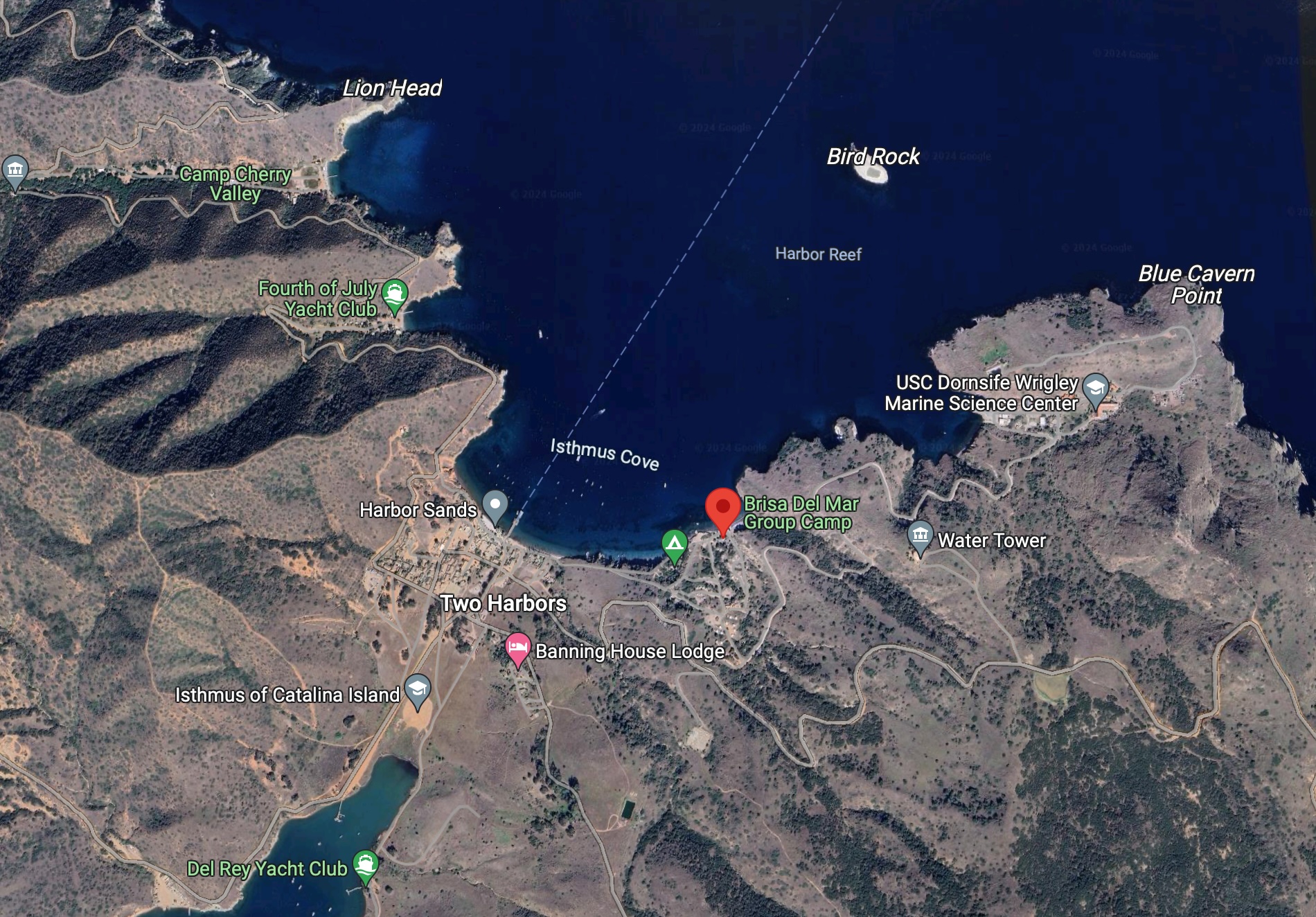
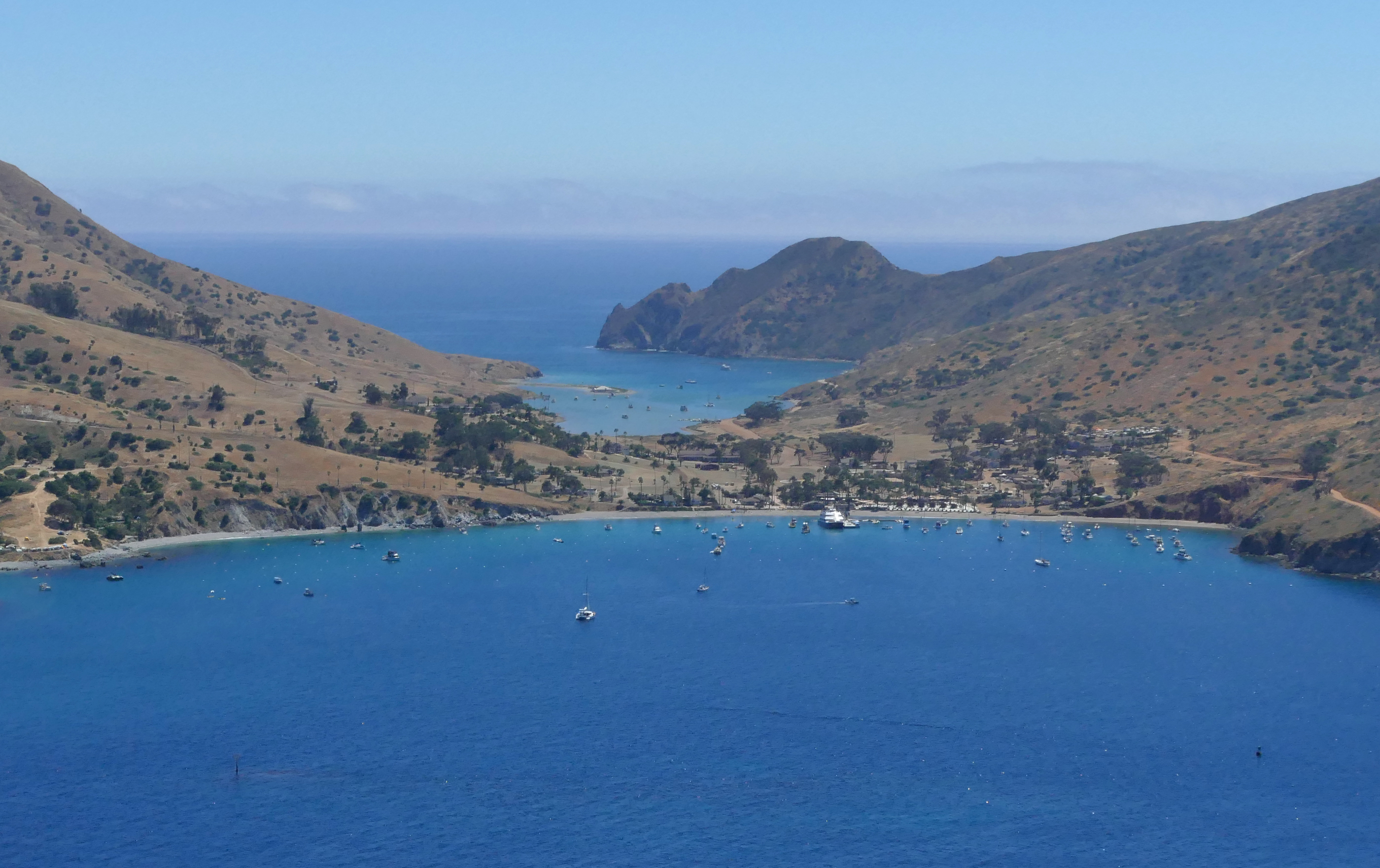
The Isthmus Cove/Two Harbors area of Catalina Island. Wood’s body was found off of Blue Cavern Point, right. 2024 image. (Credit: Google Earth)

When Wagner realized she had gone above board, he went to look for her. He didn’t find her, but did notice that the dinghy attached to the boat also had gone missing. He contacted the Harbor Patrol, who searched, but didn’t find her. The Coast Guard was enlisted to join in the search.

Shortly before dawn, the authorities contacted Doug Bombard, thinking that his local knowledge of the area might help. By this time, they had already located the dinghy, but not Wood.

Doug Bombard, harbor master at Isthmus Cove and long-time Catalina resident, found Natalie Wood’s body floating about 200 yards off Blue Cavern Point. Bombard is also the one who informed Wood’s husband, Robert Wagner, that his wife was deceased. Nov. 30, 1981 photo. (Credit: Los Angeles Public Library Photo Collection)

Bombard told The Catalina Islander in 2012 that he began by checking the kelp line, following it east from Two Harbors around Blue Cavern Point just east of Two Harbors. There, he spotted a red object which turned out to be part of Wood’s red down jacket, and he called for another boat to come help lift her body from the ocean.

The down jacket had filled with water, adding  an estimated 40 pounds to Wood’s body, which was clad in a flannel nightgown.

Various explanations have been offered as to what happened to the 43-year-old actress. In his original 1981 autopsy report, Los Angeles County Coroner Thomas Noguchi stated that Wood drowned after boarding the dinghy in order to get away from the arguing Walken and Wagner.

Two years later, he changed his tune in his book, Coroner (Simon & Schuster, 1983), speculating that Wood, who had had a few drinks, went above board to try to keep the dinghy from banging noisily into the Splendour, which was keeping her awake. Not a practiced swimmer, she then fell into the ocean, possibly hitting her head, and drowned.

Thirty years after her death, the Los Angeles County Sheriff’s office reopened its investigation in November 2011, citing “new information” in the case. In August 2012, the cause of death on the official autopsy report was altered from “accidental drowning” to “drowning and other undetermined factors.”

The change came after the coroner’s office could not discern whether bruises and scratches on Wood’s face and arms occurred before or after she drowned.

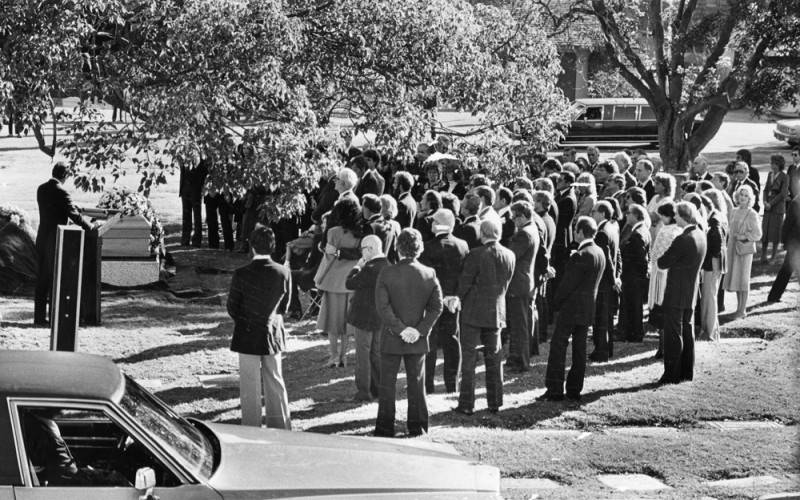
Mourners stand somberly during the burial services for Natalie Wood at Westwood Village Memorial Park Cemetery in Los Angeles. Dec. 3, 1981 photo. (Credit: Los Angeles Public Library Photo Collection)

Varying accounts of the events surrounding her death told by boat captain Davern, Wood’s sister Lana, the authorities and innumerable sensationalist tabloid articles and gossipy celebrity TV segments have attempted to cast further doubt upon what actually transpired.

In 2020, Wood’s daughter from second husband Richard Gregson, Natasha Gregson Wagner, released the HBO documentary, “Natalie Wood: What Remains Behind.” In addition to celebrating her mother’s life and accomplishments, the film also presents a strong, clear-eyed look at what is known and not known about Wood’s death. 

Even so, the case remains officially open to date. Movie star mysteries, even 43-year-old ones, seem to take on a life of their own.

View of the Isthmus Cove/Two Harbors area of Catalina Island. June 9, 2017. (Daily Breeze staff file photo by Robert Casillas)

Sources:

Daily Breeze archives.

Los Angeles Times archives.

“Mysterious Island: Natalie Wood,” by Jim Watson, The Catalina Islander website, Dec. 1, 2012.

Natalie Wood: What Remains Behind, directed by Laurent Bouzerau, HBO Documentary Films, 2020.

Lobby card for “West Side Story,” 1962.

Skechers rose from humble Manhattan Beach beginnings to $8 billion in annual sales

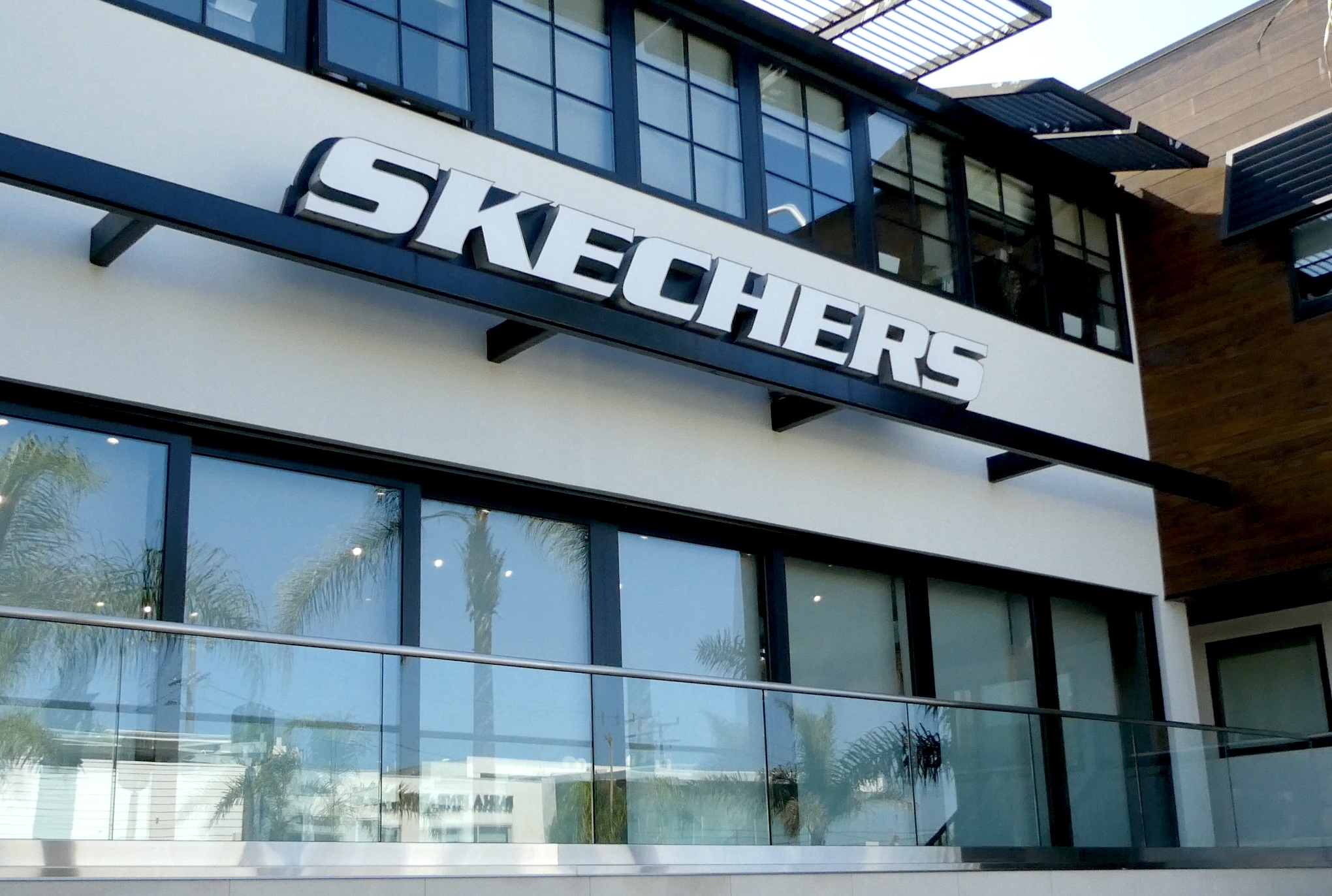
The Skechers corporate headquarters building at 228 Manhattan Beach Blvd. in Manhattan Beach. February 2024. (Photo by Sam Gnerre)

Boston-born Robert Greenberg moved to California in 1978 after deciding that a particularly brutal East Coast winter would be his last there. His relationship with the shoe industry began with his first West Coast venture, selling roller skates during the late 1970s skating craze.

From that, he learned that the shoes had a more enduring lifespan than the skates, and formed his first shoe manufacturing company, L.A. Gear, in 1983 in Santa Monica. His son, Michael, became the company’s national sales manager.

L.A. Gear’s shoes stressed fashionability and flash over athletics-enhancing features, garnering a slew of celebrity endorsements in the process that included Michael Jackson in addition to athletes such as Kareem Abdul-Jabbar and Wayne Gretzky.

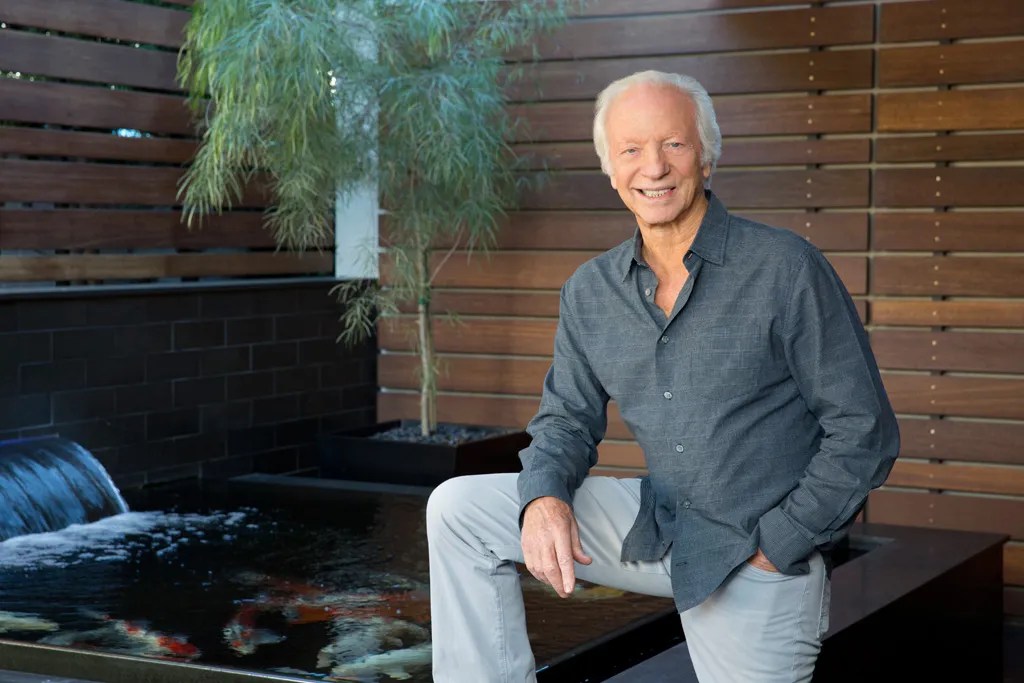
Skechers founder Robert Greenberg in 2015. (Credit: Skechers)

Conflicts with investors over the company’s direction led to the father-son duo leaving the firm in 1991. It floundered without Greenberg’s guidance, filing for bankruptcy in 1998. (It eventually recovered and continues to do business.)

The elder Greenberg considered retirement after leaving L.A. Gear. But his interest was rekindled after he and his son took a trip to England to investigate the growing popularity of the Doc Martens line of shoes and boots.

He and Michael decided to form a new company, Skechers, in 1992, originally to handle distribution of Doc Martens footwear in the U.S. Its first headquarters was in Greenberg’s small Manhattan Beach condominium at 26th St. and The Strand.

Distributing another company’s products had its share of frustrations, though, and the Greenbergs soon realized that they wanted to create and market their own Skechers brand. 

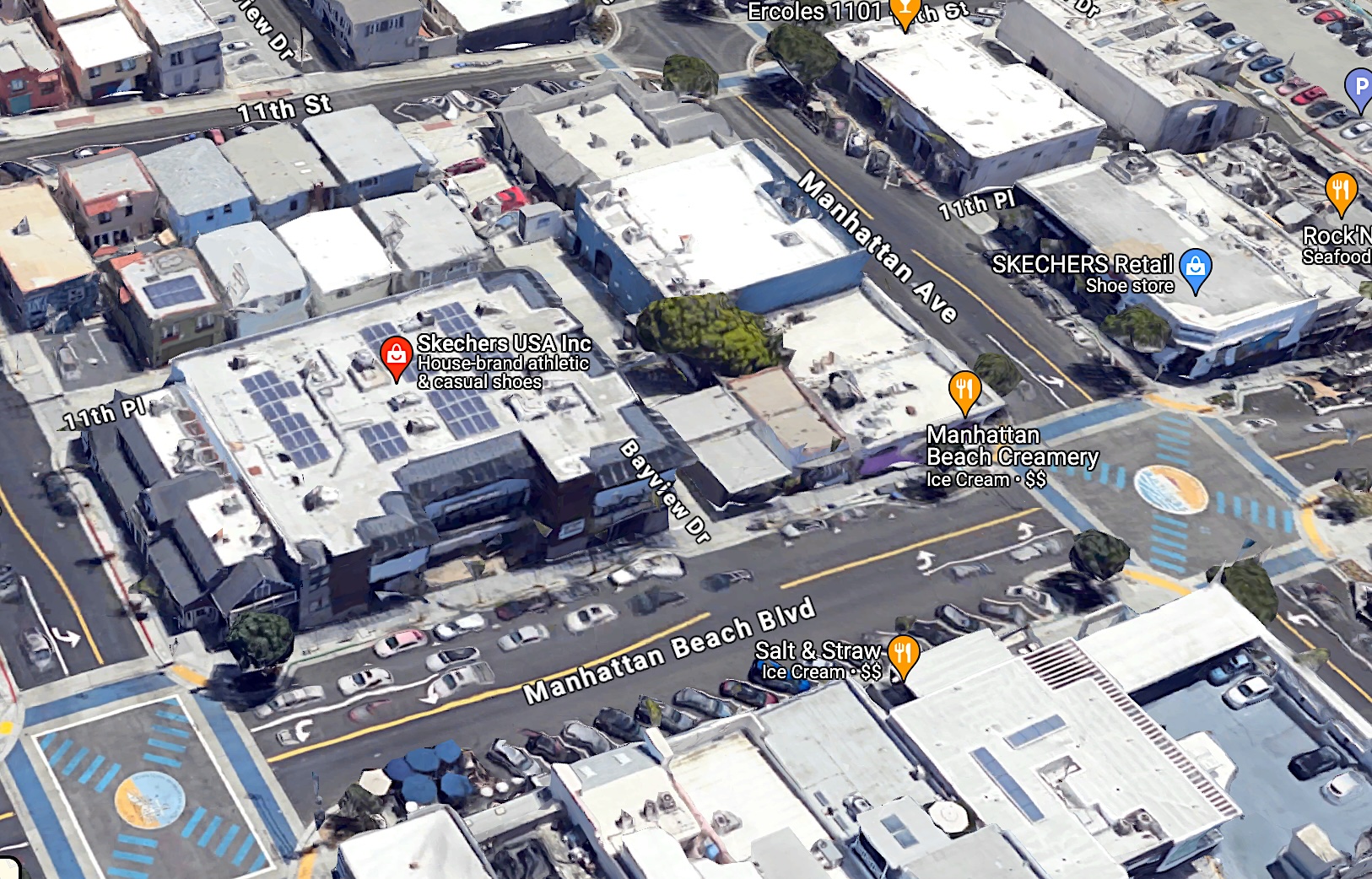
They eventually settled on a highly visible site in Manhattan Beach, on Manhattan Beach Blvd. near Highland Ave., for the company’s headquarters at 228 Manhattan Beach Blvd, located just two blocks from the beach.
Skechers headquarters, left center, and retail store, upper right. Highland Ave. is at lower left. (Credit: Google Earth)

The company’s first shoe was a utility boot. The name “Skechers” came from two younger Greenberg family members, who suggested it from the term “skecher,” which they said meant an energetic kid who couldn’t sit still. (The word also is slang for a methamphetamine abuser.)

The Greenbergs created shoe designs in a wide variety of styles and colors, with an eye to appealing to consumers with a young, athletic lifestyle while still providing comfort and reliability. They quickly added lines for women and children, and began introducing sporty casual shoes as well as athletic ones.

Their efforts were a success. Skechers began to take off in the 1990s, reaching $100 million in annual sales in 1995. The privately held company went public with a successful $115 million initial public offering in 1999.

At the time, its sales had more than doubled from $183 million to $372 million. By 2001, the company had opened 59 of its own stores, and announced plans for its first foreign locations in England, Germany and France.

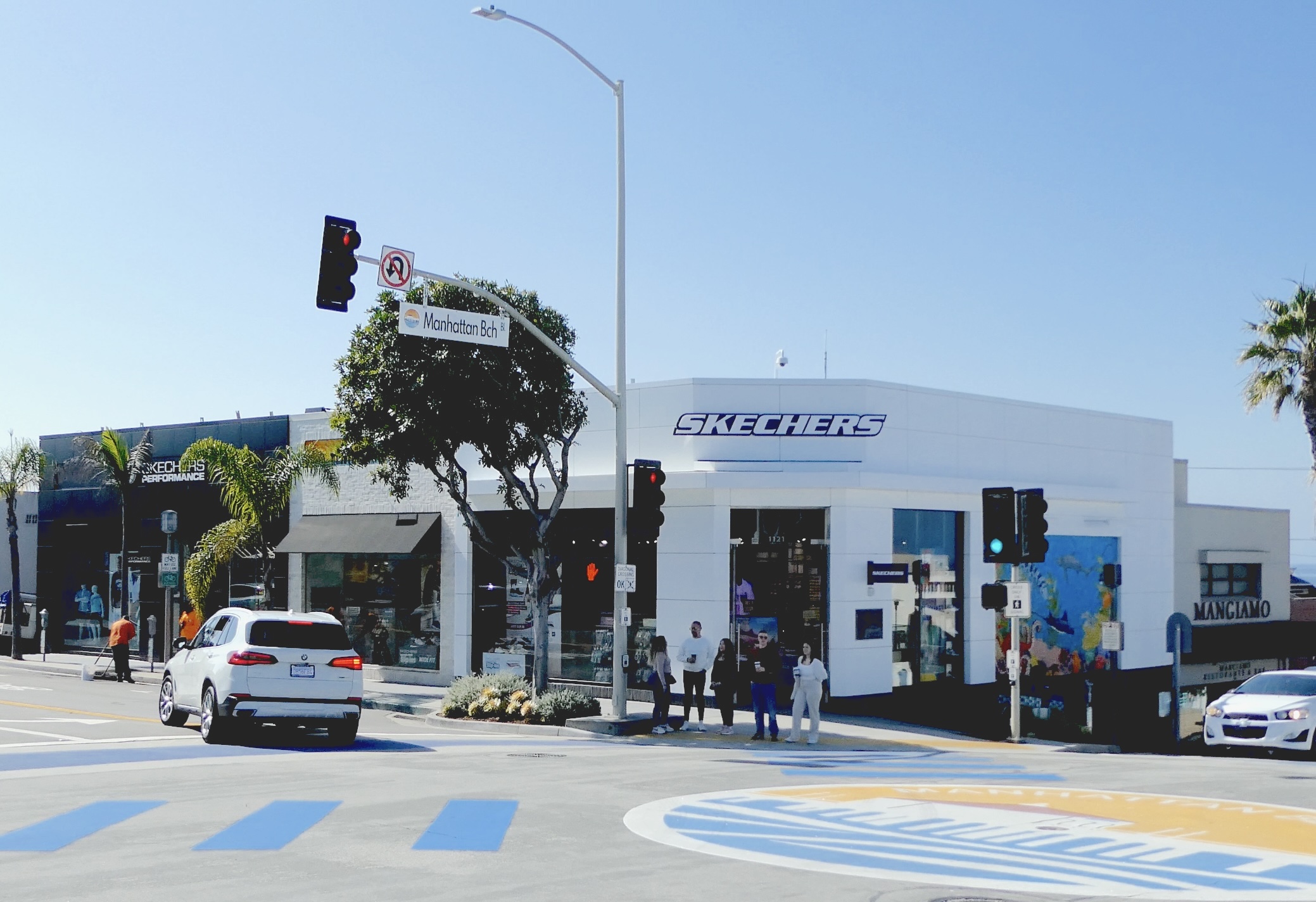
The original Manhattan Beach Skechers store, though remodeled, still stands at the southwest corner of Manhattan Beach Blvd. and Manhattan Ave. February 2024. (Photo by Sam Gnerre)

That same year, the company announced plans to build an office building in Manhattan Beach, on the northeast corner of Sepulveda Blvd. and Longfellow Ave. Some, but not all, employees were moved from its headquarters building into the new 57,000-square-foot structure.

One of the company’s few missteps involved its Shape-Up shoes introduced in 2011, endorsed by celebrities Joe Montana and Kim Kardashian. Ads for the round-soled shoes claimed their use would tone muscles and help customers lose weight. The Federal Trade Commission disagreed, and Skechers ended up paying upwards of $50 million to settle the matter.

The company’s growth during the early oughts was exponential. Annual sales topped $1 billion for the first time in 2005.

Snoop Dogg sports one of his custom Skechers models. (Credit: Skechers Instagram page)

Celebrities have always been part of the Skechers strategy. Over the years, the company has employed football stars such as Montana, Tony Romo and Howie Long, golfers Brooke Henderson, Matt Fitzpatrick and Colin Montgomerie, and entertainment figures Martha Stewart, Willie Nelson, Demi Lovato and Kim Kardashian. (An endorsement for a line of roller skates from Brittany Spears ended in a nasty legal spat in 2002.)

The company continued to expand its facilities to meet growing demand. In 2007, it announced the construction of a 1.82-million-square-foot warehouse in Moreno Valley, one of the largest such structures in California.

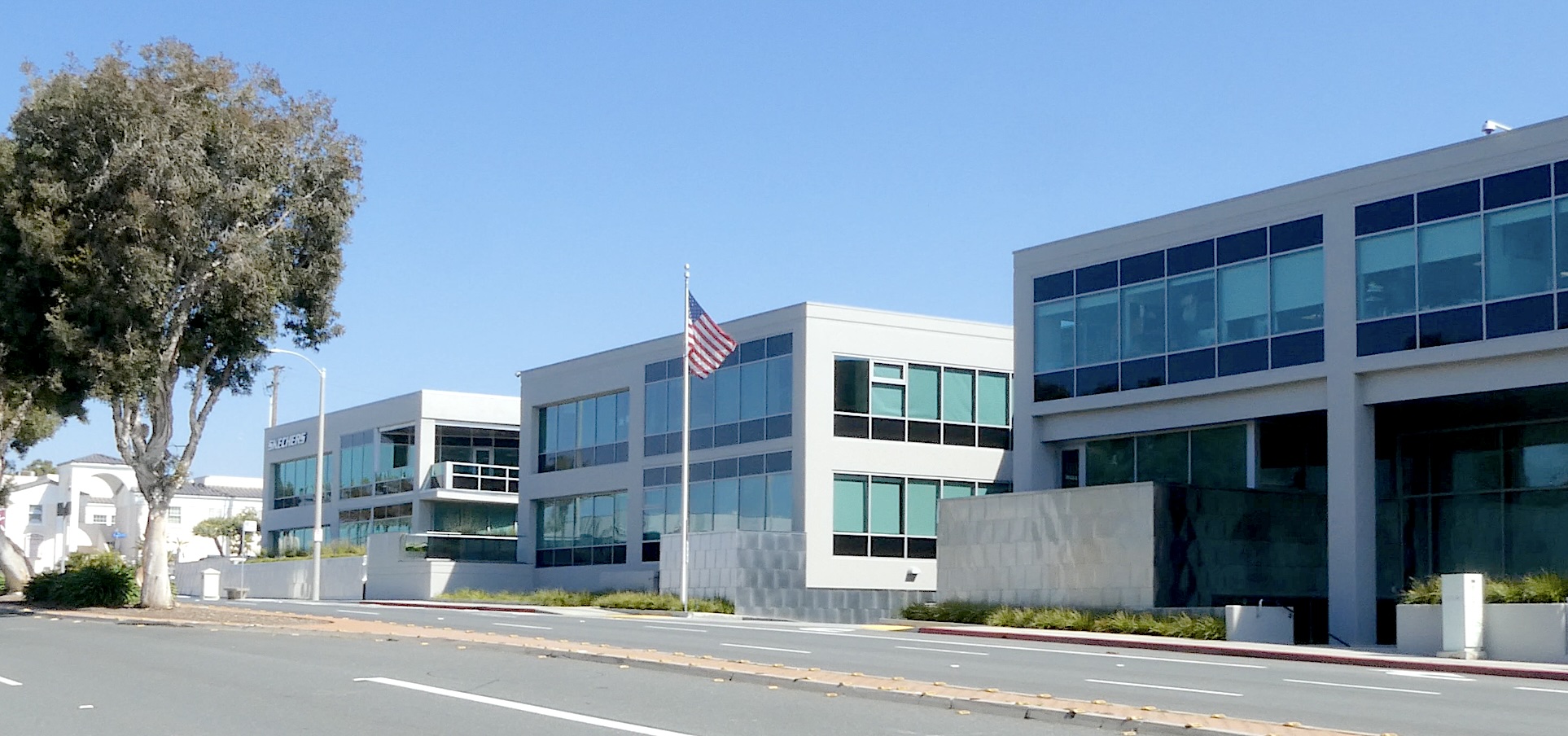
In January 2019, Skechers broke ground for three additional buildings along Pacific Coast Highway, two in Manhattan Beach and one in Hermosa Beach, replacing dilapidated former auto dealership locations that had moved to Torrance.

Two of three Skechers corporate office buildings on Sepulveda Blvd. They replaced abandoned car dealerships. February 2024. (Photo by Sam Gnerre)

The firm now has more than 5,000 retail stores in more than 120 countries worldwide. China has the greatest number of stores, with more than 3,000 locations, with plans to open more there. The first Skechers store in China opened in 2007.

In 2023, Skechers passed the $8 billion mark in annual sales and had become the second largest shoe company in the U.S., behind Nike. It was included in the Fortune 500 list for the first time.

Robert Greenberg, now 84, remains its CEO and chairman of the board, and his son Michael, its president.

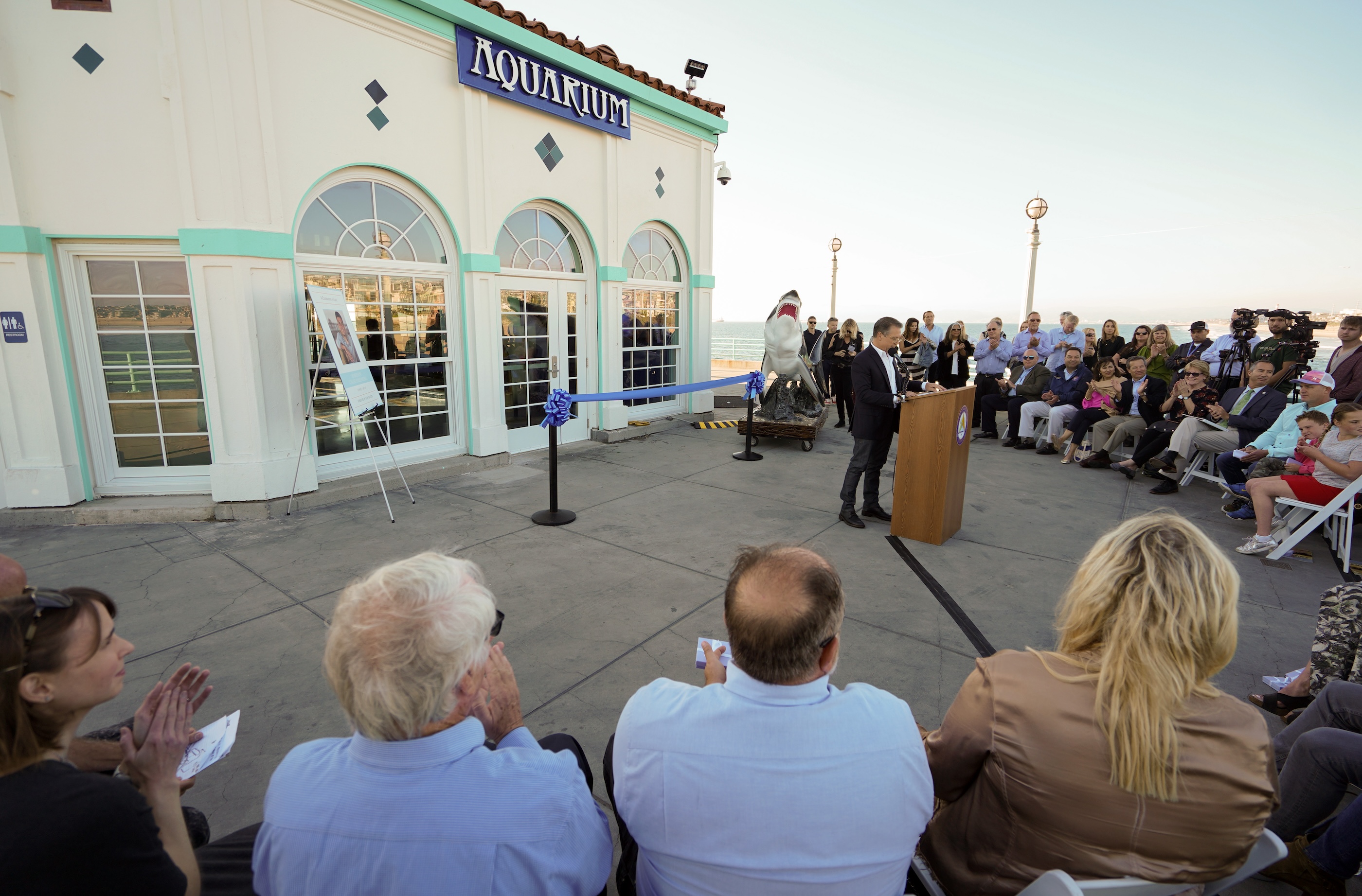
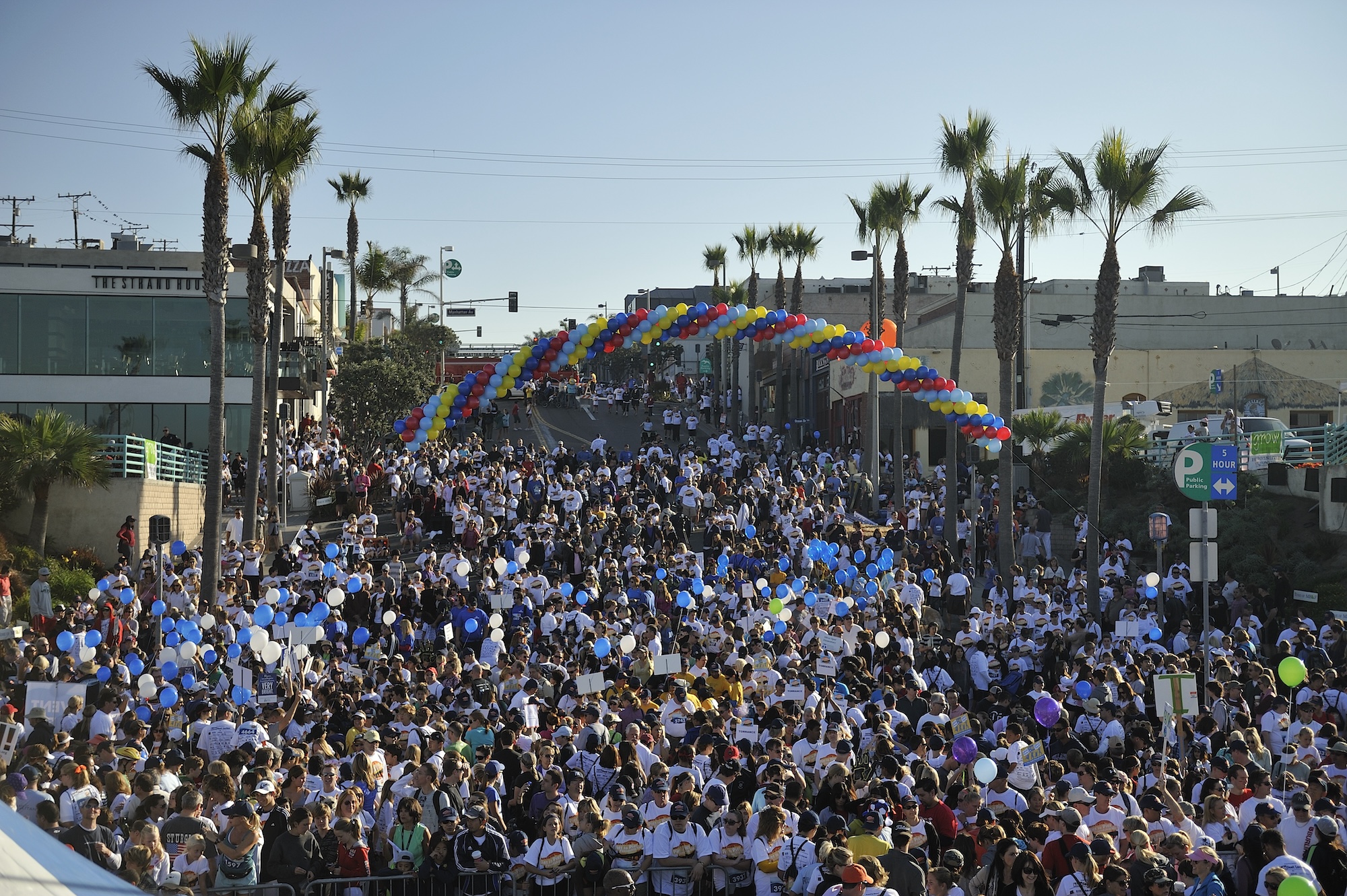
The company remains active in charitable endeavors, sponsoring the annual Skechers Pier to Pier Friendship Walk and donating to various educational causes. In 2018, a $4 million renovation of the aquarium in the roundhouse at the end of the Manhattan Beach Pier underwritten by Skechers was opened and named in honor of Greenberg’s son Harrison, who died in 2015.

Michael Greenberg, the president of Skechers, delivers remarks at the reopening of the Roundhouse Aquarium at the end of the Manhattan Beach pier on Nov. 5, 2018. (Daily Breeze file photo by Scott Varley)

Sources:

Daily Breeze archives.

Footwear News.

Los Angeles Times archives.

Skechers website.

Thousands of walkers prepare to start the Skechers Pier-to-Pier Walk in Manhattan Beach on Oct. 3, 2011. Calif. About 7,000 of them trekked from Manhattan Beach Pier to Hermosa Beach Pier and back. (Daily Breeze staff file photo by Jeff Gritchen)

Killer’s bullets cut short the dreams of Go Matsuura and Takuma Ito in San Pedro

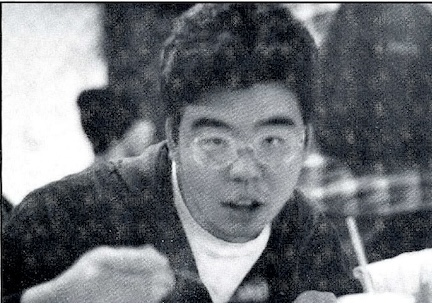
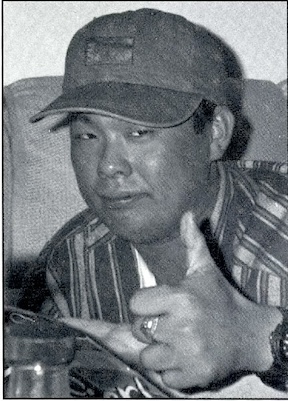
Go Matsuura

They both aspired to become filmmakers. So, once their primary education was completed, Go Matsuura and Takuma Ito left Japan and chose to attend Marymount College in Rancho Palos Verdes to enroll in its film program.

Matsuura was born in the United States, but had moved back to Japan with his family as a young boy; Ito was born in Japan and had spent his life there. Both of them were obsessed with moviemaking when they arrived at Marymount as freshmen in August 1993.

On the night of March 25, 1994, the pair had dinner with friends at a restaurant in Gardena. Afterward, the two 19-year-olds decided to stop and pick up some groceries in San Pedro. They pulled into the Ralphs market at Western Ave. and Capitol Drive around 11 p.m.

Takuma Ito

Ito’s new white 1994 Honda Civic attracted the attention of Raymond Oscar Butler, an 18-year-old gang member who lived in the Rancho San Pedro housing project. He pulled a gun on the two students, demanding the keys to the car.
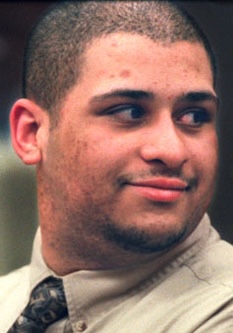
During the carjacking, he shot them both in the back of the head at close range. He dumped their bodies in the grocery store parking lot before driving off. 

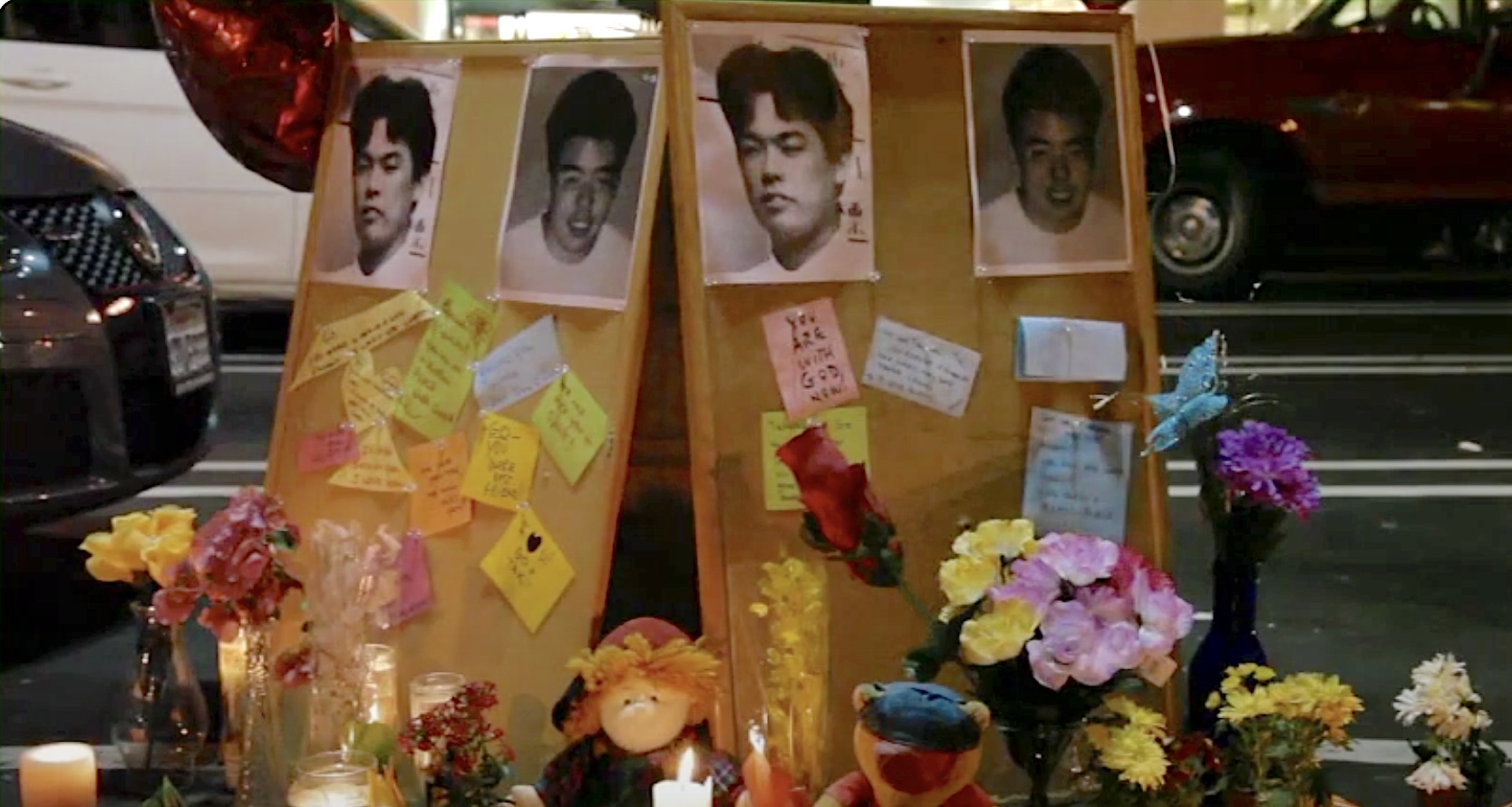
The two victims were still alive, but would never regain consciousness. They died two days later when their parents made the heartbreaking decision to have them removed from life support.

Police found the car the next day, abandoned at a car wash at Sixth and Gaffey streets. Based on evidence found on the car and one eyewitness account, they arrested Butler and Alberto Reygoza, 20, of Long Beach the following Wednesday on suspicion of murder. Both had previous criminal records.

The brutality and brazenness of the crime would end up drawing international attention. Outrage over the killings quickly spread from local officials to the White House as well to the Japanese government. The country’s newspapers seized on the killings as evidence of the dangers of living in America.
President Bill Clinton not only issued a formal statement of apology, but also spoke personally to Japanese Prime Minister Morihiro Hosokawa.

“I personally told him how regretful I was, and I apologized on behalf of our people that anyone would lose their lives here,” Clinton said in an official statement. “And I have written to both the young men’s parents personally.”

On April 12, 1994, Butler and Reygoza pleaded innocent to multiple felony charges related to the carjacking and murders. It turned out that Reygoza was not present at the crime, but was charged as an accessory after the fact and for accepting stolen property. He was convicted and sentenced to 32 months in prison.

Raymond Oscar Butler gives his family a smile on April 19, 1996, after hearing death-penalty verdict in Long Beach Superior Court. (Daily Breeze staff file photo by Wally Skalij)

Butler faced the lion’s share of the charges: murder, second degree robbery and carjacking. In addition, prosecutors brought special circumstance charges of committing multiple murders during the course of a robbery, personal use of a firearm and inflicting great bodily injury.

While in custody at the Men’s Central Jail in Los Angeles awaiting trial on the charges, Butler helped commit another murder, this time that of fellow inmate Tyrone Flemming, in April 1995. He would later be tried and convicted twice for murder in that case. (A second trial had to be held in 2012 after it was ruled that a judge had improperly barred Butler from defending himself during the first one.)

After an emotional trial, Butler was convicted of the charges in the killings of Matsuura and Ito in March 1996. The jury recommended the death penalty, and the judge agreed, sentencing him that July. (He also eventually received the death penalty in 2012 for the Flemming murder.)

In a strange twist to the case, the lone witness to the carjacking and murders, Kristin Kielniarz Wells, died at 23 from viral pneumonia contracted from chicken pox in February 1997. Her testimony was key in Butler’s conviction, and she never wavered from it throughout the trial. She had moved to Pennsylvania for the safety of herself and her family following the trial before falling ill.

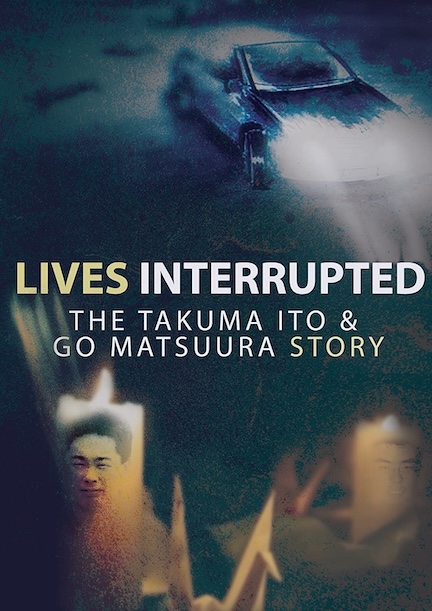
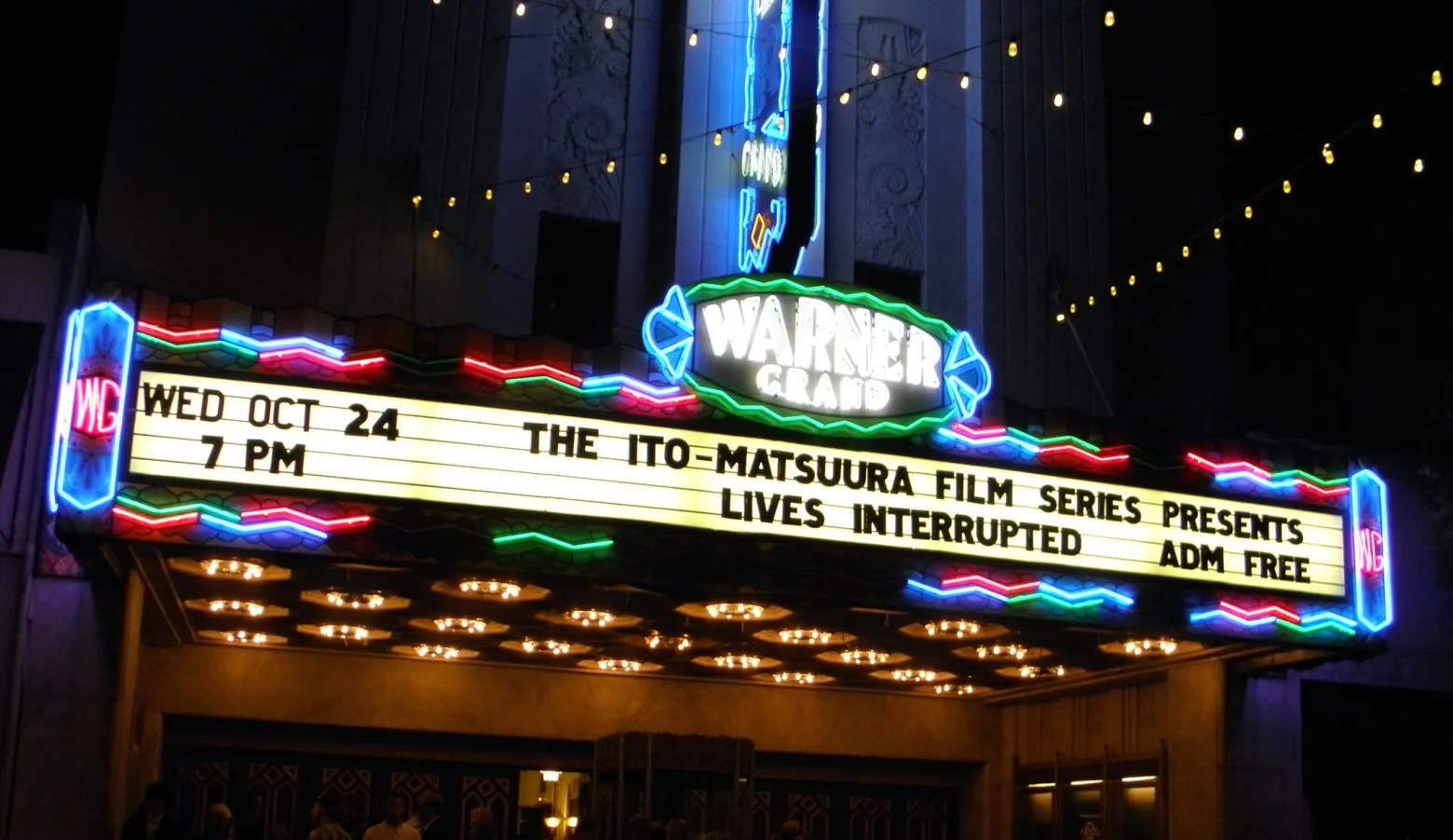
On Oct. 24, 2012, Bruce Schwartz, a professor at Marymount, premiered the documentary film “Lives Interrupted: The Takuma Ito and Go Matsuura Story,” which recounts the tragic murders and their continuing aftermath. Takuma Ito’s father and brother flew in from Japan for the special screening at the Warner Grand Theatre in San Pedro.

Bruce Schwartz’s documentary, “Lives Interrupted,” was shown at the Warner Grand in San Pedro in 2012 as a part of the Marymount film series named in honor of the two slain students. (Credit: Photo by J.K. Yamamoto, Rafu Shimpo)

Marymount College changed its name to California Marymount University in 2013, but financial problems and declining enrollment led to its closure in 2022. UCLA has purchased the property and plans to use it for one of its satellite campuses.

Also in 2022, Los Angeles County District Attorney George Gascón made headlines when he filed a 264-page sentencing recommendation asking the courts to reverse Raymond Butler’s death sentence and change it to one of life in prison without parole.

Gascón’s brief stated that Butler should be resentenced to life in prison without parole because at the time of the killings he suffered “significant, cognitive impairment,” meaning his brain was not developed enough to regulate his behavior.

No action has been taken on Gascón’s recommendation, and Butler, now 48, remains incarcerated on San Quentin’s Death Row as of this writing, 30 years after the crime.

Still taken from the “Lives Interrupted” film shows the impromptu tribute to the slain students in the Ralphs market parking lot studio where they were slain. March 1994. (Credit: “Lives Interrupted” film by Bruce Schwartz)

Sources:

“Condemned Inmate List,” California Department of Corrections and Rehabilitation website.

Daily Breeze archives.

Internet Movie Database.

Los Angeles Times archives.

Rafu Shimpo archives.

Poster for the documentary film about the case.

The Diamond Match Company’s innovative potash operation in Wilmington didn’t last

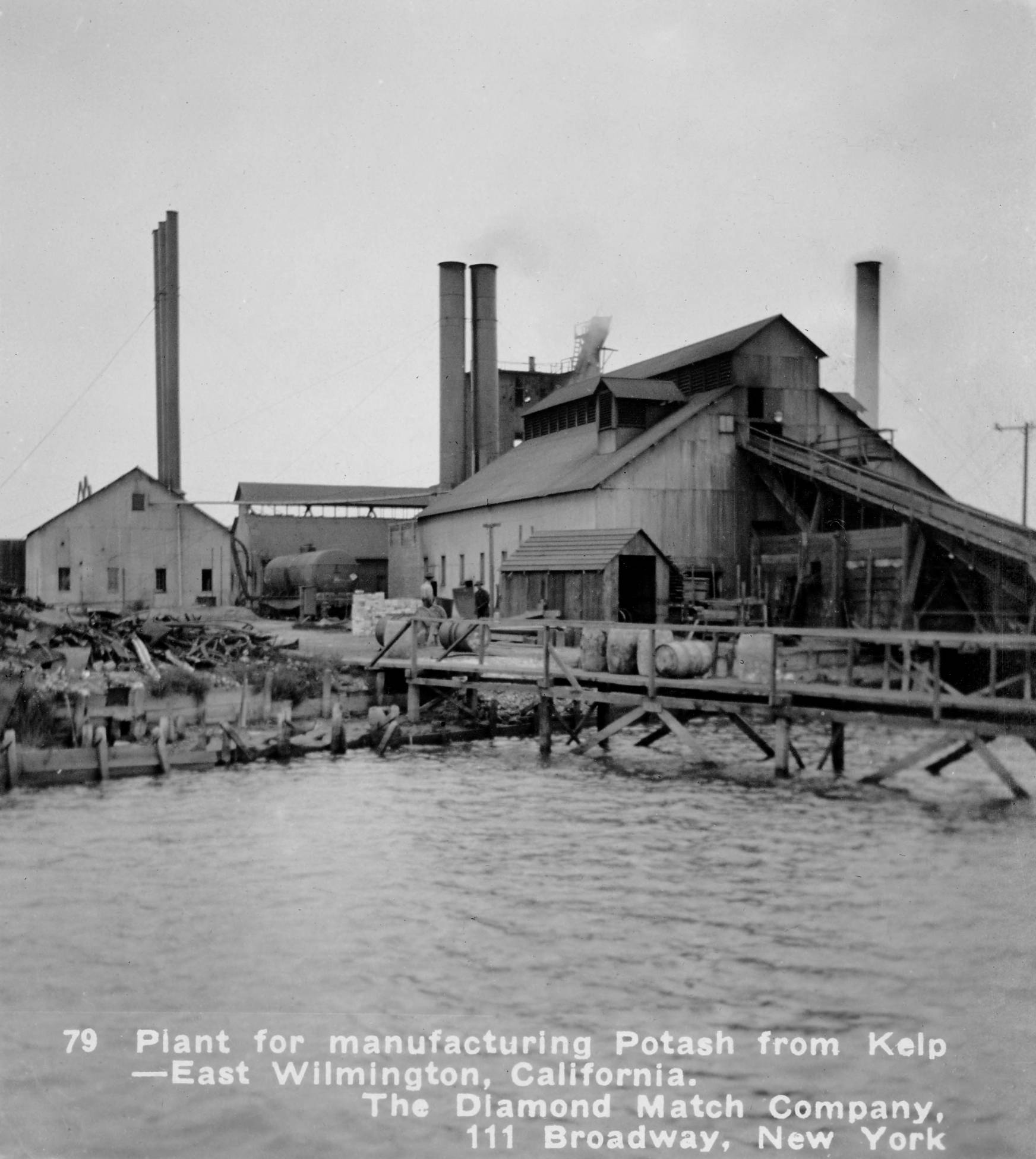
Photograph of the Diamond Match Co. plant in Wilmington taken from a stereograph card, circa 1916-19. (Credit: Meriam Library Special Collections Department, California State University, Chico.)

Wooden matches need several elements to light successfully.

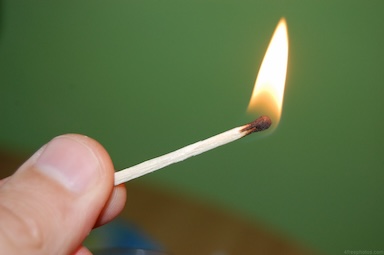
English druggist John Walker discovered this fact in 1826, when he invented the friction match. Friction matches work by rubbing two surfaces together to create a small flame, which Walker discovered after dropping a matchstick covered with a chemical solution onto his hearth. When it burst into flame, he saw the practical application and started selling matches.

Friction caused white phosphorus on the match head to ignite another substance, potassium chlorate, which burned slowly enough to light the matchstick itself. White phosphorus turned out to be volatile and dangerous, however, especially to workers in plants where it was used.

Photo by allegro. (Credit: 4freephotos.com)

In the early 1850s, another Englishman, Arthur Albright invented safety matches. Instead of white phosphorus on the match itself, Albright’s matches utilized a less explosive red phosphorus that he had formulated on a strip on the outside of the matchbox.

The safer method of ignition caught on. In 1853, American Edward Tatnall caught wind of the new matches, and formed the Diamond Match Co. in Wilmington, Delaware. Diamond would become the largest manufacturer of matches in the United States by the late 1800s.

Potassium chlorate became the key ingredient in this particular kind of matchmaking. The substance derives from potash ore, which formed from salts left behind from when inland seas and oceans dried up in ancient times.

Potash mining continues to be big business, with Canada the world’s largest producer. The substance is used mainly for fertilizer, with about 15 percent of it used for a variety of other purposes including, but not limited to matches.

Kelp turns out to be one of the marine sources for potash, a fact known as early as 1719, when offshore kelp beds were harvested and converted into potash in Scotland’s northern Orkney Islands.

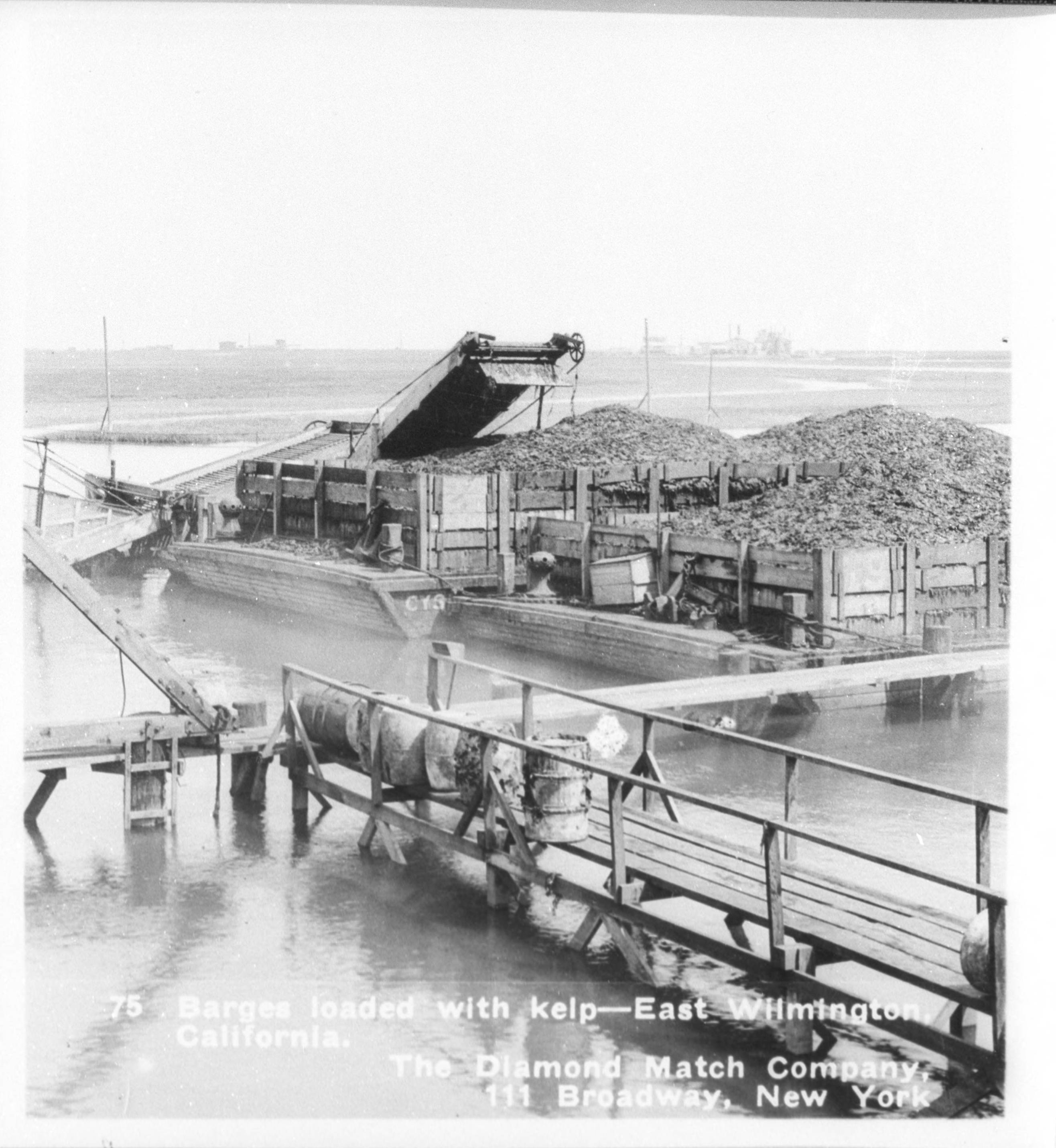
Kelp-laden barges at the Diamond Match plant in Wilmington. Image taken from a stereograph card, circa 1916-19. (Credit: Meriam Library Special Collections Department, California State University, Chico.)

With demands for potash rising in the early 1900s, producers began turning to alternative  sources. Germany was one of the main sources for mined potash, but that supply line closed with the advent of World War I and the subsequent German embargo on sales of potash to the U.S.

 The Diamond Match Co. was convinced the kelp process would work, and began investigating building a conversion plant. It already had a branch factory at Chico in northern California, so it made sense to build the kelp facility in the state.

The company decided that large offshore beds of kelp that stretched for nearly ten miles from Malaga Cove to the San Pedro breakwater offered the best source for the raw materials such an operation required.

In early February 1916, company representatives announced that Diamond Match would build a plant that would convert kelp harvested from offshore waters into potash in Southern California. Originally planned for Long Beach, the company instead selected a site in Wilmington, just north of the East Basin of the Port of Los Angeles on the Salt Lake railroad line.

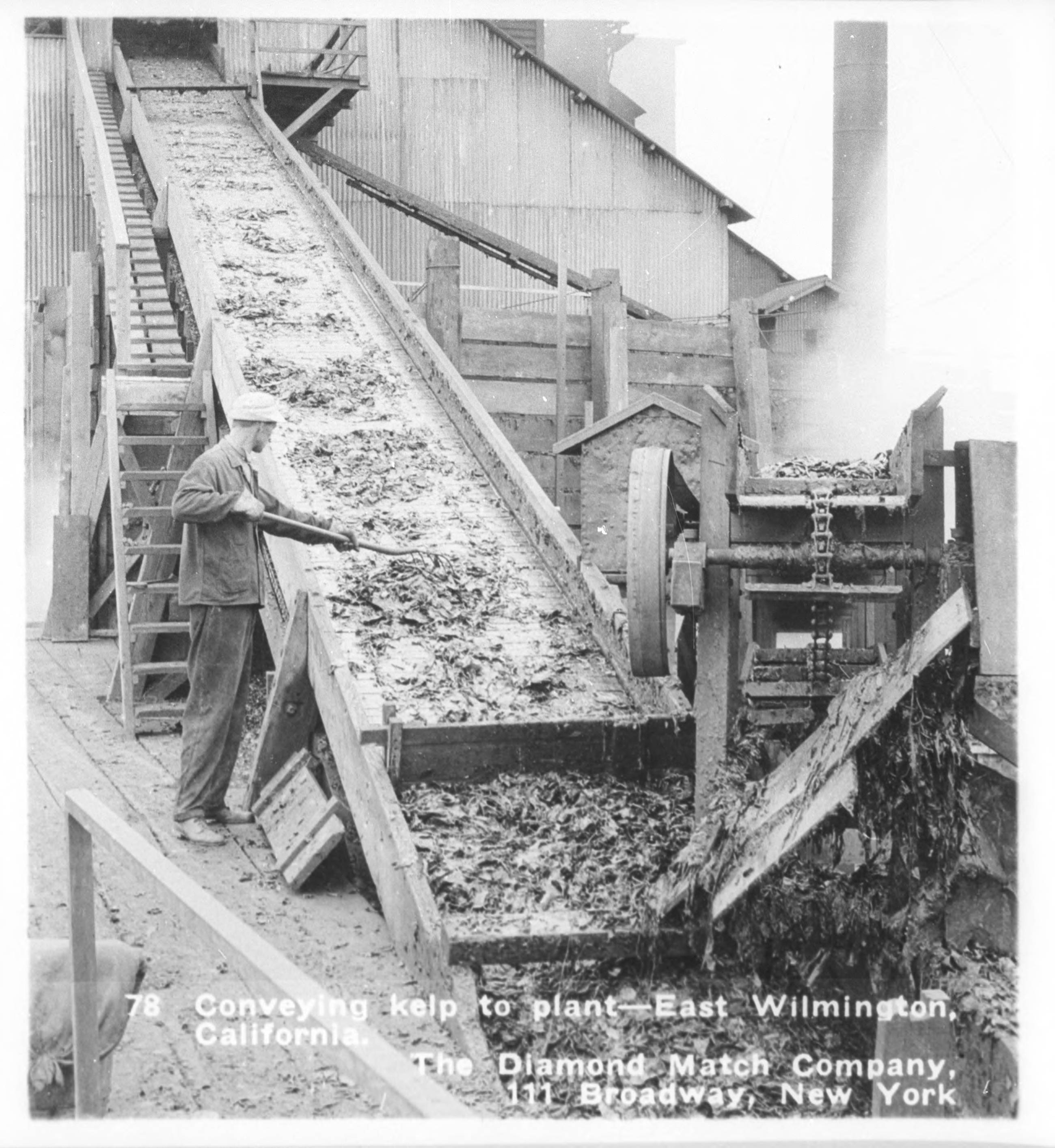
Conveyor belt at the Diamond Match plant in Wilmington. Image taken from a stereograph card, circa 1916-19. (Credit: Meriam Library Special Collections Department, California State University, Chico.)

The processing plant employed from 60-100 workers when it opened in early June 1916. The advent of World War I in Europe had driven potash prices up, as various of its derivatives were used to make munitions. Several similar plants had already been built nearby in Long Beach.

The Joe Fellows Yacht and Launch Co. in Wilmington was commissioned to build a seagoing kelp harvester to gather the raw materials for the operation. In 1917, Fellows built two boats for Diamond, a 60-foot tugboat to tow the harvesters back and forth and a scow to carry the raw materials, as well as an additional larger harvester.

Unfortunately for Diamond and the other companies operating kelp factories, the bottom fell out of the potash market with the end of World War II. Germany re-entered the market, and demand from munitions plants fell.

Another large kelp conversion plant, the Hercules Powder Plant in San Diego, also closed at around the same time. It was the largest of the 11 such companies that had been operating in the state at the time.

A few days before Christmas 1918, Diamond Match announced that it had closed the Wilmington plant, released all of its workers, and was in the process of dismantling the facility. It turned out that the plant had not been a huge boon to the local economy, as the majority of its workers lived in Long Beach.

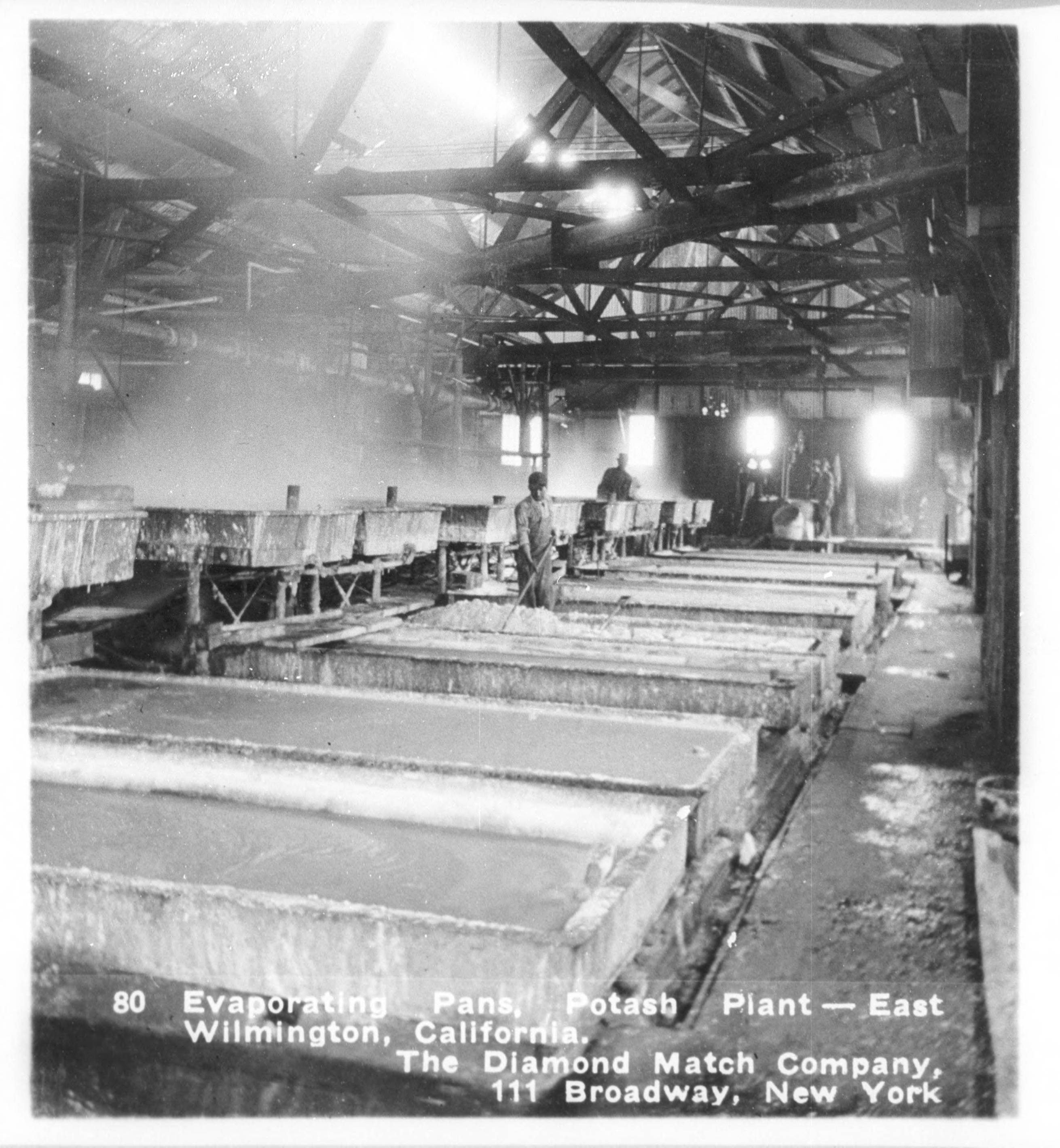
Evaporating pans at the Diamond Match plant in Wilmington. Image taken from a stereograph card, circa 1916-19. (Credit: Meriam Library Special Collections Department, California State University, Chico.)

What was once a thriving new industry basically had been shuttered by 1920. The equipment and boats from the Diamond Match plant were sold off to a San Francisco company, Crowley Launch & Tugboat.

In January 1920, the Bunn Lumber Co. announced that it would move its operations into the former Diamond Match site, and the company’s brief presence in the Harbor Area ended for good.

Land mining remains the most widely used method of obtaining potash, though fertilizers made from seaweed do offer a reasonable alternative. Oh, and the Diamond Match Co., now owned by Royal Oak Enterprises of Roswell, Georgia, remains the largest match manufacturer in the U.S., producing an estimated 12 billion of them annually.

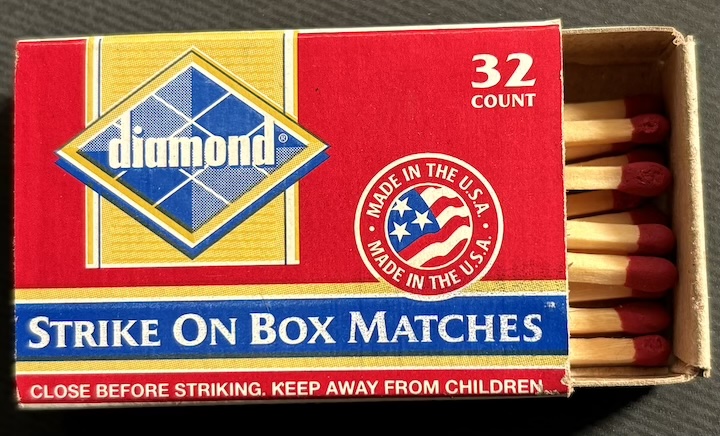
(Credit: Photo by Sam Gnerre)

Sources:

Diamond Match Company website.

Los Angeles Herald archives.

Los Angeles Times archives.

San Pedro News Pilot archives.

Wilmington Journal archives.

Wikipedia.

Brief video shows how matches work. (Credit: WIRED)

South Bay surfing pioneer Hoppy Swarts had a profound impact on the sport’s development

Hoppy Swarts photo taken from his Palos Verdes Surfing Club membership card, circa 1939. (Credit: Harry Mayo Surfing Photography Collection, University of California, Santa Cruz Library Digital Collection)

The story goes that on June 25, 1916, the day Lewis Earl Swarts was born in Tulsa, Oklahoma, his father, an oil industry worker, was reading a Hopalong Cassidy novel.

The “Hoppy” nickname he gave his newborn son stuck, even after the family left Oklahoma to move to California, settling in Redondo Beach. Hoppy became enamored with the beach, the waves and the ocean in general, and he would spend his life enthralled with surfing.

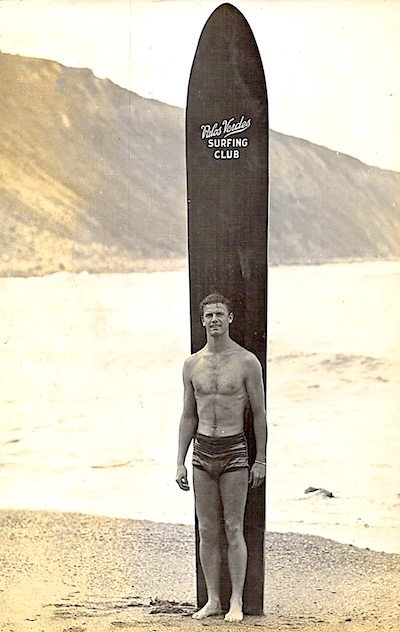
Hoppy Swarts and his redwood board. circa 1930s. (Credit: Swarts family)

He rode his first waves as a 14-year-old in 1930 in the surf in front of the Hermosa Biltmore in Hermosa Beach on a giant redwood paddle board that weighed more than 100 pounds.

He met his lifelong friend, pioneering surfer and photographer LeRoy Grannis, while both were students at Redondo Union High School in the early 1930s. Together, they surfed Malaga Cove and other Peninsula surfing spots.

They became early members of the Palos Verdes Surfing Club shortly after John “Doc” Ball and Adolph Bayer founded it in 1935. Based at Bluff Cove, it was just the second surf club formed outside of Hawaii. PVSC members wore the club’s distinctive green jackets during meetings, where smoking was not allowed.

Members swore to the group’s code, which called for them to “at all times strive to conduct myself as a club member and a gentleman.” As the sport’s popularity grew, the PVSC began organizing surfing competitions and paddleboard race events with newer clubs that had begun springing up along the Southern California coast. Swarts competed in many such events during the 1930s.

He didn’t fit the modern-day slacker surfer stereotype in the slightest, though. He enrolled at Occidental College in Glendale, where he majored in math and minored in education. He graduated in 1941 and earned his teaching credential a year later.

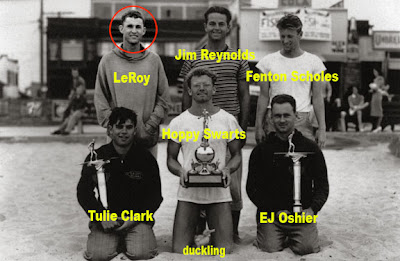
Hoppy Swarts poses with members of his paddleboard relay team after a Venice event in 1940. (“LeRoy,” circled, is LeRoy Grannis). Photo by Doc Ball. (Credit: Surfing Heritage & Culture Center website)

During World War II, he took a job as a researcher at the Massachusetts Institute of Technology’s Radiation Laboratory in Cambridge. After the war, he worked for the U.S. Navy doing research in microwave communications. He would go on to earn a master’s degree in electrical engineering at UC Berkeley.

For the next few years, he would work for local aerospace firms such as Hughes and TRW, where he helped design space radar systems. He left the industry in 1971 in order to teach math in Barstow-area high schools.

Despite his educational and research accomplishments, though, Swarts always declared that they were mere sidelights to surfing, which he considered his life’s work.

Surfing contests during the 1950s were somewhat haphazard affairs, and surfers  began to develop a reputation as being itinerant layabouts on the fringes of society. Surfing’s  meteoric rise in popular culture thanks first to the 1959 film, “Gidget,” followed by the surf music explosion of the early 1960s brought more attention to the phenomenon.

Swarts became concerned. He and his fellow veteran surf compadres thought that organizing competitions with a unified set of rules and a set schedule would help unify the sport and bring it more respectability as well.

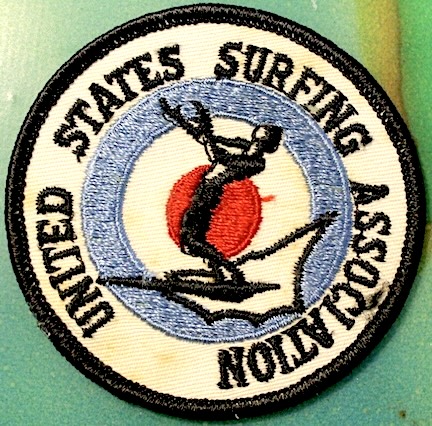
Original USSA patch from the 1960s.

With this in mind, Swarts became the first president of the United States Surfing Association, the sport’s first public umbrella organization. In addition to promoting the sport and working to improve its image, the group also created a series of tournaments. When the USSA split into regional associations in 1967, Hoppy became the first president of the new Western Surfing Association,

Swarts gets credit for developing surfing’s sophisticated tournament scoring system, which used mathematical principles that he originated. It helped to quantify surfing performances, which then could be used to calculate a system ranking professional surfers.

He also worked tirelessly to bring surfing into high school and college athletic programs. The concept seemed outlandish to many at the time, but by 1970, a South Bay high school surfing league had been established with ten teams. Many schools have since added the sport to their athletic curricula.

Another one of Swarts’ unusual ideas ended less successfully. In late 1970, the WSA announced that it would build the world’s first artificial surf reef from sandbags submerged in the ocean 200 feet offshore from the southern end of Hermosa Beach, near its border with Redondo Beach.

The philosophy behind the idea: to open up more areas for surfing and reduce the risk of injuries and territorial disputes from too many surfers trying to catch too few waves in too small areas in prime surfing spots.

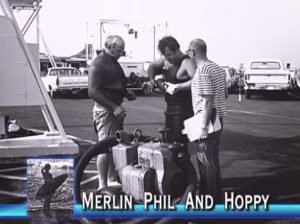
Hoppy Swarts, right, with Merlin and Phil Olsen at the artificial reef site in 1971. (Credit: Raised Water Research website)

With a surprising assist from L.A. Rams defensive great Merlin Olsen, who owned a construction company that built embankments, work began on the project in April 1971. Sadly, a year later the reef was determined to have been a failure. But ensuing projects based on similar principles later would be built, with particular success in Australia and New Zealand.

Hoppy Swarts was standing in line to buy a plane ticket at Los Angeles International Airport on June 9, 1988, when he collapsed and died from a massive stroke. At the time, he was headed for a surfing contest in Santa Cruz that he was going to run. He was 71.

More than 200 friends and admirers turned out ten days later at a celebration and memorial service held for him near the Avenue C lifeguard station in Redondo Beach during which his ashes were scattered in the ocean.

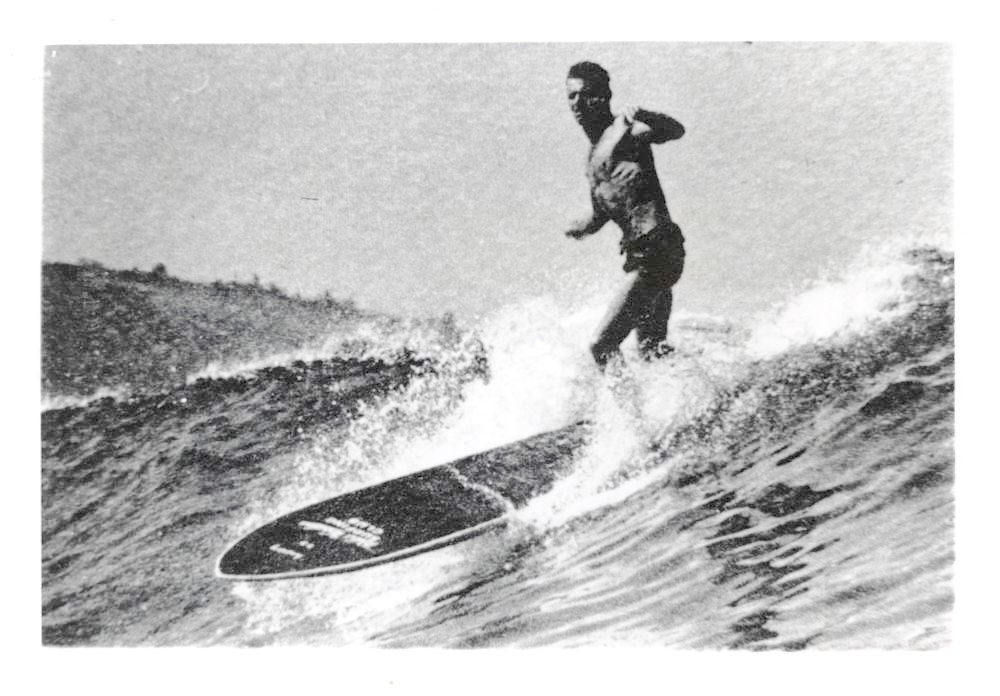
Despite his nickname, Swarts, who competed in his last seniors competition in 1983, always was smooth as silk on the waves. His longtime friend LeRoy Grannis told the Los Angeles Times at the ceremony, “He looked good in the water. Some people looked all stooped over, but he just looked like he was flowing.”

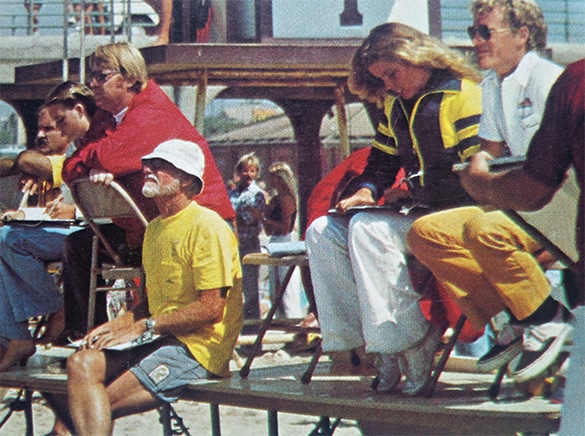
Hoppy Swarts, left in yellow shirt, judges a surfing competition. Undated photo. (Credit: Huntington Beach Surfing Walk of Fame website)

Sources:

“Chairman of the Board,” by Doug Beacham, Occidental Magazine, Summer 2017.

Daily Breeze archives.

Find A Grave website.

“The History of Artificial Surf Reefs,” SurferToday website.

“Hoppy’s Reef: The First Attempted Artificial Surf Reef,” Raised Water Research website.

Los Angeles Times archives.

Hoppy Swarts, undated photo. (Credit: Occidental College)

Inglewood’s Century Boulevard undergoes another major transformation

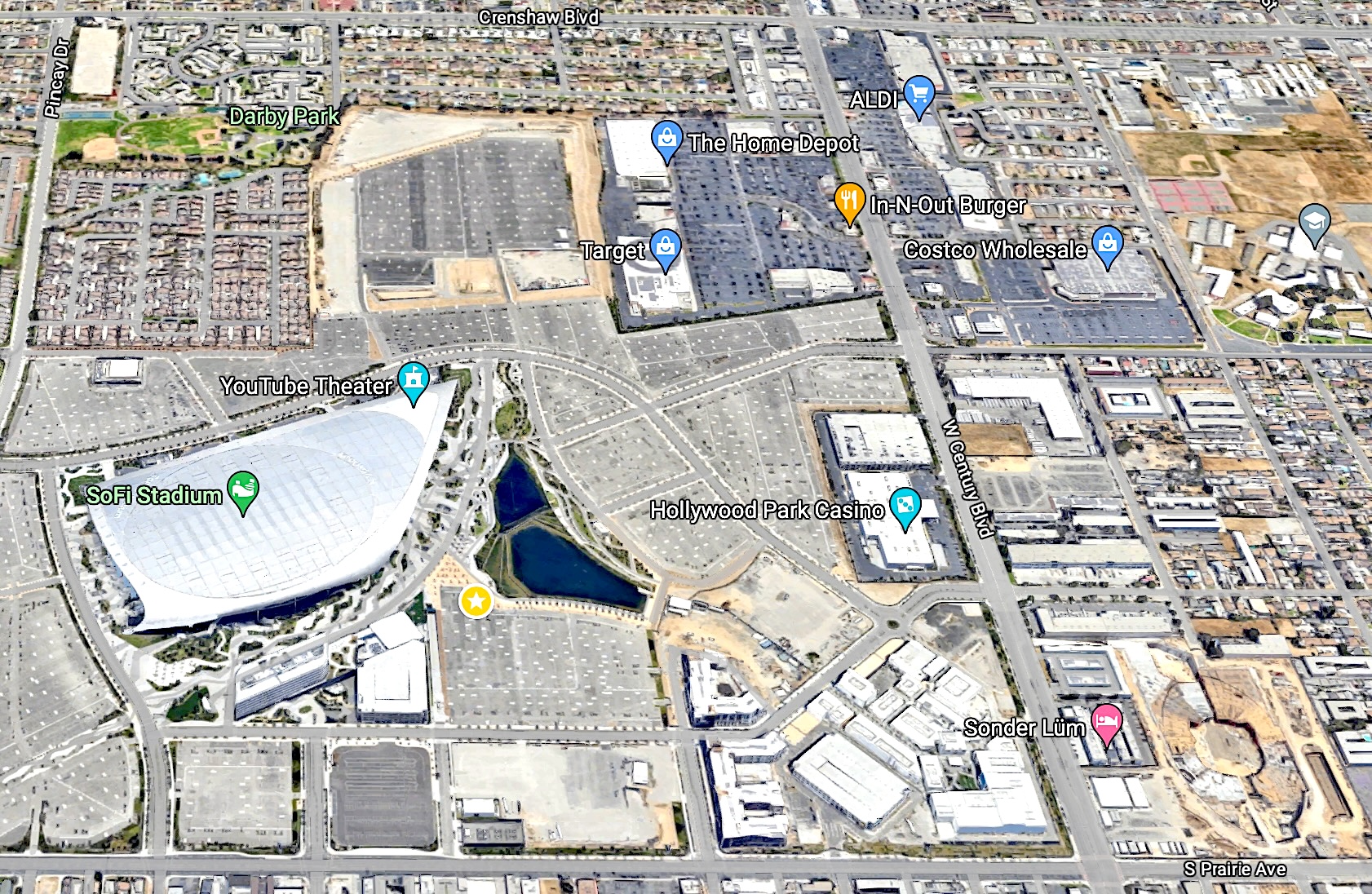
The landscape along Century Blvd., right, has changed radically in recent years. Prairie Ave. is at bottom in this view looking east, with the Intuit Dome under construction at lower right corner. Morningside High School is at upper right, behind Costco. April 2022 image. (Credit: Google Earth)

A drive westward down Century Blvd. from Prairie Ave. to Crenshaw Blvd. in Inglewood in 2024  reveals an entirely different set of major landmarks than those that existed there just a few short decades ago. Not to mention, an entirely different universe that existed when the street was named nearly a century ago in 1925.

Century’s name derives from its location between 99th and 101st streets in the Los Angeles City street numbering system. Except for three blocks between Central and Compton avenues in Watts, there is no 100th St. anywhere else in the city’s grid.

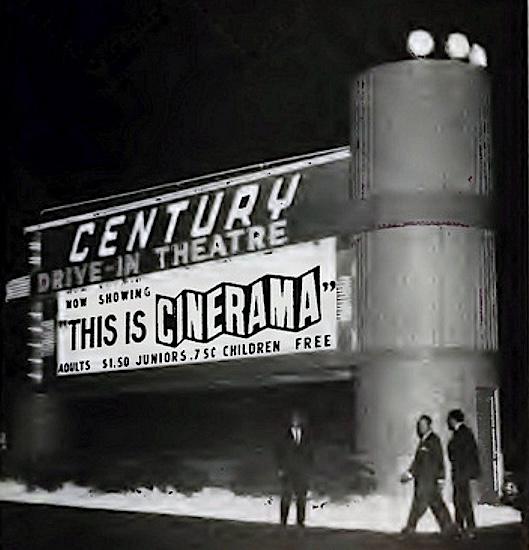
The Century Drive-In was the first drive-in theatre to show films in Cinerama. Photo circa 1964. (Credit: Cinema Treasures website)

The boulevard itself wasn’t always a major thoroughfare. Its prominence began to grow with the development of Mines Field at its western terminus in the 1920s. The informal airfield occupied a large piece of land on the Bennett Rancho, and had become a popular spot for private planes to  use.

In 1925, the Century Boulevard Association formed to lobby for the improvement of Century, which then was not significant enough of a roadway to be identified on most maps from the era. Proponents wanted to develop it into a major thoroughfare that would serve the still-developing airport on the west and become an urban highway extending eastward all the way to Santa Ana.

Much debate and discussion ensued, and the project began to show up on Los Angeles city and county government street planning wish lists. At the same time, the city started taking the idea of establishing its official airport at Mines Field more seriously.

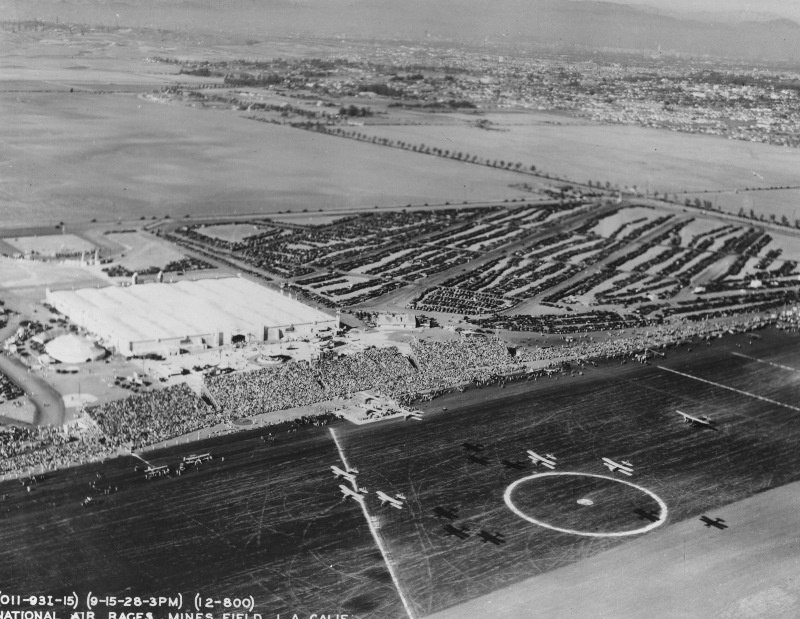
The 1928 National Air Races at Mines Field. Note the large crowd in the stands and the rows of parked cars behind and to the right. Traffic problems at the event influenced the decision to make Century Blvd. a major roadway into the airport. Sept. 15, 1928. (Photo credit: Los Angeles World Airports)

The National Air Races in September 1928 served as the catalyst that sparked real action on the improvement of Century. It’s difficult to overestimate the popularity of air races during this early aviation era. They attracted huge crowds of spectators wherever they were held.

So, when tens of thousands of people descended on Mines Field all at once in 1928, the inadequacy of the area’s ground transportation infrastructure quickly became apparent. Put simply, traffic at the airport was a mess. Imagine that!

One month after the races ended, city and county officials declared plans to fix the problem, calling for the improvement of major roadways to better serve the municipal airport, including Sepulveda, Lincoln and Century boulevards.

Mines Field became Los Angeles Municipal Airport in 1930, though it wouldn’t begin handling passenger airline traffic until after World War II. The Century Blvd. improvements began to be implemented during the 1930s.

Plans to connect the roadway to Santa Ana never came to pass, though the length of Century eventually would extend roughly 9.5 miles from the airport eastward through Inglewood and South Los Angeles. 

The boulevard now terminates at the South Gate city border at Alameda Blvd., where it becomes Tweedy Blvd. Tweedy ends at Atlantic Ave., just west of the 710 Freeway.

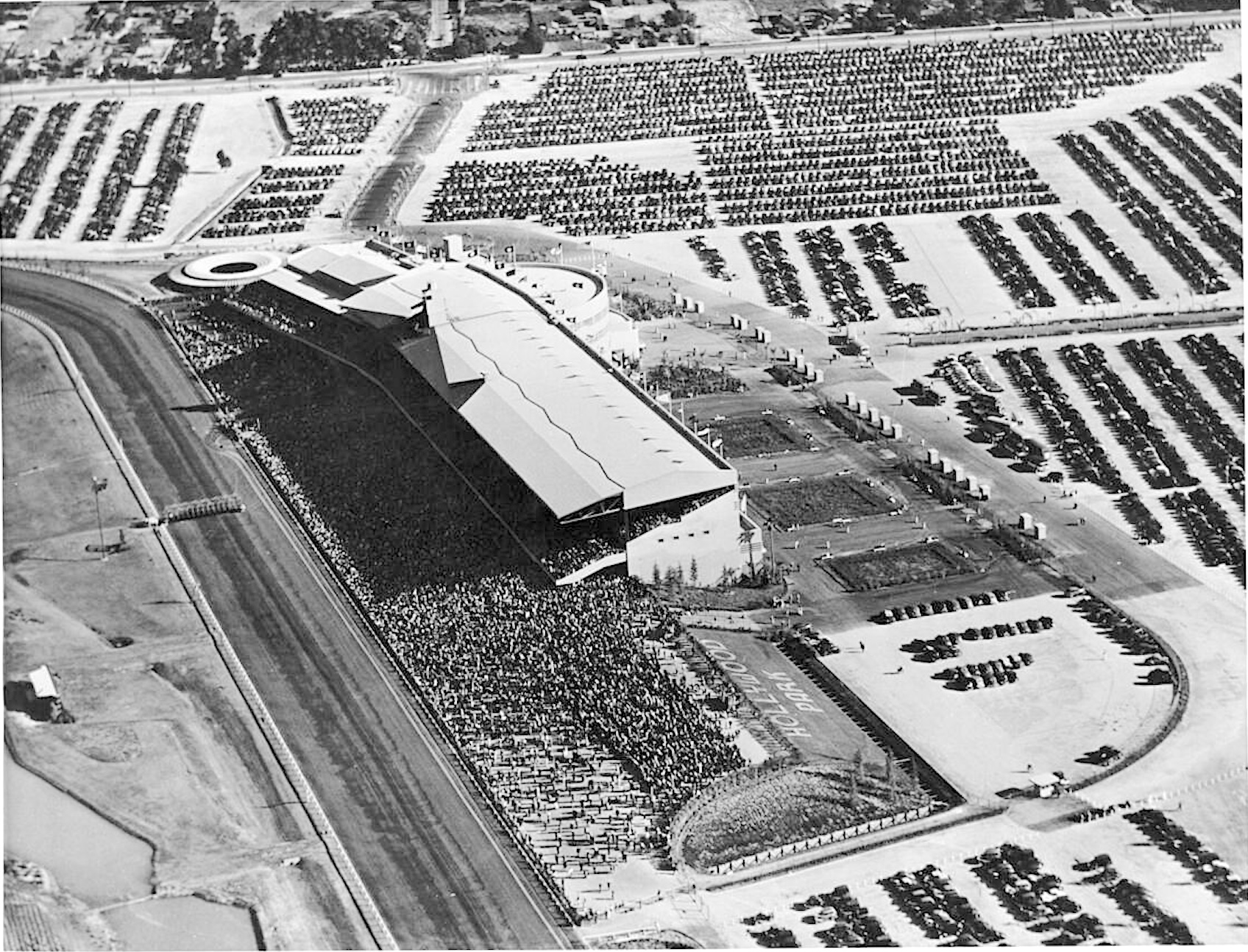
One of the first major developments on Century in Inglewood was the construction of  Hollywood Park. The horse-racing mecca was built on 315 acres northeast from the intersection of Century Boulevard and Prairie Avenue. It opened on June 10, 1938, and would operate for the next 75 years.

Hollywood Park in Inglewood, circa 1950. (Credit: California Historical Society via USC Digital Library)

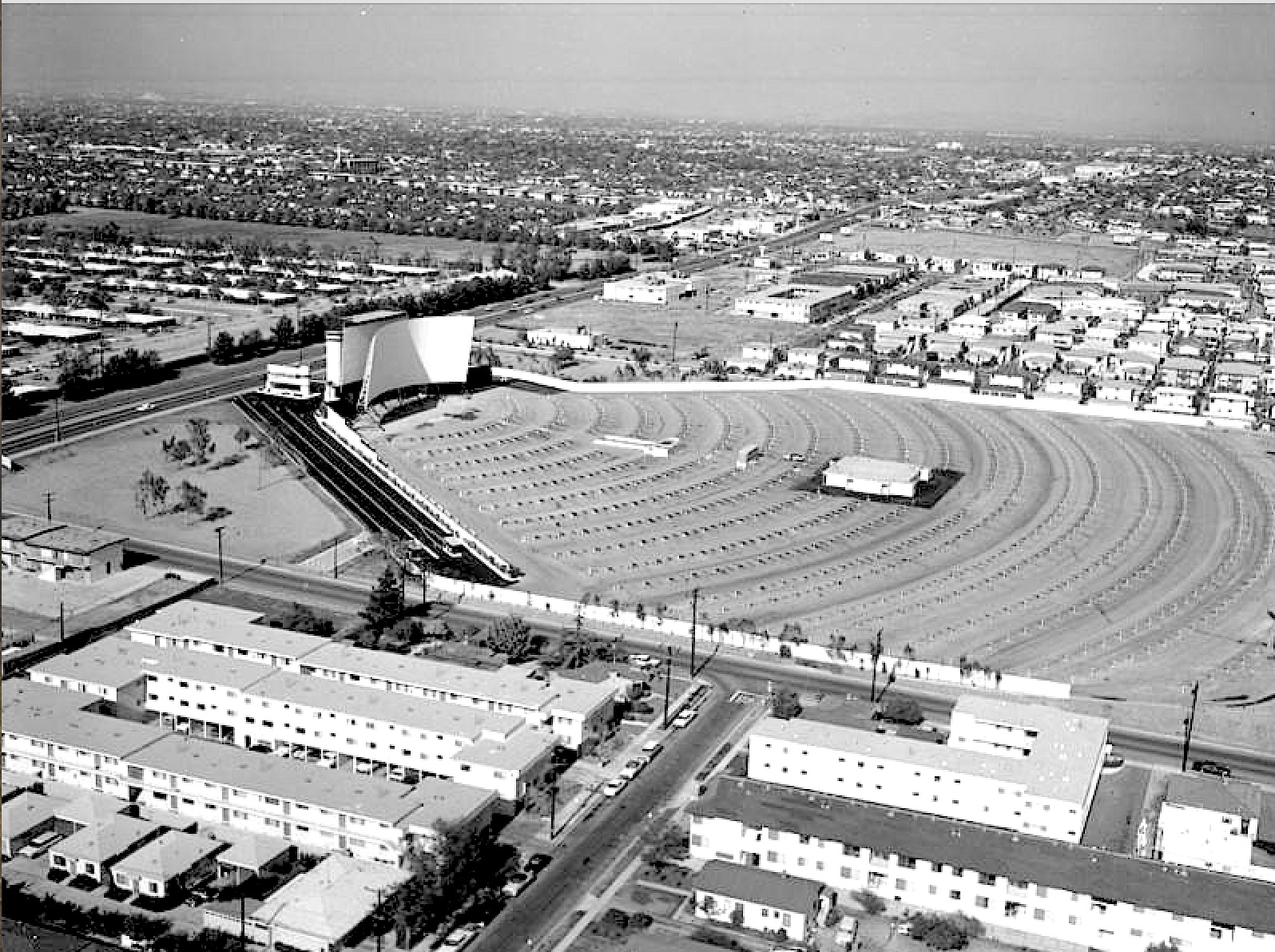
Another landmark sprang to life southeast of Hollywood Park on Century near Yukon Ave. on July 2, 1949, when Pacific Theatres opened the Century Drive-In with a screening of the boxing film “Champion,” starring Kirk Douglas.

The Century later became the first drive-in to offer films in the three-projector Cinerama format, installing a curved screen in front of its regular one. “This Is Cinerama” was the first, showing there in April 1964. (Film historians have doubted that the Century’s  car-window-speaker sound matched its cinematic visuals.)

May 1964 aerial view of the Century Drive-In, located at 3560 W. Century Blvd. at Yukon Ave. in Inglewood; view is looking northeast. There is a curved Cinerama screen in front of the regular screen. Century Blvd. runs diagonally from middle left to top right; Yukon Ave. is lower right to middle left.
(Credit: Los Angeles Public Library Photo Collection)

The Century Drive-In closed in 1984, and a new concept in retailing appeared on the site in 1985 with the opening of the Price Club warehouse store. Costco and Price Club merged in 1993, and the Inglewood store became a Costco in 1997.

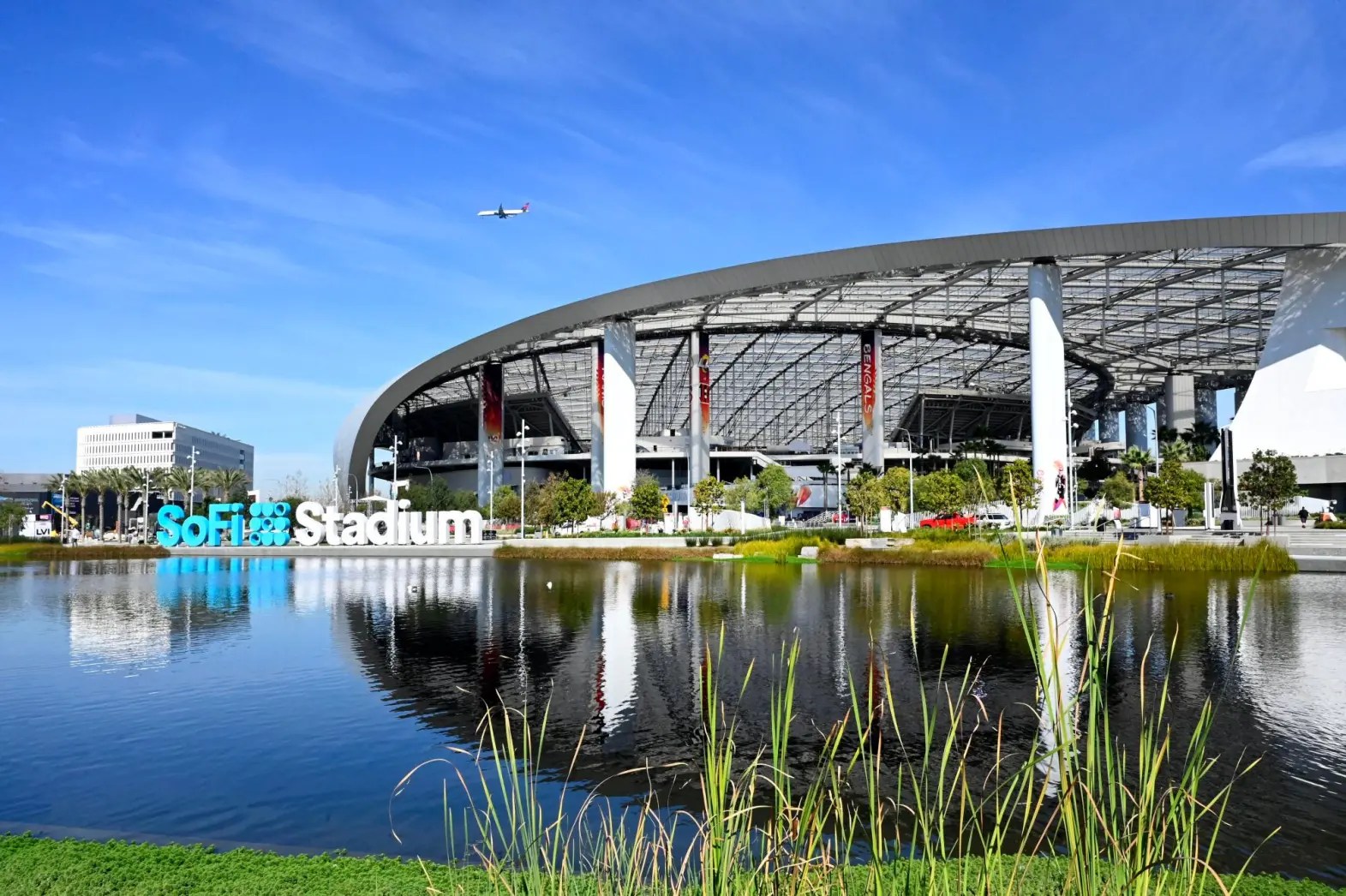
Another major modification began with the implosion and leveling of the Hollywood Park grandstand on May 31, 2015, to make room for the construction of the $5.5 billion Sofi Stadium on the site. Los Angeles Rams owner Stan Kroenke’s NFL showplace opened in 2020.

SoFi Stadium in Inglewood on the morning after Super Bowl LVI in February 2022. (Daily Breeze staff file photo by Brittany Murray)

With its movie theaters, the YouTube live theater and shopping area (including Target and Home Depot stores), the massive facility dominates the area. One remnant of the land’s former occupant remains on Century: the Hollywood Park Casino. Formerly at the racetrack, it moved to a new building on Century in 2016.

Meanwhile, across the street to the south of Century near Prairie Ave., former Microsoft CEO and current Los Angeles Clippers owner Steve Ballmer is building another landmark. The Intuit Dome is on schedule to open in August 2024, in time for the Clippers to play their 2024-25 season home games there.

So that one-mile drive eastward down Century Blvd. from Prairie Ave. to Crenshaw Blvd now reveals the Sofi Stadium and ancillaries on the left, and Intuit Dome on the right. Just past the Hollywood Park Casino on the left lies another Southern California landmark: In-N-Out Burger, with Costco and supermarket newcomer Aldi on the right.

The Intuit Dome, new home of the NBA’s Los Angeles Clippers, nears completion in October 2023. Prairie Ave. in foreground. Photo by Dialh. (Credit: Wikimedia Commons)

Sources:

“Century Blvd.,” L.A. Street Names website.

“Century Drive-In,” Cinema Treasures website.

Daily Breeze archives.

Los Angeles Times archives.

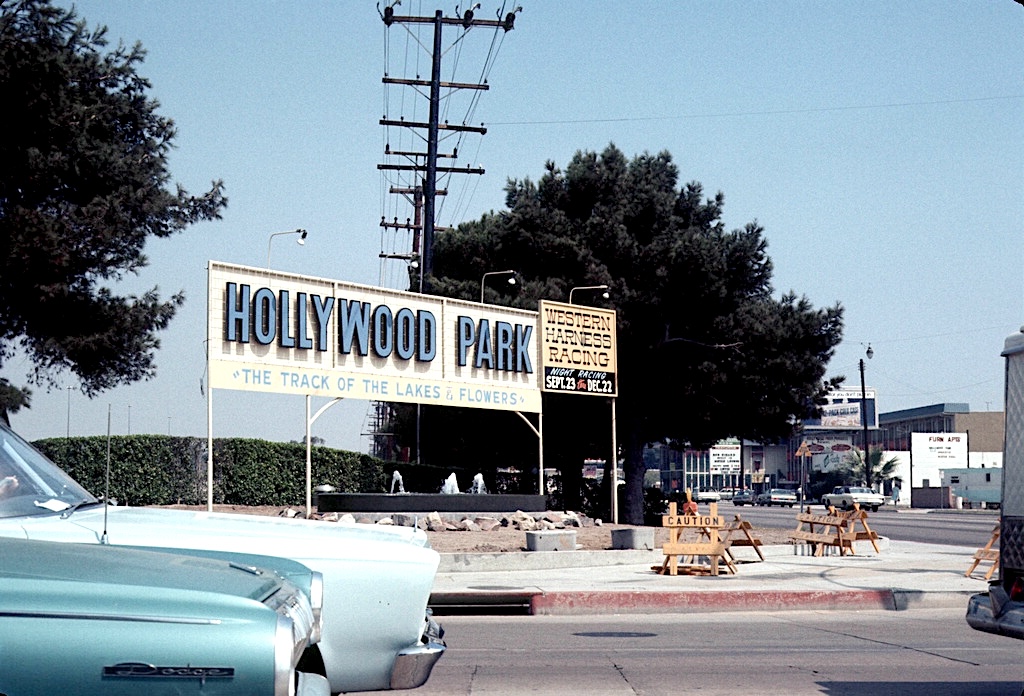
Hollywood Park sign at the corner of Prairie Ave. and Century Blvd., right rear, in Inglewood in 1969. (Credit: Inglewood Public Library Photo Collection)

Mitsuwa Marketplace in Torrance found ways to appeal to a broader audience

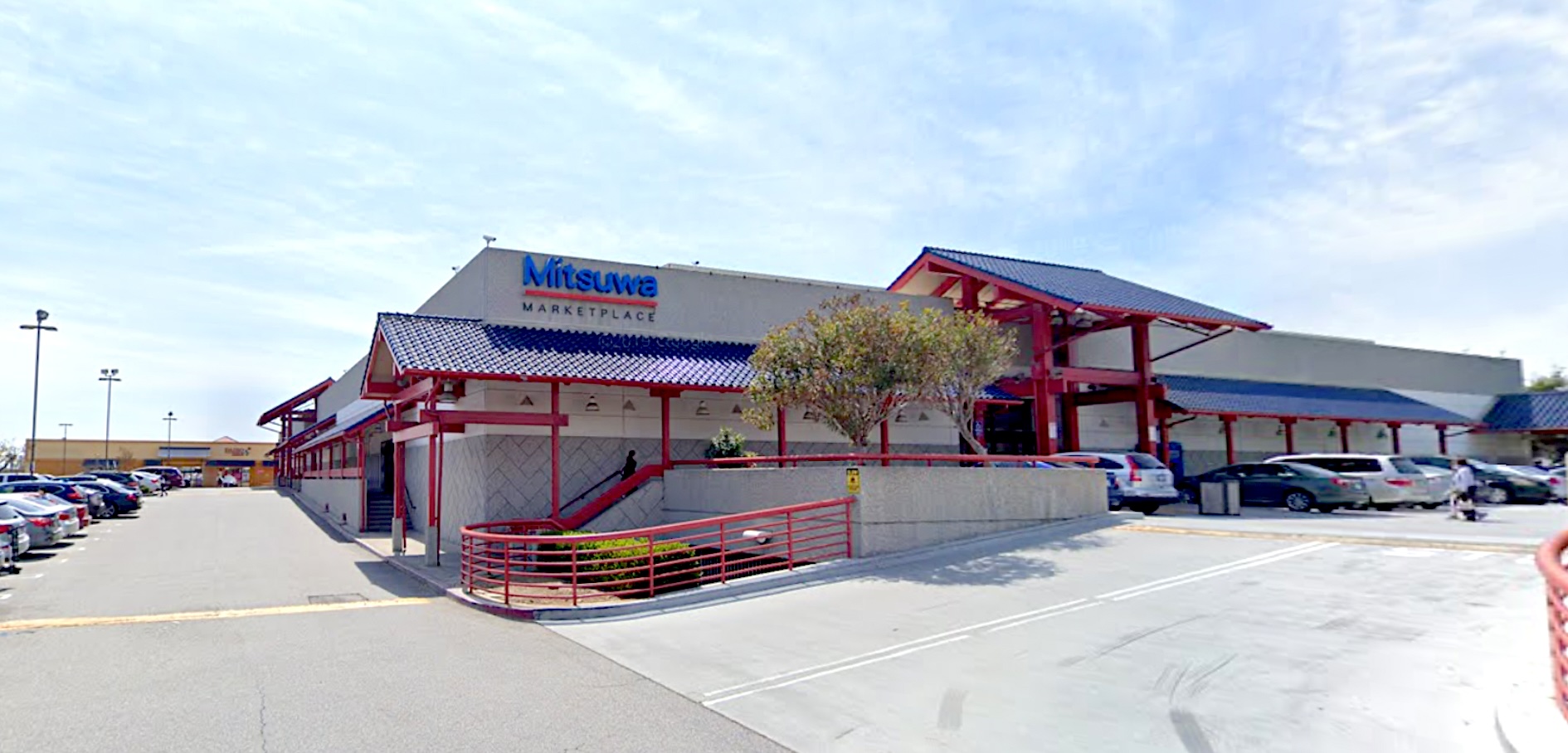
The Mitsuwa Marketplace complex at 21515 S. Western Ave. in Torrance. April 2018 image. (Credit: Google Earth)

Mitsuwa Marketplace isn’t the only Japanese supermarket in the South Bay, but it has grown into one of the most successful and visible such businesses in the area.

Its origin can be traced back to its corporate predecessor, Yaohan Supermarket. Yaohan originated as a mom and pop grocery store opened by Ryohei Wada and his wife Katsu in 1930 in Atami, Japan, a suburb of Tokyo famous for its hot springs and resort.

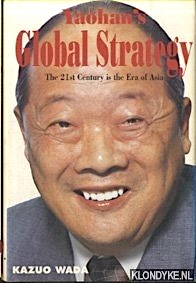
Kazuo Wada’s 1992 book about his company, Yaohan.

Their son, Kazuo Wada, took over the growing business from his parents during the 1950s, becoming company president of Yaohan in 1962. He was a firm believer in international expansion, beginning with the opening of the first overseas Yaohan store in Sao Paulo, Brazil in 1971.

Wada’s expansion plans also included the U.S. The company opened its first store in America in Fresno in 1979, and opened its Torrance store in 1983. 

In addition to Japanese food products formerly unavailable in the U.S., the store also began to offer ready-made foods, including the then-exotic sushi, as well as the hard-to-find varieties of produce used in Japanese dishes.

Yaohan’s Torrance store was highly successful, attracting a Japanese clientele that made up 70 percent of its customer base. Its popularity led to its move in 1992 to a new, much larger location on the eastern edge of the city.

Daily Breeze restaurant critic Merrill Shindler later described the imposing edifice at 21515 S. Western Ave. north of Carson St. as “a fortress of a building that looks as if it could withstand an attack by Genghis Khan and his hordes.”

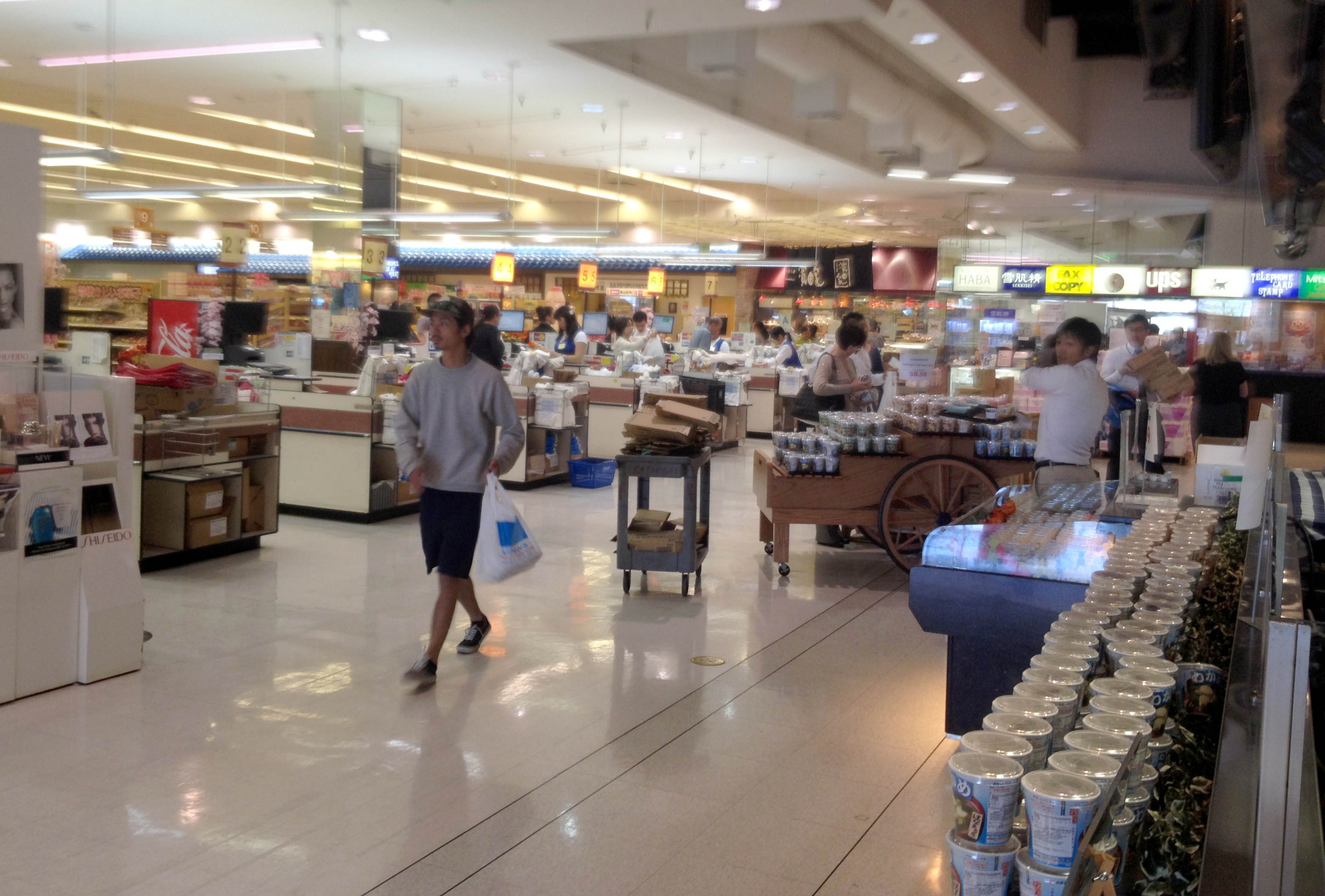
Interior of the Mitsuwa Marketplace on Western Ave. in Torrance. April 28, 2014. (Daily Breeze staff file photo by Chuck Bennett)

The large new supermarket space soon was filled not only with Japanese groceries, but also an expanded roster of restaurants in its food court and many smaller stores selling everything from gifts to clothing, Japanese-language books (including a large selection of manga titles), music and videos.

The Torrance location benefited from the South Bay’s large Asian population. Its eateries were popular lunchtime stops for employees from large firms nearby such as the American headquarters of Toyota, Nissan and Honda.

But the store also began attracting more non-Japanese shoppers due to the growing acceptance of Asian cuisine into mainstream American diets and the rising influence of Japanese popular culture via video games, anime and pop music.

Yaohan continued to thrive at its Western Ave. location throughout the 1990s. Unfortunately, its headquarters company had overextended itself financially, and it was forced to declare bankruptcy in September 1997.

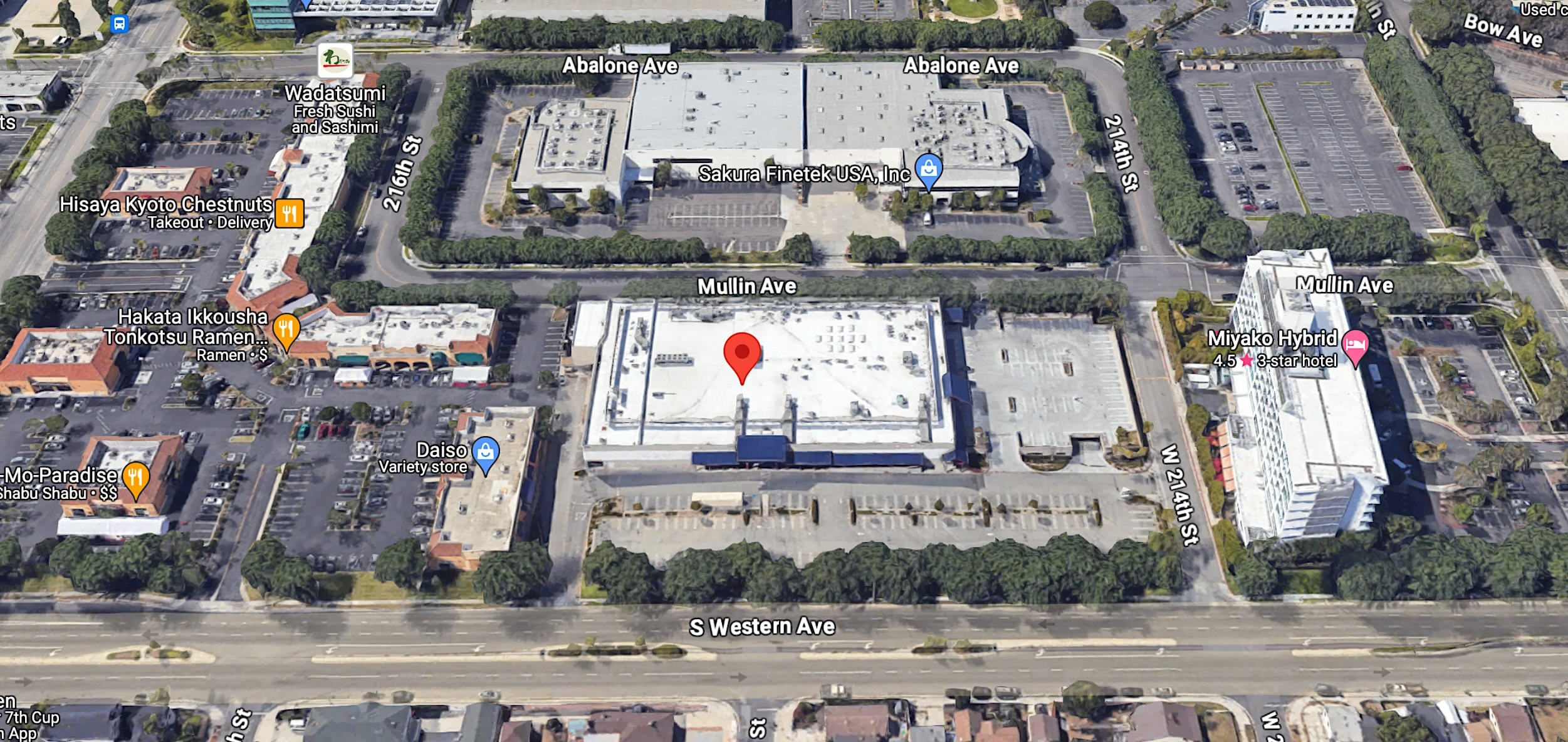
Looking east from Western Ave., from left: Eastgate Shopping Center, Mitsuwa Marketplace (center with red locator, and Miyako Hybrid Hotel, right. April 2018 image. (Credit: Google Earth)

The company’s stateside management – by this time, it had established several American locations – formed the Torrance-based Wanoba Group in 1998, which rebranded the former Yaohan shopping locations under the Mitsuwa Marketplace name.

The Torrance location anchored a growing area of Japanese-American commerce on Western. To its south, the Eastgate Plaza outdoor shopping center, including eateries and the Daiso low-cost variety store, continued to thrive.

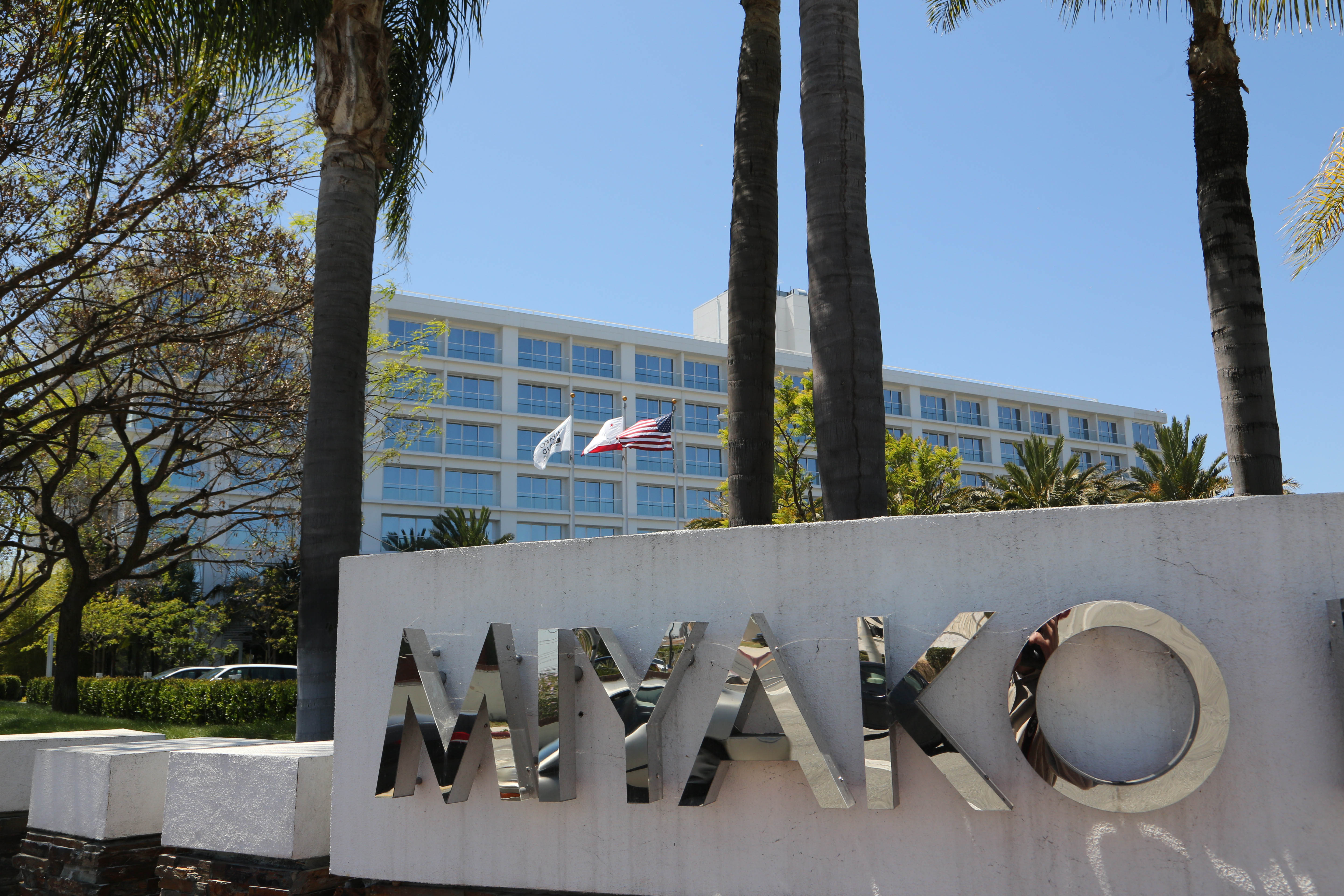
Adjacent to its north end, the Miyako Hybrid Hotel, a seven-story, eco-friendly hotel aimed chiefly at traveling businessmen, opened for business in December 2009.

The eco-friendly Miyako Hybrid Hotel on Western Ave. in Torrance. April 29, 2014. (Daily Breeze file photo by Chuck Bennett)

In January 2013, Mitsuwa announced that it had been acquired by the Japanese food and gasoline retailer Kamei Corp. Kamei’s executives assured Mitsuwa that it had no plans to make major changes to the company, its first acquisition in the U.S.

Another major Mitsuwa announcement came in 2020: the market would be closing its Western Ave. location on Jan. 31, 2020 and moving to a more highly visible spot at the Del Amo Fashion Center.

The revamped Mitsuwa Marketplace and related businesses opened in the 40,000-square-foot former Marshall’s store in Del Amo on Feb. 28, 2020. By this time, Mitsuwa had grown to 12 locations nationwide, including one it opened in Plano, Texas in 2017, not long after Toyota moved its U.S. headquarters there.

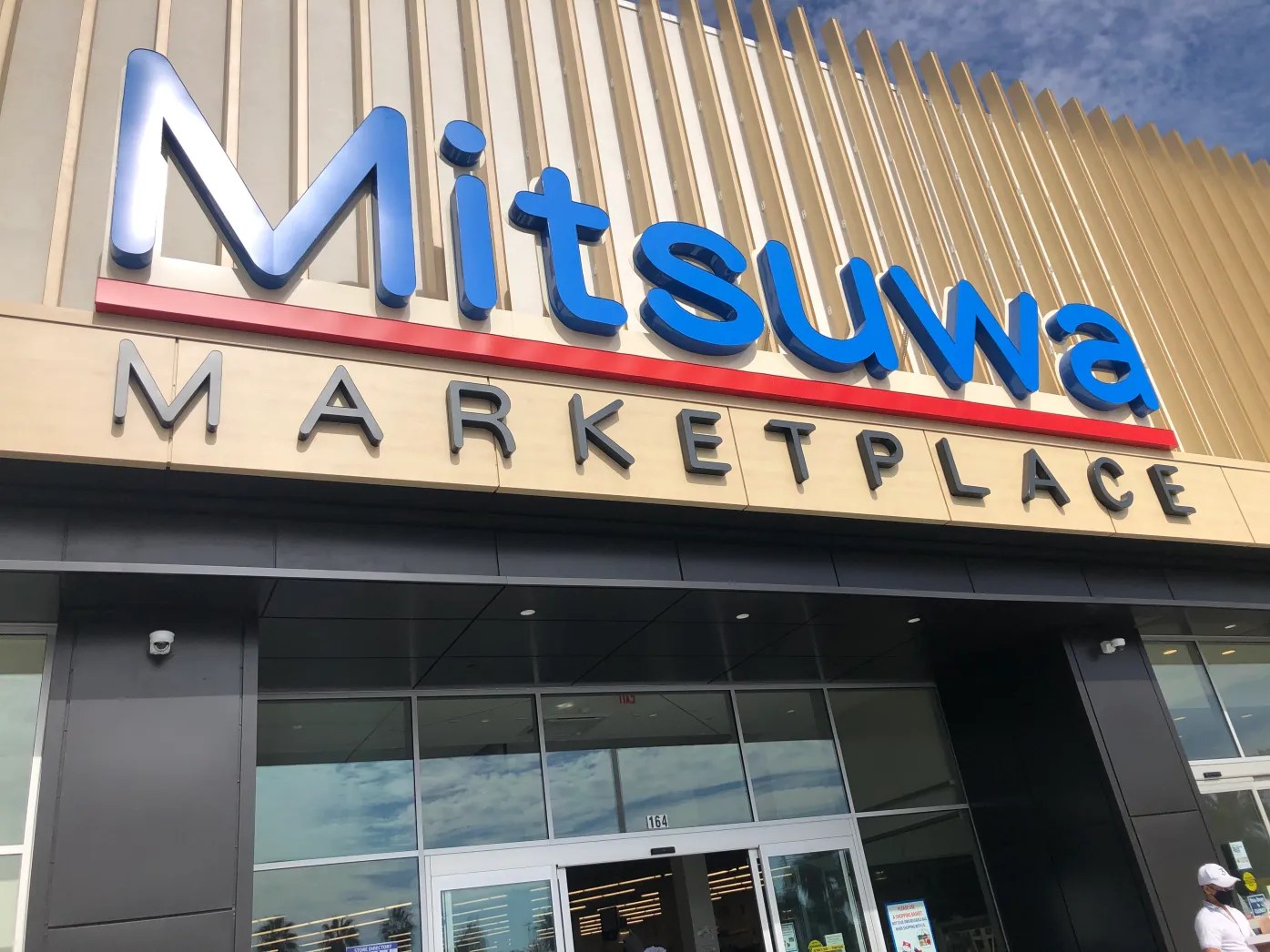
Mitsuwa Marketplace entrance at Del Amo Fashion Center in Torrance. January 2021 photo by Merrill Shindler. (Credit: Daily Breeze file photo)

As for the Western Ave. location, it remained empty and abandoned until 2023, when it became the center of controversy. On March 1, the Torrance Planning Commission approved a proposal from the firm Rexford Industrial Realty to build an 84,000-square-foot warehouse on the site.

Some local residents formed the South Bay Environmental Quality Association to protest the project, claiming that it would bring noise and other pollution to the surrounding neighborhood. They also felt that commissioners should not have allowed it to be exempt from the California Environmental Quality Act.

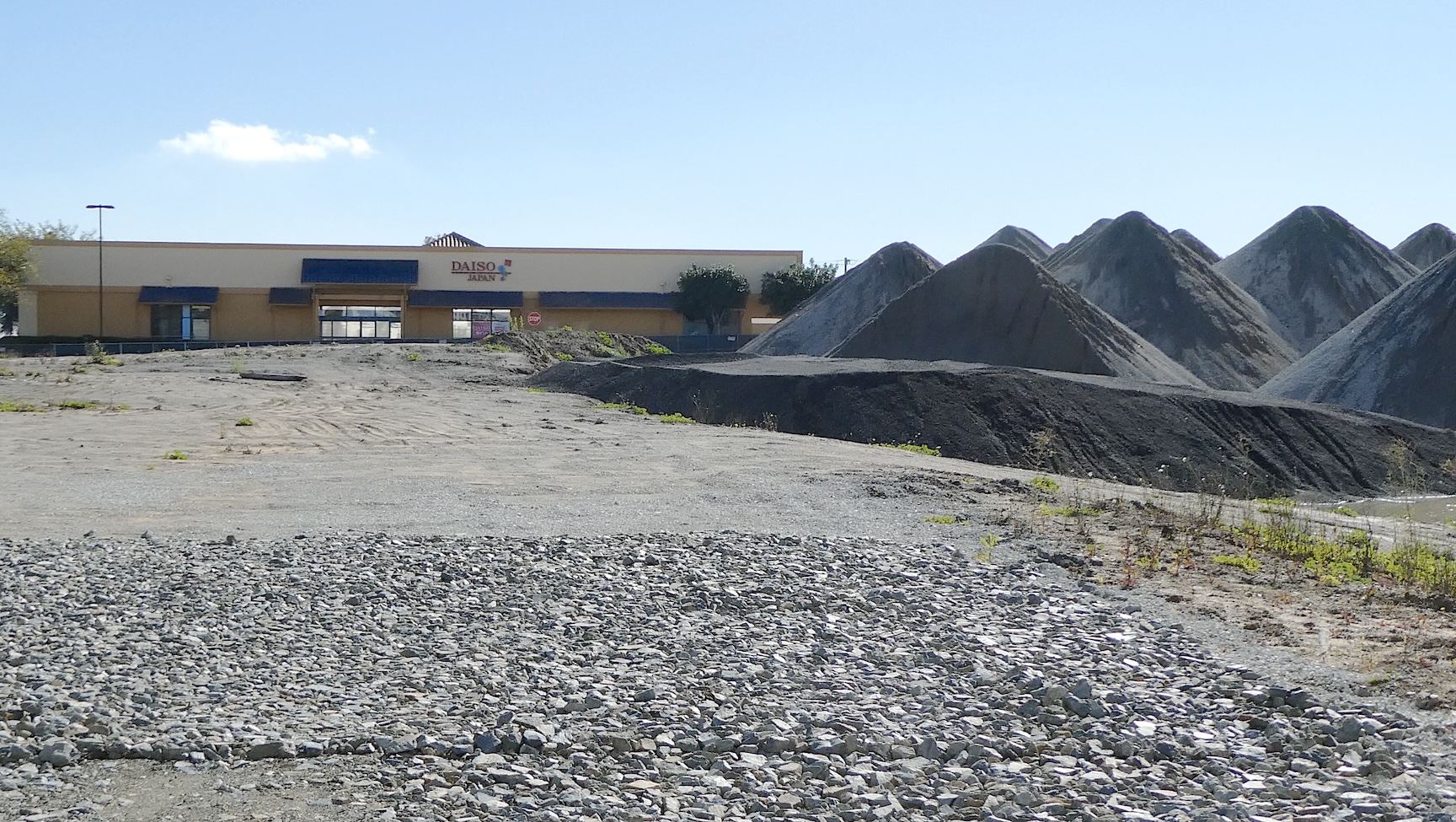
The former Mitsuwa building was razed for the new project in 2023, and the empty site awaits further developments.

The Mitsuwa Marketplace building on Western Ave. has been razed in this view looking south toward Carson St. The Daiso store can be seen at rear left. Jan. 23, 2024. (Photo by Sam Gnerre)

Sources:

Daily Breeze archives.

Los Angeles Times archives.

Rafu Shimpo archives.

Wikipedia.

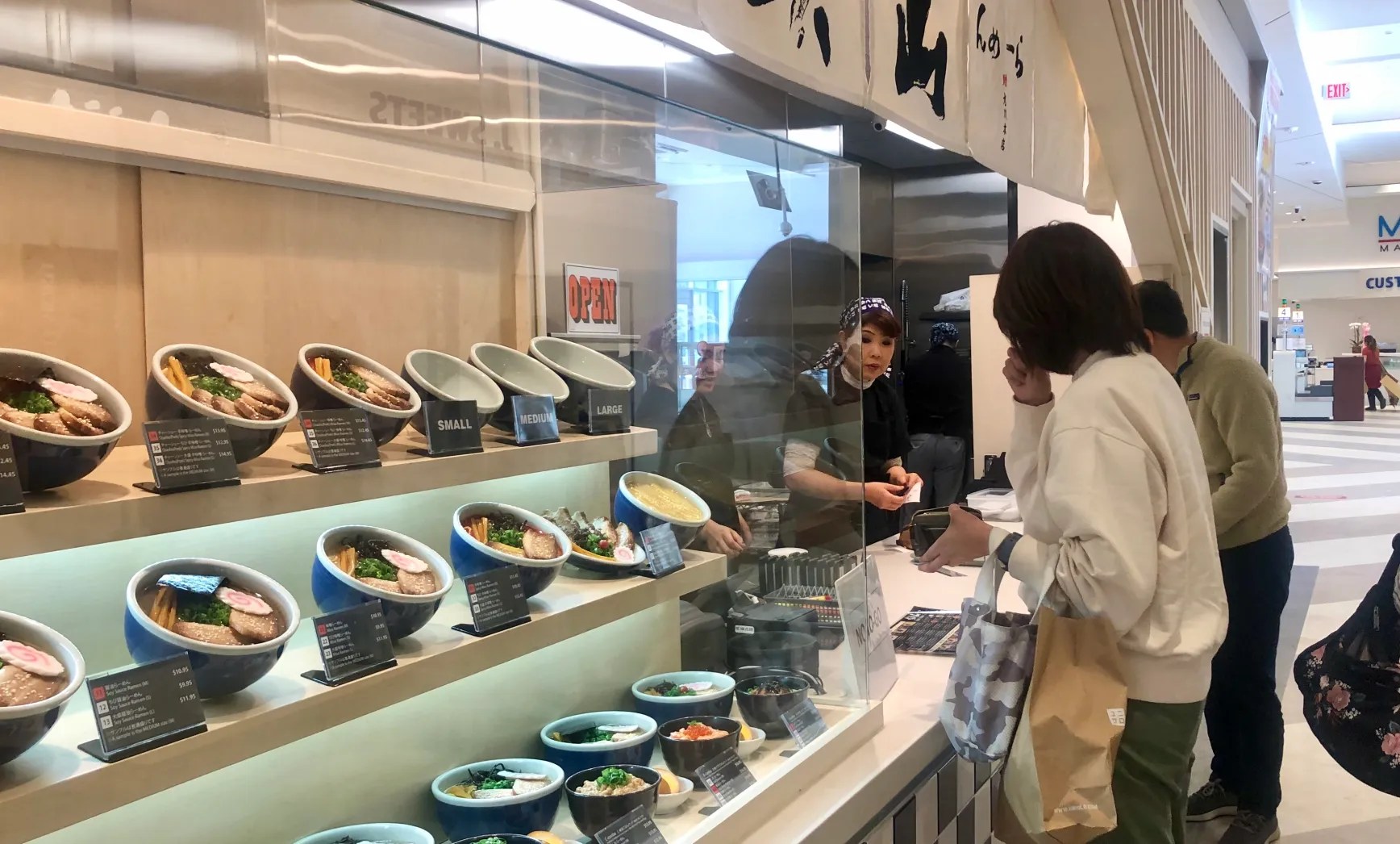
Customers order lunch at the Mitsuwa Marketplace food court at Del Amo Fashion Center in Torrance in February 2020. (Daily Breeze staff file photo by Richard Guzman)
Is this your new site? Log in to activate admin features and dismiss this message
Log In