Westchester’s Loyola Theatre

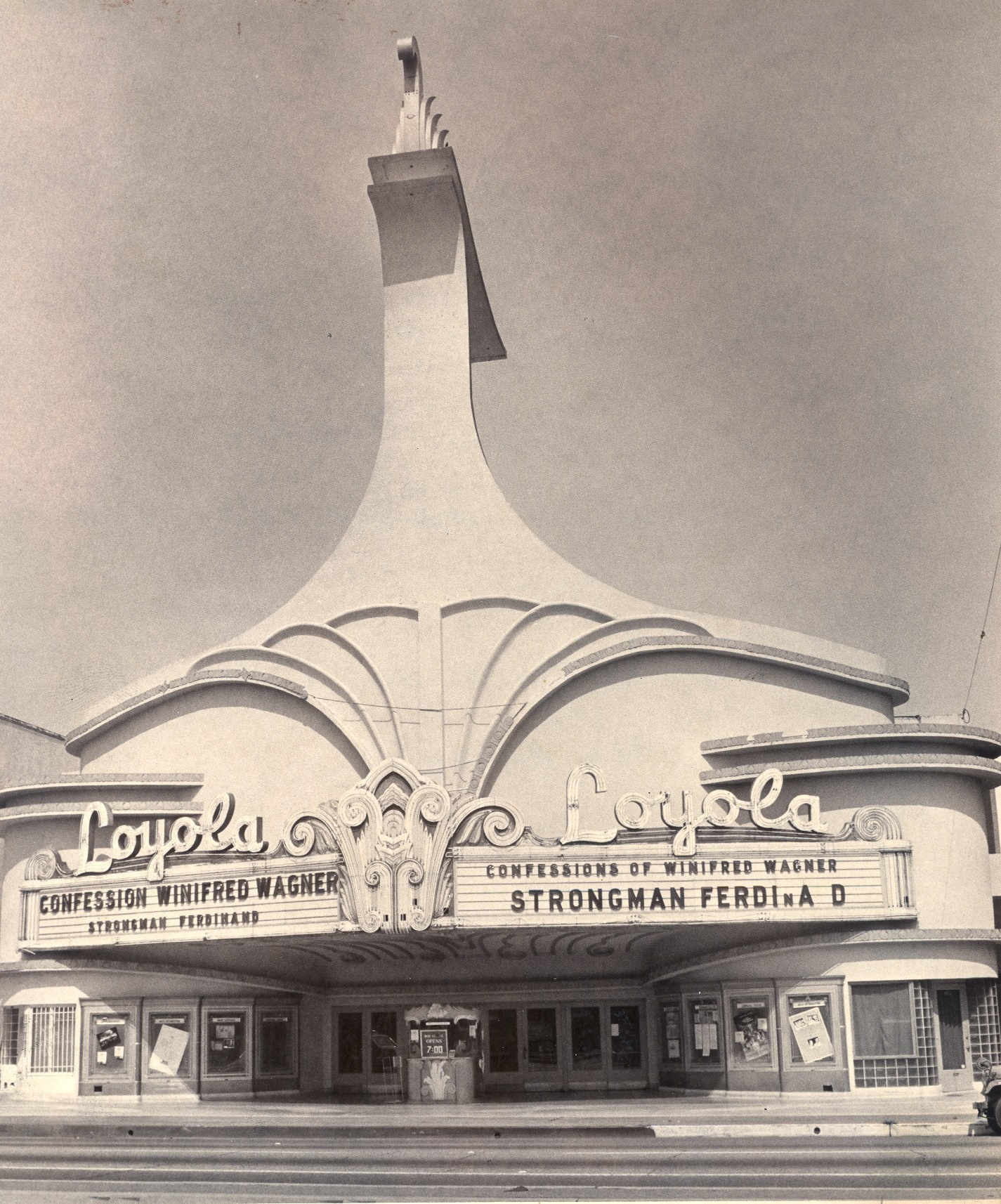
The Loyola Theatre shortly before it closed in 1982. Daily Breeze file photo by Jack Lardomita.

The stars came out in force in Westchester on Friday, Oct. 3, 1946, the night that Fox West Coast Theatres opened its state-of-the-art Loyola Theatre near the corner of Sepulveda and Manchester boulevards.
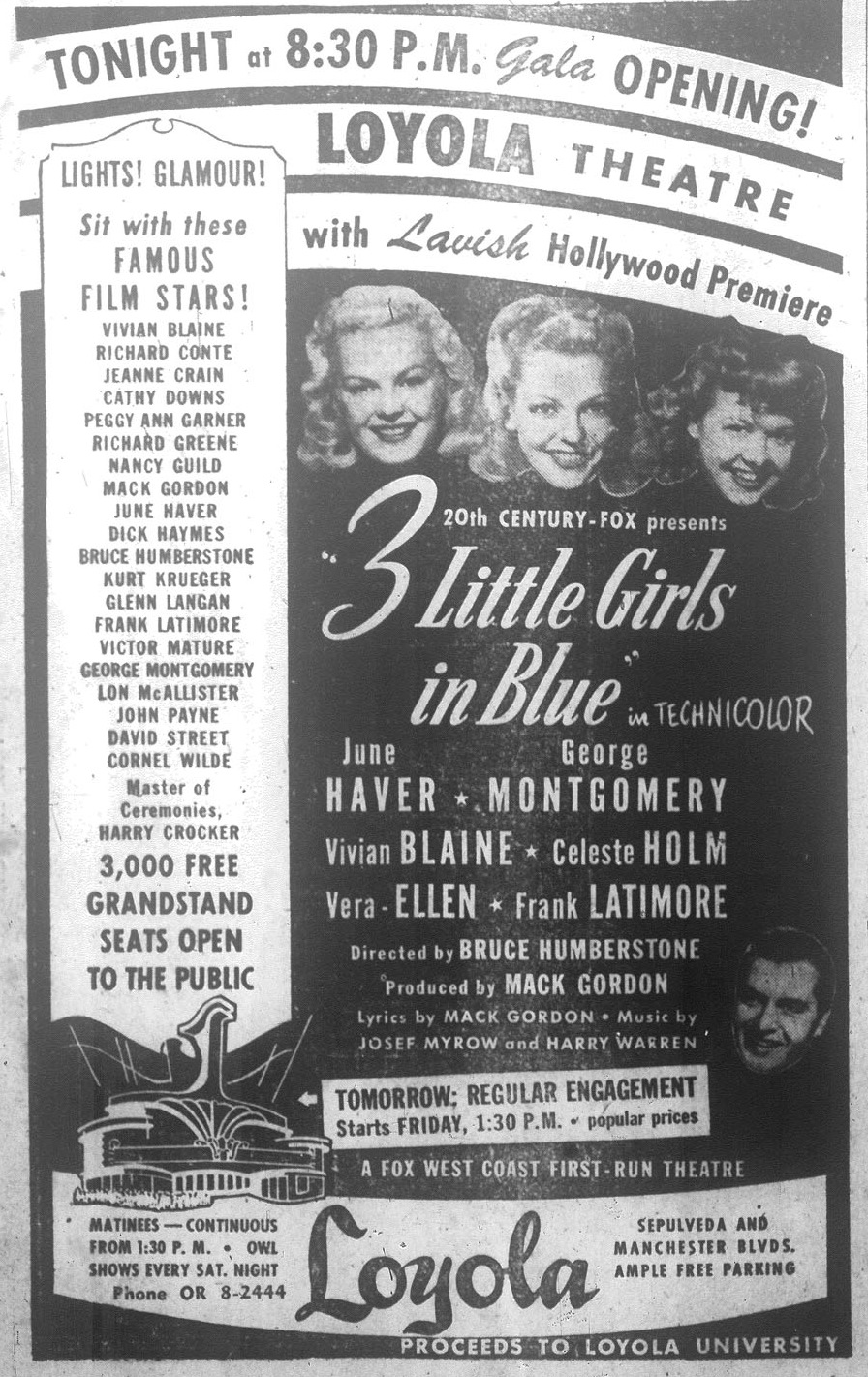
Ad promoting the opening of the Loyola Theatre. Daily Breeze, Oct. 3, 1946, Page 8.

The stars in the house included June Haver, Celeste Holm, Vera-Ellen, Vivian Blaine, George Montgomery and other players from that night’s opening feature, 20th Century Fox’s “3 Little Girls in Blue.” In addition, other Hollywood luminaries such as Dick Haymes, Jeanne Crain, Victor Mature, John Payne, Cornel Wilde and more were in attendance.

250 police officers were hired for the event, and grandstand seats holding 3,000 people were erected.

The new theater’s baroque-modern architecture featured a stainless steel box office, an ornate marquee and a distinctive curved 60-foot high spire with a swan-like sculpture at its top. Inside, the theater had 1,200 seats, velvet drapes, hand-painting wall and ceiling murals and a variey of Art Deco fixtures. It also had a unique sunken circular concessions stand in its lobby area.
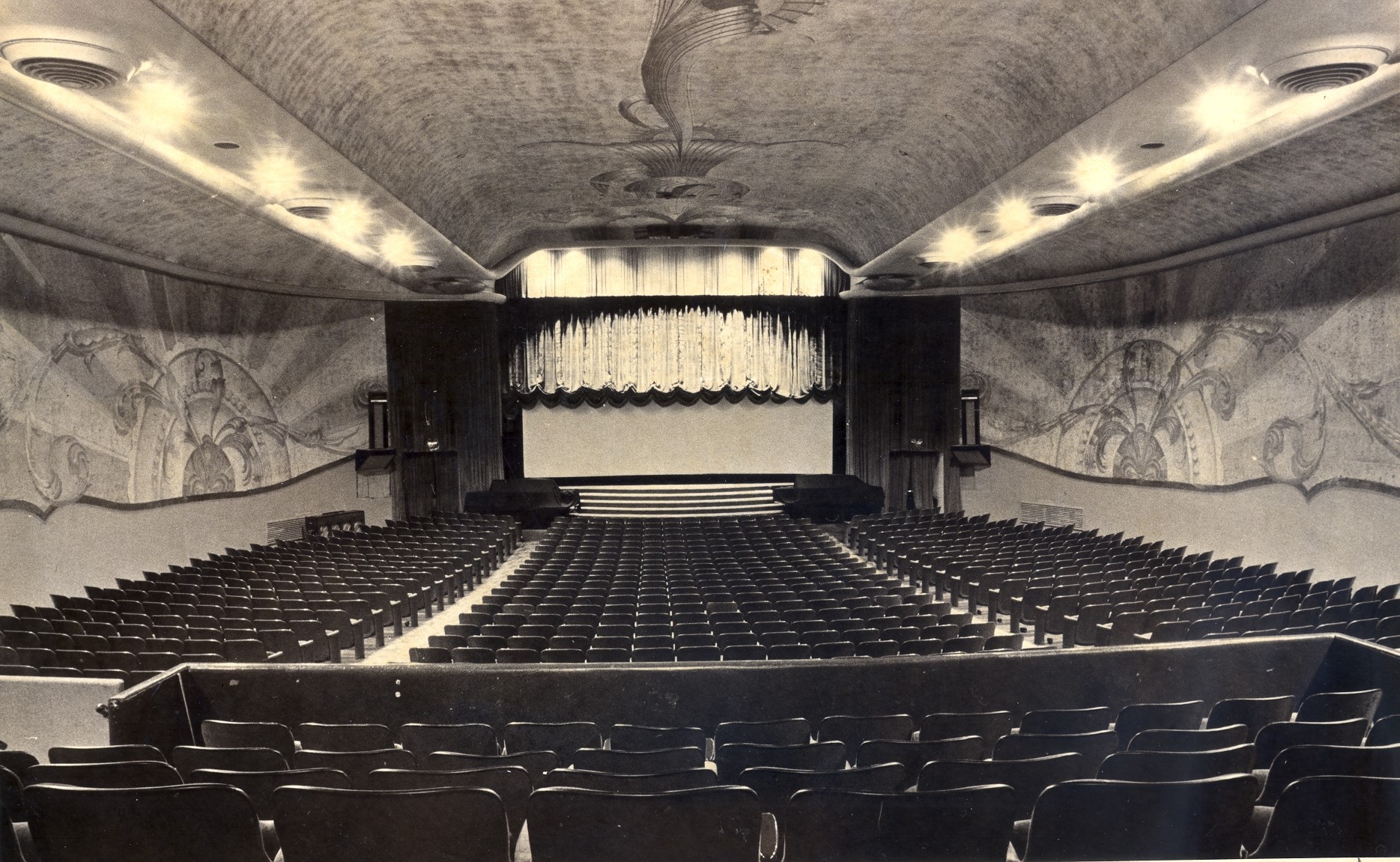
The interior of the Loyola Theatre in 1982 with its wall and ceiling murals. Daily Breeze file photo by Jack Lardomita.

In 1954, a larger theater screen was installed to accommodate the newly introduced Cinemascope technology.

Over the years, the Loyola hosted concerts (folk duo Bud & Travis appeared there in November 1960) and beauty pageants (the 1966 and 1967 Teen Queen beauty contests), as well as gala movie premieres.

The theater survived attempts in the late 1970s to make it into a multiplex, but, by 1979, it had come under the control of a guru. The Divine Light Mission of the Guru Maharaj Ji operated the church until 1981, holding meetings and programs there on a regular basis.
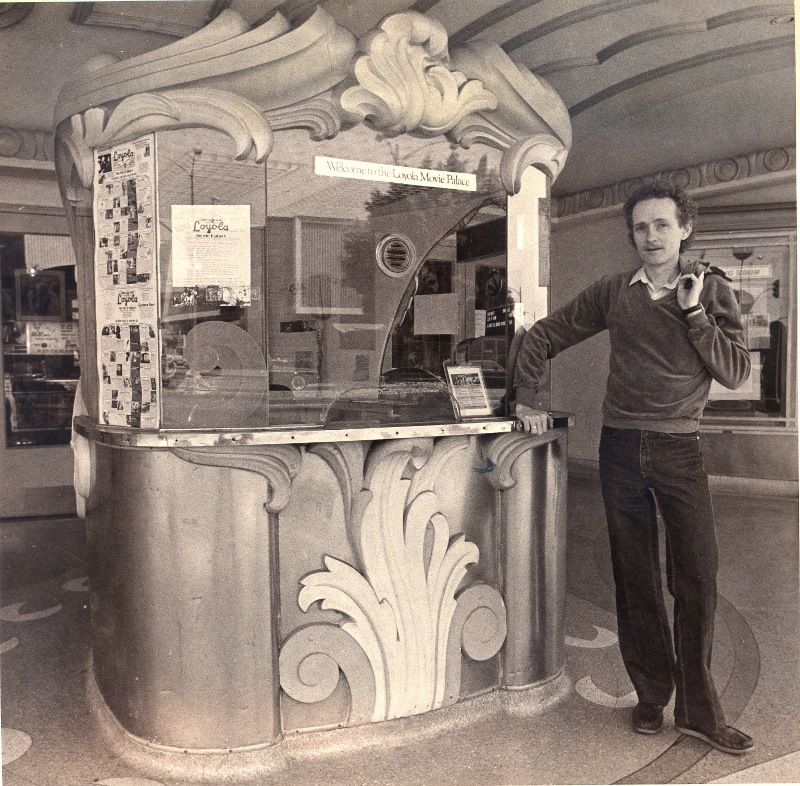
Mickey Cottrell converted the Loyola into a revival house in October 1981. Daily Breeze file photo by Jack Lardomita, May 14, 1982.
Mickey Cottrell converted the Loyola into a revival house in October 1981. Note the ornate box office and tiled foyer. Daily Breeze file photo by Jack Lardomita, May 14, 1982.

In October 1981, the Loyola became a movie theater again under the direction of Mickey Cottrell, Richie Azzarone and Jim Hanlon. With Cottrell as manager, the theater became a revival house along the lines of the Nuart, the Fox Venice and the New Beverly Cinema. Revival houses had become extremely popular places to see vintage, foreign and under appreciated films in the days before almost all such films became easily accessible on home video.

The magnificent Loyola was the perfect place to showcase such films, and Cottrell and his partners spent much time and money restoring the theater to its former glory, but it didn’t last.

Westchester developer Ted Sparks purchased the theater in March 1982, and failed to share Cottrell’s vision for the theater. They announced it would close on Sunday, May 15, 1982, so that it could be converted into a commercial office building. Attempts to forestall the conversion by theater partisans were unsuccessful.

Cottrell decided to close out the theater’s run with a weekend full of science fiction classics, including the 1956 film, “Forbidden Planet,” which became the last film to screen at the Loyola.

The Los Angeles Cultural Heritage Board declared the theater a cultural and historic monument on June 2, 1982, which kept it from being altered for a year, but it only delayed the inevitable.

Eventually the building was gutted, and turned into professional offices. It is now known as the ABDI Loyola Medical Building, with  its box office, ornate facade and tower the most visible reminders of its movie-palace past.
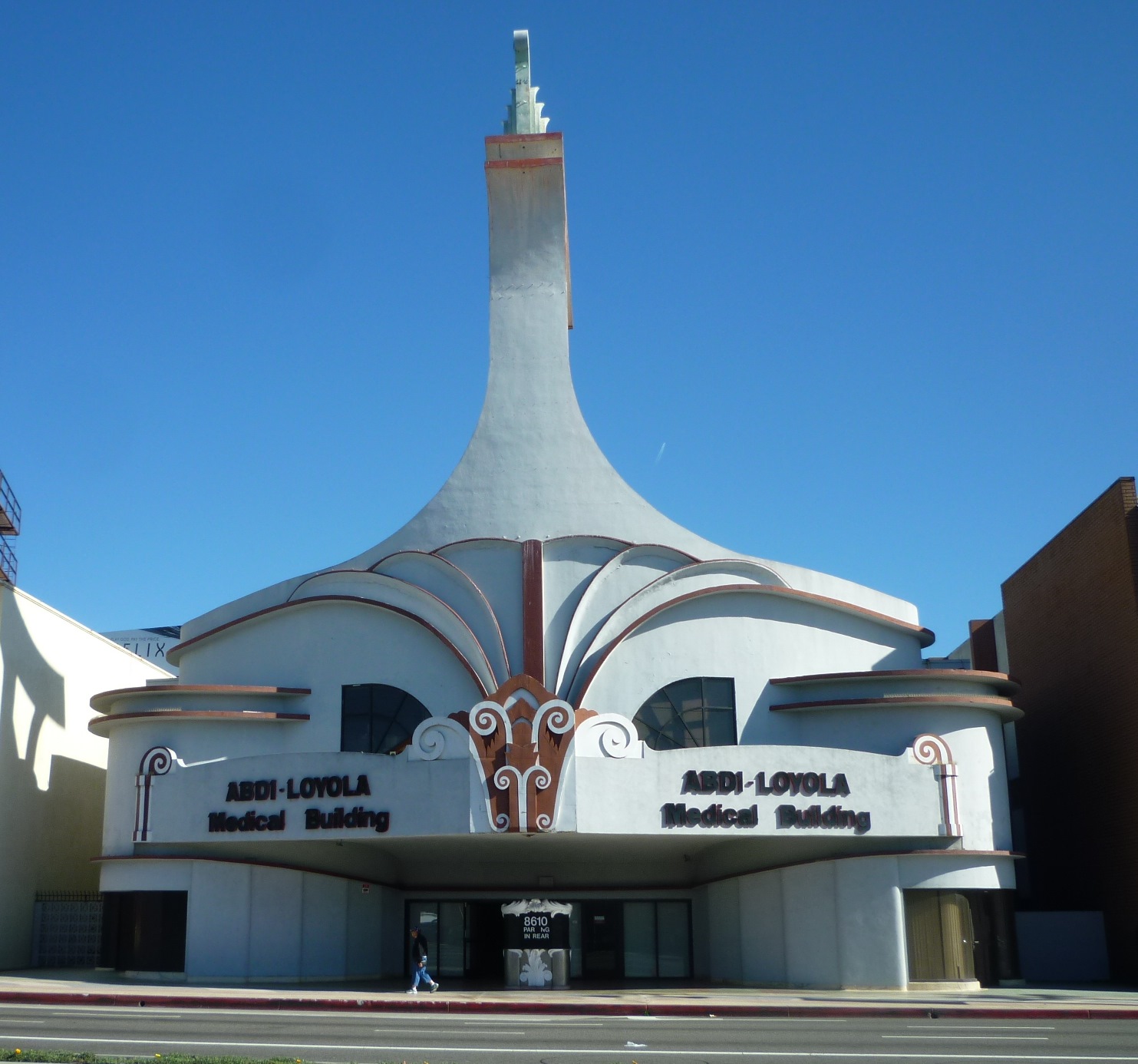
Elements of the Loyola Theatre are visible in the facade of the building, now called the ABDI-Loyola Medical Building. January 2014 Daily Breeze photo.

Sources:

Daily Breeze files.

Los Angeles Times files.

For more information:

Cinema Treasures website.
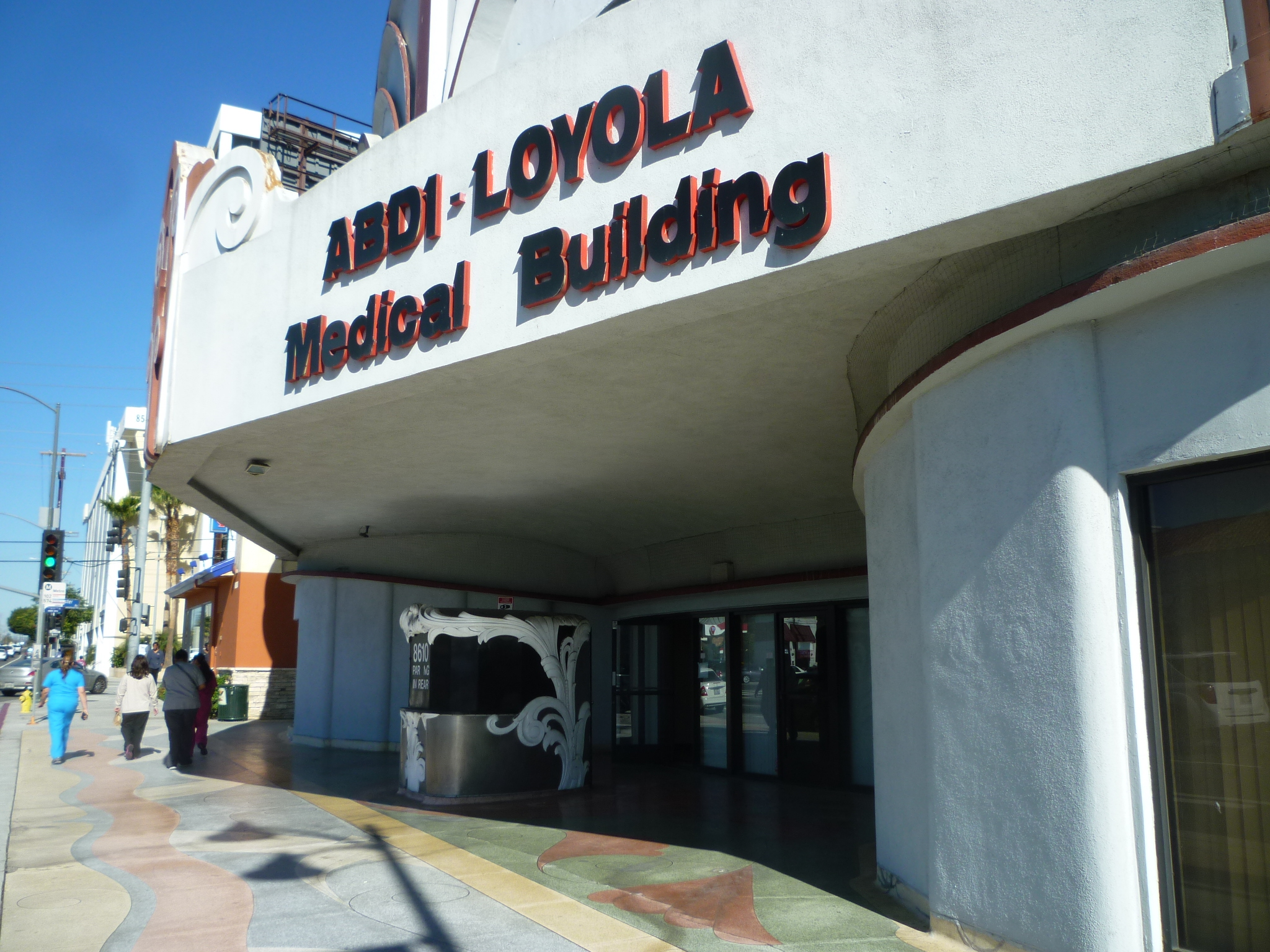
ABDI-Loyola Medical Building. January 2014 Daily Breeze file photo.

The dedication of Los Angeles Municipal Airport

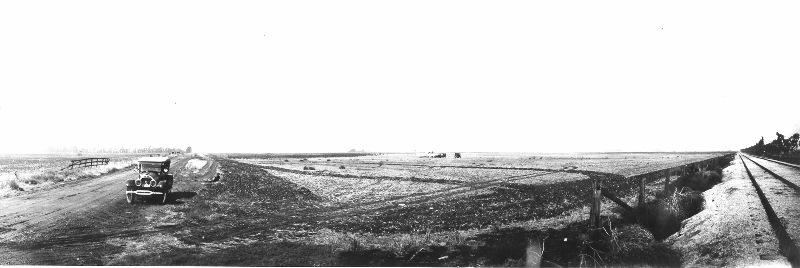
Bran and barley fields surrounded the Bennett Rancho makeshift airfield in this undated photo, presumably from the 1920s. (Photo credit: Los Angeles World Airports)

The push for Los Angeles to designate an official city airport started in 1926, when the Chamber of Commerce began to promote the idea.

The city took heed and began considering potential sites, hiring a meteorologist to analyze thirteen possible airfield locations. These included sites in the San Fernando Valley, Glendale, Santa Monica and Alhambra.

Also among the sites was an open dirt field on the Bennett Rancho property just west of Inglewood that pilots had been using informally for takeoff and landing practice for years.

The meteorologist, Dr. Ford Ashman Carpenter, judged the Inglewood site to have promise, with its unobstructed view and good drainage, despite occasional fog.

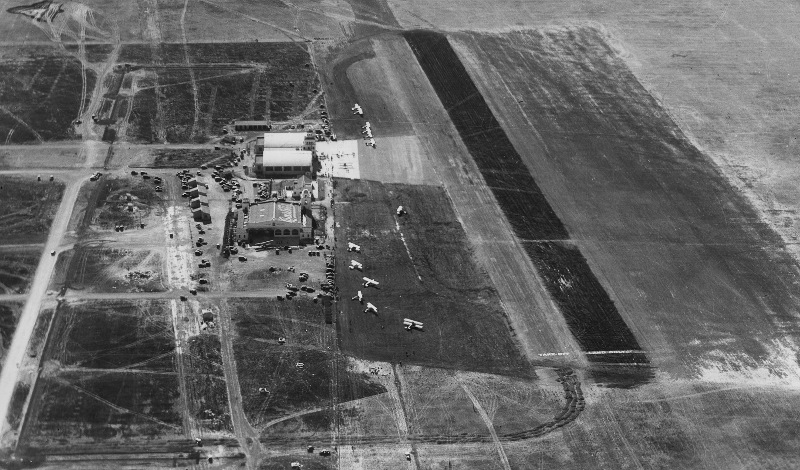
Mines Field on Aug. 27, 1929. The newly built Hangar 1, which still stands, can be seen at center.  (Photo credit: Los Angeles World Airports)
Mines Field on Aug. 27, 1929. The newly built Hangar 1, which still stands, can be seen at center. The light and dark landing strips at right are labeled “Take Off” (light, left) and “Land Only” (dark). (Photo credit: Los Angeles World Airports)

James P. Martin owned the Bennett Rancho property, and William Mines was his real estate man. In March 1928, it became one of three properties officially selected by the city, along with Vail Field in Montebello and a site in the Valley. By this time, the Inglewood site had become known as Mines Field, probably thanks to the persistence of Martin’s realtor in pushing for its inclusion.

Shortly afterward, a bond issue to fund the development of the three airport sites failed, however. The city realized the need to settle on one site in order to cut costs and provide a more specific plan for its airport.

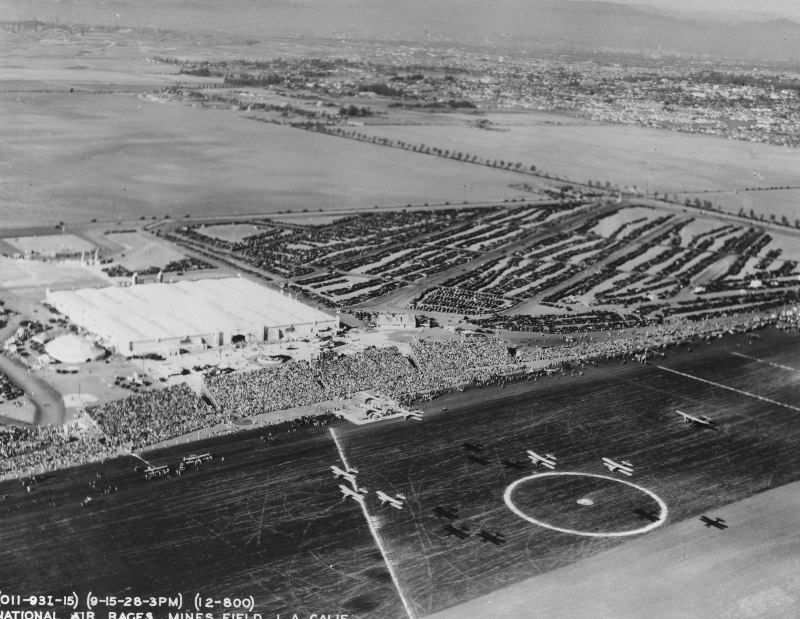
The awarding of the 1928 National Air Races to Los Angeles proved to be a deciding factor leading to the city’s selection of Mines Field as its future airport, Air races were immensely popular in the early years of aviation, and Mines pushed hard to get the 1928 races for Mines Field.

The 1928 National Air Races at Mines Field. Note the large crowd in the stands and the rows of parked cars behind and to the right.  (Photo credit: Los Angeles World Airports)
The 1928 National Air Races at Mines Field. Note the large crowd in the stands and the rows of parked cars behind and to the right. Photo is dated Sept. 15, 1928. (Photo credit: Los Angeles World Airports)

He had the support of aviation pioneers and leaders – Charles Lindbergh had visited the field in 1927 – and the selection of Mines Field for the event was a major coup. The city made the decision to go with Mines Field as the site of its airport on July 25, 1928, to become effective on October 1.

Work began on whipping the dirt field into shape to hold the races. The weeklong event held from Sept. 8-16 turned into a gigantic success, with thousands of visitors coming out to see the races. An estimated 35,000 spectators saw the opening ceremonies alone. Mines Field had shown itself to be a solid choice as the city’s airport.

Now, all that remained was to make it official. The city planned a two-day gala event to dedicate the airport officially for June 7-8, 1930, during which Mines Field would become renamed Los Angeles Municipal Airport.

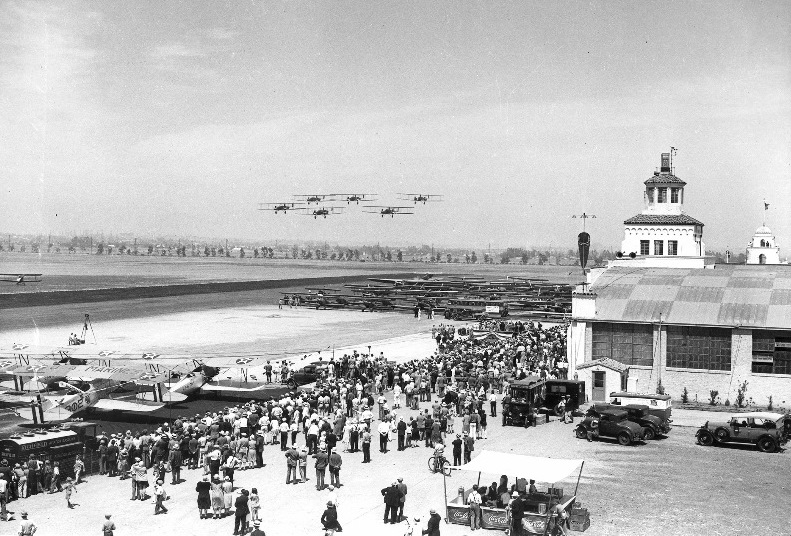
The festivities began above Los Angeles City Hall on Saturday, June 7, 1930. A formation of Boeing planes swooped down on City Hall in a mock dive-bombing exercise that certainly would raise eyebrows were it to be held today.

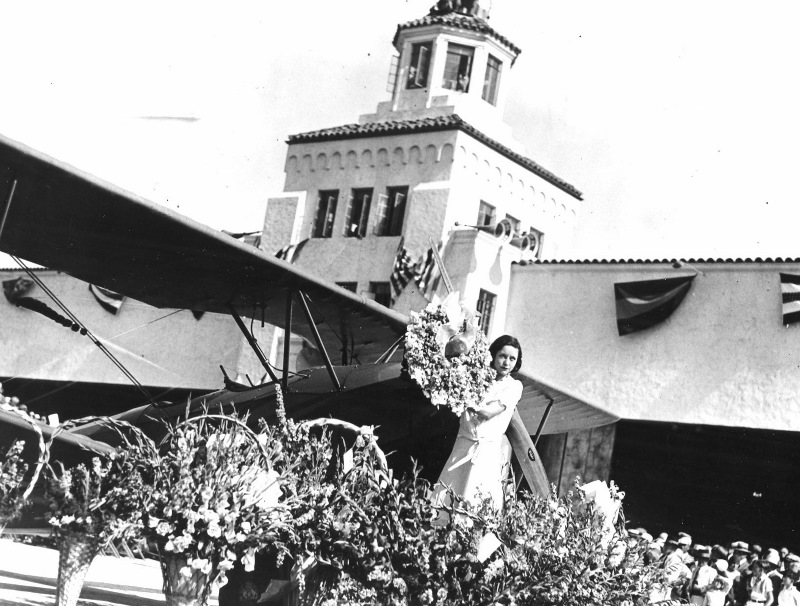
An estimated 65,000 spectators jammed the new airport for air races, demonstrations and exhibits. One part of the dedication involved the dropping of a ceremonial wreath from a Goodyear blimp into the waiting arms of actress Viola Peters, who then placed it on a plane parked nearby.

Actress Viola Peters holds the wreath that was dropped to her  from a blimp at the dedication ceremony on June 7, 1930 at the newly renamed Los Angeles Municipal Airport.  (Photo credit: Los Angeles World Airports)
Actress Viola Peters holds the wreath that was dropped to her from a blimp at the dedication ceremony on June 7, 1930 at the newly renamed Los Angeles Municipal Airport. (Photo credit: Los Angeles World Airports)

The city’s optimism for Los Angeles Municipal Airport turned out to be well-founded, if a little premature. While the airport was used steadily throughout the next decade, commercial air travel was not part of the mix. Passenger airlines still used Glendale and Burbank airports for that.

Upgrades to the airport were halted by World War II, but during the war, the city’s Department of Airports convinced several airlines that the airport would be made suitable to use after the war ended.

Additional terminal buildings were erected hastily after the war, and the first commercial flights using Los Angeles Municipal Airport were made on Dec. 9, 1946.
The facility was renamed Los Angeles International Airport on Oct. 11, 1949.

Spectators at the June 7, 1930 dedication of Los Angeles Municipal Airport watch a group of airplanes fly over during the ceremonies. (Photo credit: Los Angeles World Airports)

Sources:

Daily Breeze files.

Los Angeles Times files.

Images of Aviation: Los Angeles International Airport, by William A. Schoenberger, Ethel Pattison, Lee Nichols and Flight Path Learning Center of Southern California, Arcadia Publishing, 2009.

LAX: Los Angeles International Airport: From Lindbergh’s Landing Strip to World Air Center, by Tom Moran, CCA Publications, 1993.

See also:

“Passenger service at LAX,” Daily Breeze South Bay History blog, http://blogs.dailybreeze.com/history/2010/12/01/the-evolution-of-lax/.


The American Nazi Party’s attempts to establish itself in the South Bay

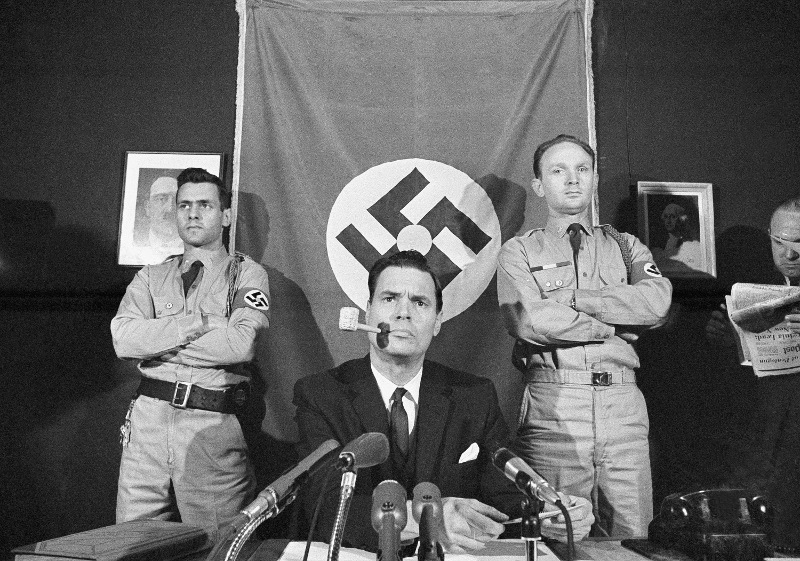
George Lincoln Rockwell, leader of the American Nazi Party holds a news conference in Arlington, Virginia, Nov. 3, 1965. At left is Matt Koehl, and at right is Alan Welch, deputy commander. (AP Photo/Harvey Georges)

George Lincoln Rockwell originally called his political action group the World Union of Free Enterprise National Socialists when he founded it in Arlington, Va. in 1959. In 1960, he streamlined the name to the American Nazi Party.

His movement began to gain some traction after he became a popular attraction as a controversial paid speaker on college campuses during the free speech movement of the early 1960s. After picking up some followers, he decided to try to make further inroads into American society.

In the South Bay, this meant lengthy battles to gain a foothold in the area, starting with Redondo Beach in 1963. The American Nazi Party and its local leader, Ralph Forbes, made repeated attempts to hold a series of public rallies in the city’s parks in June 1963.

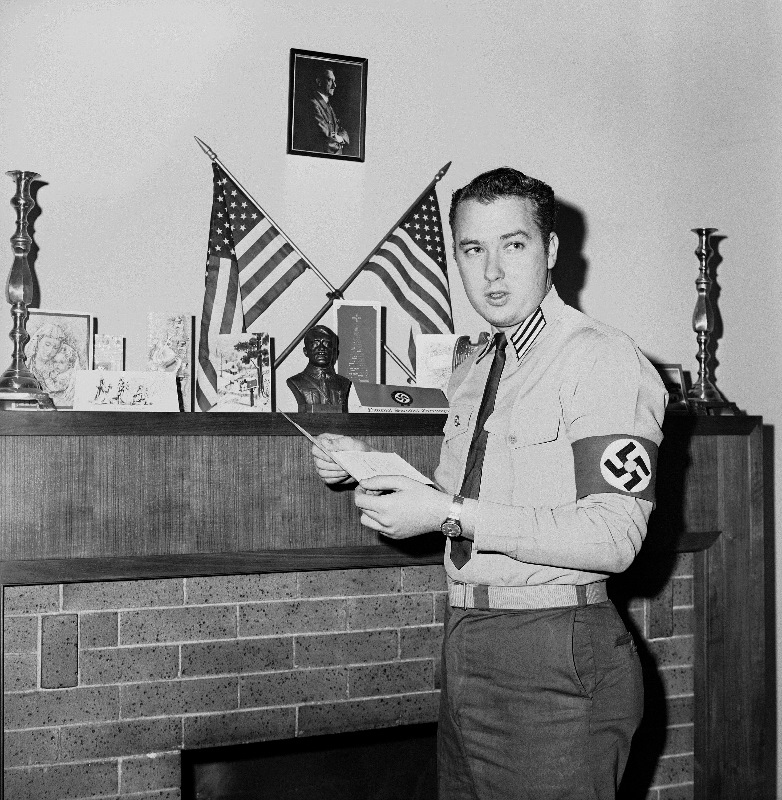
Ralph Forbes, 24, self styled western division commander of the American Nazi Party, poses beside the fireplace in his house in Glendale, Ca., Dec. 27, 1964, which the Party has leased as its western headquarters. Notice the picture of Hitler above the crossed American flags. Meanwhile city officials, clubs and churches are fuming because the Nazi group has located in its city. (AP Photo/David F. Smith)

The city drafted an emergency ordinance to block the group’s specific plan to congregate in City Park (now known as Veterans Park), and the war of words was on. The City Council voted against holding the rallies at its June 17 meeting.

That brought the American Civil Liberties Union into the mix. The ACLU filed a petition on behalf of the American Nazi Party, who wanted to use City Park for rallies on Aug. 31 and Sept. 28. The city claimed its ordinance forbade use of public property for anyone advocating overthrow of the government; the ACLU countered that the ordinance violated the ANP’s First Amendment rights.

Finally, on Aug. 23, Los Angeles Superior Court Judge Alfred Gitelson ruled that Forbes could hold his Nazi rally in Perry Park in Redondo Beach on Aug. 31, under certain conditions. Forbes had to post a $5,000 bond guaranteeing he would not incite a riot, use obscene language, break laws or bar anyone with opposing viewpoints from speaking.

After all the ballyhoo, Forbes cancelled the Aug. 31 Perry Park rally because he was unable to post the required bond.

A few months later, Forbes tried the same strategy in Torrance. Then-City Manager Ed Ferraro canceled an American Nazi Party rally scheduled for the Torrance Recreation Center on May 10, 1964, saying it was “in the public interest” to do so.

A week later, the Torrance school board denied the Nazi group’s request to hold a rally at the Torrance High School auditorium, saying the group could hold its meetings there when school was not in session if it posted a $1 million bond.

Forbes next got into hot water in Glendale, battling the city during 1965 after he converted his home into an assembly hall in violation of city ordinances. Forbes at first was convicted of violating the ordinances, but that ruling was later overturned.

He moved to a two-story building in El Monte in 1966. Wearing a clerical collar, he announced that the building would be converted into a local American Nazi Party headquarters.

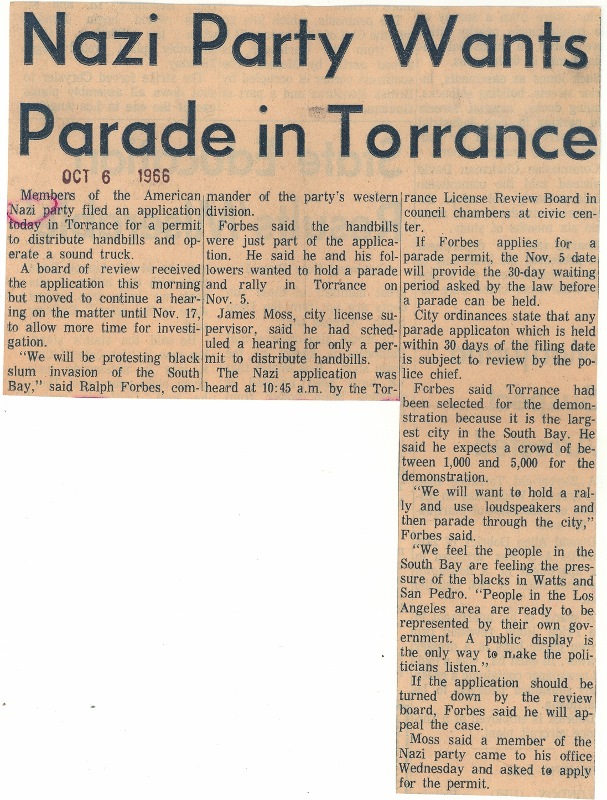
Daily Breeze news clipping from Oct. 6, 1966.
Daily Breeze news clipping from Oct. 6, 1966. (Click to enlarge.)

Later that year, the American Nazi Party applied for permits to hold a parade and rally in the city of Torrance. He planned to hire a sound truck and deliver handbills during the event, which was being held to protest the integration of South Bay neighborhoods. Forbes had been a visible counter-protesters when actor Marlon Brando appeared at a march in 1963 supporting integration of Torrance’s Southwood housing tract.

Forbes’ plan to use Walteria Park for the Nov. 5, 1966, rally was denied by the Torrance City Council on Friday, Oct. 14. It was the last major effort by the American Nazi Party to hold public meetings and rallies in the South Bay.

The American Nazi Party’s history took a bizarre twist on Friday, Aug. 25, 1967, when national leader George Rockwell was killed by a sniper outside a laundromat in Arlington, Va. The shooter was disgruntled Party captain John Patler, who used a high-powered rifle.

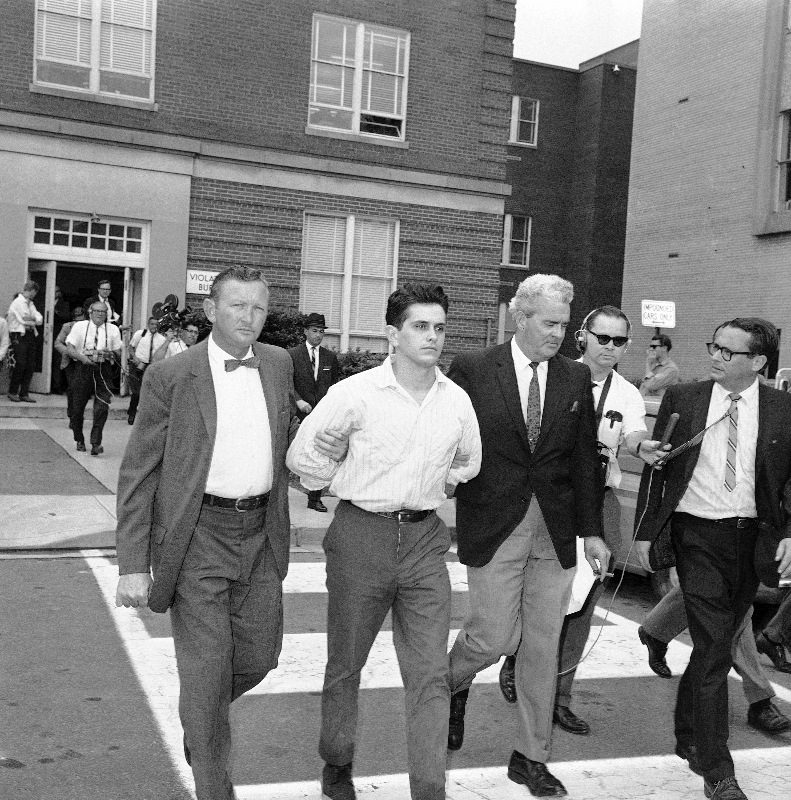
John Patler, 29, of Arlington, Va., is lead by police outside Arlington police headquarters on August 25, 1967 following his arrest. Patler, former captain in George Lincoln Rockwell’s American Nazi Party, is charged with killing his former commander. (AP Photo)

Patler had been ousted by Rockwell for alleged Marxist leanings, and also apparently was unhappy with Rockwell’s changing of the American Nazi Party’s name to the National Socialist White People’s Party on Jan. 1, 1967.

Asked for comment in El Monte, Ralph Forbes said the Nazis planned to bury Rockwell, a World War II veteran, in Arlington National Cemetery, “and there better not be any objections.”

Forbes continued to battle his El Monte landlord, whom he had never told of his intentions to set up a Nazi headquarters in his building, and the city, which battled Forbes over the matter in 1973.

Forbes later popped up in Arkansas as a right-wing Christian conservative political candidate, winning 932 votes as a presidential candidate for the America First Party in 1996.

The American Nazi Party splintered into various factions in the years following Rockwell’s death. One such group, the National Socialist Party of America headed by Frank Collin, fomented turbulence and unrest in 1977 and 1978 with its plans to march through the streets of Skokie, Ill., with its heavily Jewish population that included many Holocaust survivors.

The city battled Collin for two years, and ultimately kept the march from occurring there. It finally took place in Chicago’s Marquette Park on July 9, 1978.


Sources:

Daily Breeze files.

Los Angeles Times files.

Torrance Herald files.

Additional reading:

American Fuehrer: George Lincoln Rockwell and the American Nazi Party, by Frederick J. Simonelli, University of Illinois Press, 1999.

Lawndale builds its city hall

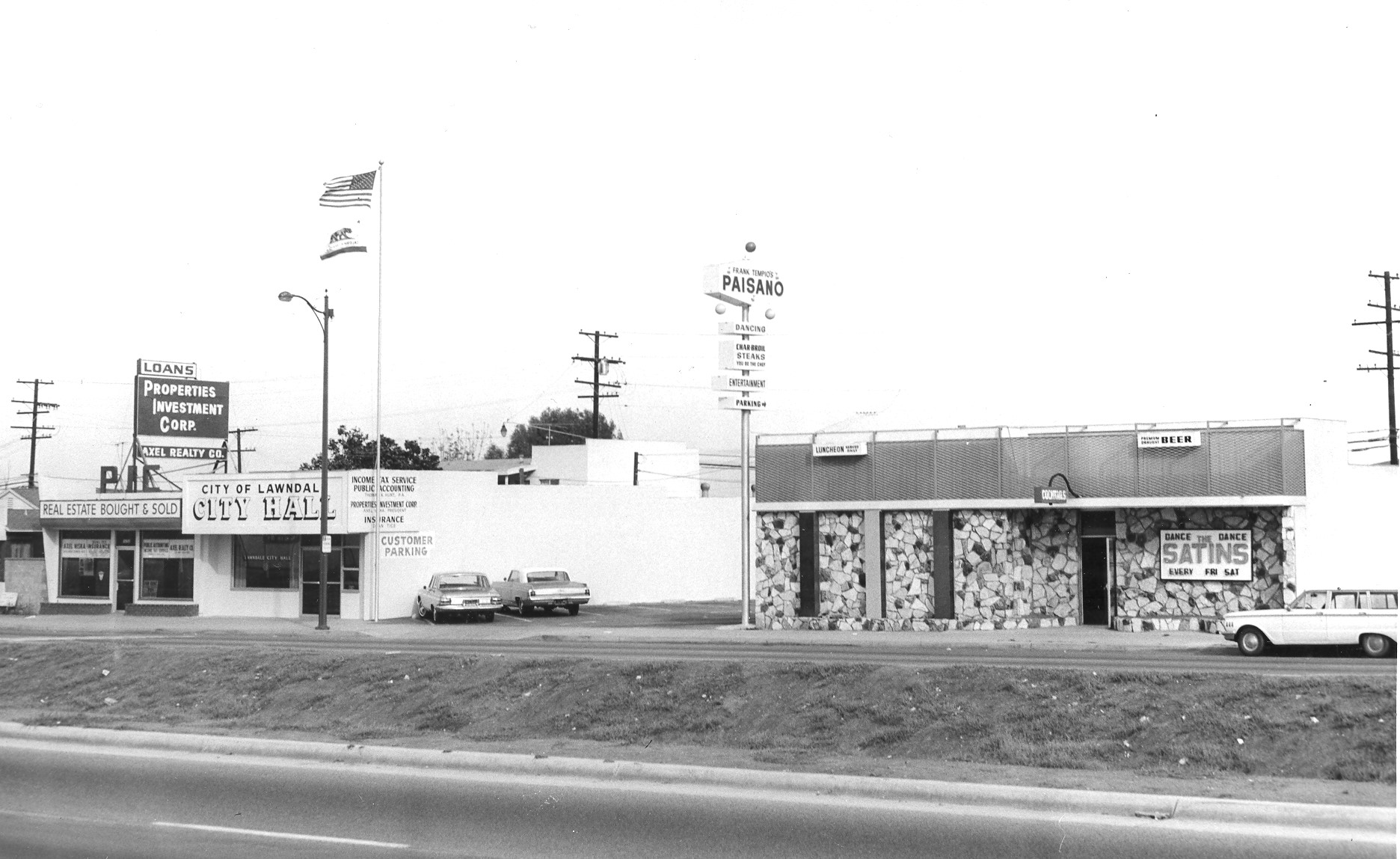
The first Lawndale City Hall was located on Hawthorne Boulevard between a real estate/loan firm and Frank Tempio's Paisano club, where The Satins were playing every weekend when this undated Daily Breeze file photo was taken.
The first Lawndale City Hall was located on Hawthorne Boulevard between a real estate/loan firm, left, and Frank Tempio’s Paisano club, right, where The Satins were playing on weekends when this undated Daily Breeze file photo was taken.

When the city of Lawndale incorporated on Dec. 28, 1959, it didn’t have a real city hall to call its own.

City hall consisted of a storefront at 17606 Hawthorne Boulevard. The city was renting the building in the commercial district for $150 a month. The location was right between the the Properties Investment Corp./Axel Realty Co. offices and Frank Tempio’s Paisano nightclub/restaurant.

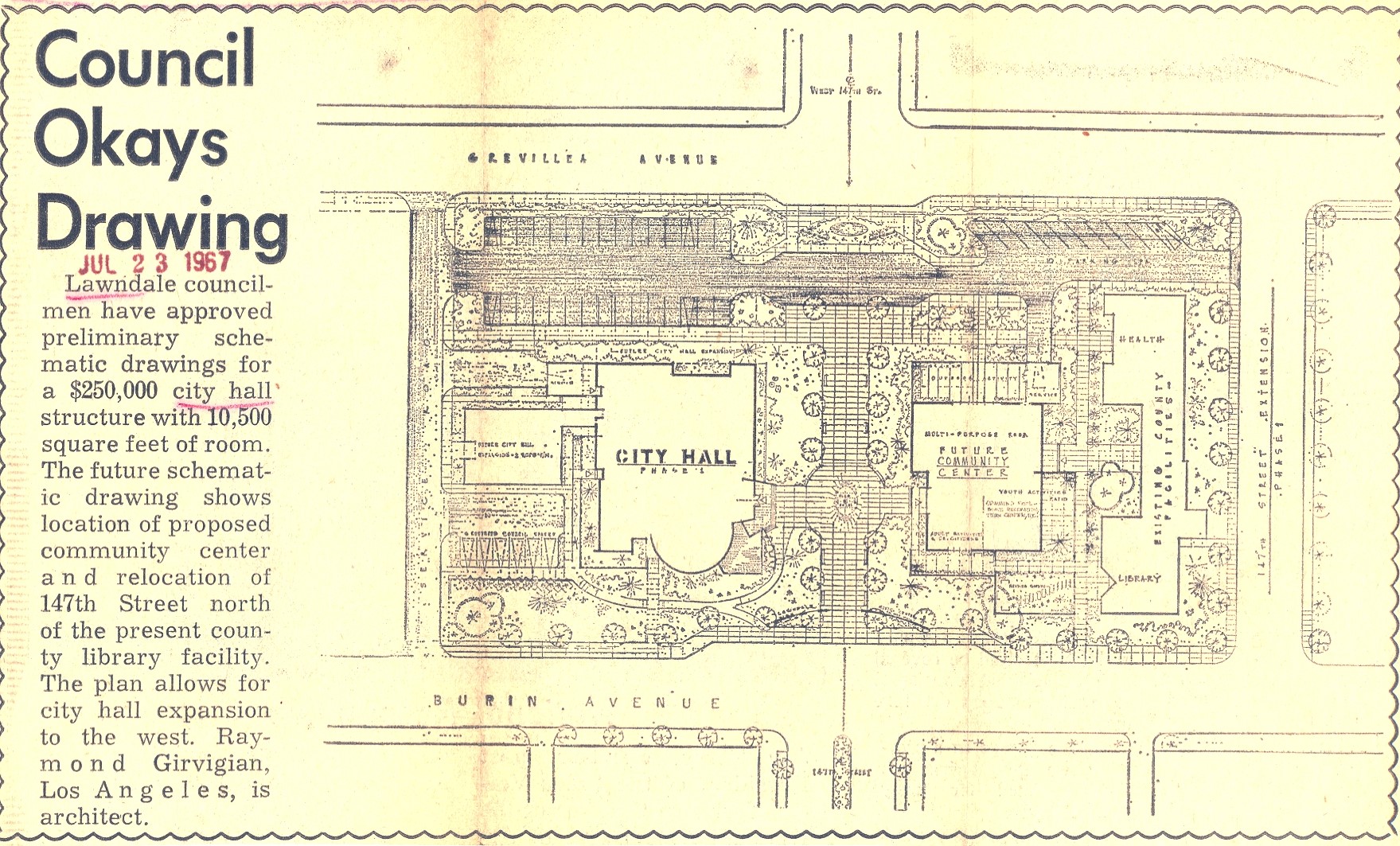
The council began laying plans for a new city hall in 1961. At its meeting on Dec. 18, 1961,  the council agreed to negotiate for the purchase of a site for a new city hall on the south side of West 147th Street between Grevillea and Burin avenues, near the Lawndale Civic Center complex.

The site consisted of five lots. The council agreed they were willing to pay George J. El Kouri $24,500 for three of them, and Willis E. and Diane B. Wilson $15,000 for the other two. After some wrangling, the Council approved the purchase on Feb. 6, 1962.

But just because the city had the land for it in its mitts didn’t mean that the new city hall was close to becoming a reality.

Finding a way to finance the new building became the next puzzle. Lease-purchasing financing, land swaps with Los Angeles County and various other ideas were discussed, but not finalized. Finally, the city had to agree to a five-year lease renewal on the storefront city hall on Jan. 21, 1963 when it became apparent that ground wouldn’t be broken on the new building in the immediate future. The new rental rate was $325 a month.

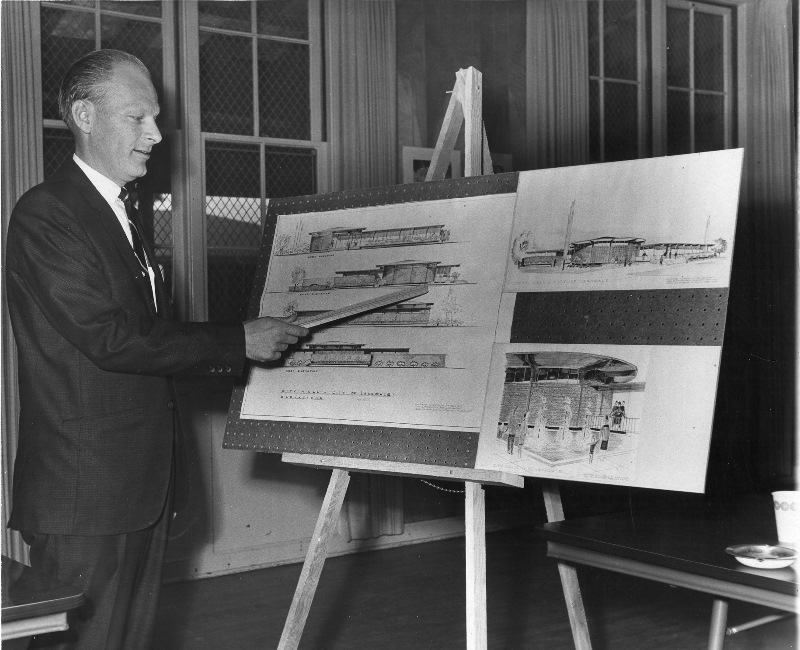
Lawndale Mayor Morris Hooper Jr. points to plans for the new city hall in this August 1967 Daily Breeze file photo. Hooper was a strong booster of the new city hall project.
Lawndale Mayor Morris Hooper Jr. points to plans for the new city hall in this August 1967 Daily Breeze file photo. Hooper was a vocal booster of the new city hall project.

The city-owned property was cleared of trash in March 1964, an optimistic move that at least kept the lot from being an eyesore. But the plans didn’t really start moving ahead until 1967. Architect Ray Girvigian presented plans for the new city hall that were adopted by the city council in July 1967.

His plan called for 10,500 square feet of floor space, with 7,000 of that devoted to administrative office and the remainder for the council chambers and conference room. Lawndale Mayor Morris Hooper Jr. was a driving force behind bringing the plans to fruition, pointing out that Lawndale was the only city in the area using a store building for a city hall.

This Daily Breeze clip from July 23, 1967 shows the planned Lawndale City Hall area.

Some council members considered the $250,000 estimated cost and the building’s size to be excessive. After some debate, the basic plan was approved in June 1968. By the time ground was broken for the building on Nov. 2, 1968, the estimated cost had risen above $300,000.

As construction continued in 1969, various city departments moved into a temporary building, actually an old house, behind the new city hall. Finally, almost exactly ten years after the city’s incorporation, the first city council meeting was held in the new building on Dec. 1, 1969, and city employees moved into their new offices a week later.

The Jan. 17, 1970 dedication ceremony for the new Lawndale City Hall drew a large crowd. Daily Breeze file photo.

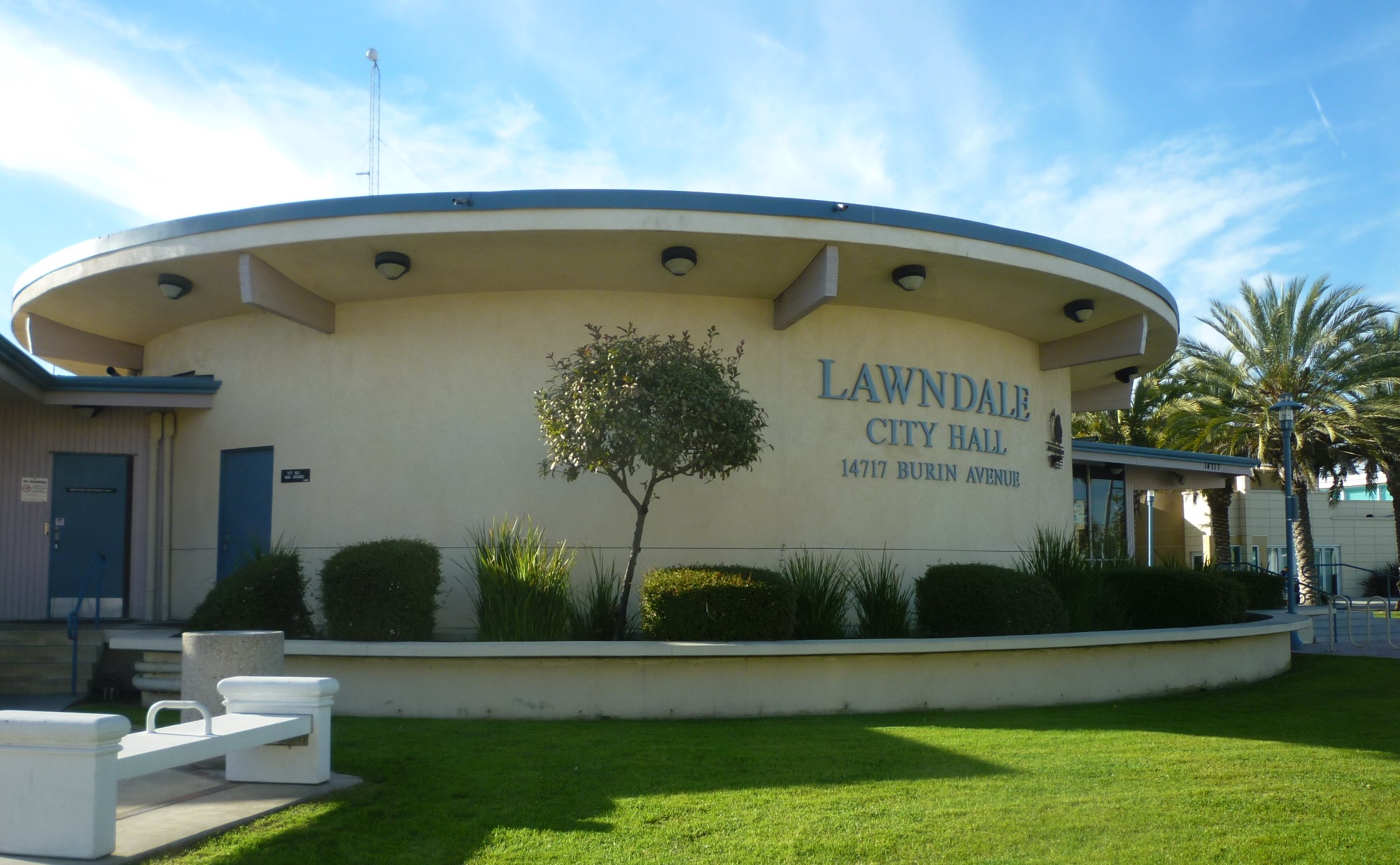
The official dedication for the Lawndale City Hall was held on Saturday, Jan. 17, 1970, in conjunction with the city’s 10th anniversary celebration. Hundreds attended the celebration, including the usual raft of politicians and legislators. A time capsule was placed in the wall, and tours were given of the new facilities, including the council chambers (described by many as “plush,” according to newspaper accounts) and its electronic voting register, the only one in the South Bay at the time.

On May 12, 2000, the Lawndale City Hall was closed for renovation. The city needed to upgrade the council chambers, improve the administrative work areas and bring the whole building into compliance with the Americans With Disabilities Act.

The renovations cost $900,000 – almost three times the original cost of the building itself – and took several months. The bulk of the $900,000 project was paid for with federal Community Development Block Grant money. with the rest coming from city bond and redevelopment funds.

The building’s rededication after the remodeling took place on Monday, Dec. 18, 2000.

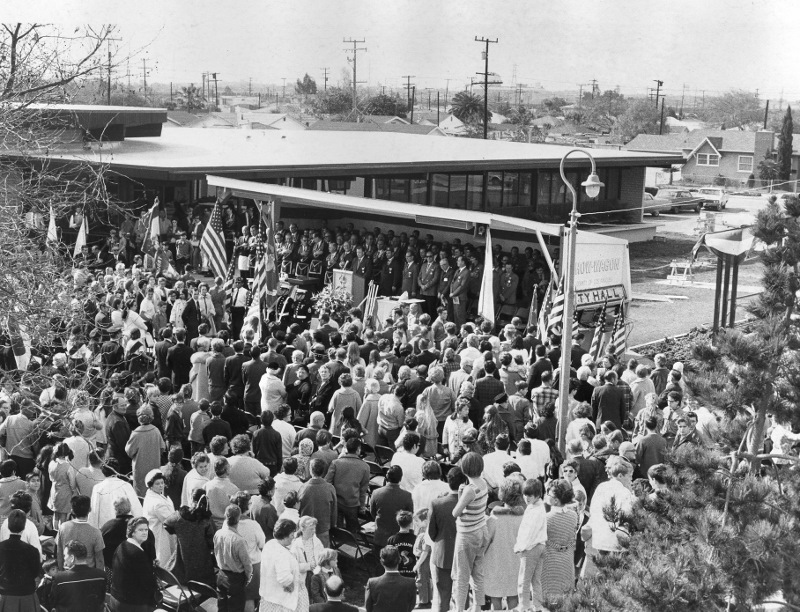
The Lawndale City Hall has kept its distinctive round shape even after a 2000 remodel. Dec. 2013 Daily Breeze photo.

Sources:

Daily Breeze files.

Los Angeles Times files.

“Memories of Lawndale,” City of Lawndale website.

Torrance’s Space-Age 1958 Rose Parade float

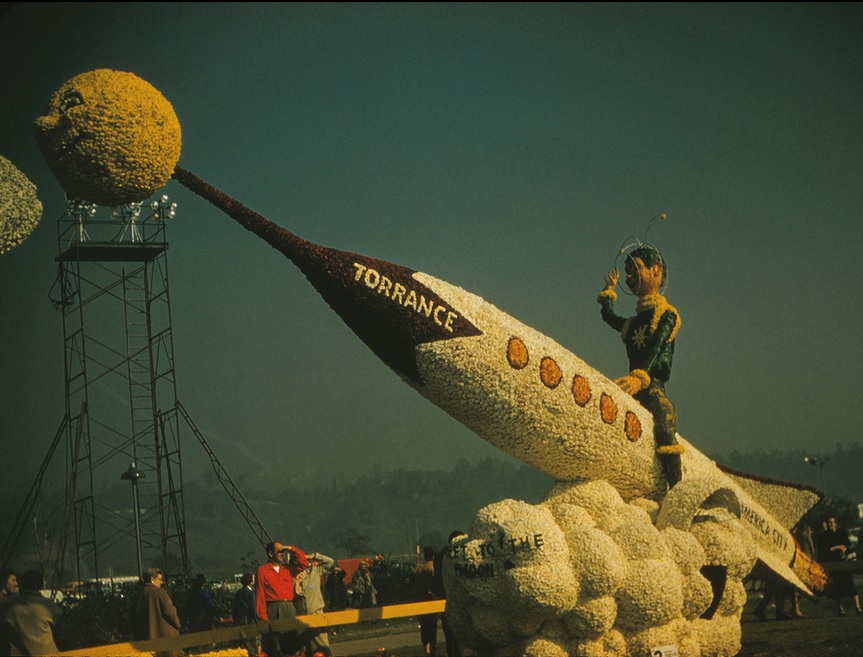
The City of Torrance's "Rocketship to the Moon" Rose Parade float from 1958. (Photo courtesy
The City of Torrance’s “Rocketship to the Moon” Rose Parade float from 1958. Photo courtesy Jordan Smith’s “The Pie Shops Collection” of photos at http://www.flickr.com/people/hollywoodplace/

The city of Torrance will continue its consecutive string of Rose Parade entries stretching back to 1958 when its AYSO-themed “Everyone Plays” float rolls down the parade route on Jan. 1, 2014. It will be the city’s 60th entry overall.

2014 marks the 100th anniversary of Torrance’s first Rose Parade float in 1914. Thomas D. Campbell and company prepared that float, which had “Industry” as its theme. While it was not eligible for any established award categories, the judges were so taken with it that they awarded it a special silver trophy several days after the parade, in honor of its beauty and uniqueness.

The city’s next entries came in 1947 and 1948. The 1947 entry, sponsored by the Torrance service group The 20-30 Club, received a second-place trophy in its classification. Its theme was “Admission Day.”

The 20-30 Club sponsored the 1948 float as well. In keeping with that year’s theme, “Our Golden West,” it consisted of a map of California with a horn of plenty spilling from the hands of an animated farmer. It was designed by Spud Murphy, and the total cost for the endeavor, including entry fees, was estimated at just under $2,000.

The city took a break after the 1948 Rose Parade, but as it continued to grow and prosper during the boom years of the 1950s, residents began to ask more and more why the city didn’t have Rose Parade float like most of its fellow cities did.

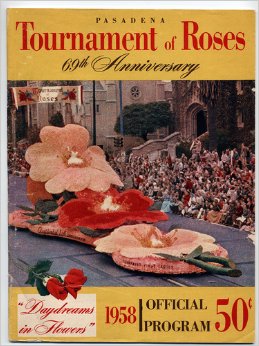
Tournament of Roses program for 1958.

A Torrance Herald editorial published a few days after the 1956 Rose Parade mentioned that Torrance Mayor Albert Isen had been asked while he watched on television where the Torrance float was in the parade. The paper called for a concerted effort to launch a float for the 1957 parade.

That didn’t come to pass, but the movement did gain momentum the following year. During its meeting just after New Year’s Day in January 1957, the Torrance City Council decided the time had come to commit to re-entering the Tournament of Roses parade in Pasadena again, and called for a float for the 1958 parade.

Despite the early decision – the city submitted its application on Jan. 2 – the drive didn’t begin officially until late in November 1957 when the city’s application was approved belatedly by the Tournament of Roses committee. The Chamber of Commerce handled the last-minute fundraising efforts, and members of the Garden Section of the Torrance Women’s Club agreed to provide the labor for the project.

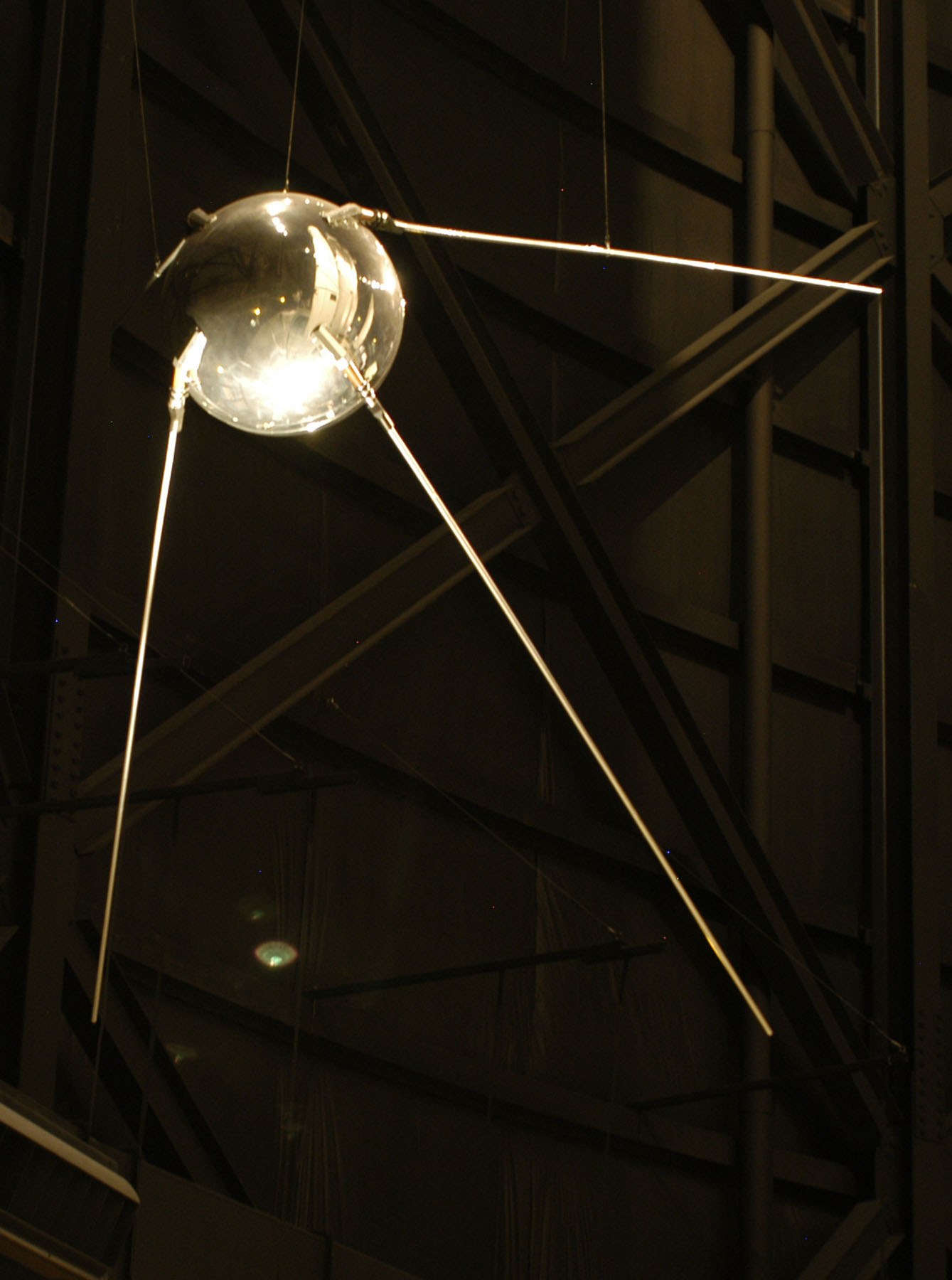
Sputnik I exhibit in the Missile & Space Gallery at the National Museum of the United States Air Force in Dayton, Ohio. (U.S. Air Force photo)

The South Bay’s rise as a center for the aerospace industry, combined with the successful launch of the Russian satellite Sputnik I on Oct. 4, 1957, would seem to have been factors shaping the decision behind the design chosen for the float. The Rose Parade theme that

year was “Daydreams in Flowers,” and the Torrance entry, titled, “Rocketship to the Moon,” certainly lived up to the theme.

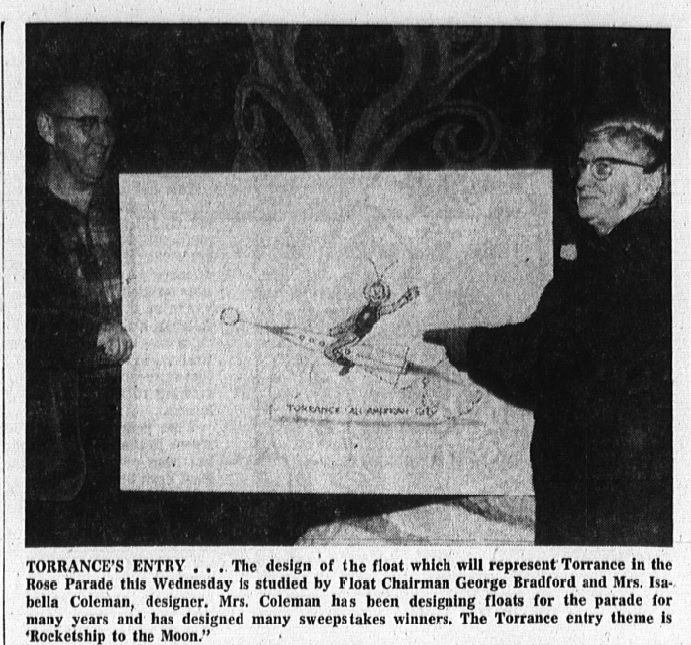
Veteran float designer Isabella Coleman of Altadena, who had been designing floats for the parade since her first entry won second prize in 1910, was hired by the city to make the space fantasy float a reality.

Rose Bowl float designer Isabella Coleman, right, with in this Dec. 29, 1957 photo from the Torrance Herald. (Torrance Herald clip courtesy Torrance Public Libary collection)

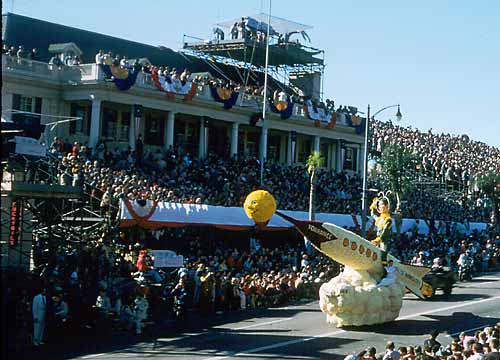
The resulting float was a vision in 1950s space-age kitsch, consisting of a missile on a bed of clouds ridden like a cowboy by an astronaut (a la Slim Pickens in the final scene from Stanley Kubrick’s 1963 film “Dr. Strangelove”) towards the gold moon at the end of its nose cone.

Volunteer Rosalie Boyko, interviewed by The Daily Breeze in 1988, worked on the 1958 entry. She recalls the actual float costing about $800, and most of the work being done by a handful of volunteers, mostly from the garden club.

“Rocketship to the Moon” won third place in the Class A-7 category, which consisted of California cities with populations between 60,000 and 100,000 people. Thus began Torrance’s still-uninterrupted string of annual Rose Parade floats.

Torrance's "Rocketship to the Moon" passes by the reviewing stand in the 1958 Rose Parade.
Torrance’s “Rocketship to the Moon” float passes by the reviewing stand in the 1958 Rose Parade. Photo courtesy the RCA TK40/41 Color Television cameras site, http://www.kingoftheroad.net/colorTV/TVcams-in-action.html.for

The city funded the entries for decades, but as costs rose and budgets tightened, there were fears that the 2012 entry would be its last. With the cost of entering floats in the Rose Parade now in the neighborhood of $150,000 and up, the float was deemed too expensive for the city to underwrite alone.

The Harbor Gateway-based firm Ace Clearwater donated $85,000 for the city’s 2013 entry, combined with $19,000 from the city and funds raised by the Torrance Rose Float Association.

AYSO raised $100,000 for the 2014 float, with $10,000 coming from Ace Clearwater. The float commemorates the 50th anniversary of AYSO, which began in Torrance and currently is based in Harbor Gateway.

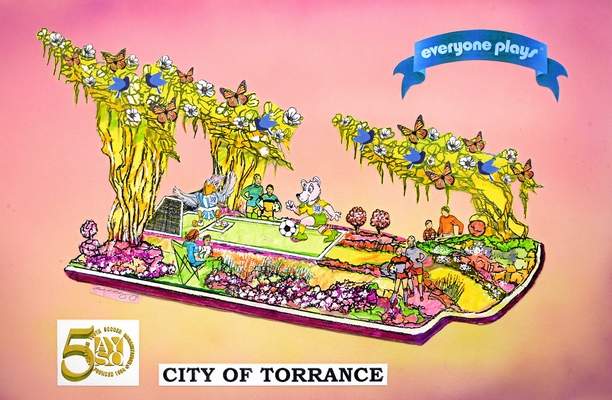
The 2014 float, which celebrates the city’s role in the development of youth soccer, willfeature former Los Angeles Galaxy star and current television commentator Cobi Jones.

Design for Torrance's 2014 Rose Parade float sponsored by AYSO.
Design for Torrance’s 2014 Rose Parade float sponsored by AYSO.

Sources:

Daily Breeze files.

Los Angeles Times files.

Torrance Herald files.

Special thanks to Jordan Smith’s amazing “The Pie Shops Collection” of photos at http://www.flickr.com/people/hollywoodplace/ for the “Rocketship to the Moon” close-up photo, and to the RCA TK40/41 Color Television cameras site, http://www.kingoftheroad.net/colorTV/TVcams-in-action.html.for the photo of the 1958 Torrance float passing the reviewing stand.

The Torrance Drive-In Theatre

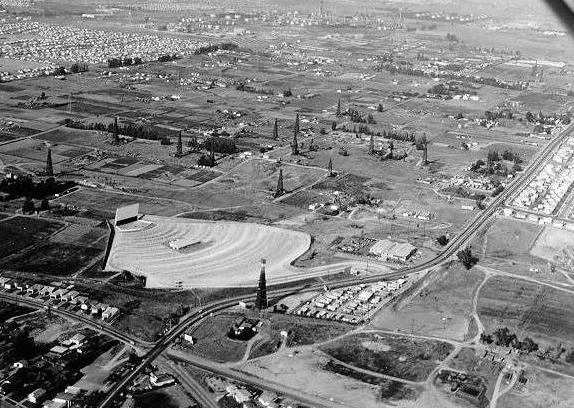
The Torrance Drive-In Theatre dominates this aerial photo of West Torrance taken in 1956. Torrance Boulevard runs diagonally acrost the lower third of the photo. (Credit: Torrance Historical Society.)
The Torrance Drive-In Theatre dominates this aerial photo of West Torrance taken in 1956. Torrance Boulevard runs diagonally from lower left to upper right of the photo. (Credit: Torrance Historical Society.)

The Torrance Drive-In Theatre had its own little corner of West Torrance all to itself when it opened amidst the oil wells at 5501 West Torrance Boulevard on Wednesday, June 29, 1955.

Other area landmarks had yet to dot the nearby landscape. Bishop Montgomery High School wouldn’t open until 1957, and the Daily Breeze building at 5215 Torrance Boulevard wasn’t built until the early 1960s.

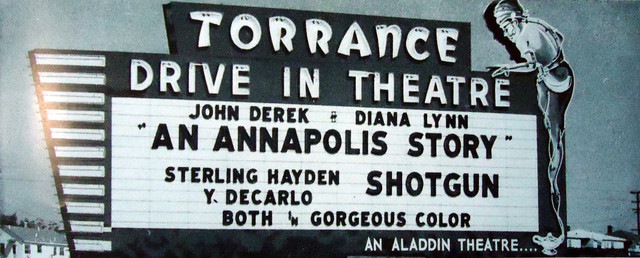
Original sign for the Torrance Drive-In Theatre indicates that it is part of the Aladdin chain. (Photo courtesy Cinema Treasures website)
Original sign for the Torrance Drive-In Theatre indicates that it is part of the Aladdin chain. The films advertised were released in 1955. (Photo courtesy Cinema Treasures website)

When the theater opened, it was part of the then-burgeoning Aladdin chain of large drive-in theaters, which also included the Centinela Drive-In on the Culver City -Westchester border in Los Angeles.

The Torrance Drive-In was built on a 14.9-acre parcel of land, and had a capacity of 1200 cars.

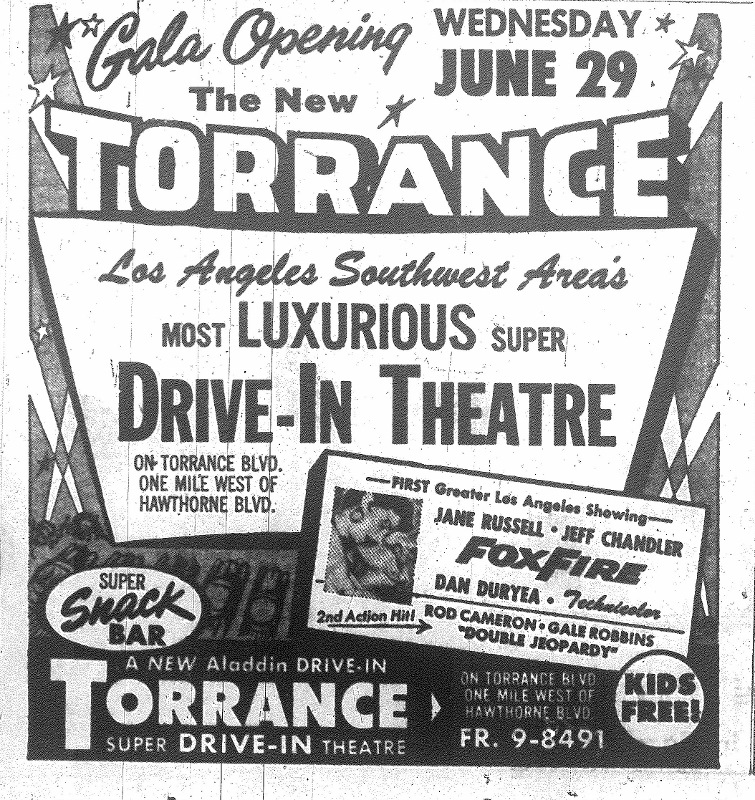
Torrance Drive-In Theatre grand opening ad from the Daily Breeze, Tuesday, June 28, 1955, Page 2.

The opening became something of a gala. The opening double bill consisted of “Foxfire,” starring Jeff Chandler and Jane Russell, and “Double Jeopardy,” a thriller starring Rod Cameron and Gale Robbins. Robbins even made a personal appearance at the new theater’s opening.

The Torrance Drive-In thrived throughout its early years, as most California drive-ins did during that era. In fact, it quickly became a target for robbers.

On April 18, 1956, less than a year after the grand opening, Louis A. Baca of Lennox came into the theater’s office ostensibly in search of work as a painter.

After being told no such work was available, he produced a .38 revolver and demanded money from the theater’s safe. He forced the theater’s manager, 31-year-old Fred Chancia, to open the safe, then tied him up.

After taking $700, he still wasn’t satisfied. He untied Chancia so he could take him to what he believed was a second safe. When he got free, the one-armed ex-boxer Chancia managed to conk Baca on the head with a portable electric heater, causing the robber to drop the gun.

The two began fighting, and during the struggle Chancia got ahold of the gun, which he began firing wildly. Five shots were fired in all, but no one was hit. Police and sheriff’s deputies arrived shortly thereafter, and arrested Baca.

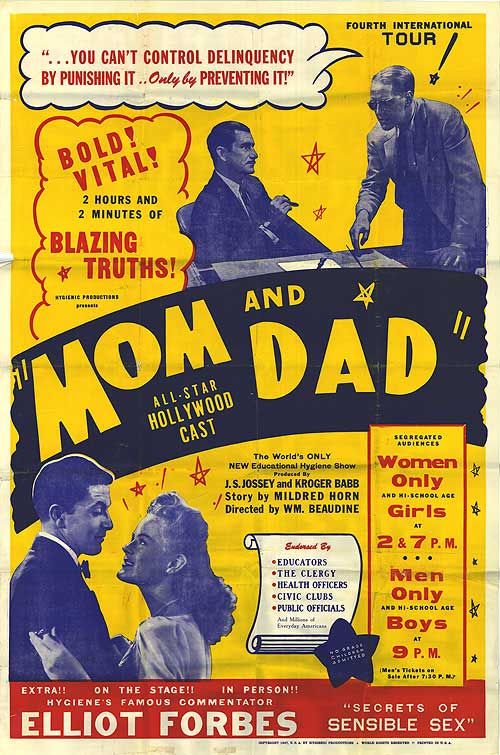
"Mom and Dad" was first released in 1945, but played on the exploitation circuit for years.
“Mom and Dad” was first released in 1945, but played on the exploitation circuit for years.

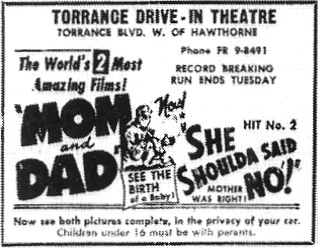
In March 1958, the Torrance Drive-In screened one of the most notorious films of the 1940s and 1950s, “Mom and Dad.” A melodrama ostensibly about sex education, here called “personal hygiene,” and its role in the family, the 1945 film had been playing for years on the exploitation circuit thanks to the marketing genius of its promoter, Kroger Babb.

In addition to salacious ads, Babb’s tactics included having “hygiene commentator” Elliot Forbes appear in person to address the audience before the film was screened. (Sharing the double bill was “She Shoulda Said No,” an first-person anti-marijuana film written by and starring Lila Leeds, who “lived the story.”)

Ad from the Torrance Herald, March 30, 1958, Page 3. (Courtesy Torrance Public Library)

But we digress. The Torrance Drive-In showed all kinds of movies both good and bad like any other drive-in theater during its nearly 33-year existence.

Outfitted from the start with a children’s playground, it also was a gathering place for families as well as teens, even though did receive the unofficial name of the “Torrance Passion Pit.”

Drive-ins started to become victims of their own well-chosen locations when real estate values began to rise in the 1980s. The theaters usually had been situated, shrewdly, on large plots of land near freeways and major arteries, and it eventually became more profitable to use all the acreage they occupied for housing developments and commercial outlets as open land in the area began to disappear.

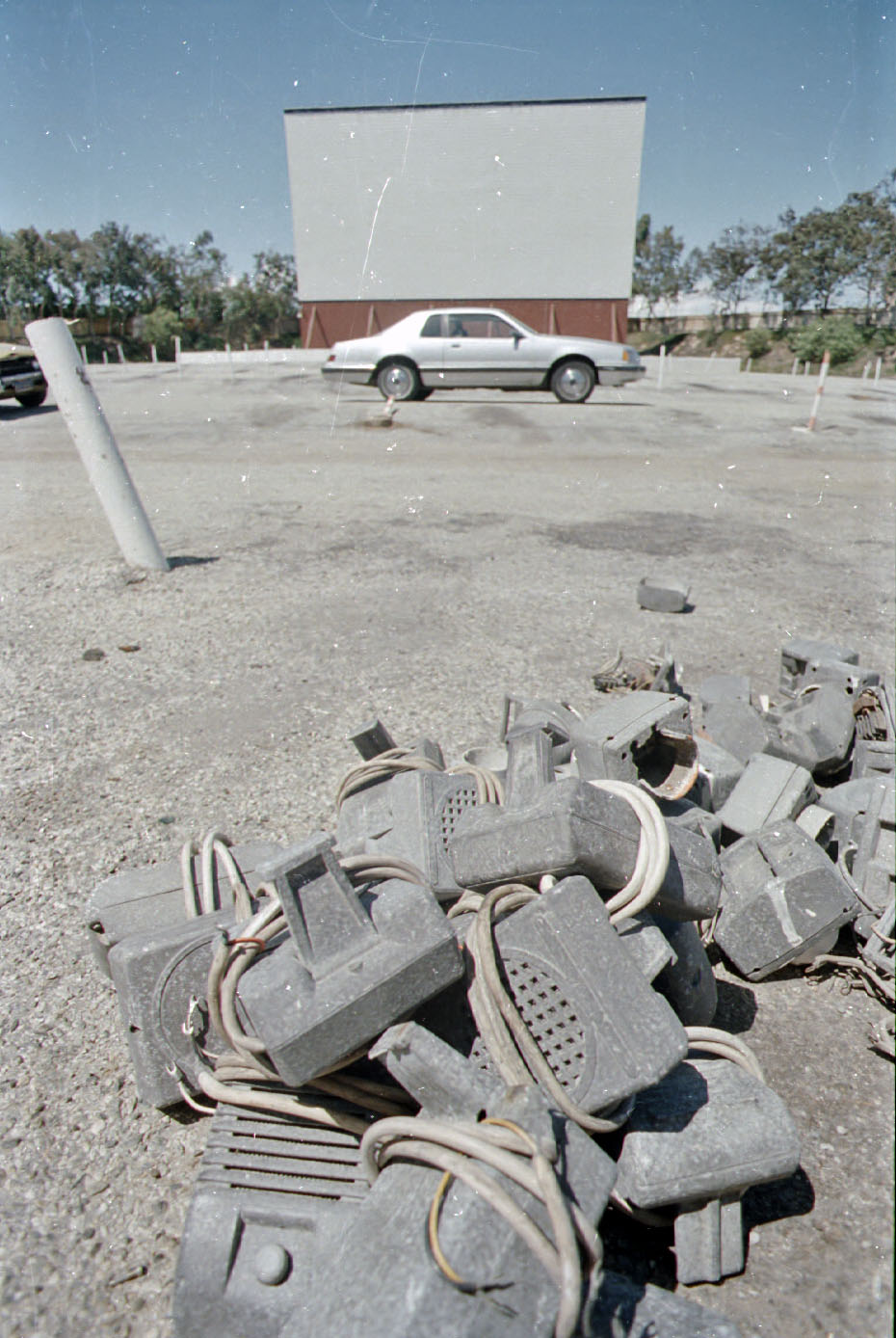
Car speakers gathered by workers lie in a heap as the Torrance Drive-In is stripped of its furnishings following its April 1988 closure. Daily Breeze staff photo.

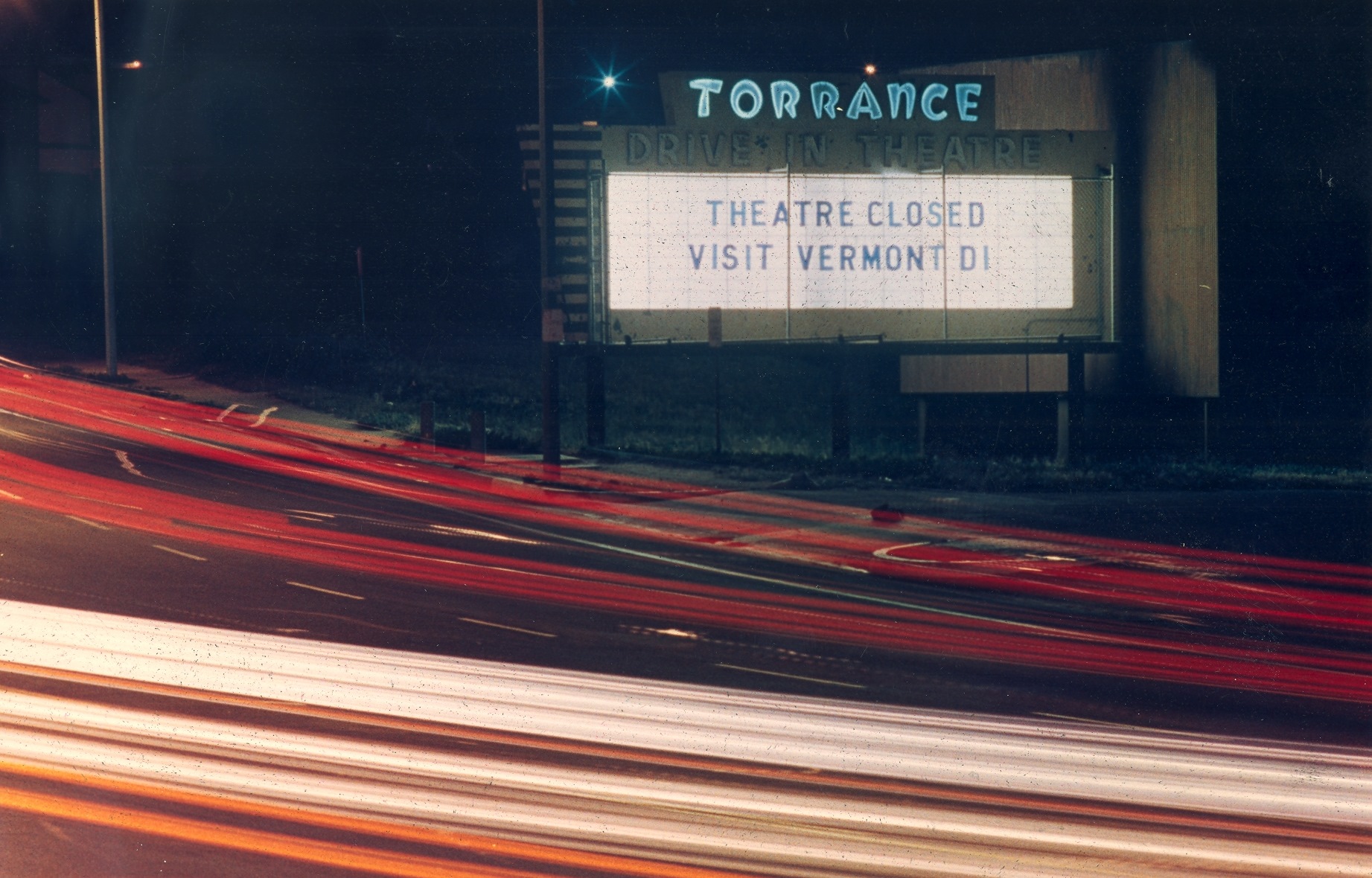
So it was with the Torrance Drive-In, which closed without fanfare on Sunday, April 24, 1988, to make way for a planned residential development.

“Moonstruck” and “Wall Street” were the last films to be screened at the Torrance that night. According to accounts, some of those in attendance hung out one last time in the snack bar rather than watch the film from their cars, while others tried to take any souvenirs from the theater that weren’t nailed down.

“It was really kind of depressing,” said theater manager Henry Castro.

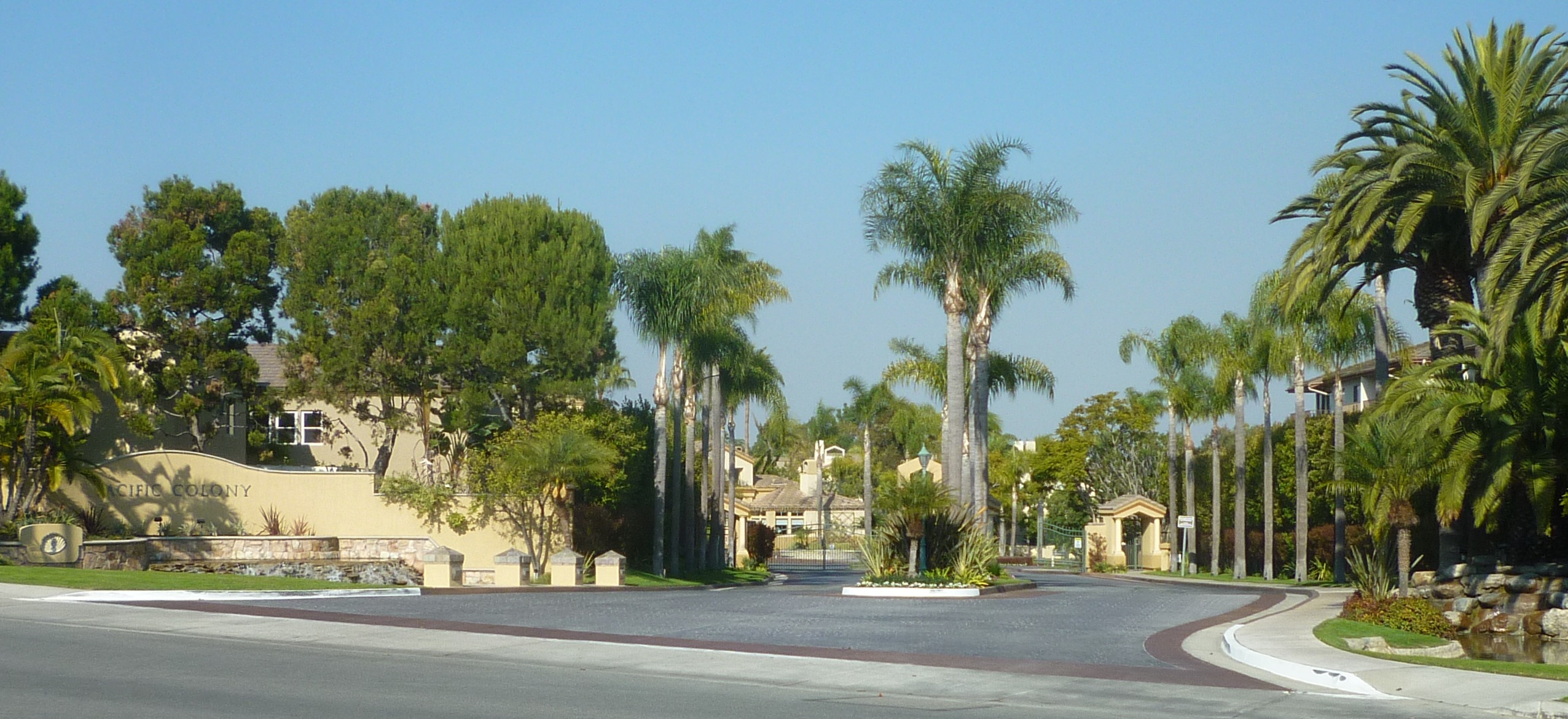
Developers eventually would build the 90-home Pacific Colony gated housing development on the site, but the drive-in property sat idle for a couple of years before construction began, with final demolition of the site occurring in the spring of 1990.

The Torrance Drive-In following its closure, May 1988. Daily Breeze staff photo.

Homes in the Pacific Colony development went on the market in 1991.

The Pacific Colony housing development now occupies the former site of the Torrance Drive-In Theatre. Daily Breeze photo, December 2013.

Sources:

Daily Breeze files.

Torrance Herald files.

Cinema Treasures website.
 

More information:

Cinema Treasures website, http://cinematreasures.org/

Drive-Ins.com website, http://www.drive-ins.com/theater/cattorr

Irons Cottage By The Sea in Redondo Beach

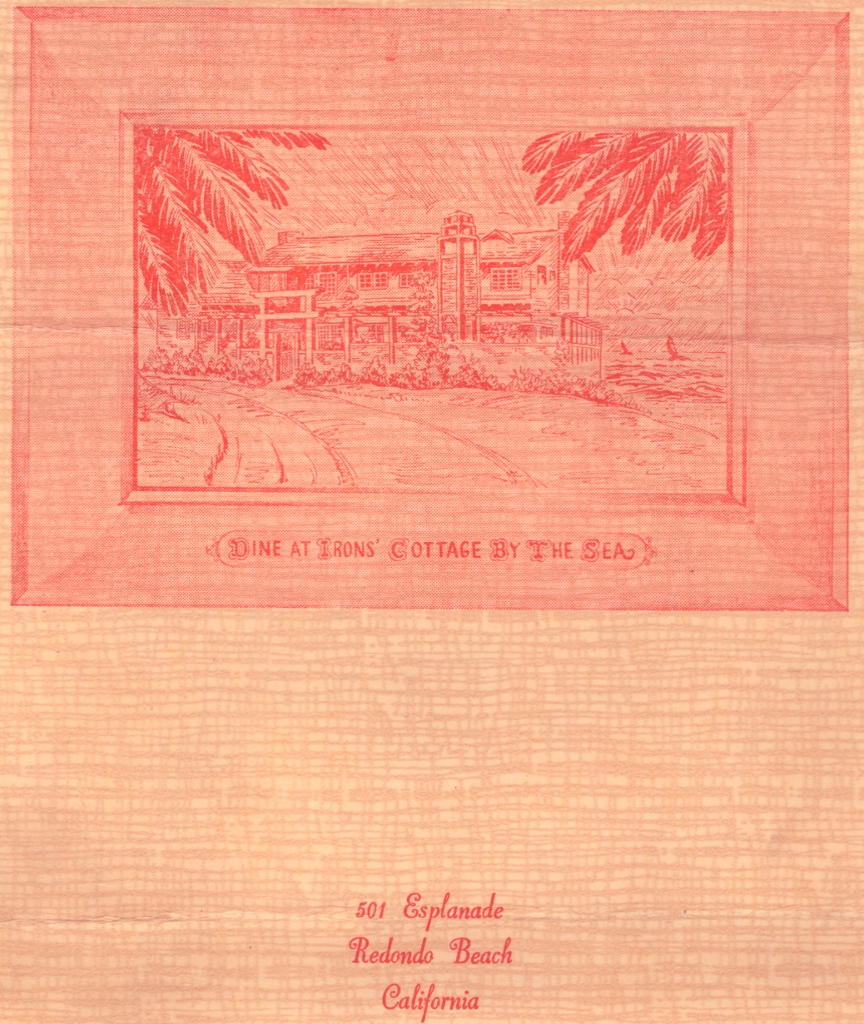
This undated line drawing of Irons Cottage By The Sea comes from a restaurant handout, probably from the early 1950s.

Before its golden years as a South Bay social hub, the Irons Cottage By The Sea family restaurant in Redondo Beach already had become one of the city’s most well-known private residences.

Captain J.C. Ainsworth and his partner R.R. Thompson became central figures in the early development of Redondo Beach when the pair bought the Redondo Beach Development Co. from Daniel Freeman and N.R. Vail in 1889.

Captain J.C. Ainsworth

Ainsworth came by his title honestly, having served as a riverboat captain on the Mississippi and Columbia rivers earlier in his career. In fact, his interest in Redondo Beach arose from the area’s deep offshore canyon which he felt would make it a natural seaport.

Shortly after their purchase, Ainsworth and Thompson built the narrow gauge Redondo Railway and opened the grand Hotel Redondo in 1890, as well as the first wharf in 1889 in preparation for transforming the area into a seaport. Land sales were successful, and Redondo Beach officially incorporated as a city on a 179-10 vote on April 18, 1892.

The seaport the pair had envisioned never came to pass, as the deep canyon made building a breakwater to blunt the impact of frequent storms impractical. But building the hotel and railway turned out to be shrewd moves, leading to the city’s huge success as a tourist mecca for the next few decades.

What does it all have to do with Irons Cottage? Well, Captain Ainsworth’s sons, George and Harry, worked with their father in developing the city’s infrastructure. In 1905, Harry Ainsworth, who also served as one of the city’s first mayors, built the first luxury home in the city, a splendid residence on the Esplanade just south of the Redondo Hotel with a panoramic view of the coastline.

Ainsworth sold the home to Mary Mitchell in 1917. She sold it to George E. Burnell of Arcadia in 1920, who used it as a summer residence for his family. He sold it to James Proudfit Irons and his wife Gertrude in 1946.

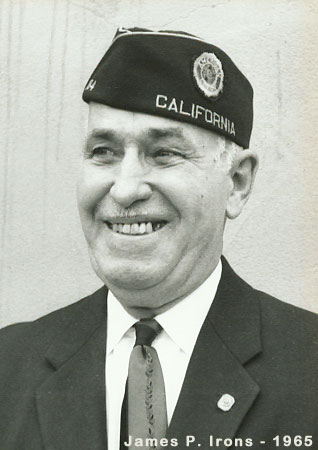
James P. Irons in 1965
James P. Irons in 1965. Photo courtesy Redondo Beach American Legion Post #184.

Irons had bought the home shortly after moving to California from Topeka, Kansas. He and Gertrude then turned what had been known up until then as the Ainsworth residence into a family restaurant that they named Irons Cottage By The Sea. With its pastoral setting and spectacular ocean view, it was a natural, and the couple operated it from 1946 until 1958.

They kept many of the original furnishings, including fireplaces and even some of the original wall paper. The Cottage hosted meetings and social functions regularly.

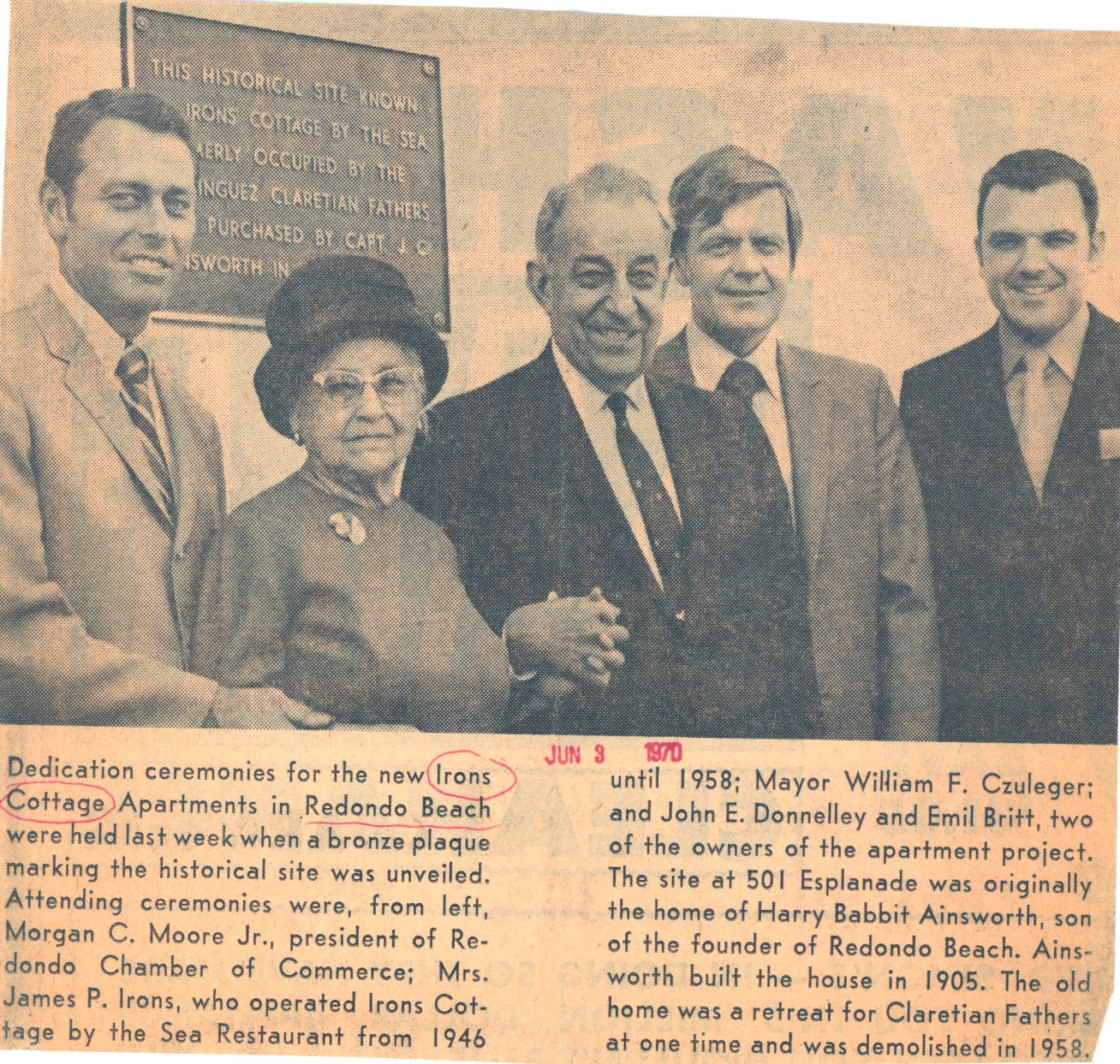
Gertrude Irons, second from left, appeared at the dedication of the new apartment complex. A plaque commemmorating Irons Cottage can be seen on the wall behind her. Daily Breeze, June 3, 1970.
Gertrude Irons, second from left, appeared at the dedication of the new apartment complex. A plaque commemorating Irons Cottage can be seen on the wall behind her. Daily Breeze, June 3, 1970.

Irons had been an engineer before entering the restaurant business. After opening Irons Cottage By the Sea, he served for many years on the Redondo Beach Planning Commission, becoming its chairman in 1951.

In 1958, the restaurant property at 501 Esplanade to Harold and Elsie Gelber, the builders of the Plush Horse restaurant in Redondo Beach. The Gelbers had Irons Cottage demolished in 1958 to make way for their planned 12-story hotel. The city officially approved the development in June 1961, but the Gelbers’ plan never came to fruition.

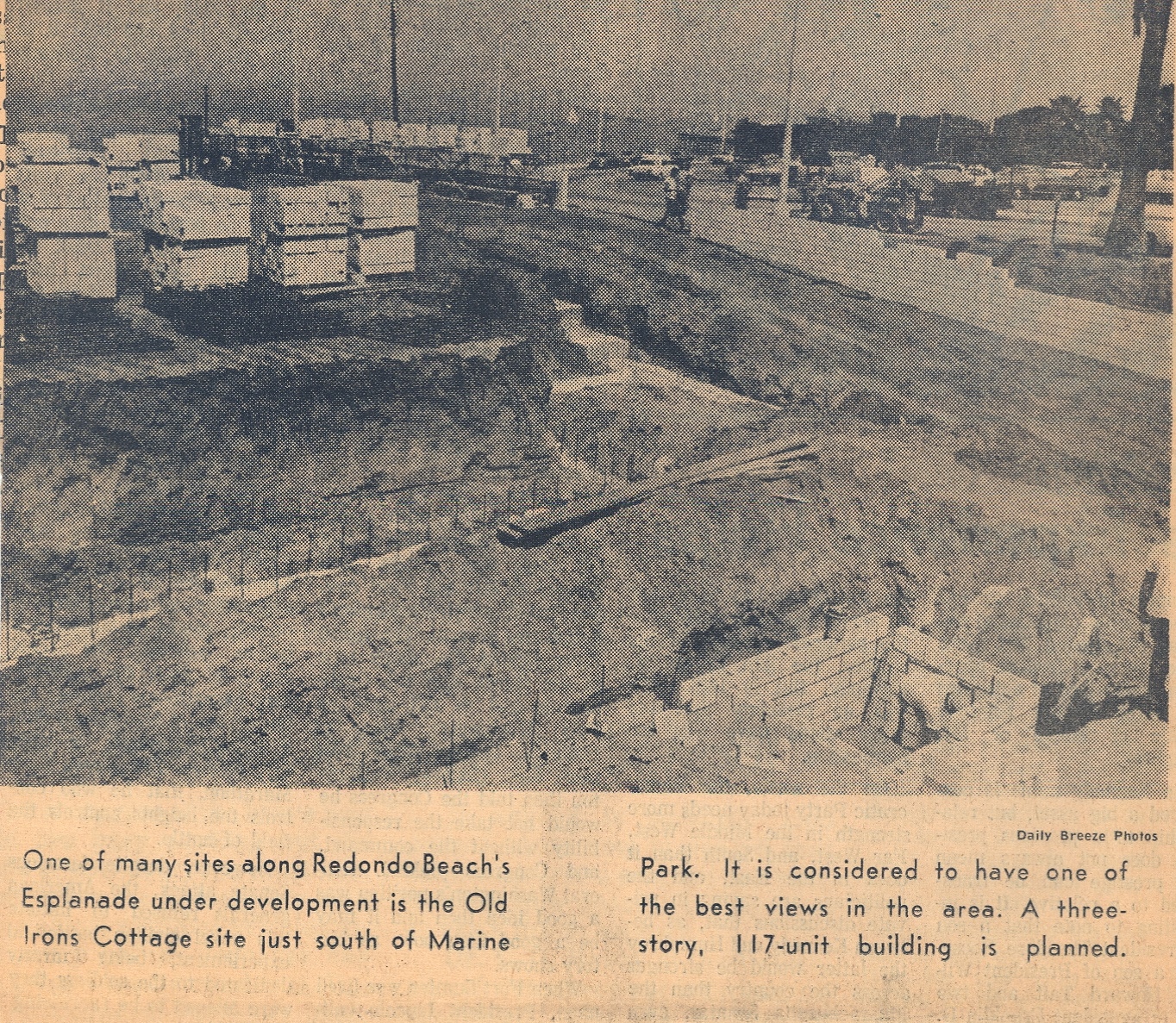
This Daily Breeze clipping from Aug. 11, 1969, Page 9, shows the apartment building under construction at the Irons Cottage site. Daily Breeze files.
After nearly a decade of plans, proposals and rumors, in May 1969, the city approved a four-story, 117-unit apartment complex to be built by developer Charles Cake on the site. The new building’s construction resulted in the removal of the last vestiges of Irons Cottage, 23 date palm trees on the long-vacant site.
Dedication ceremonies for the Irons Cottage Apartments took place a year later, in late May 1970, with Gertrude Irons in attendance.
James Irons died in a Long Beach hospital on Feb. 17, 1970. In addition to the restaurant, Irons had been active with all manner of civic and fraternal activities, including becoming commander of the Redondo Beach American Legion Post #174 in 1965.

Gertrude Irons died on Jan. 14, 1973.

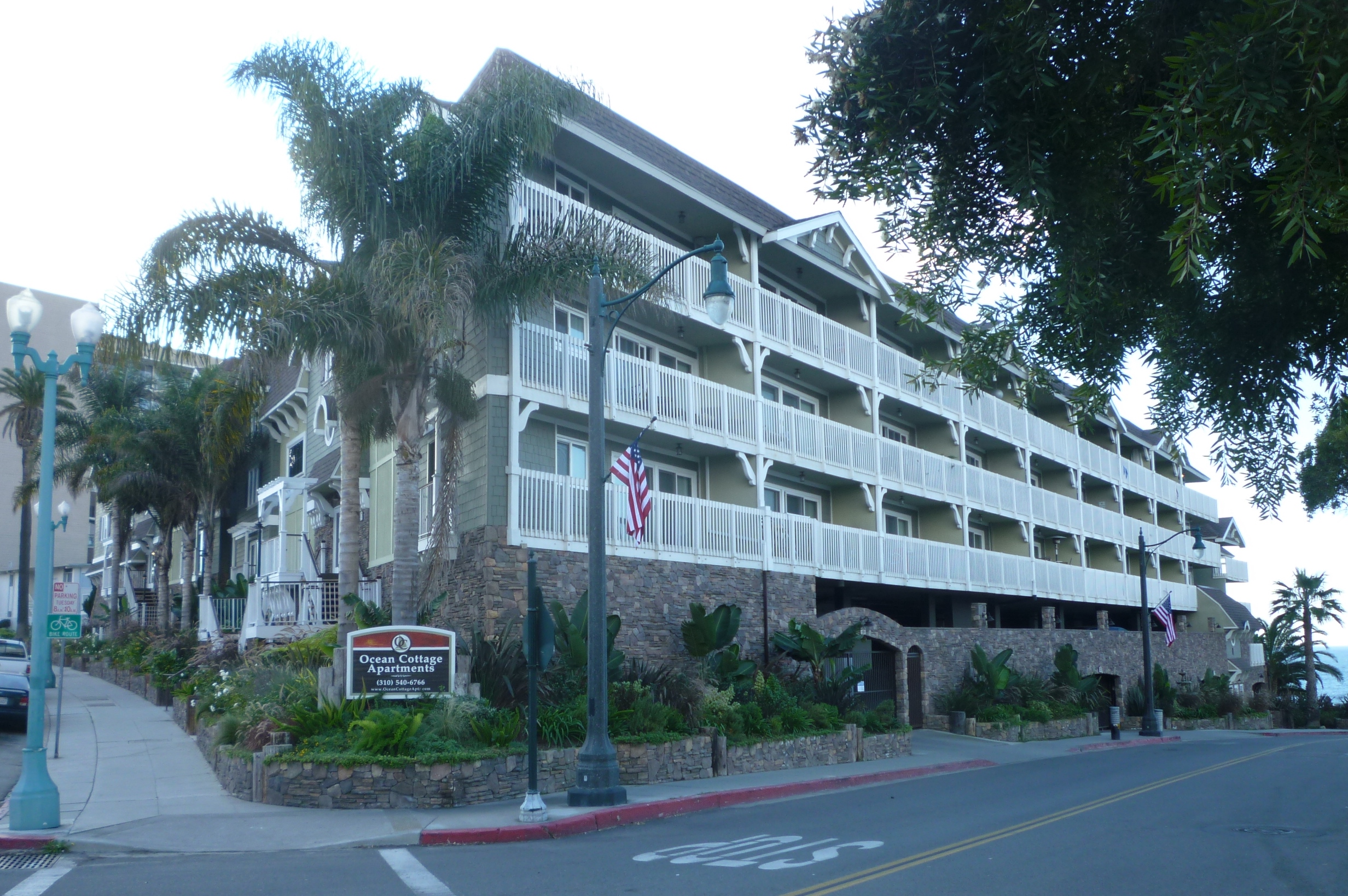
The apartment complex, remodeled and renamed the Ocean Cottage Apartments, still stands at 501 Esplanade.

The Ocean Cottage Apartments currently stand on the site of Irons Cottage By The Sea at 501 Esplanade in Redondo Beach, just south of Veterans Park. Daily Breeze photo, December 2013.

Sources:

Daily Breeze files.

“Irons Cottage By The Sea,” original restaurant one-sheet handout, undated, circa early 1950s.

Los Angeles Times files.

“Ainsworth,” Redondo Beach Historical Society website, http://www.redondohistorical.org/?page_id=820.

Old Redondo: A Pictorial History of Redondo Beach, California, by Dennis Shanahan, Legends Press, 1982.

Redondo Beach American Legion Post #184 website, http://www.post184.com/history.htm.

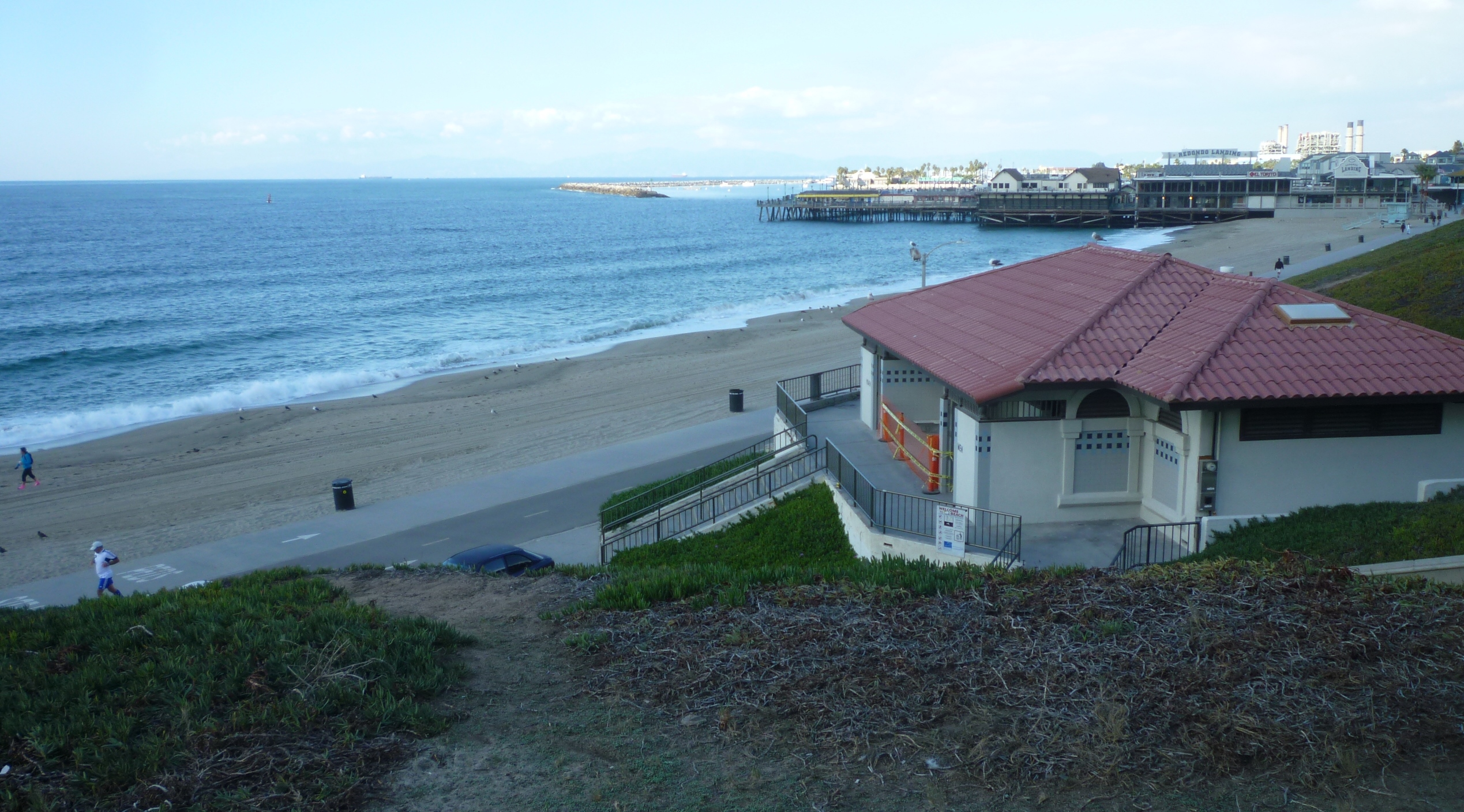
The view from the 501 Esplanade site. Daily Breeze photo, December 2013.

The California Yacht Club in Wilmington

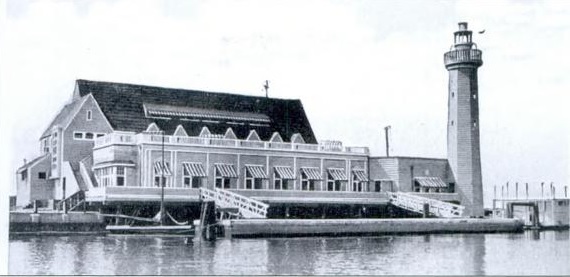
Undated postcard shows the Calfiornia Yacht Club's original clubhouse in Wilmington.
Undated postcard shows the California Yacht Club’s original clubhouse in Wilmington. (M. Kashower Company)

A group of yachtsmen, some from the Los Angeles Athletic Club and some from other boating clubs began banding together in 1921 to form the California Yacht Club.

Only a week after its official forming in February 1922, the group already had enough members and sufficient funding to undertake the building of a permanent clubhouse. On April 13, 1923, the club leased a site for a permanent location of a 9-acre site at the intersection of Canal and Yacht streets, where Berths 193 and 194  fronted the Wilmington harbor’s east basin.

Distinguished architect Edwin Bergstrom, who later would co-design the Pentagon, was brought in to plan the club’s building, which was completed in 1923.

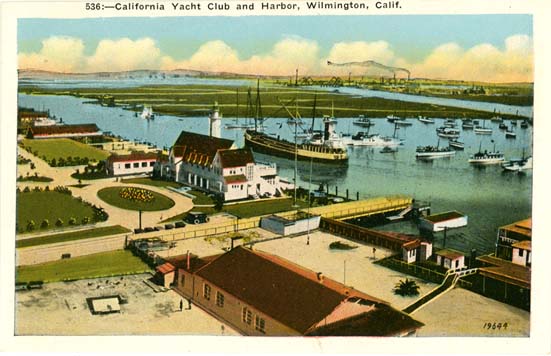
Color postcard shows the grounds of the California Yacht Club in Wilmington.
Undated color postcard shows the grounds of the California Yacht Club in Wilmington.

His design was simple and elegant, a 180-foot-long three-story building on the edge of the water with a graceful lighthouse tower on its eastern end.

Its grounds were carefully maintained, and within a couple of years, the club became a showplace for the Los Angeles elite, including businessmen, celebrities and movers and shakers on the city’s social scene.

Functions of all types were held there, mostly catering to the upper crust. The club’s trophy case also began filling up rapidly, its sailors winning many competitions in the early days.

Disaster struck the popular facility around noon on Thursday, Nov. 28, 1929. Restaurant workers in the club’s busy dining area noticed wisps of smoke coming up from the basement. Almost immediately, the dining area went up in flames.

Fire crews, including three fireboats, battled the blaze for an hour and a half, but could not save the building from being gutted completely by the flames. Fortunately, no one was injured or killed, though newpaper accounts indicate that many precious yachting trophies were lost in the blaze. Damage was estimated at $100,000 at the time.

The club was rebuilt, and continued to host social and yachting events throughout the 1930s, but the advent of World War II changed everything.

On Wednesday, June 3, 1942, the now-venerable yacht club ceased to exist in Wilmington. The United States Coast Guard took over the land in order to establish a headquarters for its new Los Angeles base of operations during wartime.

After the war ended, the Coast Guard moved out. On Jan. 28, 1948, the site was declared surplus to its needs, and the War Department terminated the lease and disposed of the improvements to it on April 13, 1948.

The California Yacht Club members had dispersed to other marinas, especially Newport, by then, and the club never retook the Wilmington location. The facilities had grown dilapidated, and, by the early 1960s, all the buildings on the site had been demolished.

The club members searched for years for a new location. Finally, the development of Marina del Rey seemed like the right opportunity, and the California Yacht Club was reactivated in 1961 and located there.

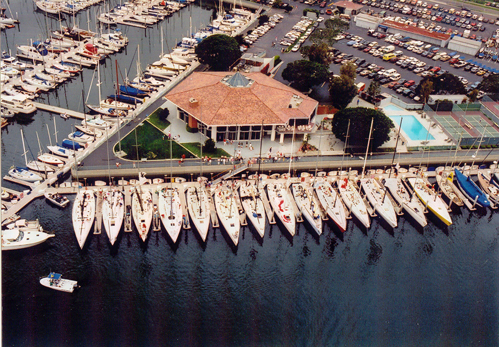
Starting in September 1963, he club’s 100-plus members were based at the new Sheraton Marina del Rey Hotel for several years until a clubhouse could be built at the head of the marina’s main channel. It was dedicated on June 10, 1967, and remains the club’s headquarters and a local landmark to this day.

The California Yacht Club's current location in Marina del Rey. (Photo courtesy California Yacht Club)
Undated photo shows the California Yacht Club’s current location in Marina del Rey. (Photo courtesy California Yacht Club)

As for the former site in Wilmington, the Los Angeles Fire Department Station 49 now occupies 194 Berth, and a variety of boat repair and other small marine firms are located at 193 Berth.

Sources:

“Club History,” California Yacht Club website, http://www.calyachtclub.com/Default.aspx?p=DynamicModule&pageid=361238&ssid=270097&vnf=1

Daily Breeze files.

Los Angeles Times files.

Wilmington, Wilmington Historical Society, Drum Barracks Civil War Museum and the Banning Residence Museum, Arcadia Publishing, 2008.

Piecing together Del Amo Boulevard

Construction continues on the Del Amo Blvd. extension which will connect Crenshaw Blvd. with Madrona/Prarie Avenue in this June 2011 file photo by Daily Breeze Staff Photographer Scott Varley.
Construction continues on the Del Amo Blvd. extension connecting Crenshaw Blvd. with Madrona Avenue in this June 2011 file photo looking eastward toward Crenshaw. The extension opened in August 2012. (Daily Breeze photo by Scott Varley)

Del Amo Boulevard once was described as Southern California’s “longest non-contiguous street.”

A glance at the 1957 Thomas Bros. Street Atlas for Los Angeles County, Pages 67-70, reveals that the throroughfare indeed was once much less thorough than it is today.

It’s as if urban planners along its length all agreed that the street was a good idea, including a segment here and a segment there in various communities along the way, but actually connecting them into a continuous roadway took a good deal of time. Decades, in fact.

The builders of the 110 Freeway segment between 190th Street and Pacific Coast Highway were so sure that Del Amo Boulevard eventually would become a major through street that they built an underpass for it that included a couple hundred feet of isolated roadway on either side so that the inevitable construction of the extension wouldn’t disturb freeway traffic. They were thinking ahead, as that particular stretch of freeway opened in the fall of 1962.

The street has come a long way since then, with that small stretch  of road under the 110 freeway now connected on both sides, part of a major east-west artery.

Del Amo Boulevard now stretches for just over 40 miles, from Diamond Street in Redondo Beach all the way to the Santa Ana River bed, finally petering out just past Gypsum Canyon Road in the Orange County community of Yorba Linda. (The name of the road changes to La Palma Boulevard in the Orange County city of La Palma.)

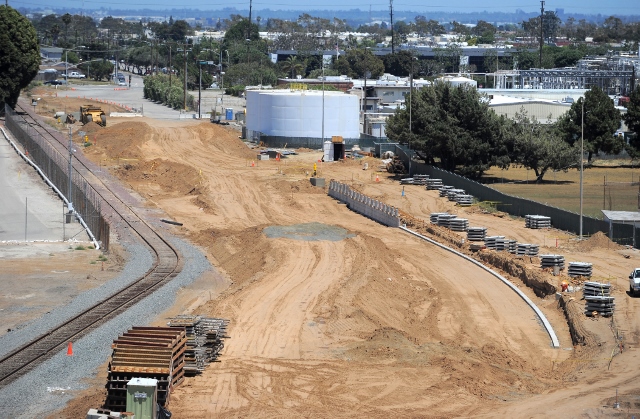
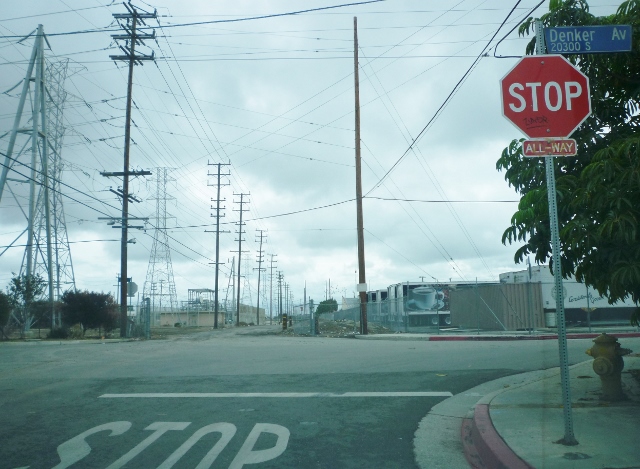
Unfortunately, it’s still not completely uniterrupted. After narrowing to a two-lane road east of Western Avenue, Del Amo’s run stops at Denker Avenue in the Los Angeles city strip. An unimproved roadway continues for a couple of hundred feet before dead-ending in the industrial area.

Del Amo Boulevard ends at Denker Avenue, above, in Harbor Gateway, then picks up again at New Hampshire Avenue just west of Vermont. Daily Breeze photo, November 2013.
Del Amo Boulevard ends at Denker Avenue, above, in Harbor Gateway. An unimproved road continues for a couple of hundred feet between the two center telephone poles before dead-ending. The road picks up again at New Hampshire Avenue just west of Vermont. Daily Breeze photo, November 2013.

It picks up again at New Hampshire Avenue, just west of Vermont Avenue, then continues uninterrupted through Long Beach and into eastern Orange County. (La Palma acts as the northern border of Knott’s Berry Farm in Buena Park.)

The street was among the many South Bay features to receive the “Del Amo” name, in honor of Dr. Gregorio Del Amo. Del Amo was a physician who married Maria Susana Delfina Dominguez, one of the six sisters who inherited the Rancho San Pedro Spanish land grant from her father, Don Manuel Dominguez.

The parcel belonging to the Del Amos included much of present-day Torrance, including the land where the Del Amo Fashion Center and Del Amo Financial Center now stand. After oil was discovered on the land, the nascent City of Torrance voted to annex the Del Amos’ property on Feb. 23, 1926.

After the roadway’s fragmented earlier years, major pieces of the Del Amo puzzle have been filled in over the years.

A key link connecting Torrance and Redondo Beach was added when the section of Del Amo Boulevard from Henrietta Street in west Torrance to Prospect Avenue in Redondo Beach was opened on Aug. 27, 1970. The joint project between the two cities cost $181,857 and provided a major link between them.

In central Torrance, a section connecting Madrona and Maple avenues opened in October, 1977. It was built at a cost of $280,000. After it was built, Del Amo then curved into Maple Avenue heading south, a traffic configuration that would last for another 35 years.

At the time, planners were optimistic that the road soon would connect all the way through to Crenshaw Boulevard. (Years earlier, a May 3, 1970 Daily Breeze story indicated that the Crenshaw-to-Madrona segment was slated for construction in 1974 at a cost of $1 million.)

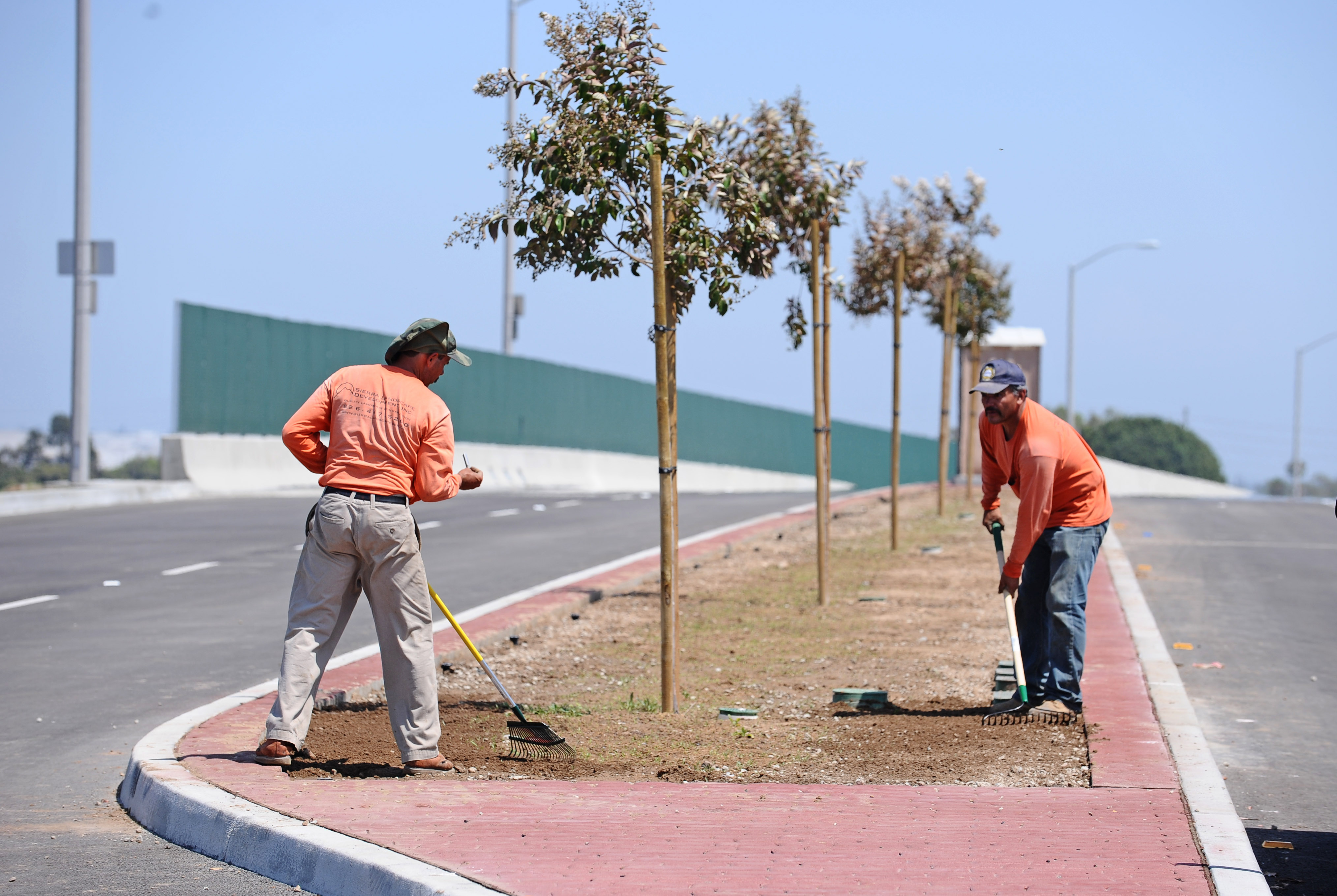
Workers finish up landscaping along the new Del Amo Avenue extension that will open to traffic Wednesday afternoon, between Crenshaw Blvd. and Maple Ave. Photo by Brad Graverson 8-21-12
Workers finish up landscaping along the new Del Amo Avenue extension that opened to traffic on Wednesday, Aug. 22, 2012. It  connected Crenshaw Boulevard and Maple Avenue. (Daily Breeze file photo by Brad Graverson)

Another segment between Crenshaw Boulevard and Van Ness Avenue opened on Feb. 11, 1971, but completion of the Madrona-to-Crenshaw link ended up taking much longer than anticipated.

After years of delays, construction finally began in 2010, and the roadway opened on Wednesday, Aug. 22, 2012. The project created almost 200 jobs and cost $32 million, and the Del Amo-to-Maple curve at last was no more.

A huge chunk of the roadway in Carson was completed in the 1960s. At one point, Del Amo ended at Main Street, and didn’t continue again until Wilmington Avenue, a distance of more than a mile. A 1.1-mile segment from Central Avenue to Avalon Boulevard opened on June 27, 1967, meeting up with a previously completed section between Central and Wilmington avenues.

Various smaller segments in the Carson area were completed in the 1970s, but a major gap remained.

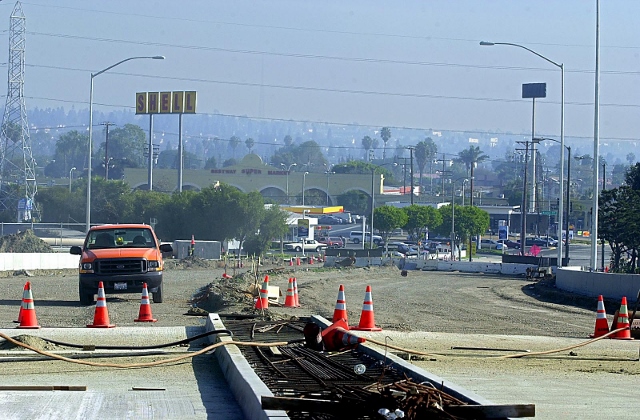
The need for a bridge that would connect Del Amo Boulevard between Stamps Drive just east of Main Street to Avalon Boulevard a mile east by spanning the San Diego Freeway and the Dominguez Channel had been under discussion since at least 1978, but construction on what would become a $17 million project didn’t begin until 1995.

The continuation of Del Amo Boulevard  (here looking east toward Avalon Boulevard in Carson) involved building an overpass over the 405 Freeway and the Dominguez Channel. January 2003 Daily Breeze file photo.
The continuation of Del Amo Boulevard (here looking east toward Avalon Boulevard in Carson, right) involved building an overpass over the 405 Freeway and the Dominguez Channel. January 2003 Daily Breeze file photo.

On May 17, 2003, the bridge and overpass finally opened. The bridge was named for Kay Calas, the Carson city councilwoman who had championed its completion.

The Kay Calas Bridge stands as the last piece in the Del Amo Boulevard jigsaw puzzle for now, as no project to complete Del Amo through that last remaining interruption in the city and county strip area between Denker and New Hampshire avenues seems likely in the near future.

Sources:

Daily Breeze files.

Mary Davis and the Portofino Inn in Redondo Beach

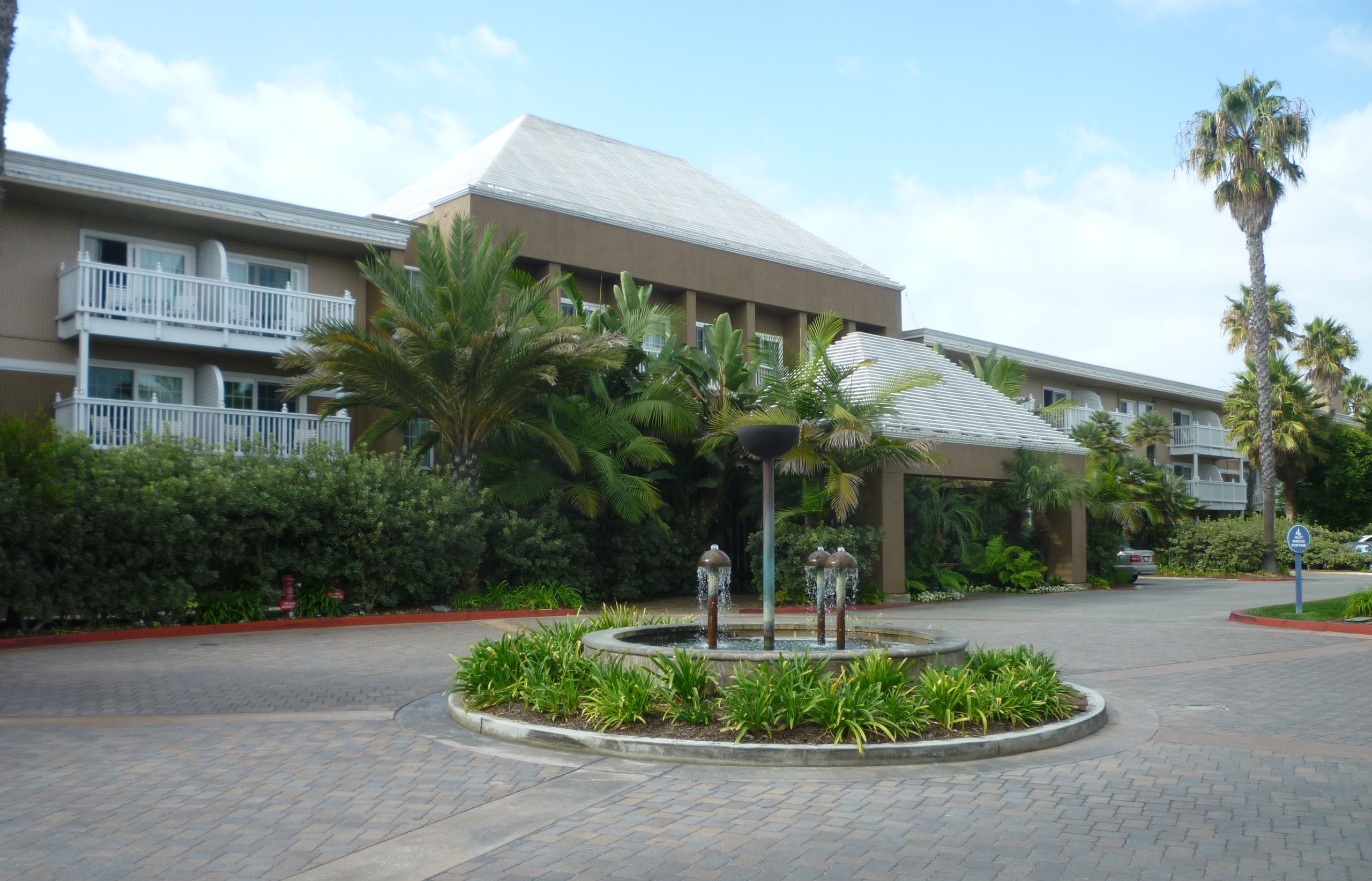
Entrance to the Portofino Inn in Redondo Beach. Nov. 2013 Daily Breeze photo.

The redevelopment of the Redondo Beach waterfront in the 1960s had a profound effect on the entire city. Whole city blocks disappeared in the transformation that included the development of King Harbor and adjacent properties.

The first major project to be developed on the land surrounding King Harbor was the Portofino Inn. Ground was broken for the hotel/apartments/marina complex in September, 1963.

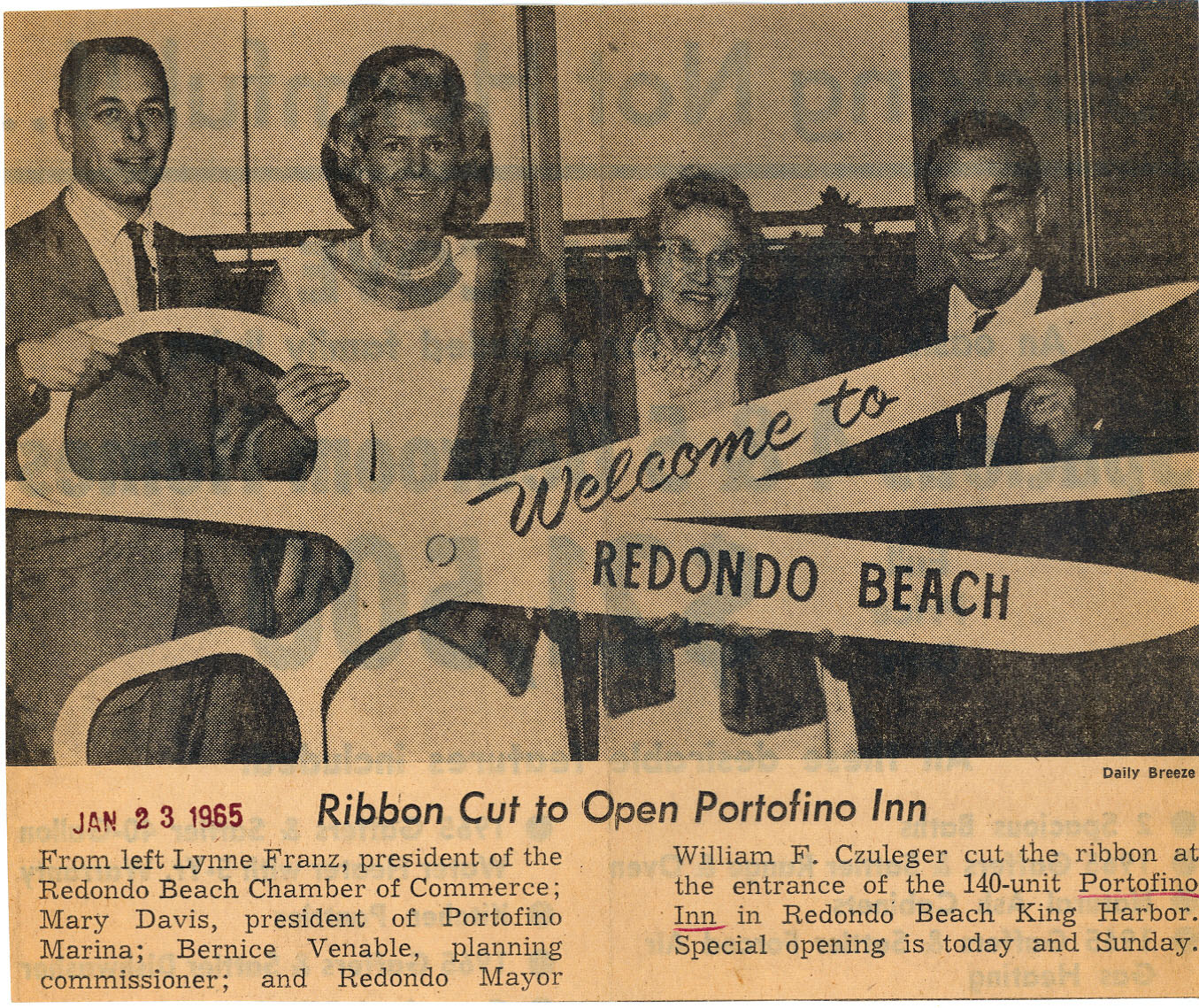
Giant ribbon-cutting scissors are once again called into action as the Portofino Inn holds its grand opening. Mary Davis is second from left in this Jan. 23, 1965 Daily Breeze clipping.

The leaseholder, Mary Davis, fell into the project almost by default. She was a race car driver by profession, a pioneering woman in a field dominated by men. She also did stunt driving in films such as “The Devil’s Hairpin” (1957), a racing film starring Cornell Wilde, and “On The Beach” (1959), in which Fred Astaire plays a former race car driver.

She opened her first restaurant, the Grand Prix, on Sunset Boulevard in West Hollywood in 1950 while her racing career was going strong. It catered to the auto racing community.

Mobil tapped her in 1957 to become the first woman ever to race in its annual Mobil Gas Economy Run. “They wanted a pretty face to help promote the run,” she said years later. “They never dreamed a woman in a Plymouth could win.”

But win the race she did, garnering nationwide headlines in the process.

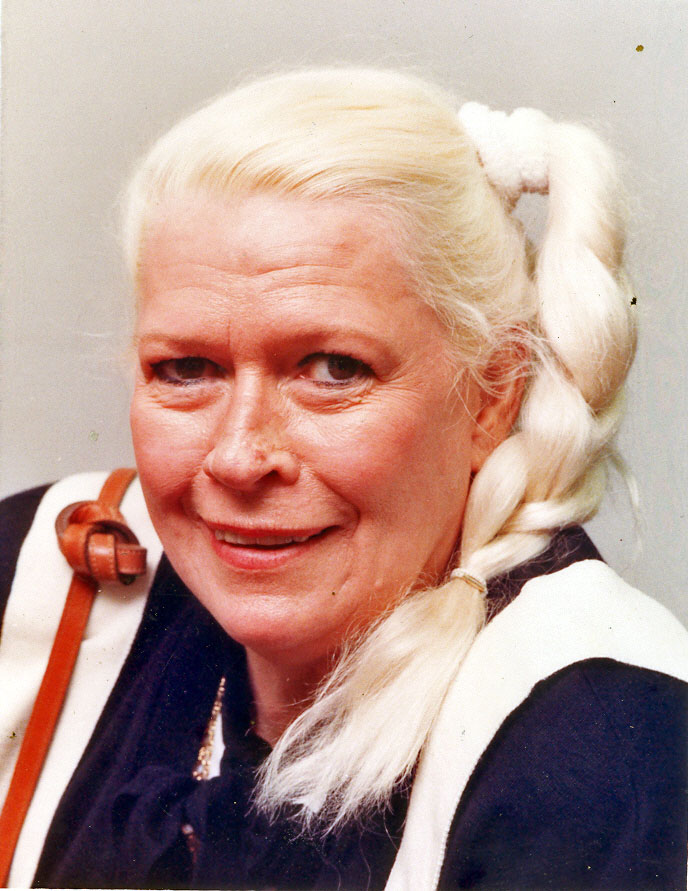
Mary Davis. 1988 Daily Breeze file photo.

Thanks partly to her affiliation with Mobil, Davis borrowed $8,000 in 1960 in order to bid on a new fuel dock for small boats to be built as a part of the King Harbor project. The City of Redondo Beach informed her she’d have to bid on the entire 8-acre parcel, not just the dock.

So she did. The project included the inn, 225-boat marina, a bar, coffee shop, gourmet restaurant, 25-unit apartment building, yacht brokerage, beauty salon – and the fuel dock.

In 1964, Davis became president of the Portofino Corp. The complex opened on the weekend of Jan. 22-Jan. 24, 1965.

The Portofino Inn was one of the three largest hotels in the South Bay when it opened. Its stunning location on the edge of the Pacific proved a major asset, and Davis’ investment gradually paid off.

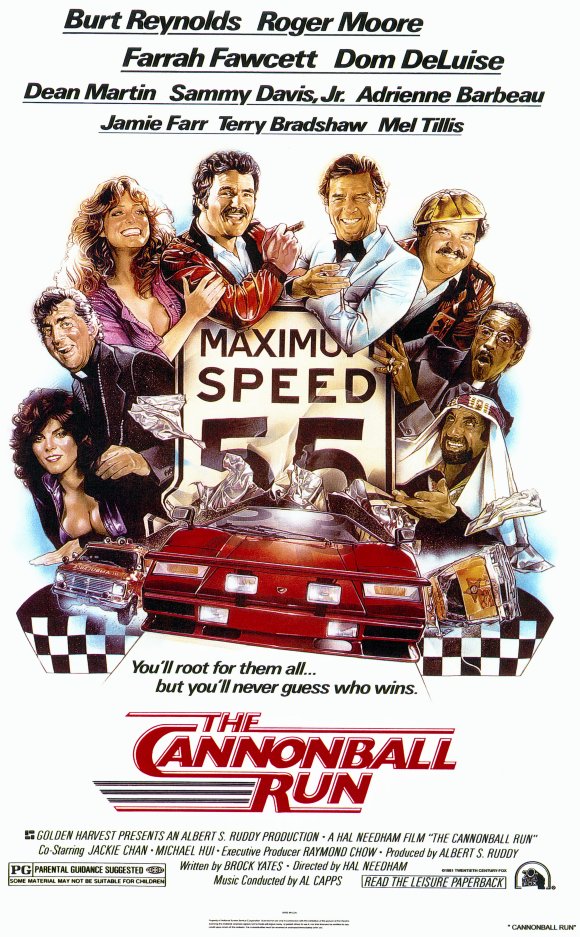
cannonball-run-movie-poster-01In 1971, Davis brought the Portofino some notoriety when she allowed the organizers of the inaugural Cannonball Baker Sea-to-Shining Sea Memorial Trophy Dash to end their highly unathorized coast-to-coast car rally at her Inn.

The Dash, started by writer/driver Brock Yates and Car and Driver editor Steve Smith, began at the Red Ball Garage in New York City. The only rules were that entrants had to get from New York City to the Redondo Beach finish at the Portofino in the shortest possible time.

The event was run five times during the 1970s, and inspired at least three films, “Gumball Rally,” and “Cannonball” in 1976, and the higher-profile Burt Reynolds action comedy, “The Cannonball Run,” in 1981.

After more than two decades at its helm, Mary Davis sold her interest in the hotel late in 1986.

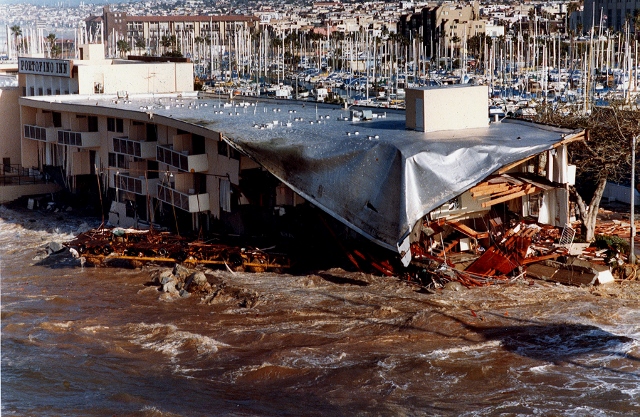
Redondo Beach Portofino Inn's southern section collapses after huge storm waves smash a gap in harbor breakwall and surge into the marina on  Jan. 18, 1988. Daily Breeze file photo.
Redondo Beach Portofino Inn’s southern section collapses after huge storm waves smash a gap in harbor breakwall and surge into the marina on Jan. 18, 1988. Daily Breeze file photo.

Two years later, an epic natural disaster struck the Inn. Huge waves generated by a large storm battered the entire west-facing Southern California coastline on Sunday, Jan. 17 and Monday, Jan. 18, 1988, and the Portofino was hit especially hard.

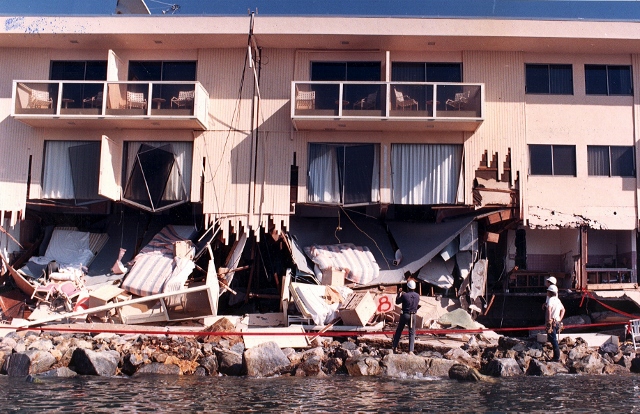
The waves battered the hotel, flooding the rooms and collapsing a third of the structure. Water washed through from the west side of the building all the way through and out the east side. Rooms that remained were left exposed to the elements.

January 1988 photo of the Portofino Inn following winter storms that severly damaged the hotel and Redondo Pier. Daily Breeze file photo.

The damage was catastrophic. The Portofino had to close for 18 months. Repairs were made at a cost of $13 million, and the complex finally reopened on June 20, 1989.

The renovation included a higher breakwater rebuilt by the U.S. Army Corps of Engineers, a 54-inch high splash wall on the Inn’s ocean-facing side, and concrete reinforcement of rooms and outdoor patio walls.

Today, the Portofino Inn and the associated complex remains a popular destination for both business meetings and personal travel. Noble House Hotels & Resorts, a national chain of luxury hotels, currently owns the 161-room Inn and its ancillary operations.


Sources:

Daily Breeze files.

Los Angeles Times files.

Old Redondo: A Pictorial History of Redondo Beach, Californa, by Dennis Shanahah, Legends Press, 1982.

Links:

The Portofino Inn: http://www.hotelportofino.com/

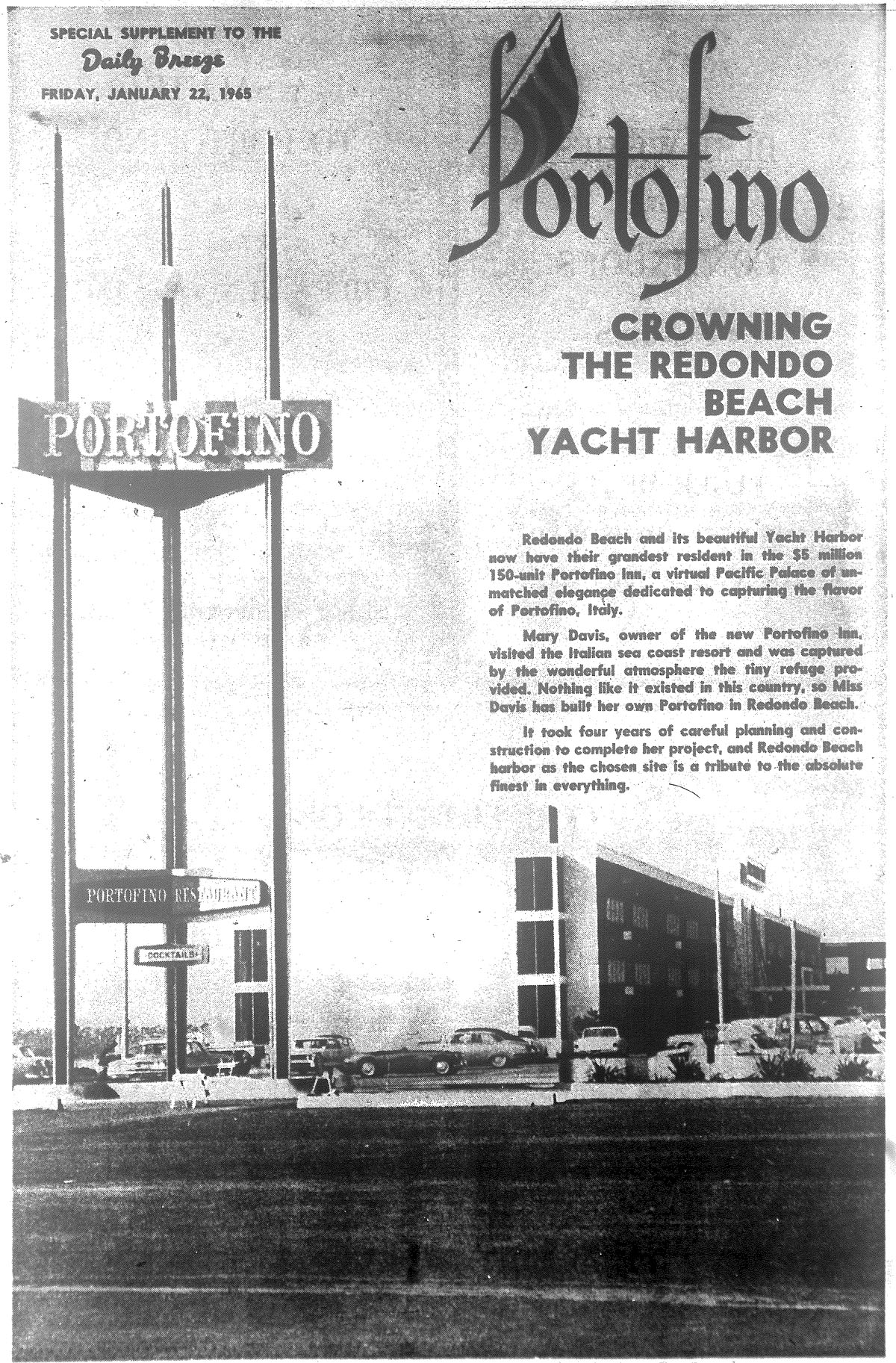
Cover of Daily Breeze special section on the occasion of the Portofino Inn's grand opening on Jan. 23. 1965.
Cover of Daily Breeze special section on the occasion of the Portofino Inn’s grand opening. From the Jan. 23. 1965 edition.
Is this your new site? Log in to activate admin features and dismiss this message
Log In