
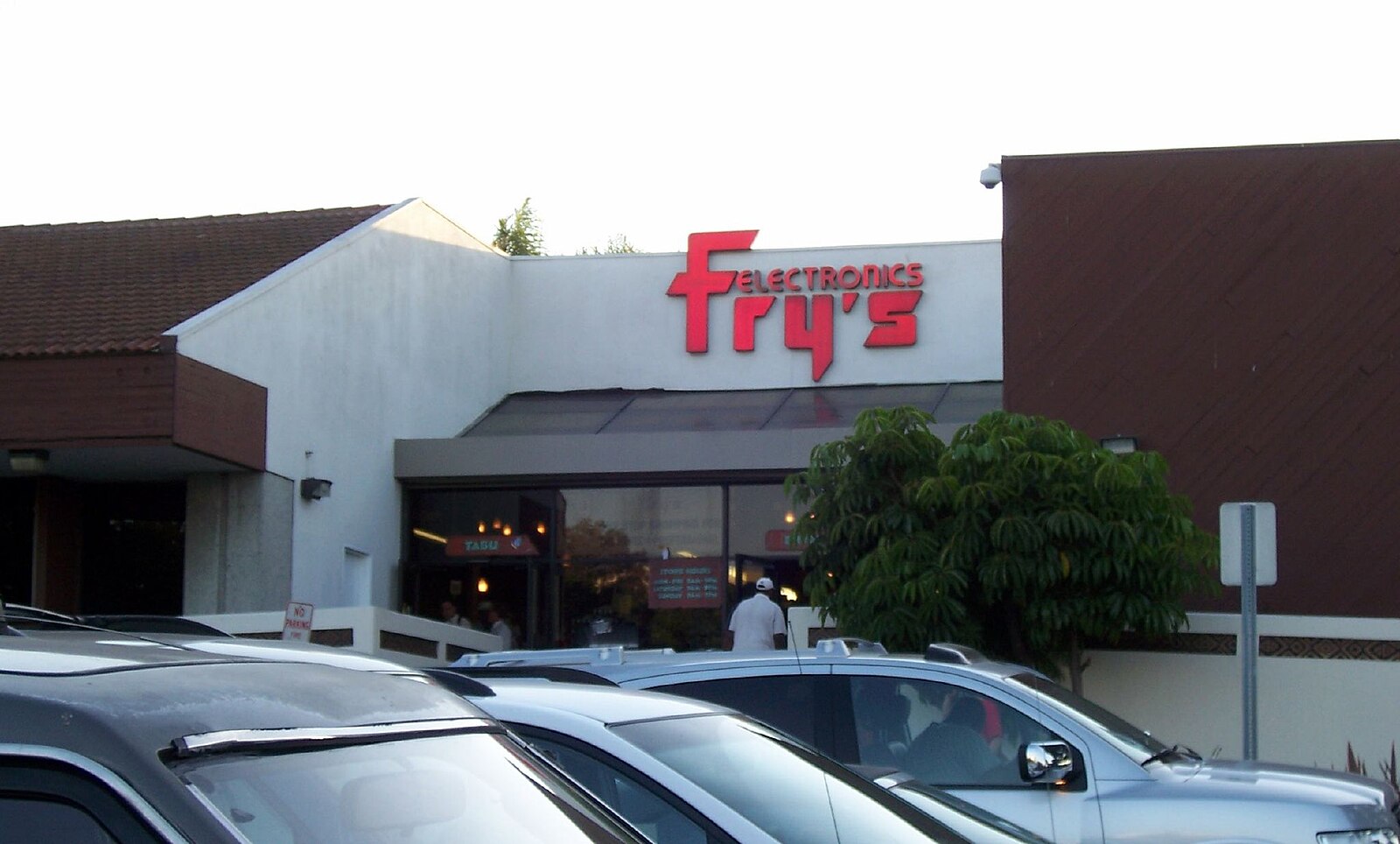
The shelves at Fry’s Electronics in Manhattan Beach were stocked with everything the 1990s-early oughts techie could possibly ask for, along with lots of other things they wanted more than needed.
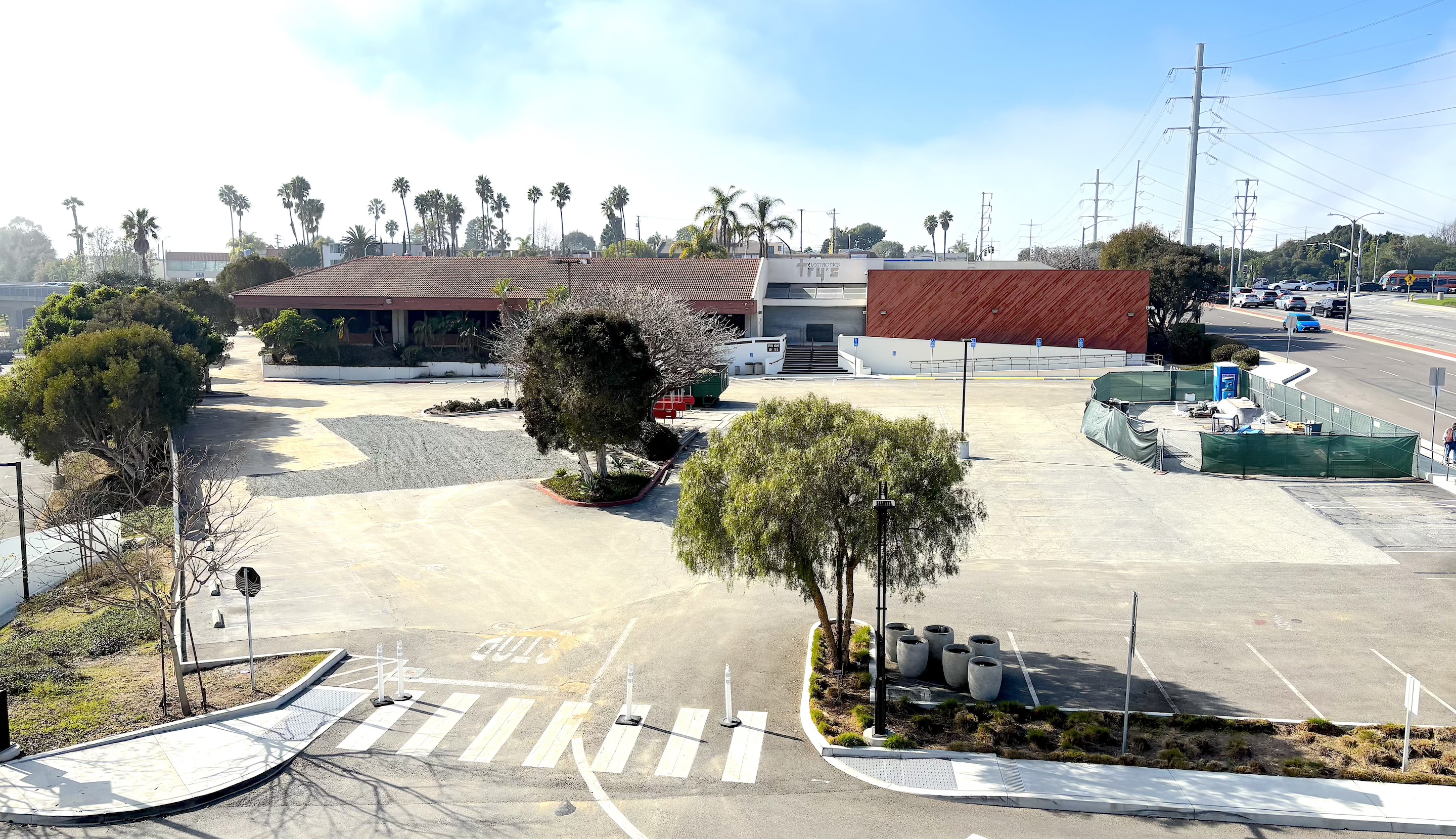
The 48,000-square-foot store at 3600 N. Sepulveda Blvd. opened in February 1992 on the southeast corner of Sepulveda and Rosecrans Ave., adjacent to the Manhattan Beach Village Mall. It had its own parking lot, and was separated from the mall by the Southern Pacific railroad right-of-way.
Supplies for the do-it-yourself computer nerd were its main stock in trade. Ample selections of circuit boards, memory chips, keyboards, monitors, mouse pads, power strips and the like captivated both casual tech shoppers and hardcore enthusiasts into building their own souped-up custom home computers.
But the store also stocked a wide variety of other items, from televisions and refrigerators to video games, DVDs, compact discs and magazines. Shoppers preparing to check out also ran a gamut of all manner of junk food items and energy drinks at the checkstands, ostensibly for consuming while they computed.
Computer stores were a hot retail trend at the time. Computer City and CompUSA stores began opening, and longtime electronics retailer Radio Shack began shifting its inventory to reflect the new fascination with personal computing. Tandy Corp, Radio Shack’s parent company later started its own full-fledged computer retail chain, Incredible Universe, in 1992.
Still, it was a considerably different line of business than the Fry family had been conducting previously. In 1954, Donald Fry bought out Ray’s Market in the Contra Costa County town of El Sobrante in the Bay Area and renamed it Fry’s.
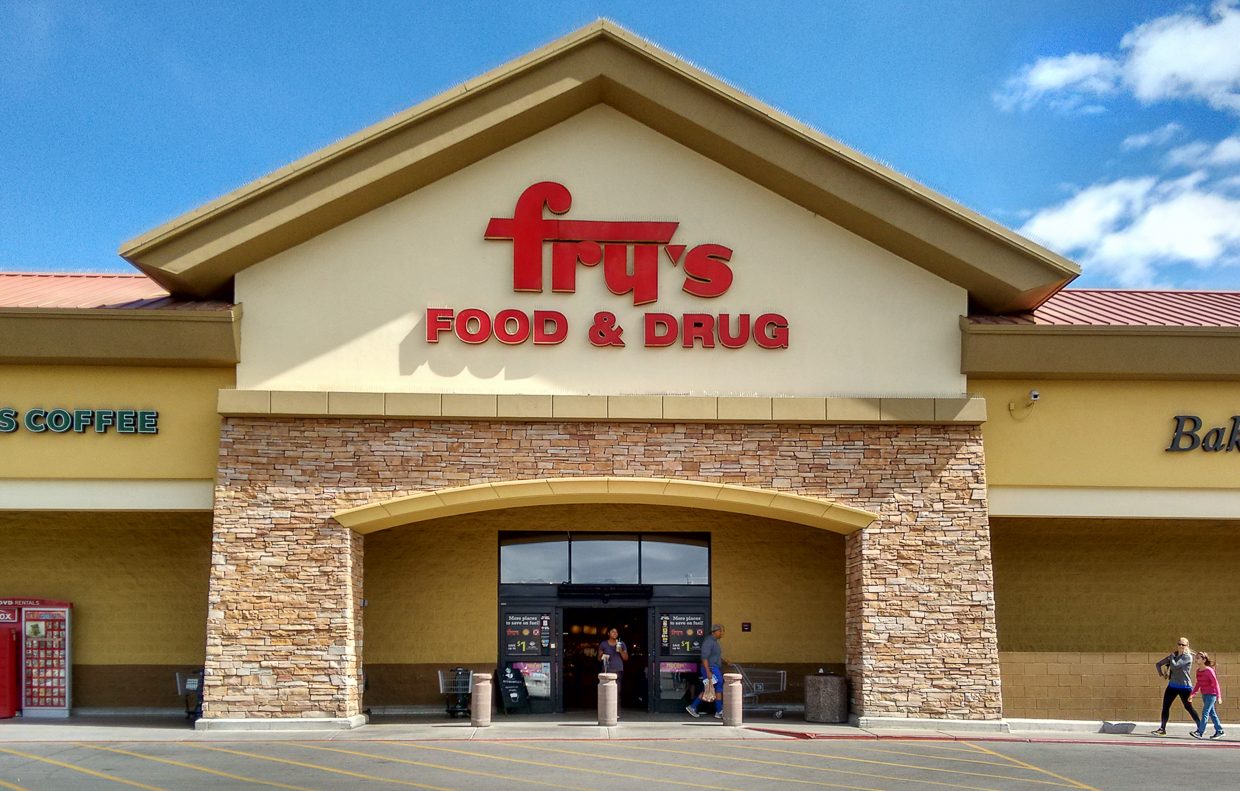
Together with his brother, Charles, they established a chain of Fry’s Food and Drug stores in northern California and Arizona that grew to more than 40 locations during the 1950s. The chain thrived, and was acquired by the larger Dillon Companies grocery firm in 1972. Fry stayed on as an executive.
After Dillon was acquired by the mega-grocery firm Kroger Co. in 1983, Donald Fry cashed out and gave his sons, John, Randy and David, $1 million each from the proceeds of the sale. John convinced his two brothers and his girlfriend, Kathy Kolder, to join him in a new startup venture, and the first Fry’s Electronics store opened in Sunnyvale, California in 1985.
Influenced by the original family business, the Fry brothers at first offered a wider range of grocery items for sale in their stores, including a full produce section. Those were quickly phased out in favor of just drinks and snacks aimed at tech junkies.
Their timing was right. The store was a success, and two more were opened in northern California before the company opened the Manhattan Beach store.
The Fry brothers began looking at the stores as entertainment destinations as well as retail outlets. They hired designers to give their various locations thematic designs and decor.
Thus, the Burbank location was given a 1950s science fiction film theme, with a flying saucer crashing into its facade, the City of Industry featured industrial steampunk motifs, and Woodland Hills had an Alice in Wonderland theme.
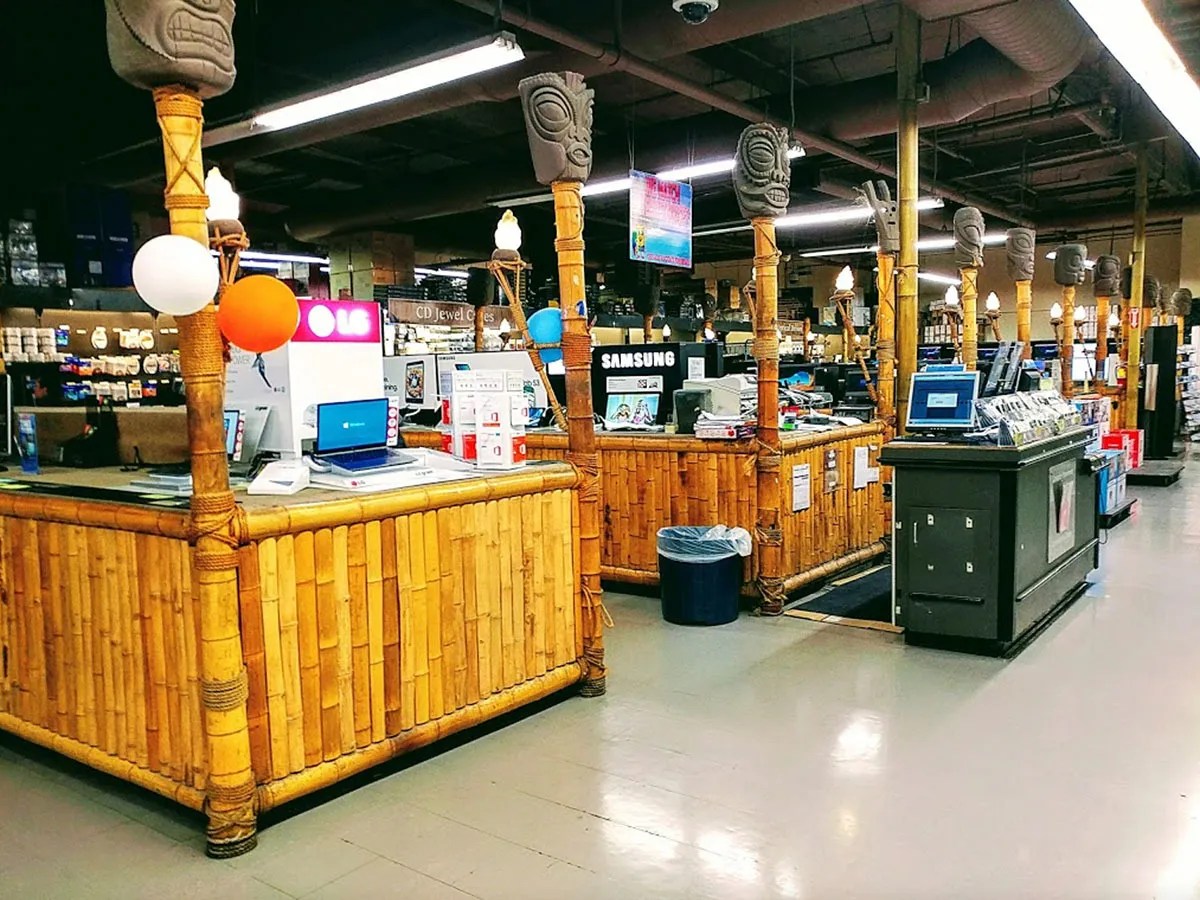
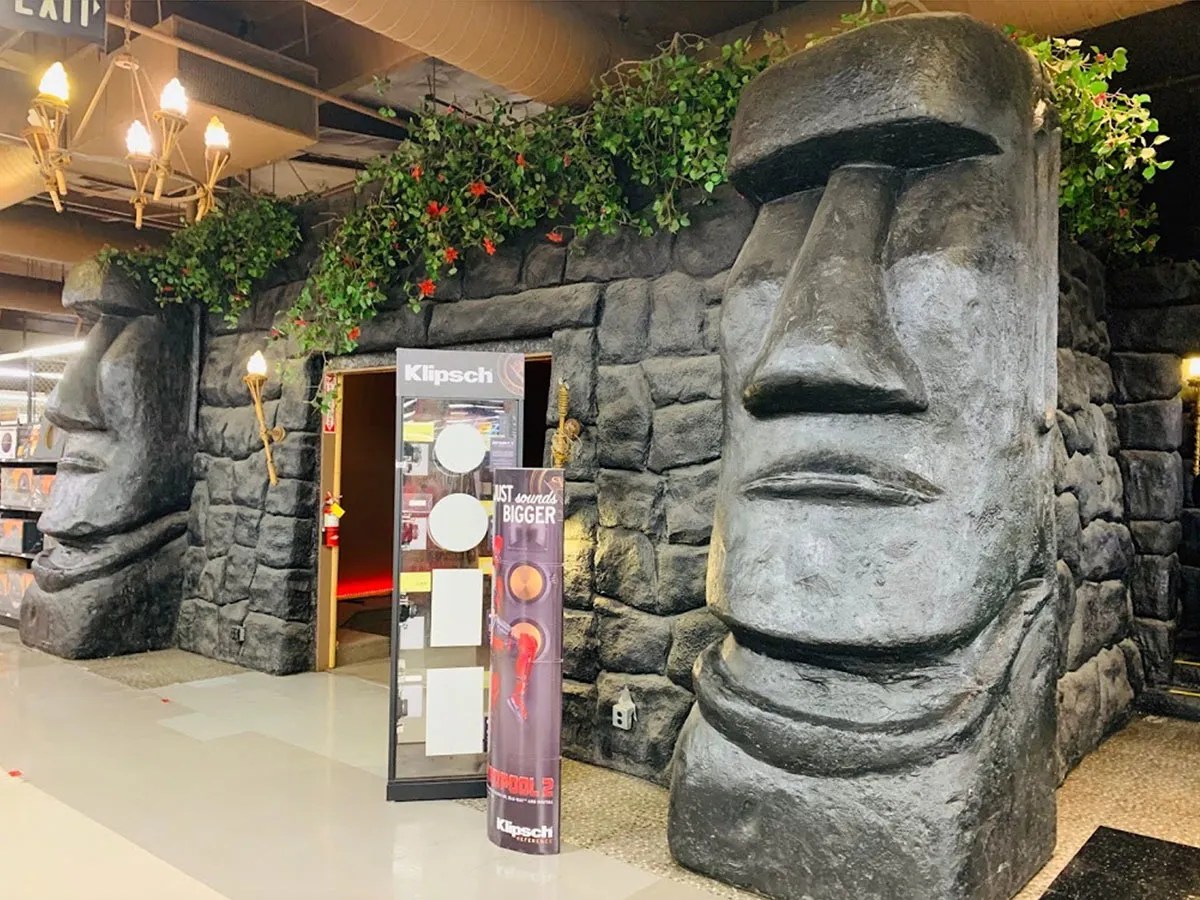
Appropriately, the Manhattan Beach store was given a beach/tiki theme when it opened in 1992. It had an outdoor koi pond, and its interior was festooned with palms, bamboo and tiki figurines. In addition, larger statues of an island god guarded the entrance to the theater/listening room in the store.
Fry’s Electronics acquired six of those Incredible Universe locations from Tandy Corp. in 1996. By August 2014, the firm owned 34 retail stores in nine different states.
By then, however, the rise of online retailers such as Amazon.com that had begun in the early 2000s had started to put a huge dent in Fry’s core business. Competitors such as Circuit City and Best Buy also offered similar products. Also, the build-it-yourself fervor had cooled as personal computers became more sophisticated.
Fry’s also had developed a negative reputation for poor customer service, its outlets accused of making it difficult for consumers to return purchases for refunds.
By the late 2010s, customers began to notice that the shelves at Fry’s were less full of merchandise than they previously had been.
During 2020, the company closed four of its stores, and the end seemed to be nearing. It came suddenly on Feb. 24, 2021, when the company abruptly announced the closure of its remaining 30 retail locations, including the Manhattan Beach store. Spokesmen cited the downturn in the economy as the result of the COVID-19 pandemic.
As early as 2004, the city of Manhattan Beach, sensing that Fry’s might be leaving the location, floated plans on reworking the Fry’s store site. The 2004 plan called for demolition of the Fry’s building and replacing it with 122,200 square feet of retail, restaurant and office space, and adding a new parking lot that would span the railroad right of way in the gully between Fry’s and the mall.
Of course, Fry’s hadn’t left yet and would remain in place for another 17 years.
Since the store’s closure, city planners have begun mulling a preliminary proposal that would convert the parcel to a mixed-use residential location by erecting two multistory apartment buildings containing a total of 285 units.
But the building remains vacant for now.
Sources:
Beach Reporter archives.
Daily Breeze archives.
Easy Reader archives.
Mytiki.life website. (Highly recommended for fans of tiki culture.)
Wikipedia.

