
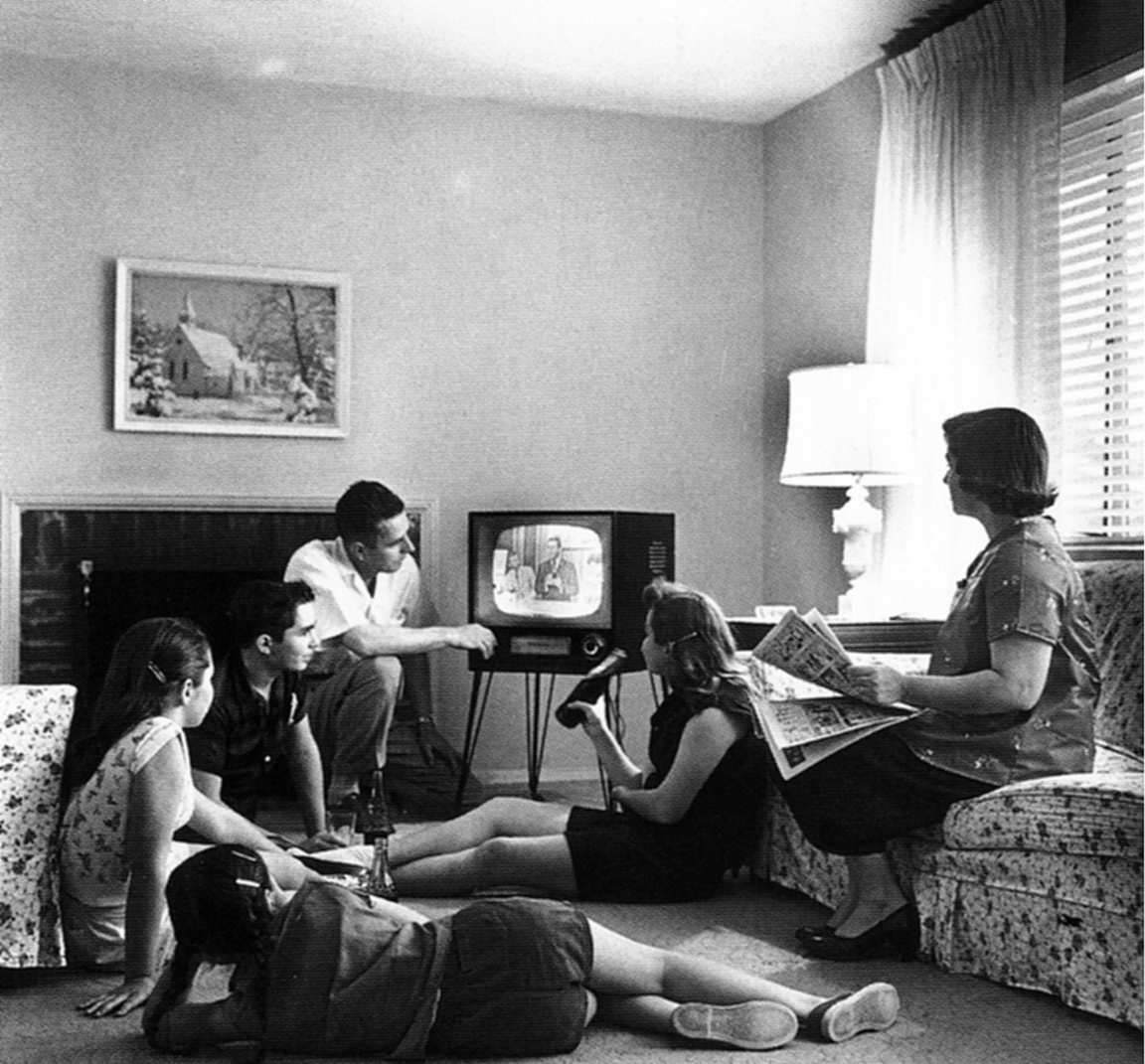
For a scientific marvel that has had amazing, far-reaching impacts on almost all aspects of modern life, it took television a long time to arrive in homes.
The concept of using radio waves to transmit images from one place to another began to take root in the early 1900s. The first use of the word has been traced to a scientific paper delivered at the International World’s Fair in 1900, though the concept existed even earlier.
No one person gets full credit for inventing television. Different scientists and engineers provided separate pieces of the puzzle. These include Nikola Tesla, John Logie Baird, Philo Farnsworth, C. Francis Jenkins, Kenjiro Takayanagi and many others who contributed in various ways to the development of the technology during the early 20th century.
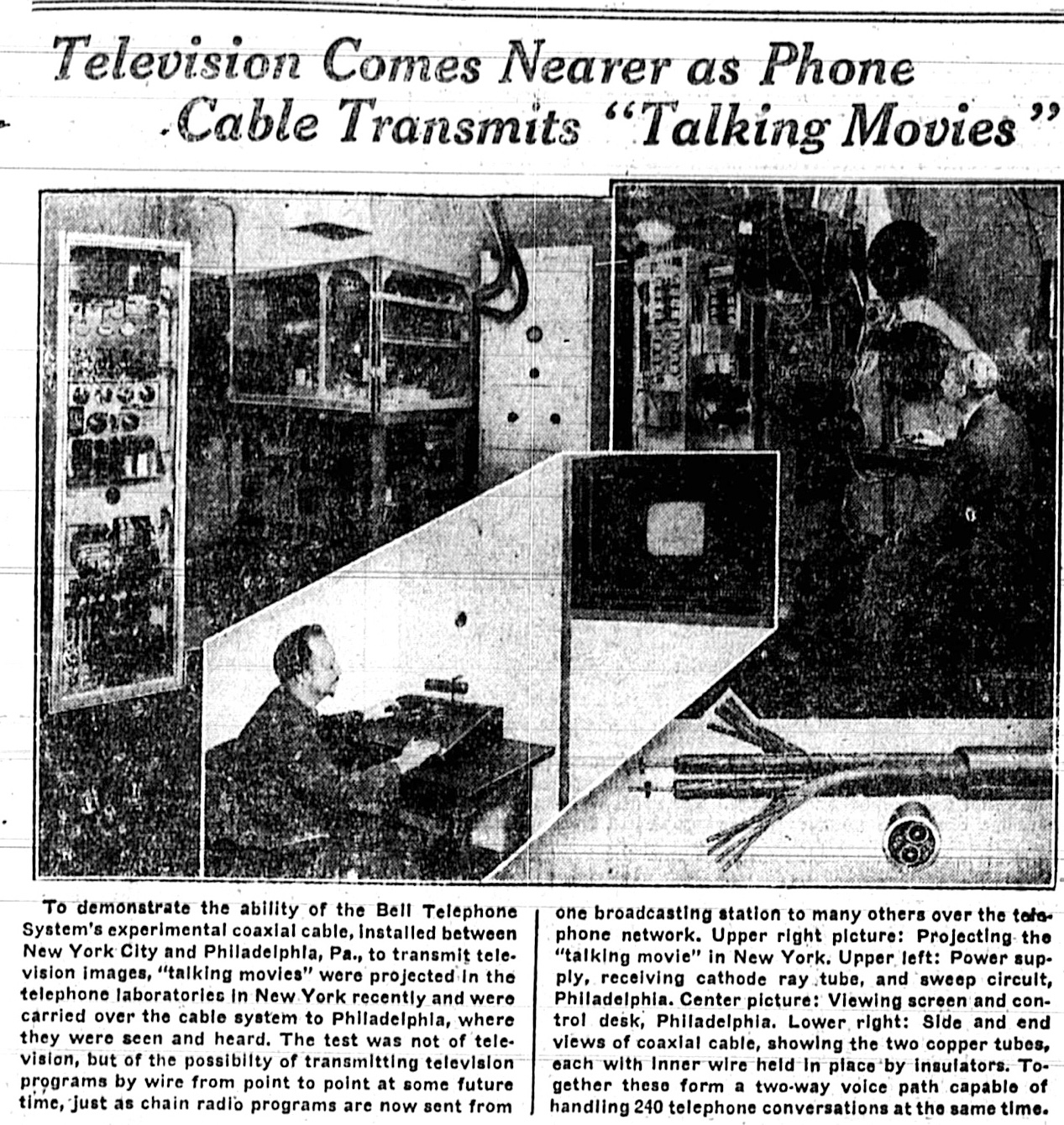
The early technology was crudely mechanical in nature and existed mostly in labs and technology centers. But by the 1920s, newspaper stories about the new electronic technologies being experimented with began to become commonplace
Headlines about television began appearing in local newspapers:
“Radio Movies Come Soon, Says Science | British Inventor is Sure Television Will Arrive in a Few Years,” San Pedro News PIlot, Jan. 24, 1924, Page 9,
Then, nine years later from the same paper:
“Television In Home Distant | Philco Officer Sees General Use of Invention Within Decade,” Dec. 11, 1933, Page 10.
The latter headline turned out to be more prescient, though it, too, also was overly rosy. Television technology had arrived in the laboratory by the 1920s, but there was no infrastructure yet to support its widespread use. Radio still ruled the airwaves during the 1930s.
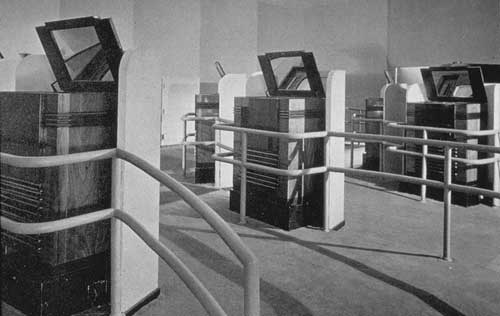
Seeing television’s potential, major communications companies such as American Telephone & Telegraph and the Radio Corporation of America began working with the technology in the 1930s. USC offered one of the first courses in television science in 1934.
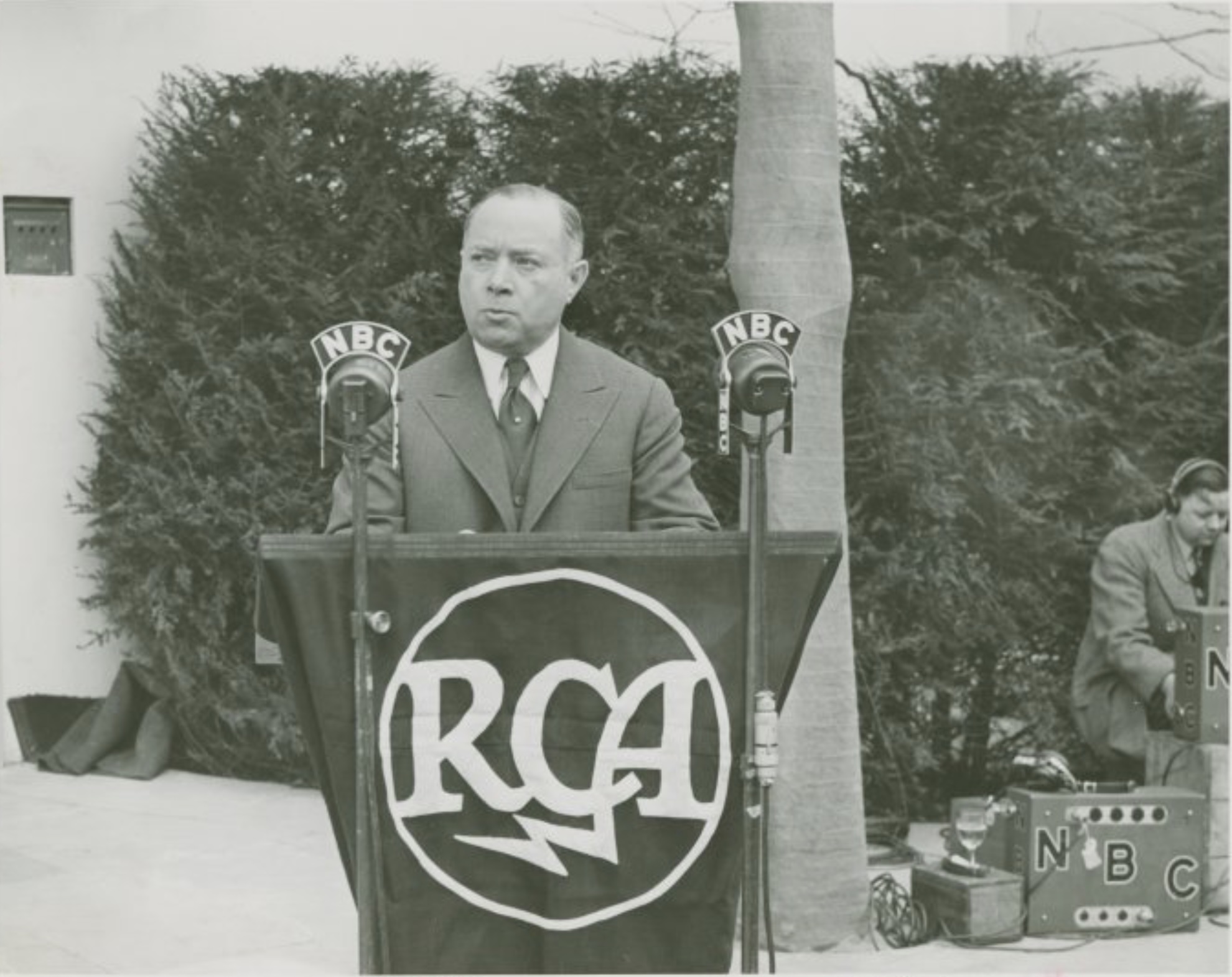
A public coming-out party for the nascent technology took place at the 1939 World’s Fair in New York City, when RCA devoted its pavilion to television. President Franklin Delano Roosevelt became the first U.S. president to appear on a television broadcast on April 20,1939, albeit on a highly localized network, when RCA broadcast his opening-day dedication speech at the fair.
But, even with its limited localized networks, television was a growing phenomenon. The Palos Verdes Peninsula News reported on television programming being offered to diners at the La Venta Inn in its March 1, 1940 edition.
Early broadcasts from the Los Angeles-based Don Lee Network were shown at two times: from 2:00 – 3:00 in the afternoon, and from 8:00 – 9:00 in the evening.
Don Lee, who made his fortune as a Cadillac dealer, owned a radio company that had been experimenting with television throughout the 1930s. It offered limited broadcasts using the cruder mechanical television technology to a tiny audience on its first station, Gardena-based W6XS, in 1931.
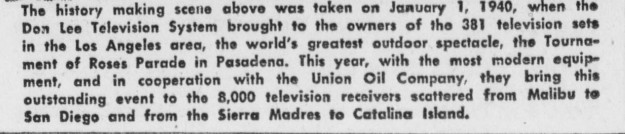
Its later W6XAO station used electronic television when it aired the first broadcast, the Tournament of Roses Parade on Jan. 1, 1940, to 381 viewers. (An estimated 300,000 viewers in greater Los Angeles would view the station’s 1947 parade broadcast.)
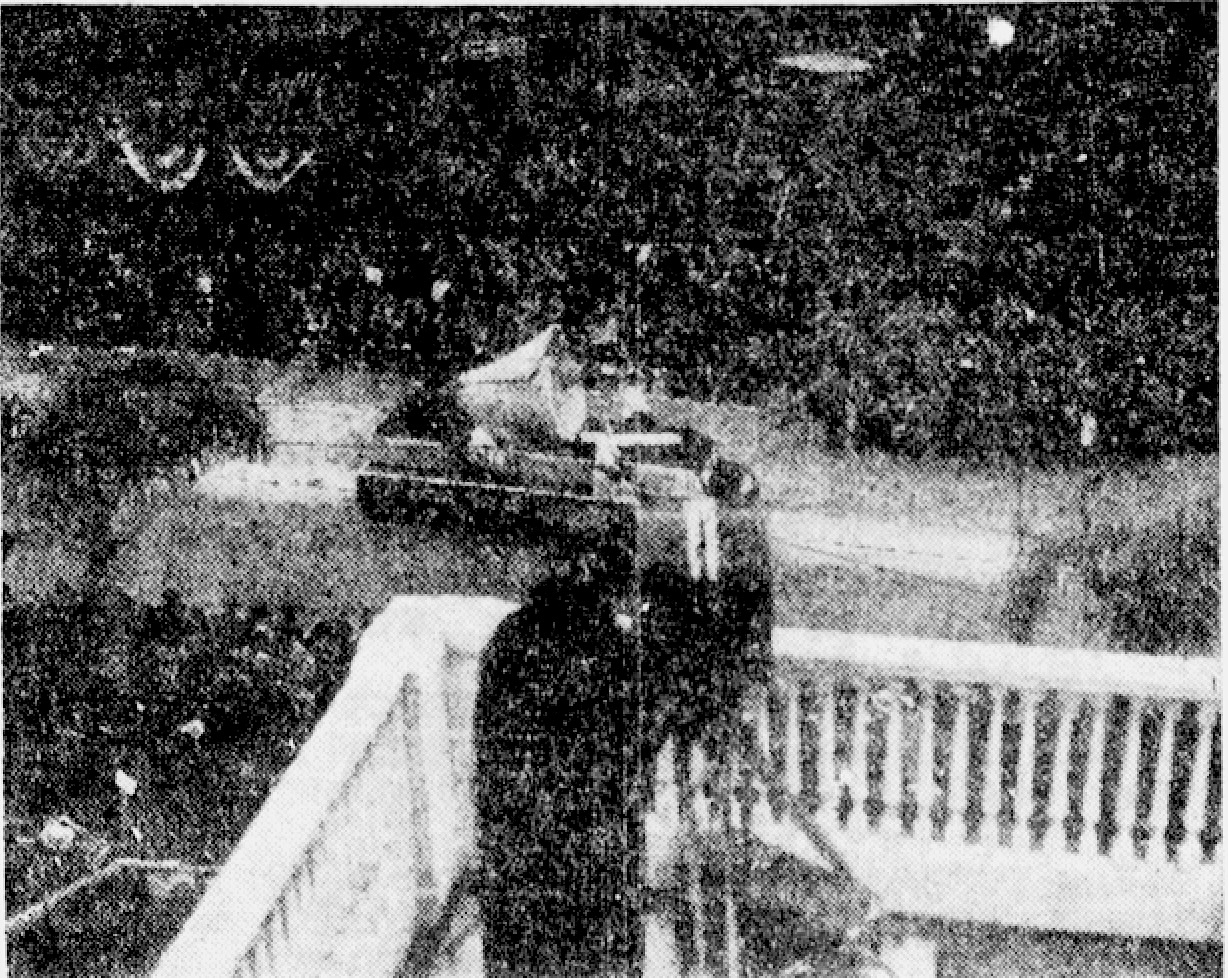
World War II delayed the arrival of television on a large scale for another few years – no TV sets were even manufactured from 1942-45 – but its spread into more homes began in earnest during the postwar years.
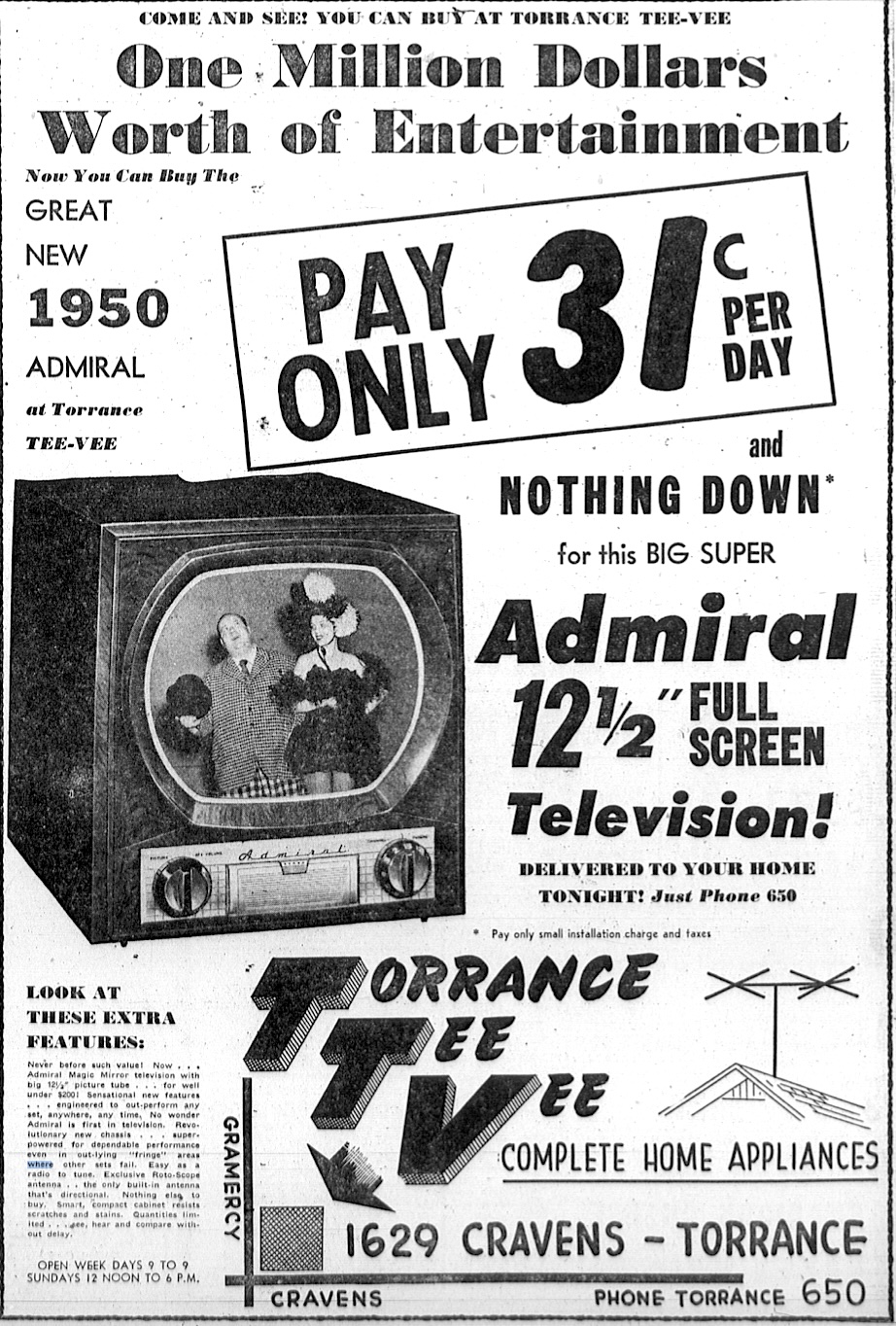
Ads for large home television sets with small screens began appearing in newspapers. The devices cost several hundred dollars, some of them costing more than automobiles.
TVs still were enough of a novelty that newspapers such as the Palos Verdes Peninsula News, Torrance Herald and San Pedro News Pilot began running stories on their social pages about local families who were holding television viewing parties at their homes for invited guests.
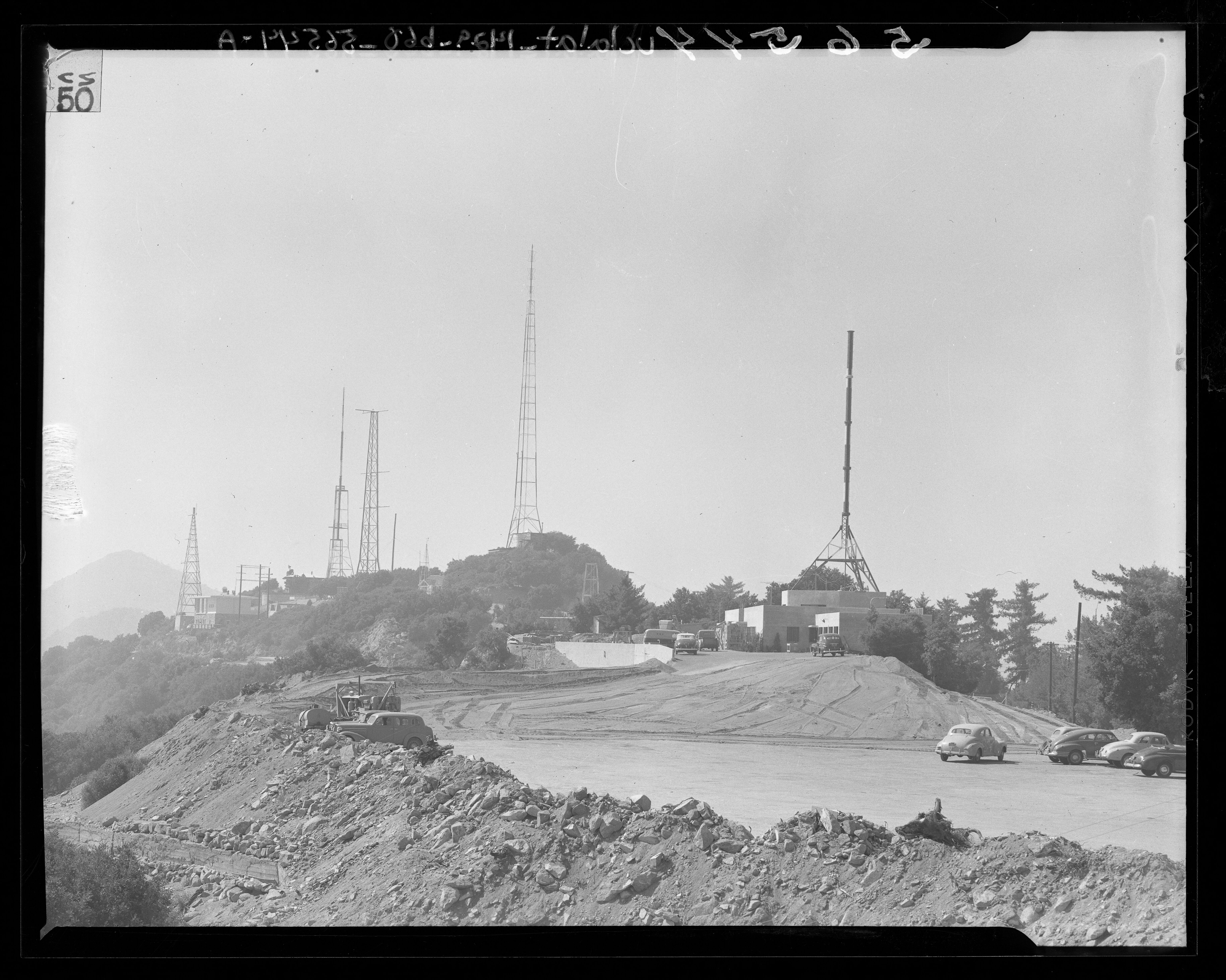
National networks were still developing in the late 1940s, but regional ones such as the Don Lee Network widened their range through the use of broadcast towers located on Mt. Wilson in Los Angeles.
KTLA became the first TV station west of the Mississippi when it debuted on Jan. 22, 1947. Two years later, the station pioneered local news saturation coverage with its focus on the unsuccessful days-long attempt to rescue Kathy Fiscus, the three-year-old girl who fell into a well in San Marino on April 8, 1949. Tragically, she was found dead when rescuers reached her two days later.
By that time, television’s march into family living rooms was unstoppable. More local stations, including KNXT, KTTV, KHJ and KCOP came on the air to serve the growing audience for programming.
Television truly exploded during the early 1950s. For one thing, there was more for people to watch. Using a tower-to-tower network established by AT&T, four national networks were operating by 1949: NBC, CBS, ABC and the Dumont Network. (Dumont went off the air in 1956.)
According to 1953 statistics from RETMA, the Radio and Electronic Television Manufacturing Association, there were 44,000 TV sets in the U.S. in 1946. By 1952, that number had grown to more than 24 million, with sets in 52.9% of American households. Television, such as it was, was here to stay.
Sources:
Early Television Museum website.
Palos Verdes Peninsula News archives.
San Pedro News Pilot archives.
Torrance Press Herald archives.
Wikipedia.

