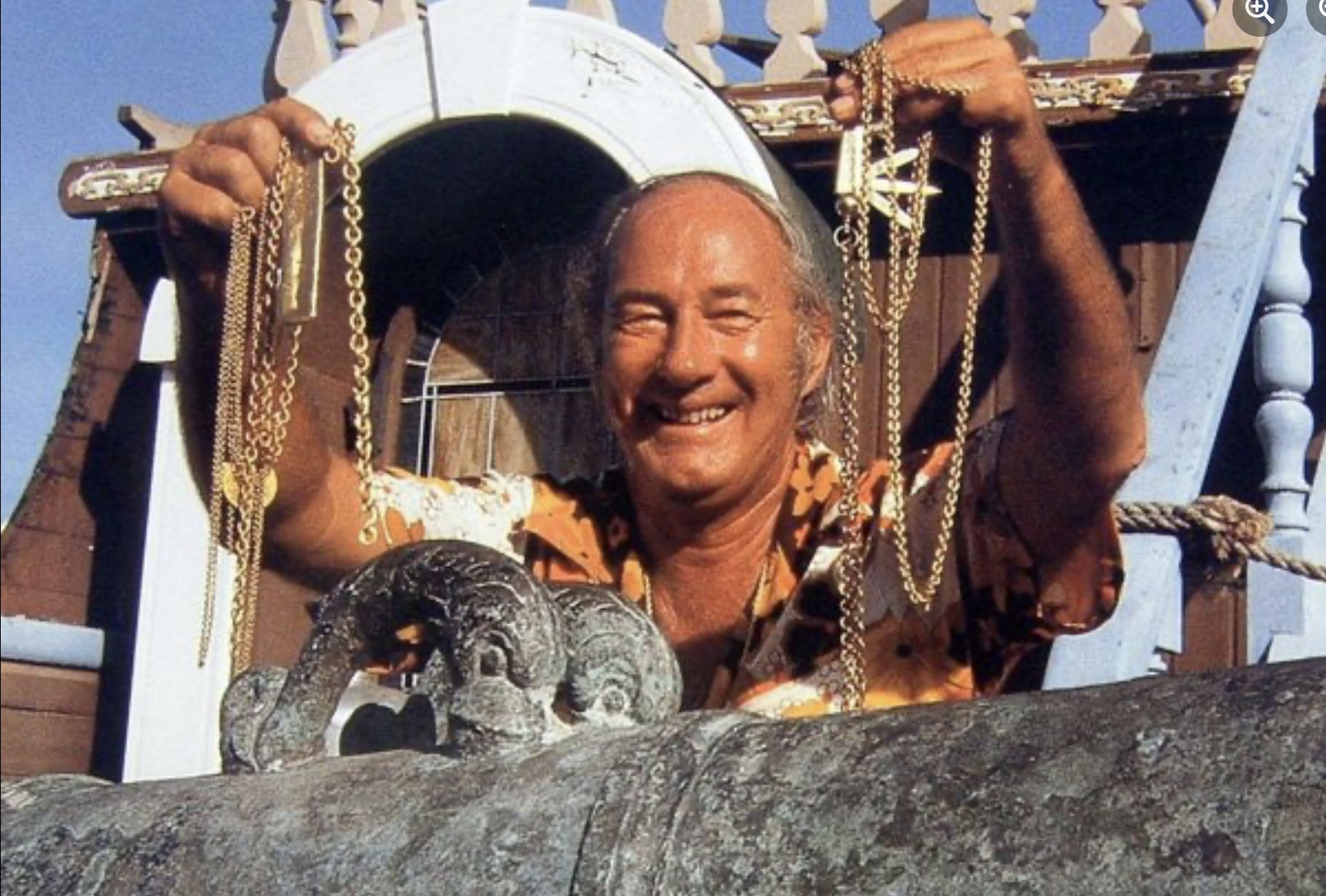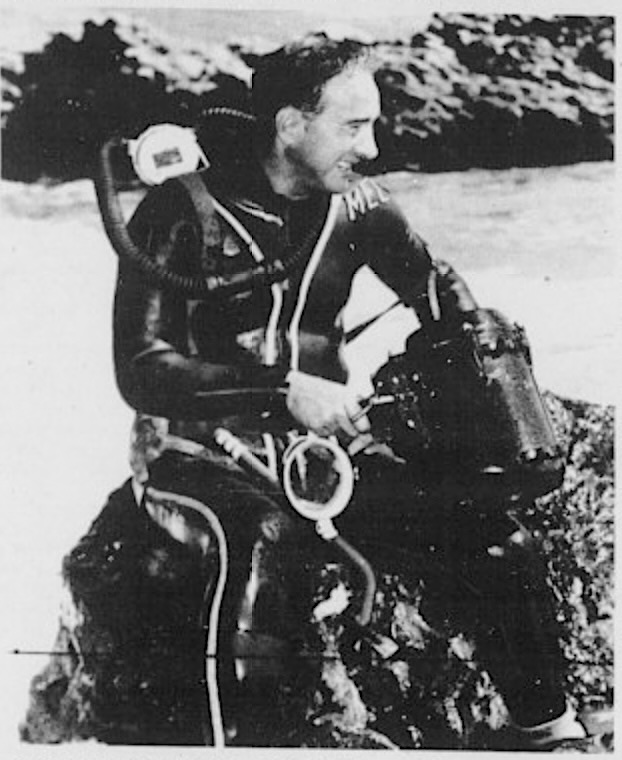
One can almost picture Mel Fisher on his father’s Torrance chicken farm dreaming of a more exciting life.
Born on Aug. 12, 1922, the World War II Army Corps of Engineers vet had moved to California after the war from Indiana, where he had attended Purdue University. While in the army, he’d been stationed near enough to the Mediterranean to become hooked on skin diving.
As the reality of the day-to-day life of a chicken farmer started to lose its romance, Fisher began to spend more time diving in the nearby Pacific. He had become an expert diver and spear fisherman whose knowledge was sought out by fellow divers.
He also became intrigued with the aqualung, the first modern scuba diving equipment invented by French naval officer Jacques Cousteau and engineer Emile Gagnan during the war.
He knew that if used properly, the new equipment could be the key tool to finding legendary treasure troves he’d read about that were buried beneath the seas. He’d caught the bug, and there was no turning back. (He even began selling dive equipment on a small scale at the ranch.)
He and his father sold the chicken ranch. Fisher used the proceeds to move his wife, Delores, Deo for short, and their young children Dirk and Kim to a house on Via Pasqual in the Hollywood Riviera area of Torrance.
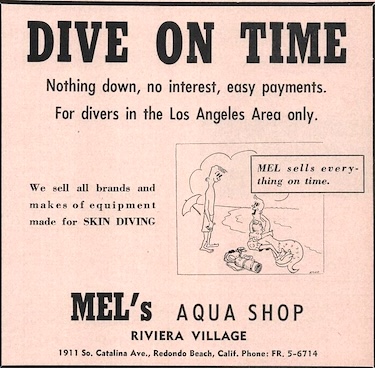
Together with Deo, who also was a renowned diver, he opened Mel’s Aqua Shop at 1911 S. Catalina Ave. in Redondo Beach in December 1953. While it isn’t clear that Mel’s was the first dive shop in the U.S., it’s widely acknowledged to be the first such retail business in the state of California.
The excitement surrounding the new scuba diving technology resulted in a thriving little business for Fisher. In addition to the latest equipment, he also offered diving lessons and even beginning swim lessons.
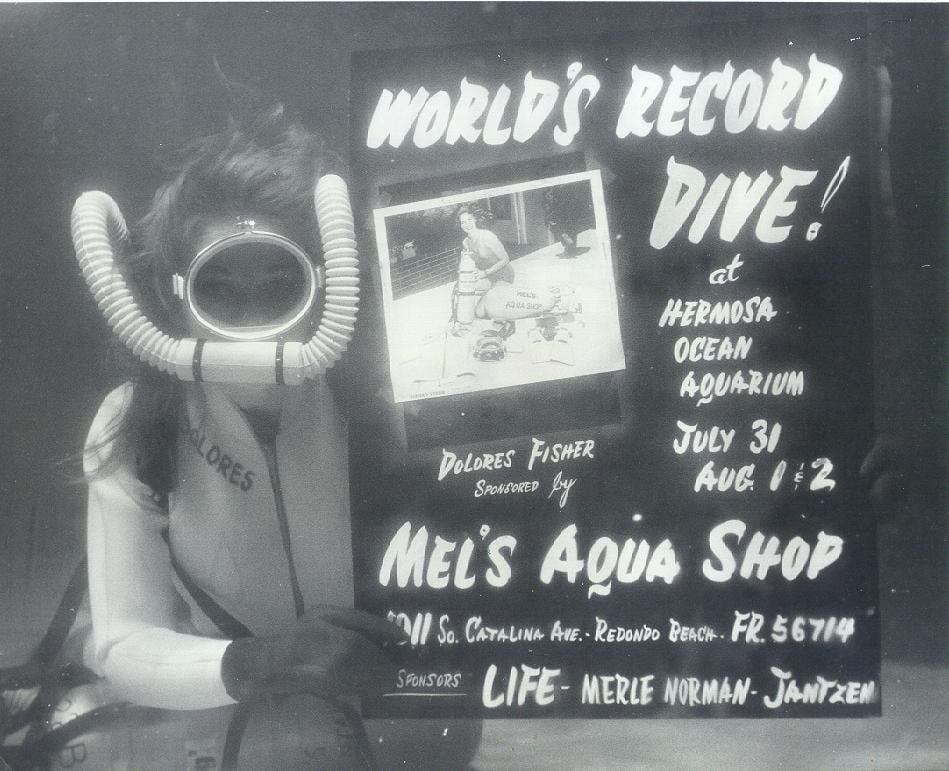
He led diving trips and tours in search of underwater treasure not only in the Channel Islands and other nearby sites, but also the northern California gold country.
The tours were popular, and they only encouraged the restless Fisher’s desire to seek riches hidden in the seas. In the early 1960s, he would take weeks off from the store to search for treasure in waters near Mexico, Cuba, the Florida Keys, and other Caribbean locations. His early efforts were generally unsuccessful, but he was not discouraged.
In June 1963, Mel Fisher decided to follow his dream full-time. After selling Mel’s Aqua Shop, he and his family pulled up stakes and left the South Bay in order to go searching for sunken treasure in the Caribbean.
For years, he had been researching the potential for recovering undersea valuables from areas in the Caribbean where galleons loaded with gold and silver had gone down during the heyday of the Spanish Main in the 16th and 17th centuries.
The Fishers settled in Key West, and Fisher formed a company, Treasure Salvors Inc. Private investors were encouraged to buy shares in the firm with the understanding that they would share in the profits from any discoveries. For years, Fisher struggled along without making any major finds.
With help from historical researchers, Fisher began to focus on finding the remains of one particular Spanish galleon, the Nuestra Senora de Atocha, which sank during a September 1622 hurricane.
After some false starts, the search began to heat up when one of Fisher’s divers, Don Kincaid, found a gold chain thought to be from the ship in 1971.
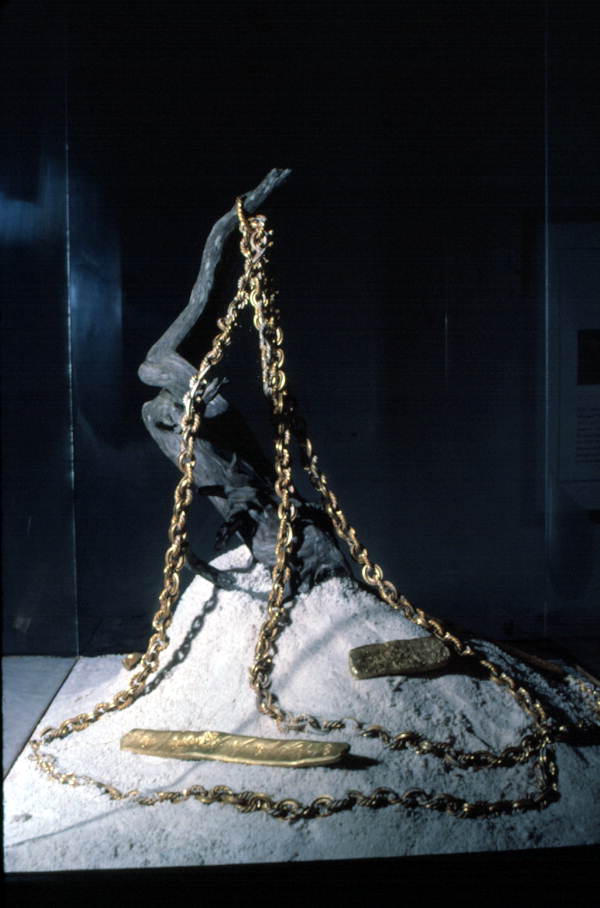
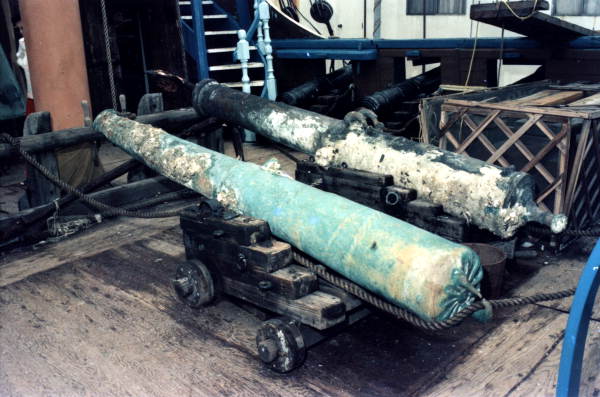
Two years later, Fisher’s 14-year-old son Kane, one of the family’s five children, found a single silver bar whose weight matched that of those listed on the ship’s manifest. In July of 1975, Fisher’s oldest son, 21-year-old Dirk, discovered several cannons from the ship.
A few days later, tragedy struck when the boat on which Dirk, his wife, Angel, and a diver named Rick Gage were sleeping suddenly took on water and sank, killing all three of them.
Despite the tragedy, Mel, very much still believing that his operation was close to succeeding, would continue the search for the Atocha’s precious cargo for the next ten years.
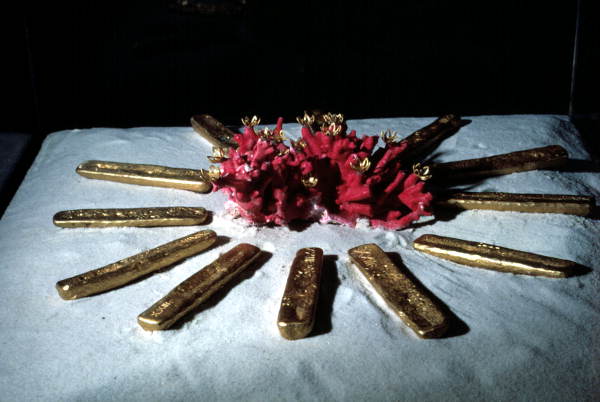
Finally, on July 20, 1985, Fisher’s crews discovered what he termed “the mother lode” of treasures from the ship about 40 miles west of Key West. It was buried under four feet of sand in about 50 feet of water.
The treasure consisted of silver bars, gold bullion, pieces of eight, bushels of emeralds and other precious metals and gems, and was estimated to be worth about $400 million.
After the discovery of the Atocha, the Florida state government had filed a claim granting it 25 percent of the value of any future booty found by Fisher. He contested the claim all the way to the U.S. Supreme Court, which ruled in 1992 in his favor: the Atocha was ruled to have been found in international waters.
Fisher sold his Treasure Salvors company in 1986 for $7 million, but he continued to search for and find additional treasures beneath the sea until he contracted cancer in the mid-1990s. He died at 76 on July 19, 1998. He was cremated, and his ashes were scattered in the Caribbean off of Key West.
The Mel Fisher Maritime Museum currently operates in Key West, and Mel Fisher’s Treasures displays many of his finds at its location in Sebastian, Florida.
Sources:
Daily Breeze archives.
FindaGrave website.
“The High Price of Treasure,” Robert Daley, The New York Times, Nov. 2, 1975.
Palos Verdes Peninsula News archives.
Wikipedia.