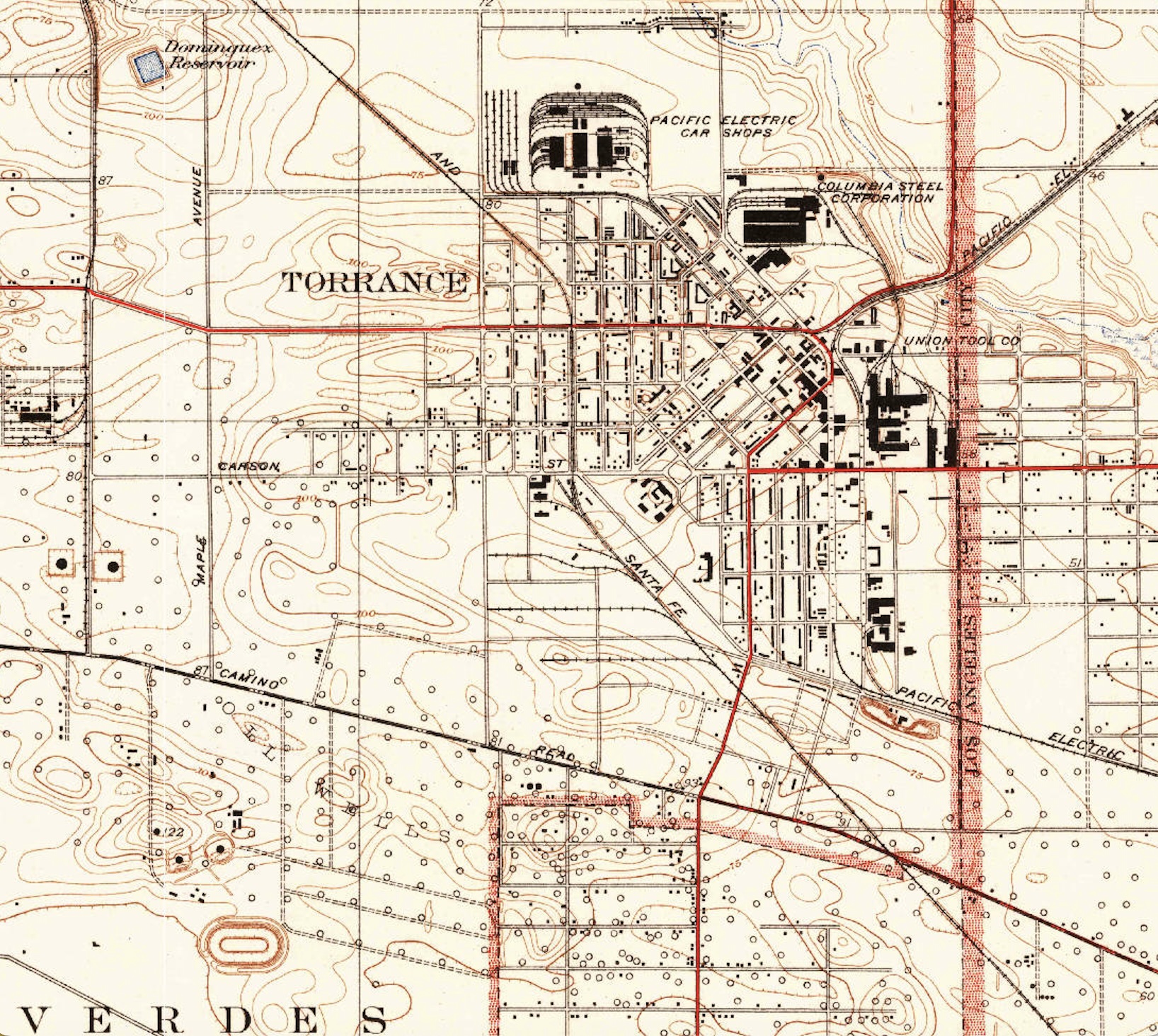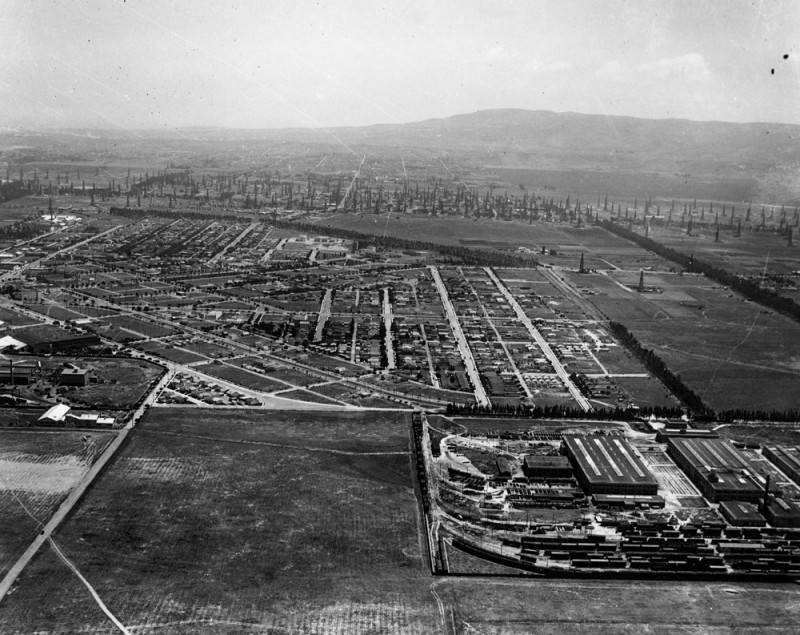
Though scarcely more than a decade old, the city of Torrance was humming during the 1920s. Major industrial plants had set up shop there, employing thousands of workers, and developers were kept plenty busy trying to build enough housing for them
Many of the workers from outside the area who commuted to their jobs at plants such as Union Tool Co., Llewelyn Iron Works or the Pacific Electric railroad shops mostly rode those same Pacific Electric red cars to get to their jobs in the city.
Automobiles weren’t rare, but longer trips were made difficult by poor roads and convoluted, nondirect routes. A surprising number of major roads were unpaved and would remain that way for decades.
The need for better roads began to grow in importance as the Twenties progressed and automobiles began to become the preferred method of transportation.
Torrance city officials and planners had built a fine little downtown area, but it remained relatively isolated from major auto thoroughfares. Downtown Torrance’s main north-south downtown street, Cabrillo Ave., was paved only from Torrance Blvd. south to Sepulveda Blvd.
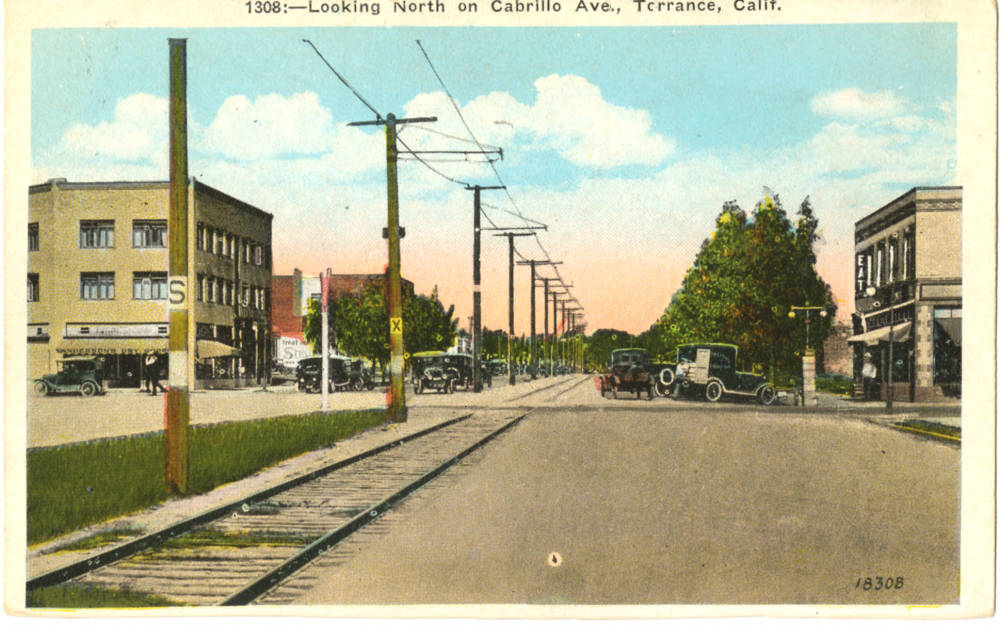
The first Los Angeles freeway wouldn’t open for another two decades, and many major connecting roadways such as Western Ave. were patchwork at best through the South Bay.
At the time, Western ended at Torrance Blvd., and started up again about four miles south at Pacific Coast Highway near Lomita. This made connecting south by car from Torrance to San Pedro’s shipyards and other industries problematic.
In 1927, city planners proposed a solution to the connectivity problem. Instead of wrangling with the city of Los Angeles to complete that unfinished section of Western, the proposal called for the extension of Cabrillo Ave. south through privately owned land to Eshelman Ave. in Lomita. From there, motorists could reach PCH and connect with Western heading south (or north).
In September 1929, rancher and land owner Emil Kettler announced that he opposed giving Torrance a right-of-way through his property to allow the project’s completion. Kettler felt it would be more valuable to prospective buyers seeking to locate an industrial plant there if it was a single large piece of property, one not bisected by the proposed roadway.
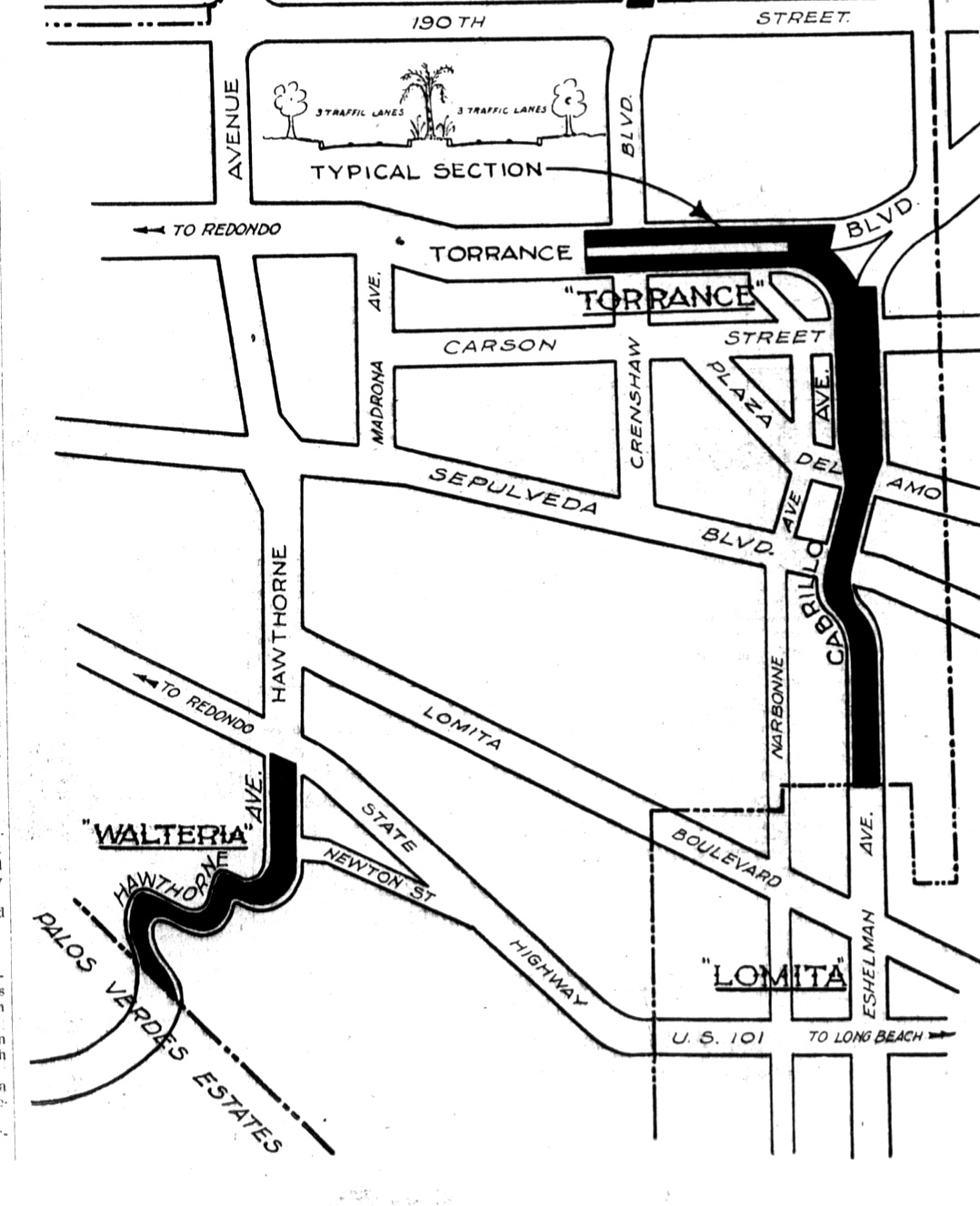
Though the extension idea was kept alive, it would be another ten years before any further progress on it was reported. In April 1939, then-Mayor William H. Tolson launched a new major highway improvement program for Torrance.
Tolson’s program recognized the need for major improvements in the city’s street and highway infrastructure, and made the completion of the Cabrillo-Eshelman extension a top priority.
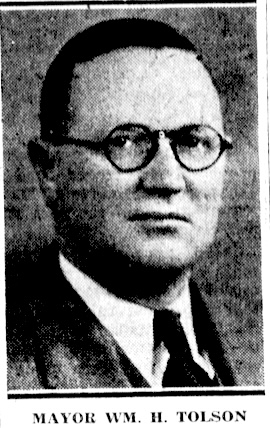
To that end, he announced that the city had secured a one-year option with the heirs of the Kettler estate to purchase a right-of-way that would allow for the new roadway to be built. (Emil Kettler died in 1932.)
But no action was taken by the city before that option expired in 1940, and the outbreak of World War II further delayed the project.
In early 1946, the Kettler estate, headed by Emil’s son, John, renewed the offer to the city of Torrance to build the Cabrillo extension. In the intervening years since Emil Kettler had denied the request, the family’s strategy had shifted from courting industrial tenants to joining the headlong postwar rush into residential development.
The Cabrillo extension now was in their own best interest. John Kettler extended the offer at the same time that he announced plans to begin building a 201-home housing development on the family’s land east of Arlington Ave. and south of Sepulveda.
This would become the first project in what would become known as the Kettler Knolls housing development, which eventually would include several hundred homes in southeast Torrance.
The estate even offered to provide grading for the land for the city’s proposed road. In return, Torrance would provide curbs, sidewalks and paving.
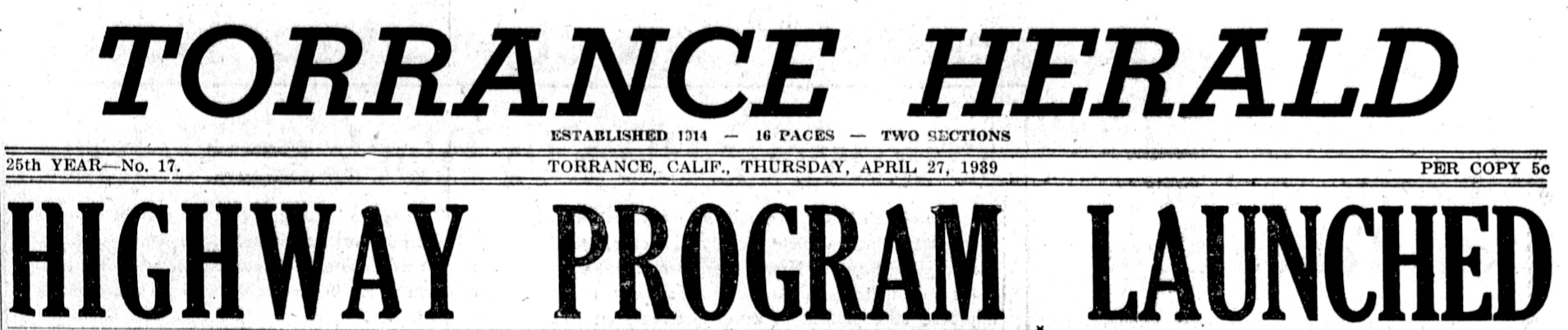
The yet-to-be-completed roadway was last mentioned in an article from the Torrance Herald on Nov. 6, 1947, which reported that the Torrance City Council had authorized funding for it. Most probably, it was completed in 1948.
That’s only two decades or so after the city first officially proposed it in 1927. On the other hand, it did finally get built, barely, before the second option the city had decided against in 1927: waiting for the city of Los Angeles to complete the nearly four-mile Western Ave. through-link to San Pedro that it finally opened to motorists in April 1950.
Sources:
Los Angeles Times archives.
San Pedro News PIlot archives.
Torrance Press-Herald archives.