
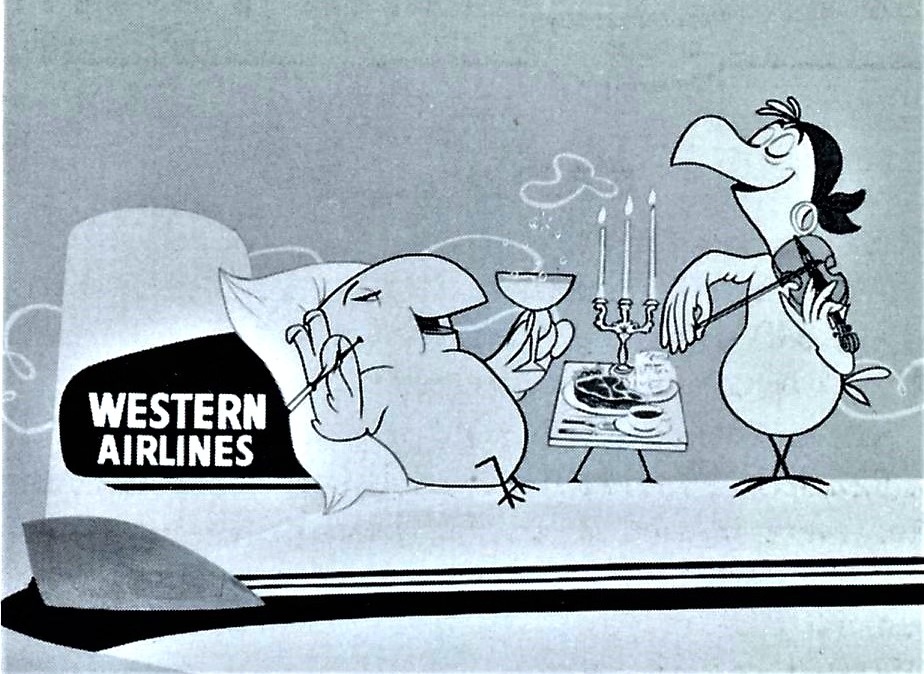
If you lived on the West Coast and watched television in the 1960s and 1970s, you couldn’t miss the Wally Bird commercials.
In the ads, the animated spokes-bird for Western Airlines reclined on pillows on a company plane’s fuselage while drinking champagne, a reference to the airline’s popular in-flight champagne service.
His signature slogan: “Western Airlines … the oo-oo-oonly way to fly!”
The Los Angeles-based airline’s roots extend back to the days when Los Angeles International Airport was known as Mines Field, named for William Mines, the man who leased the former beanfield to airport boosters in the early 1920s.
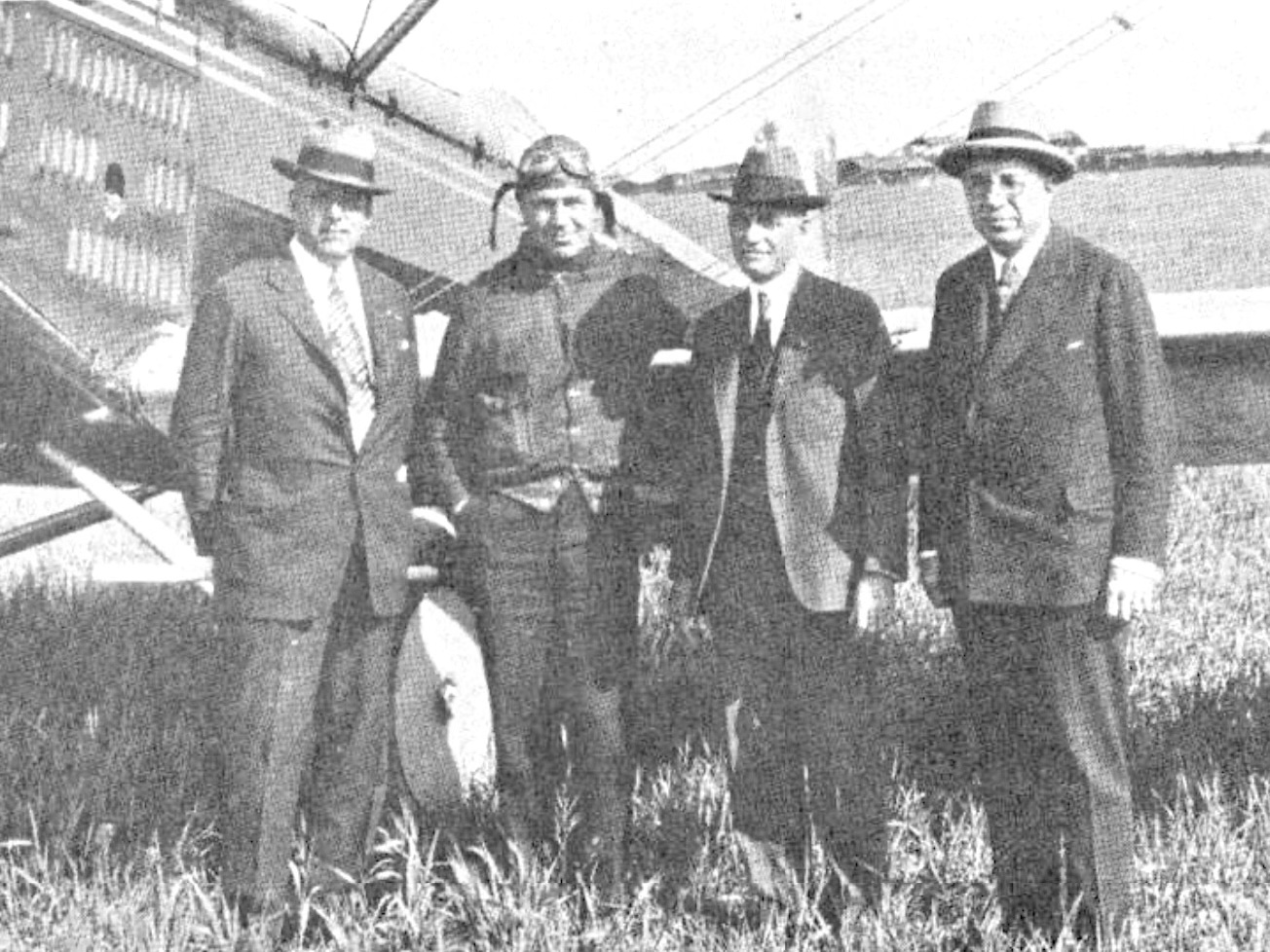
Harris Hanshue founded the company, originally known as Western Air Express, in Los Angeles in 1925. Passenger air travel was in its infancy; Hanshue’s operation was predicated on his winning a key U.S. Post Office air route from Los Angeles to Salt Lake City.
In October 1925, Hanshue, a former race car driver, succeeded in landing the 650-mile long Contract Air Mail route #4 from the government.. The mail flights began operating on April 17, 1926. A little over a month later on May 23, Western’s first passenger flight took place, from Woodward Field in Salt Lake City to Los Angeles.
By securing the Salt Lake City route early on, Hanshue had established Western as a major force in early air travel in the western United States, and its operations continued to grow. Seemingly, no new route was too small. It even offered seaplane service to Hamilton Cove Sea Base just north of Avalon on Catalina Island from 1928-1930.
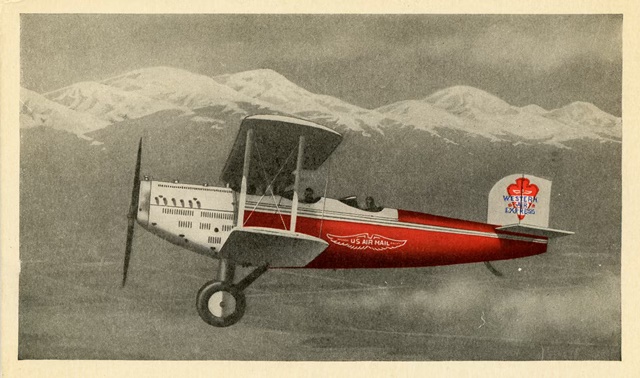
The firm expanded its reach by acquiring several smaller operations during these early years. These included Standard Air Lines in 1930, and National Parks Airways in 1937. The latter acquisition extended Western’s reach from Utah up through smaller airports, several near national parks, in Idaho and Montana.
After acquiring Standard in 1930, Western Air Express merged with the Dutch aircraft company Fokker and Transcontinental Air Transport to form Transcontinental & Western Air, more familiarly known as TWA. Western broke off from TWA in 1934, changing its name to General Air Lines briefly before returning to the WAE name.
As its operations and corporate affiliations expanded, so too did its fleet of aircraft. The small Douglas M-2 biplane that carried mail to Utah and back in 1926 soon was augmented by larger planes.
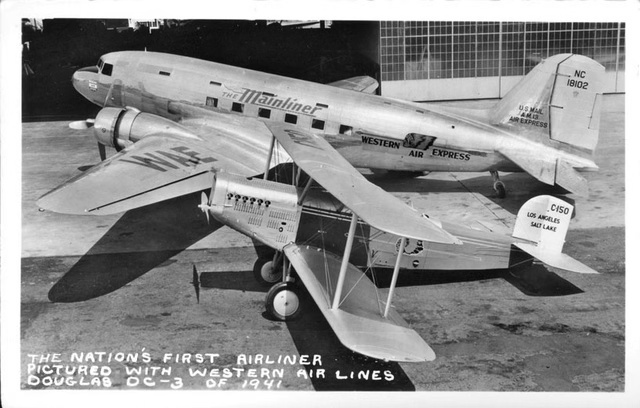
(Credit: Pomona Public Library)
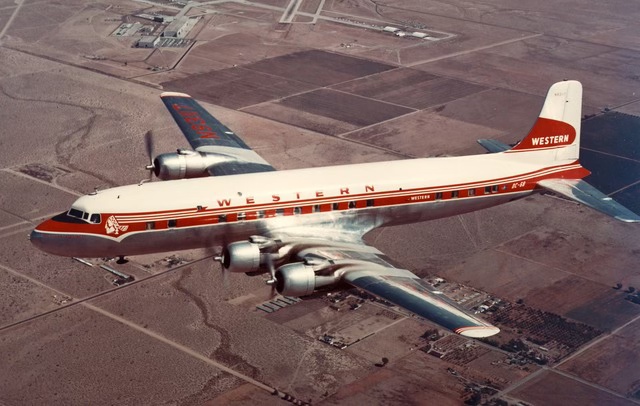
Western used a variety of them, including models made by Fokker, Stearman, Curtiss and Sikorsky before settling on Douglas DC-2s and DC-3s during the late 1930s and early 1940s.
In 1941, the company changed its name to Western Air Lines, then shortened that to Western Airlines, the name by which it would be known for the next 46 years.
Following some lean economic years after World War II, business boomed for Western in the 1950s and 1960s. Flying on commercial airlines became a much more common phenomenon, and the company found ways to get its name known in the marketplace.
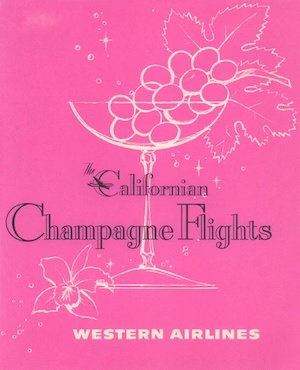
Rather than offering the usual barebones food service to passengers, Western shrewdly chose to set itself apart by offering its customers something out of the ordinary, introducing its Champagne Flights in 1954.
In addition to the complimentary sparkling wines – the company did not serve actual French Champagne – all passengers were offered fancy meals including filet mignon, salad Escoffier and the like.
In order to publicize the flights, the company introduced its advertising campaign featuring Wally Bird extolling the virtues of the luxurious flights in 1955. The cartoon bird would serve as the company’s advertising mascot for the next several decades.
Western also embraced the Jet Age, adding the Boeing 707 jetliners to its fleet in 1960. (Pan Am had introduced them in late 1958, and the first one to land at LAX did so in January 1959.)
LAX’s massive remodel to accommodate the new generation of jet aircraft, which used tunnels to move people to satellite terminals, opened in June 1961. Western had its own satellite building, Terminal 5.
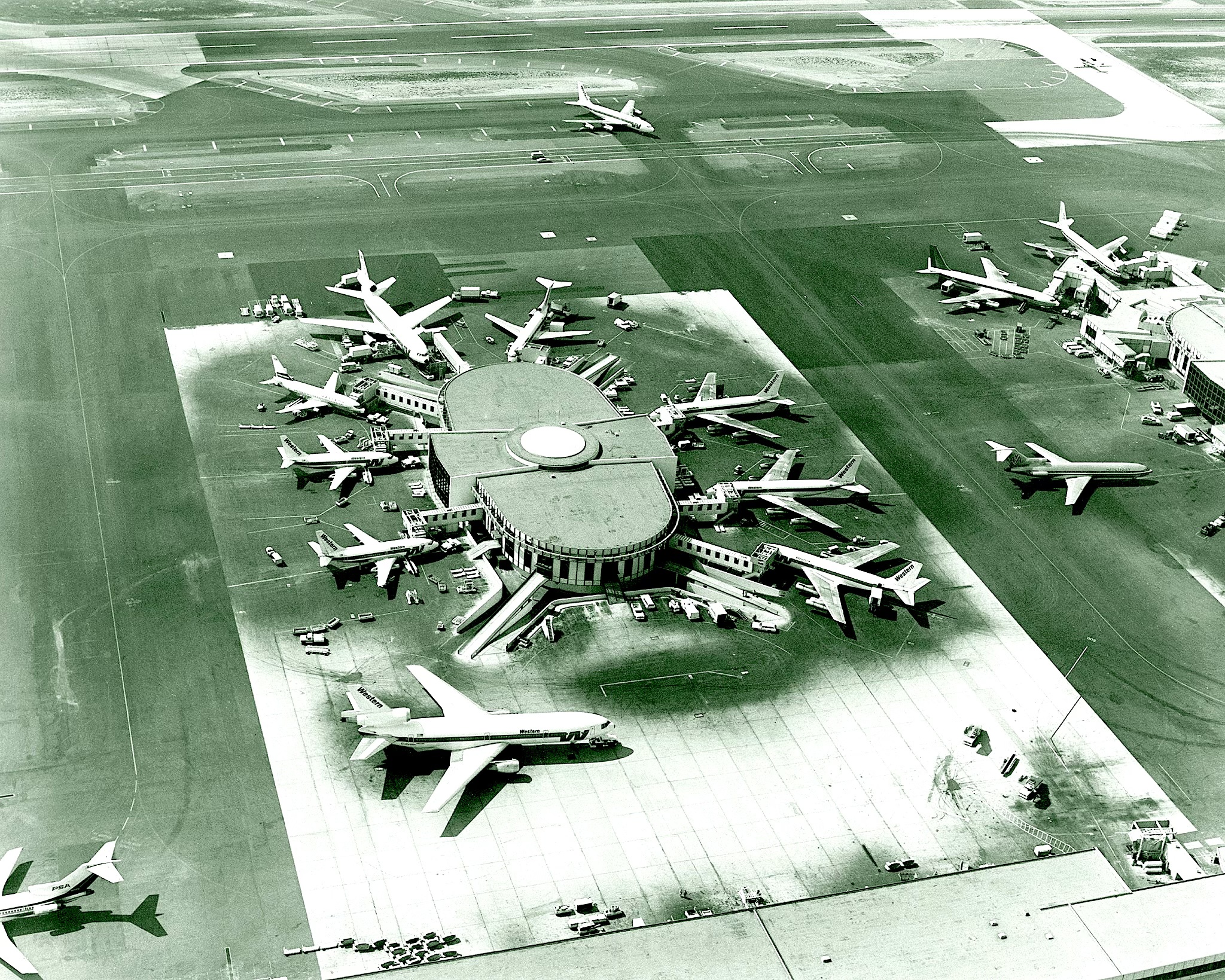
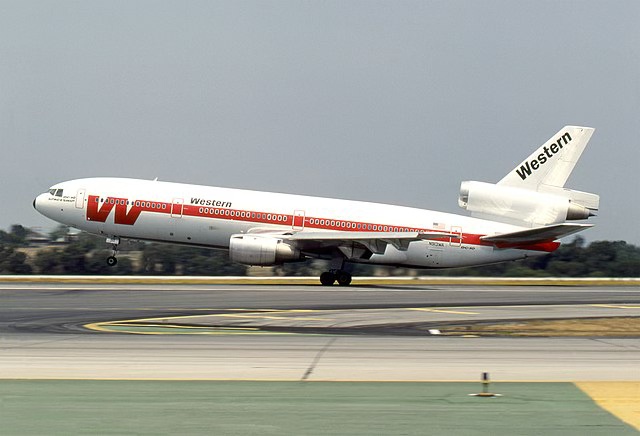
The 1960s and 1970s marked a golden era for Western, which continued to expand both its aircraft fleet – it would add its largest plane, the Douglas DC-10 in 1973 – and the markets it served from its two hubs in Los Angeles and Salt Lake City.
Its 1967 acquisition of Pacific Northern Airlines extended the airline’s reach to Alaska, and in 1969, Western began offering flights to Hawaii from several California cities.
The first of several merger attempts involved a proposed deal with American Airlines in 1969. Government regulators ruled against the deal in 1972.
In 1978, Western and fellow LAX-based Continental Airlines agreed to negotiate a merger. They ran into difficulty when Continental chief Bob Six lost a coin toss over whether to call the new firm Western Continental or Continental Western. Supposedly, he was so unhappy about it that he called off the merger.
Eventually, Delta Airlines and Western agreed to a merger (sans coin flip) in September 1986, and it became final that December. The two companies were completely merged by April 1, 1987.
Western and Wally Bird became remnants of the past, and Delta gained two strong hubs in Los Angeles and Salt Lake City and a valuable presence in the western U.S. that it retains to this day.
Sources:
Daily Breeze archives.
Delta Flight Museum website.
“The Rich History of Western Airlines: Aircraft, Milestones and Legacy,” by Kenneth Schulte, Airspeed Junkie website, Nov. 11, 2024.
Wikipedia.


I loved your article on Western Airlines. My Dad flew for them for 32 years plus my Mom was a stewardess for them for 5 years until she married my Dad.
I remember the old LAX terminal east of the present location. And I was there for the grand opening of the “new” LAX. Although I was just a kid, I remember all those great times. Western Airlines was family.
Thanks for all your articles.
Paul Hill
>
LikeLike