
Torrance Municipal Airport has become a fixture in the city over the years, though it has its detractors who complain mostly about noise pollution.
It began humbly in 1941 with construction of the bare-bones Lomita Flight Strip by the U.S. government with the aim of encouraging the development of civil aviation. Just months later, it transformed into a military facility after the outbreak of World War II, serving as a training field for Army Air Forces pilots.
After the war, the government ceded the land back to Torrance for civilian use, but kept operational control of the airport until 1956, when Torrance regained control. The city then officially renamed the facility Torrance Municipal Airport.
But, for about four years during the late 1940s, a second general aviation airport also operated in the city.
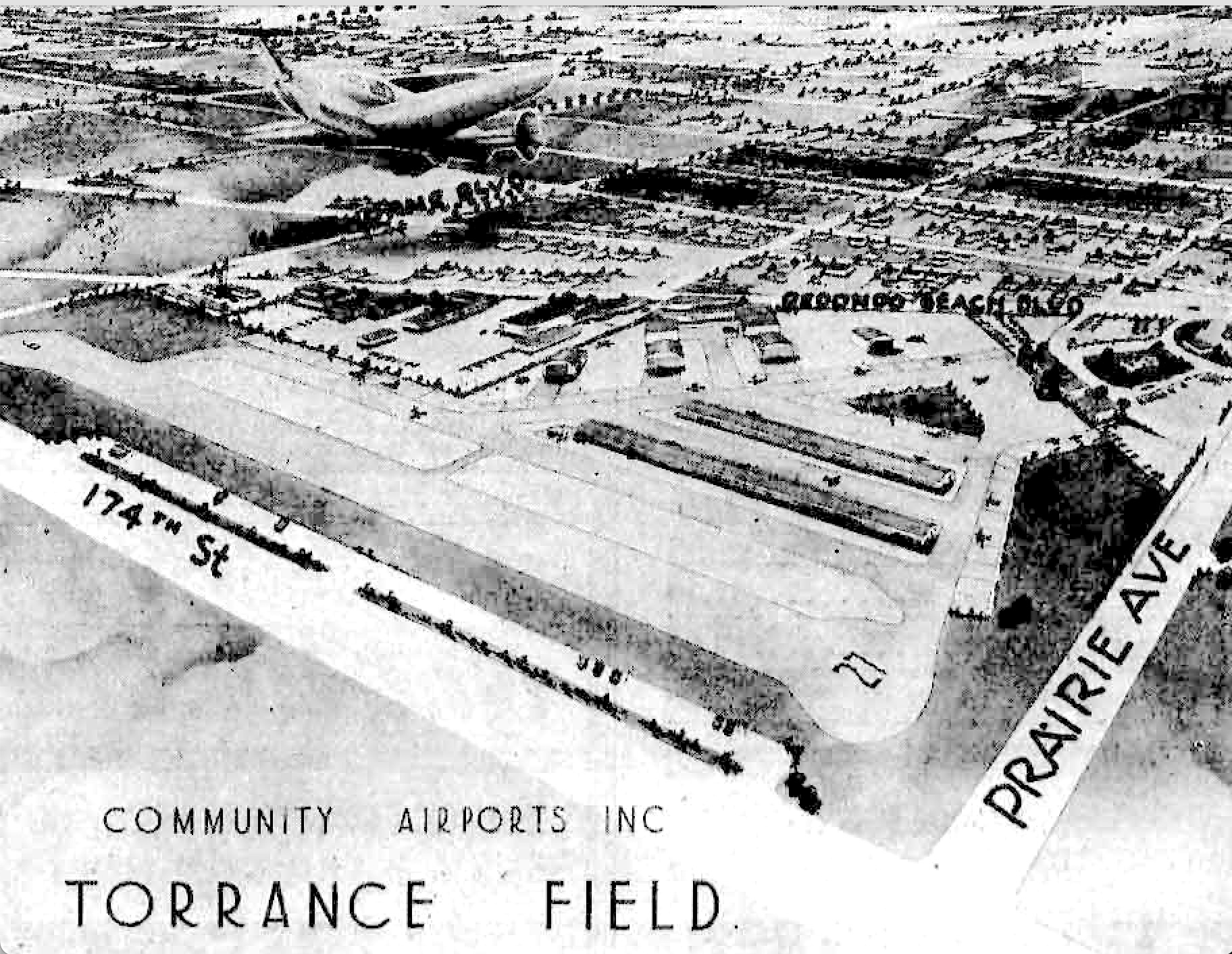
On Nov. 8, 1945, a newly incorporated firm, Community Airports Inc., announced plans to build the first of a planned series of community airports in the Los Angeles area. They chose a 40-acre site in northwest Torrance for their initial project.
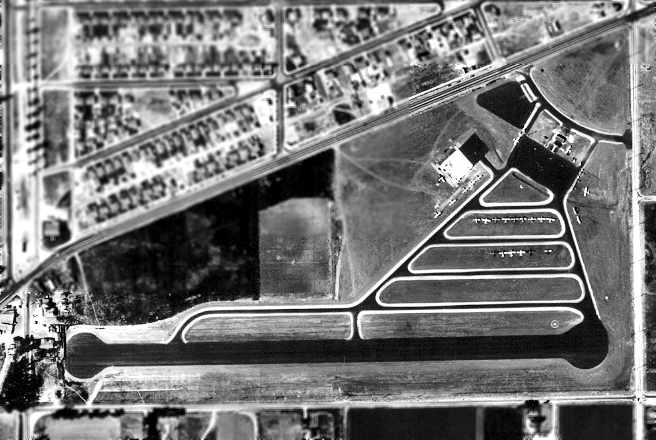
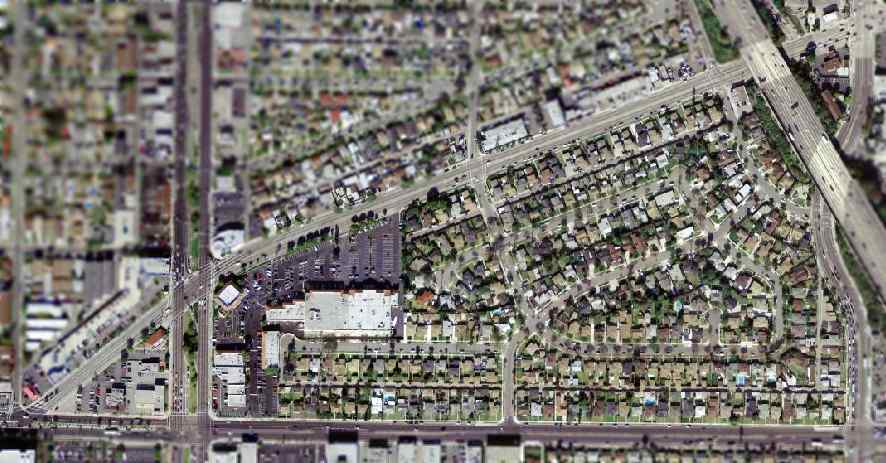
The facility was situated on open land south of Redondo Beach Blvd. to 174th St.,and between Hawthorne Blvd. and Prairie Ave. The airport was to be named Torrance Community Airport.
The top two men behind the operation had military backgrounds. Company president Col. William J. Fox was still in the Marines at the time of the announcement. He had been recognized for building the makeshift airport at Guadalcanal while under fire during the famous battle.
Company VP Major Joseph J. Foss was a skilled pilot who was the first to equal World War I ace Eddie Rickenbacker’s record of enemy planes shot down.
Features planned for the Torrance airport included an administration building, a restaurant and lounge, showers and locker rooms, and a daycare playground where children could be taken care of while their parents went flying. “The private flier has been operating off of a back-alley field much too long,” Fox told the Torrance Herald while promoting the airport’s modern features.
All of this, according to the company, would be offered to customers “at a price which they will be able to afford.” It set an opening date of June 1, 1946 for the new airport, which cost an estimated $500,000 to build.
The Herald described the new airport as “the most modern on the West Coast.” Col. Fox said no military planes or noisy trainers would be allowed in order to keep noise down.
The airport’s 2,700-foot paved runway was ready to go for the June 1st grand opening, which went off without a hitch. Even the expected noise complaints failed to materialize, at least during its first few days of operation.
Meanwhile, proponents of transforming the Lomita Flight Strip into Torrance’s main airport presented a glowing picture of its prospects to civic leaders and Chamber of Commerce members in late February 1946. Civil Aeronautics Administration airports superintendent R.W.F. Schmidt assured the assembled that they would get their airport, and soon.
Names for the two airports caused confusion. Fox’s project was known in its early stages as Torrance Community Airport. After it opened, it was called Torrance Field for a time, to distinguish it from Torrance Airport under development to the south. (Torrance Airport didn’t add the “Municipal” to its name right away.) Finally, the north Torrance facility was renamed Bay Cities Airport in 1948.
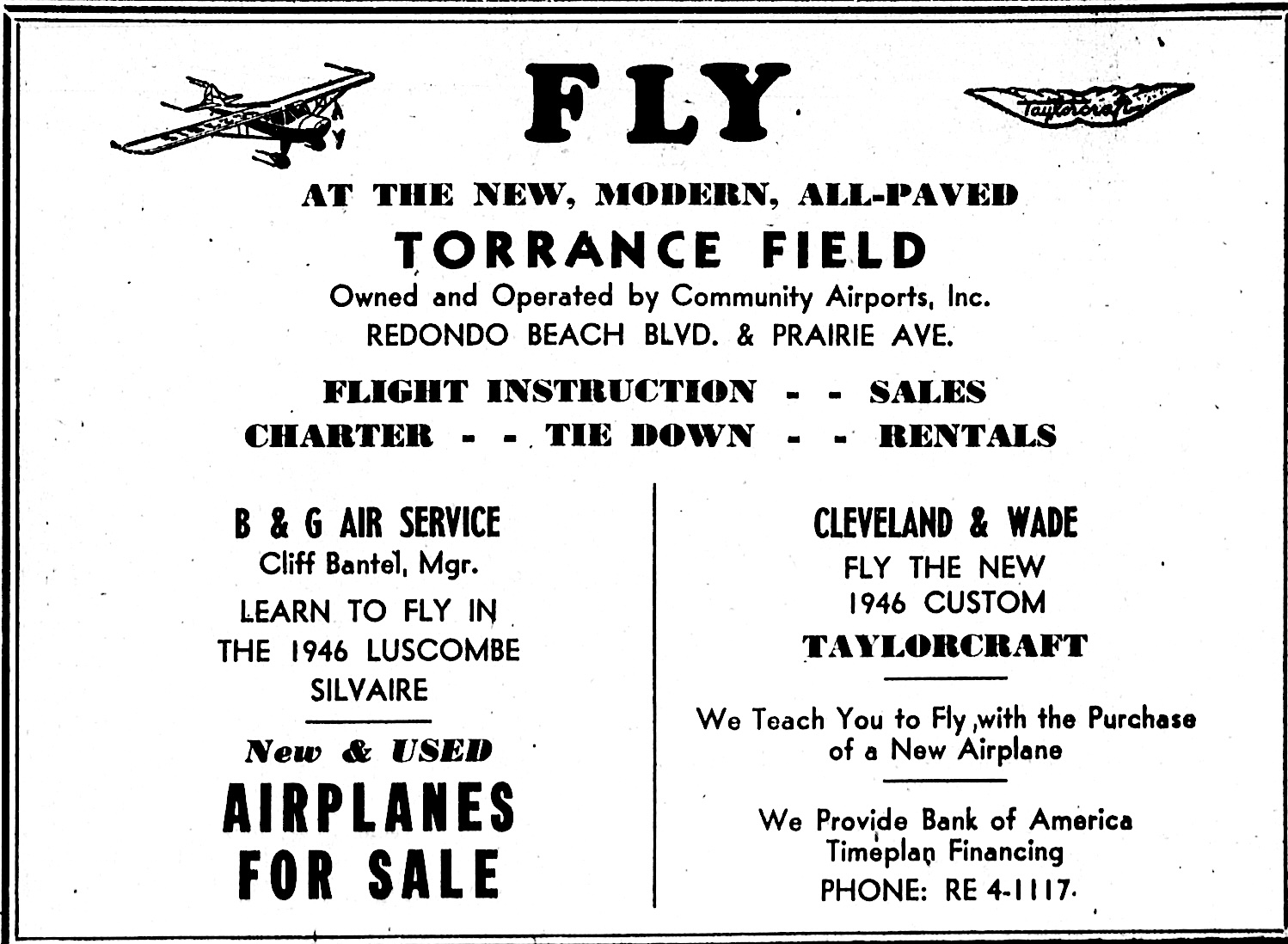
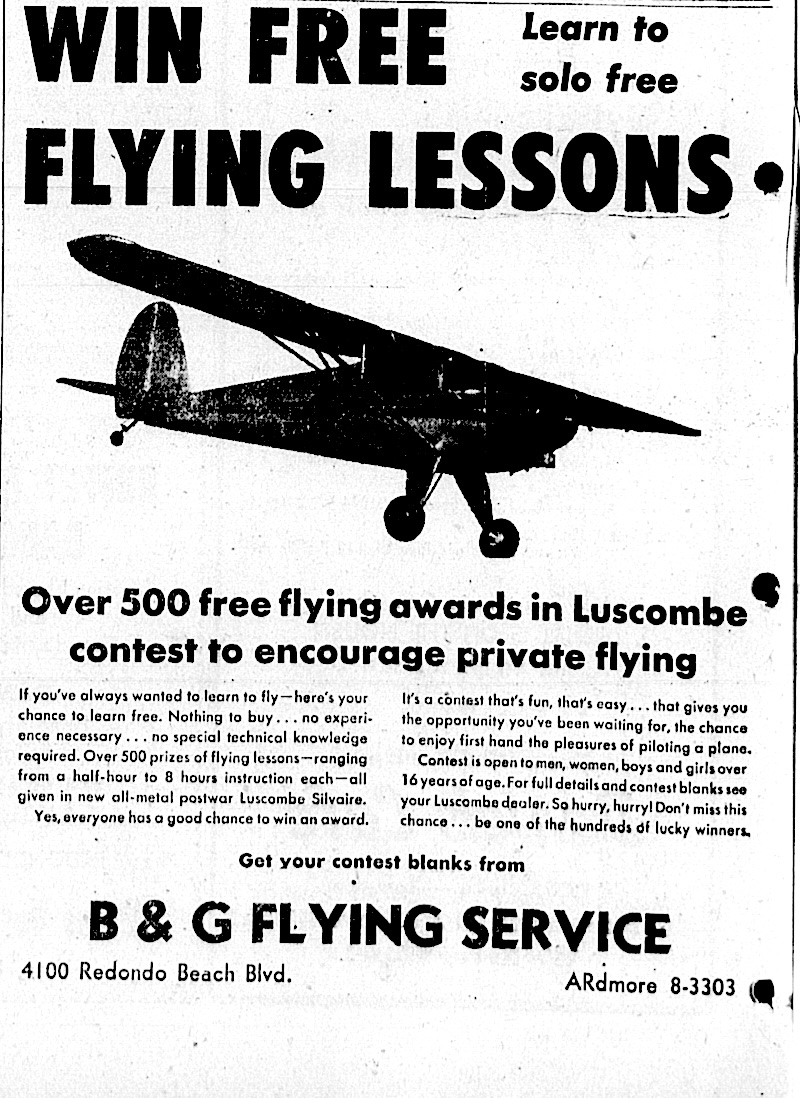
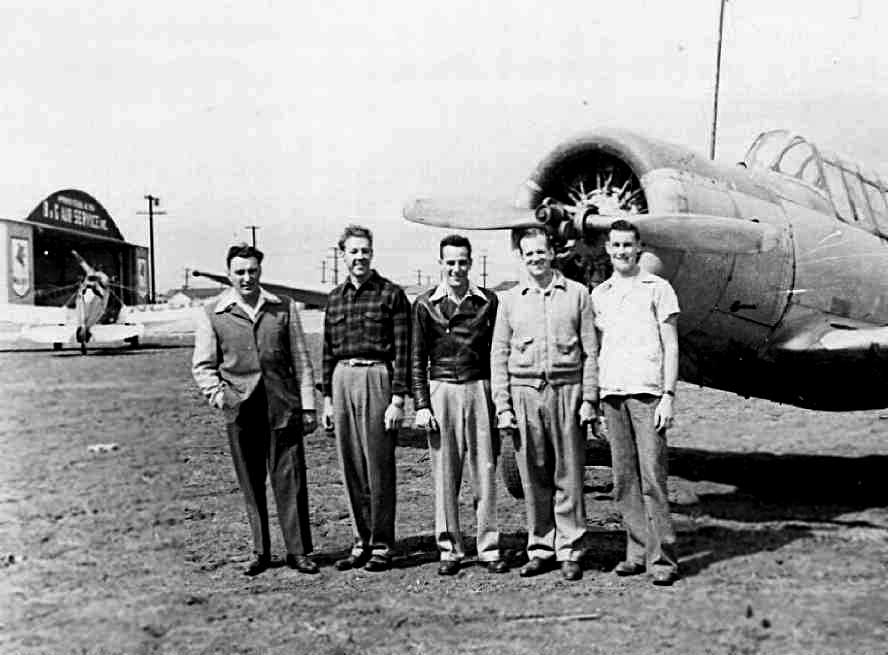
Instructors such as Cliff Bantel of B & G Air Service and those at the Cleveland & Wade firm offered free lessons to those purchasing small aircraft such as Taylorcraft, Luscombe and others offered for sale.
For a while, the airport continued to operate as usual, but it was becoming more and more apparent that Torrance Municipal Airport soon would become the city’s choice for its local airfield. No official closure date for Bay Cities could be located, but by late 1950, it was being described as “abandoned” in the Herald.
On Nov. 12, 1950, 19-year-old Paul Galla was killed during an illegal motorcycle race being held on the abandoned airport’s runway. As a result, the city moved to shut down racing there.
Later that month, the Herald announced that building permits valued at $519,506 were issued to Community Airports Inc. for the purpose of building 79 new family homes on the site.
Construction was well underway in 1951 and, by 1952, houses covered the site, leaving no traces of the former airport. Except, that is, for nearby businesses such as Airport Lumber, whose aviation-themed name would puzzle future area residents, as there was no corresponding airport in the area after 1950.
Sources:
“Airport Matters,” City of Torrance website.
Abandoned & Little-Known Airfields” website.
San Pedro News Pilot archives.
Torrance Press Herald archives.


Sam, Gherre,
Thank you for sharing out Torrance history. Our house sits in this area and our neighbor who passed away a few years back was one of the first ones to move in when the homes were built. Thank you and we always appreciate reading your column.
If I may, I would request an article regarding the area on Hawthorne Blvd and Artesia Blvd. before the South Bay Galleria was built. I have fond memories of the Newbury Store, Thrifty Drugstore and many small shops around it.
Thank you.
Estela
LikeLike
Hi Estela,
Thanks for reading and writing in. It’s been a few years, but I did do a blog post on South Bay Center, as the pre-Galleria outdoor shopping area was known. From 2015:
Sam
LikeLike