
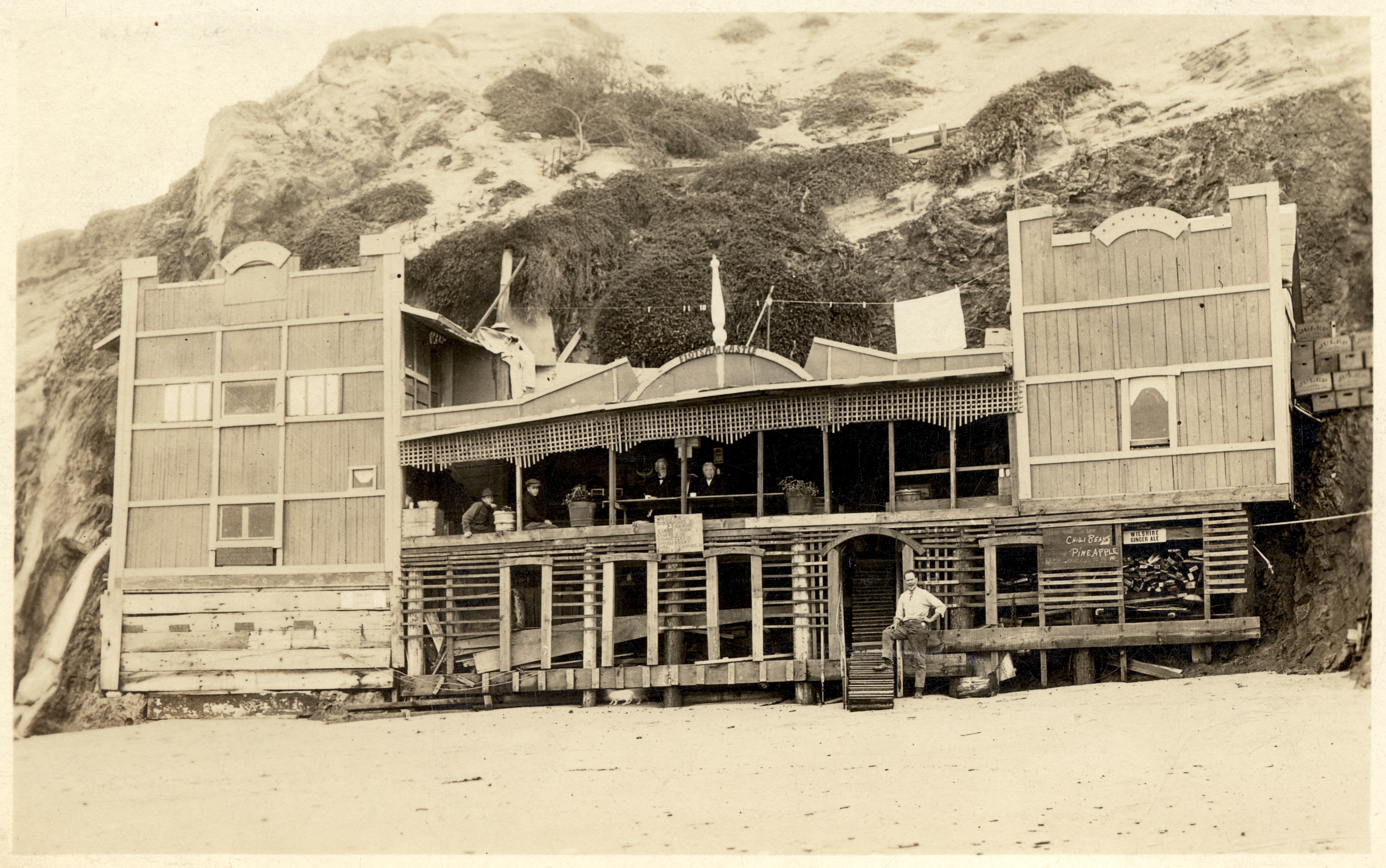
(Credit: California Historical Society)
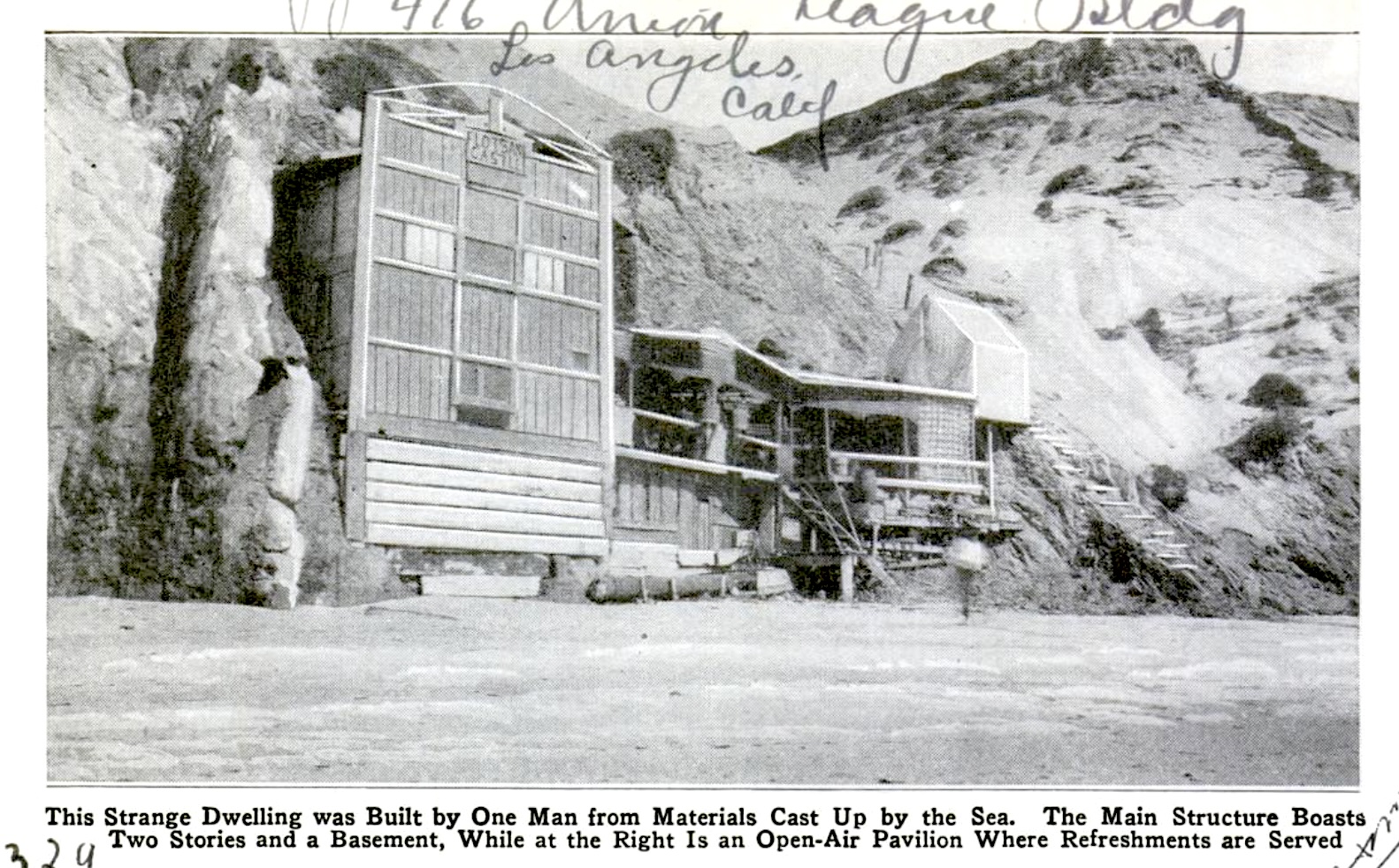
When I was working on the story on the origins of the name “RAT Beach” a few weeks ago, I noticed that some of the vintage photos of the area showed a striking-looking homemade structure built into the side of the cliffs on its northern end, near Torrance Beach.
A quick inquiry into its origin uncovered research by Dennis Piotrowski and Monique Sugimoto of the Palos Verdes Library District that told the story of the man responsible for the unique house.
Louis Calvin Dart, the man who would become known as “The Hermit of Flotsam Castle,” was born in Missouri in 1859. He spent most of his early years in the Midwest, graduating with a law degree from an Iowa college and running a successful legal practice in Nebraska.
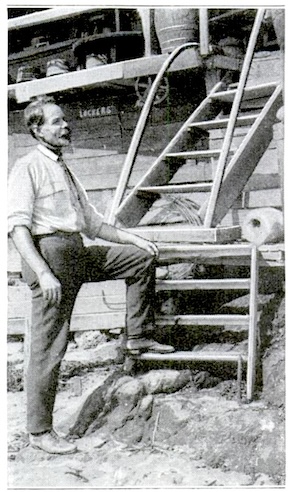
Illness struck him down, though, and left him unable to continue as a lawyer. He later said that he had been diagnosed with Bright’s disease, a kidney ailment now known as nephritis, but that doctors had stopped treating him after he ran out of money.
He became a drifter, eventually finding his way to northern California where he worked as a cook in mining camps in the early 1900s. During the 1910s, he moved down to Southern California, where the beaches of the Palos Verdes Peninsula attracted the formerly rootless wanderer.
The story goes that a Spanish woman who worked on one of the local ranchos was gathering clams when she encountered the increasingly sickly Dart on the beach. After hearing about his physical ailments, she told him to drink water from a spring at the base of the rocky cliffs on the north end of Malaga Cove, which she believed had special healing qualities.
Dart followed the woman’s advice, living for a time only on a broth he fashioned from the spring water together with sea snails that were plentiful on the rocky beach. His new diet suited him, and his health improved significantly. He was now able to climb up the rocks and gather wild tomatoes that grew on top of the cliff to eat as well.
He decided that the beach life suited him, and began fashioning a crude shelter up against a hollow in the rocks at what is now the north end of RAT Beach, just south of present-day Torrance Beach. Hard and fast dates as to when he did this are unclear, but he probably started building there in 1918 or 1919.
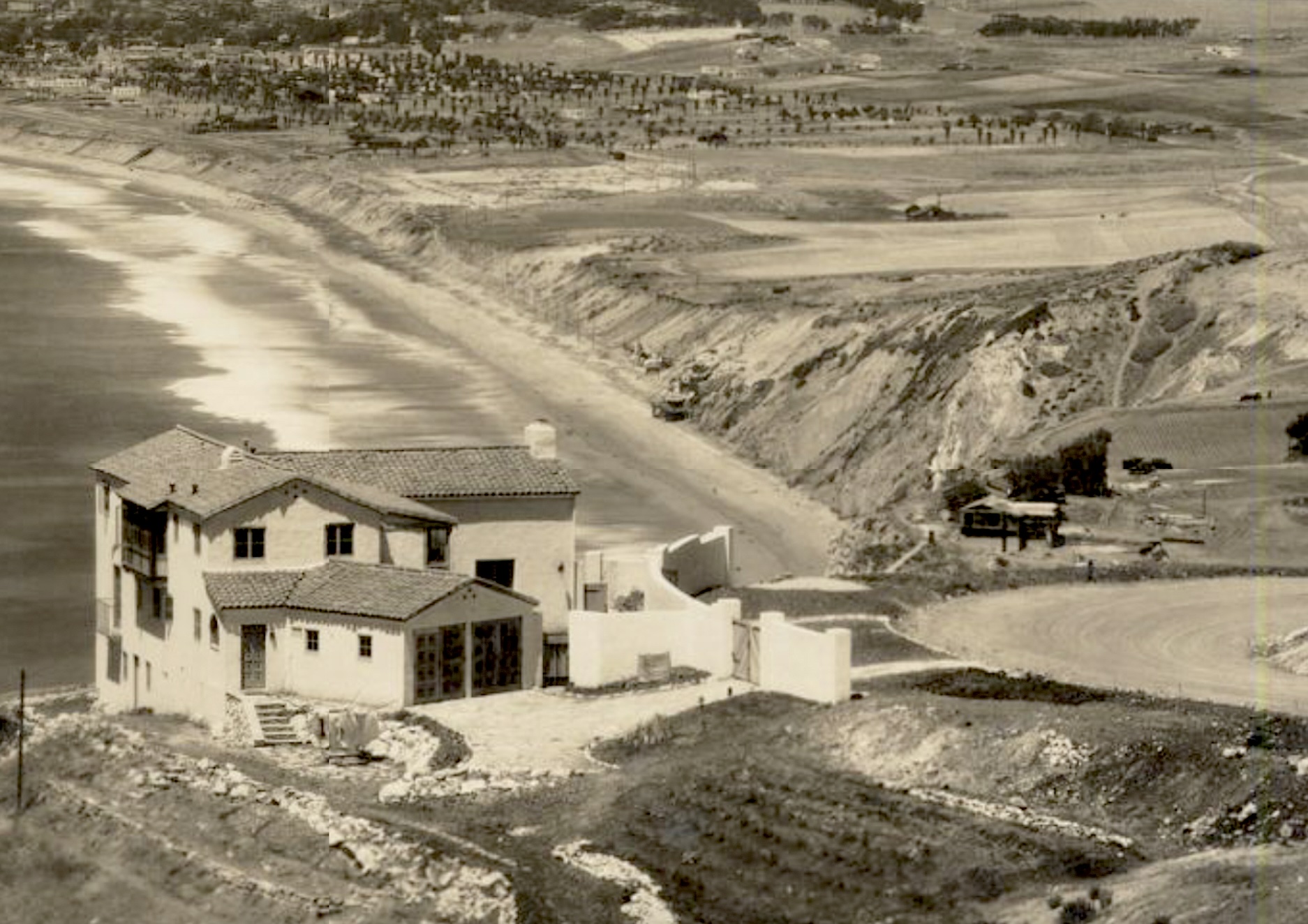
His project received a huge boost when the 45-foot yacht Genevieve, which had been moored in nearby Malaga Cove, broke free from its anchorage during high winds and wrecked on the rocky shore on Thanksgiving Day, 1920.
Its owners paid Dart five dollars to guard the boat overnight, and eventually allowed him to take wood and other scraps from the ruins. He sold $85 worth of scrap as salvage, a small fortune at the time, and used the rest of it on his home.
From this raw material, Dart began to rebuild his seaside shelter into something that more resembled an actual house up against the cliffs. The new improved structure attracted attention from locals and beachgoers, and the impromptu local landmark became known as “Flotsam Castle.”
Dart lived there with two pets, both called “Baby”: a guinea pig and a gray house cat. His two-story handcrafted home had stairs to an upstairs living room. Downstairs, there was a lunch room with a kitchen and a stove where he baked pies, thousands of them, that he sold to tourists.
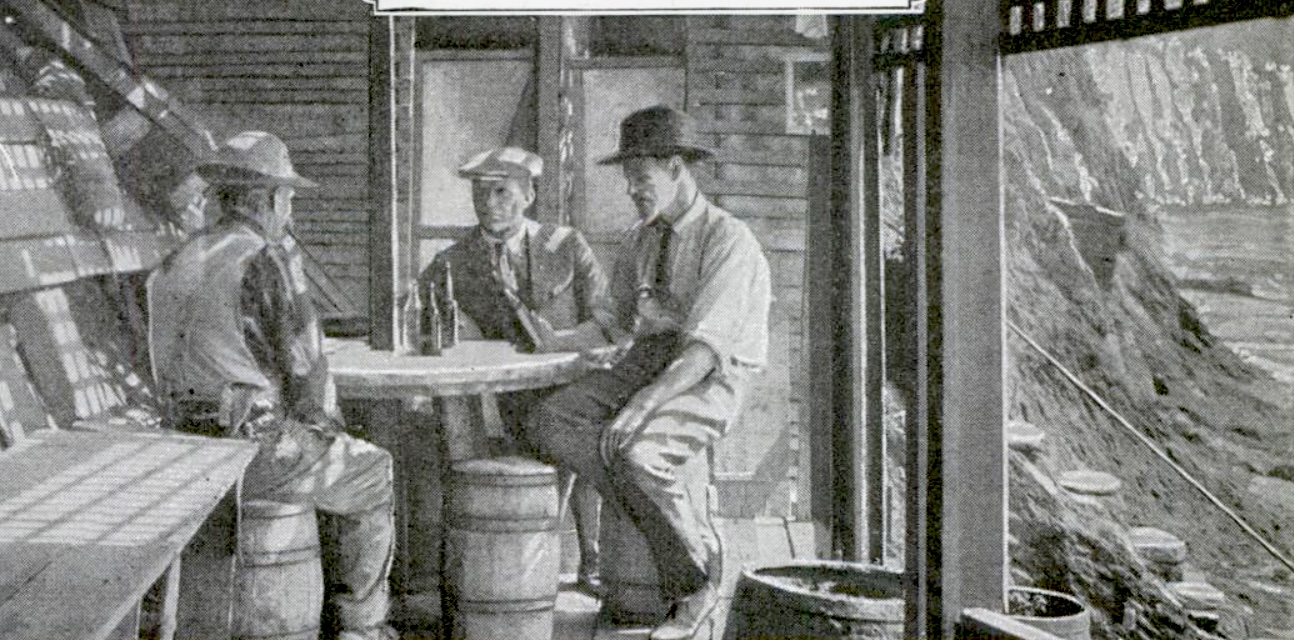
A large empty cable wire spool that had washed up on the beach formed one of the tables on Dart’s patio where they ate the pies on the house’s patio. He even kept sodas and drinks cold in a recessed niche he carved out of the cliff near the spring, whose waters cooled the hillside enough to create a natural ice chest.
Dart’s fame began to spread, and visitors came from all over the world to see his home. Stories about his creation began appearing in newspapers and magazines in the early 1920s.
Dart also fancied himself something of a homespun philosopher, adorning his “Castle” with bromides and and axioms. “This building cost but little money but much work, without which life affords no satisfying kick,” read a sign hung near its front door. He also had pamphlets printed up with more of his philosophical musings.
It’s not clear exactly when Dart moved out of his abode. It may have been as early as 1925, but he definitely was gone by the late 1920s.
Los Angeles Times reporter Florence Haines, who had written a feature story on Dart in 1922, revisited the Flotsam Castle in early May 1930. She found it deserted. A man living in a neighboring beach shack informed her that Dart had moved away.
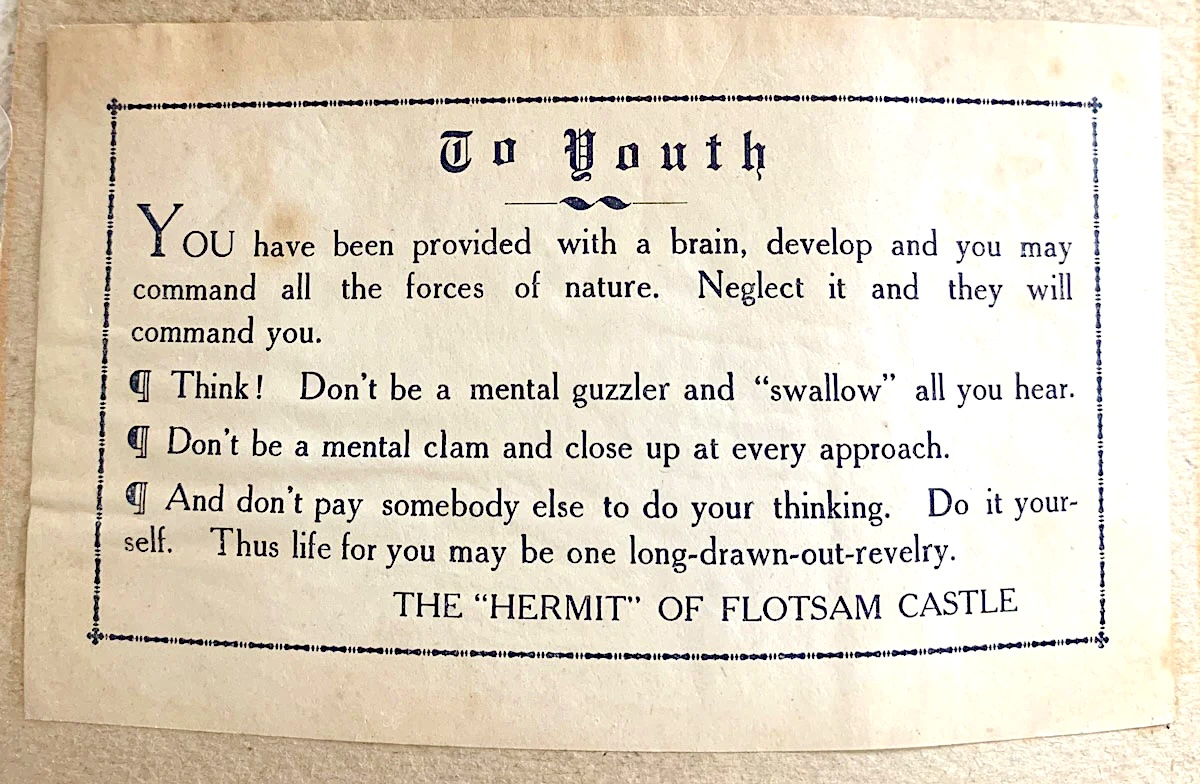
He’d left the beach for the Arlington area of Riverside, where he built a less-famous shack on a hill, but was forced to move when it was looted while he wasn’t home.
On May 11, 1930, a development company building homes in the Hollywood Riviera area of Torrance finally burned the abandoned Flotsam Castle to the ground.
Dart ended up in a rooming house in downtown Riverside, where he refused all efforts by friends and his family in Idaho to help him. He lived there on support from the county welfare agency until his death at 72 on March 3, 1932. He was buried in Riverside’s Olivewood Memorial Park cemetery.
Sources:
Daily Breeze archives.
Find A Grave website.
“Flotsam Castle,” by Maureen Megowan, Active Rain website, June 24, 2016.
“The Hermit Philosopher of Malaga Cove and His 20-Cent Castle,” by Dennis Piotrowski & Monique Sugimoto, Palos Verdes Library District website.
Los Angeles Times archives.
“Sea Furnishes Material for Queer Dwelling,” Popular Mechanics, August 1922, Page 222-224.
Torrance Press-Herald archives.

