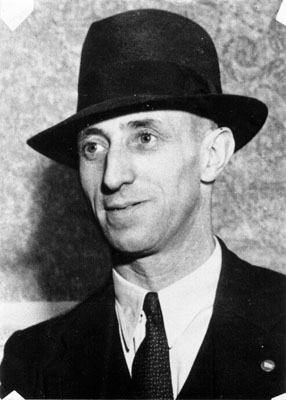
Waterfront labor leader Harry Bridges, whom we’ve written about several times, led the movement to unionize West Coast dockworkers when he formed the International Longshoremen’s Association (ILA) in 1933.
After meeting stiff resistance in contract negotiations with the Waterfront Employers Association (WEA), which represented shipping company owners, the union voted to strike in May 1934.
A tumultuous, violent labor battle on the docks followed, during which four union members were killed, two in Los Angeles and two in San Francisco. The labor dispute continued throughout the summer, finally going to arbitration in October 1934.
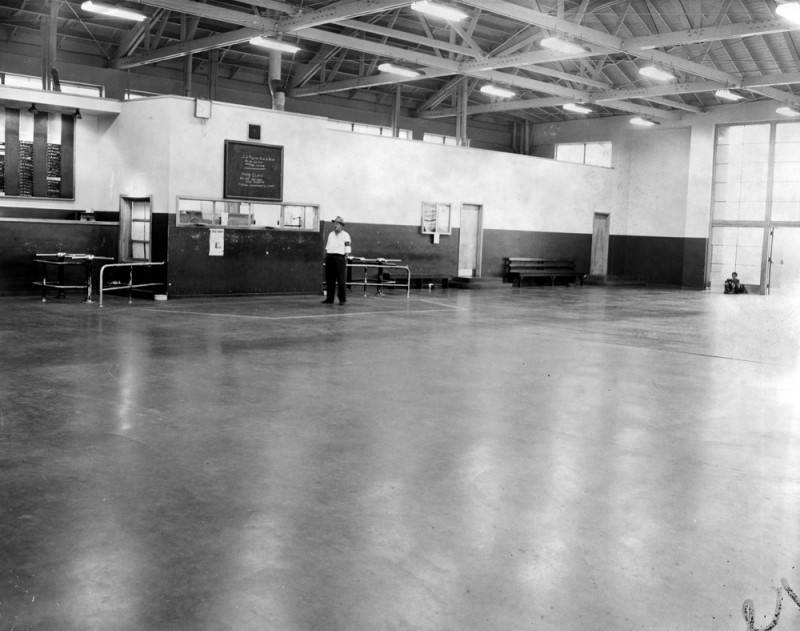
The arbitration board’s ruling favored the union. They won not only higher pay, but improved conditions, including less onerous workloads and safer working conditions. It also allowed them to keep hiring halls, union-operated offices that provided labor to employers.
As a result, the longshore union’s position was strengthened, and its down-to-earth leader who had come up working on the docks became the focus of the shipping companies’ ire.
They accused Bridges of being a card-carrying Communist, a charge which he would deny for the rest of his life. He did admit to not disagreeing with many of the philosophy’s principles, especially during the 1930s, and his use of the Communist Daily Worker publication to issue daily newsletters to union members during the 1934 strike certainly raised eyebrows.
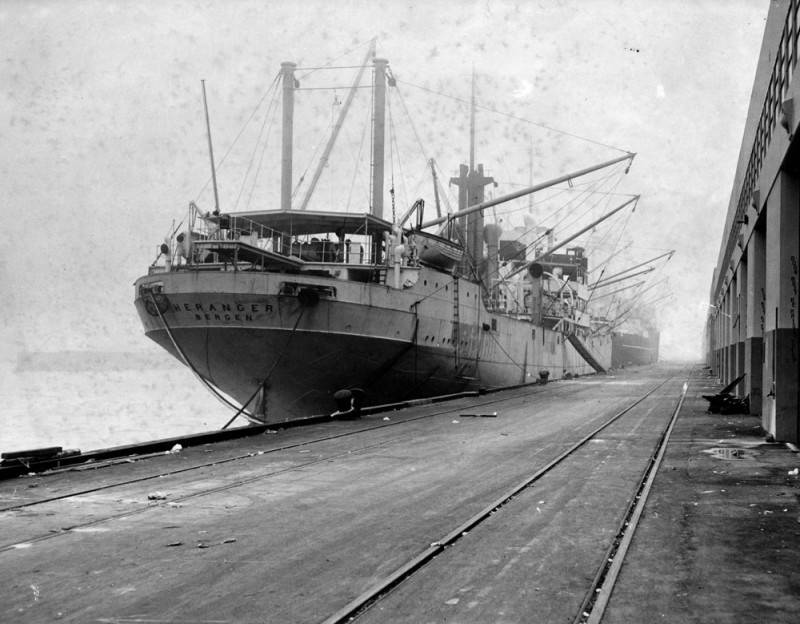
The companies seized on the perceived links, repeatedly calling him a Communist. The federal government tried multiple times to deport Bridges, bringing cases against him in 1939, 1941, 1949 and again in 1955. The attempts were unsuccessful.
In 1935, a year after the strike, President Franklin Delano Roosevelt signed the National Labor Relations Act as part of the New Deal. The measure empowered the labor union movement in the U.S. by ensuring the right of private-sector workers to form trade unions, engage in collective bargaining and authorize strikes against employers.
In 1937, Bridges split off from the I.L.A., forming the International Longshoremen’s and Warehouse Union (ILWU). (“Longshoremen” was simplified to “Longshore” in 1997 in acknowledgment that the union counted other genders besides males among its members.)
World War II brought relative harmony to labor-management relations on the docks, as both sides worked tirelessly for the war effort.
FDR died in April 1945 as the war was winding down, and Harry Truman had become president. With the end of the war came new attempts to tamp down the union movement.
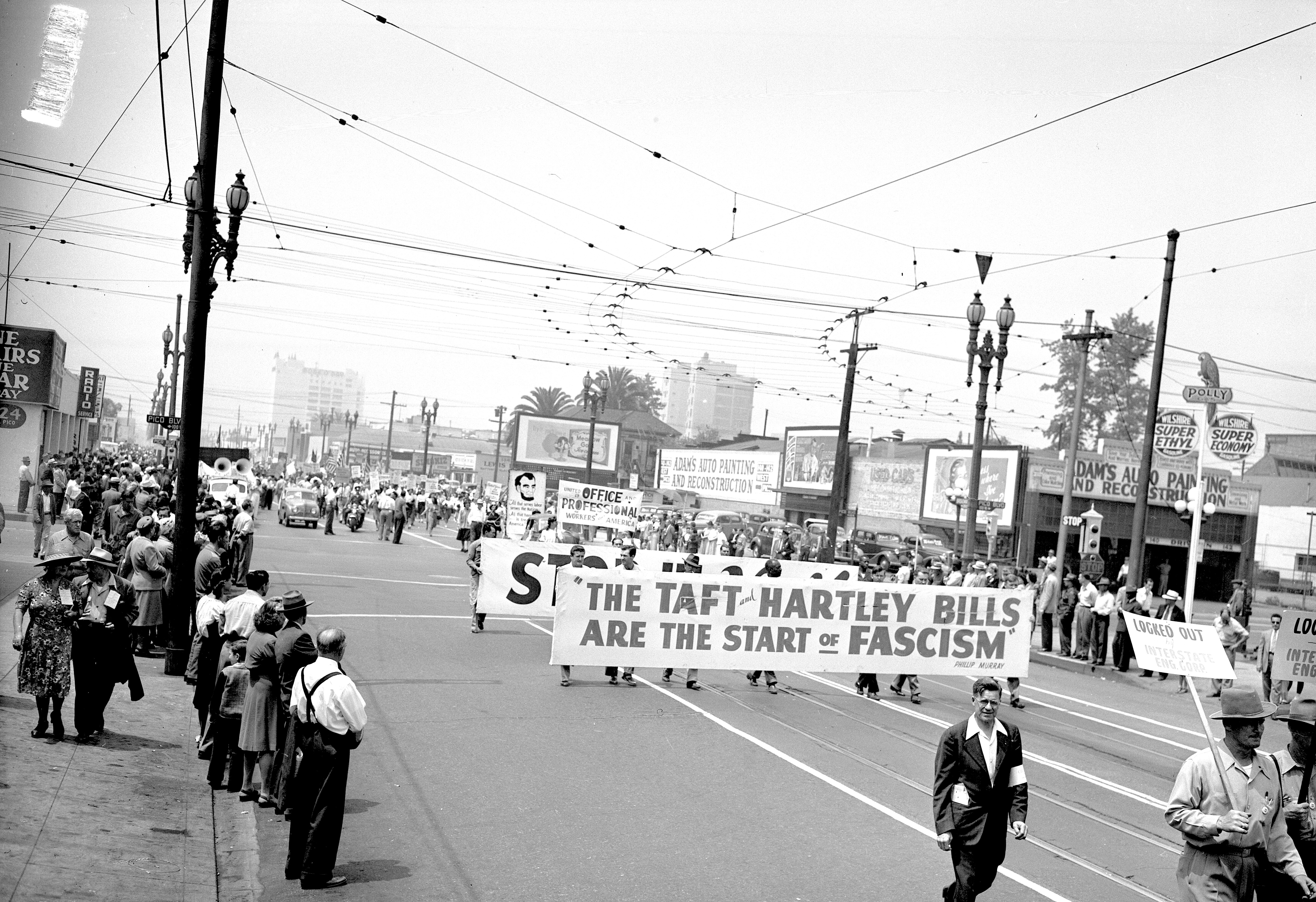
A postwar wave of large-scale union strikes followed, and Republicans in Congress, possessing their first majority since the early 1930s, decided the timing was right for legislation reining in the labor movement. Congress passed the Taft-Hartley Act to do just that, with many Democrats lending their support. President Truman vetoed it, but Congress overrode his veto and the measure became law in June 1947.
The law banned certain kinds of strikes and boycotts, political contributions by unions, and “closed shops” which forced employers to hire union labor. Also, union leaders had to file an affidavit declaring that they were not members of the Communist Party, or any other group threatening to overthrow the government.
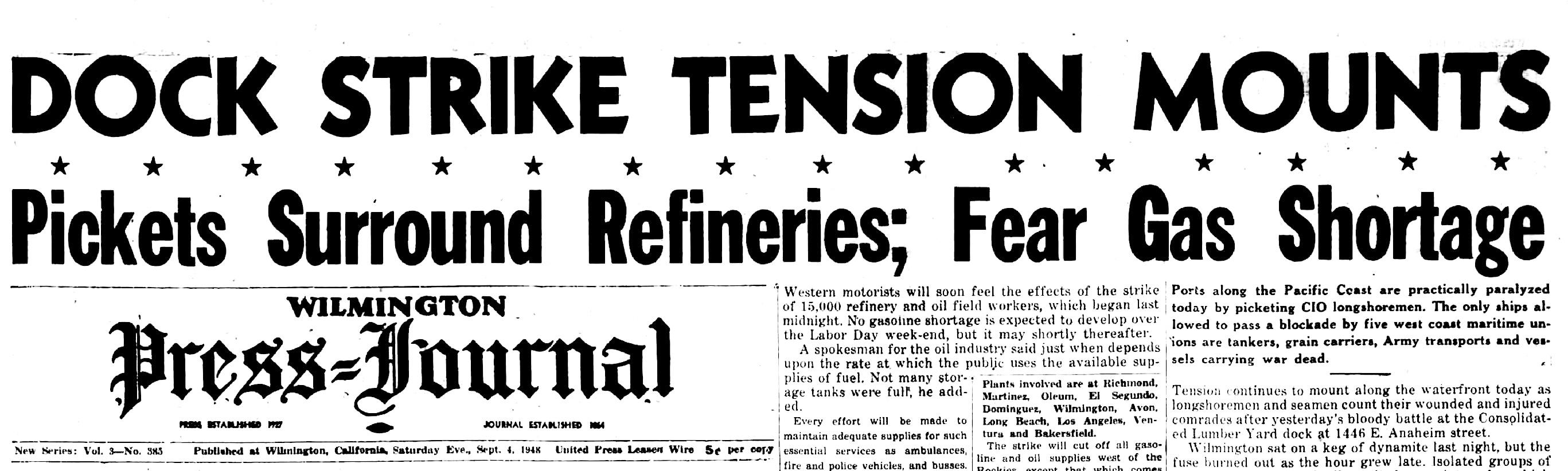
So, when the time came to negotiate a new labor contract in 1948, the WEA tried to invoke the new Taft-Hartley provisions against Bridges and the ILWU. Their demand for an end to the union-run hiring halls alone was a deal-breaker for the union, whose members authorized a strike if the WEA didn’t rescind their demand.
They didn’t, negotiations broke down, and the ILWU officially went on strike on Sept. 2, 1948. Having failed at one Taft-Hartley tactic, the shipping companies decided to try another one: leaning hard on the anti-communist sentiments of the era. They refused to negotiate because union leaders had refused to sign anti-Communism affidavits as the new law required.
The strike was on. On its second day, violence broke out when non-union members attempted to unload the lumber ship Ronaldo, to the visible dismay of ILWU members.
According to the San Pedro News PIlot, “Approximately 450 persons were involved in the dispute in which gunshots, clubswinging and knife-wielding figured.” Though dozens were injured, there were no fatalities.
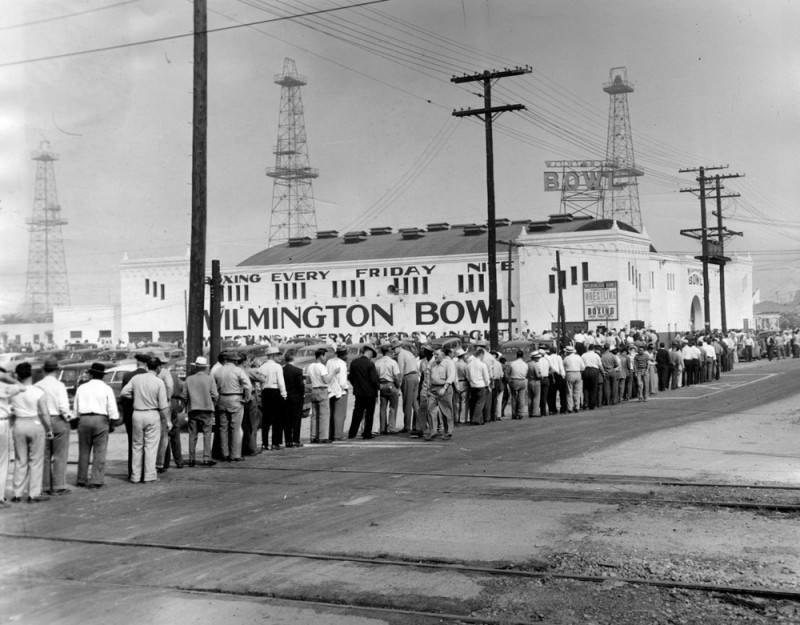
As the strike dragged on, the WEA gradually began backing down from its demands, even changing its negotiators from hard-line anti-unionists to those more receptive to bargaining.
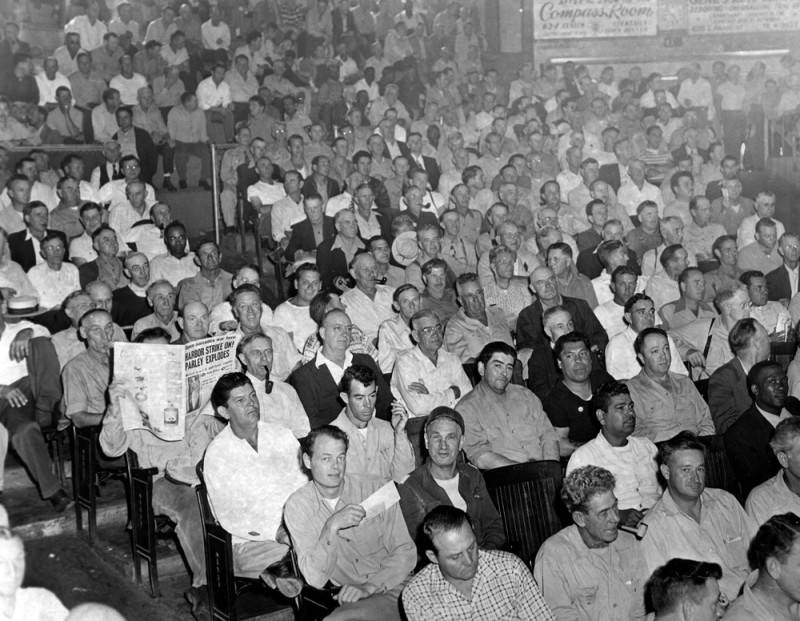
The 93-day strike officially was settled at noon on Dec. 3, 1948. Despite the initial posturing by the shipping company owners, the ILWU ended up getting most of what it asked for in its new contract. The union retained its hiring hall privileges, and also won increased wages and vacations and improved working hours.
In 1965, the Supreme Court struck down the Taft-Hartley provision requiring union leaders to sign anti-Communism affidavits.
Bridges went on to lead the ILWU until his retirement in 1977. He died in 1990.
Sources:
Daily Breeze archives.
“Harry Bridges: Life and Legacy,” by Michael Reagan, University of Washington Waterfront Workers History Project website, 2019.
ILWU Local 19 website.
“Looking Back at the 1948 Strike,” International Longshore and Warehouse Union website.
Los Angeles Times archives.
San Pedro News Pilot archives.
Wikipedia.
Wilmington Press-Journal archives.