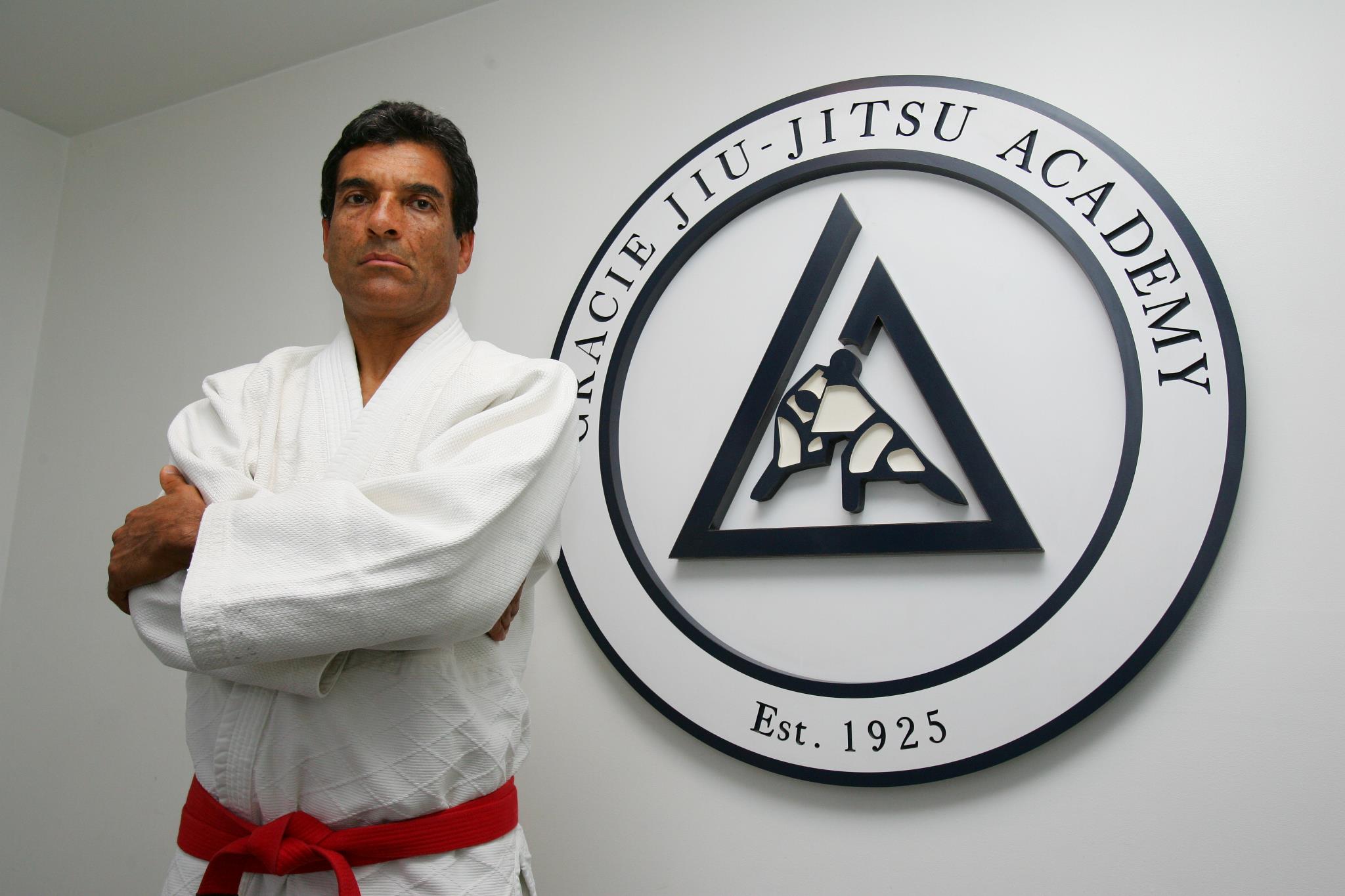
In 2022, the mixed martial arts website FanSided estimated the total value of the Ultimate Fighting Championship (UFC) franchise at $9-10 billion. Not bad for a competition co-founded by Rorion Gracie of Gracie University in Torrance in 1993.
To trace how it all came to be, we’ll have to go back to Oct. 1, 1913, and the birth of Rorion’s father, Helio Gracie, in Belem, Brazil. Financial setbacks forced the family to move to Rio de Janeiro a few years later.
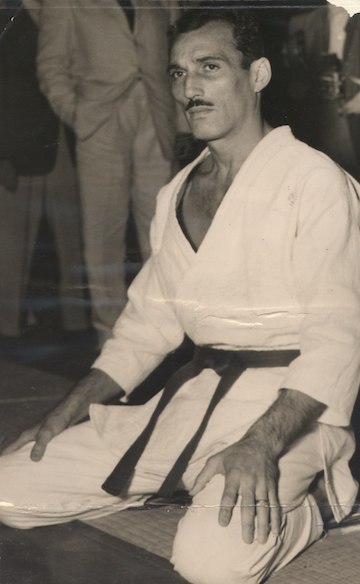
Helio had several physical infirmities as a child, and couldn’t participate in ovelry vigorous activities. When his brother, Carlos, opened a jiu-jitsu studio in Rio in 1925, Helio began training in the martial art.
He found that jiu-jitsu had certain elements that exceeded his physical capabilities. But when he began mixing elements of judo and other martial arts disciplines into the process, it enabled him to use leverage to his advantage against opponents. This technique became known as the Gracie Jiu-Jitsu method.
Helio began competing professionally at age 18. The Gracies felt their method would prove effective against conventional boxers and wrestlers, so Helio took to the ring in 1932, defeating boxer Antonio Portugal in his first match.
It was the first in a series of contests that came to be known as the Gracie Challenge, aimed at proving the superiority of the family’s style of hand-to-hand combat, which does not involve striking or punching, over other styles of fighting
Helio went on to fight 19 more times over the next 35 years, winning nine matches, drawing eight and losing three. He retired in 1937 and again in 1955. In addition to martial arts fighters, he also challenged boxers and wrestlers during his career, but few accepted. Heavyweight champ Joe Louis said he would face him in a boxing match, but Helio refused.
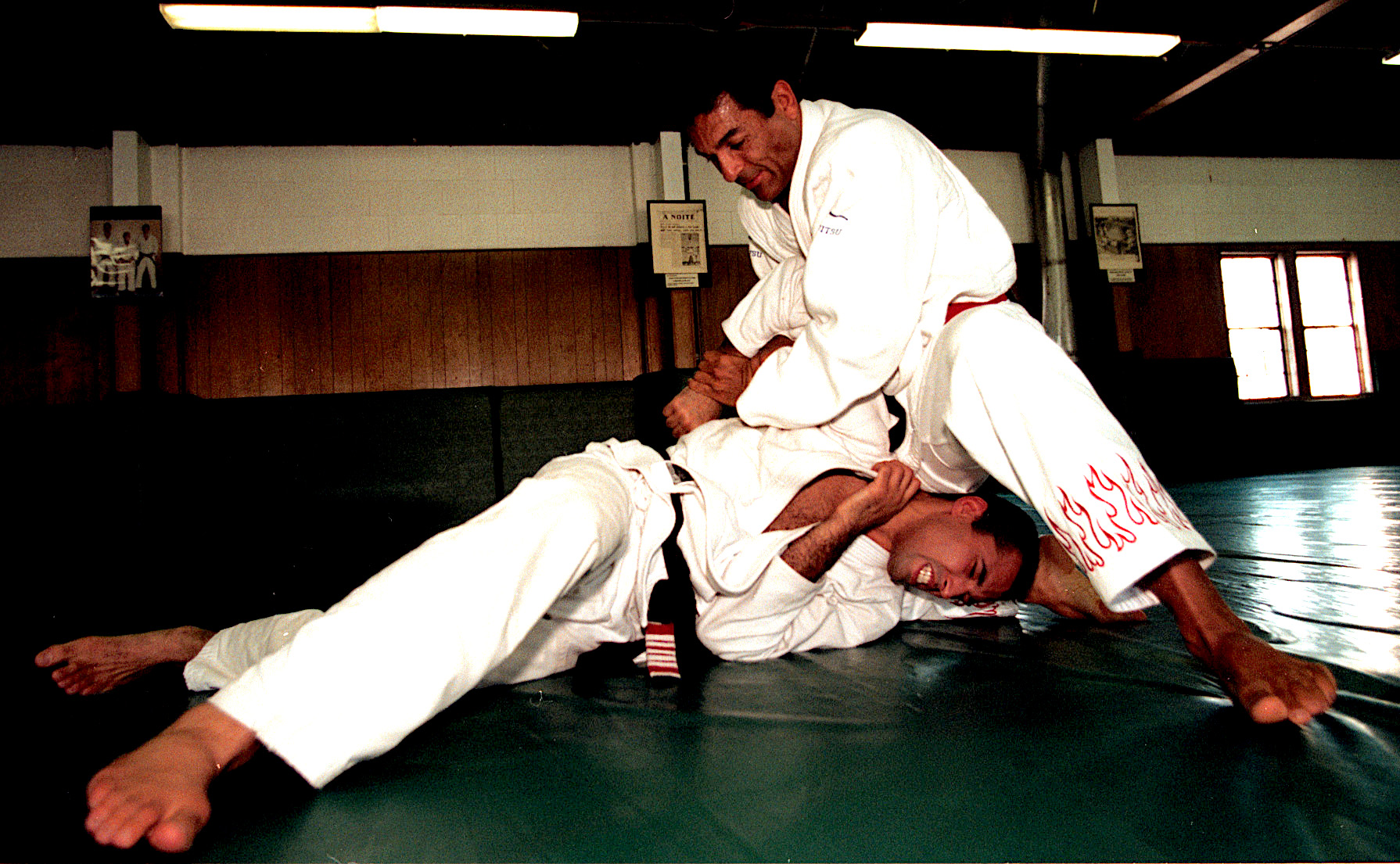
Rorion Gracie was the first of Helio’s nine children, all of whose names start with “R.” He was born on Jan. 10, 1952 in Brazil. He was a natural athlete, and excelled in the family’s Gracie Jiu-Jitsu style, training to become a teacher instead of a fighter.
Rorion fell in love with the United States during a 1969 visit. He returned to Brazil a year later, where he spent the next five years earning his law degree.
He returned to the U.S. in 1978, and settled in Hermosa Beach. He began giving informal lessons in the family’s martial arts technique in his garage, preaching its superiority to other styles.
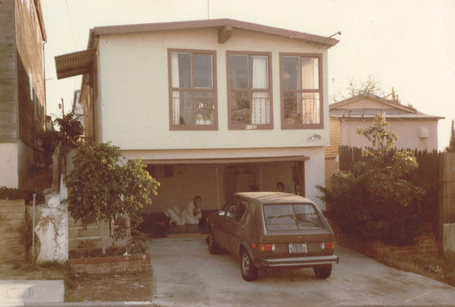
His students would bring their coaches by to challenge his assertions, and Rorion would roll out the mats in his garage and do battle with them, often drawing crowds to watch the impromptu duels.
In 1985, he invited his younger brother Royce to join him, and they opened the first Gracie Jiu-Jitsu academy in a two-story building atR1951 Carson St. in downtown Torrance in 1989.
During this period, Rorion also worked on the “Lethal Weapon” films. Director Richard Donner wanted star Mel Gibson to showcase a different style of martial arts fighting, and the Gracie method fit the bill.
In addition to working frequently with film stars and entertainment industry figures, Gracie also worked with the U.S. Army to develop new hand-to-hand combat techniques. Police departments and government law enforcement agencies have also adopted the techniques.
In 1993, Rorion began working with promoter Art Davie to stage a fighting event that would bring the Gracie Challenge concept into the spotlight. He was less interested in the spectacle than he was in proving the superiority of the Gracie Jiu Jitsu method.
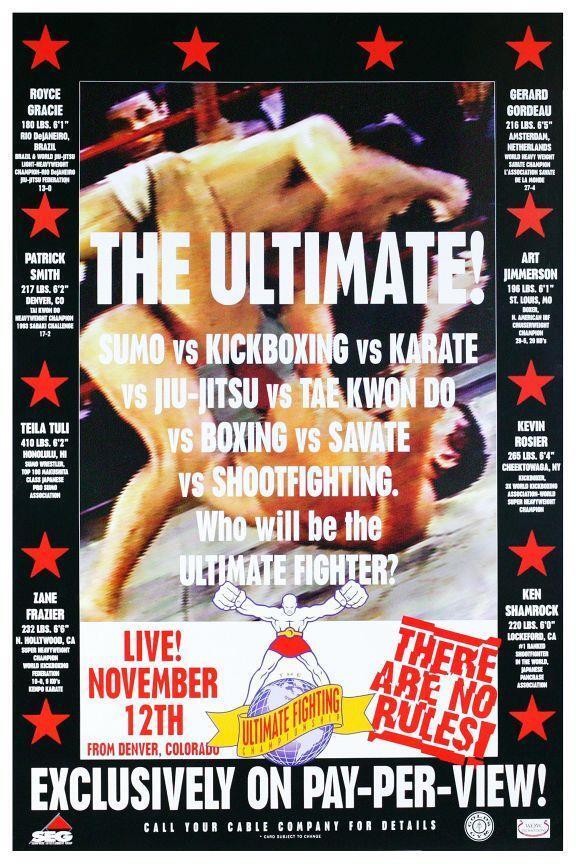
That’s why he selected his younger brother Royce, who, at 178 pounds, was the smallest of the Gracies. By using a smaller fighter against larger men, the strengths of the Gracie method would be illustrated more fully.
The first UFC championship match took place on Nov. 12, 1993, at McNichols Sports Arena in Denver, Colorado. Only 2,800 people attended in person, but Davie and Gracie’s pay-per-view operation drew 85,000 viewers, more than twice what they had expected.
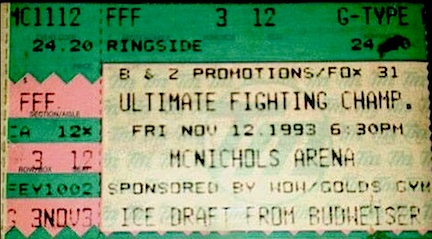
Royce Gracie defeated all three challengers he faced to become the event’s first champion. He would go on to win at UFC 2 and UFC 4, and gain election to the UFC Hall of Fame in 2003.
Two years later after the first event, Rorion sold his stake in UFC. He felt he had proved his point, and was distressed at the whole enterprise turning into a made-for-television show. “I wanted real fights on TV. My partners wanted a TV show with fights,” he told the martial arts website MMA Fighting in 2013.
In 1997, Gracie Academy moved to its new quarters at 3515 Artesia Blvd. By 2017, the school had outgrown that facility, moving to its newly built current location at 2440 W. Carson St. in Torrance, and adopting a new name, Gracie University.
The Torrance location serves not only as the discipline’s flagship training center, but also as the headquarters for an organization that has spread to hundreds of training locations throughout the world.
Helio Gracie, who had coached his son Royce in the first two UFC events, died in his sleep of natural causes at his home in Rio de Janeiro on Jan. 29, 2009.

Sources:
Daily Breeze archives.
Gracie University website.
Los Angeles Times archives.
“Rorion Gracie and the Day He Created the UFC,” by Guilherme Cruz, MMA Fighting website, Nov. 12, 2013.
Wikipedia.