
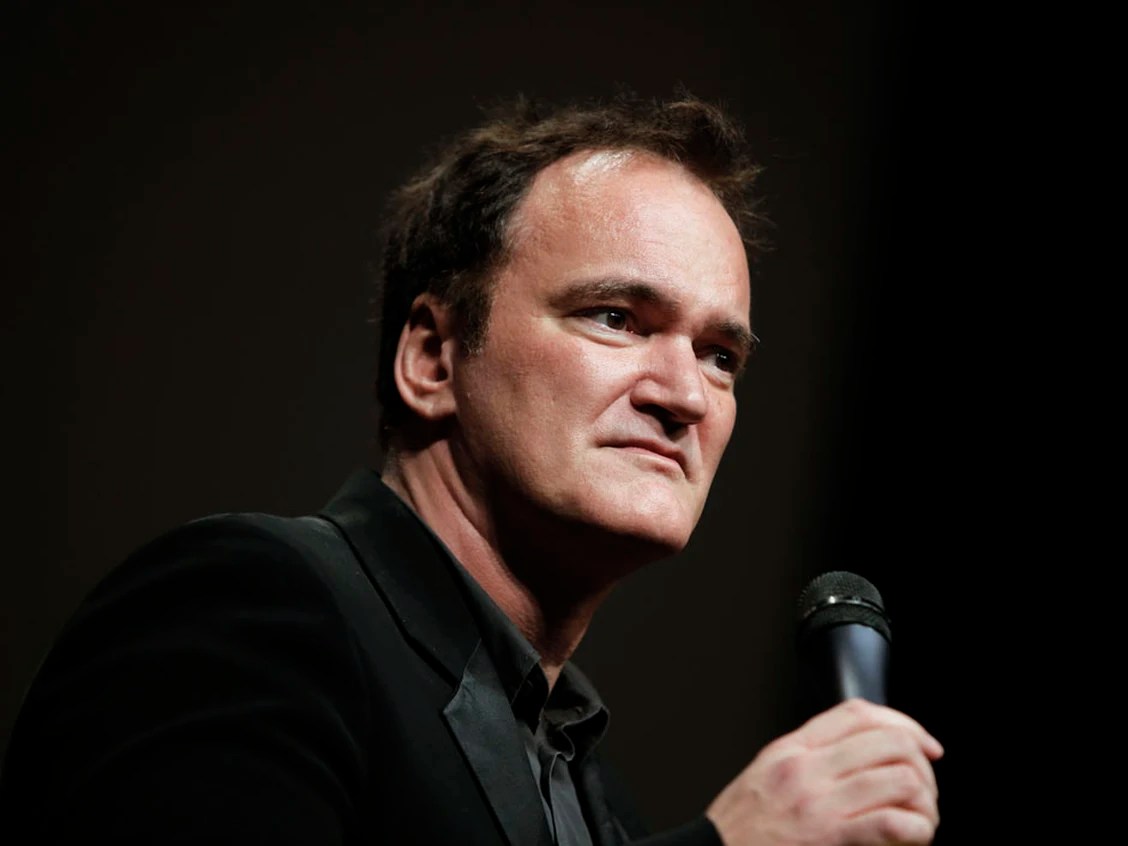
Quentin Tarantino may have been born in Tennessee, but he spent his formative years in the South Bay.
He grew up not knowing his father, aspiring actor Tony Tarantino, who left his teenage wife, Connie, before Quentin was born in Knoxville on March 27, 1963. The couple originally met and married in Los Angeles, but Connie returned to her family in Knoxville after their split.
She returned to Los Angeles to go to nursing school, eventually landing a job in a Hacienda Heights doctor’s office. While working there, she met and eventually married musician Curtis Zastoupil, a piano player who played in local bars and nightclubs.
The couple lived in El Segundo, then in Manhattan Beach. His mom sent for young Quentin to join them; he’d been staying with his grandmother in Tennessee. The trio formed a happy, if somewhat unconventional family unit.
Tarantino’s obsession with film may have had its roots in the many films his parents took him to as a child, including a double bill of “The Wild Bunch” and “Deliverance” when he was six.
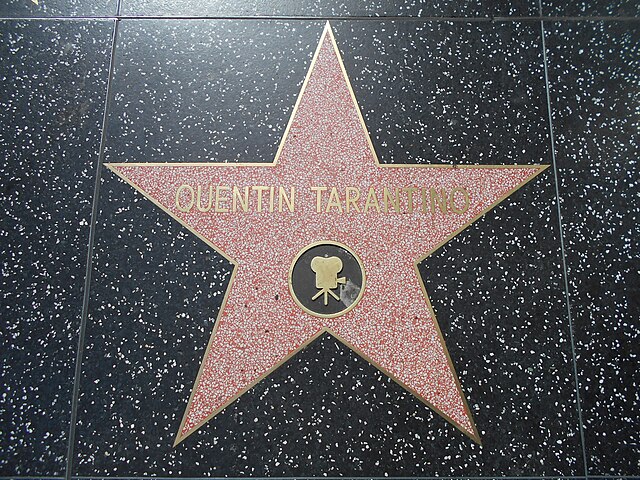
Tarantino later paid tribute to his stepfather by including a scene with a piano player named Curt Zastoupil in his 2021 novelization of the screenplay for the film “Once Upon a Time in Hollywood” (2019).
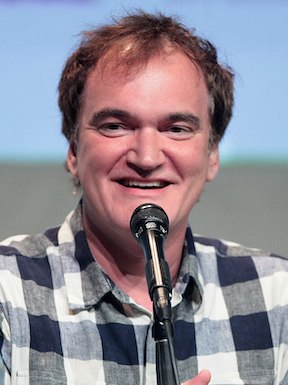
The marriage didn’t last, however. The couple divorced when Tarantino was nine, and his mother and Quentin moved to Harbor City. Quentin became a regular attendee at the Carson Twin Cinema theaters. He learned to love the exploitation, horror and martial arts movies frequently screened there, later describing it to the Los Angeles Times as “the perfect grindhouse theater.”
His obsession with movies was growing more intense, at about the same time as his desire to continue his education at Narbonne High School as a ninth grader was ebbing. He gradually just stopped going to classes altogether, which his mom found out when the school called to inquire about his frequent absences.
He caught the acting bug and began attending the James Best acting school in Toluca Lake. He changed his last name from Zastoupil to Tarantino, because, as he told podcaster Mark Maron in 2021, “it sounded cooler.”
His mom also insisted that the 15-year-old get a job if he wasn’t going to go to school. After lying about his age, he complied, getting hired as an usher at the Pussycat Theater on Cravens Ave. in downtown Torrance.
His movie theater job wasn’t ideal – he hated how poorly the films were made – so he tried a couple more, one doing market research and one as a headhunter in the aerospace industry. After those didn’t pan out, he landed a job in 1985 that would change his life.
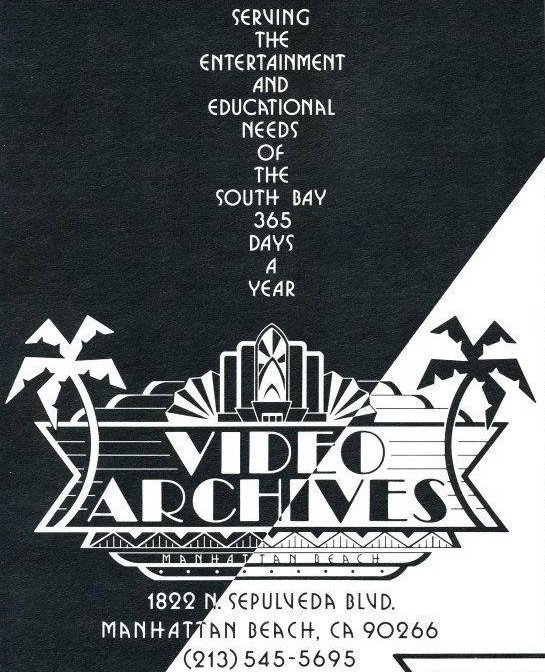
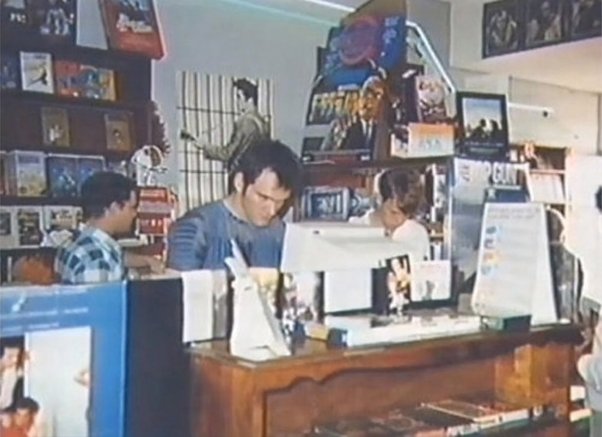
The offer came from the Manhattan Beach video rental store he’d discovered, Video Archives. The tiny store at 1822 Sepulveda Blvd. was crammed with films of all types and genres, both foreign and domestic. Tarantino spent hours hanging out there. Already well-versed in a wide variety of films, he often could be found debating and discussing their merits with the store’s clerks.
One of those clerks, future Tarantino film collaborator Roger Avary, recommended Quentin ford the job to the store’s owner, Lance Lawson. Tarantino worked there for five years, leaving just before the store moved to larger quarters at 1805 Sepulveda.
His acting career had stalled after his one television role, as an Elvis impersonator in a 1988 episode of the “Golden Girls” sitcom. But he continued writing the screenplays he’d begun writing as a young boy, living in large part off the residuals of his television guest shot.
The longer he worked at Video Archives, the stronger his desire became to break into the movie industry. He acted in two early films, the short “Love Birds in Bondage” (1983), which he and co-director Scott Magill allegedly destroyed after seeing how it turned out, and the unfinished “My Best Friend’s Birthday” (1987), a collaboration with Avary.
After leaving his Video Archives job, Tarantino began concentrating on scriptwriting, seeing it as a pathway to raising enough money to make his own films. His first project to get attention in Hollywood was called “The Open Road.” The sprawling story, co-written with Avary, eventually was split into two separate screenplays, “True Romance” and “Natural Born Killers.”
Director Tony Scott made “True Romance” (1993) starring Christian Slater and Rosanna Arquette, and Oliver Stone directed “Natural Born Killers” (1994) with Woody Harrelson and Juliette Lewis.
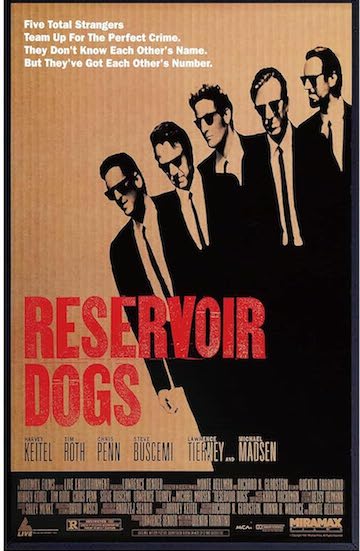
Doors were opening for Tarantino. At a 1989 meeting with Hollywood producer Lawrence Bender, Tarantino told him about his in-progress script about a gang of thieves meeting after an unsuccessful jewelry store heist. Bender encouraged him to finish it. After actor Harvey Keitel signed on to do the project, “Reservoir Dogs” went into production.
Directed by Tarantino, the film went on to become an indie sensation in 1992. “Reservoir Dogs” earned only $3 million on its initial U.S. release, but it took in $20 million internationally. It also received a host of award nominations, mainly from film critics groups and independent film associations.
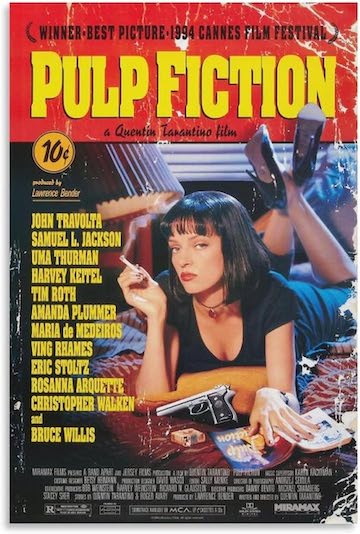
Tarantino’s tour de force, “Pulp Fiction,” starring John Travolta and Samuel L. Jackson followed in 1994, and he never looked back. But he also never forgot his childhood upbringing, frequently using South Bay locations in his films. Next week, we’ll take a look at some of those.
Sources:
Daily Breeze archives.
Los Angeles Times archives.
“Quentin Tarantino,” The Internet Movie Database.
“Quentin Tarantino Explains the Heartwarming Reason He Named a ‘Once Upon a Time In Hollywood’ Character After His Stepfather,” by Fred Topel, Showbiz Cheat Sheet website, July 8, 2021
Quentin Tarantino: The Film Geek Files, edited by Paul A. Woods, Plexus Publishing, 2005 (2nd edition).
“R.I.P. Video Archives,” by Adam Groves, The Bedlam Files blog.
Tarantino: A Retrospective, by Tom Shone, Insight Editions, 2017.
Wikipedia.
Recommended: The Video Archives Podcast With Quentin Tarantino & Roger Avary.
Video: From the 1994 documentary, “Quentin Tarantino: Hollywood’s Boy Wonder”:

