World’s Fairs have dropped off the cultural radar in recent times. The last one officially sanctioned by the Paris-based Bureau International des Expositions occurred without a lot of fanfare in Dubai in 2020, and the next one is scheduled for Osaka, Japan in 2025.
The first World’s Fair took place in Prague in 1791. The World Expo in London in 1851 during Queen Victoria’s reign is considered to be the first such fair to showcase technological and manufacturing innovations. It set the standard for those that followed.
World’s Fairs would be held roughly every three to four years after that. Philadelphia staged the first one in the U.S., the Centennial Exposition in 1876. Chicago (1893) and St. Louis (1904) followed, the latter forming the backdrop for the 1944 Judy Garland musical film “Meet Me In St. Louis.”

Perhaps the most sensational and culturally significant World’s Fair of them all occurred in New York City in 1939-40. Its exhibition halls showcased technological innovations from television to automatic dishwashers, fluorescent lighting and super highways.
Fast forward to 1958. The Brussels World’s Fair is going strong in Europe, attracting some 41.5 million visitors. Decisions are being made as to the location of the next fair, which had 1963 as a target date.
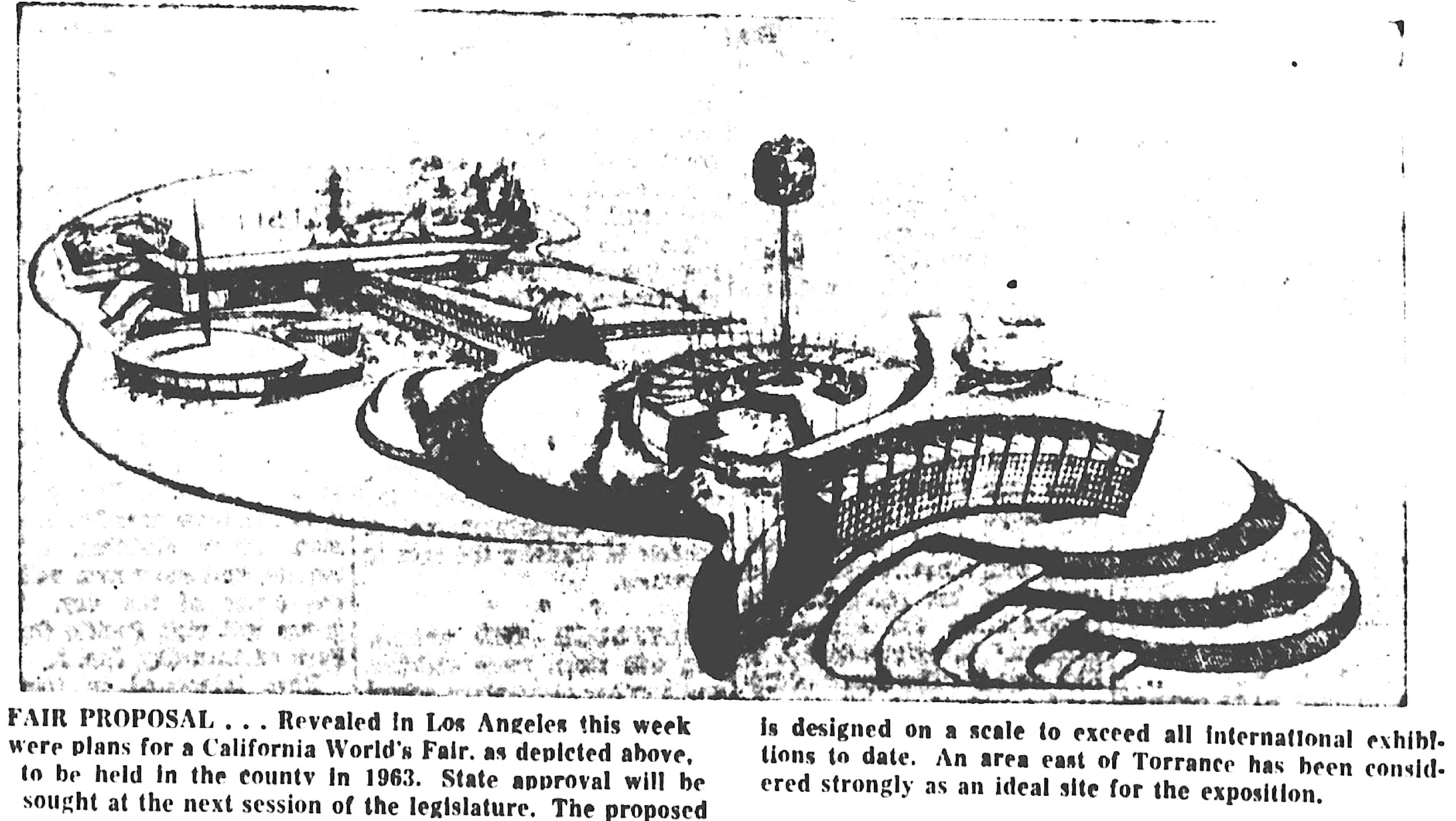
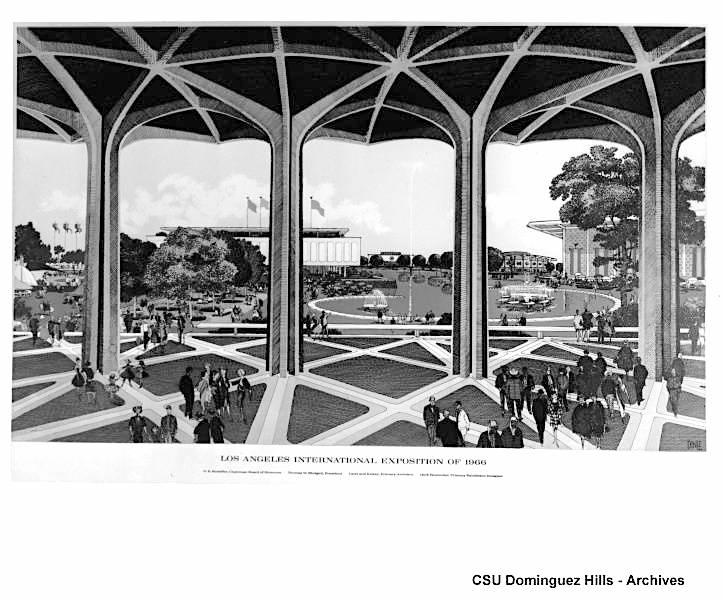
Several cities had tossed their hats into the ring, including Washington, D.C. and Paris. A group of Los Angeles businessmen and local politicians put their heads together in 1958 and decided to add Los Angeles to the mix.
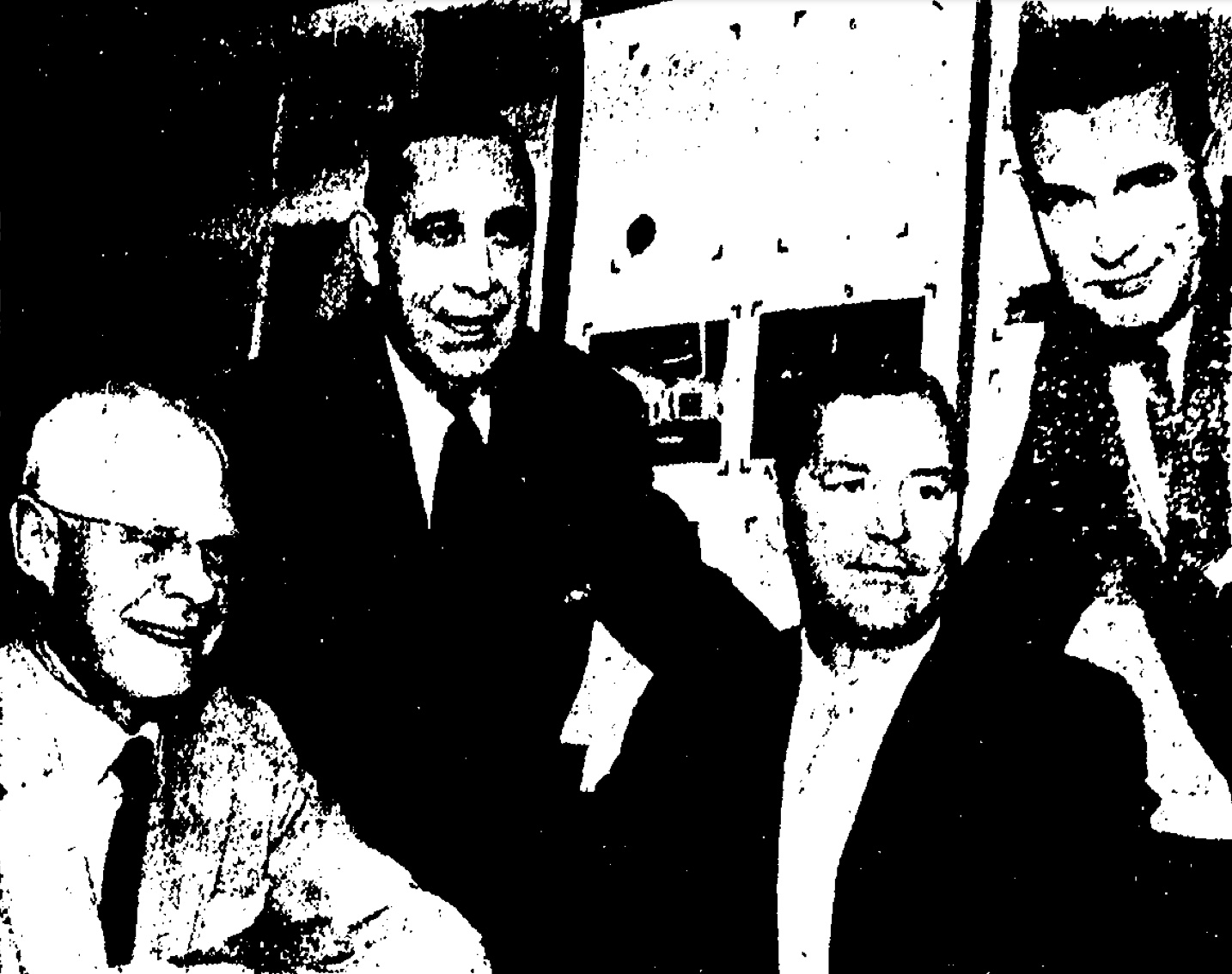
The group formed California World’s Fair Inc. (CWFI) in 1958, opening an office in downtown L.A. and naming San Diego financier J.A. Smith as its president. On June 17, 1958, the Los Angeles County Board of Supervisors passed a resolution supporting the proposed event.
Smith’s group listed six possible sites for the event, five in Los Angeles County and one in Orange County. Sanctioned World’s Fairs required the construction of permanent buildings to house the various pavilions and exhibition halls, as well as sufficient parking areas. This translated into the need for a minimum of 1,000 acres of space in order to house the fair.
Paramount among the six sites was a 1200-acre site offered for lease to the organization by the Dominguez Estate Co. on what was then unincorporated county property between Avalon and Wilmington avenues south of Victoria St. Today, it’s the home of the Dignity Health Sports Park (formerly the Home Depot Center) and California State University, Dominguez Hills in Carson.
Fair boosters preferred the site because they envisioned that four freeways then either under construction or finished, the Artesia (91), San Diego (405), Harbor (110) and Long Beach (710), would be available to offer convenient automobile access to the fair.
An optimistic Smith told a meeting of the Los Angeles Downtown Business Men’s Association in December 1958, “Any fair we hold here must be equal or better than the recent Brussels Fair,” which had attracted an estimated 50 million visitors. “We should approach the 100 million attendance mark,” he added.
Residents of the area that would become Carson had been talking about incorporation as the 1950s progressed. Interest in the process accelerated when news of the proposed World Fair broke. It was also rumored that Walter O’Malley might be interested in building Dodger Stadium on the Dominguez site in case his Chavez Ravine deal didn’t work out. Despite this early push, Carson’s incorporation battle wouldn’t be settled until a successful 1968 vote.
Having gotten the approval of the Board of Supervisors, fair organizers next turned to the California Legislature for further approval. After that, the proposal would go to the U.S. Congress and then to the Paris governing body for final approval.
On May 20, 1959, CWFI won approval from both houses of the Legislature, but ran into a roadblock in the Assembly the following day. Assemblyman Jesse Unruh questioned financial aspects of the proposal, including the distribution of funds to CWFI committee members at the end of the event. The Assembly rescinded its approval by a 68-3 vote, killing the fair proposal.
Supervisor Burton Chace revived the World’s Fair campaign in August, when he created a 15-member committee to help get the proposal moving forward again. But the dream died for good in November, when a government commission bypassed the Los Angeles bid and recommended New York as the 1963 World’s Fair site instead. In 1961, Chase’s committee attempted to revive the idea of a Los Angeles World’s Fair, this time to be held in 1966, without success.
Meanwhile, the city of Seattle had been working diligently throughout the 1950s on its plan to host a World’s Fair, securing a site and doing enough preliminary preparations to convince the Paris sanctioning group to officially designate the event planned for 1962 as a World’s Fair.
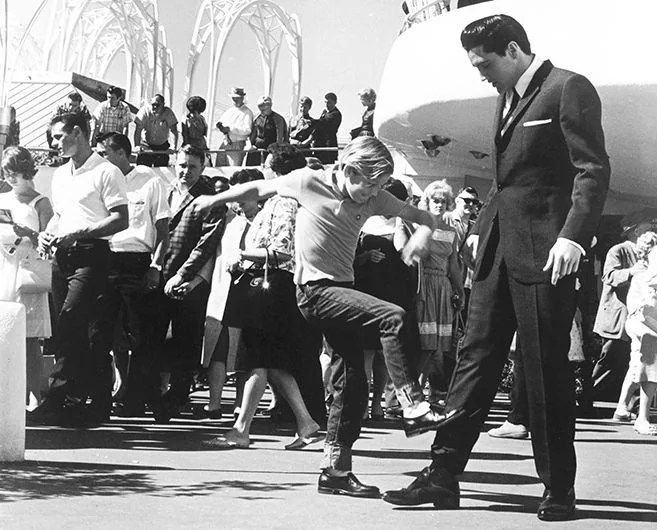
The 1962 Seattle World’s Fair brought us the Space Needle and a downtown monorail constructed for the event, both of which still stand in the Emerald City. In addition, Elvis Presley filmed his 1963 film “It Happened at the World’s Fair” at the event.
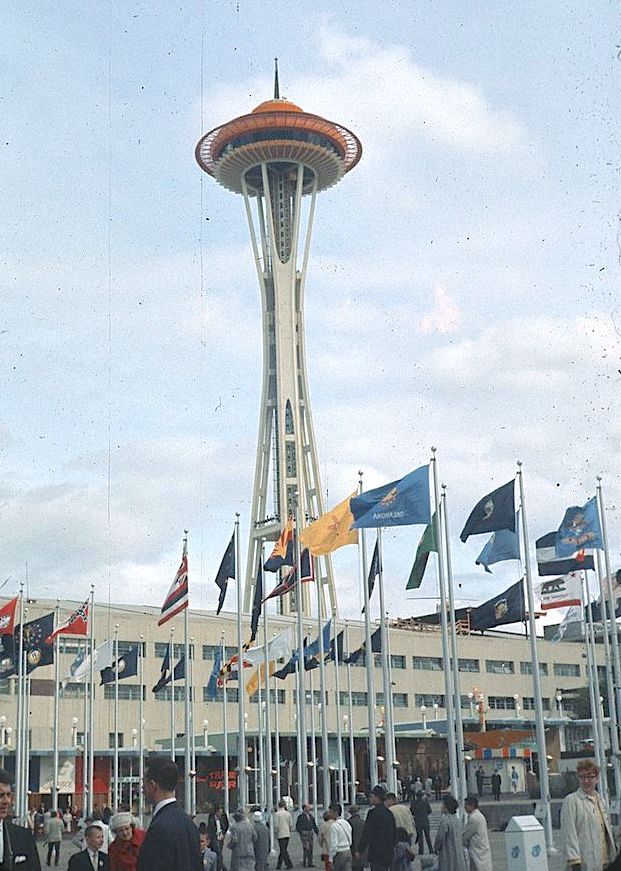
Approximately 10 million people attended the Seattle Fair during its six-month run. It remains the most recent such event held on U.S. soil to be sanctioned as an official World’s Fair. (The 1964 New York world’s fair, while successful, was not officially sanctioned.)
Back in Los Angeles, the CWFI folded temporarily, but would return later in the 1960s to run smaller California World’s Fair events, including one in San Francisco in 1966.
In recent years, the World’s Fair concept has lost some steam in the U.S. Montreal’s Expo 1967 was highly successful, as well as being the last sanctioned fair to be held in the Americas. The Knoxville (1982) and New Orleans (1984) world’s fairs were unsanctioned.
But the dream still returns from time to time, most recently in the early 2010s when a group calling itself Los Angeles World’s Fair attempted to drum up crowdfunding-style support to help the city hold its first-ever World’s Fair in 2022. The effort was unsuccessful.

Sources:
Daily Breeze archives.
The History of a City … Carson, California, by Jack E. Jerrils, City of Carson, 1972.
Los Angeles Times archives.
Torrance Press-Herald archives.
Wikipedia.