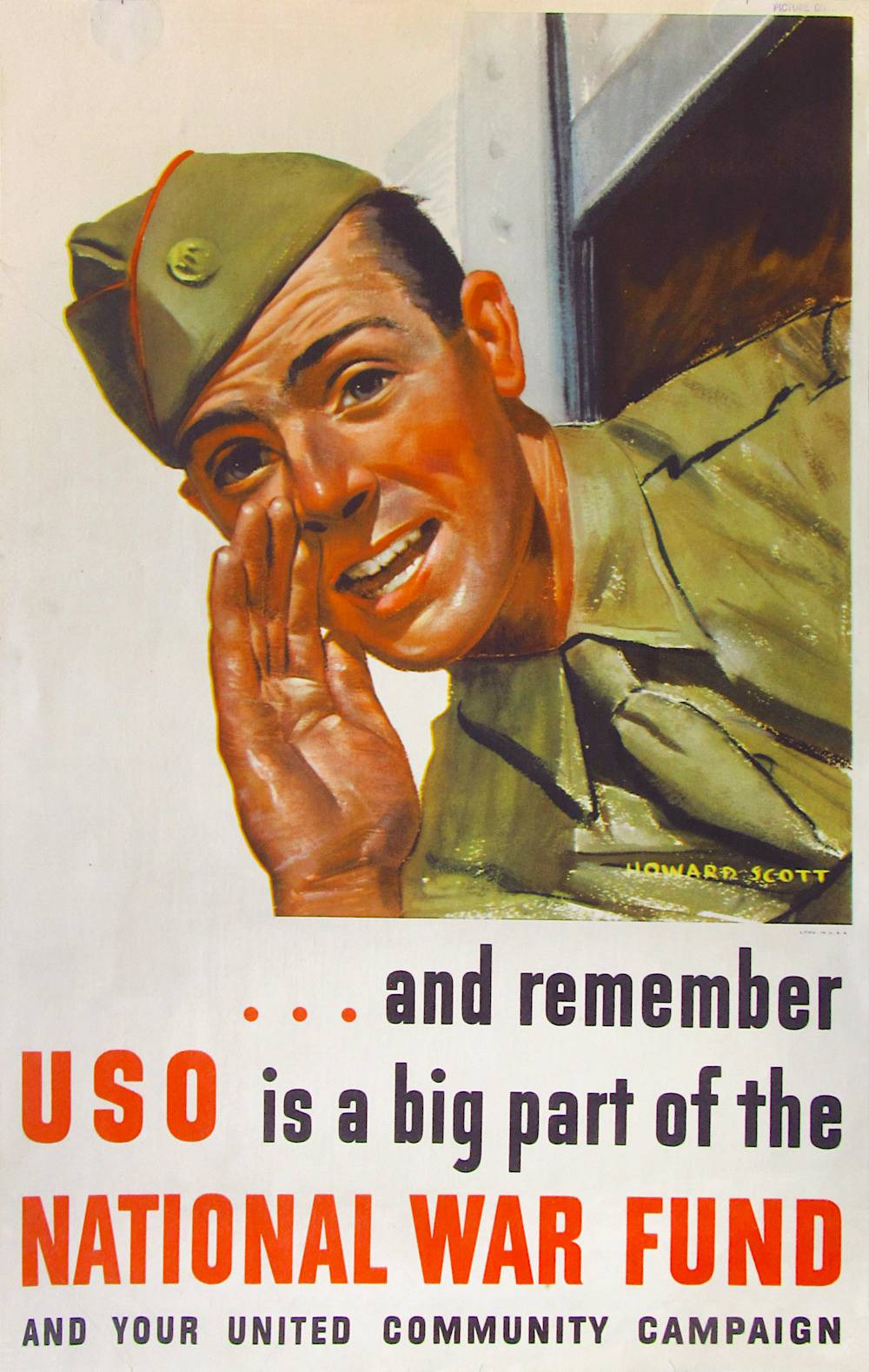
President Franklin Delano Roosevelt signed the bill creating the United Service Organization (USO) on Feb. 4, 1941, ten months before the Pearl Harbor attack brought the U.S. into World War II.
The idea behind the USO was to enlist various non-governmental public service agencies to offer comfort and morale to members of the military in an organized way. The Department of Defense had wanted to take on the responsibility, fearing loss of control over its military personnel, but Roosevelt felt private agencies were better suited for the job.
The six agencies tapped for the new effort included The Salvation Army, the Jewish Welfare Board, National Catholic Community Service, the Young Men’s Christian Association (YMCA), Young Women’s Christian Association (YWCA), and the National TravelerÙs Aid Association.
Under the terms of the new organization, the six agencies would provide the comfort services required, and the government would fund the building of the new USO centers planned throughout the country.
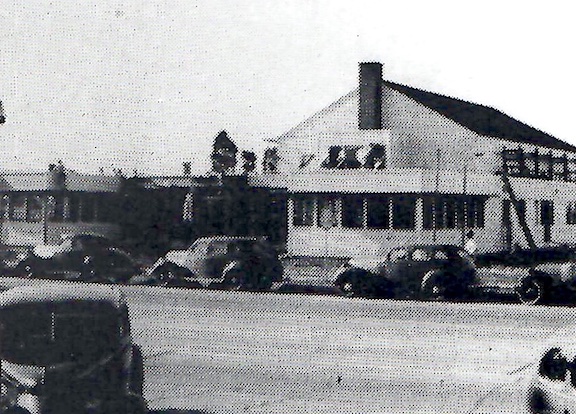
A hospitality center on seven acres of city-owned land at 700 N. La Brea Ave. in Inglewood became part of the first wave of USO buildings to go up when it opened on Dec. 21, 1941, just two weeks after Pearl Harbor. An estimated 2,000 visitors streamed into the $75,000 structure at the dedication ceremony.
Its proximity to Mines Field, soon to be renamed Los Angeles International Airport, and to area defense plants made Inglewood a natural location. (The La Brea location eventually became the site for the city’s Department of Motor Vehicles office, which remains there to this day.)
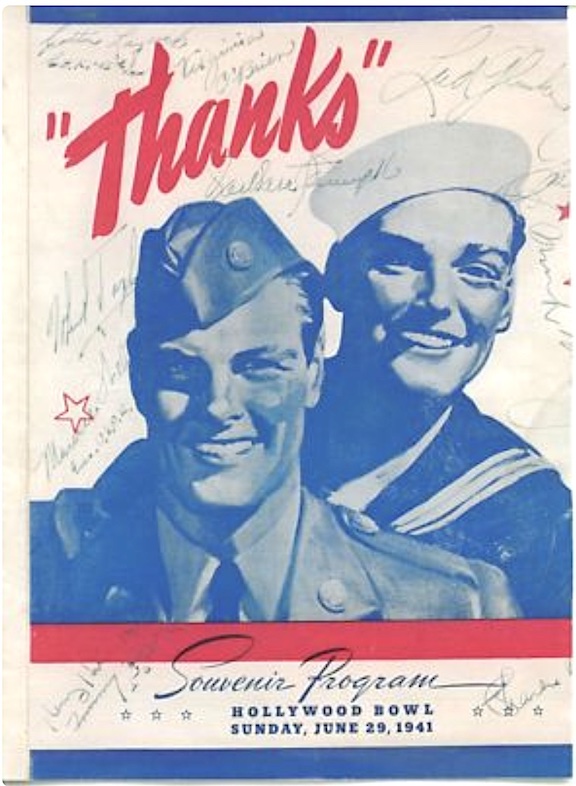
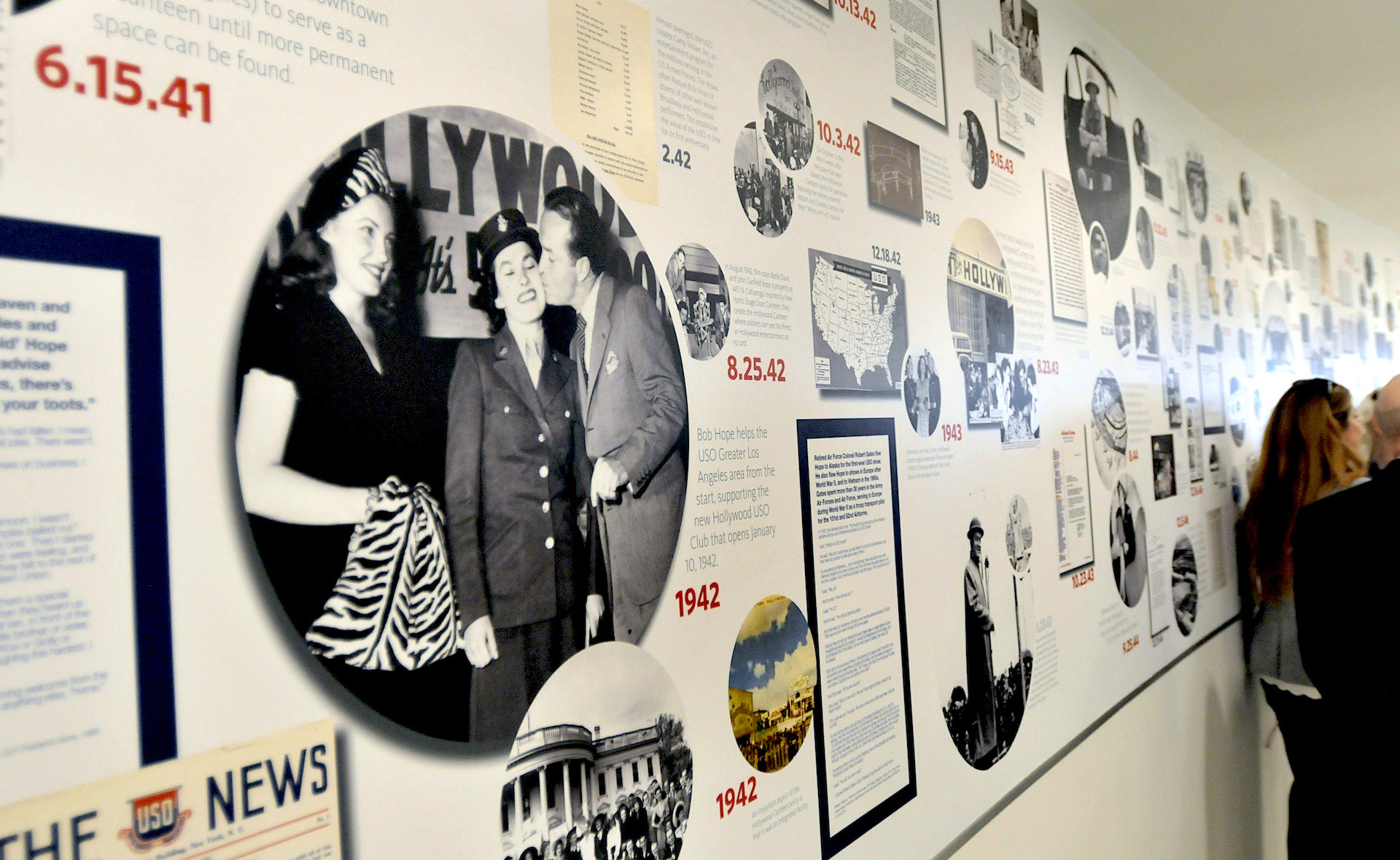
Other USO sites were built throughout the area, most notably in Hollywood. The movie industry acted quickly to support the new organization, notably with an all-star fundraising event at the Hollywood Bowl on June 29, 1941, that attracted a record-breaking 30,000 people.
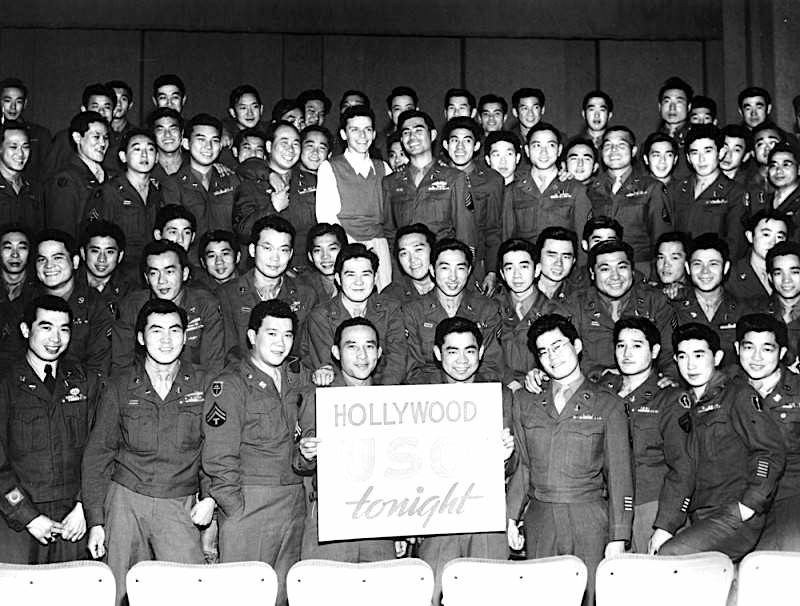
Activities at the Hollywood USO at 1531 N. Cahuenga Blvd. naturally drew most of the publicity, as movie stars and celebrities were frequent guests and performers there. The 1944 film “Hollywood Canteen” was based on it.
In 1951, the Travelers Aid Society added service for military travelers at its desk at Los Angeles International Airport, helping them find their way in the airport, which had just officially become a full-service international facility in 1949.
For decades, USO services at LAX consisted chiefly of one person manning a phone and answering questions at the Travelers Aid desk.
By 1980, the USO had 24 square feet of space and its own desk, but little else at the airport. Other major airports, notably in San Francisco and New York, had USO lounges offering places for soldiers to eat, shower and relax between flights.
USO management set about to change that in 1984, succeeding in opening a small 1,600-square-foot facility that offered little more than snacks and drinks. It had only one bathroom. Its location and size made it somewhat difficult to find, and its hours were variable due to staffing shortages.
After years of struggle, the USO upgraded the facility near the LAX Theme Building in 2004, thanks to $250,000 in private contributions and furnishings donated by Home Depot.
It still wasn’t huge at 3,600 square feet, but it was more comfortable and accessible than it had been. It offered comfy furniture, a 40-seat theater, a kitchen, showers, library and a computer room.
Finally, the USO got the center it had always wanted at LAX when airport officials agreed to allow them to move into the empty space on the ground floor of the Theme Building. With LAX’s gigantic ground transportation project slated to begin, the USO’s old space was needed for its construction, while the Theme Building will remain intact.
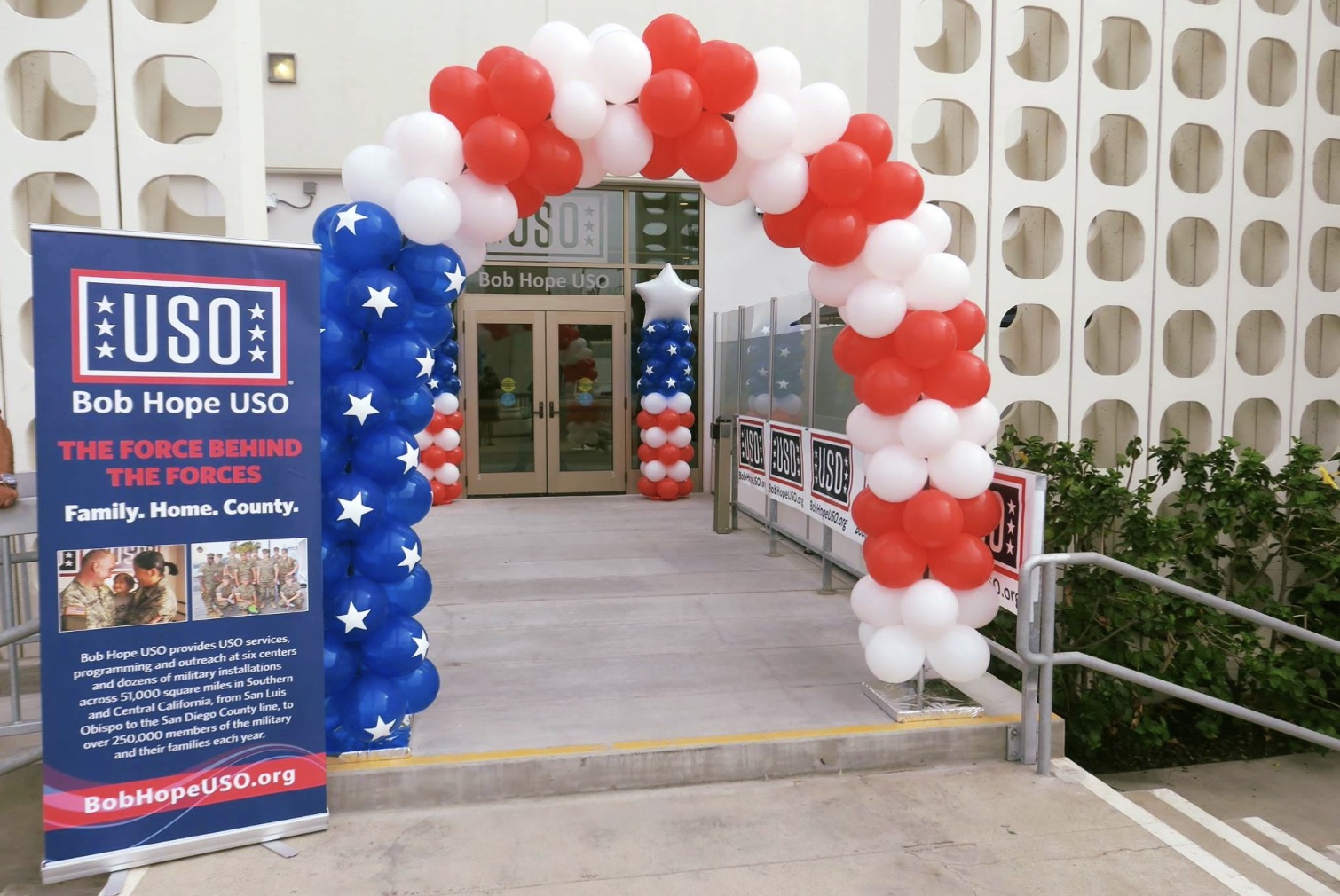
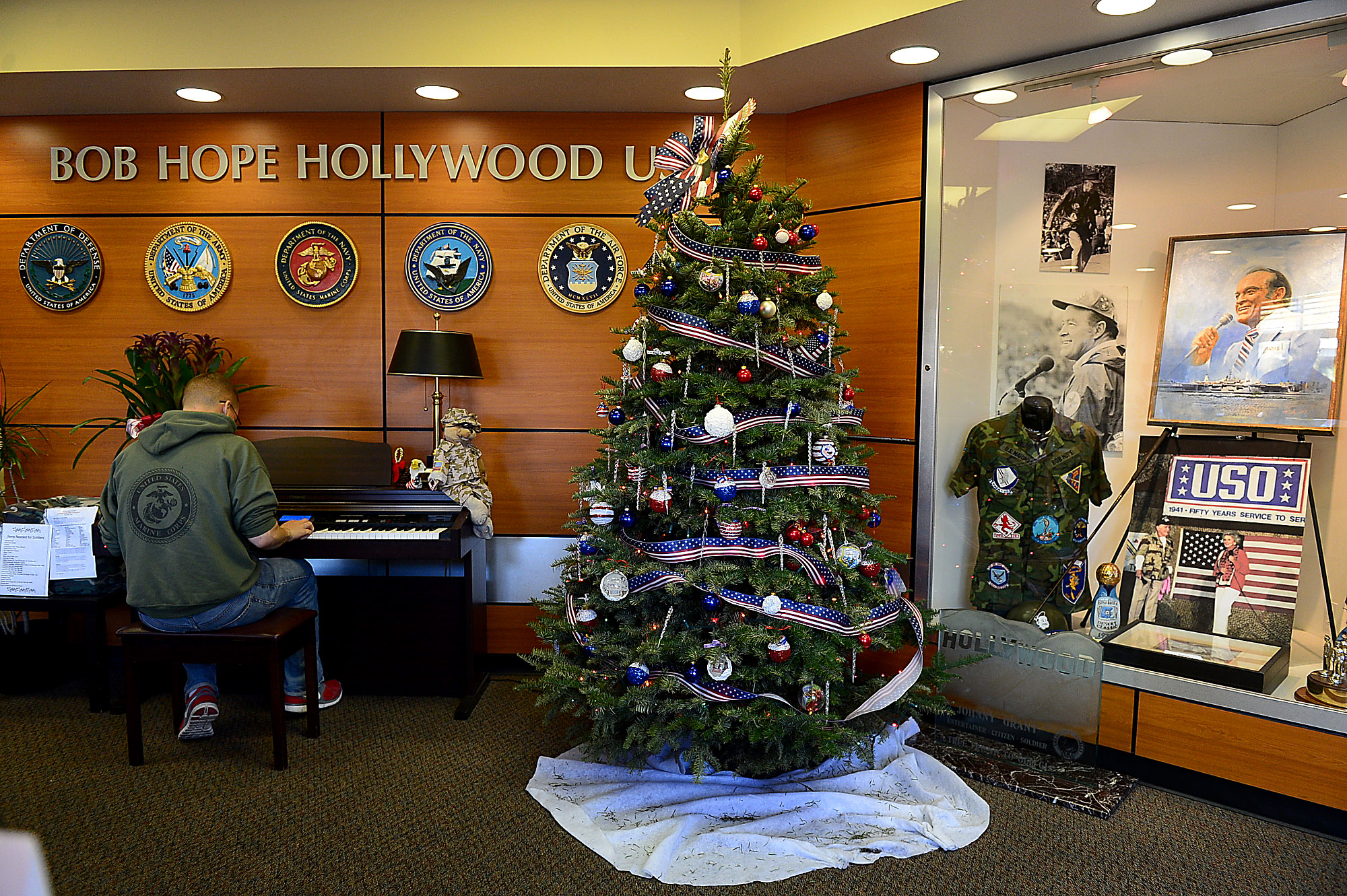
The USO’s new permanent home is almost double the size of the old one, at 7,100 square feet. It’s brightly lit and easily visible to travelers. Improvements include a reception area, a Bob Hope memorabilia display, a pavilion, a family zone, a family hub room, three private connection rooms, a gaming lounge, a movie theater, a relaxation room, a dining room, a TV lounge, and troop baggage storage racks.
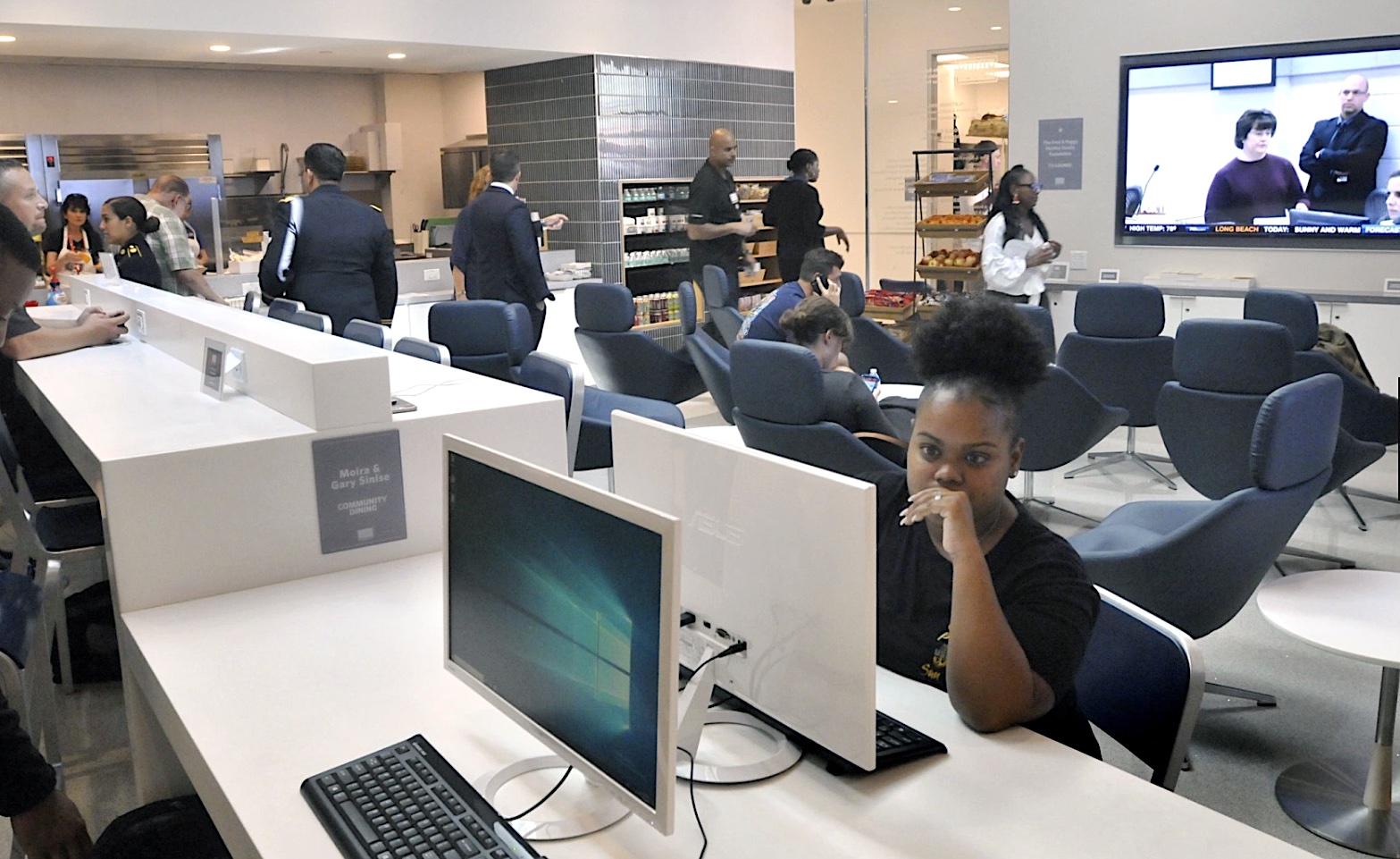
“This makes a big difference,” Bob Hope USO president Bob Kurkjian told the Daily Breeze in 2018. “With all the extended layovers, they (military personnel) can come here and relax in a safe environment, all at no cost to them.”
Over the years, comedian Bob Hope’s name became synonymous with the USO thanks to his tireless tours entertaining troops, usually in combat zones. Hope, who died in 2003, made his first appearance at a USO show on May 6, 1941 at March Field (now March Air Reserve Base) in Riverside.
Thus it was only fitting that the facility at LAX be called the Bob Hope Hollywood USO. Originally named for World War II flying hero Jimmy Doolittle in 1984, its name was shortened to the Bob Hope USO at LAX for its dedication in 2018. Other L.A. area USO airport travel centers are located at Ontario International Airport, John Wayne Airport, Palm Springs International Airport and March ARB.
Through it all, from 1941 until the present day, the USO has retained its independence from the federal government, and continues to receive all its funding from personal and corporate donations. It leases its current space in the Theme Building for $1 a year.
Sources:
Bob Hope USO Los Angeles website.
Daily Breeze archives.
The History of Inglewood, by Gladys Waddingham, published by the Historical Society of Centinela Valley, 1994.
Los Angeles Times archives.
“70 Years Ago Today,” The Official USO Blog, May 6, 2011.
WW2 USO Preservation Association website.