During the 1960s, the booming South Bay seemed to be coalescing into one giant suburb. Tract houses, modern industry and retail megaplexes dotted the landscape.
Tens of thousands of its residents worked in the aerospace industry. Firms such as TRW, Northrop, Hughes Aircraft, North American Rockwell and Douglas Aircraft built huge plants in the area, and dozens of other related but less monolithic firms based operations there.
The area had become so central to aerospace that the U.S. Air Force built the Los Angeles Air Force Base in El Segundo in 1962. It had no airplanes or runways – its function was mostly administrative – but it embodied the area’s close ties to the military and defense-related industries.
When it came to politics, those living the good life in southwest Los Angeles county tended to have conservative views. The firms they worked for had close links to the government. Fear of communism and general Cold War paranoia also held some sway over decisions at the ballot box.
The South Bay and Harbor Area thus became a prime destination for Republicans seeking higher office. Two men in particular would visit often during their campaigns for the California governor’s office.
The first of these, Richard M. Nixon, announced his plan to run for governor of California on Sept. 27, 1961. Nixon first won election to the U.S. Congress in 1946, serving California’s 12th Congressional District. In 1950, he waged a successful campaign to win the U.S. Senate seat race against Helen Gahagan Douglas.
Nixon then served two terms as Vice President under President Dwight Eisenhower from 1952-1960. In 1960, he ran for President, losing narrowly to John F. Kennedy.
Having grown up in nearby Whittier, Nixon knew the demographics of the area well. He worked the South Bay hard during his 1962 campaign against the incumbent Democratic governor, Edmund G. “Pat” Brown.
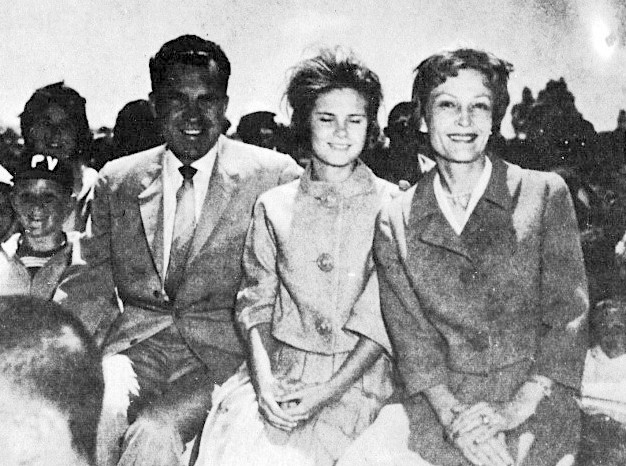
His visits included giving a speech to area Republican clubs at a packed South High School gym on March 20th, and acting as grand marshall before 13,000 spectators at the Fiesta de los Serranos parade in Palos Verdes Estates on May 12.
On June 4, the day before the Republican primary election, he appeared at his South Bay campaign headquarters at 1307 Post Ave. in downtown Torrance. He was greeted by a large crowd there, including the Torrance Nixonettes, a group of high-school-age female Nixon supporters. He went on to win the primary, handily defeating his opponent, Joe Shell.
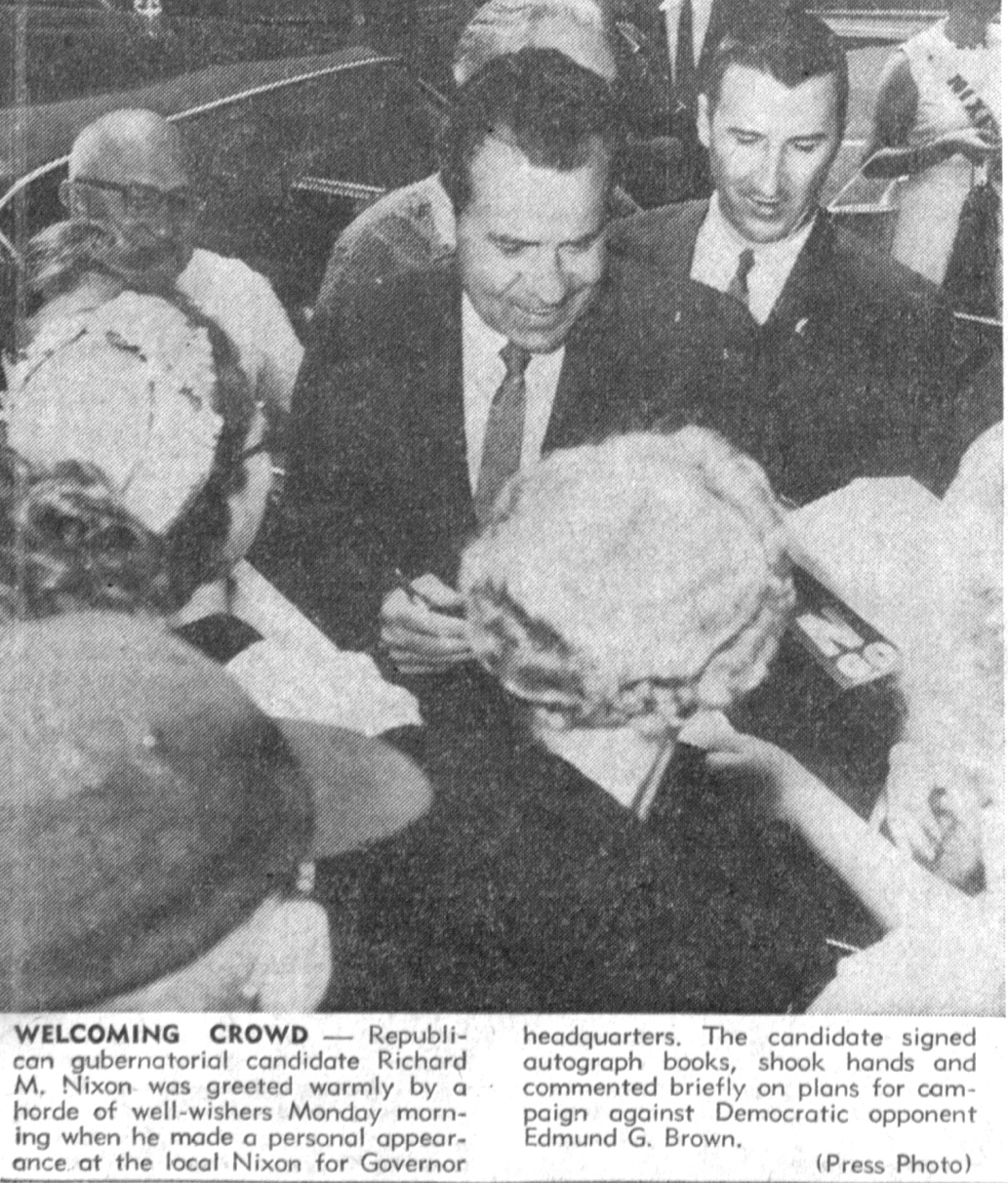
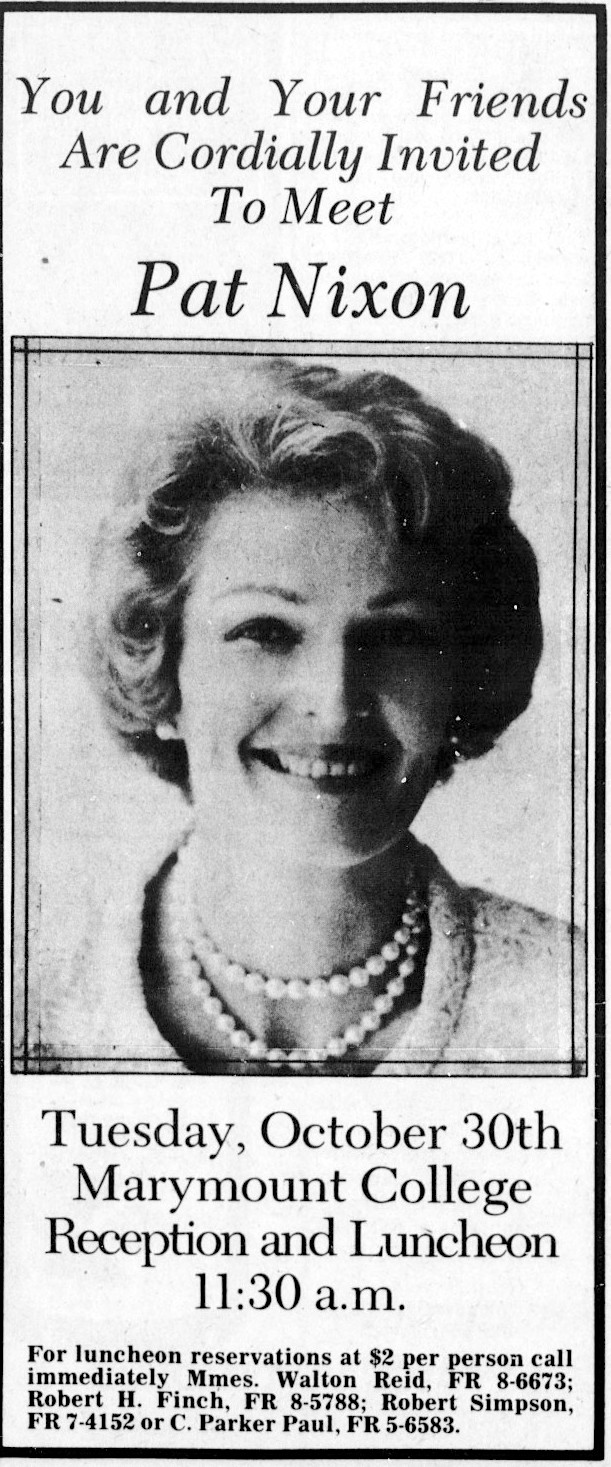
He would make several more visits to the South Bay and Harbor Area before the November election. His wife, Pat Nixon, even appeared at three events in one day on Oct. 30, a luncheon at Marymount College and teas held in Hermosa Beach and San Pedro.
Despite his best efforts, Nixon lost the election to Gov. Brown by a decisive five percentage points.
At a post-election news conference on Nov. 7, Nixon made his now infamous “…you don’t have Dick Nixon to kick around any more” statement to the press, indicating he wouldn’t run for office again. Six years later, he ran for U.S. president and won, defeating Democratic foe Hubert H. Humphrey.
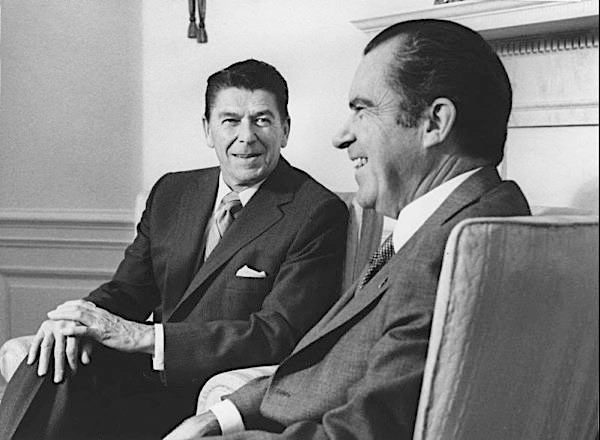
Four years after Nixon lost to Pat Brown, another Republican challenger took Brown on. In late 1965, Hollywood actor-turned-politician Ronald Reagan announced that he was planning to enter the California governor’s race. Reagan had never held political office before, though he had been president of the Screen Actors Guild twice.
He turned his attention to politics in the 1960s, turning heads at the 1964 Republican National Convention with his speech, “A Time For Choosing,” which endorsed eventual nominee Barry Goldwater.
His combination of staunchly conservative views and movie star charisma caught the eye of Republican Party leaders, and by early 1965, his name was coming up frequently as a potential challenger to entrenched Gov. Pat Brown.
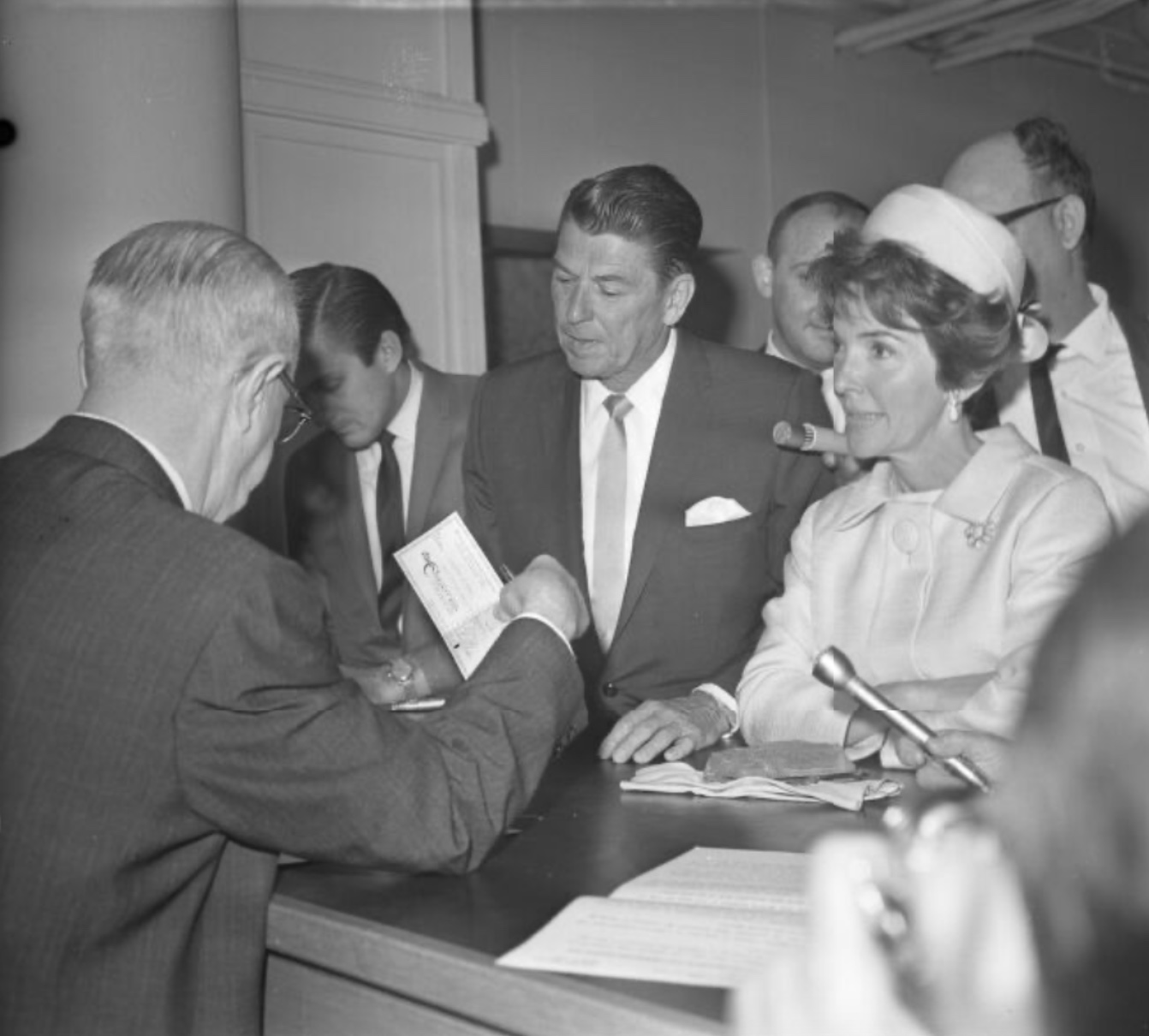
(Credit: UCLA Library Dept. of Special Collections)
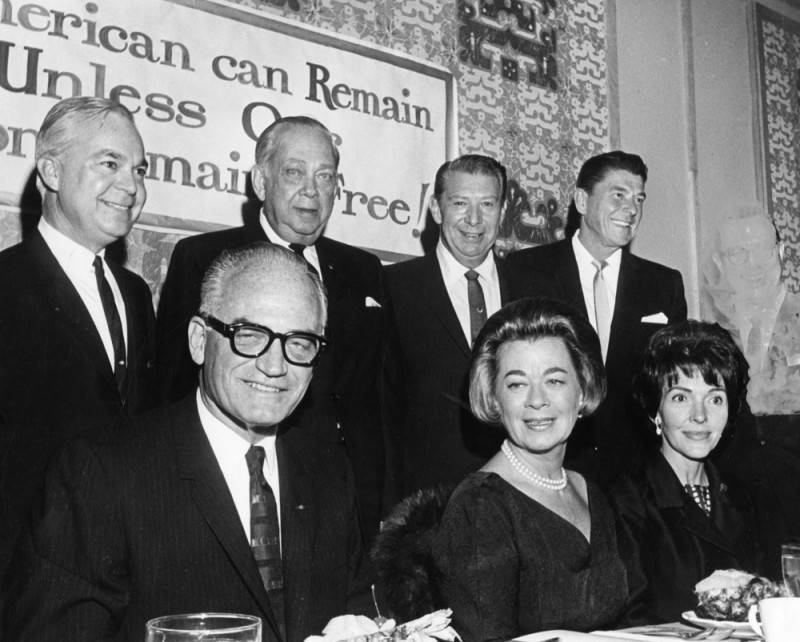
Reagan was feted by at a dinner at Los Verdes Golf Club on January 22nd, 1965, months before announcing his candidacy. In the run-up to the June 1966 primary election, he made several appearances at dinners and banquets in the South Bay and Harbor Area.
He soundly defeated San Francisco Mayor George Christopher in the June 7 primary, and set his sights on Brown, who seemed to underestimate Reagan as a candidate, repeatedly emphasizing his political inexperience.
Reagan made a series of high profile appearances in the South Bay and Harbor Area as the November election neared. He visited the annual Fishermen’s Fiesta in San Pedro on October 2. On October 20, his campaign rally at Mira Costa High in Manhattan Beach included celebrities Buddy Ebsen, Ray Bolger, Claire Trevor and others.
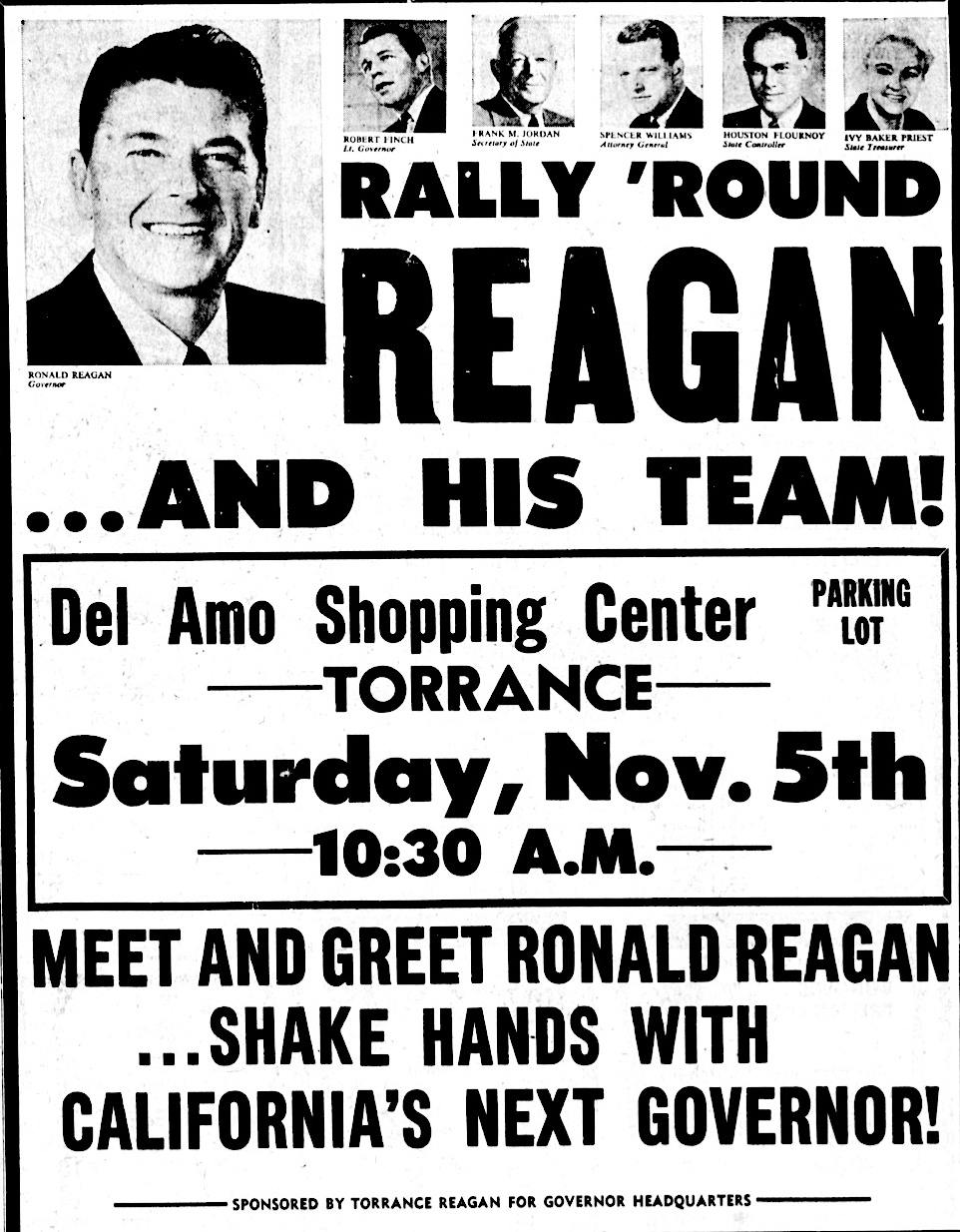
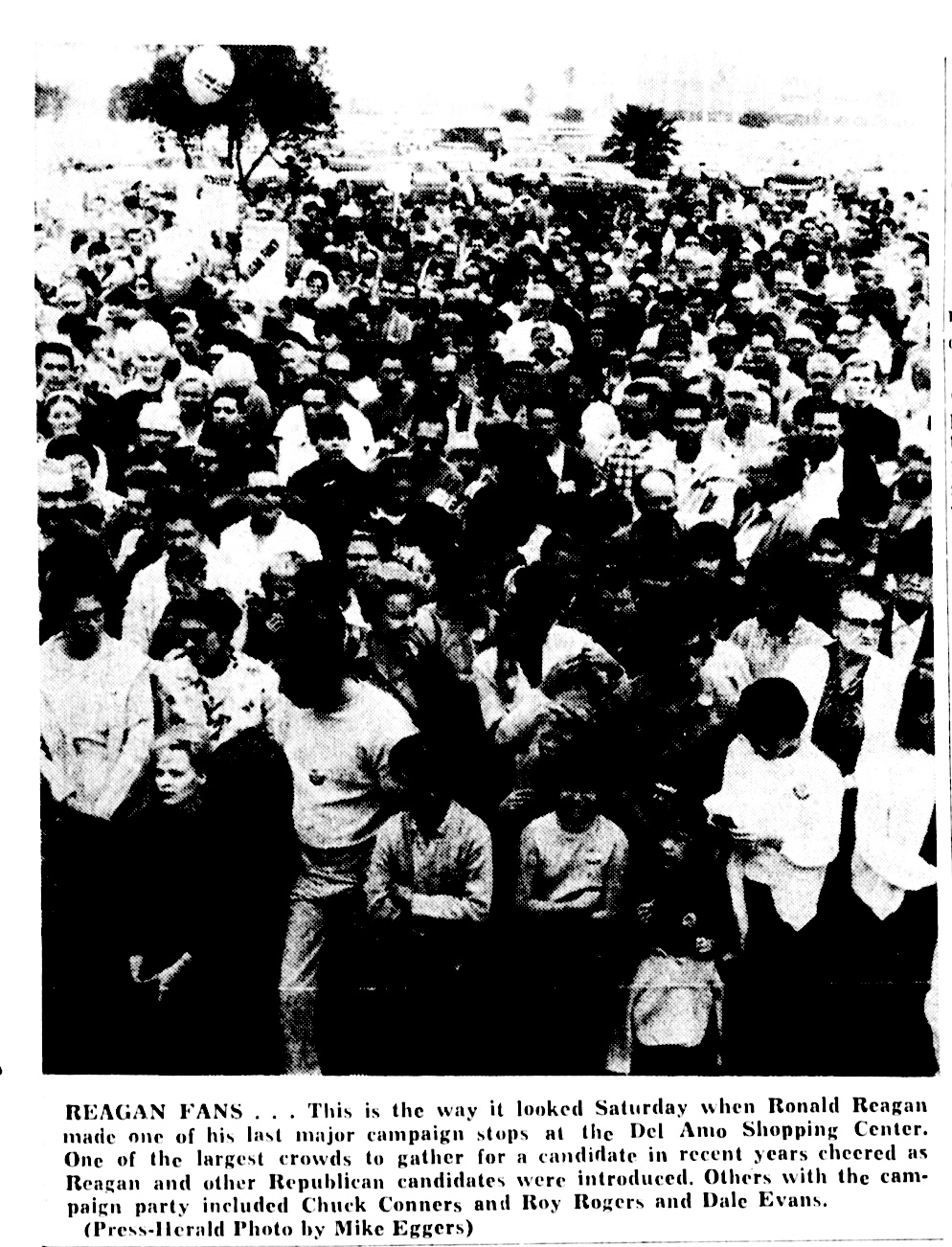
Reagan chose the South Bay for two major campaign events immediately before the Nov. 8 election. The first, on Nov. 5, was a major rally that drew throngs of people to the Del Amo Shopping Center in Torrance. The second was a similar rally on Nov. 7, the Monday before the election, held the West Imperial Terminal at Los Angeles International Airport
Reagan’s tireless get-out-the-vote efforts worked like a charm. He trounced the complacent Brown by more than a million votes. He would go on to serve two terms as California governor, followed by two terms as U.S. President.
Sources:
“AEROSPACE: The industry that built the South Bay,” Easy Reader staff, Easy Reader, Oct. 17, 2013.
“The American Presidency Project,” University of California, Santa Barbara website.
Palos Verdes Peninsula News archives.
Torrance Press Herald archives.
Wikipedia.