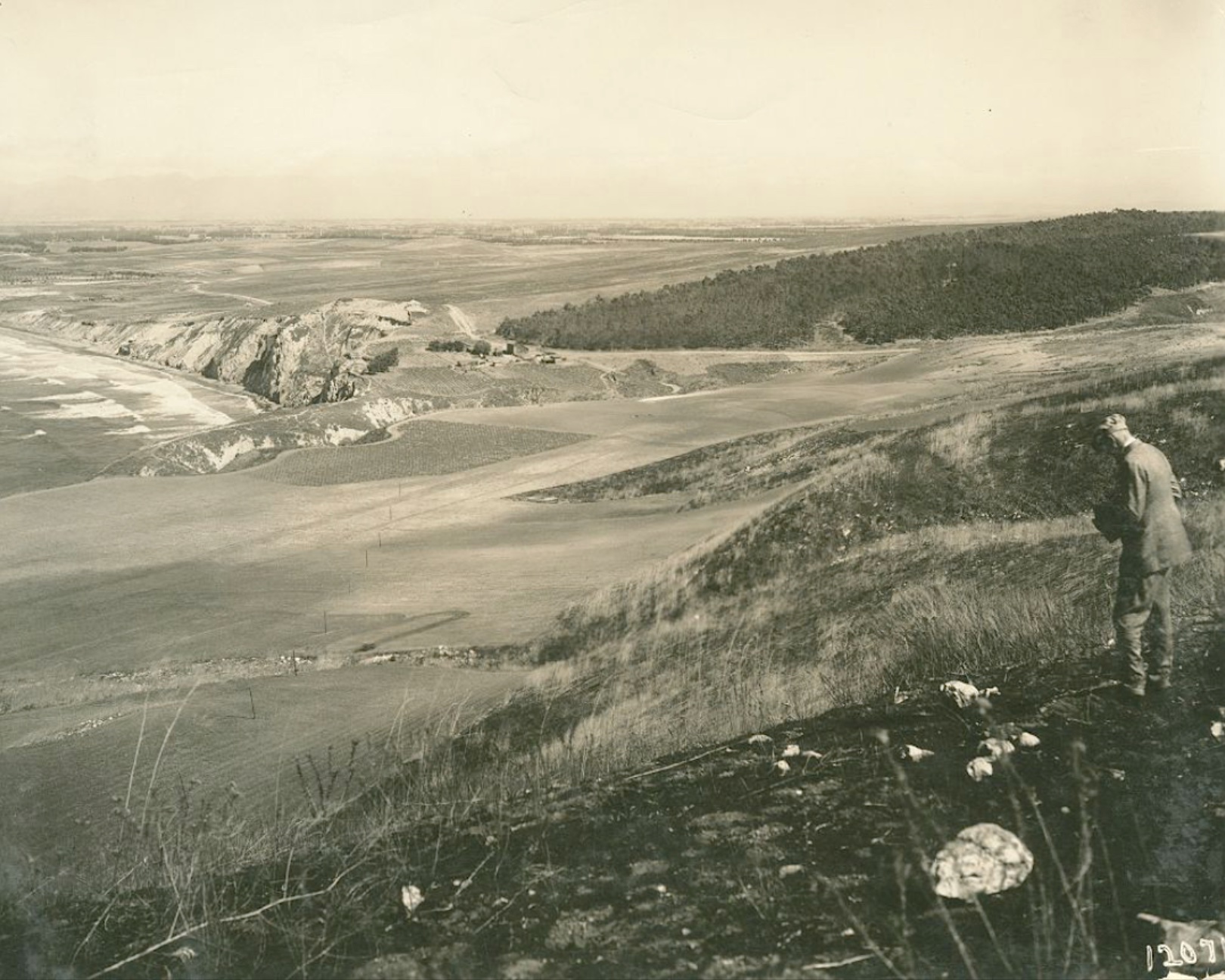
The four cities on the Palos Verdes Peninsula – Palos Verdes Estates, Rancho Palos Verdes, Rolling HIlls and Rolling Hills Estates – have traced their origins to a real estate rally held to promote the eventual sale of lots that was held on June 17, 1923.
To celebrate the unofficial 100th birthday of the Peninsula, the Palos Verdes Library District and the Peninsula Friends of the Library, in conjunction with the four cities, will host Doors Open Peninsula during June 2023.
The oldest of the four cities, Palos Verdes Estates, was the site of the first urban development on the Peninsula. Its first commercial structure, the Gardner Building, opened in 1925. PVE also was the first of the four cities to incorporate, but it didn’t happen without a fight.
In the years before the city was incorporated, it was ruled by the Board of Directors of the Palos Verdes Homes Association. The governing body had limited legal and financial powers, though.
A combination of factors arising from the growing number of people wanting to call the Peninsula their home led to the move towards incorporation. One factor was the settlement’s growing indebtedness to Los Angeles County.
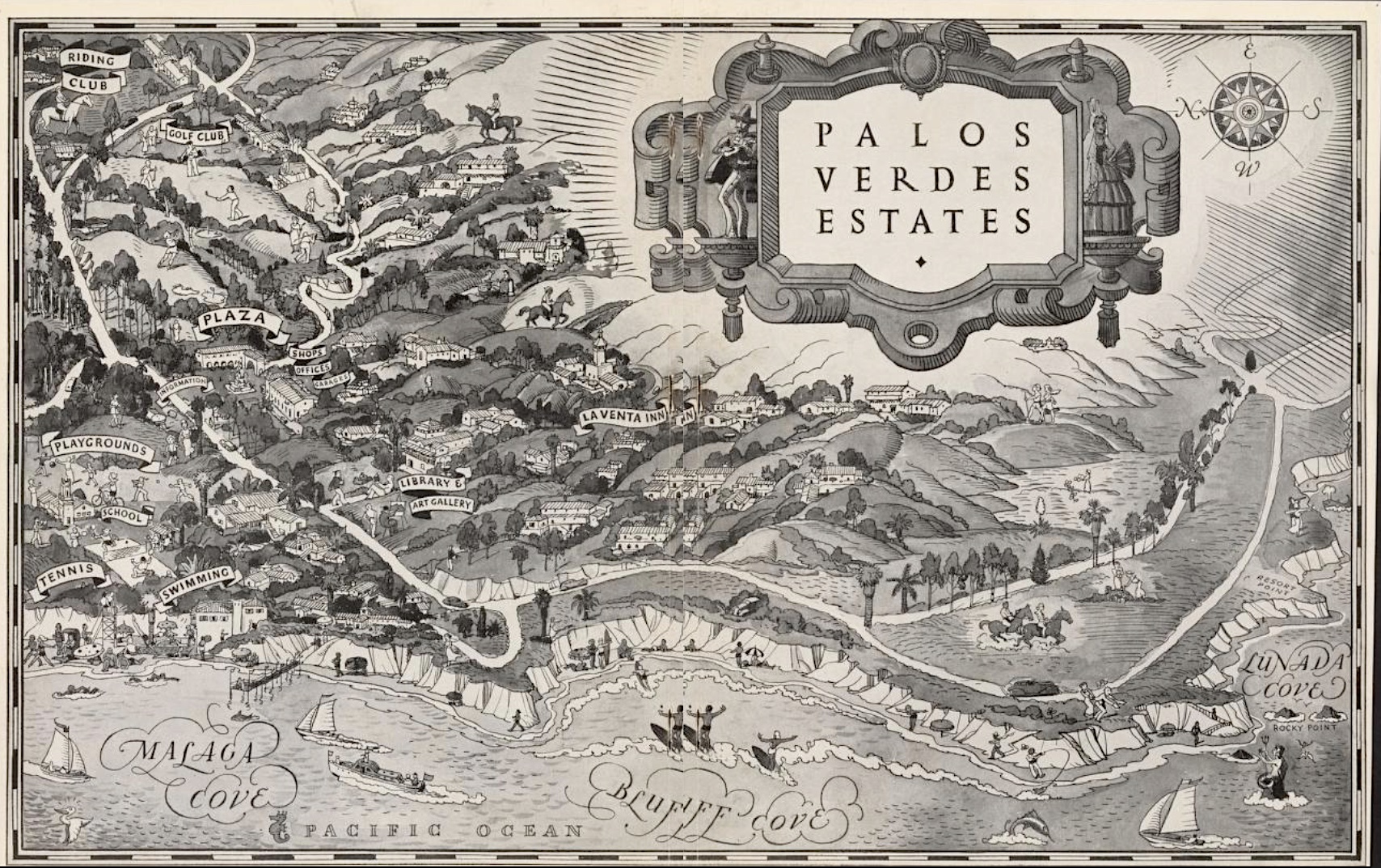
The Association had helped provide many public facilities on The Hill, including a the Palos Verdes Golf Club, horse stables, a community swimming pool, the Malaga Cove shopping area, Malaga Cove School and the Malaga Cove Library.
Its members also had worked to protect what they called “the parklands,” the scenic areas of PVE that helped make it such an attractive place to live. These included Bluff Cove, parts of Lunada Bay and other scenic areas that attracted visitors from all over.
As the number of these improvements increased along with the number of residents in the city, the Homes Association found itself in arrears with Los Angeles County in the payment of property taxes.
There also existed the threat of the County taking control of the parklands and opening them to everyone. Some residents saw this as possibly leading to an influx of outsiders bringing all kinds of dangers to PVE’s citizenry, according to this anonymous writer in the May 13, 1938, Palos Verdes Peninsula News:
“With the gay throng of picnickers on our shores will come the NOT SO GAY throngs of loafers, of prowlers, of drunkards (and, of course, a few degenerates and sex maniacs) who will not resist the temptation to inspect these deserted country lanes where many of our homes are built . . .”
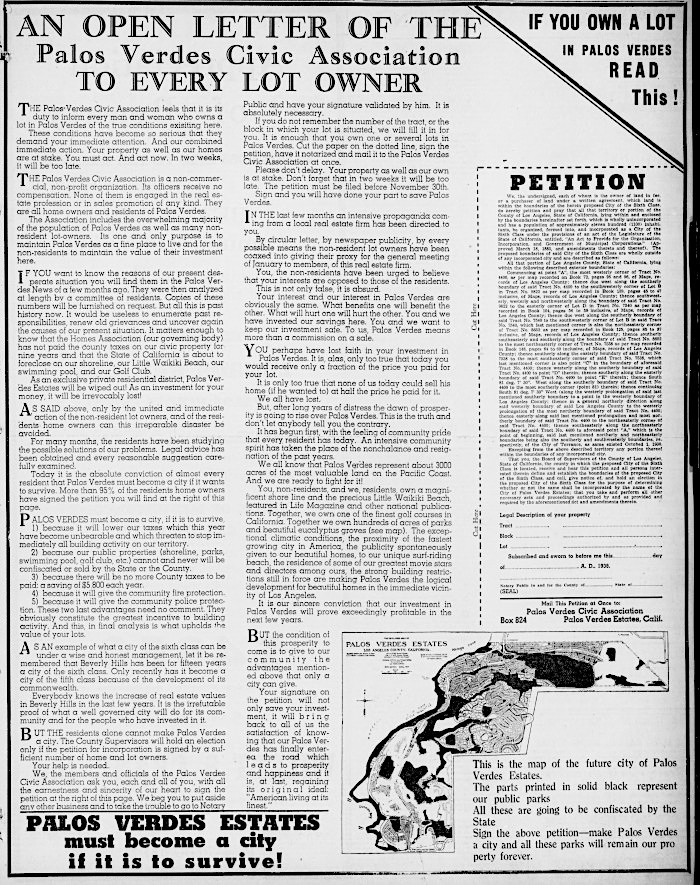
By late 1938, a movement began to grow towards incorporation as a city of the sixth class. This move would give residents control over the parklands, but, more importantly, allow them to impose taxes to raise money to pay its tax bills and generate funds for a police force, garbage collection and other services.
A petition circulated in 1939, with enough signatures gathered for the L.A. County Board of Supervisors to call for an election to settle the matter on Dec. 9, 1939.
At this point, the campaign began to grow increasingly bitter. Opponents feared incorporation would lead to the commercialization of The Hill and a relaxation of land use restrictions that the Homes Association and the Palos Verdes Art Jury had worked very hard to establish.
Proponents saw it as the only way for the growing community to escape its many financial problems and to retain control over its future growth and development. The heated politics of the issue set household against household.
The Palos Verdes Peninsula News at first took a neutral stand on the issue, running many pro and con articles and ads from both camps. But in its Nov. 10, 1939, issue, one month before the election, the paper announced its opposition to incorporation, which served to roil the seas even more. Here’s one of the reasons it gave:
“If any reader holds any illusions concerning a municipality, let him attend Council meetings at any of our neighboring cities, Redondo, Hermosa, Manhattan. Listen to the wrangling, the aimless discussion, the demands, the political jockeying. Then come back to our peaceful hills and think it over!”
On December 8, the night before the election, Ralph Bandini of the News summed up the general tenor of the election debate:
“Tempers have frayed. Friendships have broken. Bitterness has reigned. So high has feeling and partisanship run that there is grave danger that this most important issue, important, that is, to us may not be decided upon its merits, but rather upon emotionalism and prejudice.”
In hindsight, the decision to incorporate sounds like a slam dunk solution to many of the community’s growing list of ills, but the final vote at the polls on Dec. 9 was anything but unanimous: 213 votes for, and 206 against.
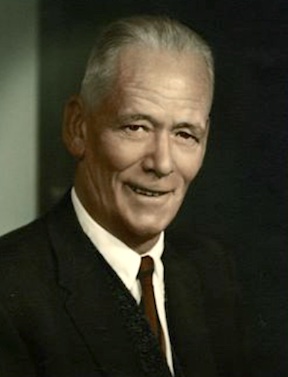
On Jan. 2, 1940, the newly incorporated city of Palos Verdes Estates officially swore in Fred Roessler as its first mayor, and Dr. Ulric Bray, Dr. Paul A. Reeder, Dr. Dennis Smith and Hammond Sadler as the first members of its city council. Roessler would go on to serve as the city’s mayor for the next 25 years, until his death in 1965.
Sources:
Palos Verdes Peninsula News archives.
The Palos Verdes Story, by Delane Morgan, The Palos Verdes Review, 1982.
Anti-incorporation ad:
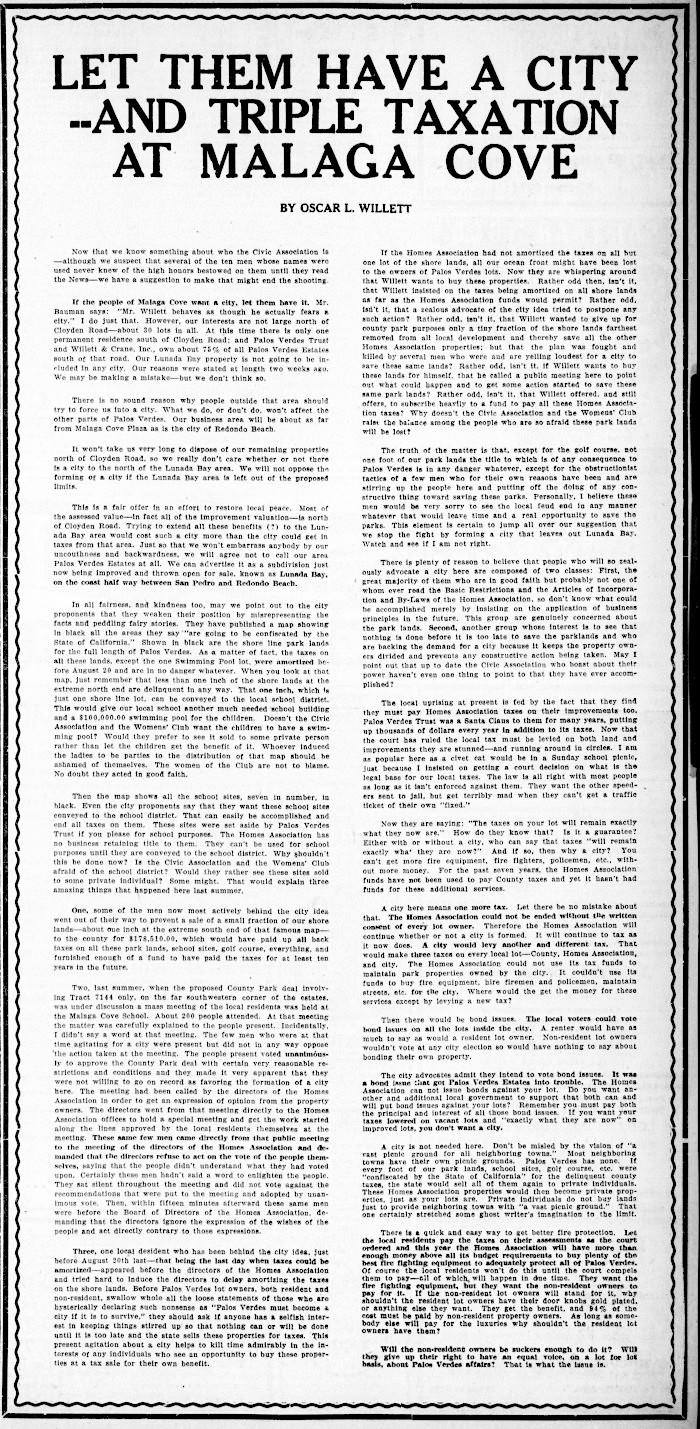
Pro-incorporation ad: