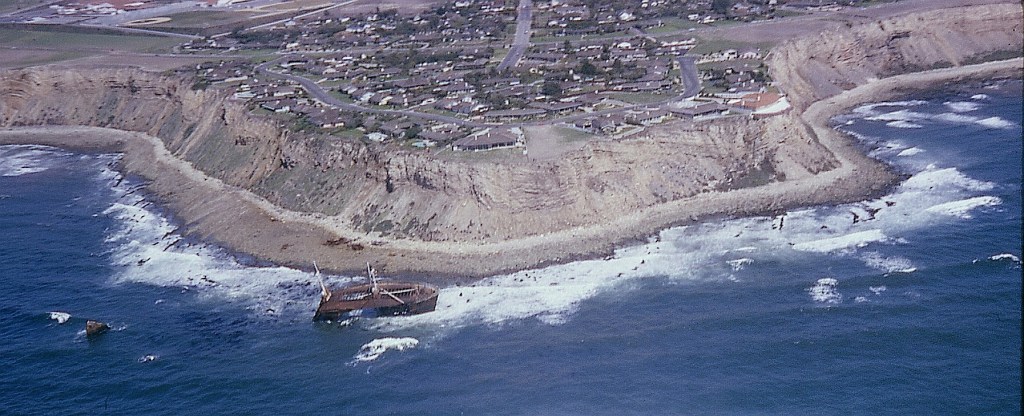
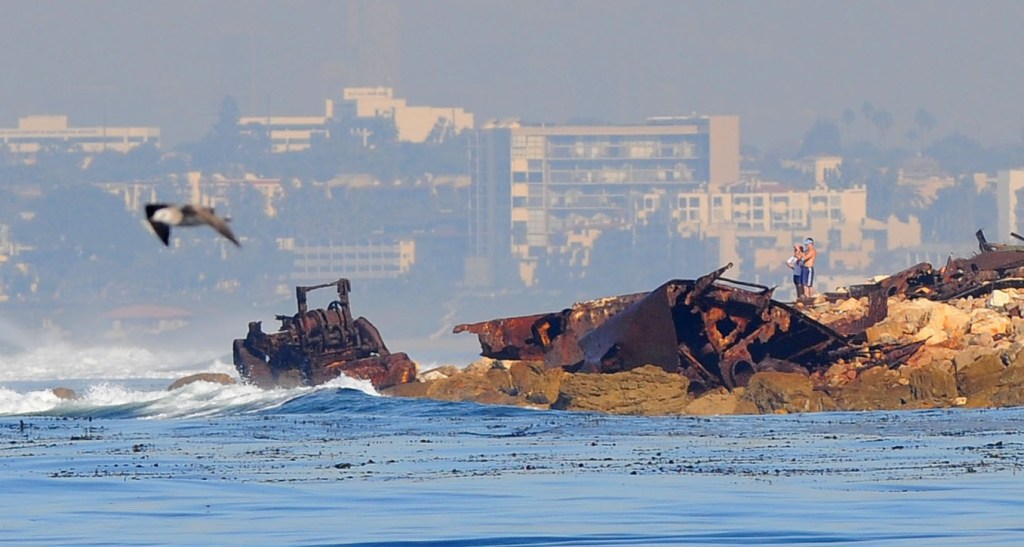
A few rusted pieces of a ship’s hull strewn on the shore at the foot of Rocky Point in Palos Verdes Estates scarcely tell the tale of the SS Dominator, the repurposed Liberty ship that ran aground just offshore more than 60 years ago.
For decades, the aft section of the 10,000-ton, 441-foot-long vessel lie marooned upon a rocky reef, a tattered reminder of the foggy night in 1961 when it ran aground.
The Dominator was built in 1943 at the Walsh-Kaiser Co. shipyard in Providence, Rhode Island, and launched on Jan. 18, 1944. Originally named the Melville Jacoby after a well-known war journalist, she was one of 2,710 Liberty ships built for the war effort between 1941 and 1945.
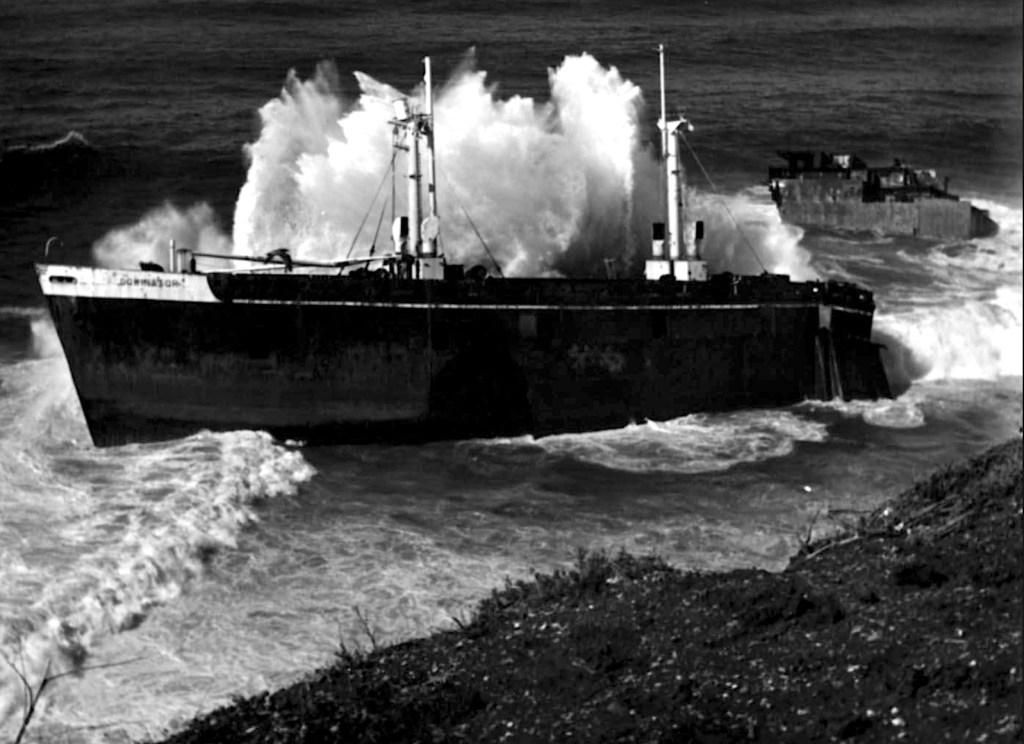
The Liberty class ships were workhorses, freighters that carried men, supplies and equipment everywhere during World War II. The Wilmore Steamship Co. in Boston operated the Melville Jacoby during the war.
After the war, the ship was sold to a Panamanian freight company in 1947, and her name changed to the SS Victoria. In 1950, she became the SS North Queen, and in 1953, ownership changed again and she took on the SS Dominator name for the remainder of her time as a freighter.
The last leg of the Dominator’s final voyage began in Vancouver, B.C. After bringing a load of beef and 9,000 tons of wheat across the Pacific from Japan, the ship was headed for its final destination in Algiers in northern Africa.
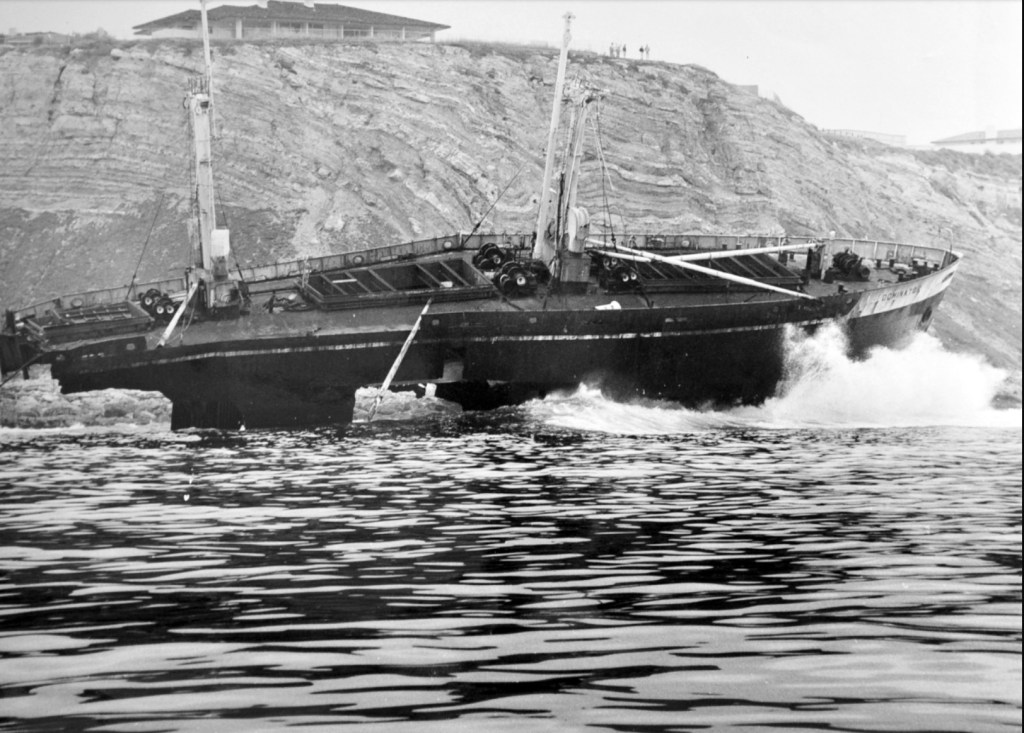
The Dominator’s captain, 64-year-old Charitos Papanicolopoulus, decided to stop in Long Beach for refueling. Papanicolopoulus had worked his way up from crewman to captain over the years, and this was his first voyage at the helm.
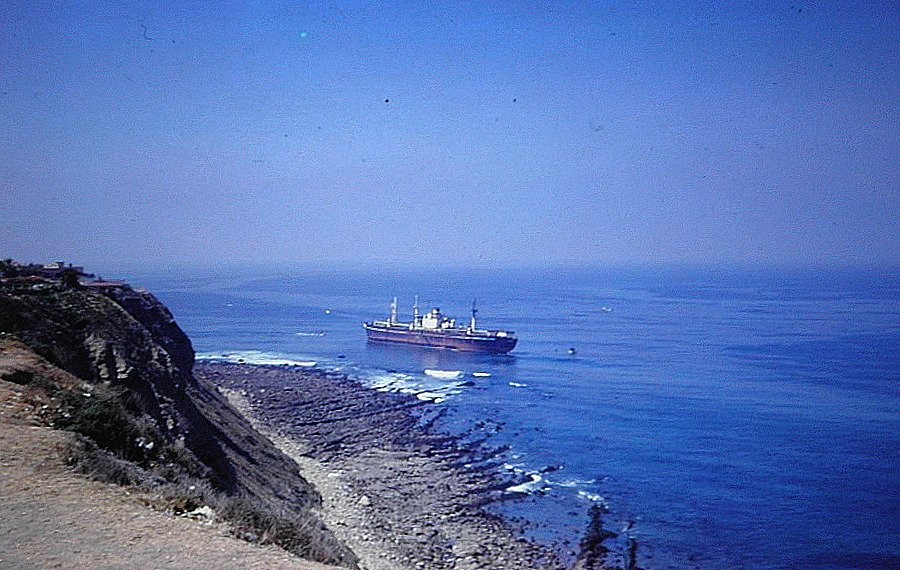
He and his 29-man crew found themselves plunged into thick fog off the Palos Verdes Peninsula coast on the night of March 13, 1961. Shortly before 6 p.m. the Dominator, which lacked any kind of modern navigational equipment, foundered on the undersea rocks about 200 feet from Rocky Point. The rocks tore three holes in the ship’s cargo holds.
Capt. Papanicolopoulus initially refused offers of help from the Coast Guard, but his own attempts to free the marooned ship over the next two days were unsuccessful. The danger eventually forced him and his crew to abandon the ship and its cargo. Unfortunately, the subsequent efforts of tugboats and Coast Guard ships proved unsuccessful as well.
Home movies show Dominator in April 1961. Onlookers visible at 2:05:
The offshore drama caught the fancy of thousands of shore-bound onlookers. The beleaguered Palos Verdes Police Department estimated that around 325,000 people poured into the coastal area over the first three days following the shipwreck.
Local homeowners reported curiosity seekers showing up in their yards and knocking on their doors asking to use bathrooms during the initial sightseeing crush.
They also complained about odors wafting ashore from the decaying meat and grain aboard the stranded ship, and the resultant sudden onslaught of flies in the area.
Brokers eventually purchased and removed what cargo they could, while salvage operators dickered over the fate of the ship itself. Items that could be salvaged were taken, but the ship herself remained firmly attached to the rocks.
At least three people lost their lives over the next few months in attempts to explore the Dominator, and more than 100 other swimmers and divers had to be rescued from the dangerous eddies swirling around its remains.
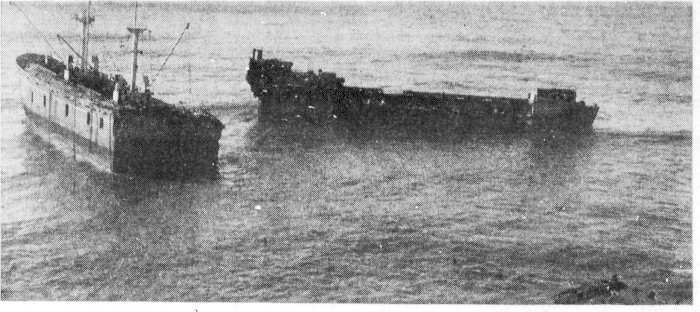
During these months, a mid-ship crack had worsened, making any attempts to refloat the ship increasingly dangerous. Finally, the Dominator split completely in two just in front of her wheel house on a Sunday morning in November 1961, forming two separate pieces of wreckage.
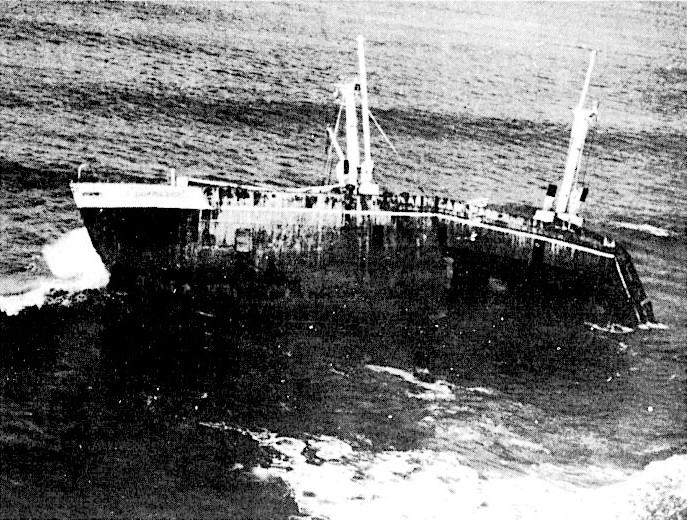
When the ship’s carcass still remained more than two years later, PVE residents petitioned the City Council to have the ship removed by demolition. That never happened, though the hubbub around the wreckage gradually subsided. By 1965, only the front portion of the ship remained visible, with the other half submerged beneath the waves.
The shipwreck still posed some danger. Small boats attempting to navigate the area occasionally collided with the wreckage, though no deaths from the accidents were reported. All attempts to remove the ship’s remains had been abandoned by this point, and it was left to the ocean to erase most traces of the Dominator.
The sea eventually completed its task, and now there are no longer any above-water traces of the ship, save for those random pieces on shore.
Its undersea wreckage still remains, and divers have continued to enjoy exploring it when the waters are still over the six decades since the crash. They have long since picked the sunken portion of the ship clean of souvenirs and maritime relics.
Despite the ship’s now-scant physical remnants, the SS Dominator, with its fog-bound troubles and its long tenure as an offshore landmark, remains firmly rooted in Palos Verdes Peninsula history and folklore.
Sources:
Daily Breeze archives.
“Dominator,” Ships Nostalgia website, Dec. 20, 2017.
“Dominator Shipwreck,” Lakata website.
Los Angeles Times archives.
Palos Verdes Peninsula News archives.
“SS Dominator,” Wrecksite website.
Wikipedia.
“The Wreck of the Dominator,” LAist website.
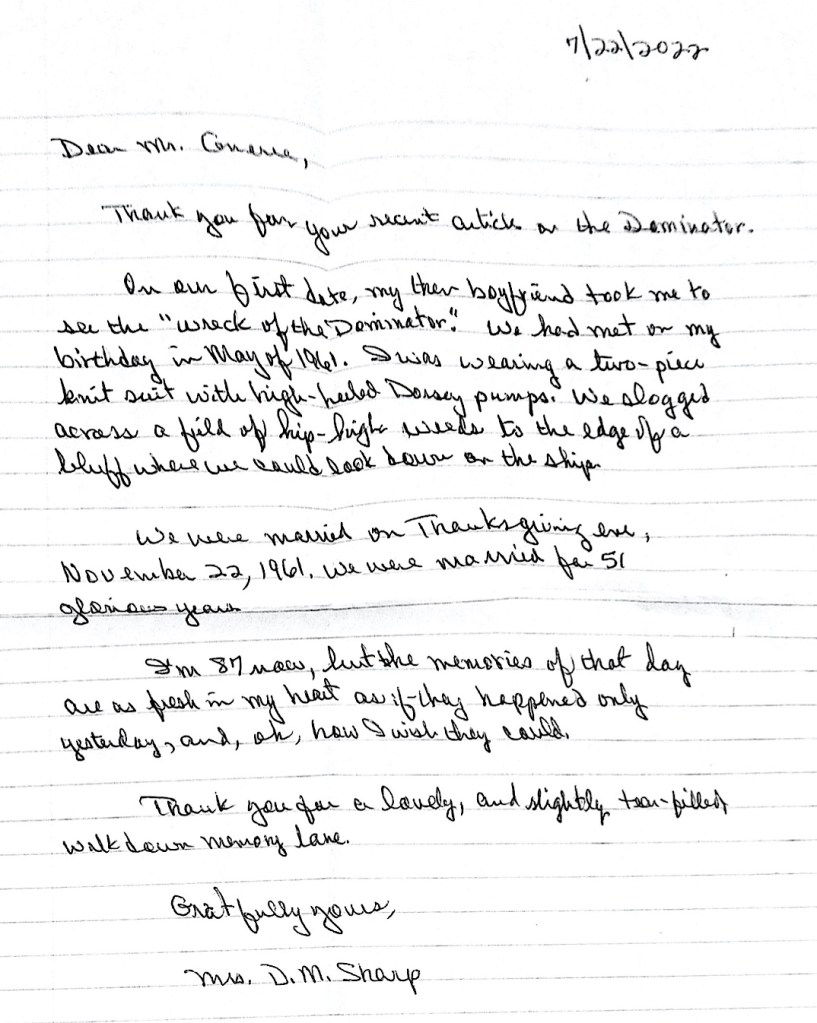
Note: After this post was published in the Daily. Breeze on July 15, 2022, the paper received this reminiscence: