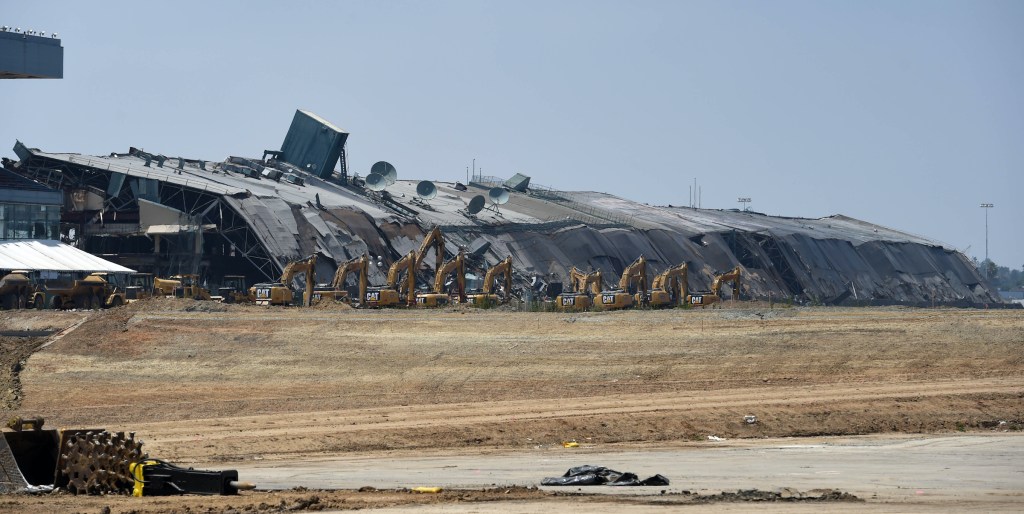
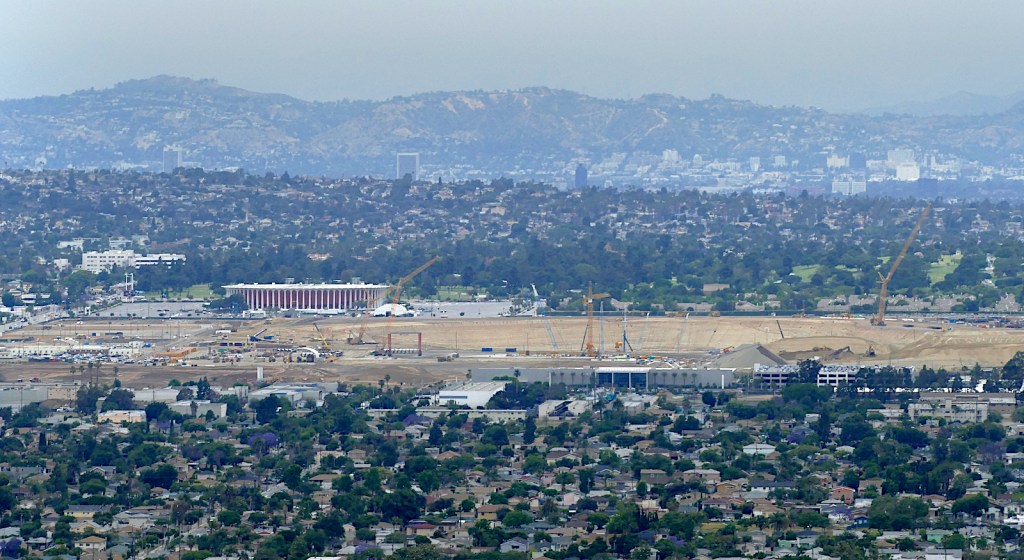
Consider this blog post part three of my history of the Hollywood Park site in Inglewood. Part 1 and Part 2 appeared in 2015, just after the main grandstand of the horse racing track Betfair Hollywood Park was brought down by implosion on May 31.
Earlier that year, on Jan. 5, St. Louis Rams owner Stan Kroenke had announced plans to build an NFL stadium on the site. A month later, the city of Inglewood approved the stadium plan, to be built on land Kroenke had acquired in 2014. The stadium plan was folded into a pre-existing commercial/residential development plan for the Hollywood Park site.
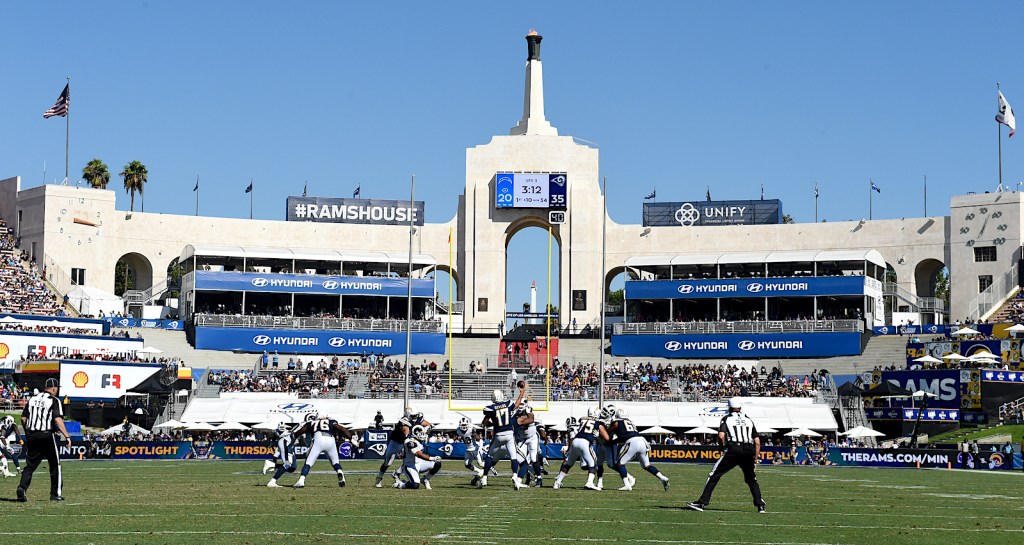
The Rams originally played in Cleveland from 1936-45, winning an NFL championship title in 1945. They moved to Los Angeles in 1946, where they then won another championship in 1951. They would play in the Coliseum for decades before moving to Anaheim Stadium in 1980.
After 14 years in Anaheim, the Rams moved to St. Louis, where they won the Super Bowl in 2000 with quarterback Kurt Warner at the helm. Kroenke bought the team in 2010.
An agreement in the team’s lease deal with the city called for St. Louis to finance improvements at the city’s stadium. When the city balked, Kroenke began plotting his move back to Los Angeles.
At that time, rumors were floating around that the NFL’s San Diego Chargers and possibly the Oakland Raiders would be moving to a former toxic waste landfill site just off the 405 Freeway in Carson, pending league approval.
The two projects vied along with several others for the final endorsement by the NFL owners, with the Carson faction headed by former Disney executive Robert Iger. Two other competing plans included Farmers Field, Phillip Anschutz’s AEG plan to build a stadium at the downtown Convention Center, and a City of Industry proposal set forth by billionaire Ed Roski.
The back-and-forth battle behind the scenes lasted until January 12, 2016, when the NFL owners voted 30-2 to allow the Rams to return to Los Angeles and, eventually, Kroenke’s new Inglewood stadium.
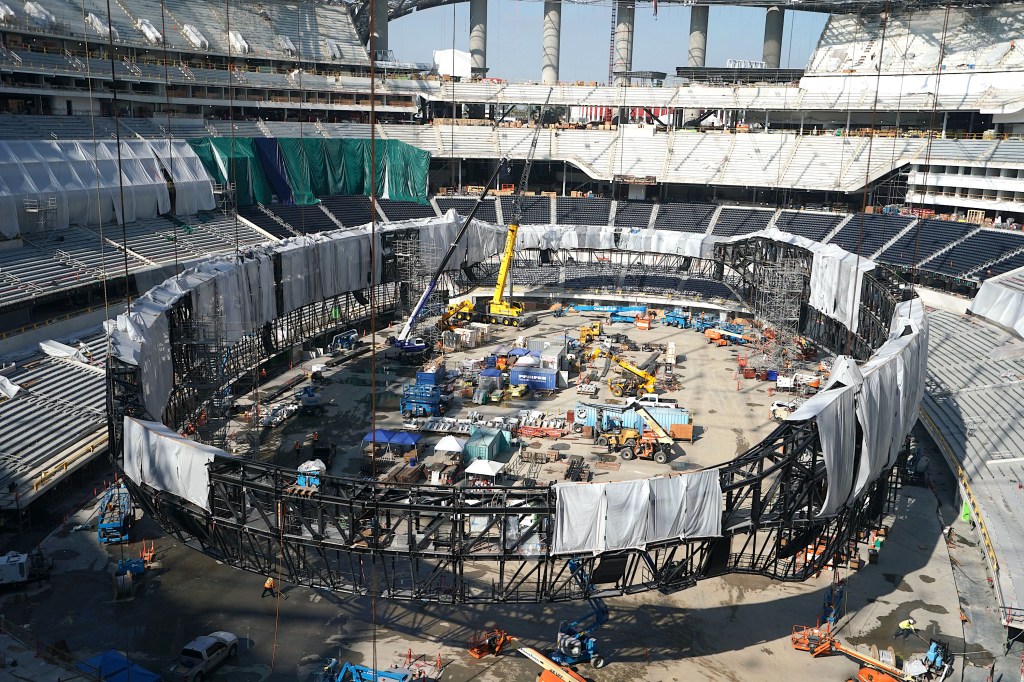
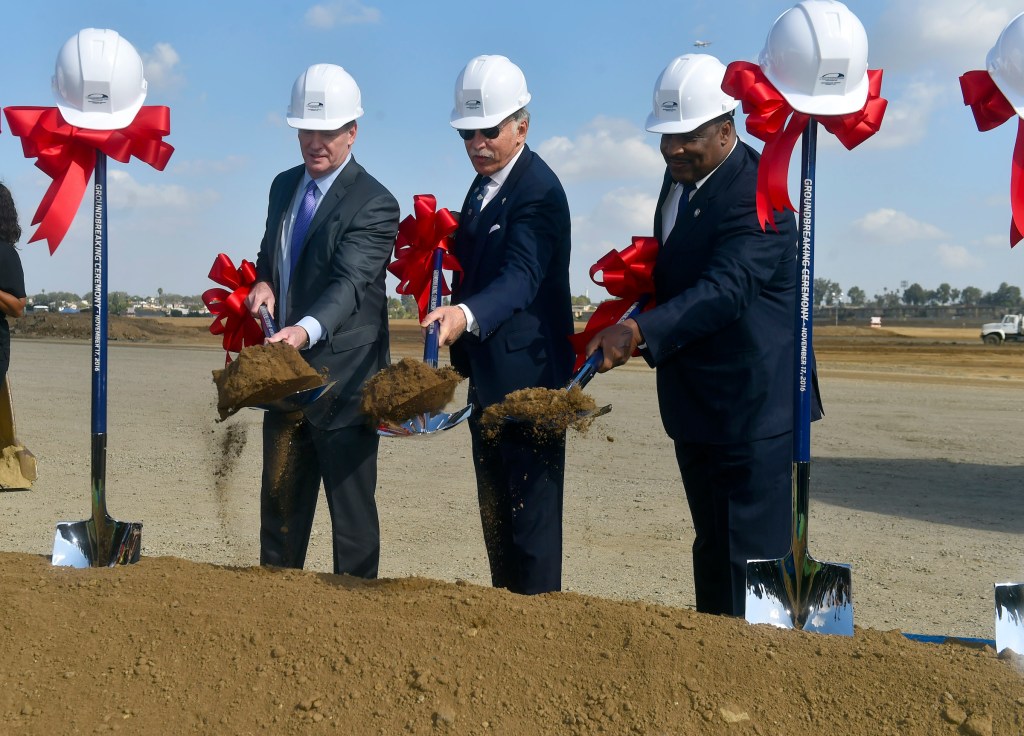
Originally, the plan was to play in the Coliseum for three years beginning in 2016, until the new 298-acre facility was completed in time for the 2019 season. Ground was broken for the project on Nov. 18, 2016, though grading work already had begun.
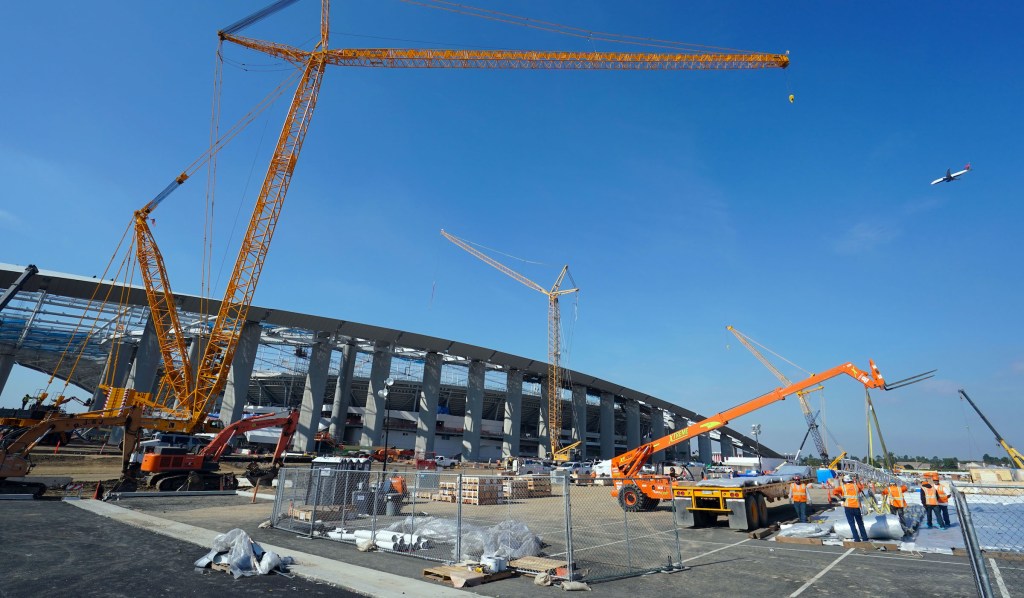
Several factors contributed to a one-year delay in the plan. Because of the stadium’s proximity to Los Angeles International Airport, much of it had to be built below ground level in order not to interfere with LAX’s radar and the flights of incoming planes.
In addition, FAA approval for the plan was held up for months until Kroenke agreed to build a separate $29 million radar system to eliminate interference with LAX radar operations.
A 200-foot-deep hole needed to be excavated for that to happen. Unfortunately, the unusually heavy 2016-17 rainy season led to 60 days of rain delays. The rainwater would fill up the excavation site, which then would have to pumped out and dried before work could continue. As a result, the completion date had to be moved to 2020, and the Rams spent an extra year in the Coliseum.
Meanwhile, with the collapse of the Carson stadium deal, the Chargers and the Raiders were left in limbo. The Raiders eventually opted out of Los Angeles completely, gaining approval from the league in 2017 to move to Las Vegas. In 2020, they moved into their new $1.9 billion Allegiant Stadium there.
The Chargers cut ties with the city of San Diego when owner Dean Spanos announced plans in January 2017 to move to Los Angeles after the city’s voters nixed a proposed $1.6 billion financing plan for a new stadium. The team had played its first-ever season of pro football in Los Angeles in 1960, as members of the upstart American Football League (AFL). They moved to San Diego after one year, and stayed there for 56 seasons.
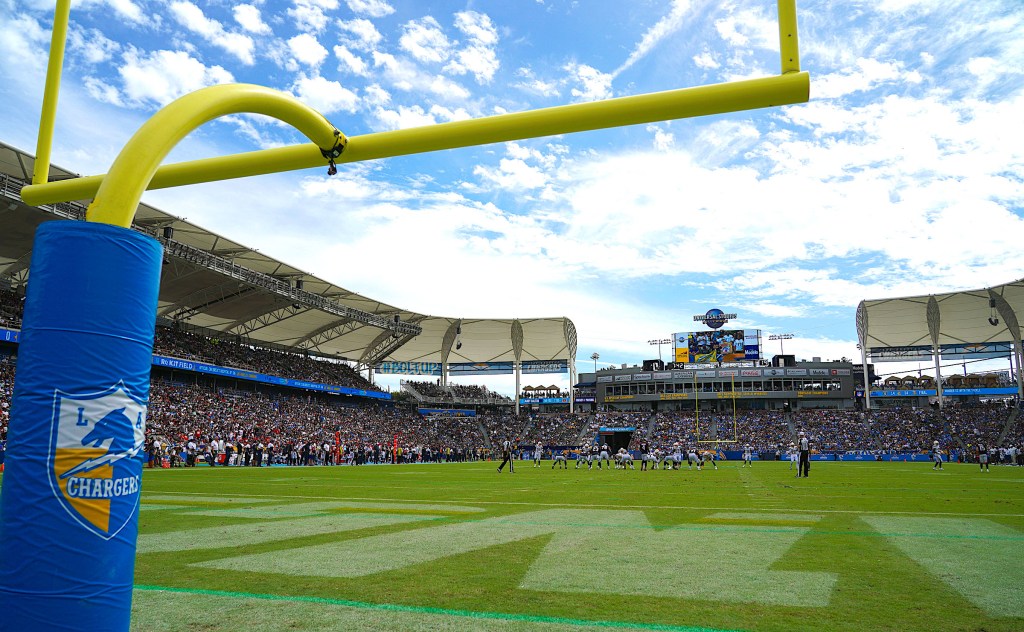
Their plan to share the new Inglewood stadium with the Rams also was set back for a year by the construction delays, and they ended up playing three seasons at the Dignity Health Sports Park (formerly the Home Depot Center) in Carson. The NFL okayed the unusual arrangement, even though the Carson stadium’s capacity of 30,000 was 20,000 less than the league’s minimum.
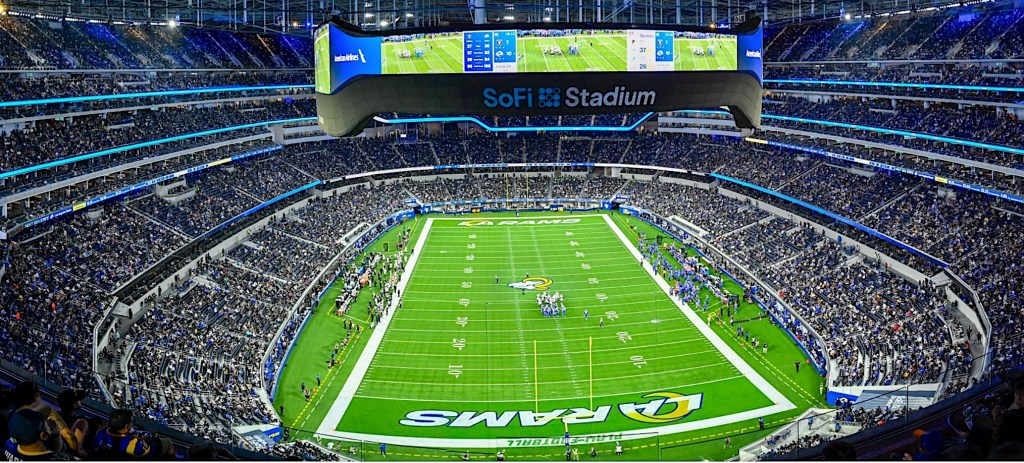
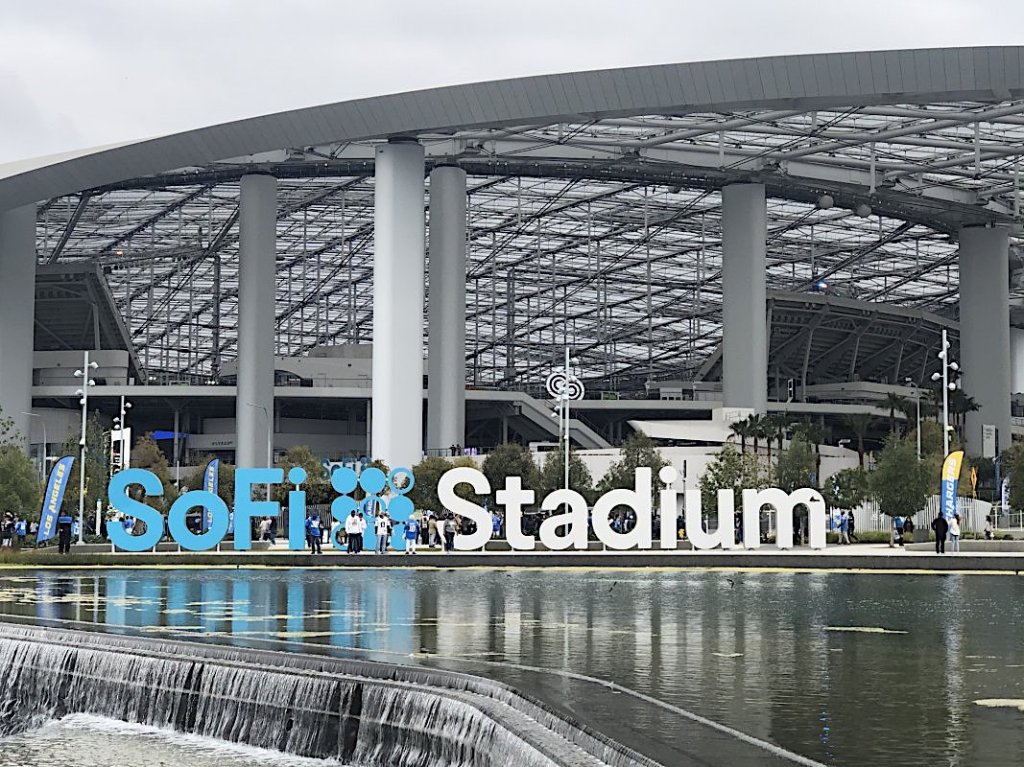
In September 2019, the online finance company Social Finance Inc signed a 20-year deal for the naming rights to the new facility, giving it its name of Sofi Stadium.
The Rams defeated the Dallas Cowboys, 20-17, in the first regular-season NFL game at Sofi on Sept. 13, 2020. What would have been a day of great celebration was muted by the COVID-19 pandemic; the game was played in a very beautiful but very empty stadium save for players and fan cutouts due to health restrictions.
The full celebration took place in 2021, when fans returned in person to celebrate the return of the Rams and Chargers to football before live crowds.
The construction delay cost Sofi Stadium its chance to host Super Bowl LV in 2021, in a deal that had been made with the NFL in 2016. But the league merely pushed the event ahead by a year, so that Sofi will be the site of Super Bowl LVI on Feb. 13, 2022.
In addition, Sofi will host the college football national championship game in 2023, as well as the opening and closing ceremonies of the Olympic Games in 2028.
At a total cost of $5.5 billion, Sofi is the most expensive sports stadium ever built as of this writing.
Sources:
Construction Disputes website.
Daily Breeze archives.
Los Angeles Times archives.
Wikipedia.