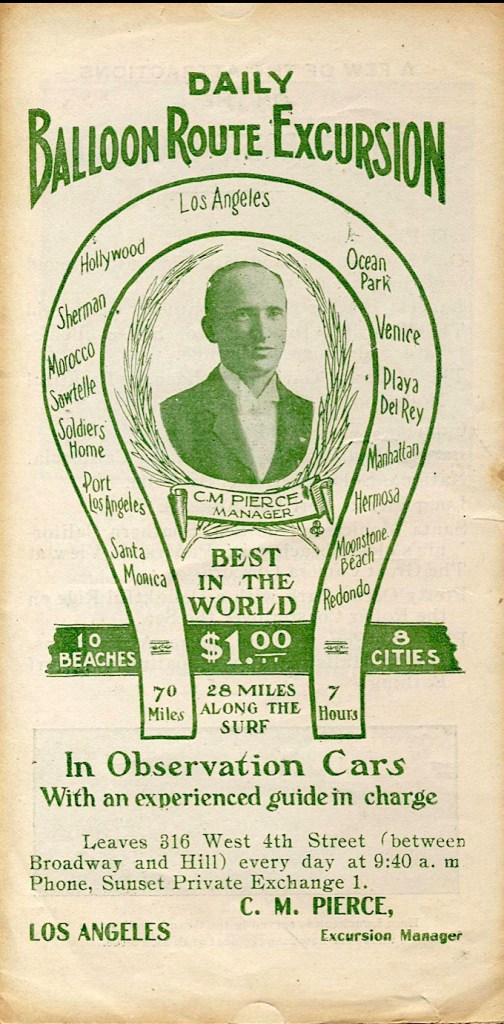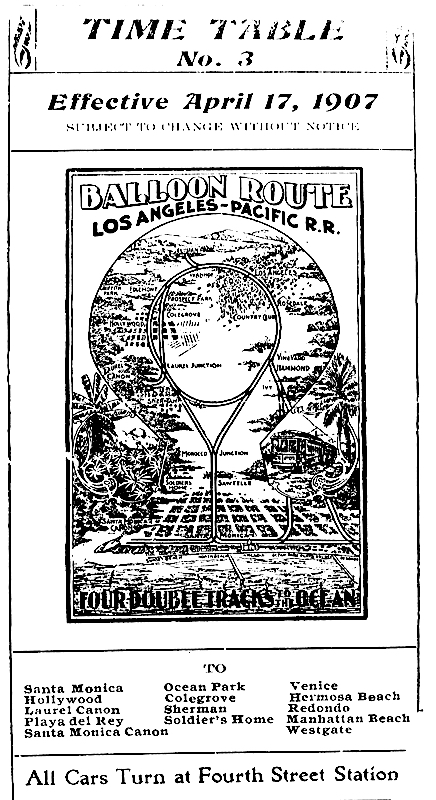
When I first began seeing references to the early 1900s tours operated by the Balloon Route Excursion Co., I assumed they were conducted using hot air balloons. I wondered how that possibly could have worked.
A closer look revealed that the company’s tours got their name from the balloon-shaped trolley car route that they took through Los Angeles, which were conducted most definitely on land, and not via balloon.
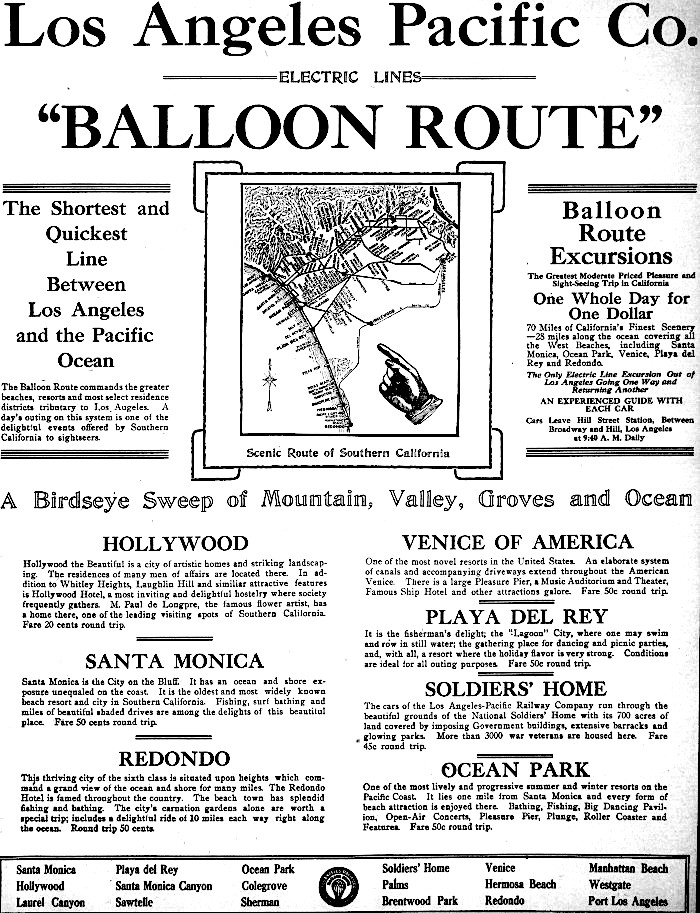
The Balloon Route Excursion Co. was the brainchild of Henry Huntington’s Pacific Electric Railway Co., which introduced the service along its train lines in 1901.
Developers and trolley pioneers Moses Sherman and Eli Clark, whose smaller lines were bought up by the larger Pacific Electric that year, came up with the idea. Sherman would later develop a large chunk of the San Fernando Valley; Sherman Way and Sherman Oaks are named for him.
The pair had an ulterior motive for formulating an excursion route using several existing trolley lines through west Los Angeles and the lightly developed coastal South Bay: to show regular folks the allure of coastal Los Angeles and convince them to buy property along the way.
For just one dollar, riders could board the special excursion cars at 316 W. 4th St. in downtown Los Angeles and spend the day visiting the advertised “10 beaches and 8 cities.” Tour guides led them to stops in Hollywood, west Los Angeles, Santa Monica, Playa del Rey, Redondo Beach and Venice before returning through Culver City to their point of origin downtown.
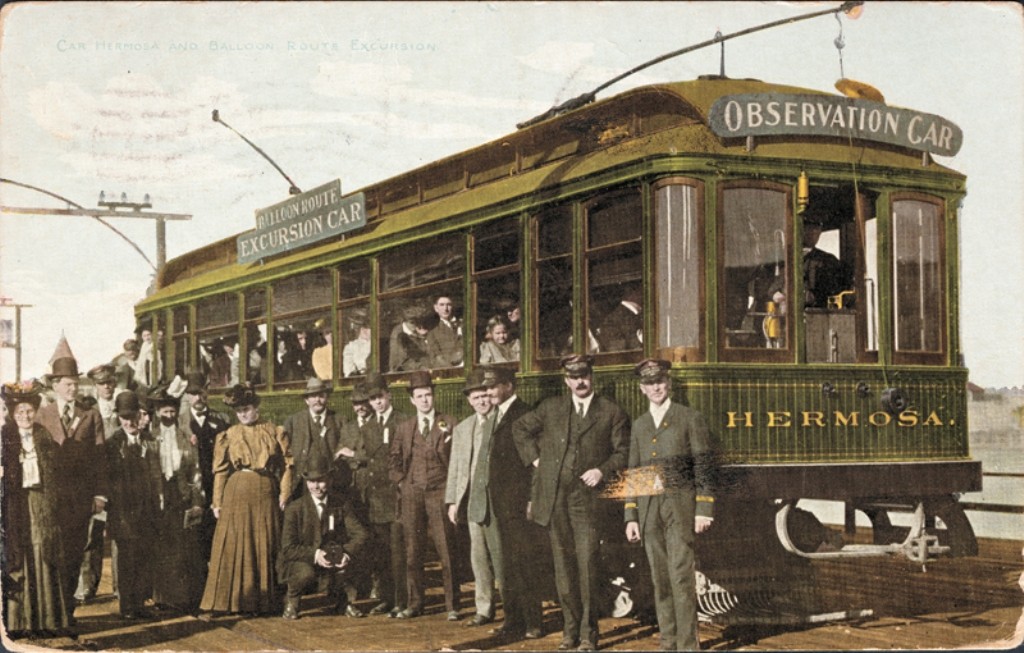
Sherman and Clark did a fine job in putting the Balloon Route concept together, but the railway failed to promote the service adequately in its first couple of years, and ridership was light.
The company remedied that by hiring master marketer Charles Merritt Pierce, who took charge of the Balloon Route operation in November 1904. Pierce had operated horse-and-carriage tours to and from his Glen Avon Hotel in Hollywood before coming to his new job.
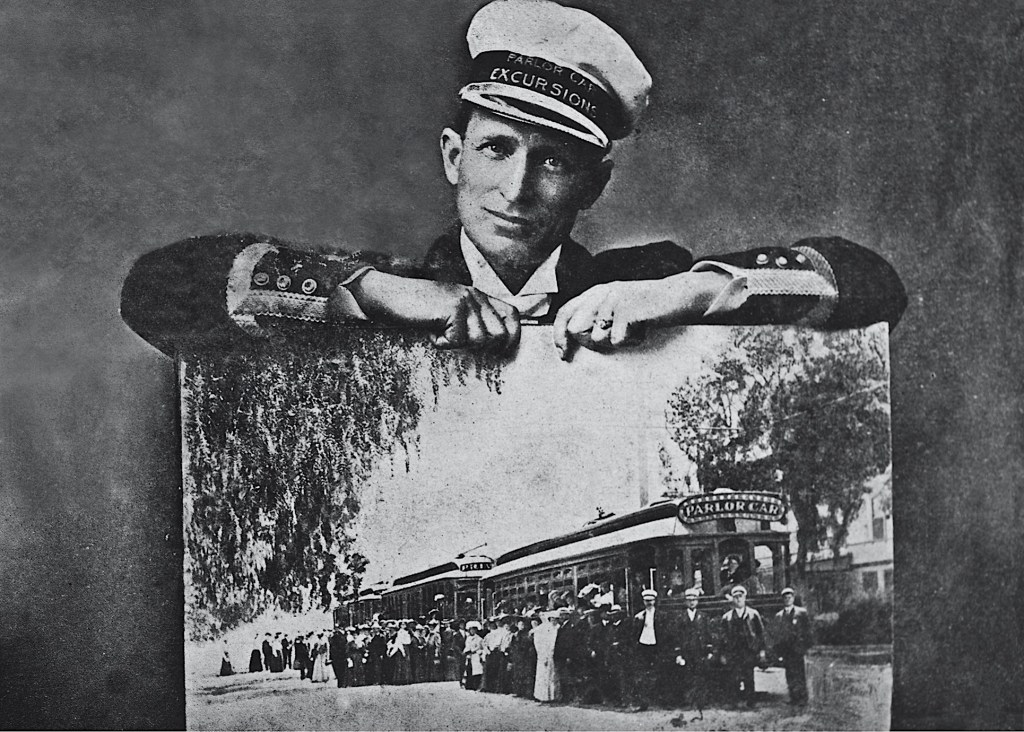
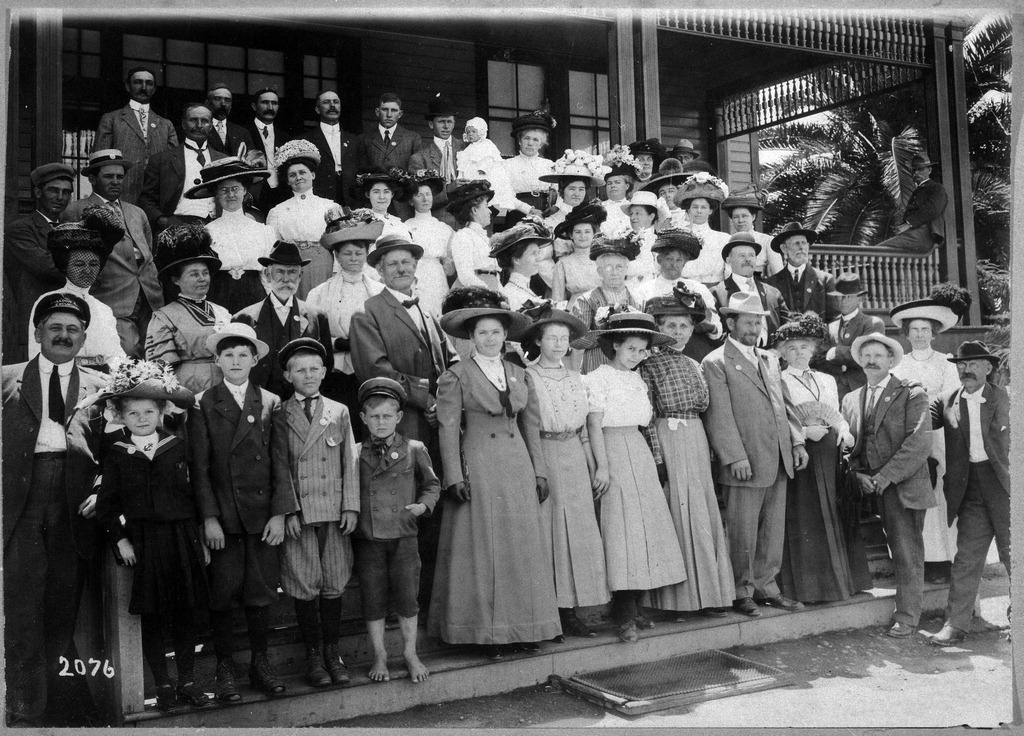
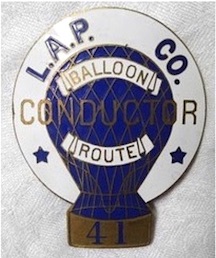
He threw all his considerable promotional talents into the job. He hired carefully vetted tour guides in specially designed Balloon Route uniforms to work in the trolley cars whose spartan interiors he had remodeled to make for more comfortable riding. He also hired professional ad men who made sure that flyers hyping the service got placed in local hotels, the Catalina steamship, and other tourist excursions.
The Balloon Route’s popularity grew immediately. Additional train cars were added to handle the crowds, and, on peak summer days, thousands of tourists enjoyed the day-long ride.
The tour’s first stop was in Hollywood, where riders toured the house of then-prominent French artist Paul de Longpre. Next came a visit to the Sawtelle Old Soldier’s Home in West Los Angeles, on the site of the current Veterans Administration grounds, whose lushly landscaped gardens made it popular among tourists.
From there, the trolley made two stops in Santa Monica, at the Camera Obscura and then at the Long Wharf, a 4,270-foot pier near Pacific Palisades that was removed in 1933.
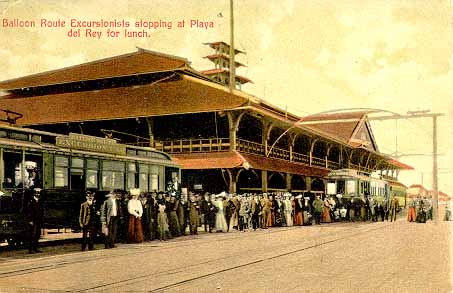
The South Bay stops came next, beginning with Playa del Rey. In 1902, developer Harry Barbour had opened a resort complex that would include a three-story pavilion, hotel, bowling alley and skating rink there. Balloon Route visitors could eat at the pavilion at a restaurant Pierce owned for 50 cents, as well as enjoying the other facilities.
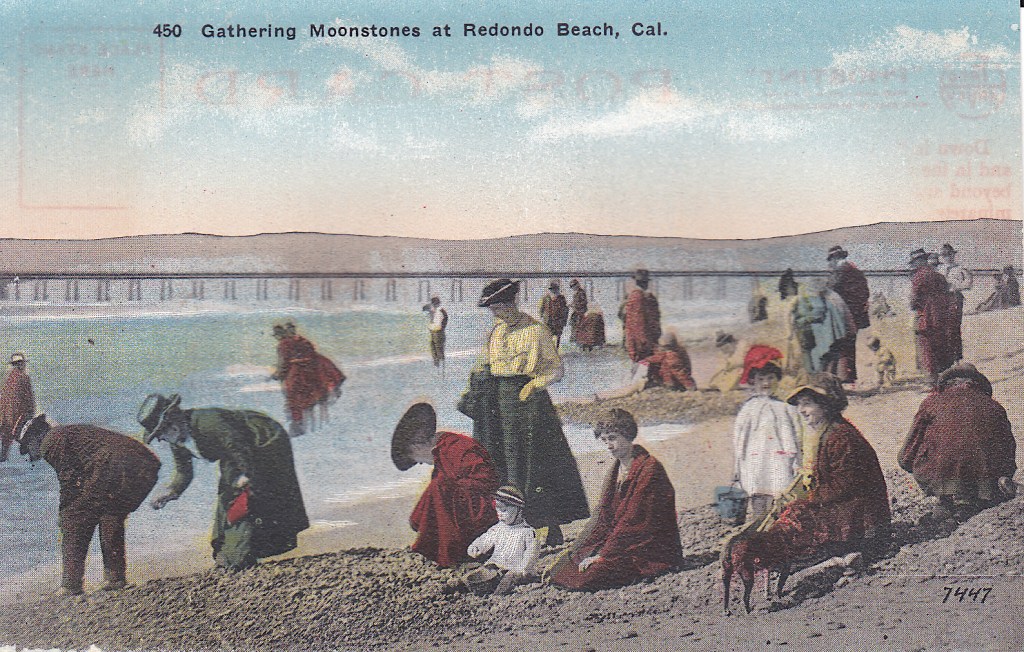
Two stops in Redondo Beach followed. First, riders would disembark at Moonstone Beach, a stretch of shoreline from roughly present-day Herondo Ave. south to Diamond St. The beach was named for the smooth feldspar stones washed up on its shores by the strong ocean currents in the area.
Tourists flocked to Moonstone Beach in the late 1800s and early 1900s to hunt for the desirable oval stones, which took on a lustrous beauty once polished by jewelers or lapidarists. Unfortunately, the stones began disappearing in the 1920s, gobbled up for use in construction projects.
In the 1960s, the geography and geology of Moonstone Beach changed forever with the building of the massive King Harbor project. The city of Redondo Beach created Moonstone Park on Mole B in King Harbor to commemorate the former beach.
From there, tourists were transported to Redondo Beach’s Paseo de la Playa area, home of the Pavilion, saltwater plunge, and other amusements, and then to the lavish Hotel Redondo for a quick tour. The trolley then returned north to Venice and its seaside attractions, including an aquarium and roller coaster as well as shops and cafes, before finally heading back to downtown Los Angeles.
After building up the popularity of the Balloon Route operation, Pierce left the company in 1911, following the Pacific Electric merger with Southern Pacific. The new management took back operation of the many tourist trolley lines that Pierce had managed after the success of the Balloon Route, including the Seaside Route, which transported sightseers to San Pedro and the Harbor Area.
The rise of the automobile and the further development of roads and highways led to the gradual decline in popularity of the tourist trolleys, though they continued to operate for another couple of decades. The freedom of the open road made it possible to conduct one’s own tour.
Pierce remained in the sightseeing business for decades before his death in 1964 at 97.
Sources:
“The Balloon Route: A Tourist’s Trolley Trip Through Early-1900s Los Angeles,” by Victoria Bernal, KCET website, June 9, 2016.
“Charles Merritt (C.M.) Pierce and the Los Angeles Pacific Balloon Route Excursion,” edited by Ira L. Sweet, November 1955, Pacific Electric Railway Historical Society website.
Daily Breeze archives.
Los Angeles A To Z: An Encyclopedia of the City and County, by Leonard and Dale Pitt, University of California Press, 1997.
Los Angeles Herald archives.
Los Angeles Times archives.
Redondo Reflex archives.