
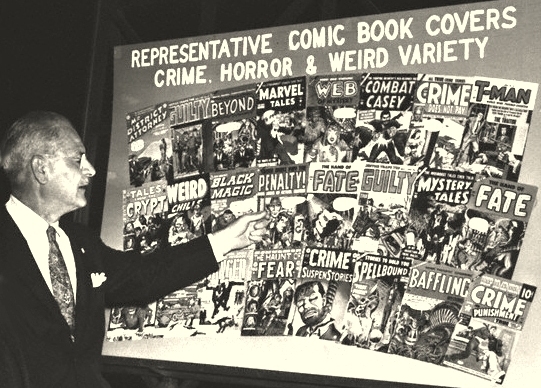
Threats to the American way of life seemed to lurk around every corner in the 1950s. Just a few weeks ago, I wrote about the war on pinball machines being used for illicit gambling during the era.
Today’s topic posed a deeper, more pernicious danger: the corruption of America’s youth via crime and horror-based comic books, which mushroomed in popularity in the early part of that decade.
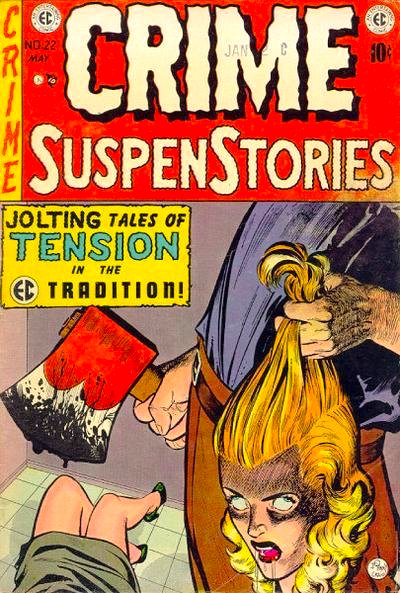
Make no mistake, the comic books in question did portray scenes of crime, violence, gore and ghoulishness with unbridled enthusiasm, and should not have been allowed to be sold to young children. But their proliferation did spark what in retrospect seems like a classic overreaction among the arbiters of morals, common decency and good taste.
Comics historians date the origin of comic books to the early 1930s, with the 1938 publication of Action Comics #1, the debut of Superman, marking their rise to mass popularity.
Comic books always have relied heavily on fantasy and the supernatural, so the rise of horror-based comics isn’t all that surprising. Early illustrated adaptations of Edgar Allan Poe stories and Mary Shelley’s Frankenstein were comic book naturals.
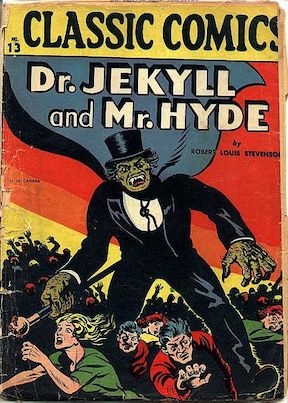
Comics expert Adrian Wymann cites the 1943 publication of Robert Louis Stevenson’s Dr. Jekyll and Mr. Hyde in 1943 by the Gilberton Company in its Classic Comics series as the first comic wholly dedicated to the horror genre.
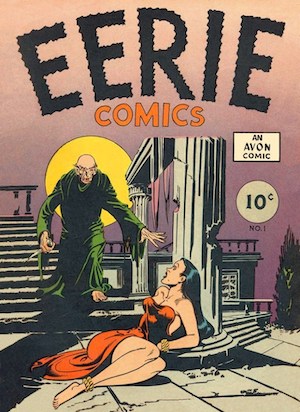
The publication of Eerie #1 by Avon Comics (a division of Avon Books) in 1947 marks the first comic comprised fully of original horror stories. But it was the arrival of EC Comics that really kick-started the horror comics trend.
Max Gaines had started Educational Comics as a traditional comics outfit, but his son William changed the company’s direction after Max died in 1947. He began publishing crime, horror, science fiction and, later, satirical comic books, starting MAD magazine in 1952. Oh, and he also changed the name of the company to Entertaining Comics.
With the arrival of EC titles such as The Crypt of Terror, The Vault of Horror, Tales From the Crypt and The Haunt of Fear in 1950, the small company’s new direction became clear. And its comics grew in popularity among teens, who often passed the comics on to their younger siblings.
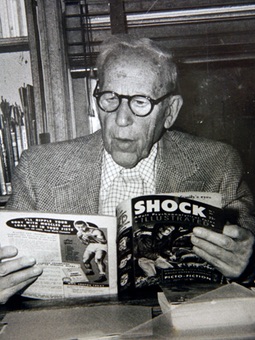
By April 1954, EC’s output had a high-enough visibility on the cultural landscape to attract the attention of Congress, specifically the U.S. Senate Subcommittee on Juvenile Delinquency, headed by Sen. Estes Kefauver. Time magazine estimated the horror comics comprised 25 percent of all comic book sales.
Looking for quick answers to a complicated social ill, the committee attempted to tie the postwar rise in delinquency to the influence of the lurid comics.
Kefauver relied heavily on testimony from Dr. Fredric Wertham, a psychiatrist who theorized that comics were responsible for juvenile delinquency, something he personally believed but did not back up with facts or relevant studies.
His sensationalist November 1953 article in Ladies Home Journal, “What Parents Don’t Know About Comic Books,” fueled outrage, and the publication of his full-length book condemnation, Seduction of the Innocent (Farrar & Rinehart), in early 1954 further stoked the flames.
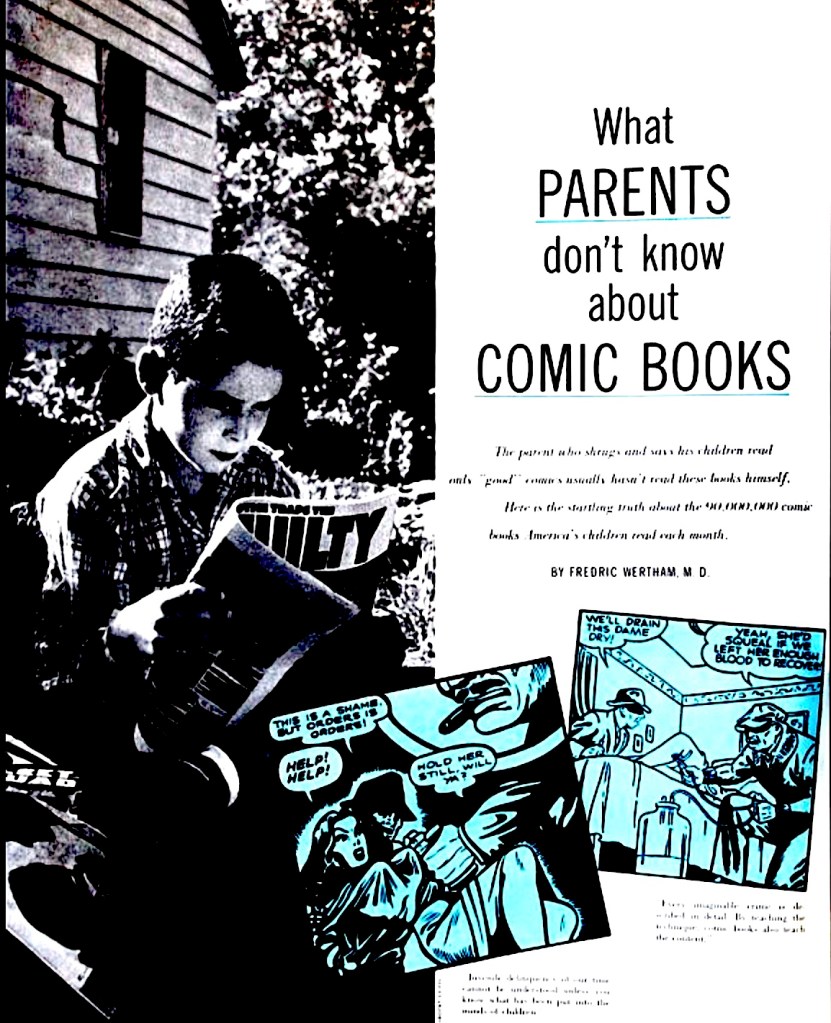
The Senate hearings generated enormous publicity, enough to alarm parents nationwide. The scare was on, and local governments throughout the land took their cue from Kefauver.
The Los Angeles County Board of Supervisors banned the violent comics on Nov. 15, 1954. The South Bay beach cities of Manhattan, Hermosa and Redondo Beach all had their own bans on horror comics in place by then.
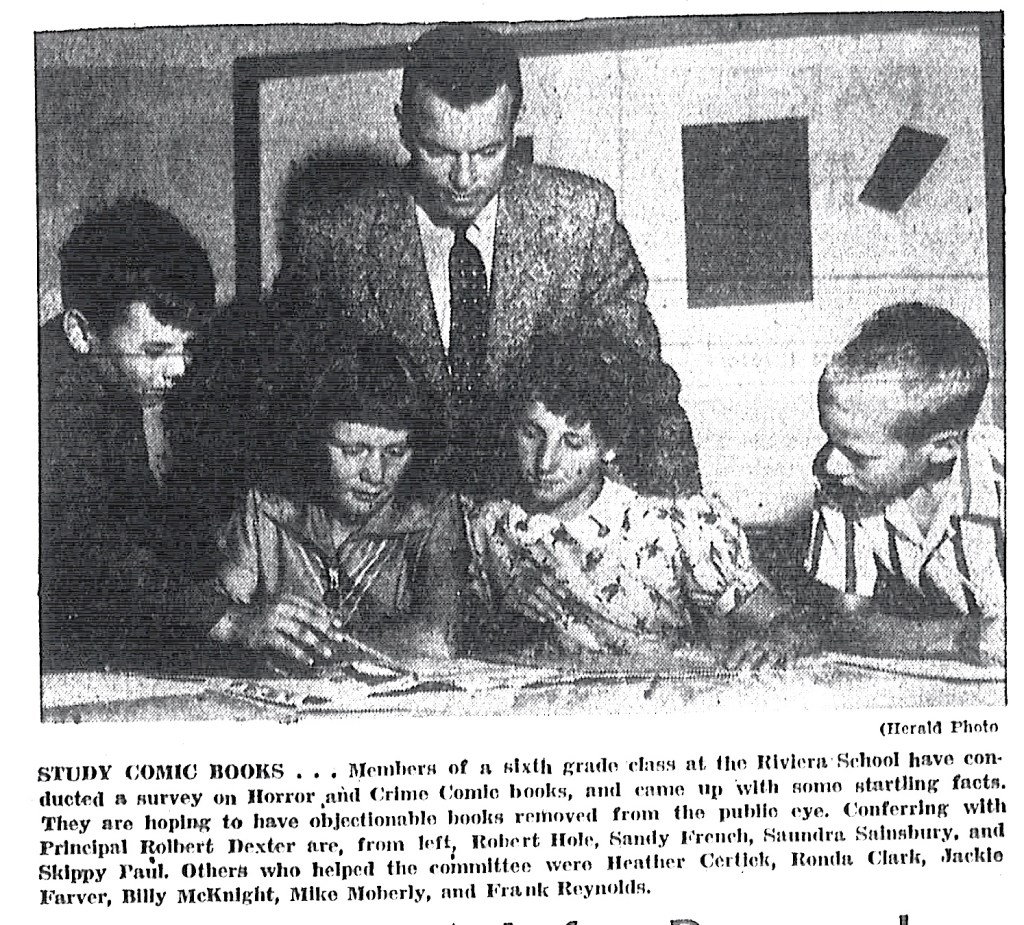
Outrage grew in Torrance as well. The Torrance Herald joined in the fray in early November 1954, sending a reporter to discuss the comics with a sixth-grade class at Riviera School, many of whom felt the books should be kept from kids their age.
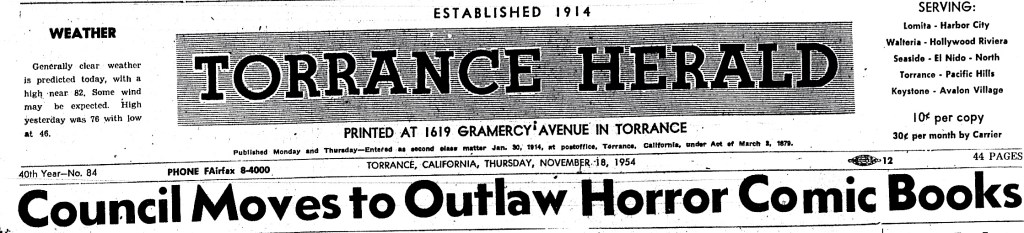
After increasing pressure from local PTAs and parent groups, Torrance councilman Albert Isen, who would become mayor a year later, proposed an emergency ordinance banning the sale of such comics. The council passed unanimously on Dec. 7, 1954. (Isen would go on to tout his role in local comics enforcement in his mayoral campaign ads well into the 1960s.)
Nationally, the comic book industry already had gotten the message, and began scrambling to clean up its image. Mainstream publishers hastily formed the Comics Magazine Association of America and its Comics Code Authority subsidiary in September 1954. The latter group quickly issued its self-policing Comic Book Code a month later.
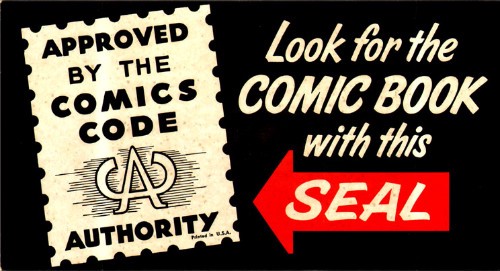
Its provisions explicitly prohibited just the kind of subject matter and graphic depictions that EC Comics and its imitators had become so successful in selling. The Code, which put a postage stamp-like seal of approval on every non-violating comic book issued, essentially put EC out of business.
William Gaines went on to devote his energies to MAD magazine. The popular satiric monthly had started out as a comic book, but became a magazine in 1955, enabling it to avoid the strictures of the Comic Book Code.
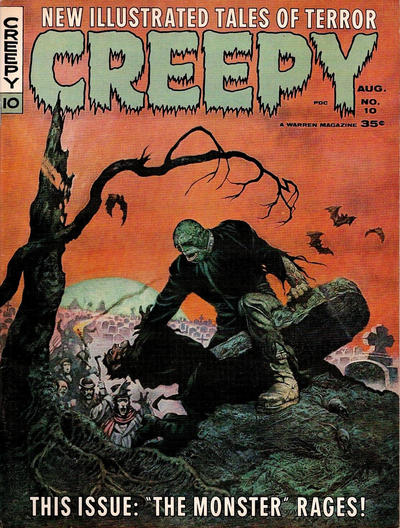
Horror comics would return in the 1960s with the advent of Creepy (1964) and Eerie (1966). Like MAD, they were comic books in magazine form, allowing them to avoid Code regulation. Essentially niche publications, they trafficked in just the kinds of stories and illustrations that had brought about the 1950s frenzy, but, by then, the crusade against horror comics had become a distant memory.
Sources:
“Haunts Of Horror Or Tombs Of Torture? American Comic Books And The Horror Genre 1939 – 1955,” By Adrian Wymann, The Thought Balloon blog, April 10, 2014.
Los Angeles Times archives.
Redondo Reflex archives.
“Horror Comics,” Time magazine, May 3, 1954, Page 78.
Torrance Press-Herald archives.
Wikipedia.


Thank you Sam Gnerre for your weekly articles. You have opened my eyes to the wonderful history of the South Bay.
LikeLike