The United States Coast Guard has one of the most reassuring mottoes in the military: “Semper paratus,” Latin for “always ready.” Whether by sea, air or land, the military branch serves to protect our coastal areas from natural and manmade disasters, foreign attacks, crime and a myriad of other threats.
It traces its roots to 1790 and the formation of the United States Revenue Cutter Service, whose original purpose was to enforce tariffs. It was the country’s only naval force until the founding of the U.S. Navy in 1798. The early cutter ships also performed rescues, fought piracy and even carried mail.
In 1878, the U.S. Lifesaving Service was formed from a loose aggregation of coastal sea rescue services throughout the country. The two agencies operated independently until Jan. 28, 1915, when Congress authorized the formation of the U.S. Coast Guard, which merged the two operations. Though defined as a branch of the military, it initially found itself under the auspices of the Treasury Dept.
Coast Guard cutters became regular visitors to San Pedro’s waters shortly thereafter, though its first official outpost wasn’t established until 1919: the Marine Exchange which reports on the comings and goings of ships in the port.
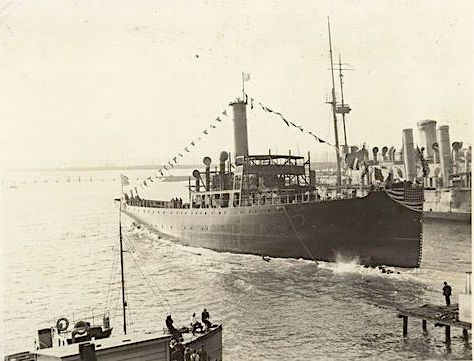
(Credit: San Francisco Maritime National Historical Digital Archive, National Park Service)
In 1922, the newly built Coast Guard cutter Haida began calling San Pedro its home port, concentrating on what would be the Guard’s chief mission during the next decade: patrolling offshore waters for rum-running ships during Prohibition.
For the next few decades, Coast Guard cutters would dock at various spots in the harbor, most notably near the U.S. Navy’s docking area at the Outer Harbor Dock & Wharf Company. An area there with 400 feet of docking and a small office was obtained by the Coast Guard in March 1926.
Under its commander, Leon C. Covell, the San Pedro unit that he established in 1925 already had grown to two cutters, eight patrol ships and two survey ships. Covell led operations that vigorously chased down and captured rum-runners up and down the coast.
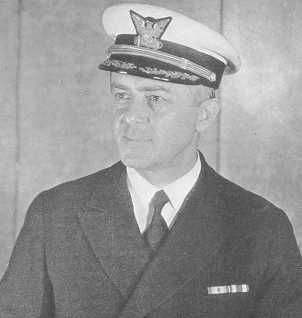
But they also conducted many rescues on the high seas, including a high-profile one involving big-time Hollywood director Cecil B. DeMille’s luxury yacht Seaward, which exploded and caught fire in June 1927. The Coast Guard rescued five crew members from the flames.
The repeal of Prohibition in 1933 reduced the Coast Guard’s need to chase rum-runners, though catching smugglers of all types would always be part of its enforcement duties.
In 1936, another item was added to its list of duties when the federal government made the Coast Guard the official protector of whales swimming off the coasts it patrolled, a major environmental responsibility.
With the advent of World War II, the Coast Guard came back under the command of the U.S. Navy, as it also had during World War I. It played a major role in the naval war effort throughout the conflict, including conducting large-scale rescue operations during the Normandy invasion on June 6, 1944.
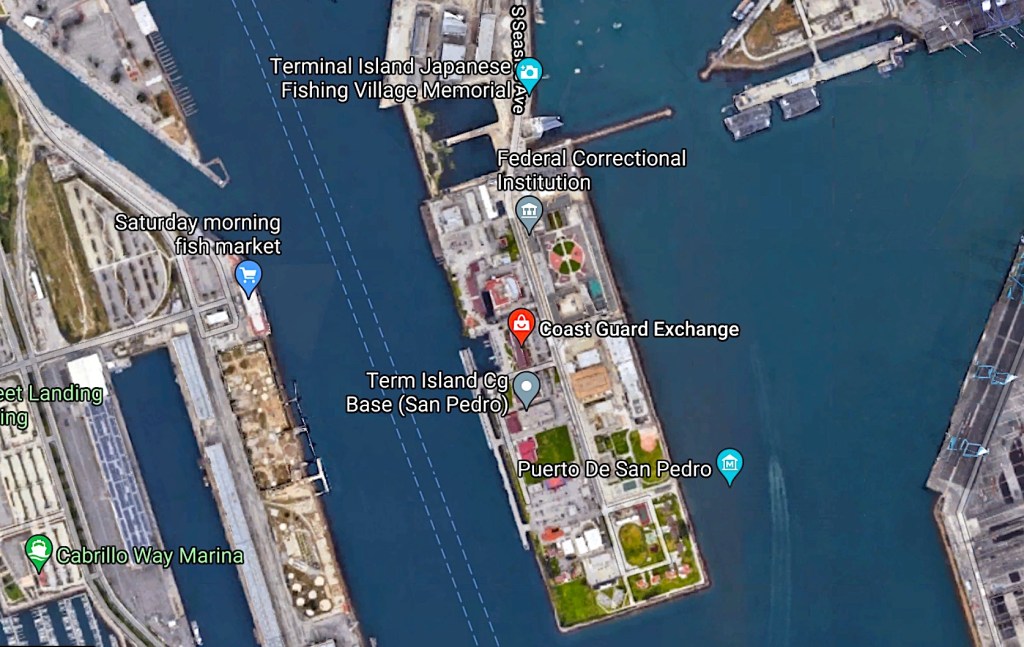
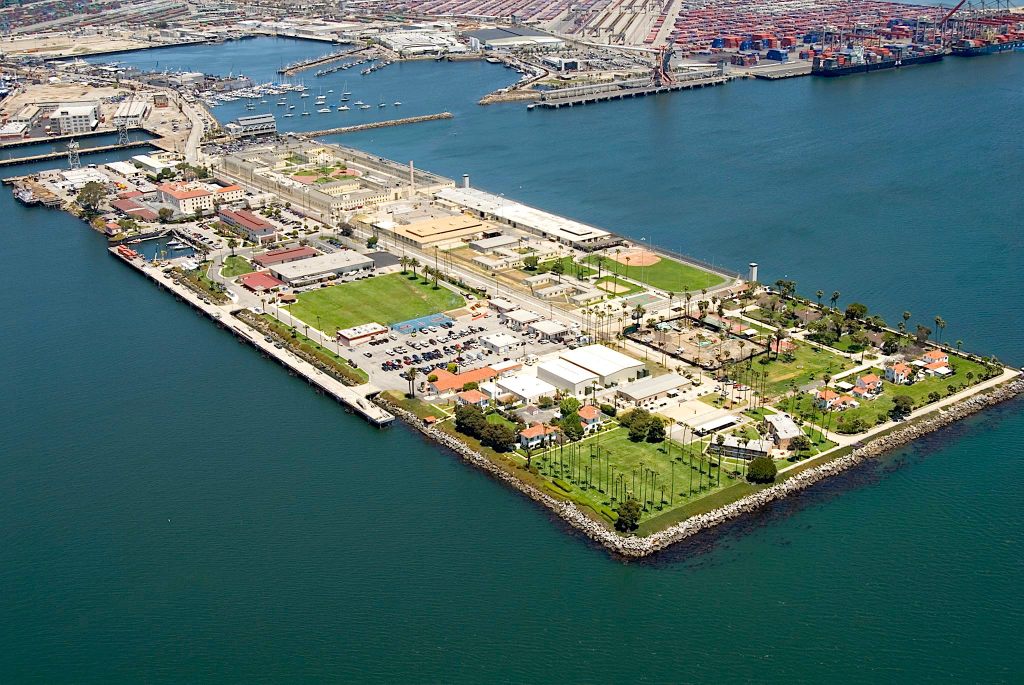
After the war, control of the Coast Guard reverted back to the Treasury Dept. In 1946, a major push to establish a more permanent base in San Pedro was proposed in Congress. It called for $1 million to establish a base at Reservation Point on the southern end of Terminal Island, south of the federal prison that opened there in 1938.
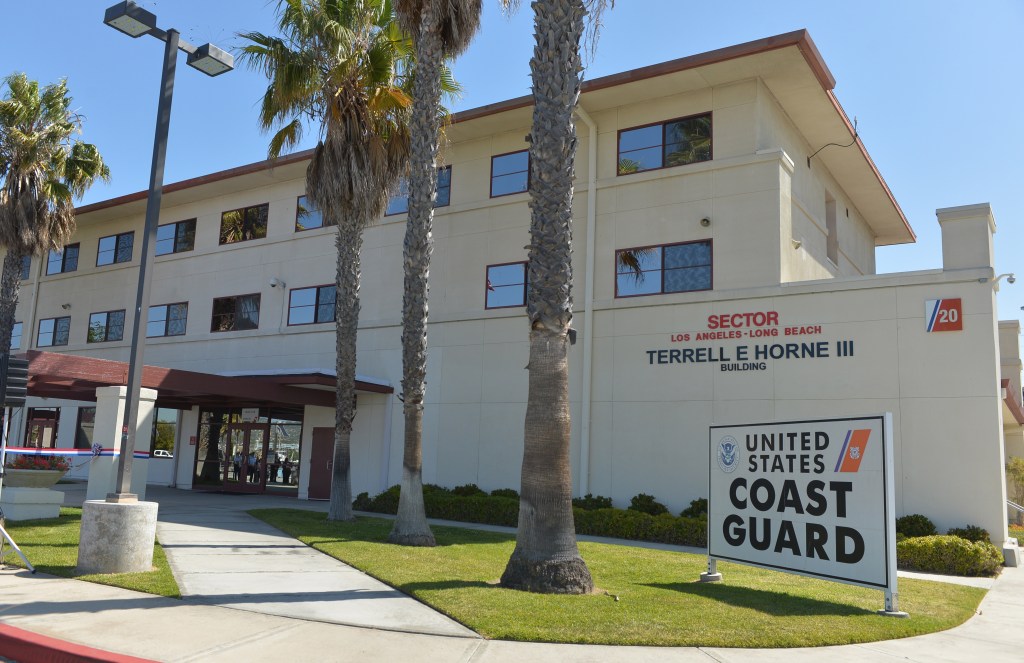
The planned base would consolidate various Coast Guard operations currently scattered among sites in San Pedro, Wilmington and Long Beach on eight acres of land at Reservation Point. It would contain an administration building, barracks, base exchange, mess hall and machine shops, as well as four deepwater moorings for cutters, a long wharf and a dredged basin for patrol boats and small craft.
The plan eventually was approved, and construction of the Los Angeles – Long Beach Coast Guard base as it currently exists began in 1950.
Not everything was consolidated. The Coast Guard’s shoreline radio transmitter continued to operate at Point Vicente, right next to the lighthouse, as it still does.
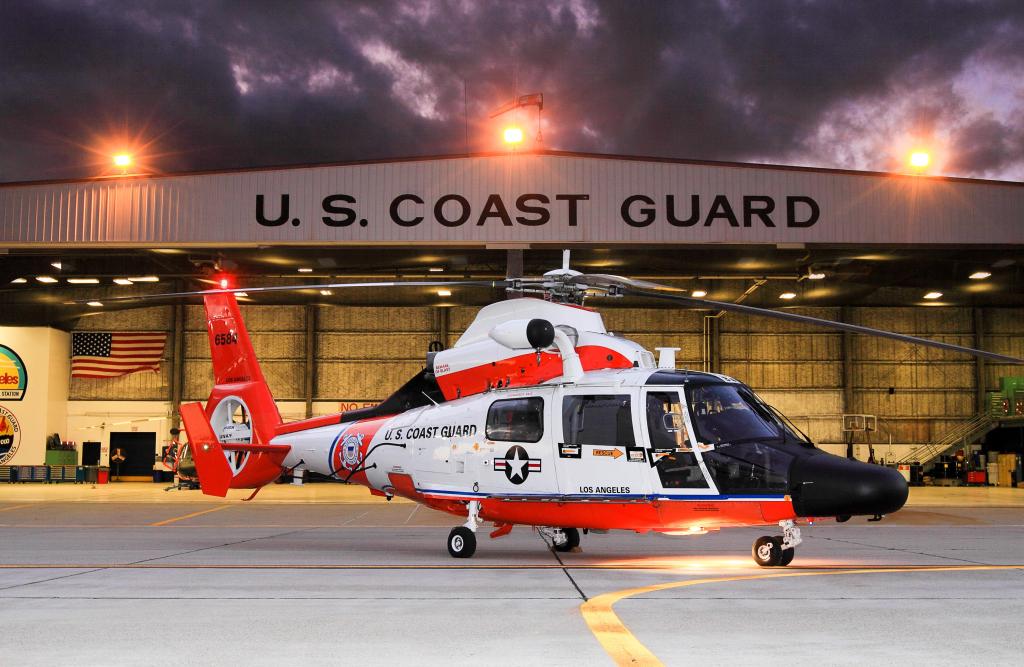
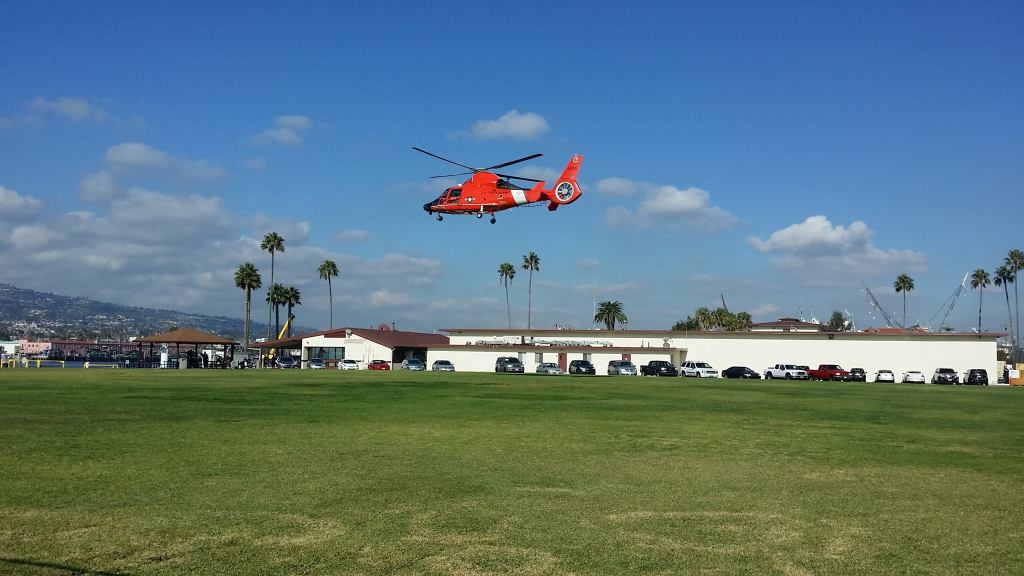
The U.S. Coast Guard permanently moved its helicopter air operations from LAX to Point Mugu in Ventura County in 2016. Undated pre-2016 photo taken at LAX. (Credit: United States Coast Guard)
Also, the Los Angeles Coast Guard Air Station, home base for its helicopter and airplane operations, was moved to Los Angeles International Airport in August 1962.
But it was forced to close in September 2016 when its lease was not renewed due to LAX’s massive improvement plans. Its operations have since moved to the Naval Air Station at Point Mugu.
In 1967, the Coast Guard began adding a distinctive blue and red stripe design element to its ships and aircraft to make them more identifiable. That same year, the Guard became part of the U.S. Dept. of Transportation.
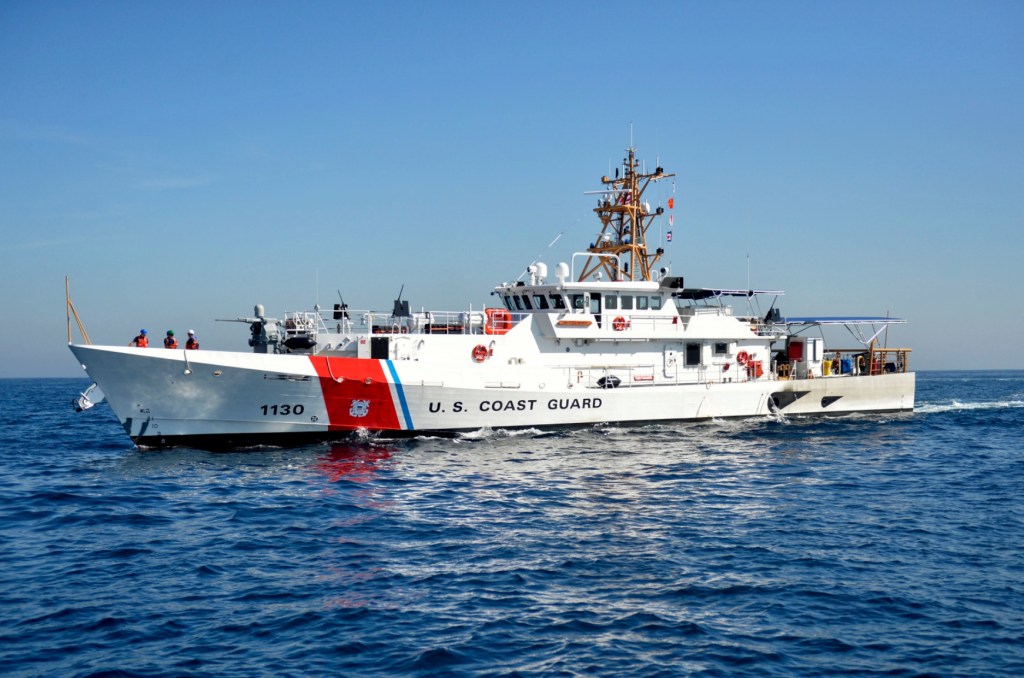
Following the Sept. 11, 2001, terrorist attacks and the creation of the U.S. Dept. of Homeland Security, the Coast Guard came under the authority of DHS in 2003.
It has continued to lend its strengths and expertise to everything from small craft rescues and marine conservation efforts to full-scale participation in everything from wars to weather and environmental disasters such as Hurricane Katrina and the Exxon Valdez oil spill.
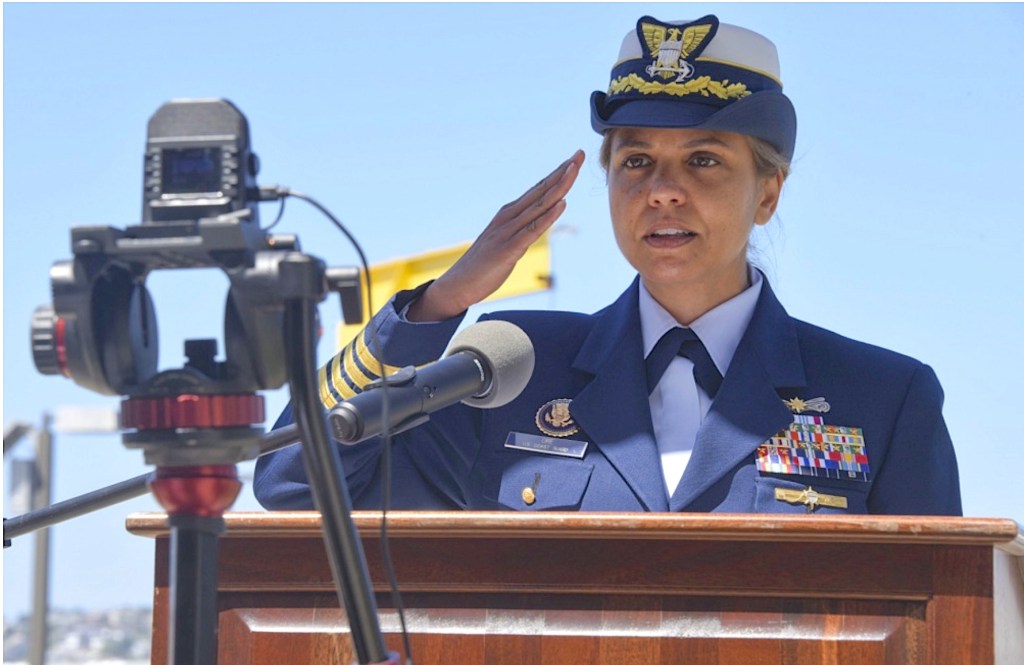
In May 2020, U.S. Coast Guard Capt. Rebecca Ore became commander of the Coast Guard’s Los Angeles-Long Beach sector at the base on Terminal Island, with responsibility for an area stretching from Morro Bay to San Clemente.
Note: Special thanks to Tom Lasser.
Sources:
Daily Breeze archives.
Los Angeles Times archives.
Palos Verdes Peninsula News archives.
San Pedro News Pilot archives.
U.S. Coast Guard Historian’s Office website.
U.S. Coast Guard Base Los Angeles Long Beach Facebook page.
Wikipedia.
Note: The Terminal Island base is not open to the general public without special permission from the Coast Guard.