
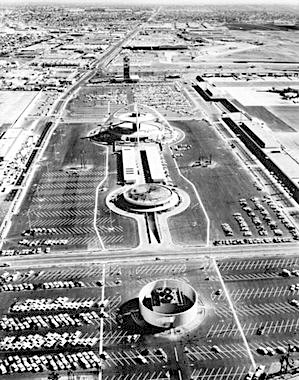
For the first couple of decades after Los Angeles International Airport began operations in the late 1940s, linking up to your airport flight wasn’t much of a concern. You just drove up, pulled into one of the large central parking lots and parked before catching your plane.
As the airport and its surrounding metro area continued to grow exponentially during the 1970s and 1980s, though, the lack of a direct public transportation link and all that automobile traffic along the central airport loop frustrated commuters to no end.
Large parking garages seemed to only exacerbate the traffic problems. Airline travelers had to rely on shuttle vans, Flyaway and municipal buses, and, more recently, Ubers and Lyfts to make the connection.
With the arrival of the Los Angeles County Metropolitan Transportation Authority (Metro) light rail lines in the 1990s, optimism grew that such a link would become available. The best bet, the Green Line, which follows the 105 Freeway from Norwalk to the South Bay, opened in 1995.
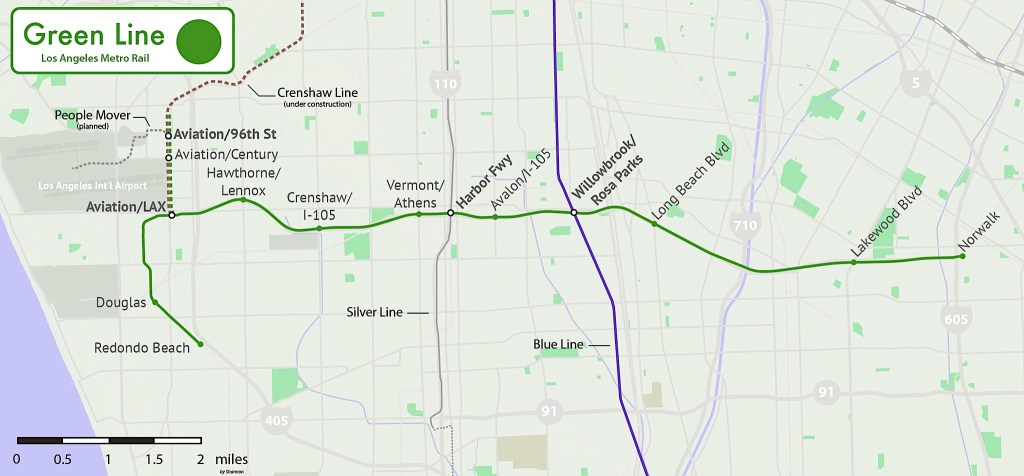
In reality, it did bring commuters to the southeastern edge of the airport, but, incredibly to some, no closer before drifting off to its western terminus in a quiet Redondo Beach neighborhood.
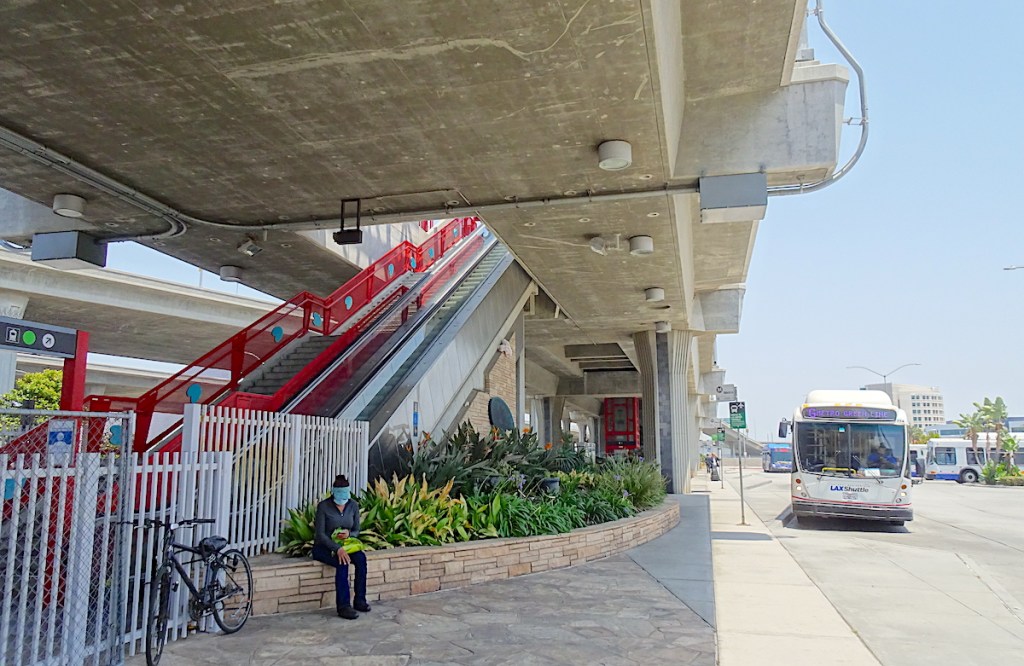
Metro planners cited lack of funding and other factors for their decision not to connect to the airport. They offered its riders, you guessed it, a shuttle bus to traverse the short distance from the closest Green Line station, Aviation/LAX, to the airport terminals. It remains a cumbersome solution.
Twenty years earlier in 1970, San Fernando Valley commuters to LAX came up with an innovative plan to make their way through the clogged Sepulveda Pass section of the 405 Freeway and get to LAX on time to catch their flights. The answer: high-speed air-cushioned trains running on elevated tracks.
Borrowing from a 1961 proposal by Supervisor Kenneth Hahn to connect downtown Los Angeles and LAX via monorail, the city’s Transportation committee report suggested using the right-of-way along the 405 Freeway through the Sepulveda Pass.
High speed trains would connect in the Valley via Sepulveda Blvd. to the north and to LAX via Westchester, also partly along Sepulveda, to the south. The entire journey would take 11 minutes.
It would be the first part of a proposed route that would also include, ambitiously, high speed trains linking to the planned Palmdale International Airport and from there to Las Vegas.
Debate and discussion over the innovative plan continued for the next 18 months. Should we build a tunnel under Sepulveda? Add a stop in congested Westwood on the way over? Route it through Pasadena instead?
But it all came to nought when L.A. Recreation and Parks commissioners refused to allow the trains to use Sepulveda Basin parkland for the train’s northern terminus. The other solutions were deemed unworkable and funding never came. The plan died.
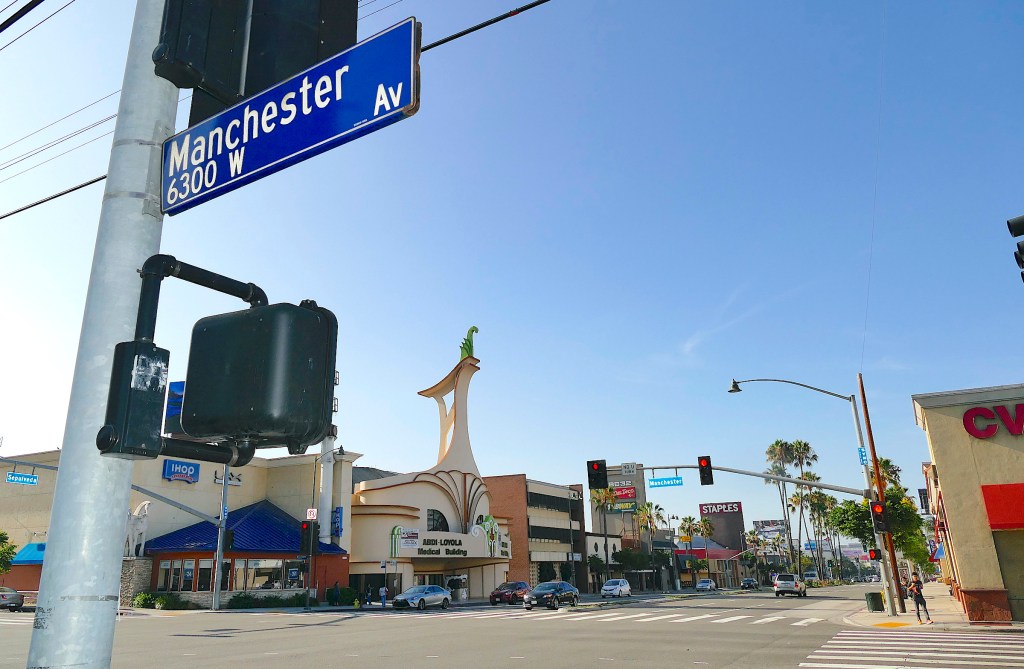
The plan might never have happened anyway, as it had plenty of critics both in the Valley and in Westchester. Neither location was pleased about the idea of railroad tracks on elevated pylons running through their respective Sepulveda Blvd. business corridors. “It would kill the Westchester shopping district,” then-Councilwoman Pat Russell told a Los Angeles Times reporter in December 1970.
As for the Green Line, planning recommendations calling for it to connect to LAX directly were being made as early as 1984, but it never came to be. In addition to funding deficiencies, naysayers also cited engineering problems, saying the trains might distract landing planes with their lights, befuddle radar navigation due to their electromagnetic emissions and cause utility conflicts and traffic snarls during construction.
Nearly 40 years later, here’s how the link will be made at long last. First, the new Crenshaw/LAX Line scheduled to open in 2022 will originate from Crenshaw Blvd. and connect from the north to the Green Line at the airport.
Next, two new stations will be built near the airport, the Aviation/Century station and the all-important Aviation/96th St. station. Airport officials have their own name for the new Aviation/96th St. station: the Airport Metro Connector (AMC) Station Project.
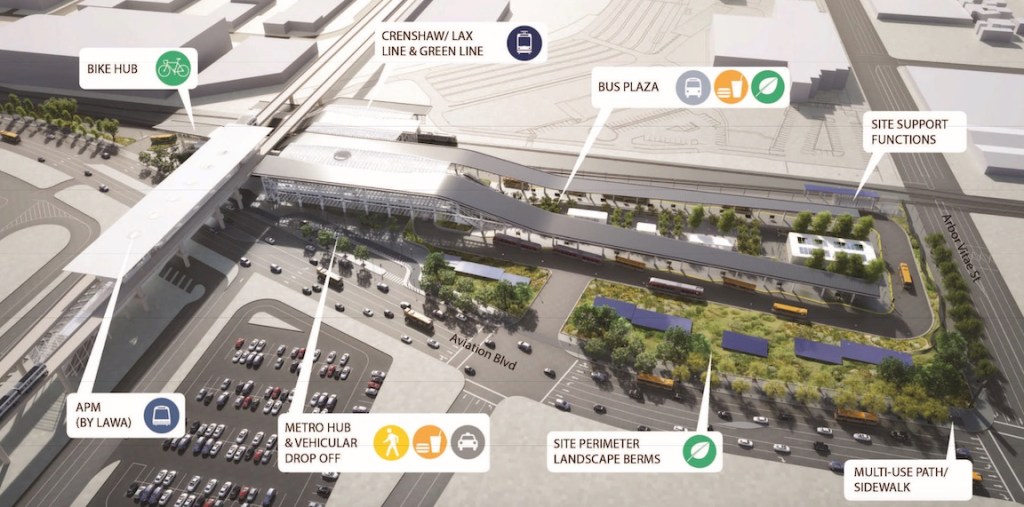
Passengers riding the two train lines that will reach the airport will disembark at the large, $898.6 million AMC station and ride short Automated People Mover trains to their terminals when that part of the massive LAX reconfiguration project is completed in 2023.
The station also will offer other transportation options, including a bike hub, bus plaza and private vehicle drop-off area. Groundbreaking for the AMC was held in June 2021. The new station, scheduled to open in 2024, will be second in size only to Union Station in the Metro system.
Planners envision it as the key gateway from the airport to the Los Angeles area. The Aviation/96th St. facility will have not only a variety of transportation choices, but also passenger amenities such as a customer service center, pedestrian plaza and retail spaces for shops and restaurants.
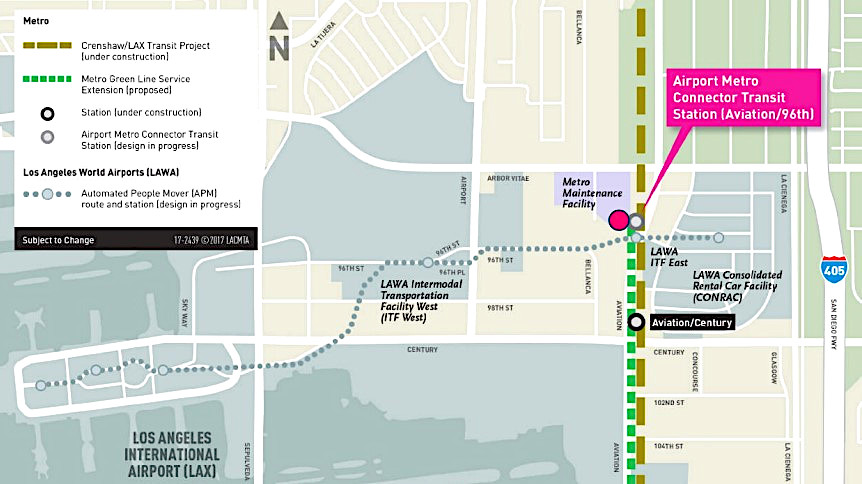
Even long-neglected South Bay residents will be able to avail themselves more fully of this new Metro link once an extension of the Green Line into Torrance is completed in 2028.
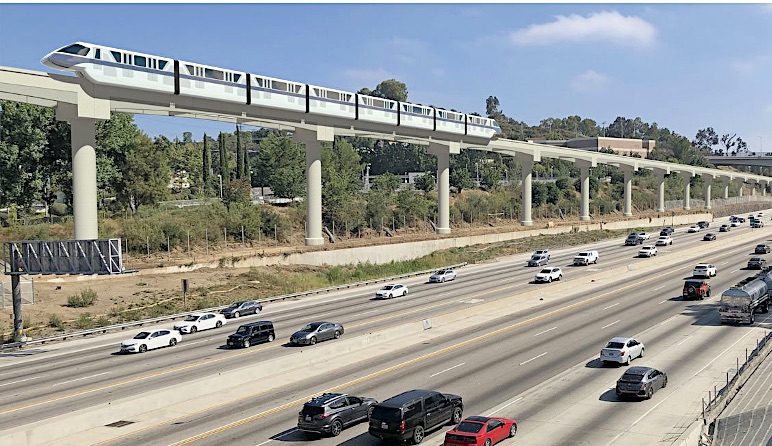
As for the San Fernando Valley-LAX link, it turns out that everything old is new again. Proposals for a rail line through the Sepulveda Pass that could link to the airport are being debated currently, with options including an underground train, a monorail, or some combination of the two. But the project, if it ever materializes, is still in the pre-development stage, and a long way from becoming reality.
Sources:
Airport Metro Connector Station: 60% Design Presentation, Los Angeles County Metropolitan Transportation Authority (Metro), June 2021.
Daily Breeze archives.
Los Angeles Times archives.
Metro website.
“SkyRail Express, Metro to Explore Development of Sepulveda Pass Monorail,” by Mark Madler, San Fernando Valley Business Journal, July 1, 2021.
StreetsBlog LA website.
“Who is the Driving Force for a Monorail Through the Sepulveda Pass?”, by Matthew Hetz, City Watch blog, May 6, 2021.

