The Stadium Theater in Torrance

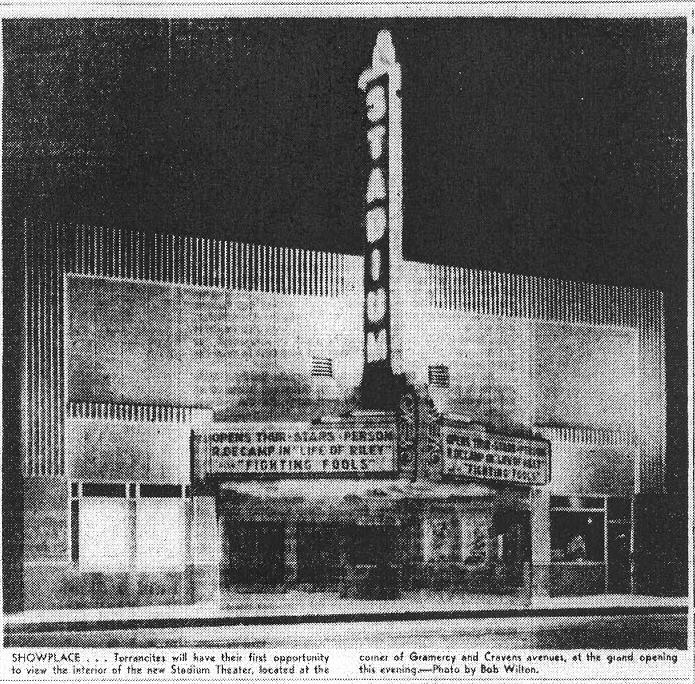
The Stadium Theater in downtown Torrance right before its June 2, 1949 grand opening. Photo courtesy of Torrance Herald via the Torrance Public Library's Historical Newspaper Archives site.
The Stadium Theater in downtown Torrance right before its June 2, 1949 grand opening. Photo courtesy of Torrance Herald via the Torrance Public Library’s Historical Newspaper Archives site.

In 2009, I wrote a blog post about South Bay movie theaters of the past in which I spent a paragraph describing the Stadium Theater in Torrance. A second look convinced me that the theater’s history is worth retelling in a little more detail.
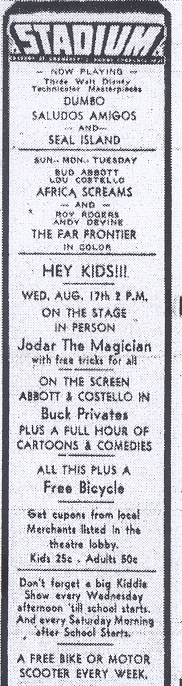
An ad for a typical lineup at the Stadium from the Aug. 11, 1949 Torrance Herald. Credit: Torrance Public Library, Historical Newspaper Archives.

The Stadium is often confused with the Torrance Theater, which was built in the 1920s in downtown Torrance on Sartori Avenue near Marcelina. The Torrance Theater closed in the 1950s and was repurposed into a California Bank branch in 1955. A Wells Fargo bank branch currently occupies the site.

The Stadium was part of a small chain owned by Albert Mellinkoff and Harry Milstein, whose company, M & M Enterprises, also owned the Torrance Theater, as well as the Grand, Park and Gardena theaters. Construction on the theater began at the site on the southeast corner of Cravens and Gramercy avenues in May 1948.

The theater took its name for the way its seats rose up as one moved toward the rear, as in a stadium. Its seating capacity was 900 on the day that it opened, Thursday, June 2, 1949.

The opening night was pretty glitzy stuff for Torrance, and attracted 1200 guests. The city’s hometown movie star, Rosemary DeCamp, appeared live on stage, promoting the night’s screening of the film “The Life of Riley,” in which she co-starred with William Bendix. (DeCamp lived in the Hollywood Riviera area of Torrance with her husband, noted South Bay Judge John Shidler.)

In addition, two stars of the Bowery Boys film series, Huntz Hall and Gabriel Dell, appeared to promote their latest film, “Fighting Fools” (also on that night’s program), along with actor Frankie Darro, who also was in the film. Also appearing were Duncan Renaldo, aka “The Cisco Kid,” and ventriloquist Max Terhune and his dummy Elmer.

The Stadium continued as a popular downtown movie venue until the late 1960s, when it fell upon hard times and changed its fare into adult films, eventually becoming an outlet for the Pussycat Theater chain.

The Pussycat always had an uneasy relationship with the city of Torrance, which never was happy to have it operating in the city. Neither were Christian religious groups, who held regular Friday night protests against the immorality of the theater’s fare in the early 1990s.
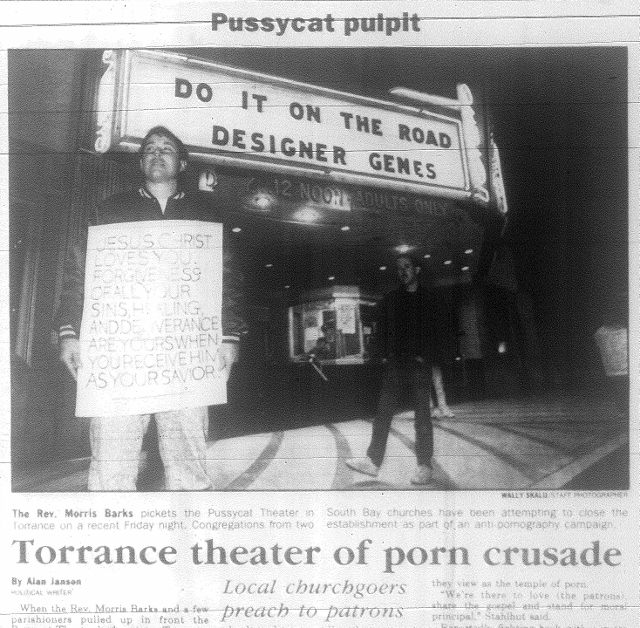
The Rev. Morris Barks holds a religious sign outside the Pussycat Theater in Torrance in early 1991. Daily Breeze photo by Wally Skalij.

Among those carrying signs and singing Christian songs were members of The Calvary Chapel of South Bay in Carson, led by the Rev. Roger Stahlhut, and the Vineyard at South Bay, led by the Rev. Morris Barks.

The theater’s then-manager Frank Martinez claimed the theater was a regular target of vandalism and excessive enforcement of parking violations and frequent inspections by fire officials. Protesters claimed Martinez sprayed water on them; Martinez claimed he always washed the theater’s marquee on Friday nights.

Finally, the standoff came to an end when it was announced on Nov. 22, 1991, that developers Gascon Mar Ltd. would pay the owners of the theater $50,000 to renovate the aging facility in return for shutting the Pussycat operation down.

The move pleased Torrance’s then-mayor, the late Katy Geissert, who said of the Pussycat’s departure: “I’m delighted to see it go. It has never been an appropriate use.”

Gascon Mar made elaborate plans to renovate the theater, rename it the Torrance Metro and start showing second-run films.

Unfortunately, the costs of renovating the now-rundown interior of the theater proved to be a barrier, and Gascon Mar’s proposal never came to fruition.

The Stadium sat vacant for years while the debate about how best to utilize the property dragged on. The Torrance Community Theater group expressed interest in moving its productions there in the mid-1990s, but found that the building’s owners, the Starplex Group of Los Angeles, wanted $1 million for the property, well beyond the theater group’s means. Eventually the price was lowered to $600,000, but negotiations between the theater group, Starplex and the city fell apart amid much frustration on all sides.
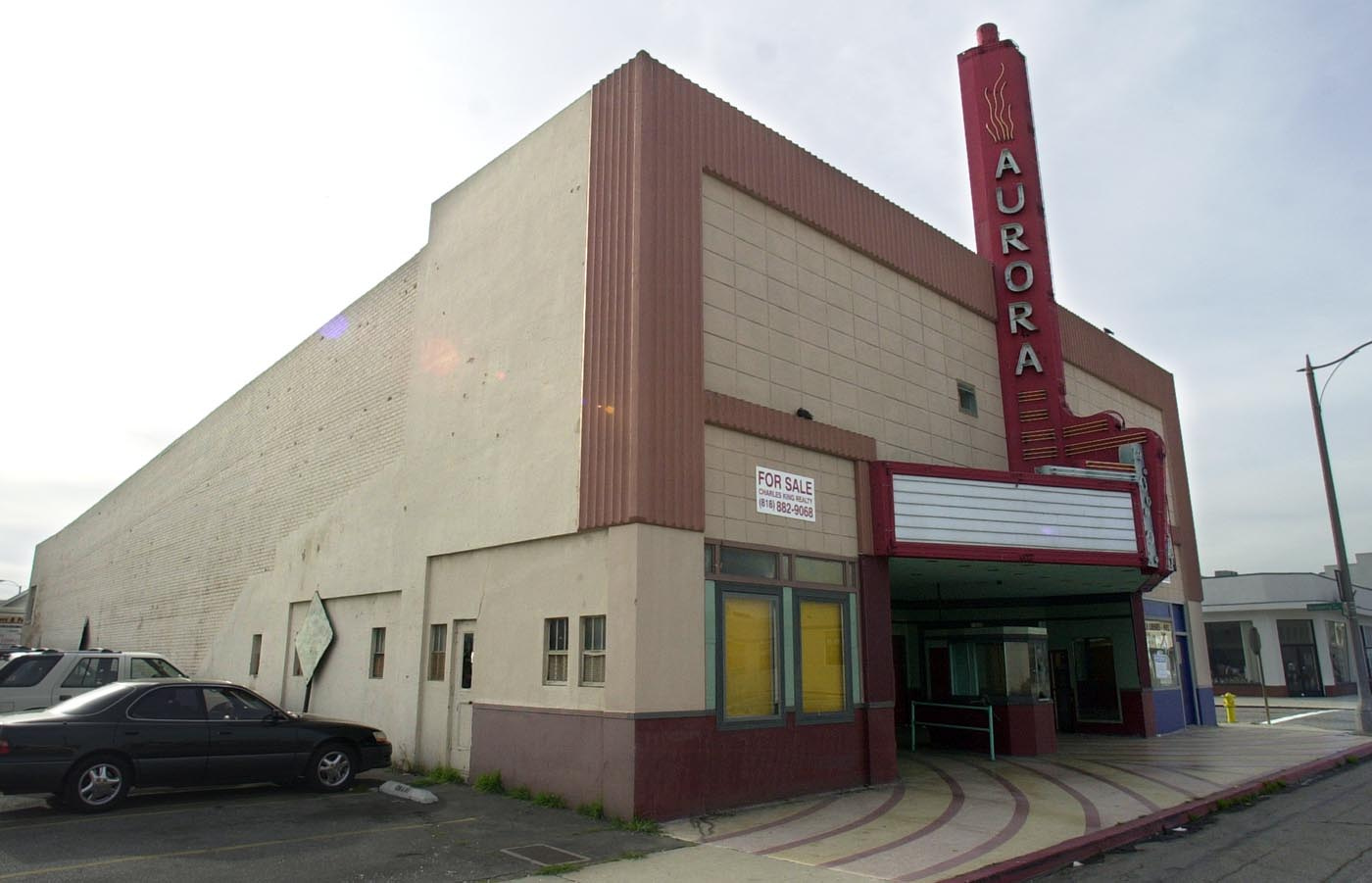
The former Stadium Theater on Cravens and Gramercy avenues  in Torrance, redone as the "Aurora Theater" for "If These Walls Could Talk 2." Daily Breeze photo by Bruce Hazelton, Jan. 25, 2002.
The former Stadium Theater on Cravens and Gramercy avenues in Torrance, redone as the “Aurora Theater” for the HBO film “If These Walls Could Talk 2.” Daily Breeze photo by Bruce Hazelton, Jan. 25, 2002.

The abandoned site was used occasionally for movie shoots. Director Tim Burton shot scenes for his 1994 film “Ed Wood” there. The exterior of the theater was repainted and a new sign reading “Aurora Theater” added for filming of the 2000 HBO film, “If These Walls Could Talk 2.” The makeover was left intact after filming was completed, confusing the theater’s identity further.

When plans by Hermosa Beach firm Michael Mulligan Development to build condos on the site began to gain traction, a movement arose to save the Stadium for its historic value. But the campaign was too little, too late, failing to stave off the development, which was approved by the city on Dec. 18, 2001.

The wrecking ball began to fall in May 2002, and soon the Stadium Theater was no more.
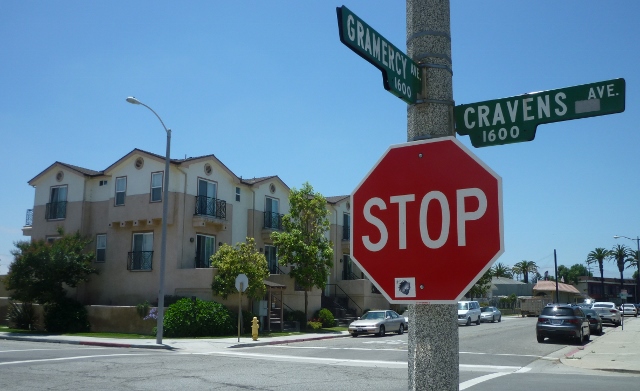
Condominiums ultimately replaced the Stadium Theater in 2003. June 2013 Daily Breeze photo.

Sources:

Daily Breeze files.

Torrance Herald files.
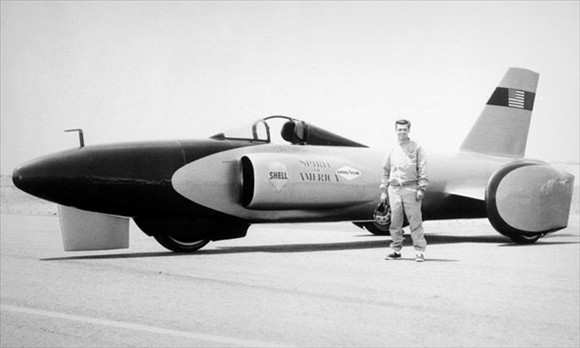
Craig Breedlove and the Spirit of America

Driver Craig Breedlove stands in front of the Spriit of America race car in 1963. Photo credit: www.motorntv.com.
Driver Craig Breedlove stands in front of the Spirit of America race car in 1963. Photo credit: http://www.motorntv.com.

Craig Breedlove set land speed records during the 1960s in his “Spirit of America” racer, becoming the first man to break the 400, 500 and 600 mph barriers, living and working in the South Bay during that whole golden era.

Breedlove was born in West Los Angeles on March 23, 1937. He went to Venice High School, where he excelled in drafting and machine shop classes. After high school, he worked for two years for a firm that specialized in building race cars, then another two years for an aircraft manufacturer.

Continue reading “Craig Breedlove and the Spirit of America”

Tornadoes in Hawthorne

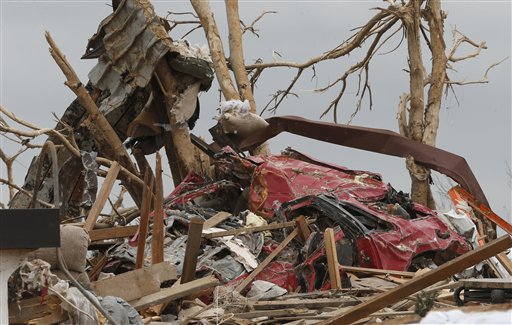
Two tree trucks have become the resting place for twisted pieces of metal, a car and other tornado debris in Moore, Okla., following the May 20, 2013 tornado. Photo by The Associated Press.

The May 20, 2013 tornado that stuck Moore, Oklahoma tornado has brought tornadoes back to the forefront of public consciousness. The tornado was classified as an EF5, the highest level given on the Enhanced Fujita scale that measures tornado intensity. Its winds were clocked at 210 mph at one point.

Though EF5 tornadoes are unusual, it seems like every year we hear about these storms in the Midwest and the South, striking in “Tornado Alleys,” areas where conditions are most conducive for them to form.

Tornadoes on land are rare in California, but they have landed from time to time. Water spouts over the ocean during violent storms are more common.

But if you’re still looking for Southern California’s “Tornado Alley,” Hawthorne deserves some consideration, with violent storms that have been classified as tornadoes occurring on at least three occasions: March 15, 1930, Nov. 7, 1966, and Oct. 1, 1983.Continue reading “Tornadoes in Hawthorne”

The Concorde comes to LAX, but not for long

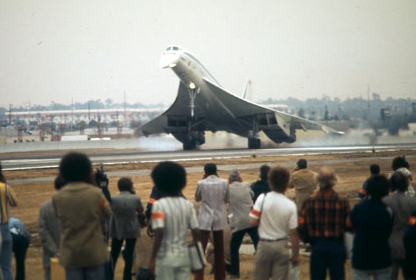
The Concorde 2 supersonic transport plane lands for the first time at LAX on Oct. 23, 1974. Daily Breeze file photo by Staff Photographer Jack Wyman.

On an overcast day in 1974, the Concorde 2 supersonic transport (SST) airplane flew into LAX, the first time the SST had visited Southern California.

Traveling at a top speed nearing 1,400 mph, the plane left Anchorage, Alaska at 1:16 p.m. on Oct. 23, 1974, slightly later than planned. Thousands of spectators lining viewing areas at LAX and watching from nearby buildings and hillsides had to wait a few extra minutes for the 3:49 p.m. landing.

The event was part of a promotional United States tour on behalf of the Concorde, the product of a collaboration begun in the 1950s between the French and British companies Aerospatiale and the British Aircraft Corporation to produce a supersonic jetliner for longer routes.

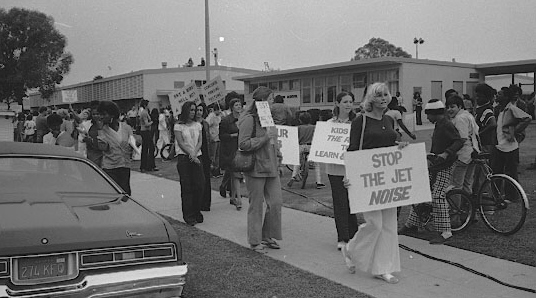
Protesters from the group "The Enraged Citizens" at Felton Elementary School in Lennox carry picket signs decrying the arrival of the Concorde 2 at LAX, about a mile away, on Oct. 23, 1974. Daily Breeze file photo.
Protesters from the group “The Enraged Citizens” at Felton Elementary School in Lennox carry picket signs decrying the arrival of the Concorde 2 at LAX, about a mile away, on Oct. 23, 1974. Daily Breeze file photo.

Not everyone was happy to see the SST arrive in town. A mile away at Felton Elementary School in Lennox, a dozen protesters from the group “The Enraged Citizens” staged a protest march with picket signs protesting the plane’s environmental unfriendliness.

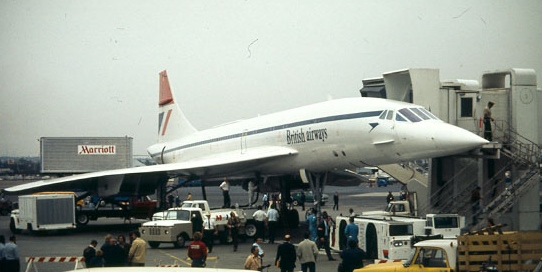
After its landing, the aircraft was put on public display the next day at the B-4 hangar at LAX near Sepulveda Boulevard and Imperial Highway. The five-hour display created massive traffic jams at the airport. Concorde officials estimated that 100,000 people from throughout Southern California viewed the plane.

The Concorde 2 on the ground at LAX, Oct. 23, 1974. Daily Breeze photo by Staff Photographer Jack Wyman.

The plane made a “somewhat noisy farewell” the next day, according to Daily Breeze reporter Thom Mead, when it left on Friday, Oct. 25, at 9 a.m. and headed to Acapulco, Mexico, the next destination on the promotional tour.

During its two-day LAX visit, airport officials and the Environmental Protection Agency were on hand to conduct noise samplings and collect other data on the plane.

The supersonic jet would not become an operational part of Air France and British Airways flights until Jan. 21, 1976, when British Airways began using it for London-Bahrain and Paris-Rio de Janeiro routes. At first, the plane was not allowed to land in the U.S. because of noise and air pollution concerns. Dulles International Airport in Washington, D.C., was granted permission by the U.S. Department of Transportation for  supersonic flights in May 1976. After first banning the plane, Kennedy International Airport in New York City also began allowing it in November 1977.

But, despite years of battling, the Concorde never would be approved to operate out of LAX. Its noise levels, especially on takeoff, were deemed too loud to meet the airport’s noise standards and the airport beat back several attempts to allow SST aircraft to use its facilities.

It did land at Ontario International Airport on May 1 (Air France) and Sept. 21, 1986 (British Airways), but future landings there were banned by the Board of Commissioners of the Los Angeles Department of Airports, the group governing operations of the county’s airports, again because its engines were considered too loud.

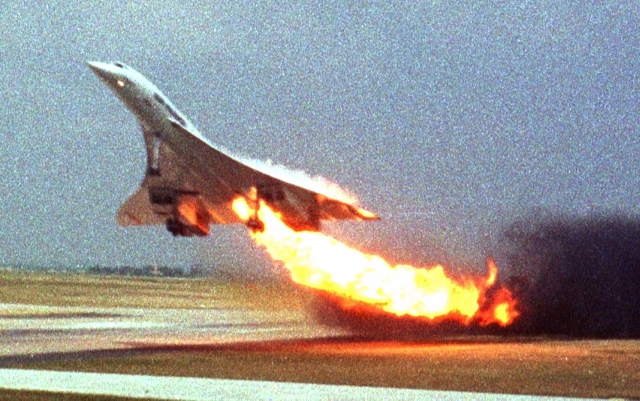
The Air France Concorde bursts into flames shortly after takeoff from Charles de Gaulle Airport in Paris on Oct. 25, 2000. 109 people aboard and four on the ground were killed. Associated Press photo.
The Air France Concorde bursts into flames shortly after takeoff from Charles de Gaulle Airport in Paris on July 25, 2000. All 109 people aboard and four on the ground were killed. Associated Press photo.
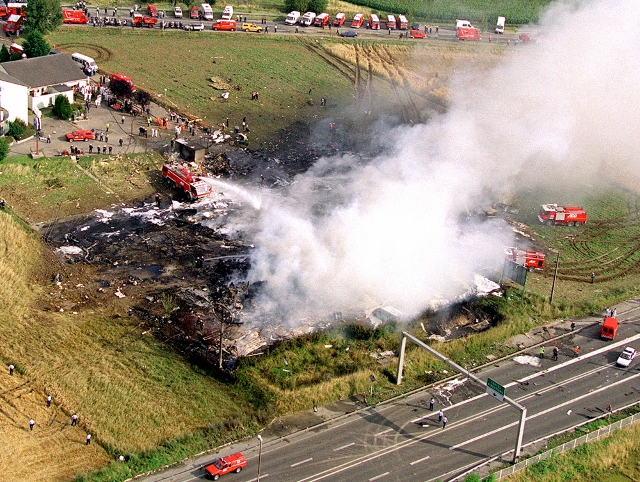
This July 25, 2000, file photo from The Associated Press  shows an aerial view of the scene where an Air France Concorde plane crashed shortly after takeoff onto a hotel in Gonesse outside Paris, killing all 109 on board and 4 people on the ground.
This July 25, 2000, file photo from The Associated Press shows an aerial view of the scene where an Air France Concorde plane crashed shortly after takeoff onto a hotel in Gonesse outside Paris, killing all 109 on board and 4 people on the ground.

The Concorde went on to operate internationally for 27 years, with only one accident marring its record. On July 25, 2000, Air France Flight 4590 crashed into a hotel shortly after taking off from Charles de Gaulle Airport outside of Paris, killing 113 people. All Concordes were grounded for a year following the crash, but it turned out that external factors – debris from a Continental Airlines DC-10 that had taken off moments earlier – actually caused the disaster.

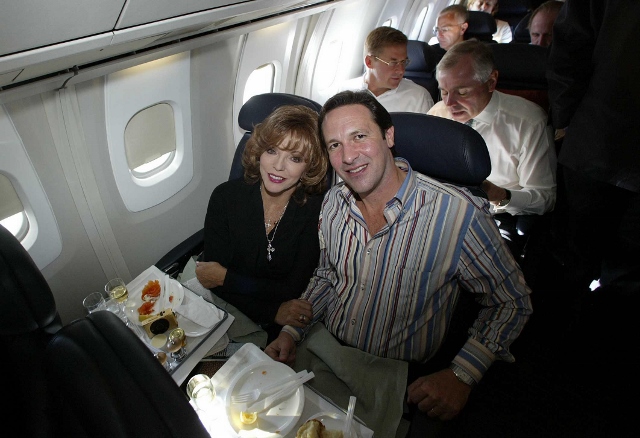
British actress Joan Collins and husband Percey Gibson on the last commercial flight of Concorde from JFK to Heathrow, Friday, Oct. 24, 2003, on the day that the world's first supersonic airliner retired from commercial service. Associated Press photo.
British actress Joan Collins and husband Percey Gibson on the last commercial flight of Concorde from JFK to Heathrow, Friday, Oct. 24, 2003, on the day that the world’s first supersonic airliner retired from commercial service. Associated Press photo.

Even though the courts ruled against Continental in the case, the Concorde’s airborne days were numbered. Air France stopped its Concorde flights in May 2003, and the final British Airways Concorde flight landed at Heathrow Airport near London on Friday, Oct. 24, 2003. Celebrities on board included David Frost, Christie Brinkley and Joan Collins.

“There was a sense that Concorde was the last decent thing we ever did in this country,” said British television commentator Jeremy Clarkson, who also was on the flight. “And now we don’t even have it anymore.”

Sources:

Daily Breeze files.

Los Angeles Times files.

“What caused the 2000 Concorde crash?” by Stephen Kurczy, Christian Science Monitor Global News Blog, Sept. 2, 2010: http://www.csmonitor.com/World/Global-News/2010/0202/What-caused-the-2000-Concorde-crash.


Gardena Records launches Paul Revere and the Raiders

A row of industrial buildings in a nondescript stretch of 154th street in Gardena masks a little-known byway in pop music history, even though the building that once housed John Guss’s Gardena Records is gone now.

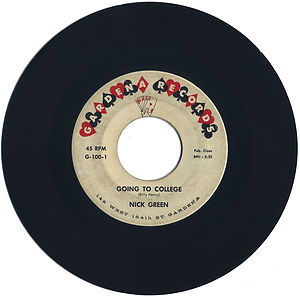
In the late 1950s, Guss owned a record-pressing plant that was located at 145 West 154th Street. (The address is identified as Gardena, though technically it’s in Los Angeles County territory just east of the city.) In addition to contract work, he occasionally would press up gardenafirst45and release records by artists that he liked or that he thought showed commercial potential. He called his label Gardena Records, and, in honor of the city’s legalized poker casinos, its design featured playing card imagery, as seen on the label’s first release, Gardena #100, from early 1960, right:

A few states away, in Boise, Idaho, Paul Revere Dick and Mark Lindsay had put together some demo tapes of their band, the Downbeats, named after the jazz magazine. The popular combo played mostly instrumentals, but had gathered a strong following with regular gigs in small towns stretching from Idaho to Oregon.

Continue reading “Gardena Records launches Paul Revere and the Raiders”

Was Gertrude Evelyn Landon’s murder related to the ‘Black Dahlia’ case?

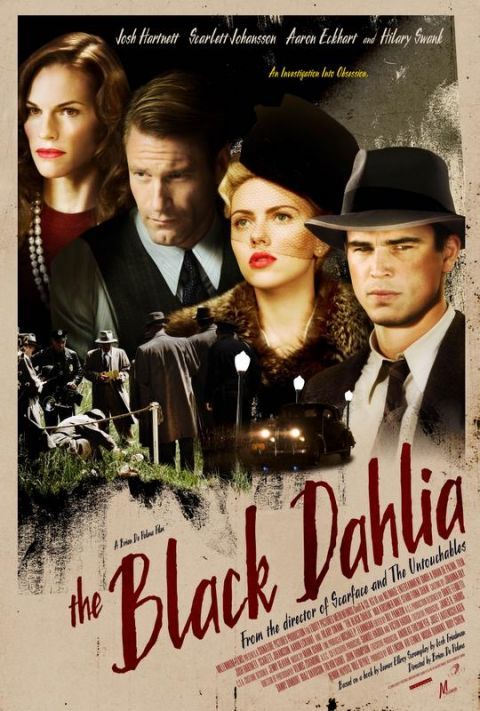
dahliaposterThe Black Dahlia murder case has baffled investigators and fascinated the public for almost 70 years.

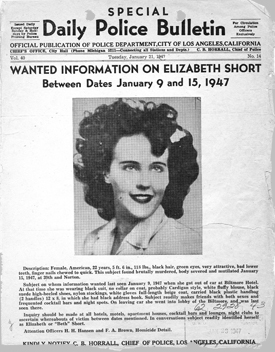
The brutal murder of aspiring actress Elizabeth Short, then 22, shocked postwar Los Angeles. Her mutilated and bisected body was found in a vacant lot at 39th and Norton streets in South Los Angeles on Jan. 15, 1947.

The case captivated the public’s imagination, fanned by sensational newspaper coverage at the time. Its fame continues to this day.

Poster from the 2003 film.
Poster from the 2006 film.

In 2006, director Brian De Palma’s film version of James Ellroy’s 1987 novel “Black Dahlia,” based on the Short case, came out to mostly negative reviews. It was just the latest retelling: the 1975 made-for-television film “Who Killed the Black Dahlia?” also chronicled the case (and received much better reviews).

Several months before Short’s killing, a less-publicized murder occurred that some have ascribed to the Black Dahlia killer. This time, the body was dumped in the South Bay.

On Sunday, July 15, 1946, 33-year-old Wilmington shipyard worker Theodore P. Walther was looking through junk at a dump site that was part of the giant gravel pit that recently had become the Chandler Palos Verdes Sand and Gravel Co., which I wrote about in last week’s blog post (link).

Continue reading “Was Gertrude Evelyn Landon’s murder related to the ‘Black Dahlia’ case?”

The Chandler Palos Verdes Sand and Gravel Company

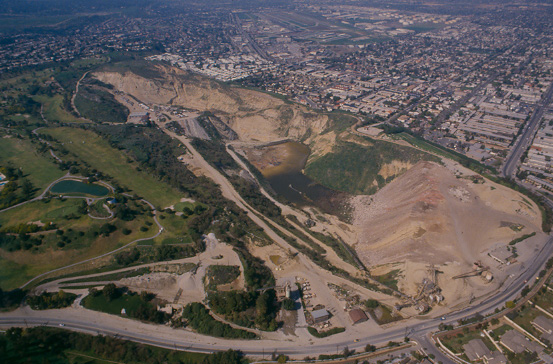
This Feburary 1985 Daily Breeze file photo shows the Chandler quarry and gravel pit looking northwest from Narbonne Avenue at bottom. The Rolling Hills Country Club can be seen at left.


“I never thought it would amount to this much. No one else did, either.” So Linden Harold Chandler told Daily Breeze reporter Diana Chapman in a 1985 interview.

“It” was Chandler’s giant gravel pit and quarry operation in Rolling Hills Estates.

Continue reading “The Chandler Palos Verdes Sand and Gravel Company”

Carrell Speedway in Gardena


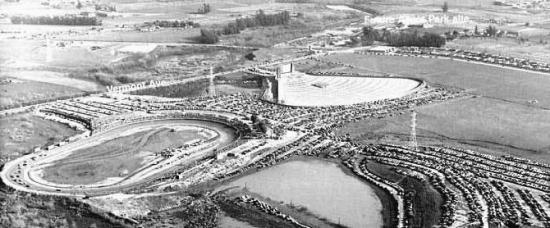
Carrell Speedway in Gardena, left, in undated aerial photo. Vermont Avenue runs diagonally through the center of the photo. The Vermont Drive-In, right center, opened in 1947, could make parking for either venue a challenge.

Carrell Speedway in Gardena was part of a whole circuit of local automobile raceways scattered around in the Los Angeles area in the first half of the 20th century.

Continue reading “Carrell Speedway in Gardena”

Wade Peebles and the 1963 Torrance corruption scandal

Wade Peebles got the appointment to become city manager of Torrance on Wednesday, July 5, 1961, on a 4-3 vote from the city council.

He had been the city’s public works director since April 1959, and before that had been the city engineer and public works director for the city of Inglewood.

A USC graduate and masters degree holder in civil engineering, the Torrance resident succeeded George Stevens in the post.

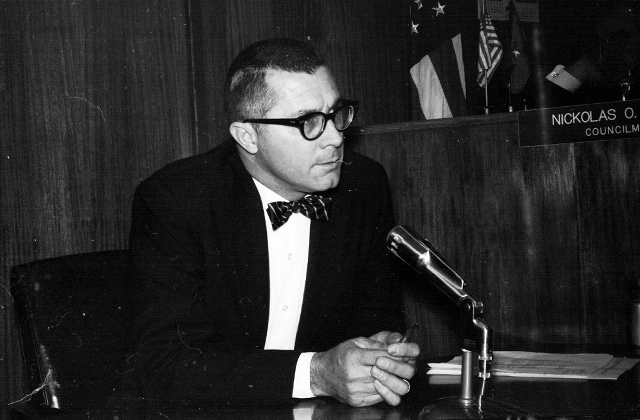
Wade Peebles speaks at a special meeting of the Torrance City Council on Jan. 8, 1964. (Daily Breeze photo by Jay Berman.)

“I don’t expect to fill Mr. Stevens’ shoes … he will be a tough man to replace,” he said, adding that he planned no sudden changes for the city.

Little more than four years later, he was dead at age 44, having shot himself in the head with a rifle.

Continue reading “Wade Peebles and the 1963 Torrance corruption scandal”

Fred Roessler, father of Palos Verdes Estates

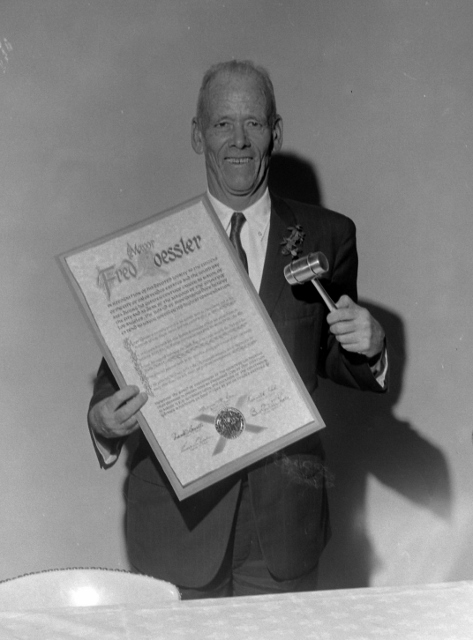
H.F.B. “Fred” Roessler poses with a scroll and silver gavel he received at a community dinner held in his honor in June 1964, shortly before his death. Roessler was mayor of Palos Verdes Estates for 25 years. Daily Breeze photo.

Most people familiar with the Palos Verdes Peninsula have run across the Roessler name at one time or another. Roessler Memorial Pool, the seaside pool built in 1930 as the Palos Verdes Swim Club, was for many years the most visible structure to bear the name.

Hans Frederick Bernard Roessler, or Fred, as he preferred to be known, served for 25 years, from 1940 until his death in 1965, as the mayor of Palos Verdes Estates. He was the city’s first mayor, taking office after leading the fight to incorporate that became successful in 1939. He was elected to the first city council, and its members voted him to be the city’s first mayor.

Fred Roessler was born on Oct. 2, 1893, in Perth Amboy, New Jersey, where he attended high school. He would later attend Cornell University and the Massachusetts Institute of Technology.

After serving in the U.S. Army in France during World War I, Roessler settled in Los Angeles, where he married Edna Lucille Hansen in 1921.

Continue reading “Fred Roessler, father of Palos Verdes Estates”

Is this your new site? Log in to activate admin features and dismiss this message
Log In