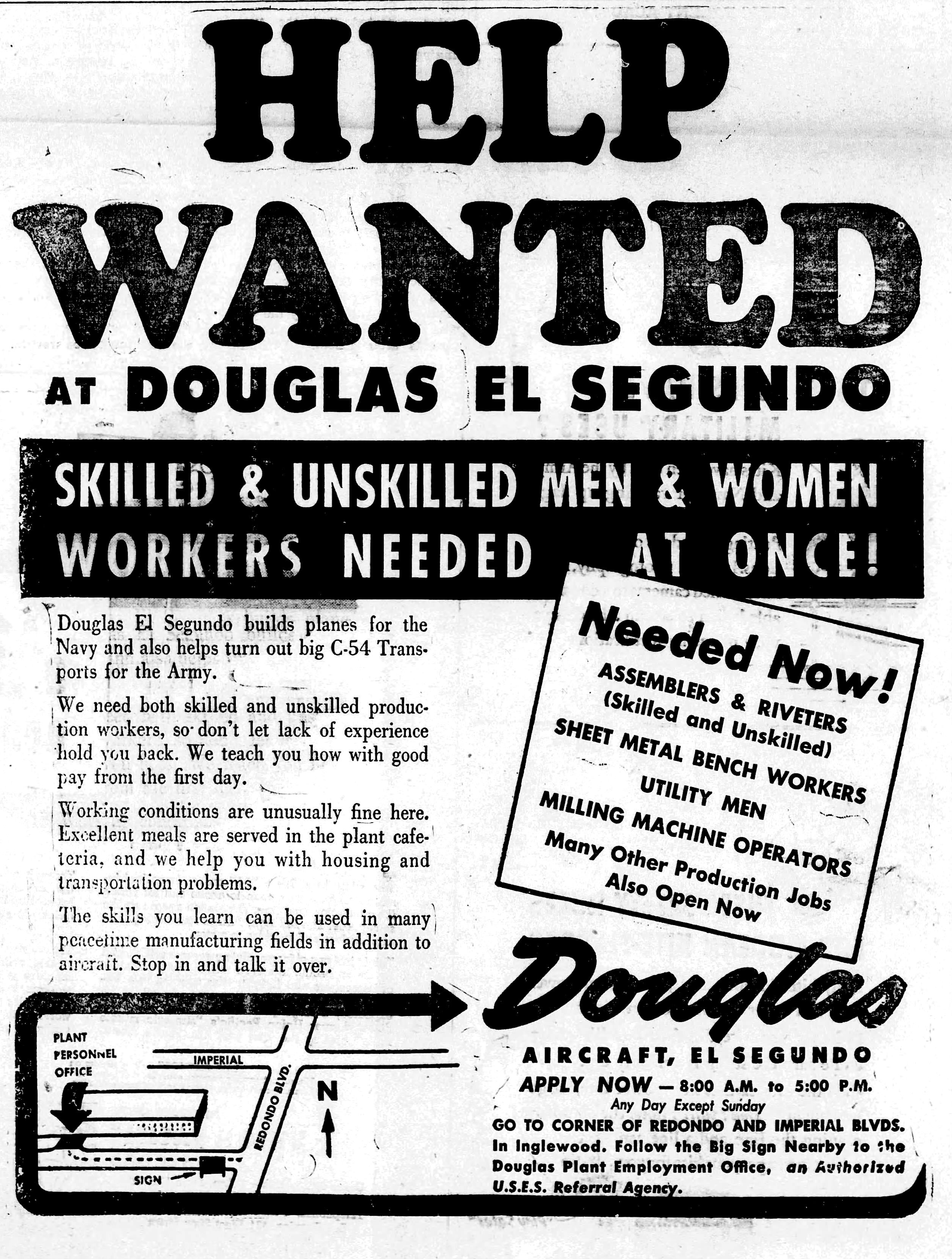
Aviation pioneer Donald W. Douglas is most often associated with Douglas Aircraft, the firm he created near Clover Field in Santa Monica in 1921. (Clover Field was later renamed Santa Monica Municipal Airport).
Born in Brooklyn, New York on April 6, 1892, Douglas was entranced with aviation from its earliest days. He dropped out of the U.S. Naval Academy in Annapolis in 1912 in order to pursue aeronautical engineering at the Massachusetts Institute of Technology (MIT).
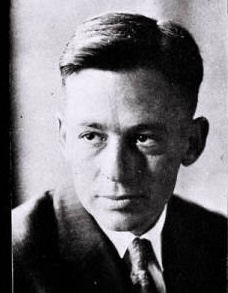
Just two years later, he became the first person at the school to earn a Bachelor of Science degree in Aeronautical Engineering. While still in his early 20s, he designed aircraft, including a U.S. Navy dirigible, for several different firms.
He formed his first company, the Davis-Douglas Company, in July 1920 with investor David Davis. Its mission was to develop the first manned aircraft to make a nonstop flight across the United States.
The Davis-Douglas airplane, the Cloudster, was brought down by engine troubles during its June 1921 attempt, leading to the dissolution of the company. Davis pulled out of the venture, and Douglas carried on under the Douglas Aircraft Co. name at Clover Field in Santa Monica. (John Macready and Oakley Kelley made the first successful U.S. transcontinental flight in May 1923.)
A few miles south, aviation activity had begun ramping up at Mines Field north of the newly incorporated city of El Segundo, especially after the airfield with its crude oiled dirt runways was selected as the official site of Los Angeles Municipal Airport in 1928.
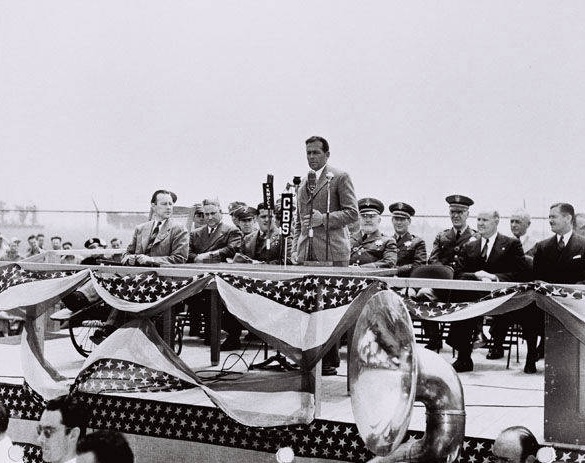
(Credit: Santa Monica Public Library Image Archives)
The small Moreland Aircraft Co. opened up on land south of Imperial Highway at the airfield’s southern border in 1928, and the company built small training planes there from 1928 to 1931. In 1932, Douglas Aircraft bought Moreland and renamed it the Northrop Division of Douglas Aircraft after Douglas brought in another future aviation legend, Jack Northrop, who was then working for him, to run it.
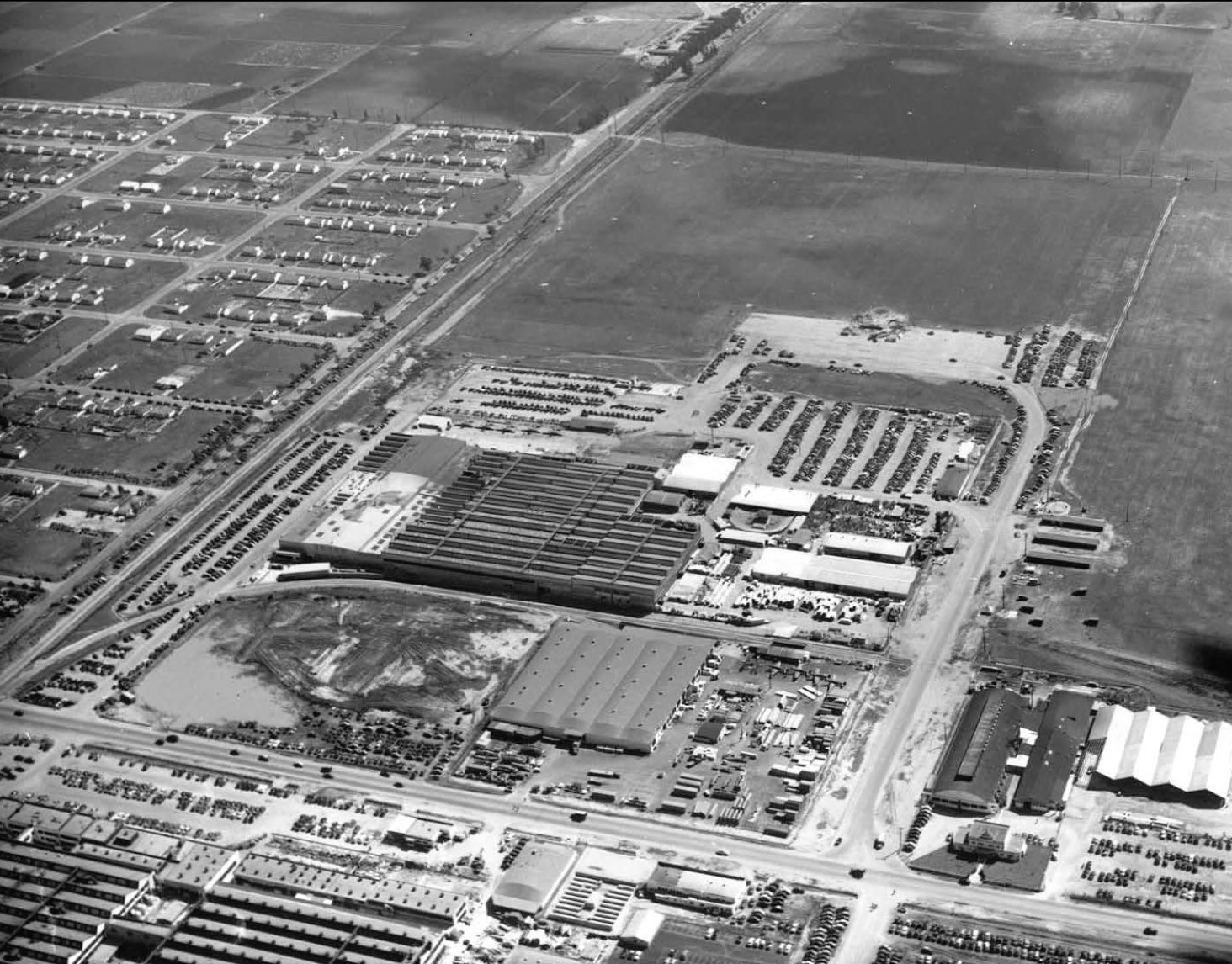
Northrop designed two successful monoplanes at the El Segundo plant, the Gamma and the Delta. He would leave to form his own company in nearby Hawthorne in 1937, confusingly also named the Northrop Co. The El Segundo plant was then renamed the El Segundo Division of Douglas Aircraft.
During the 1930s, the streets on the east and west sides of the El Segundo plant were renamed Aviation Blvd. and Douglas St., respectively.
Back in Santa Monica, the flagship Douglas plant had broken through with the production of the DC-3 commercial aircraft, introduced in 1935. It was a huge success both commercially and militarily as the repurposed C-47 during World War II. The company would continue to produce DC commercial jets for decades following the war.
The onset of the war sent the Douglas plants into overdrive. The company opened a third plant in Long Beach which initially specialized in C-47 transport production, and later became one of three plants turning out the workhorse B-17 bomber.
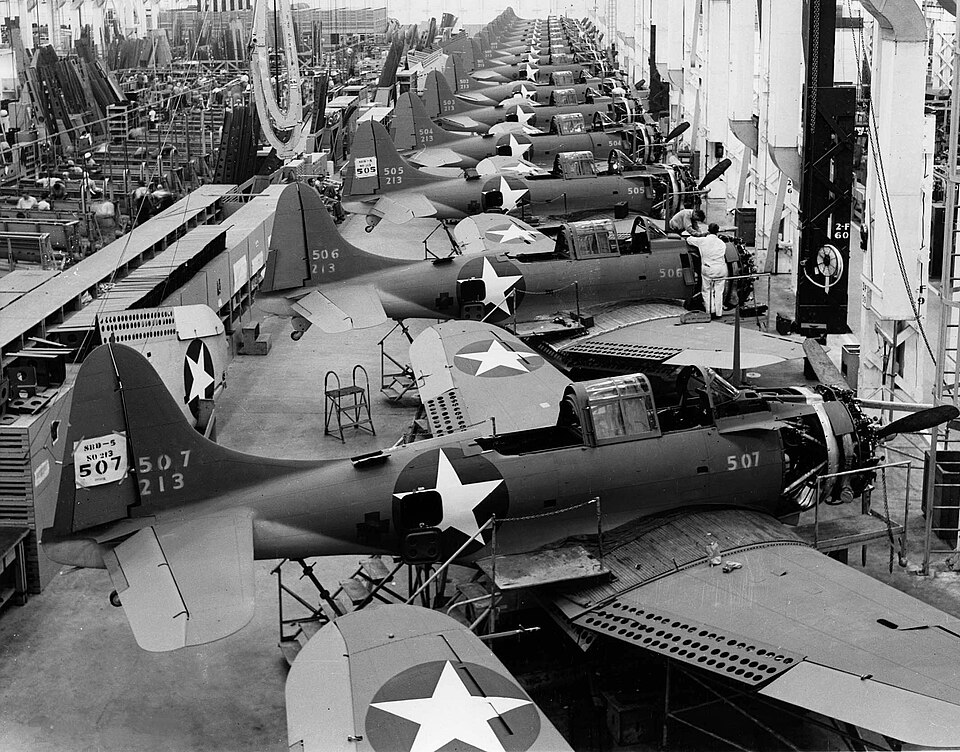
The El Segundo Douglas plant was retooled to produce fighter planes for the U.S. Navy. These were propeller-driven monoplanes capable of being launched from aircraft carrier decks. The most famous of these: the SBD Dauntless dive bomber.
The “SBD” stands for “Scout Bomber Douglas,” and the majority of them were produced at the Douglas El Segundo plant beginning in the mid-1930s. The Dauntless dive bomber, an extremely slow-flying plane by modern standards, is credited with greatly influencing the outcome of the war in the Pacific theater.
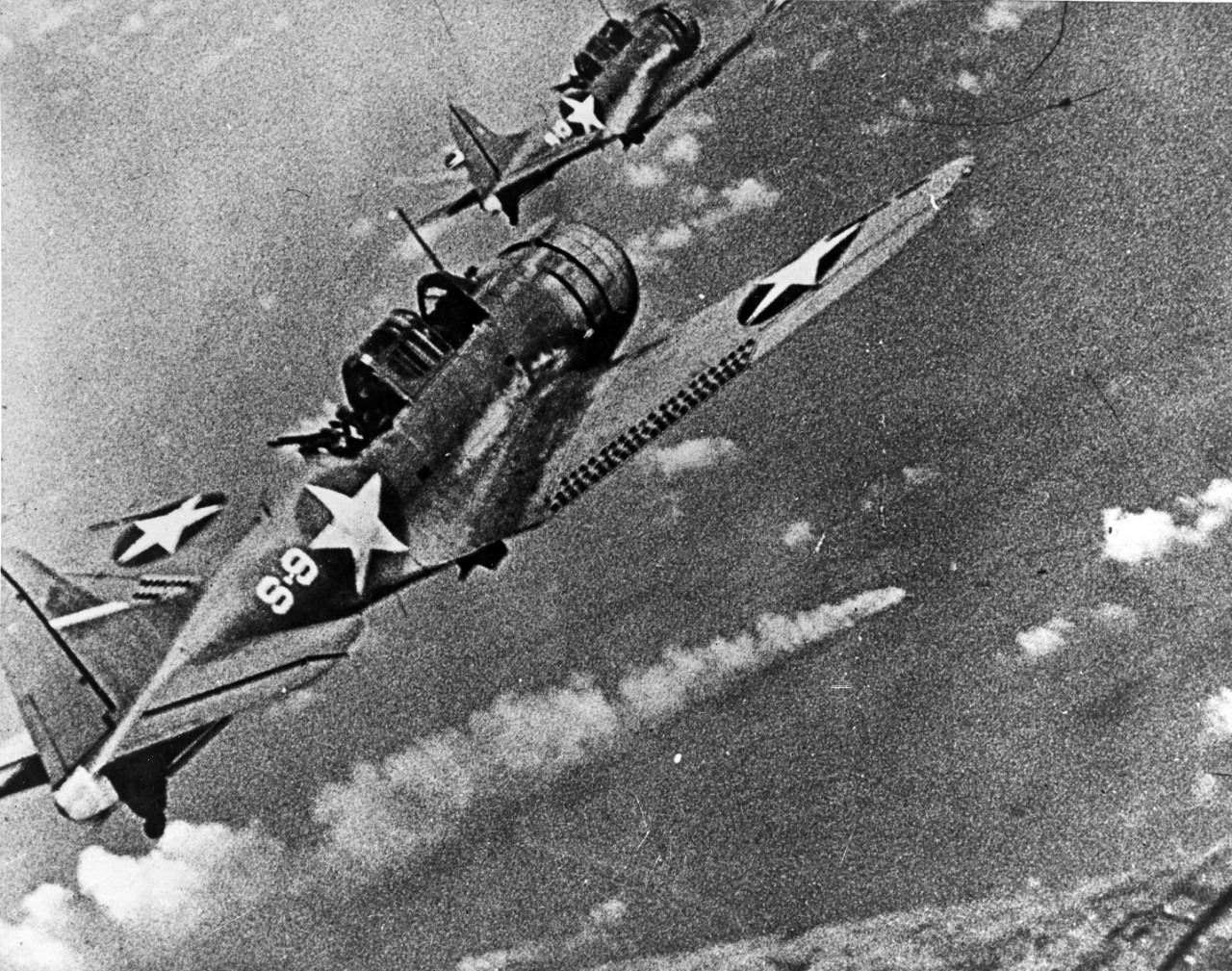
Four squadrons of Dauntless planes attacked the Japanese fleet at the Battle of Midway on June 6, 1942, sinking all four of the Japanese warships present, taking down three of them within six minutes. This naval victory essentially stopped the Japanese advance across the Pacific in its tracks, and gave the Allied forces their first major naval victory of the war.
Following World War II, Douglas Aircraft laid off approximately 100,000 of its wartime-peak 160,000 employees. But the business of aviation and aerospace research and production continued.
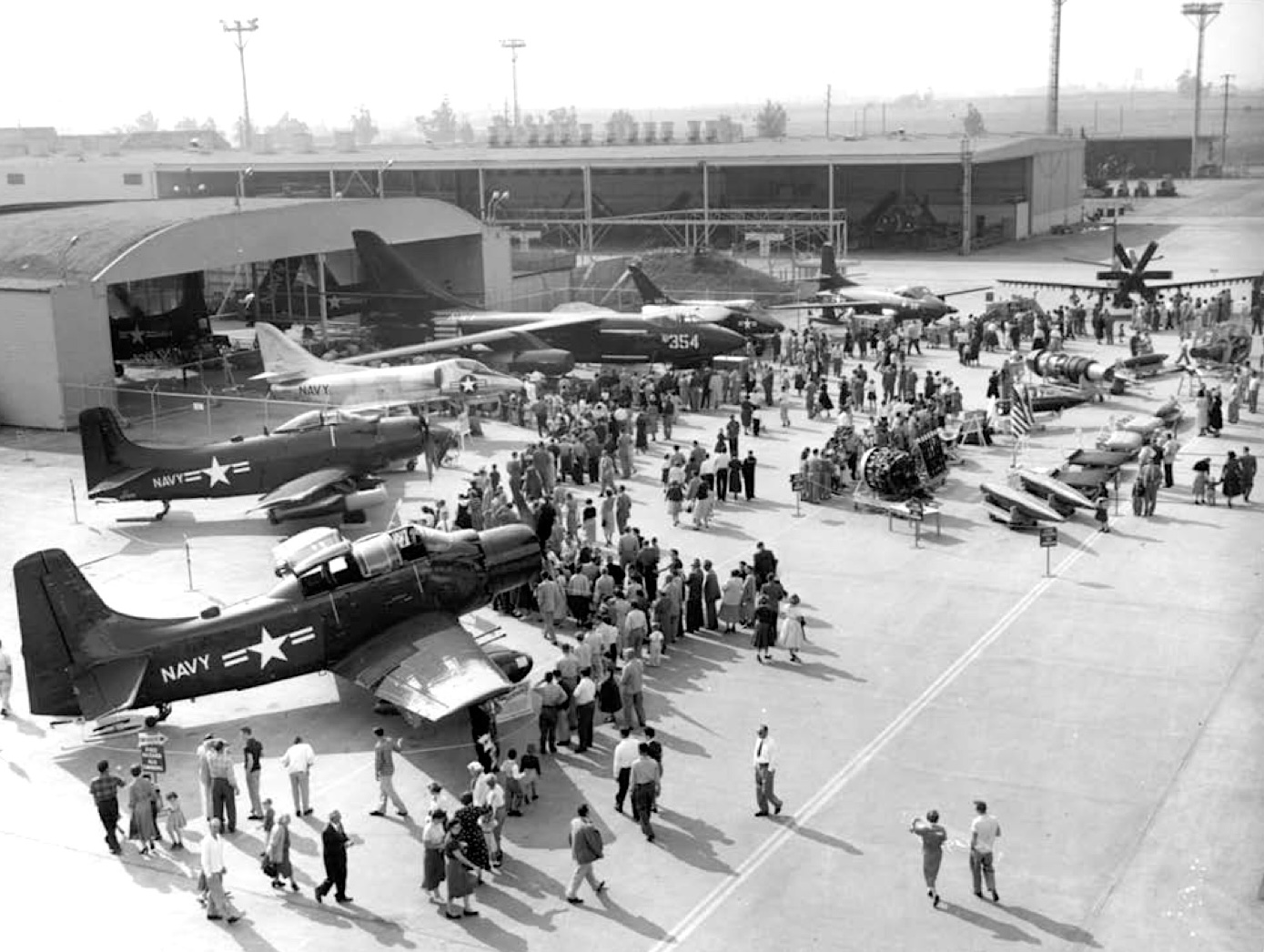
The company moved into jet aircraft, missile production and aerospace technology. Its A-6 Skyhawk fighter jet became a key weapon in the arsenal of the U.S. Navy and the U.S. Marine Corps during the 1950s and 1960s.
Commercial aircraft in the DC series resumed, with propeller-driven airliners giving way to jets, beginning with the introduction of the DC-8 in 1958 to compete with the Boeing 707 jetliner.
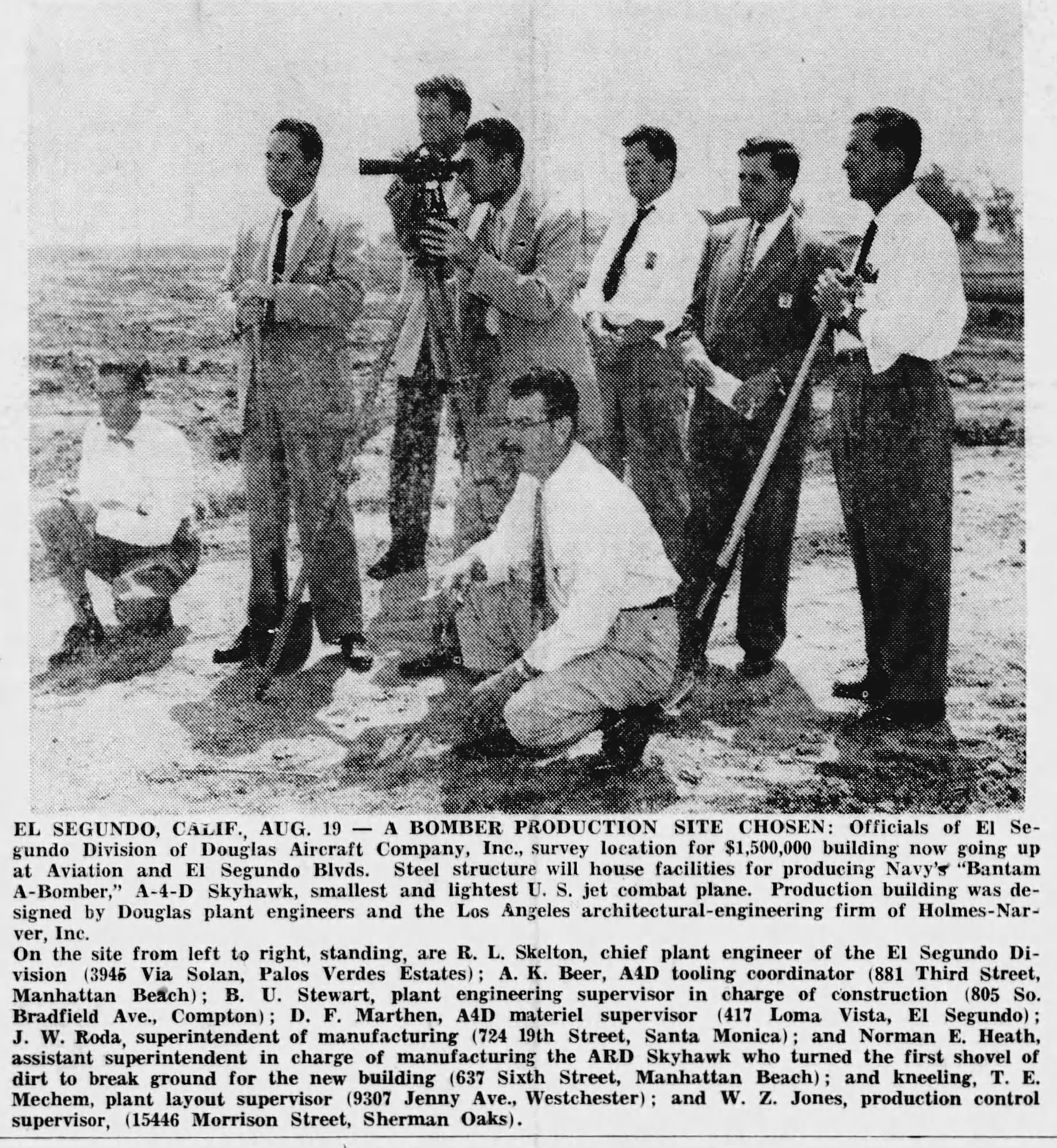
30 years of Douglas Aircraft production in El Segundo ended when the plant ceased its manufacturing operations in 1962. Its former site now contains a Northrop-Grumman plant on its north end, and the Los Angeles Air Force Base on its south end that fronts El Segundo Blvd.
In 1967, Douglas Aircraft merged with the McDonnell corporation to form McDonnell Douglas. Douglas Aircraft shuttered its Santa Monica plant in 1968. McDonnell Douglas merged with Boeing in 1997, retiring the final vestige of the Douglas name in the industry.
Donald Douglas died at the age of 88 on Feb. 1, 1981. The final former Douglas Aircraft plant in Long Beach closed in 2015.
Sources:
Daily Breeze archives.
“The Douglas Aircraft That Became Los Angeles Air Force Base,” by Robert Mulcahy, Los Angeles Air Force Base website, 2012.
El Segundo: Seventy-Five Years: A Pictorial History of El Segundo, California, by Eileen Curry Hunter, H2 Limited, 1991.
The Skyhawk Association website.
Wikipedia.