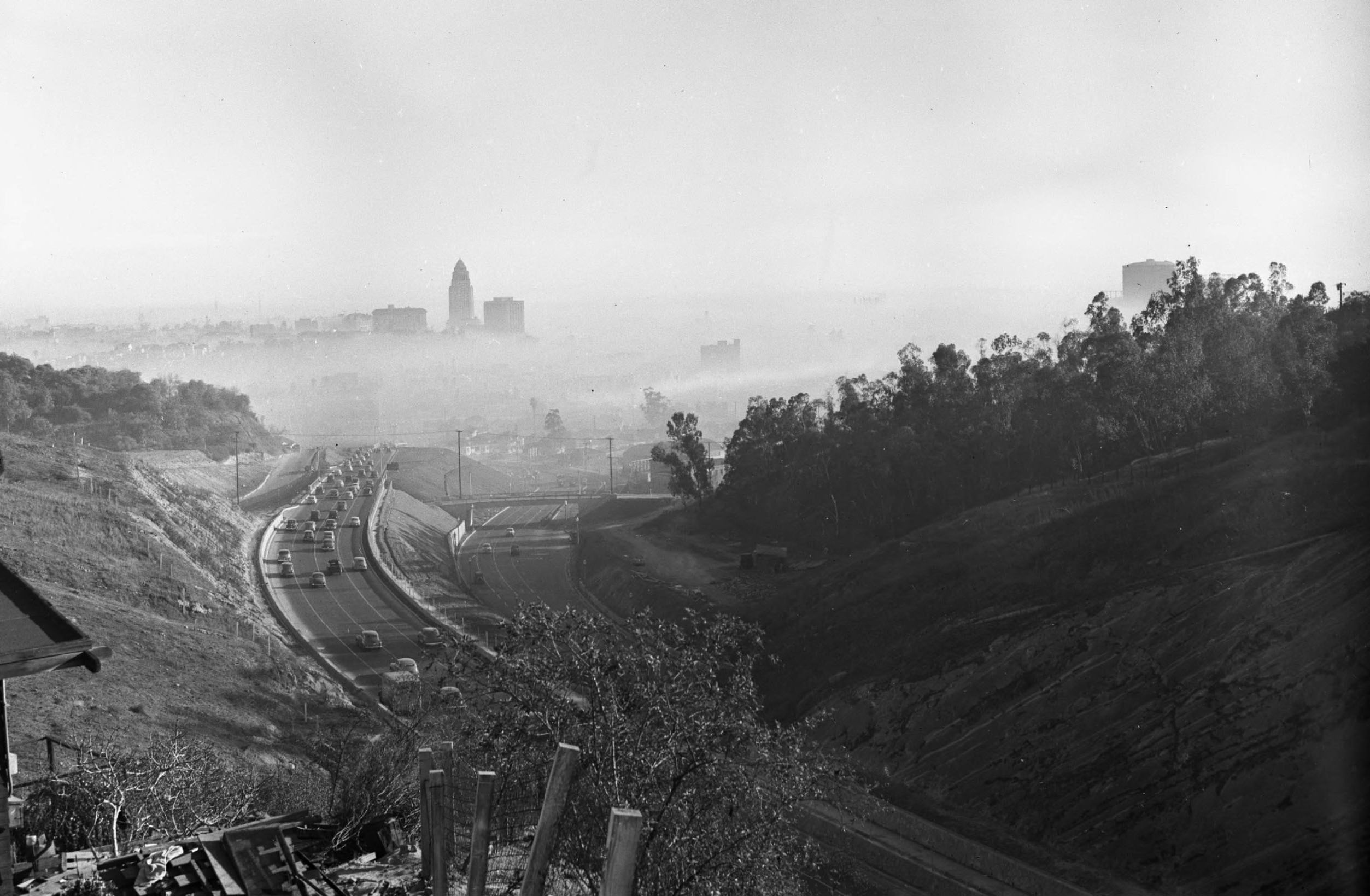
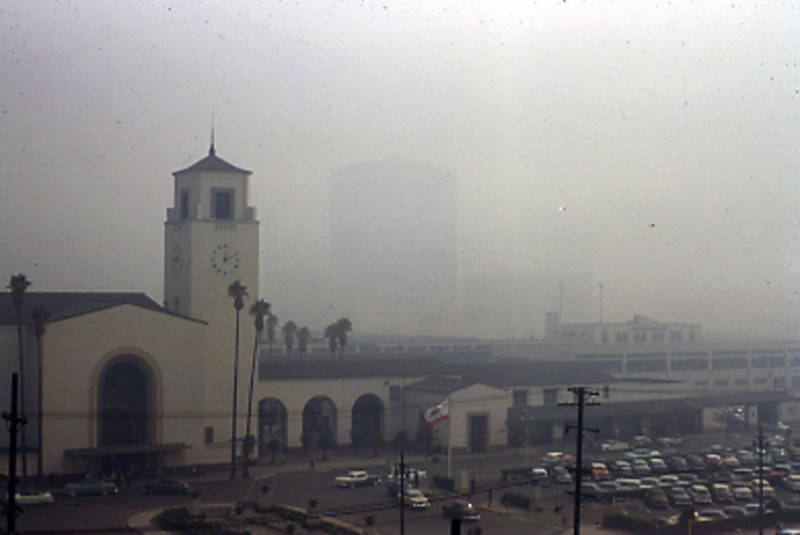
It’s fair to say that the descent of suffocating grey clouds into the Los Angeles basin on the blazing hot day of July 26, 1943, caused unhappy sensations in the ever-growing metropolis beyond the burning eyes and painful breathing.
Denizens of the downtown area didn’t know who to blame for the new plague. Was it some nefarious new chemical weaponry being unleashed by our wartime foes? The buildup of toxic fumes from industrial plants? Sulfur fumes belching from outlying oil refineries such as Chevron’s in El Segundo and General Petroleum (later known as the Mobil Refinery) in Torrance?
All of these and several other possibilities would be investigated after the toxic clouds that came to be known as “smog,” a combination of smoke and fog, began to recur with increasing frequency and severity following the end of World War II.
(Credit: Los Angeles Public Library Photo Collection)
Confusion over its source dogged early efforts to combat the sieges of bad air. Two months after the 1943 incident, city officials shuttered a Southern California Gas Co. plant just east of downtown that they were convinced was the sole source of the problem. It wasn’t.
If only solving the smog plague were that simple. Los Angeles County realized that a wider and more organized approach was needed to get a handle on the recurrent problem. In 1947, it formed the Air Pollution Control District (APCD), the precursor of the present-day Air Quality Management District (AQMD), to work on the county-wide problem.
The harder scientists and experts worked to understand and find some kind of remedy for the smog attacks, the more prevalent they seemed to become during the 1950s.
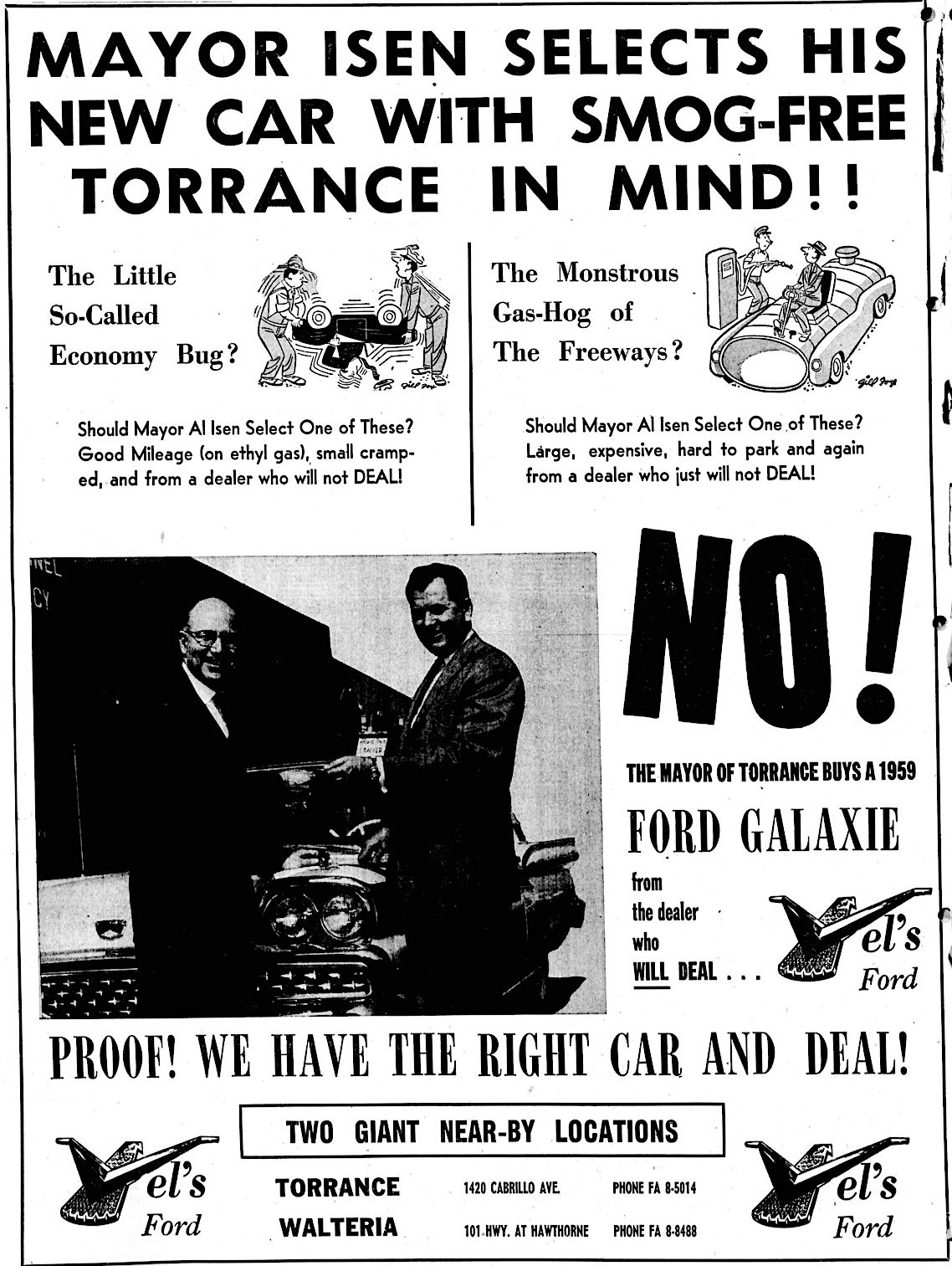
Despite glowing real estate ads in the Daily Breeze, Torrance Herald and other local papers declaring that properties for sale were located in “smog-free Torrance,” the South Bay and Harbor Area were not immune.
Severe smog conditions during the 1950s often caused flights coming into Los Angeles International Airport to be delayed or rerouted because pilots had difficulty seeing the runways through the smoky haze.
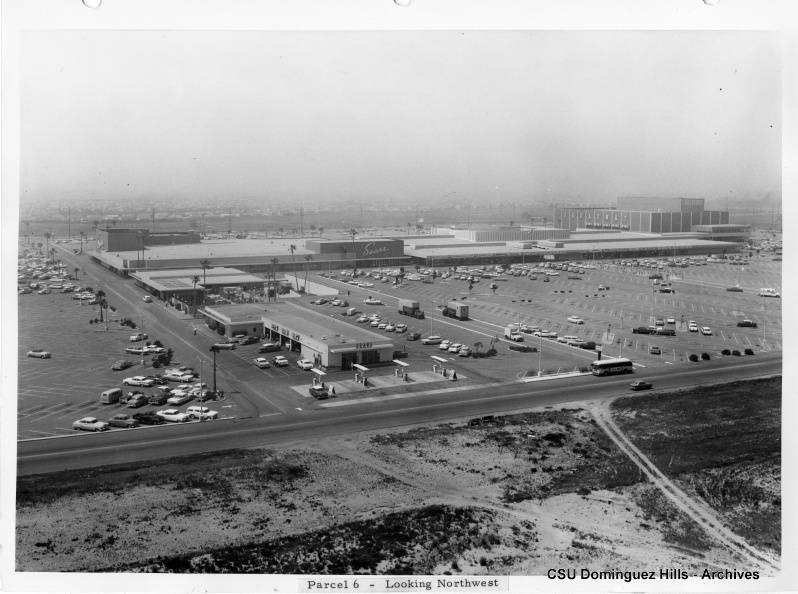
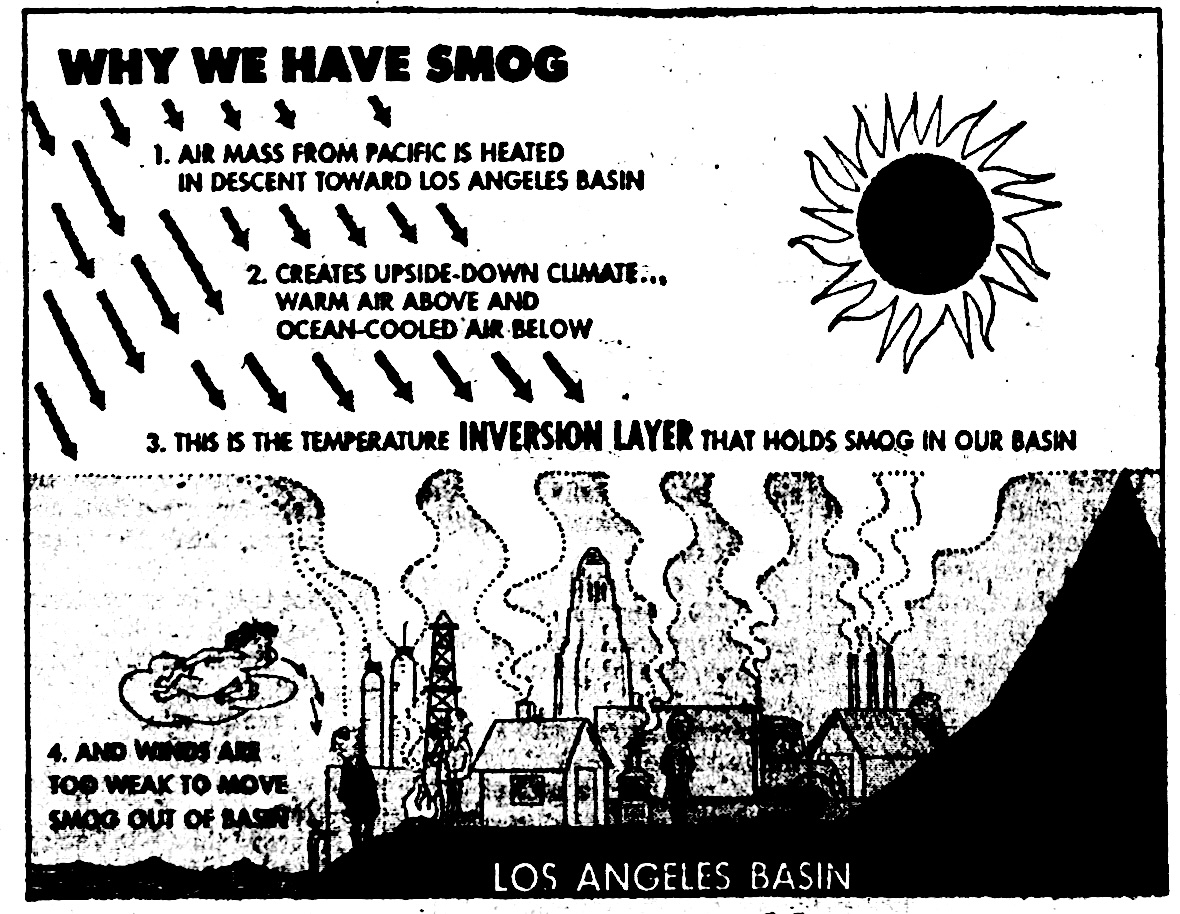
Inversion layers that exacerbated smog alerts by trapping the airborne pollutants often blanketed the coastal areas. Though sea breezes helped somewhat, concentrations of pollutants still reached dangerous levels throughout the Los Angeles basin.
Downtown Los Angeles conditions were worse due to its surrounding geography, with hills and mountains trapping the smog into a smaller area and increasing its potency.
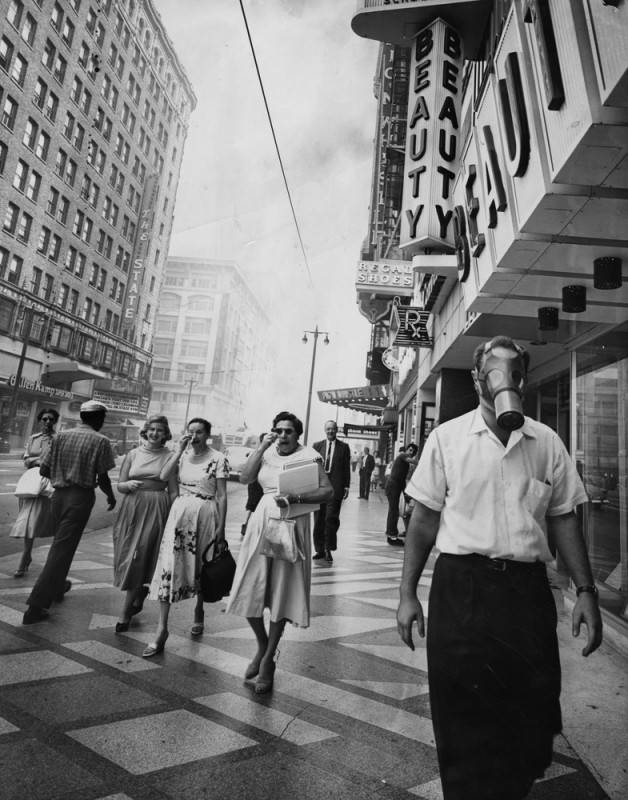
Severe attacks occurred in 1949, 1951 and 1954, with the worst smog attack in the area’s history occurring on Sept. 13, 1955. Helped by intense heat and a particularly strong inversion layer, the ozone levels reached a record of .85 parts per million making that day still the smoggiest in L.A. history.
The 1949 smog episode alarmed the agriculture industry when it was determined that its pollutants completely killed a field of romaine lettuce and damaged other crops in the San Gabriel Valley in just 36 hours.
Everyone had a theory as to the cause of the air pollution plague, and more than one of them was right. A number of factors contributed. We’ve already mentioned the geography of the L.A. basin, rimmed by mountains and hills that trapped pollutants, especially when a combination of heat and the low clouds of an inversion layer were present.
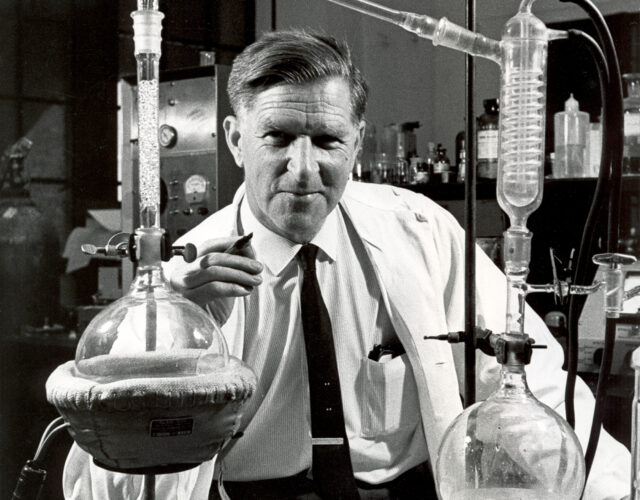
Aarie Haagen-Smit, a Dutch biochemist working at Caltech in the late 1940s, has been credited with proving that the sun reacting with automobile exhaust and industrial pollutants led to the formation of ozone. He spent years trying to convince pollution officials that the ozone was the main component of smog, which reached its highest levels on hot sunny days.
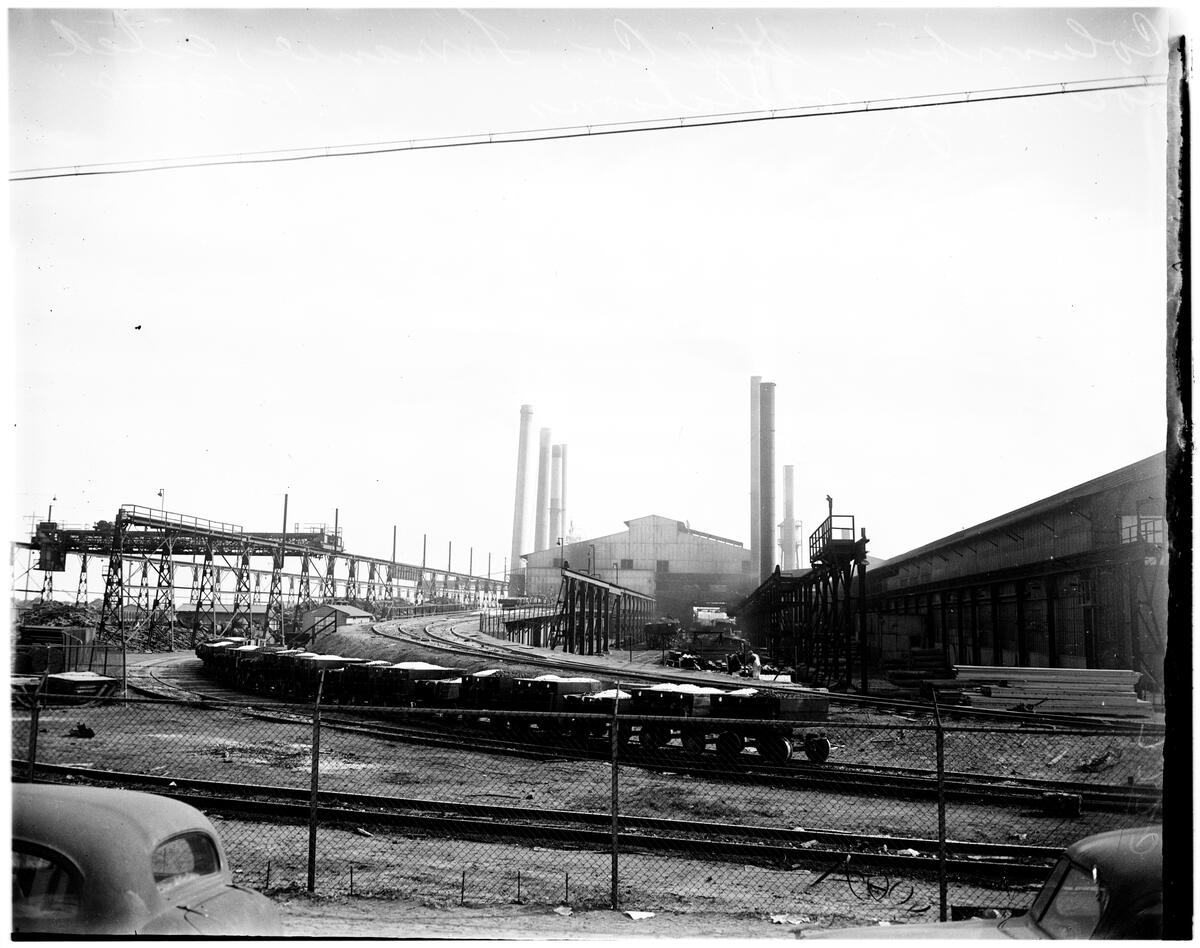
The airborne pollutants from a variety of industrial plants – refineries, steel manufacturers and the like – had very few restrictions on what they pumped into the air at that time. The APCD faced stiff opposition when it attempted to regulate the likes of Columbia Steel in Torrance, which eventually installed smoke abatement devices at the plant in 1949 after being cited.
The postwar population boom also added to the problem. At the same time as the area’s suburbs grew exponentially, the city and county began phasing out its Red Cars and other commuter rail systems in favor of gas-powered cars and buses.
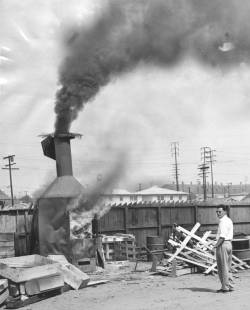
Besides its growing reliance on the automobile, another practice in the greater Los Angeles area that contributed to the problem was the unchecked use of backyard incinerators for burning household, garden and backyard waste.
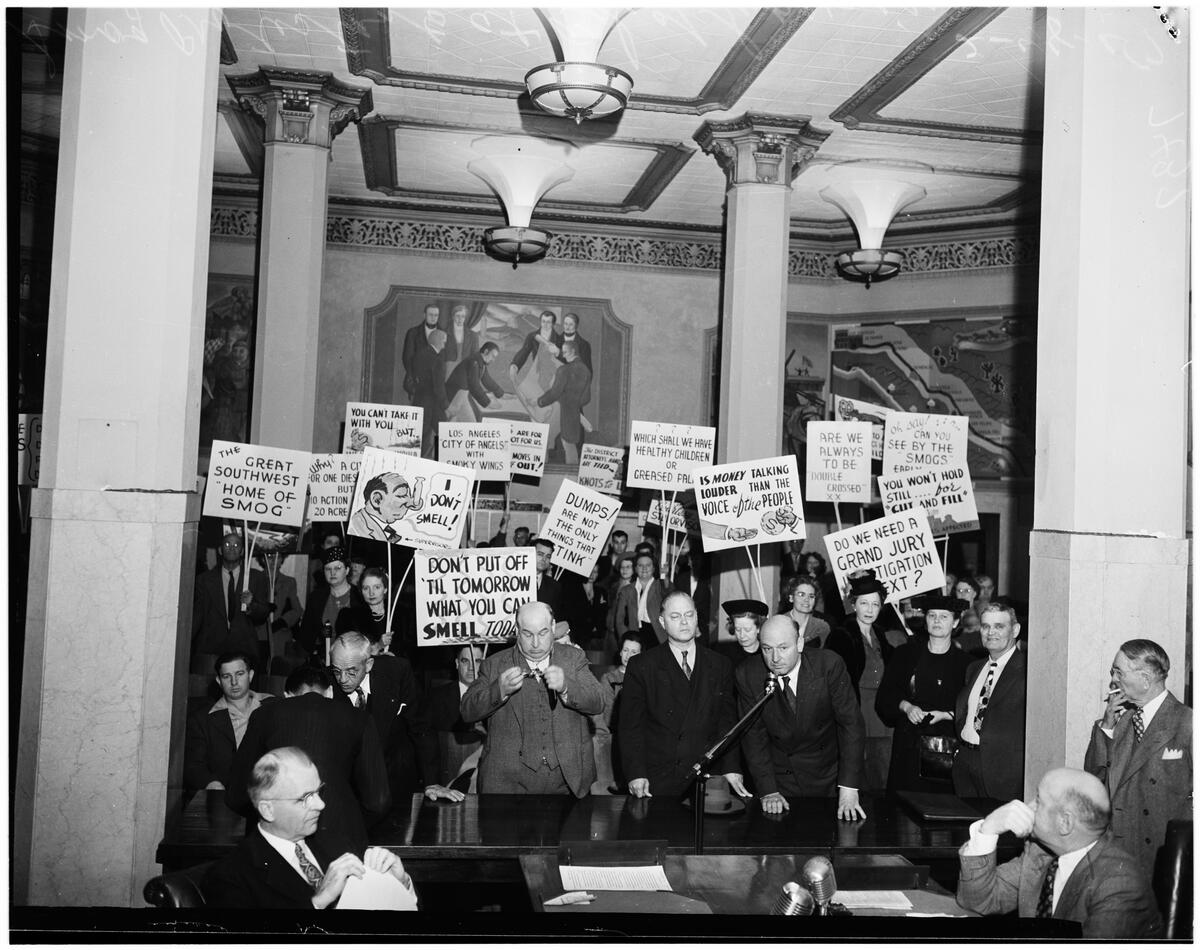
As a result, Los Angeles began to get its not-undeserved reputation as the nation’s smog capital. The barrage of negative publicity from the 1950s episodes helped to light the fire for more regulation.
Over the years, restrictions on industry, a ban on the use of backyard incinerators and improvements in automobile emissions technology slowly began to emerge. Air pollution continued to be a major environmental problem during the 1960s and 1970s, but the life-threatening episodes of the 1940s and 1950s have become less commonplace.
The Los Angeles area still frequently tops the American Lung Association’s annual list of metro regions with the most unhealthy air quality in the United States, as it did in 2025. But overall pollution levels have been significantly reduced. The last third-stage smog alert in the county occurred in 1974.
Sources:
Daily Breeze archives.
Los Angeles Times archives.
San Pedro News Pilot archives.
Torrance Press Herald archives.
Smogtown: The Lung-Burning History of Pollution in Los Angeles, by Chip Jacobs & William J. Kelly, The Overlook Press, 2008.
South Coast Air Quality Management District website.
Note: Thanks to Barbara Natanson for the story suggestion.