
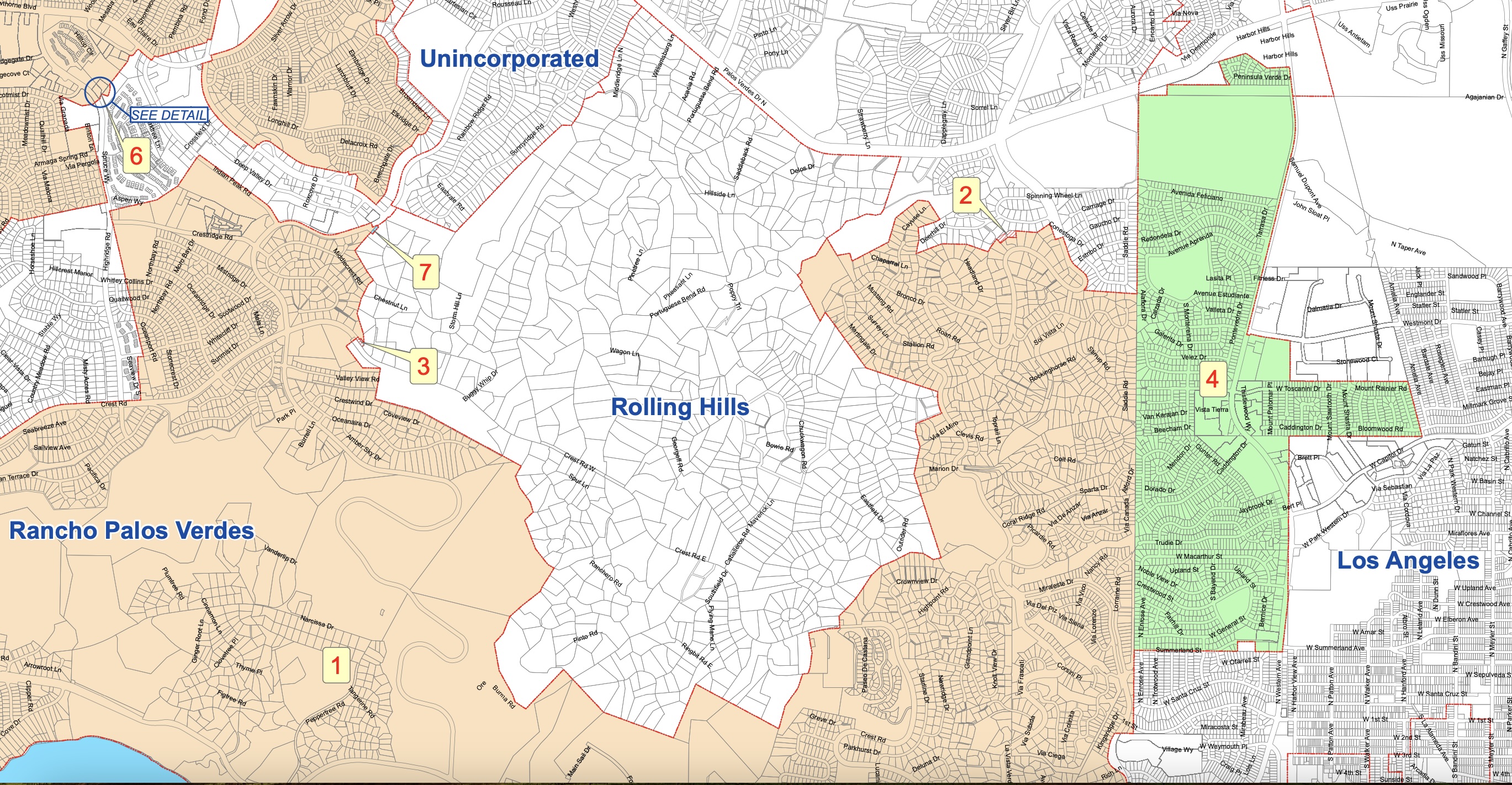
When the city of Rancho Palos Verdes incorporated in 1973, the new city did not include a vertical strip containing 1.4 square miles of unincorporated Los Angeles County land between its new eastern boundary and the Los Angeles city land on which San Pedro rests.
The Eastview area then stretched from Palos Verdes Drive North to Summerland Ave. It included Green HIlls Memorial Park cemetery and the U.S. Navy housing development, the latter of which has since become the Ponte Vista tract of homes.
Eastview straddles Western Ave., the main north-south artery through western San Pedro, and includes land both west and east of Western. The section west of Western includes homes on the sloping eastern hills of the Palos Verdes Peninsula.
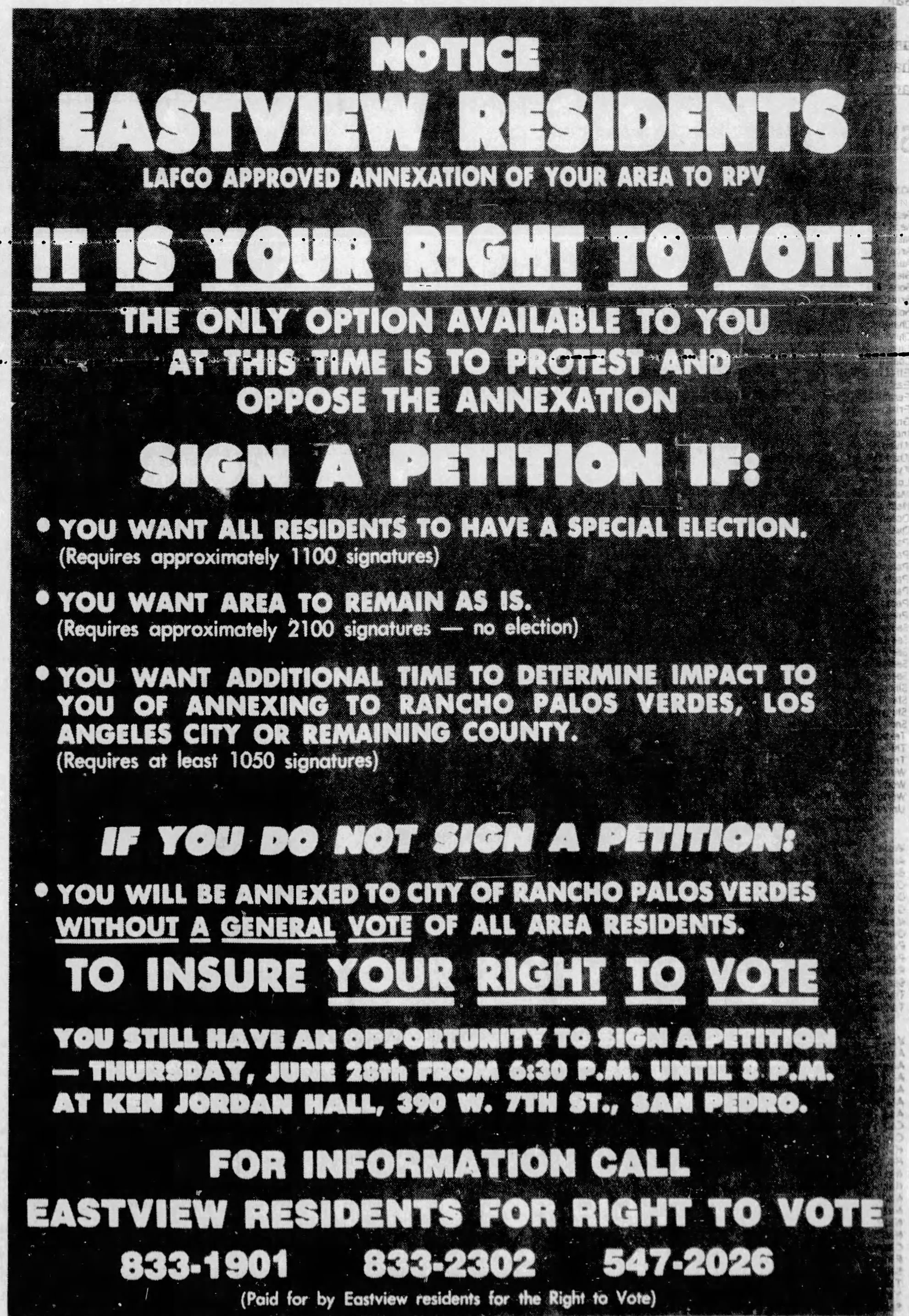
Eastview residents, numbering more than 9,000 at the time, felt snubbed by being left out of the new city’s boundaries, and began a years-long campaign in support of annexation to RPV.
They were unhappy with having to rely on Los Angeles County for services, confusingly having to use Los Angeles, San Pedro or Lomita mailing addresses, and with being forced to send their children to Los Angeles Unified District schools.
They fervently petitioned the county on behalf of their cause. On May 9, 1979, Los Angeles County’s Local Agency Formation Commission (LAFCO) approved the petition calling for Eastview’s annexation to Rancho Palos Verdes.
Their only adjustment was the removal of Green Hills cemetery and the Navy housing area, which reduced the tract’s land area from 1.4 to 1.1 square miles.
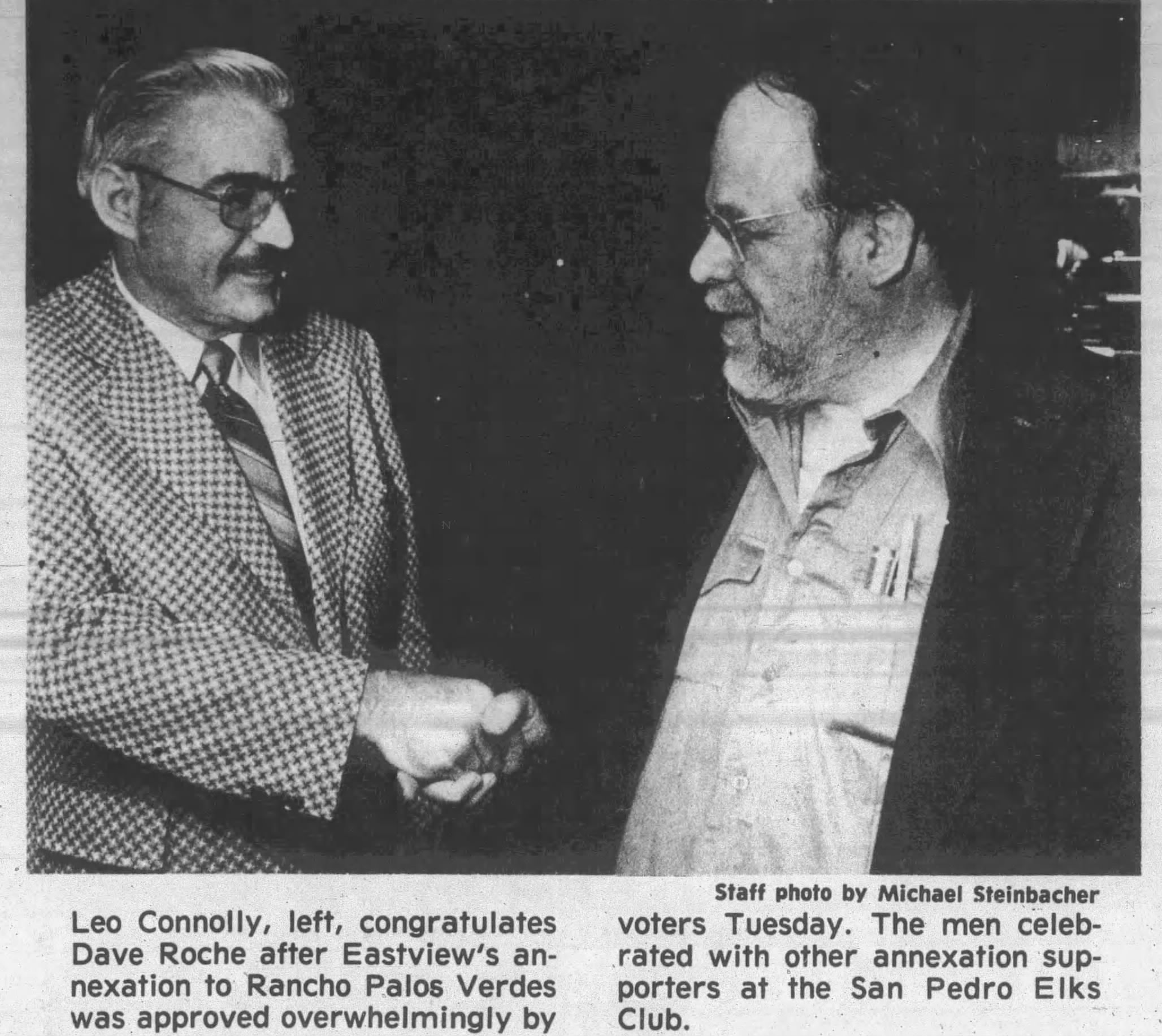
Eastview residents voted on the matter on Nov. 6, 1979. They approved the annexation by a more than two-to-one margin – 1,813 votes for and 755 against. So that settled the matter? Not quite.
Next came the campaign to convince RPV to approve the new annexation. This would become a four-year battle. Then-RPV Councilman Gunther Buerk steadfastly opposed the Eastview annexation, creating the group CAFA, Citizens Against Forced Annexation.

CAFA’s position was that the annexation vote was not binding, since the citizens of RPV had not been included in the voting. Annexation proponents accused the group of snobbery, saying that they looked down on those residing on the east side of the hill and didn’t want them in their city.
CAFA stood firm, and the legal battle over the annexation was pressed all the way to the California Supreme Court. The Court ruled in December 1982 that RPV residents did not have the right to vote on the matter, and LAFCO gave its final approval to the annexation in 1983.
Eastview’s integration into Rancho Palos Verdes did not go particularly smoothly, however. Initially, the U.S. Post Office insisted that residents of the tract continue to use a San Pedro or Lomita address and zip code for mail purposes, as their zip codes don’t always correspond to city boundaries.
It took years, but eventually an Eastview Post Office was built and the area’s address and zip code was changed to Rancho Palos Verdes, 90275, ending some of the confusion.
Eastview residents also weren’t granted regular Palos Verdes Peninsula Library cards, instead receiving “courtesy cards” stamped “non-resident.” A library spokesperson said they were ruled ineligible for regular cards because they lived outside the library district’s boundaries.
A deeper problem arose around the public education of children living in the Eastview area.
Before the annexation, Eastview students were part of the Los Angeles Unified School District, and were compelled to enroll in LAUSD schools.
Residents assumed that the annexation into RPV would include access to the city’s schools. They were wrong, at first. Children of school age were still required to attend LAUSD schools.
A group of parents began the campaign to change that in 1990. A local election was held in 1992 proposing the change. The measure passed with 84.5% of the vote, but it was invalidated by a Superior Court judge who ruled in favor of LAUSD.
Finally, a bill giving students a one-time choice between LAUSD and RPV schools was introduced by state Sen. Betty Karnette and signed into law in September 1998. It remains in force, leaving the school decision up to Eastview students and their parents.
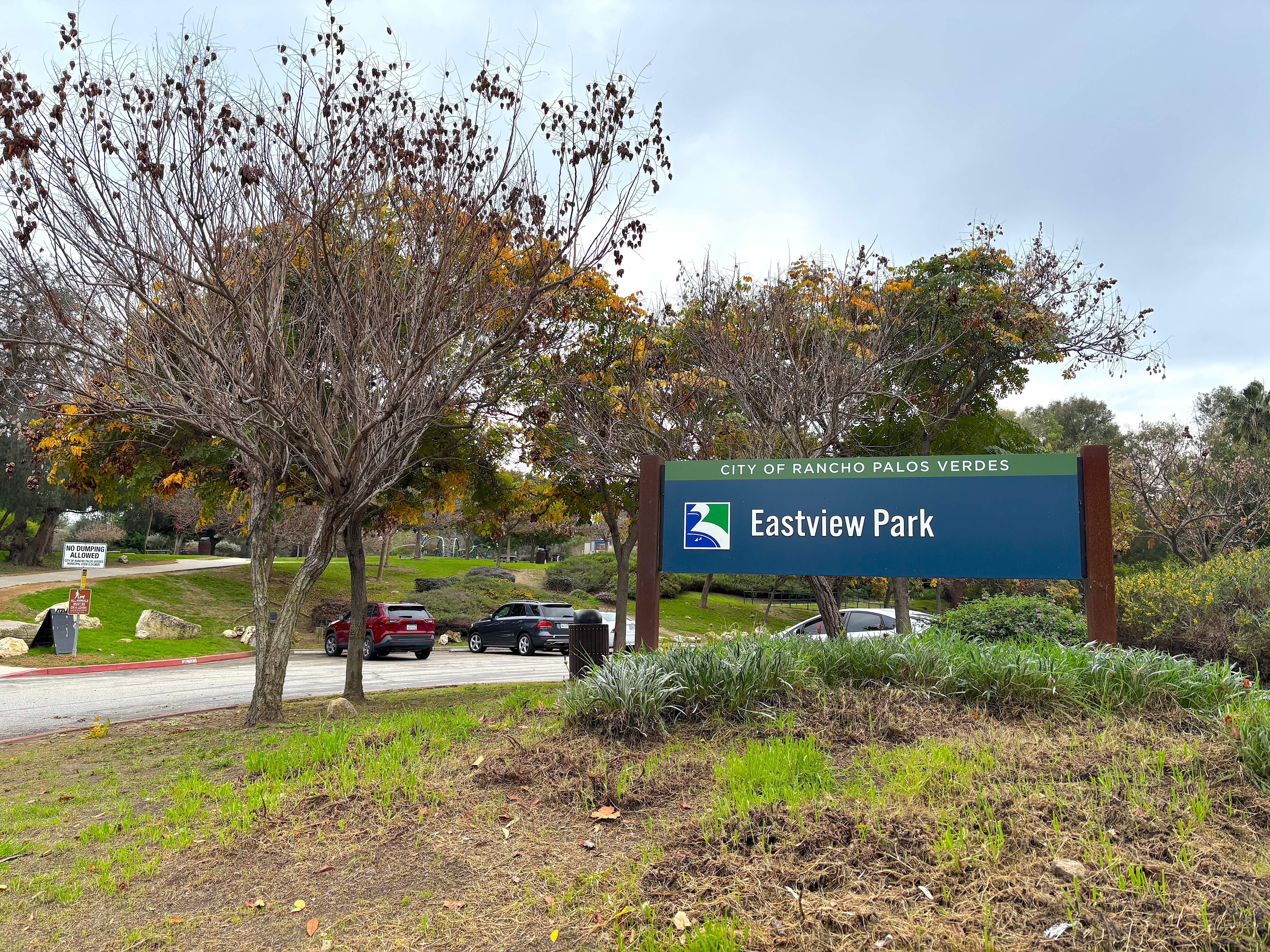
A long-promised amenity became a reality in 1990 when Los Angeles County agreed to build Eastview Park at 1700 Westmont Drive, just east of Western Ave. After polling residents, a dog park was added to its facilities in 2017.
Note: Special thanks to reader Kevin Wei for suggesting this topic.
Sources:
Daily Breeze archives.
Los Angeles Times archives.
San Pedro News Pilot archives.

