
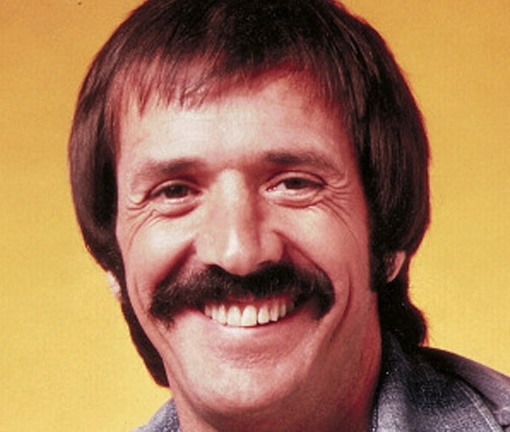
Sonny Bono’s tumultuous life began in Detroit, Mich. on Feb. 16, 1935. His father, Santo Bono, had emigrated to the U.S. from Montelepre, Sicily. His mother, Jean, was a second-generation Italian forced by her parents to marry at fourteen.
Salvatore Phillip Bono was the couple’s third child, and first boy. The family had settled in Detroit, where Santo found steady employment. But the Bonos soon grew tired of Detroit, and, on advice from relatives, decided to move to California in 1942 when Sonny was seven years old.
Santo moved out west first. He found a job as a truck driver, and was able to buy the family a new two-bedroom tract home in the South Bay, a significant improvement over their home in Detroit. Jean drove out with the kids later on a cross-country trip, during which the family car broke down in Cheyenne, Wyoming. They finished the rest of the trip by bus.
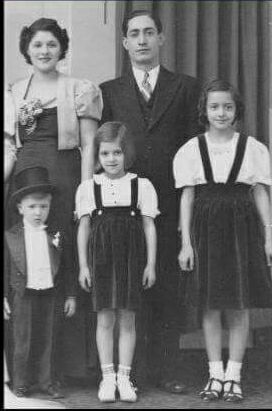
Their new home’s exact location is unclear. In his autobiography, And The Beat Goes On (Pocket Books, 1991), Sonny says it was in Hawthorne. Most other sources put the house in Inglewood, possibly because Sonny attended Inglewood High School starting in 1949. (He did not attend Hawthorne High School, which wouldn’t open until 1952.)
Because Sonny attended Dana Junior High (now Dana Middle School) in the Wiseburn area, it’s possible that the house was situated in that unincorporated county area west of Hawthorne, some parts of which have an Inglewood mailing address.
Bono also says in his autobiography that he graduated from Inglewood High in 1952, but most biographical sources indicate that he left high school before graduation. This disappointed his parents, who wanted him to be a doctor or a lawyer.
Unfortunately, his poor grades didn’t support that ambition. Sonny himself recalls in his book exclaiming at a family dinner where his academic deficiencies were being discussed, “Who cares about school? I’m going to be a movie star!”
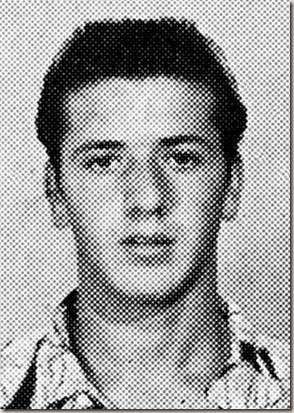
The entertainment world beckoned. He began his climb to fame by playing the conga drums and singing while a friend pounded out boogie-woogie piano riffs at the post-football game dances at Inglewood High.
When he hired local sax player Jimmy Johnson to play at a school assembly, the raucous music alarmed the faculty and earned Sonny a three-day suspension. He saw how the rhythm and blues music he loved had a powerful effect on teenagers, and it only made him more determined to find his place in the music industry.
He bought a cheap ukulele and wrote his first song with his friend John Bloomfield, “Ecstasy.” He performed it on a local talent show, and won a transistor radio for his efforts. He knew then that he’d found his niche.
In the meantime, he got a job working at the Better Foods market in Hawthorne. Inspired by Coco Joes brand cookies sold at the store, he wrote “Koko Joe,” which became a minor hit record for Don & Dewey six years later. (It was also recorded by the Righteous Brothers.)
After his grocery gig ended, he got a job at Douglas Aircraft in El Segundo where Santo also now worked. But his heart was set on breaking into the music business. He played hooky from work one day to go visit local rhythm and blues star Johnny Otis, who thought his songs showed potential.
Sonny took the song “Ecstasy” to singer Frankie Laine, who liked it but didn’t record it. Bono began making the rounds of local record labels, getting his first real music business job with Art Rupe’s Specialty Records, home of rock pioneer Little Richard and soul singer Sam Cooke.
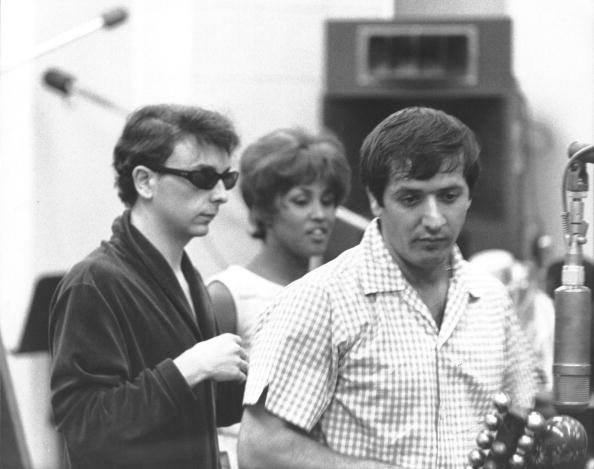
All of this hustling around town ended his marriage to his first wife, Donna, whom he’d married in 1954. After the breakup, he met Jack Nitzsche, who was working as a musical arranger for teen music producer Phil Spector.
Bono began working as a promotion man for Spector, pushing his records to radio stations. One night in 1962, a fellow promo man brought him along on a double date at Aldo’s Italian restaurant in Hollywood, where Sonny, then 27, met and fell in love with 16-year-old Cherilyn Sarkisian La Pierre.
In Cher’s distinctive contralto voice, he found the vehicle for his musical vision. His own vocal talents were average at best, but when the two of them sang together, they had that undefinable something that reached record buyers.
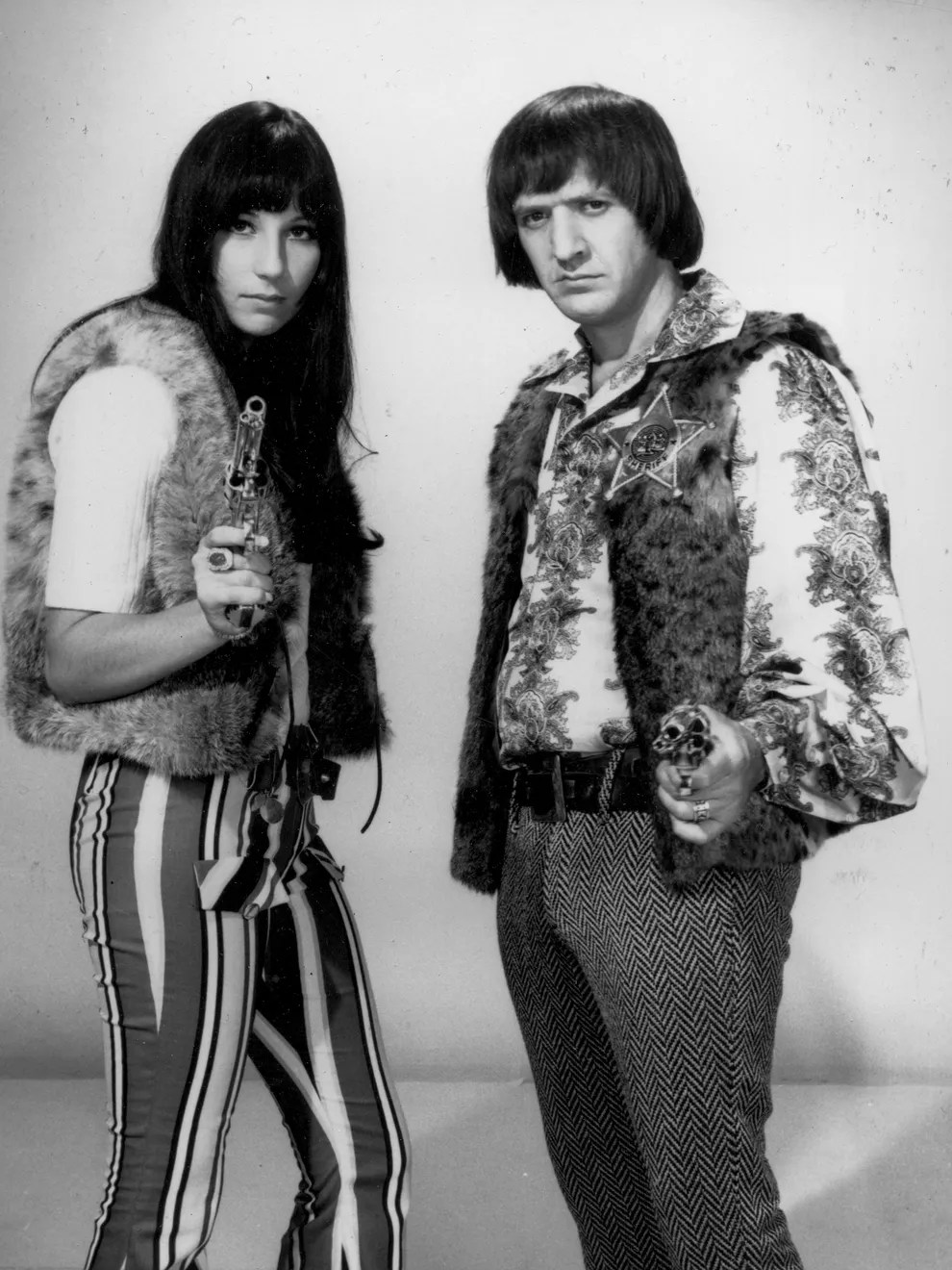
It didn’t happen right away. Their first record, “The Letter,” came out under the name Caesar & Cleo, the name trading on the popularity of the 1964 film “Cleopatra.” It was only a mild local hit.
“Baby Don’t Go” as Sonny & Cher fared better, but it was the Bono-written and produced “I Got You Babe” that brought them their first number one hit in August 1965. It remains their best-known song. (“Baby Don’t Go” reached the Top Ten after it was re-released that same month.)
Sonny had a solo top ten record in late 1965 with “Laugh At Me,” a protest number he wrote and recorded after being thrown out of the tony Hollywood restaurant Martoni’s following a dispute during which he was verbally attacked for his appearance.
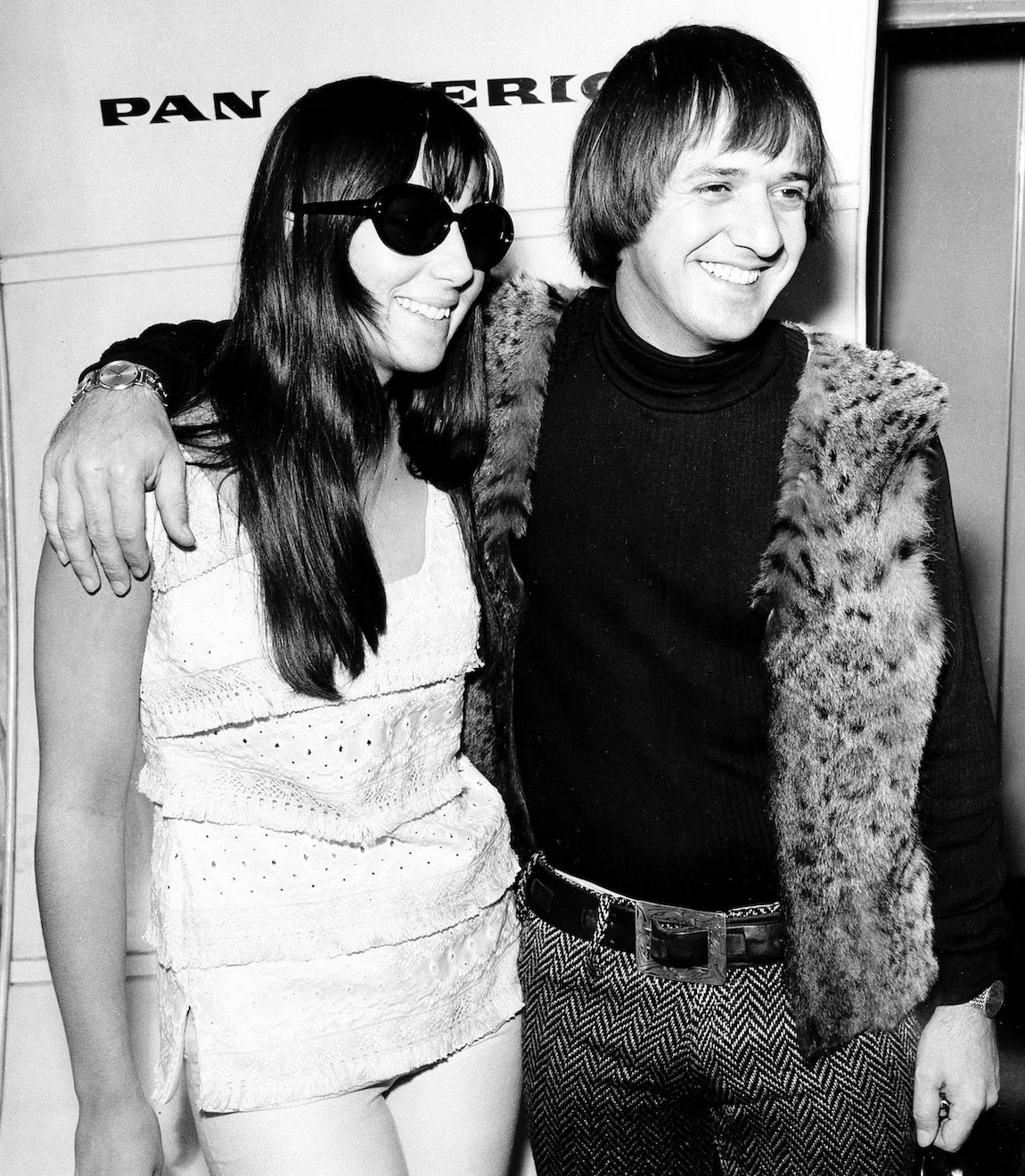
“Babe” began a series of pop hits which evolved into their popular 1970s TV variety show, “The Sonny & Cher Comedy Hour” on CBS, as well as an acrimonious personal and professional breakup.
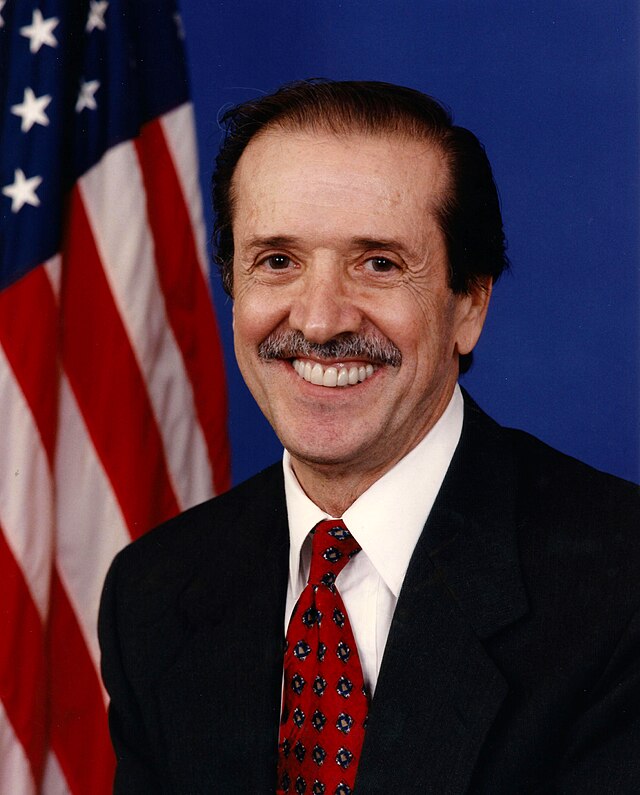
Sonny married Mary Whittaker in 1986. The couple moved to Palm Springs. Red tape from the city involving their new house there led an incensed Bono to run for mayor of the city in 1988. He won. In 1994, he ran for and won a seat in the U.S. Congress as a conservative Republican.
He died tragically on January 5, 1998, suffering fatal injuries when he hit a tree while skiing at Heavenly Mountain Resort in South Lake Tahoe. His widow, Mary, ran for his seat in Congress and won, serving in that role from 1998-2013.
Sources:
And The Beat Goes On, by Sonny Bono, Pocket Books, 1991.
Daily Breeze archives.
Los Angeles Times archives.
Wikipedia.


