By the time Jared Sydney Torrance publicly announced the founding of the city that bears his name in 1912, he had already arranged for two major industrial employers to establish operations there.
In December 1911, the Pacific Electric Railway Co. agreed to build its maintenance facility there in return for 125 acres of land.
Torrance sat on the board of directors of the other major employer, the Union Tool Co. In July 1911, he persuaded the firm, which was looking for cheaper land on which to build its new factory, to invest in 25 acres of dusty fields in his new settlement.
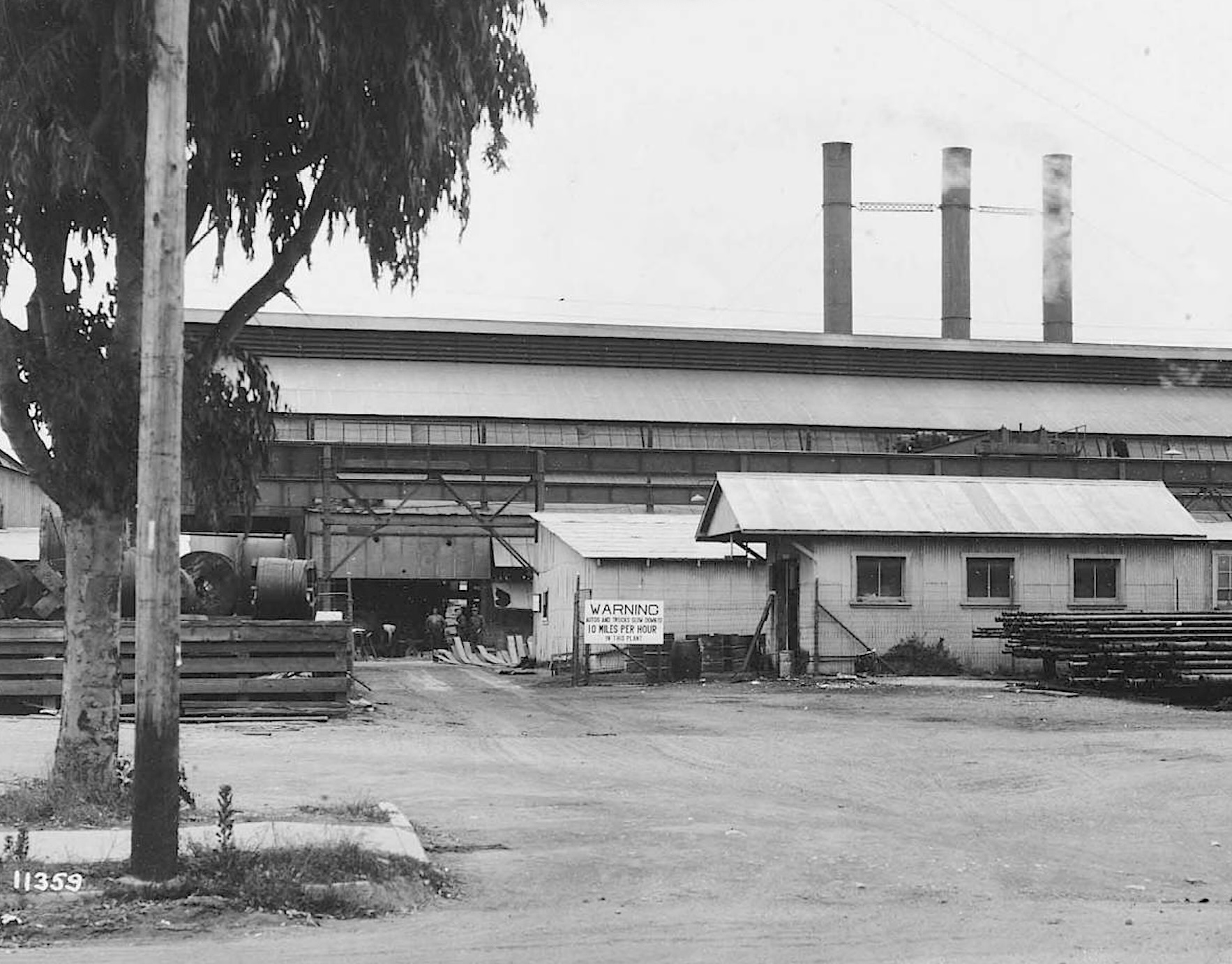
Union Tool, founded in 1908, had outgrown its Los Angeles location. The company, which specialized in making equipment and machinery for the oil drilling industry, found its business was booming due to the increasingly rapid proliferation of oil wells in the Los Angeles area.
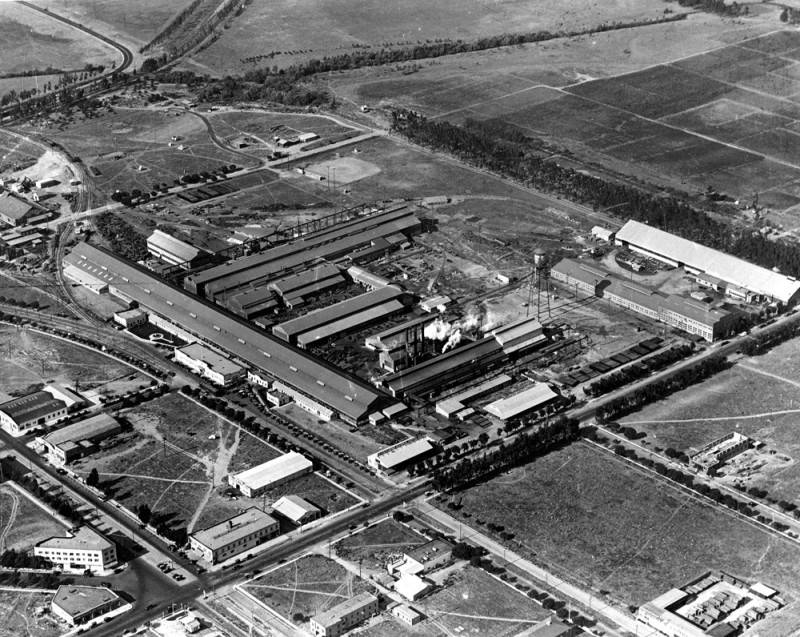
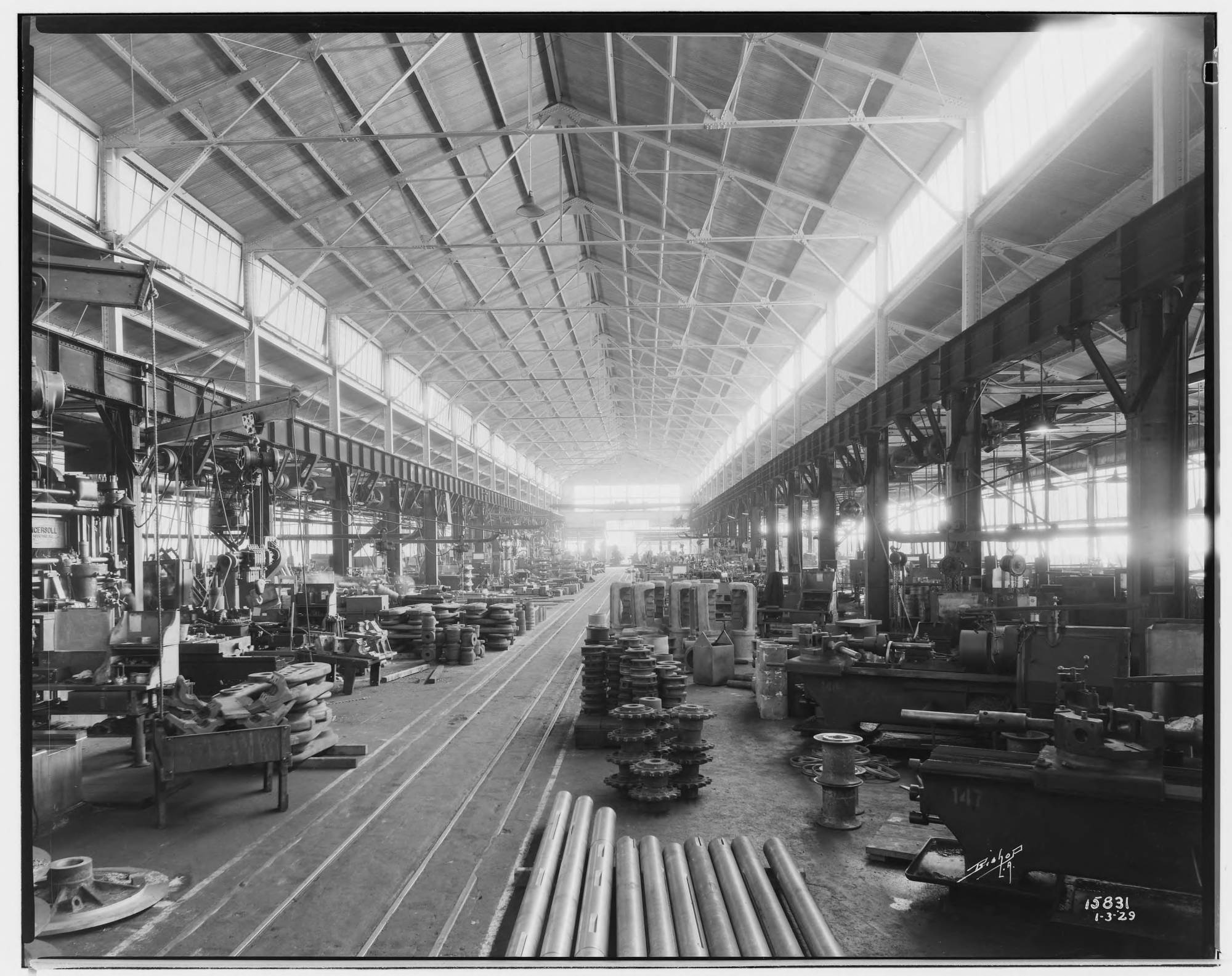
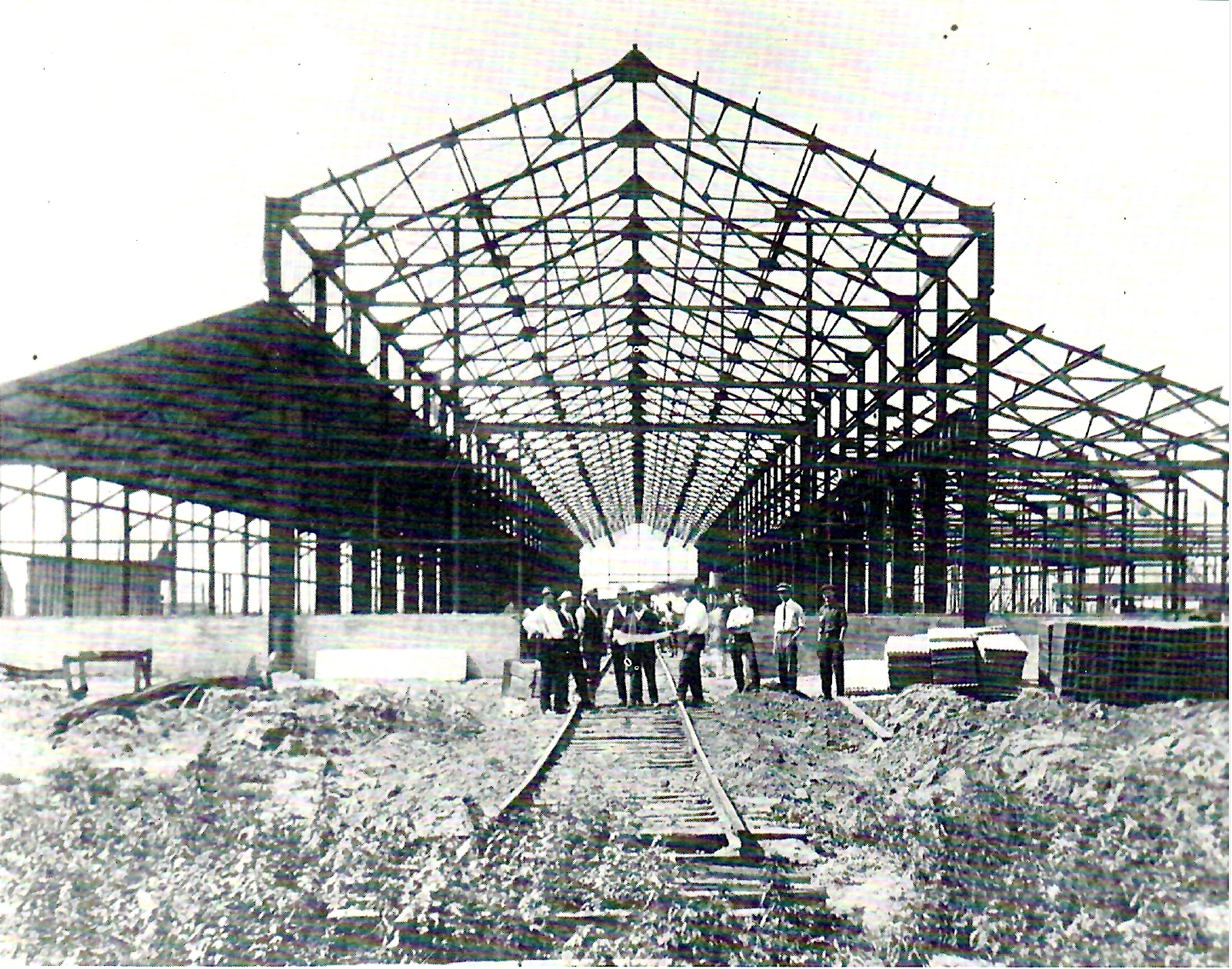
Union Tool’s owners were unfazed by Torrance’s insistence that its new plant needed to be up and running within 18 months of signing the deal, and agreed to the plan. In December 1912, Union Tool’s factory at 1542 Border Ave., just northwest of the intersection of Carson St. and Western Ave., began operations with 280 employees, mostly drawn from its Los Angeles location.
According to the Torrance Herald, most of them had to commute at first, as there were only three houses in the city at the time. That would change rapidly as the new city raced to build houses and businesses to support other companies which began moving operations there.
These included the Hendrie Rubber Co., Pacific Metal Products Co., Fuller Shoe Co., Acme Brass Foundry, Llewellyn Iron Works and many others.
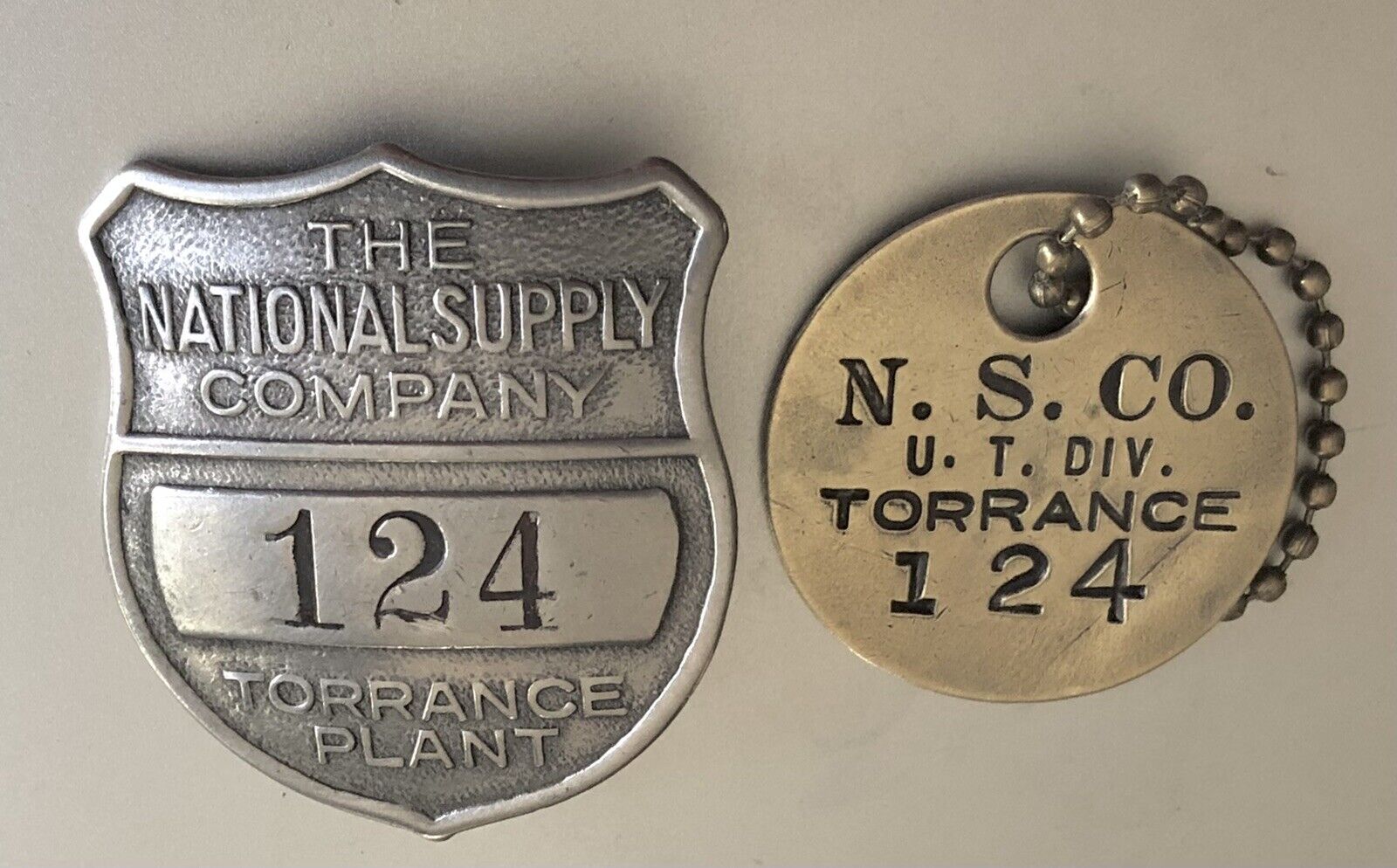
Business continued to boom at Union Tool, and the firm was acquired in 1920 by the National Supply Co., a large industrial machinery firm founded in 1894 in Pittsburgh, Pennsylvania. It would become the nation’s largest supplier of equipment to the oil industry, and a pioneer in the development and production of materials for the rotary drilling process.
Its Torrance operation changed its name to the National Supply Co., and its business exploded during the 1920s oil drilling boom. Large swaths of oil derricks soon covered the South Bay and Long Beach areas, from the Inglewood oil field to the north to Signal Hill.
As if that didn’t keep the company busy enough, oil wells soon blanketed the city of Torrance itself during the mid-1920s during its own oil boom. The last oil derrick wasn’t removed from the city until 1961, and oil operations continued long after that.
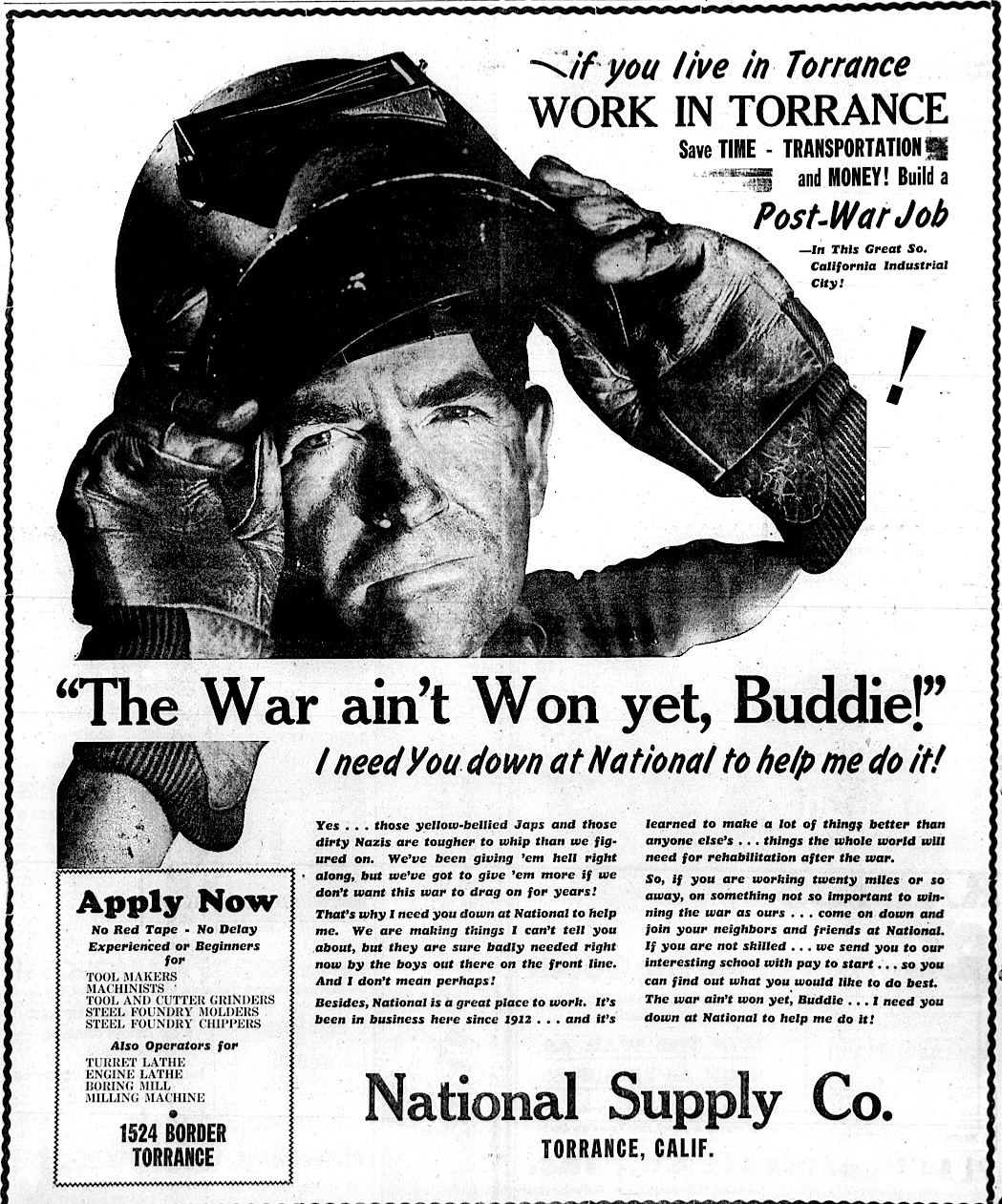
By the late 1930s, National Supply employed more than 1,000 workers on its payroll. As the nation ramped up for possible entry into World War II, the company began shifting over to manufacturing wartime materials.
In November 1941, just weeks before the Pearl Harbor attack, National Supply announced it would build a $2.3 million plant under a contract from the U.S. Navy. The 74-by-750 foot building would house the largest forging press on the West Coast, and six large lathes, all to be used to produce materials for ship construction.
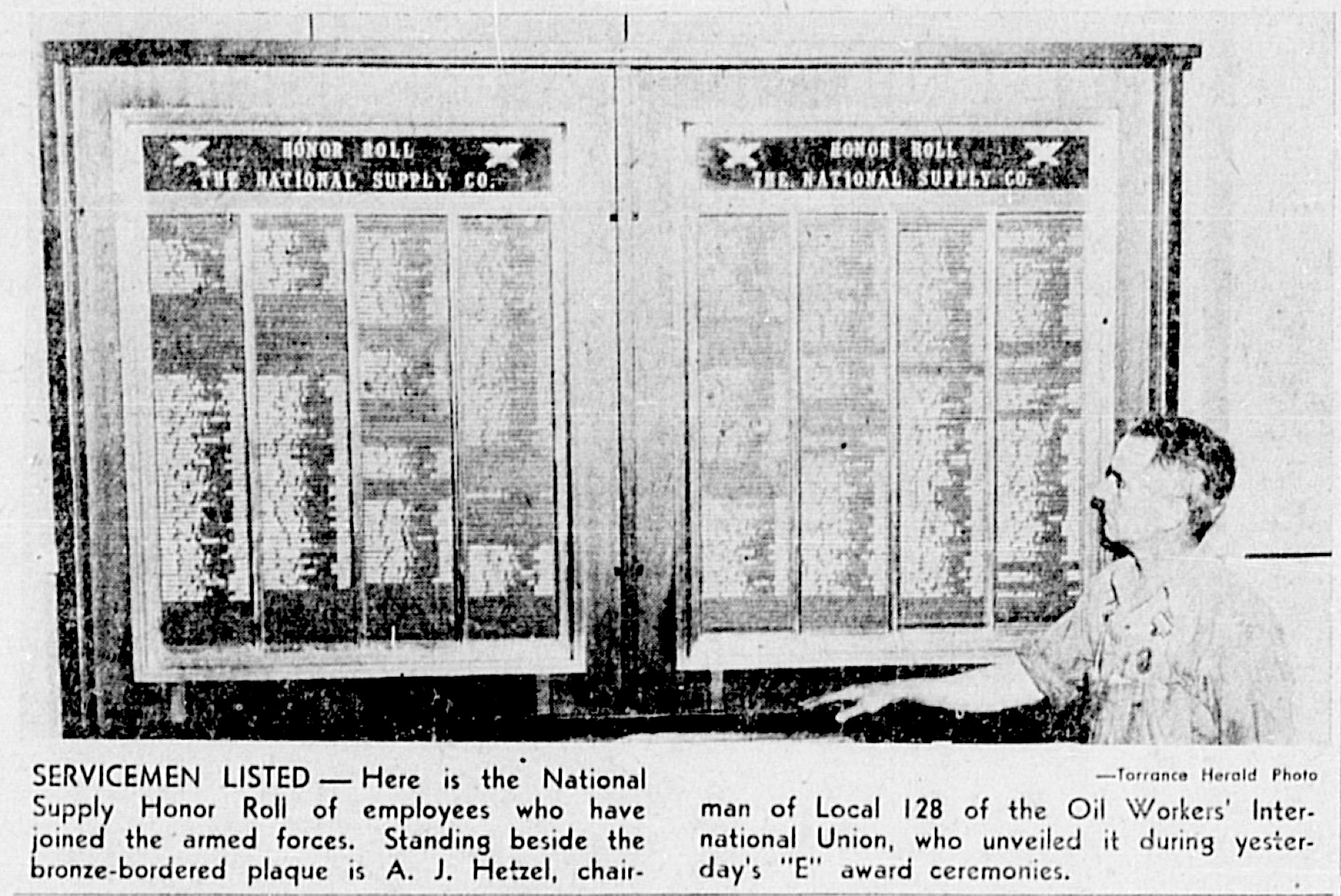
The day after Pearl Harbor, Torrance police and fire personnel were on alert to help protect National Supply and other defense-related industries in town, and the companies themselves posted extra guards around their plants.
With the end of the war, National’s defense operations subsided. During the 1950s, the company became the world’s largest manufacturer and distributor of oil drilling equipment, employing more than 1,500 workers.
In early January 1958, National’s board of directors unanimously voted to merge with MIddletown, Ohio-based Armco Steel Corp., then the seventh largest steel producer and the 43rd largest company in general in the U.S.
After the merger went into effect a few weeks later, the company became known as the National Supply Division of Armco. Together with the U.S. Steel plant and the Bethlehem Steel fabricating operation, National Supply had turned Torrance into one of California’s major steel manufacturing centers during the 1960s.
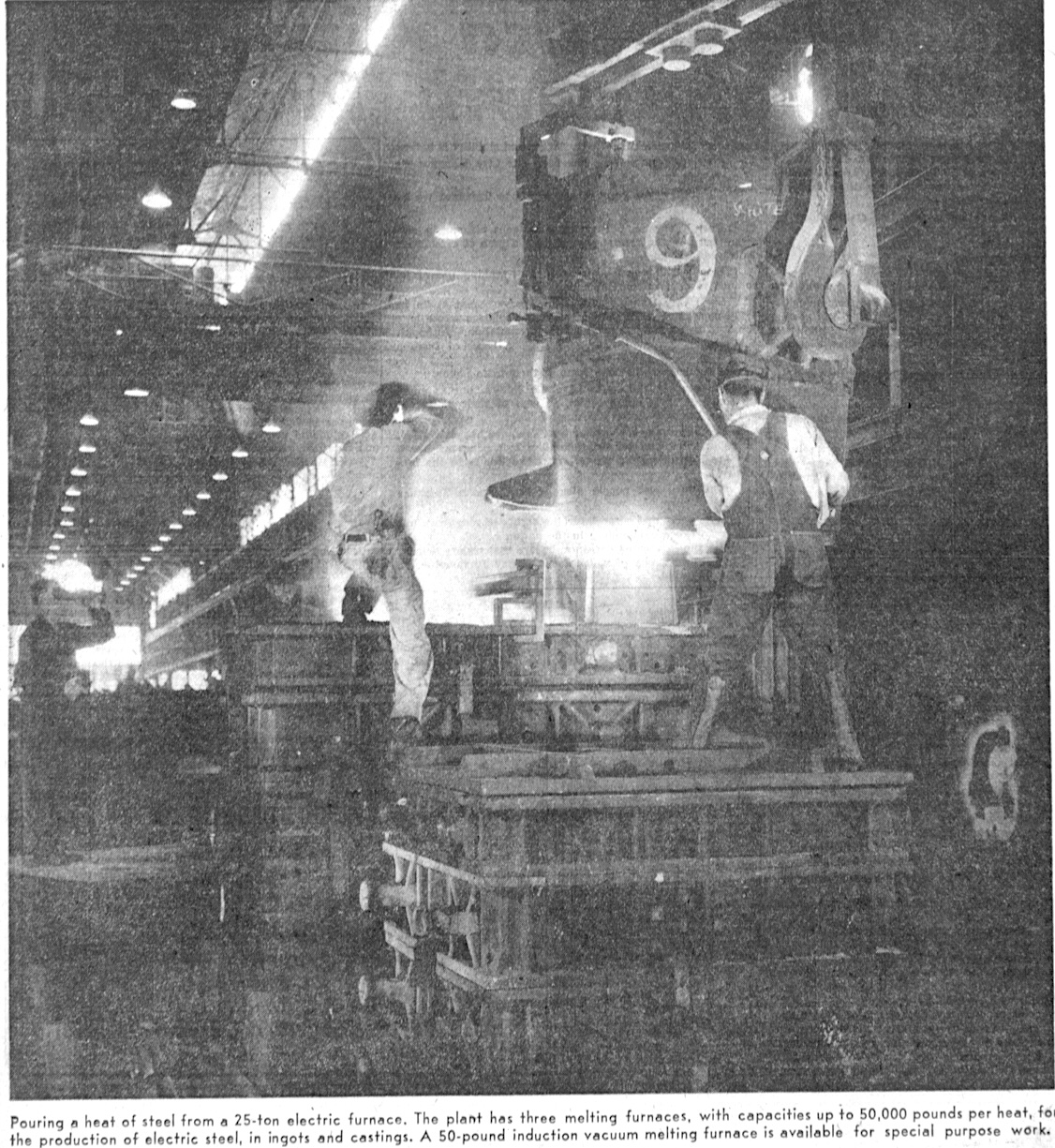
But the 1970s and 1980s were less kind to the steel industry. Downturns in the production of steel and, more tellingly, an increased reliance on foreign oil and the resulting slump in domestic oil drilling and production took a toll on plant operations.
The National Supply buildings were razed shortly afterward, and were replaced by a large industrial park that currently occupies the site. (The U.S. Steel plant had been converted into an industrial park a decade earlier.)
By 1985, the National Supply Division of Armco Steel had reduced its workforce to 230 employees. That October, Armco announced plans to close it and a sister plant in Houston. Finally, on Feb. 28, 1985, with its employee pool down to just 100 or so people, the Torrance National Supply plant was shuttered for good after more than 70 years of operation.
The redevelopment of the site marked the continuing gradual shift from Torrance’s position as a center for heavy manufacturing to more technology-based industries.
Sources:
Daily Breeze archives.
Historic Torrance: A Pictorial History of Torrance, California, by Dennis F. Shanahan and Charles Elliott Jr., Legends Press, 1984.
Los Angeles Times archives.
Torrance Press Herald archives.