
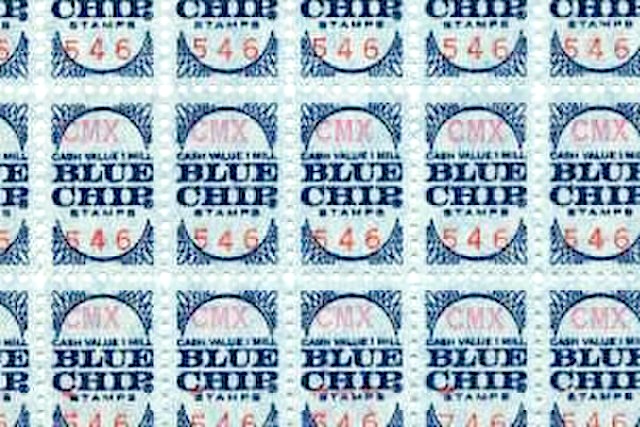
These days, we earn Starbucks bonus stars, Target Circle rewards and a host of other loyalty programs directly from individual retailers. Though they existed then, such programs were less commonplace during the mid-1900s, when trading stamp businesses were in their heyday.
Retailers signed up with various trading stamp companies and gave out stamps to their customers based on the amount of money they spent in their stores. Consumers collected the physical stamps and pasted them in savings books that could then be exchanged for merchandise at redemption centers operated by the stamp companies.
Retail trading stamps were introduced in the early 1890s originally to reward shoppers who made their purchases using cash instead of credit. In 1896, the Sperry & Hutchinson Co. became the first independent trading stamp company, signing up a wide range of retailers to offer its S&H Green Stamps to their customers.
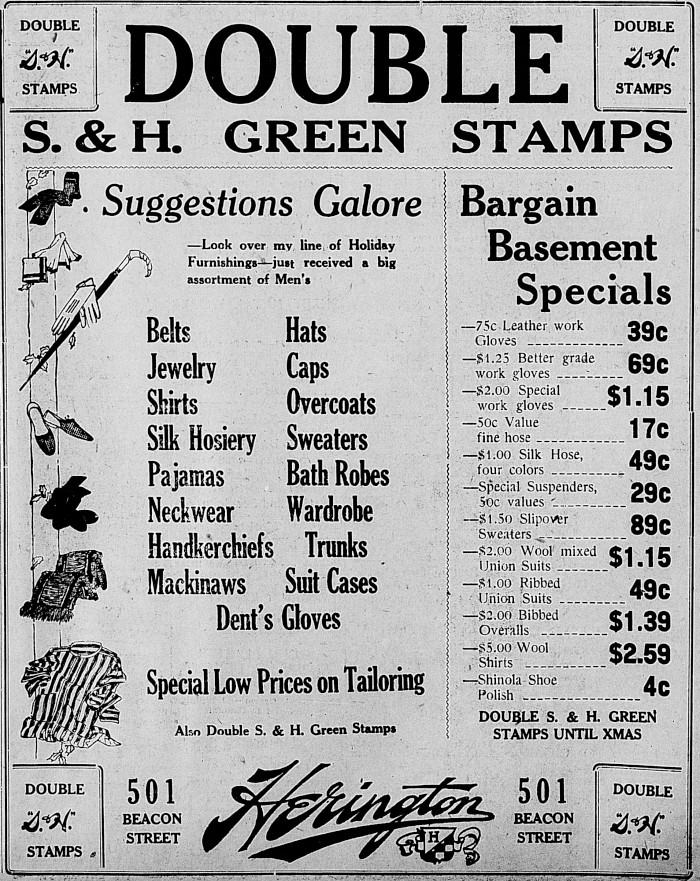
Green Stamps, issued mostly by grocery stores and gas stations, proved popular among consumers. Other companies, including Gold Bond Stamps (founded in 1938), began entering the business. Under the Gold Bond plan, a complete stamp book could be turned in at participating Torrance merchants in order to receive a $3.00 reduction off store purchases.
Interest in the trading stamp programs soared following the end of World War II and the rise of the suburbs. Middle class families viewed the stamps as a way to get “free” household goods and other products from trading stamp redemption stores.
Family members would be enlisted to aid in the licking and pasting of stamps in books. The stamp companies widely distributed free catalogs, which were pored over intently, and the stamp books also were free and widely available.

Competition among grocery stores and other retailers became fierce, with some offering double and triple trading stamps in order to lure customers.
During the 1950s, S&H Green Stamps, which still dominated the market, announced that it was printing more stamps annually than the U.S. Post Office. According to a 1957 Gallup Poll, 33 million American households, two out of every three, were saving trading stamps.
Blue Chip was headquartered in Los Angeles, and began by opening five redemption centers, including one in Westchester and another in Long Beach. It promised to have at least 50 redemption centers open by the end of that year.
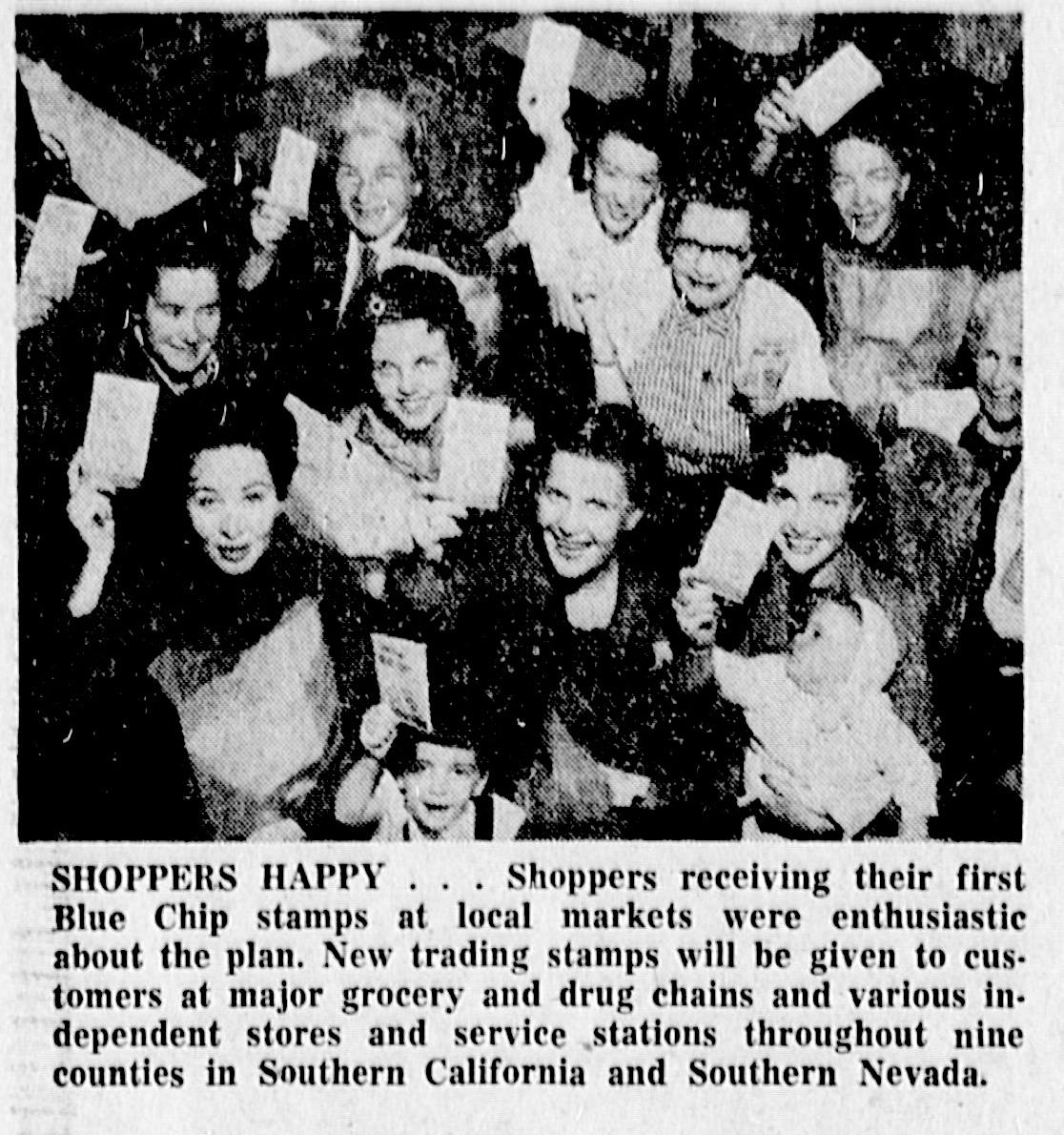
In Southern California, Green Stamps began to face serious competition starting on Jan. 4, 1960, when a coalition of chain grocers, drug stores and other retailers announced the formation of the Blue Chip Stamp Company cooperative venture and began distributing its stamps.
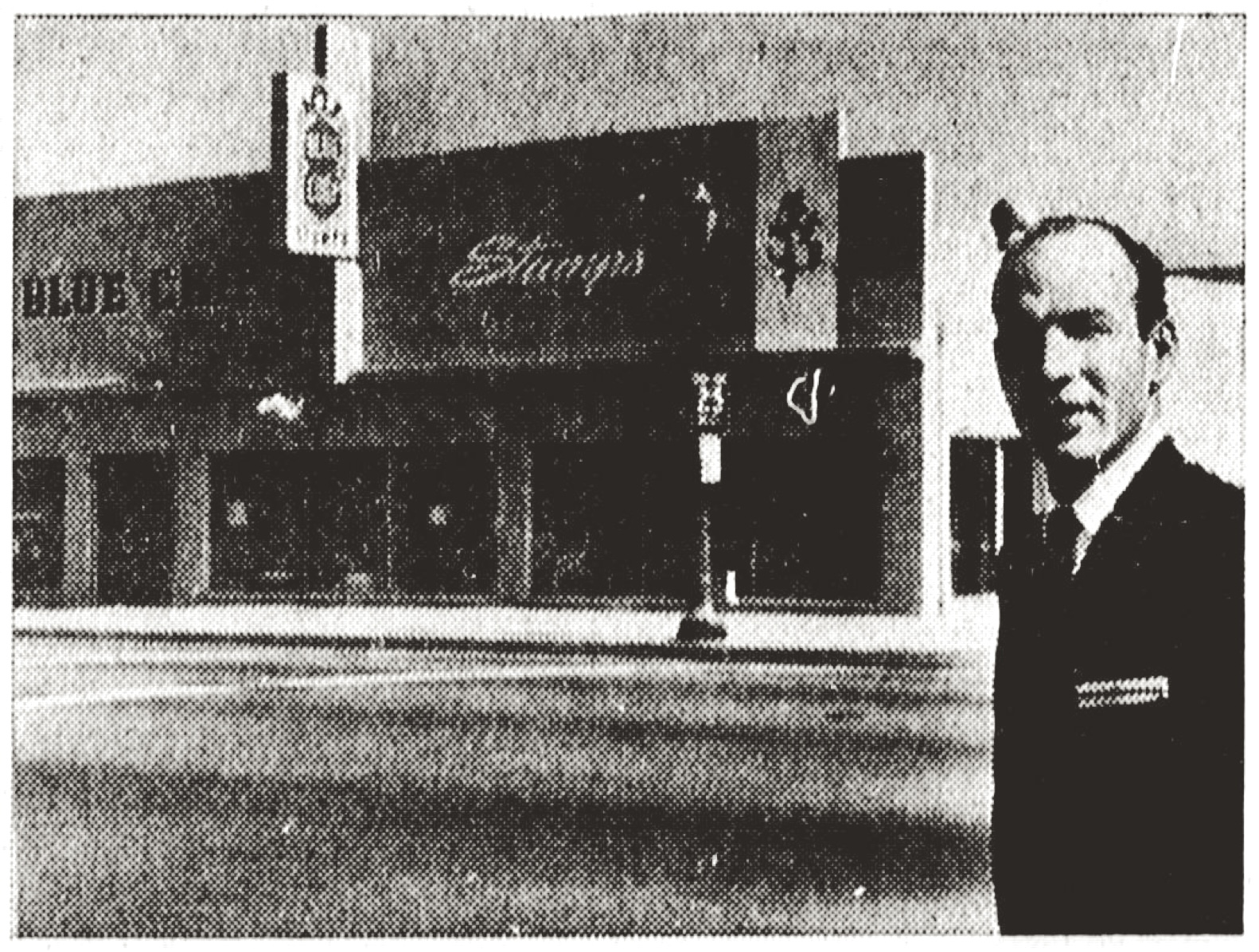
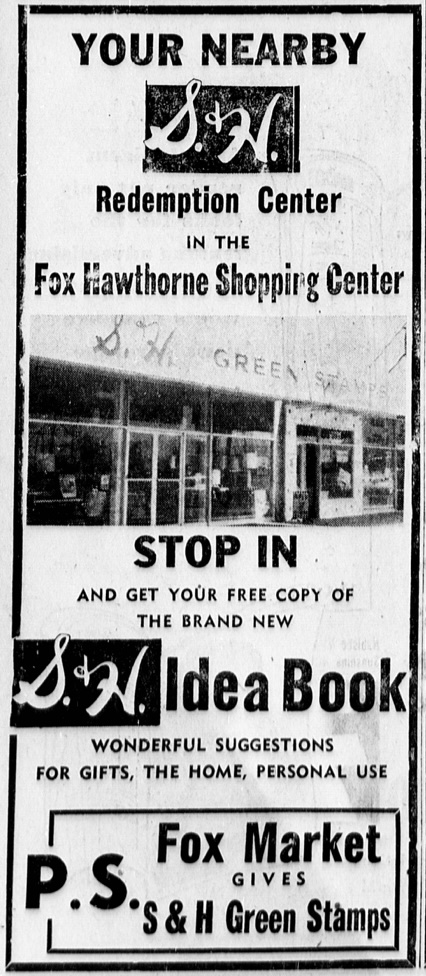
By June 1960, a Torrance Blue Chip redemption center had opened at 2153 Torrance Blvd. in a building which now houses a carpet store. Down the street, at Torrance and Hawthorne boulevards, an S&H redemption center had opened in the shopping center near the northeast corner of the two major boulevards.
The 1950s and 1960s proved to be the boom years for trading stamp companies. Some merchants objected to them, claiming they were too costly and cumbersome to administer. A group of independent Torrance gas station owners stopped offering the stamps for a while in July 1960, but they were swimming against the tide. Everyone seemed to be handing out the stamps.
Families weren’t the only ones who used trading stamps. They became popular fundraising tools for churches, social clubs, schools and charities. Admission into South Bay and Harbor Area community benefits and galas at times required contributing a completed book of trading stamps along with or instead of the usual entry fee.
Several factors contributed to the precipitous decline of trading stamps beginning in the 1970s. Most service stations stopped offering them after the 1973 gas shortage. With long lines of cars waiting for hours for fuel, station owners no longer needed to pay for inducements such as trading stamps to attract customers.
Supermarkets also turned to other customer strategies. Some preferred to undercut competitors through lower prices and coupons rather than pay for trading stamp programs. As supermarket checkout systems became more automated, the markets began offering price discounts through membership programs instead.
Consumer ardor for amassing the pesky little stamps and pasting them in books had cooled considerably as well. By the late 1990s, most traditional merchant trading stamp programs had ceased operations.
Sources:
Daily Breeze archives.
Los Angeles Daily News archives.
Los Angeles Times archives.
San Pedro News Pilot archives.
Torrance Press Herald archives.
“The Trading Stamp Story,” by Jeff R. Lonto, Studio Z-7 Publishing website, 2000/2013.
Wikipedia.

Comments:
Sept. 30, 2024
Just read your article about Blue Chip and S&H Green Stamps and thought you should know that we are bringing back the iconic S&H Green Stamp program , now digital! We are just getting started and are excited to carry on the legacy of what S&H Green Stamps meant to so many!
Check us out – Https://mygreenstamps.com
Carl Norloff, S&H Green Stamps CEO

