
This may sound hard to believe, but before 1903, no Americans wanted anything to do with eating tuna. Anglers loved to catch the feisty sportfish, but its flesh tasted gamey and unpleasant.
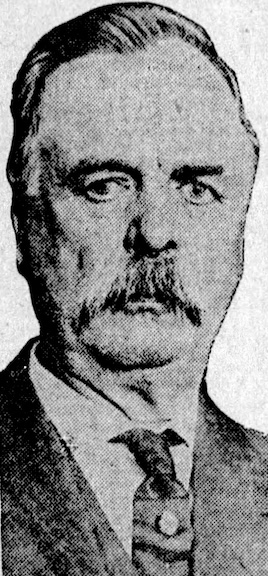
Alfred Powers Halfhill turned that all around.
He was born in Morrow County, Ohio, near Columbus, on Nov. 25, 1847. He worked as a clerk in a dry goods store and later supported his wife, Sarah, and their two children by becoming a partner in a Minnesota wholesale grocery business.
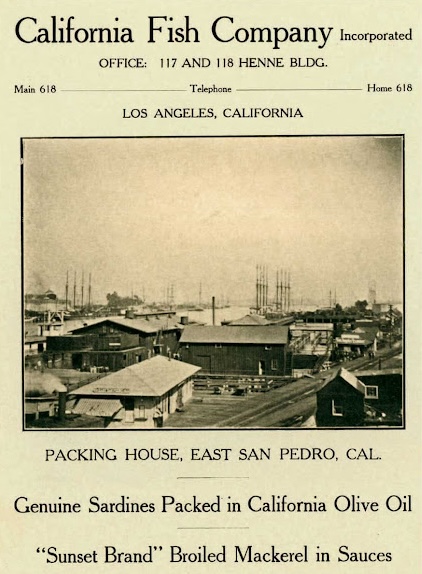
Sarah’s poor health caused the family to move to Los Angeles in 1892. There Alfred met up with a partner, Richard Wade, and despite having no experience in the fish canning business, the pair decided to buy canning equipment from a San Francisco firm, the Golden Gate Packing Co.
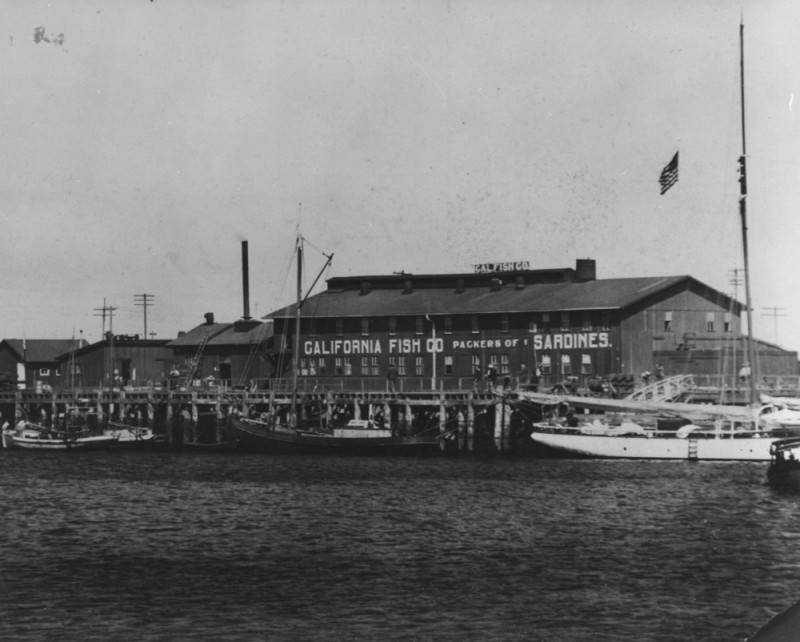
They relocated the operation to Terminal Island in San Pedro, opening the California Fish Co. in February 1893 in what was known then as East San Pedro. The facility, located on the harbor’s main channel from just across from 1st St. in San Pedro, was the first fish cannery established in Los Angeles Harbor.
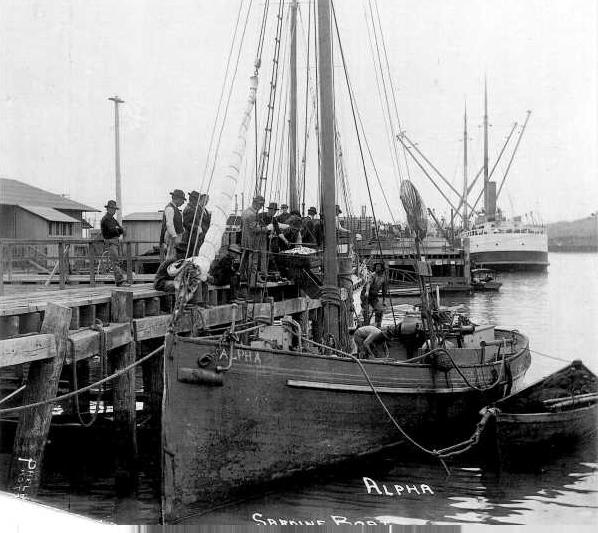
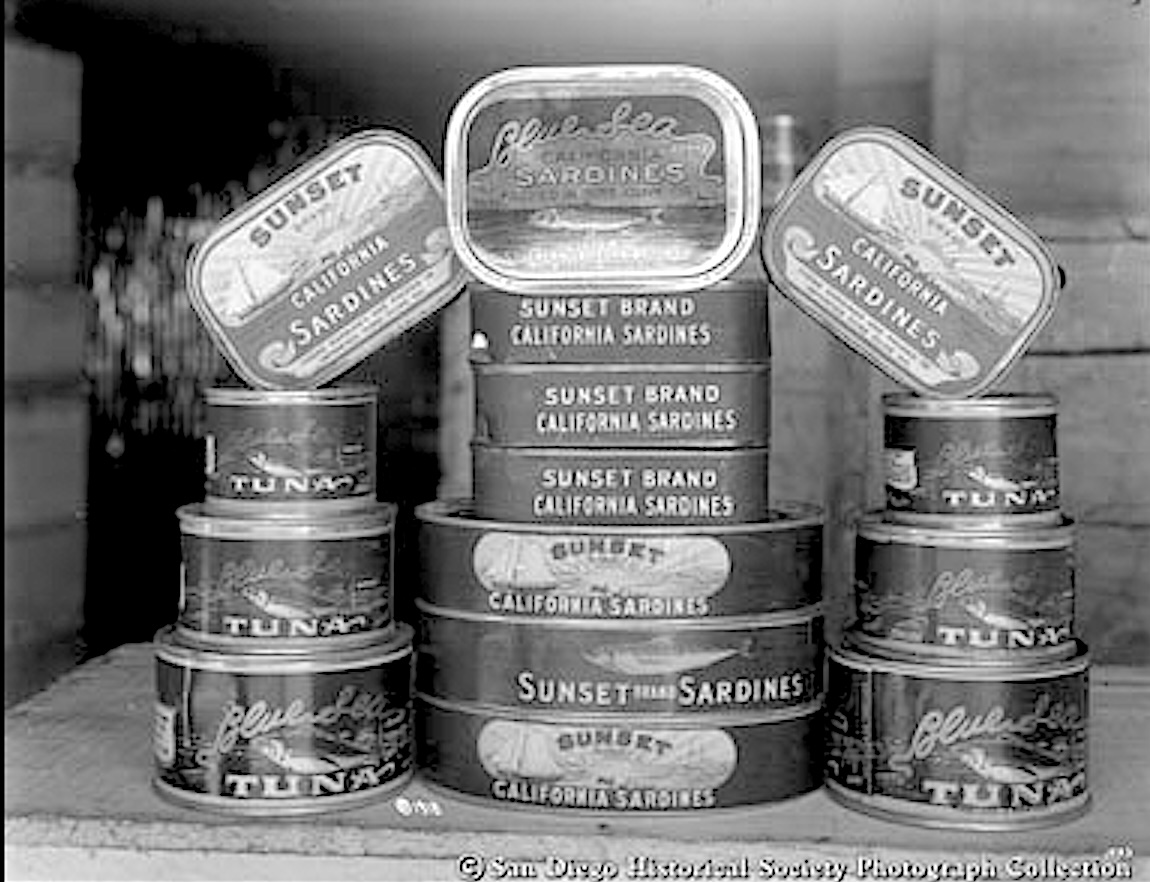
The company’s business centered on sardines and mackerel, and it operated its own fishing boat, the Alpha. The sardines found in San Pedro Bay were considered the equal of those canned in Europe. They were packed in olive oil and sold under the Sunset brand.
When the sardines and mackerel were plentiful, business was good. But both fishes were prone to fallow periods. During one such down season in 1903, Halfhill started exploring other options. He tried rock cod and halibut before concentrating on albacore tuna.
Tuna seemed to be plentiful in the local waters, and it seemed to be going to waste since few people were eating it. Halfhill began looking for ways to make it more palatable. His experiments began with salting and smoking the tuna, which didn’t help much. But steaming the meat turned it white and more tender, like chicken. Adding olive oil was the final step.
The Van Camp cannery later would brand its tuna product “Chicken of the Sea” in 1930, but the exact origin of the phrase is murky. It was being used in newspaper stories about the industry much earlier than that.
Halfhill gets credit for being the first tuna processor to use the phrase in advertising when he first began taking his product to the marketplace in 1908. He had canned his first tuna products in 1907, but not in large quantities.
Halfhill’s reimagined tuna quickly grew in popularity. He marketed it under the Blue Sea brand name and began trying to convince grocers of its appeal and convenience. Most Los Angeles area wholesalers were unimpressed at first, but the cases Halfhill shipped to New York caused something of a sensation in retail food circles.
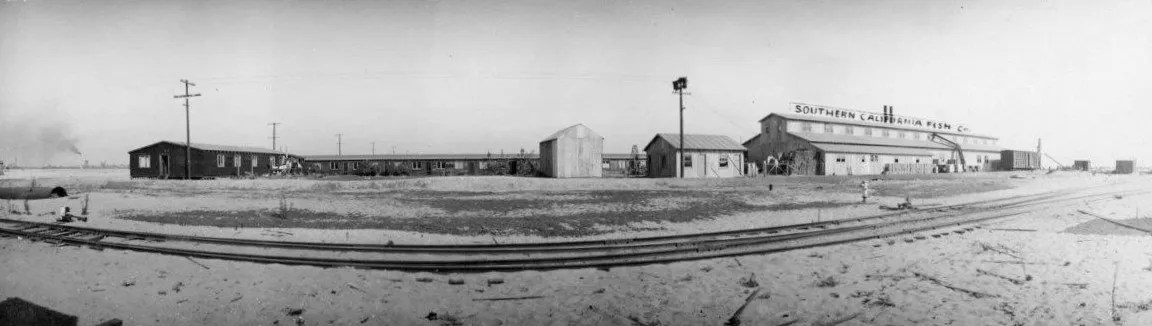
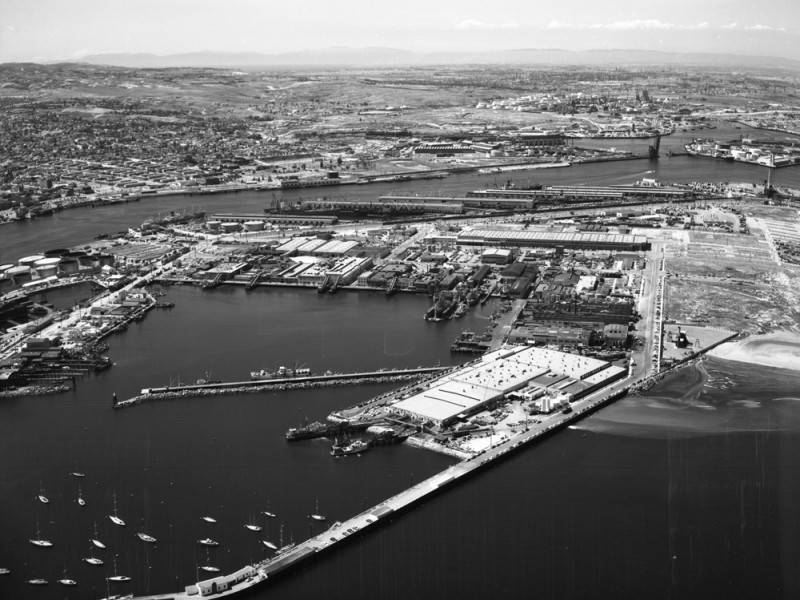
In 1910, the company shipped 6,000 cases of Blue Sea tuna. By 1912, it had changed its name to Southern California Fish Co. and expanded its fleet of fishing boats to seven. Canned tuna had become a sensation and other canneries quickly sprung up on Terminal Island in the area that later would become known as Fish Harbor.
These firms produced canned tuna under such familiar names of Bumble Bee, Chicken of the Sea and Starkist. (StarKist was founded by local San Pedro businessman Martin Bogdanovich in 1918.)
The tuna industry gradually became a mainstay of the local economy. By 1914, more than 200,000 cases of tuna were packed by the companies operating on Terminal Island.
On Oct. 25, 1914, high winds spread a fire thought to have originated in Standard Oil’s nearby warehouse into the Southern California Fish Co. cannery, which ended up a near-total loss. The large amount of oil present in the cannery received blame for the quick spread of the flames.
The San Pedro News Pilot reported the next day that a series of pops and explosions had alarmed firefighters at the blaze, who assumed it came from ammunition being stored in the area. It turned out to have come from thousands of exploding vacuum-packed tuna cans, many of which were found floating in the nearby channel after the blaze.
In the aftermath of the blaze, Halfhill announced in early 1915 that he had cut all ties with the Southern California Fish Co. He had decided to open a new concern with his sons Harry and Charles.
The Halfhill Tuna Packing Co., was built on the site of the former National Tuna and Fish Co. in nearby Long Beach Harbor. Halfhill used funds from the sale of his stock in SCFC to finance the new plant.
The successful company was renamed the Halfhill Packing Corp. in 1919. In December 1920, It too was damaged by a large fire, but the cannery carried on, rebuilding the plant thanks to fire insurance.
Halfhill retired from the business in 1922, turning over its operation to his sons. After a brief illness, he died at 76 at his longtime Los Angeles home on May 7, 1924. He was buried at Inglewood Park Cemetery.
At the time of his death, 36 tuna canneries were producing canned tuna along the West Coast.
As of 2023, the U.S. canned tuna market had an estimated valuation of $3 billion. Americans eat an estimated 1 billion pounds of it annually.
Sources:
Los Angeles Herald archives.
Los Angeles Times archives.
Precedence Research website.
San Pedro News Pilot archives.
“Through the Viewfinder: Panoramic Photos of the Southern California Fish Company, Terminal Island, Ca. 1912-1914,” by Paul R. Spitzzeri, Homestead Museum blog, April 26, 2011.
“Tuna Facts,” National Fisheries Institute website.
Wikipedia.


One thought on “Albert Halfhill: The man who transformed once-lowly tuna into the “Chicken of the Sea””