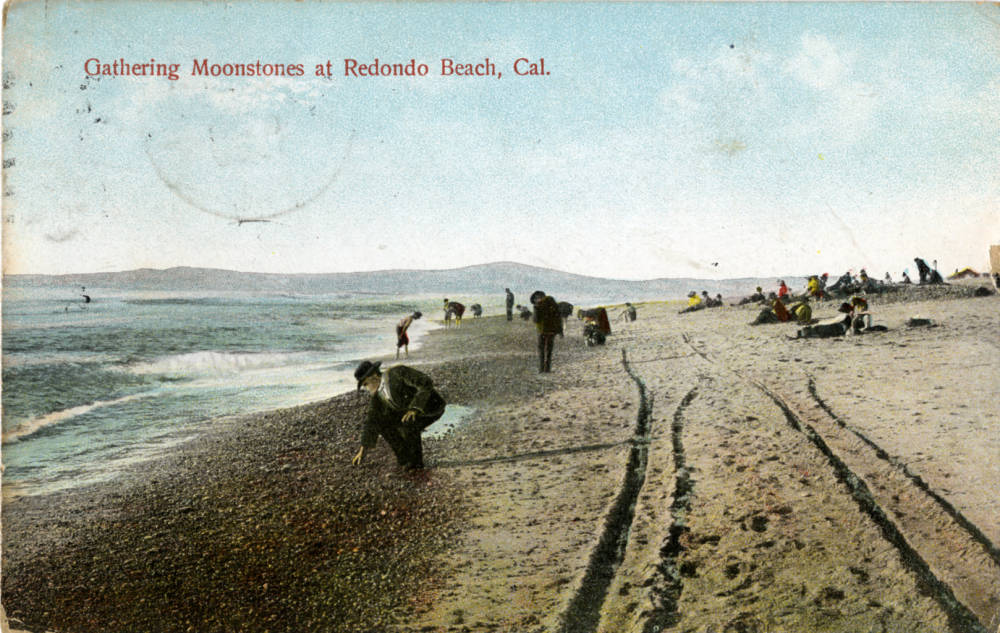
Everybody seemed to love Moonstone Beach, one of the South Bay coastline’s most popular, if relatively short-lived, tourist stops on the Red Car railroad lines of the early 20th century.
I’ve mentioned the stretch of shoreline strewn with ocean-polished smooth stones that ran roughly from the southern Hermosa Beach border to just above the Redondo Beach pier in past stories, but it deserves a closer look.
The Redondo coast was wild and undeveloped when the city first began to be developed in the 1880s. The seas were rough in the era before dredging, breakwaters and harbors tamed it somewhat. Frequent storms washed heaps of rocks up from the depths onto the shore, sometimes in piles up to six feet high.
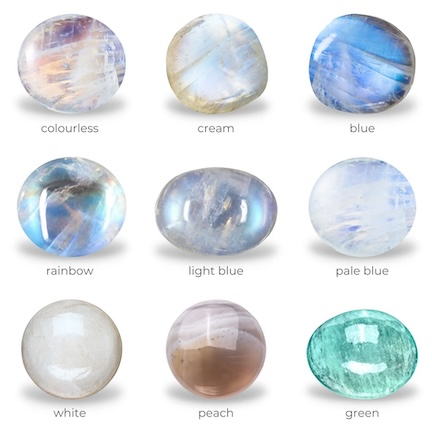
By the late 1880s, the beach already had a reputation as a place to find the translucent semi-precious gemstones known as moonstones. They derive their name from their unusual sheen which has been compared to the glow of the moon. This phenomenon is called adularescence, after Mt. Adular in Switzerland, an area known as a source for the stones.
Moonstones, which belong to the feldspar family, are formed when two minerals, orthoclase and albite, combine via volcanic activity into layered stones, a process which gives them their distinctive luminescence. In addition to moonstones, stones of value that could be found washed up on the beach included agate, chalcedony, carnelian, amethyst, beryl, jasper and others.
If some of those names sound familiar, it could be because Redondo Beach decided to name some of its east-west streets after the Moonstone Beach semi-precious gems in the late 1880s. (They threw in a few other precious gemstone names, too, including Diamond, Ruby, Emerald, Sapphire and Pearl.)
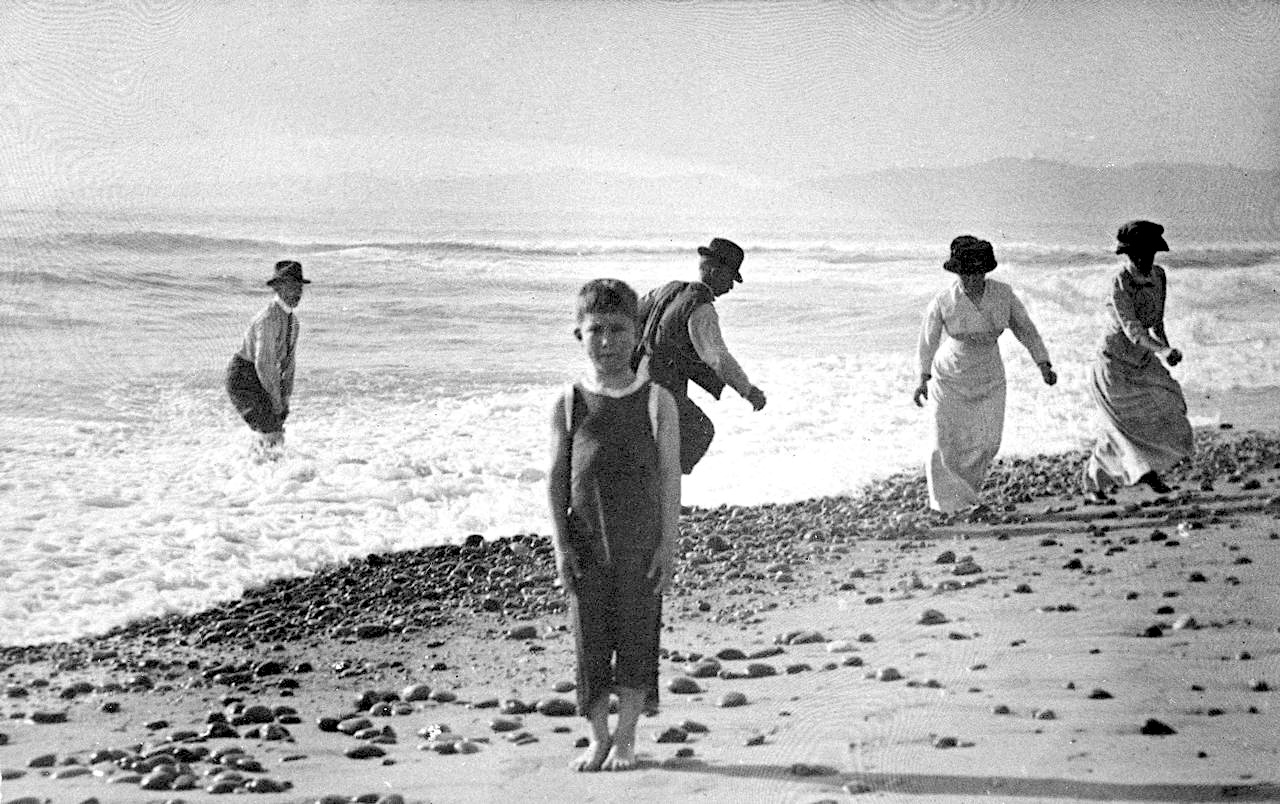
Moonstone Beach became a tourism phenomenon, especially once visitors began arriving at the seacoast town via the railroads connecting the area to Los Angeles in the 1890s. They began seeking out the semi-precious stones that could be found among the plentiful rocks, especially after storms.
A March 11, 1906 article in the Los Angeles Times detailed the activities of the moonstone hunters, who arrived in trainloads every day at the shore to do their searching. The desired stones weren’t as rare as precious gems, but most of the finer ones could sell from $10 to $20, with exceptional examples bringing up to $100.
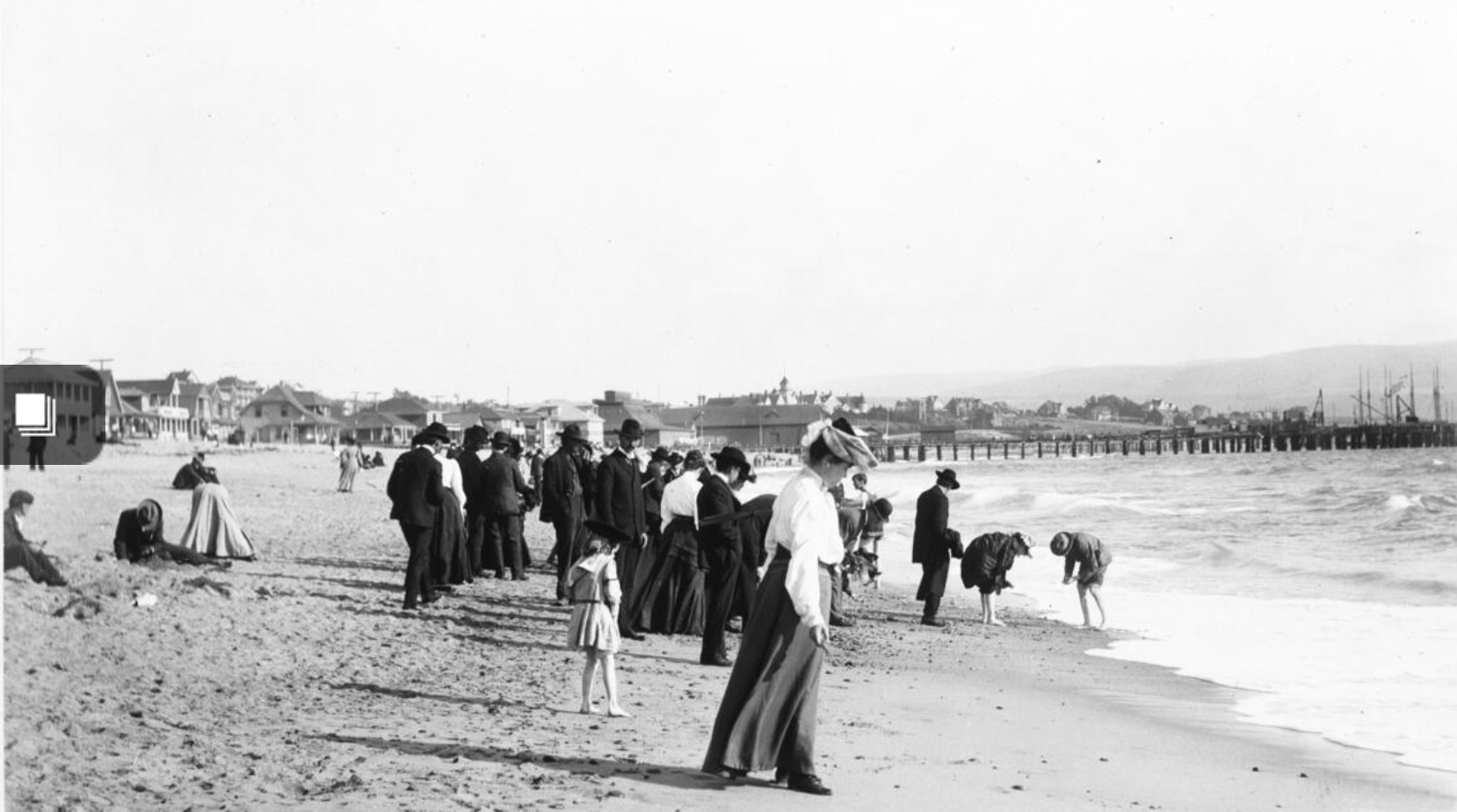
Local jewelers and lapidarists set up shop nearby, polishing and cutting the stones found by visitors. Some less scrupulous beach vendors sold ready-made stones of often-dubious quality to those who lacked the patience to dig out the real thing.
The quantities of stones with value found on the beach began to diminish after the early 1900s. Some blamed the hordes of moonstone seekers for depleting the rocky deposits, which certainly attracted large numbers of people.
A more likely explanation points out the large amount of beach stones that were used in construction projects in the growing city, including for structures such as the 1907 Redondo Beach steam power plant.
Whatever the explanation, the stones began to disappear from Moonstone Beach, and the craze gradually died down.
Occasionally, a particularly violent storm or exceptionally high tides would bring new piles of stones to its shores. This happened in 1915, 1934, 1941 and 1951, bringing rock hunters out in droves to search through the new deposits.
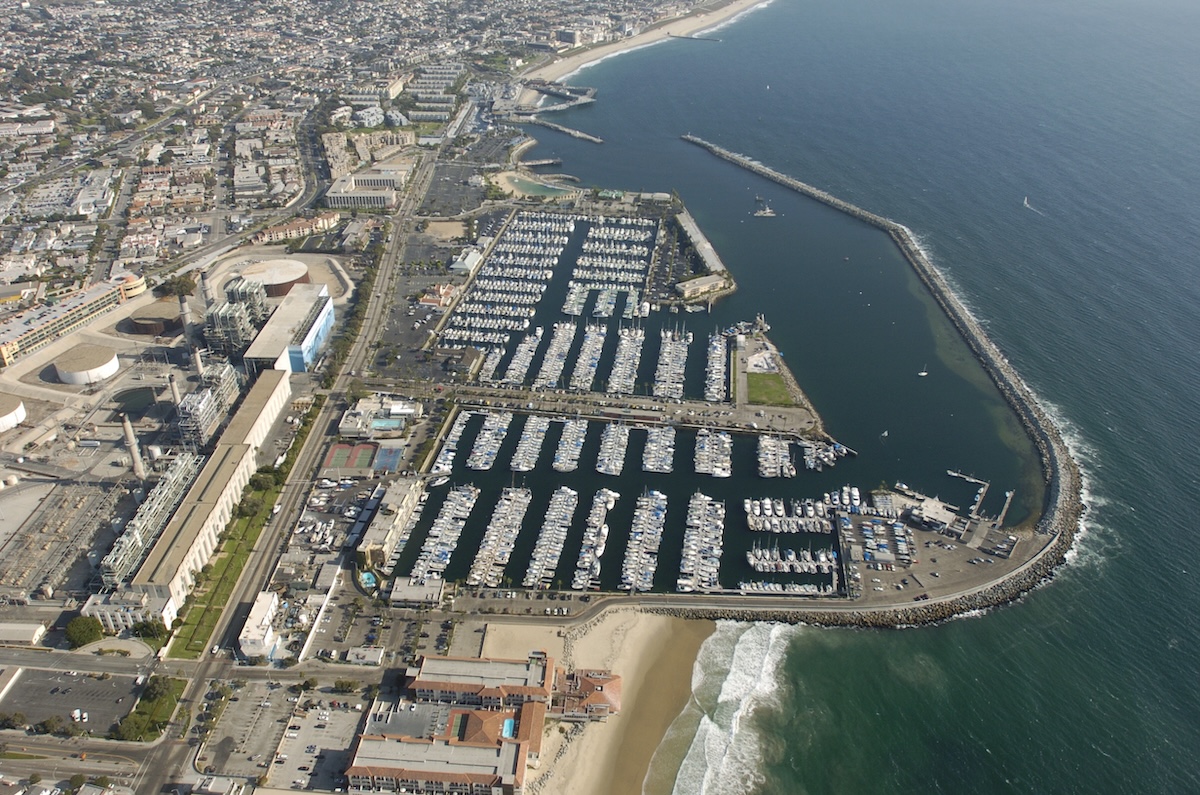
But it all changed forever during the 1960s. Redevelopment radically altered Redondo’s downtown during the creation of King Harbor. More importantly to Moonstone Beach, King Harbor and its breakwaters also changed the configuration of the shoreline.
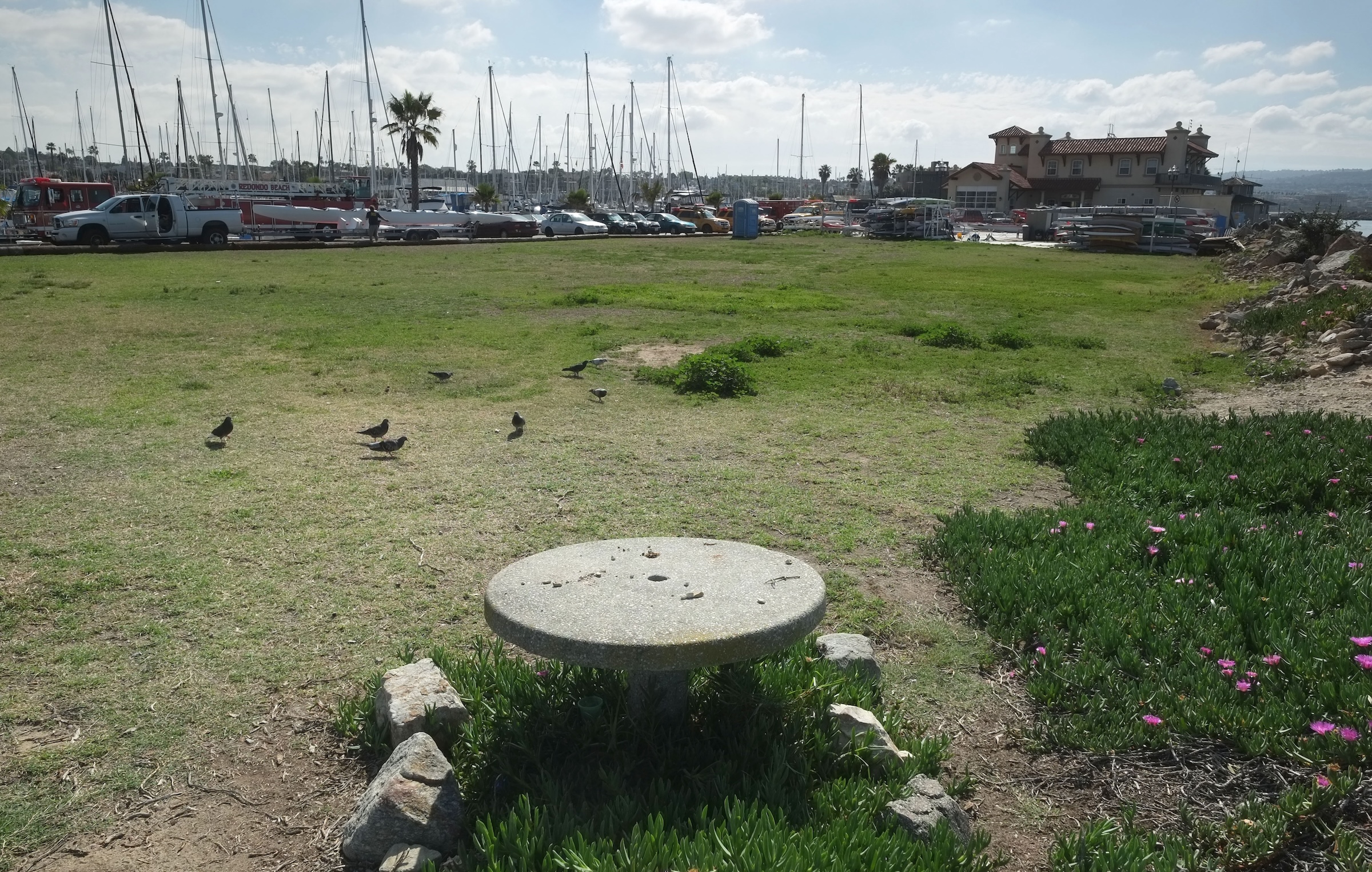
The natural conditions that led to the accumulation of rocks from the ocean onto its shores were no more, and, for that matter, neither was Moonstone Beach itself. The city of Redondo Beach memorialized the former beach by creating Moonstone Park, a small green space on a small spit of man-made land in King Harbor known as Mole B.
The patch of green grass on Mole B has become the source of controversy in recent years. The city’s plans to develop it in 2011 were scrapped, and the land remains undeveloped.
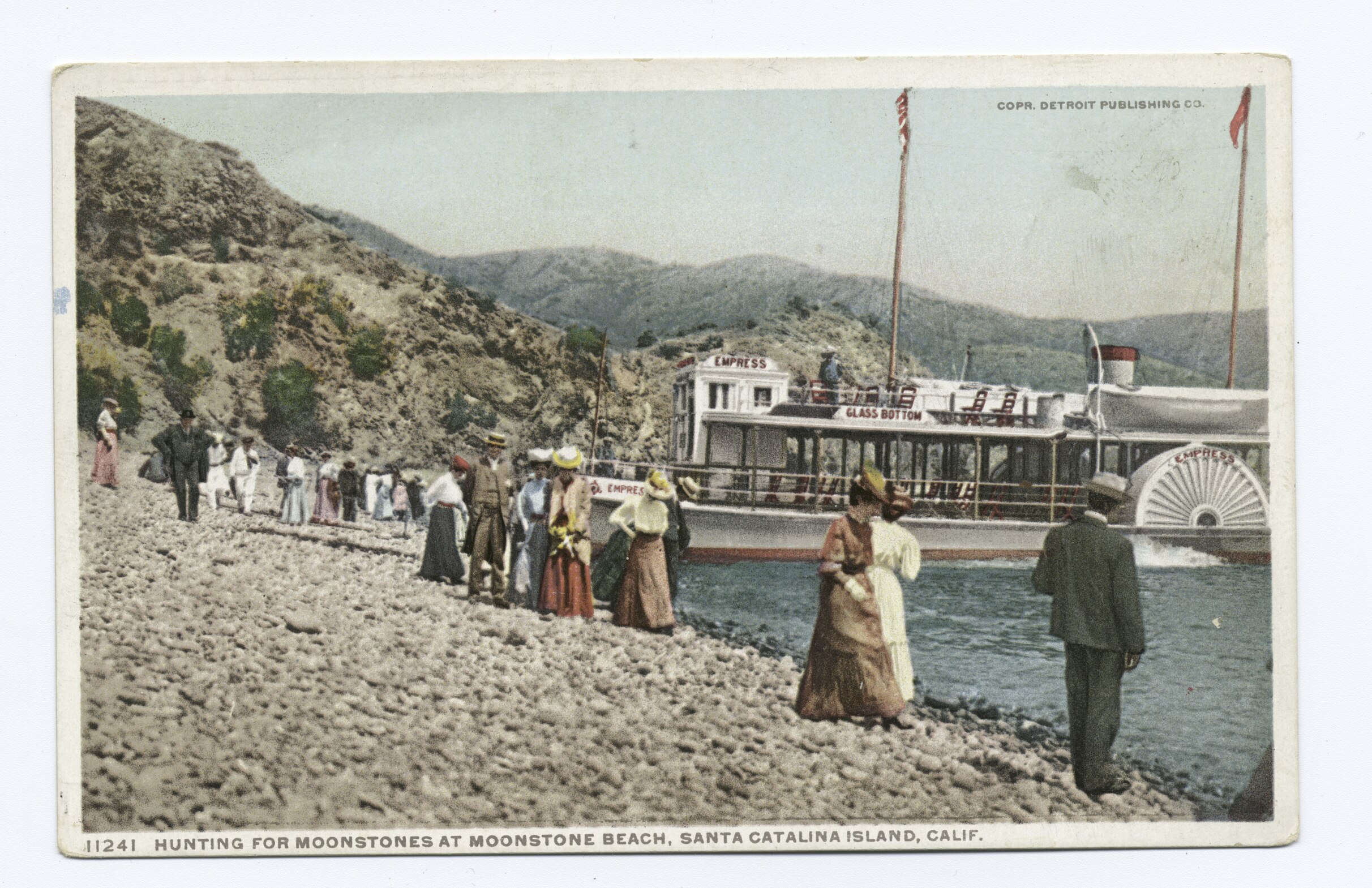
Redondo Beach wasn’t the only place in California to have a Moonstone Beach. Catalina Island’s Moonstone Beach, about four miles northwest of Avalon as the crow flies, reported that moonstones, opals and agates could be found on its shores as early as 1901. As a result, it had become one of the island’s most popular tourist spots at that time.
Another popular Moonstone Beach is located in Cambria in San Luis Obispo County, just south of Hearst Castle. It still has its stones, but it turns out they’re not true moonstones, but the more common chalcedony, a variety of quartz.
A fourth Moonstone Beach also exists in Humboldt County on the northern California coast, though it doesn’t appear to have actual moonstones on its shores.
Back in the late 19th and early 20th centuries, though, Redondo’s Moonstone Beach had more than enough moonstones to go around. For a while, at least.
Sources:
Daily Breeze archives.
Los Angeles Times archives.
“Moonstone Properties and Characteristics,” Diamond Buzz blog, Dec. 27, 2022.
Old Redondo: A Pictorial History of Redondo Beach, California, by Dennis Shanahan, Legends Press, 1982.
Wikipedia.