
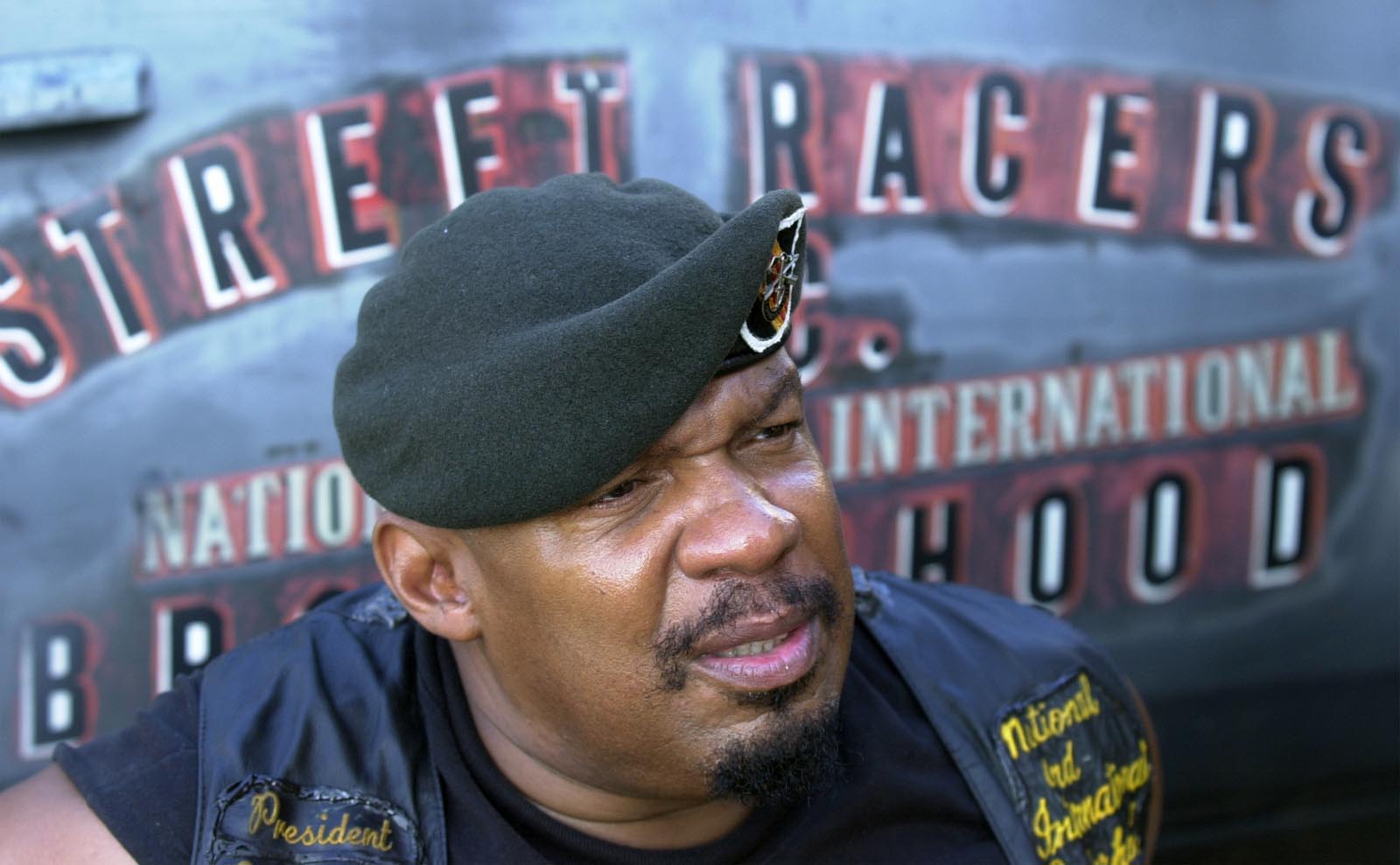
Big Willie Robinson, the man who spent most of his life fighting for a place for street racers to have a safe place to compete, born to Lula Mae and Willie Robinson Jr. in New Orleans, Louisiana, on Sept. 12, 1942. He was the oldest of the couple’s five children.
He wouldn’t adopt the “Big Willie” nickname until after leaving New Orleans, but, at 6-foot-6 and 300 lbs., he already had grown into the moniker as a young man. He attempted to pursue a football career at Louisiana State University, but the school turned him down. (LSU wouldn’t integrate its football team until 1972.)
He developed his love of cars from a young age working alongside his father, who was a body shop repairman. After his prized Oldsmobile 98 was destroyed in an apparently racially motivated attack, the family sent him to live on his own in Los Angeles in 1960.
With hostilities escalating in Vietnam, Robinson enlisted in the U.S. Army, but physical problems with his legs and back caused him to be honorably discharged before completing basic training in 1966.
Robinson later would claim to have fought in Vietnam and usually wore fatigues and a military beret in public. After Robinson’s death, Los Angeles Times reporter Daniel Miller discovered in 2019 that Robinson had embellished the facts concerning his service.
It ultimately didn’t affect the value of Robinson’s social contributions, which would begin after the 1965 Watts Riots in Los Angeles pointed up the social and racial inequities in the polarized city.
City officials previously indifferent to the problems of poverty and racial inequity in South Los Angeles suddenly began listening to voices coming from the affected acommunity. Among those who caught their ear: Big Willie Robinson.
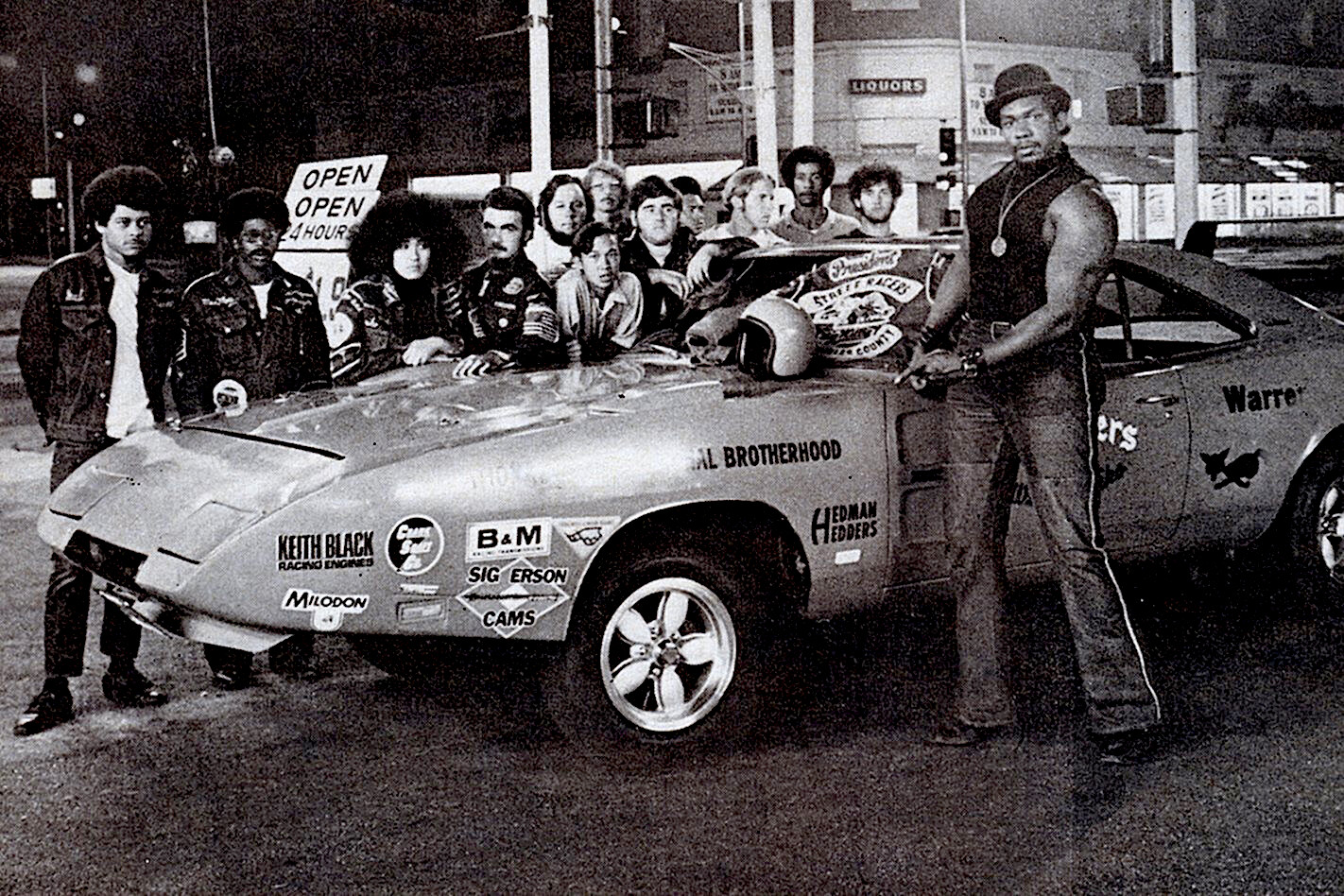
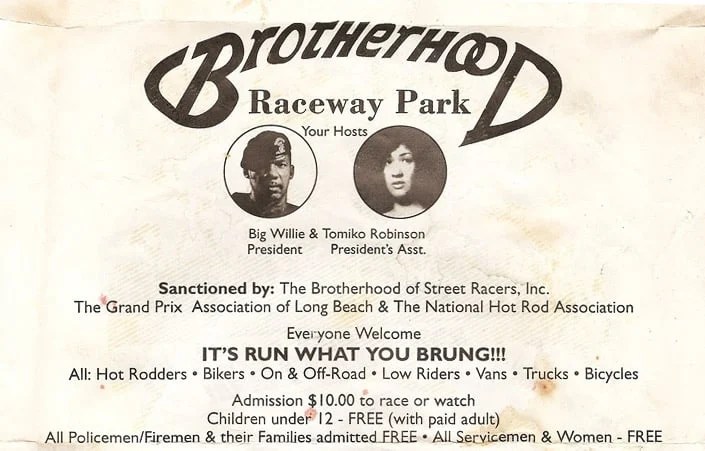
As a car buff, Robinson had experienced the dangers of illegal street racing and had been advocating for an organized solution that would allow drag racing in a safer and more controlled environment. In 1968, he formed the National and International Brotherhood of Street Racers to help in his lobbying for the cause.
He began working with the Los Angeles Police Department to stage such races including all members of the racing community on neutral turf, holding the first such event in 1968. He convinced skeptics with his belief in the use of organized street racing to help heal fractured social relationships.
As he told the Los Angeles Times, “When it comes to wheels — white, black, brown and yellow; male and female; young and old; rich or poor; from gangbangers to law enforcement — with that formula you can pull your communities together.”
The street racing events attracted large crowds, but Robinson became more and more convinced that a permanent site was needed in order to hold the regular weekly racing events. After former LAPD chief Tom Bradley became mayor of Los Angeles in 1973, Robinson approached him with his plans.
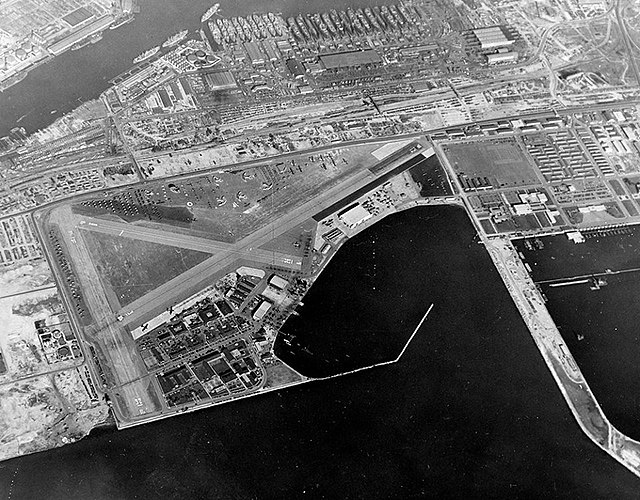
They involved leasing land on Terminal Island just southeast of the Vincent Thomas Bridge for a raceway. The former Reeves Field had been a U.S. naval air training site since 1927, but it was decommissioned in 1947. The Navy still used it occasionally, as did the LAPD, which held driver training instruction for its officers there.
It didn’t take long for auto racers to see the promise of those paved runways. A Long Beach car club held the first official race there in 1953. It lost money, and was not repeated, but the idea of using the former base survived and Big Willie Robinson adopted it.
Big Willie had mastered the art of speaking in rough-hewn eloquence to those in power, in this case, the Los Angeles City Council and Port of Los Angeles officials. He described the unifying power of street racing to bring disparate groups together, while alsoveasing the rising tide of deadly traffic accidents tied to illegal racing on city streets.
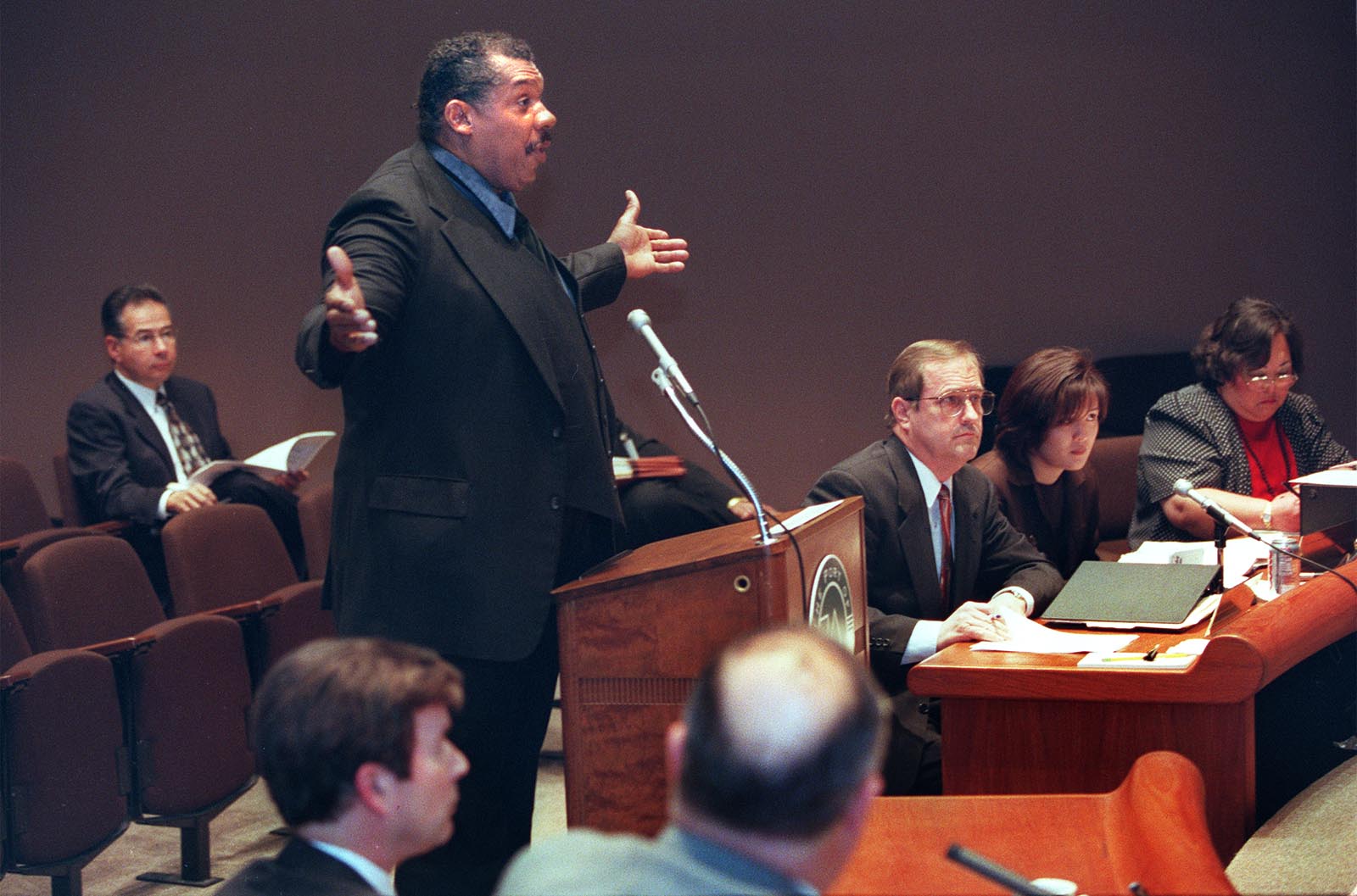
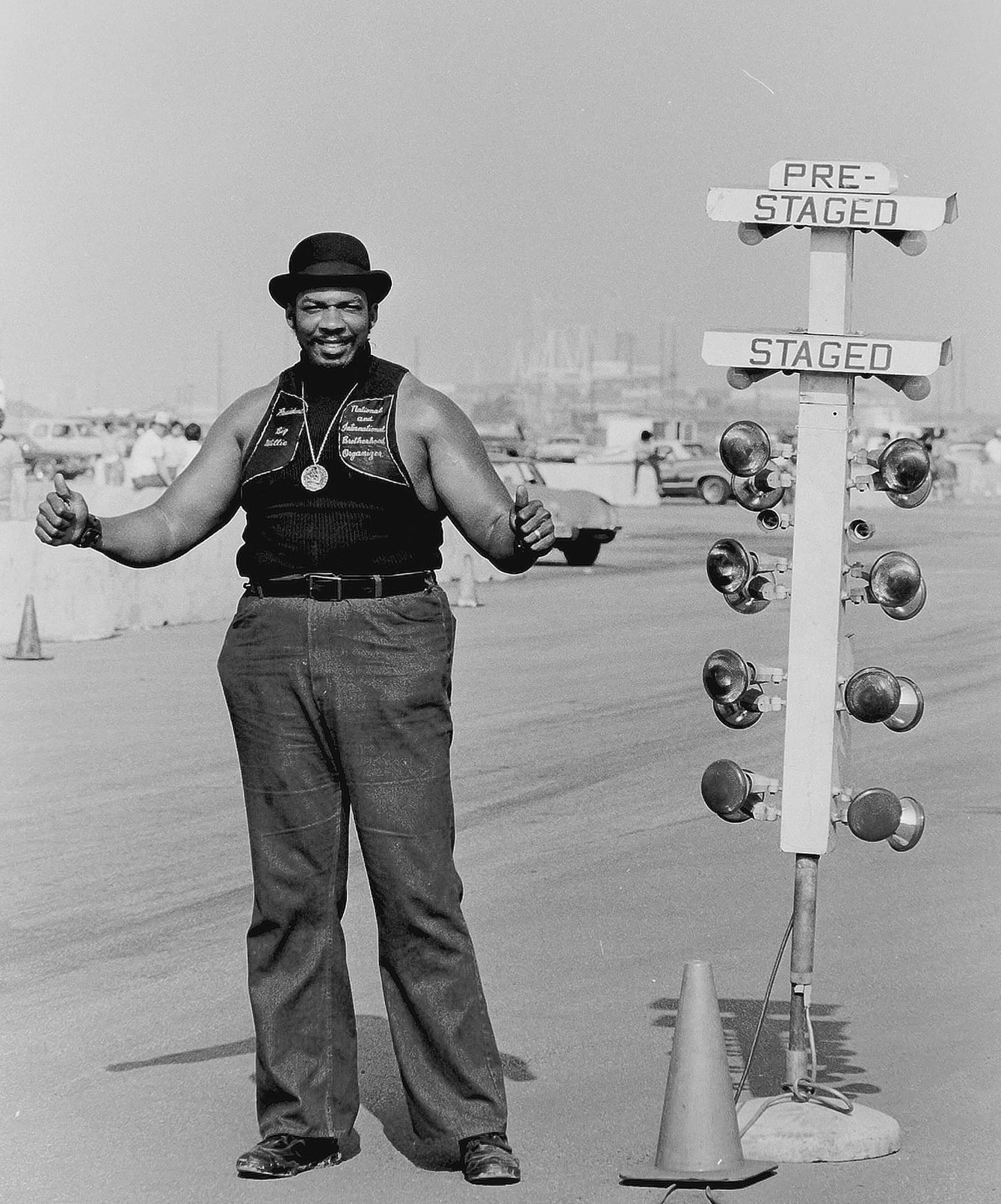
The closure of dragstrips throughout the L.A. area, including the nearby Lions Drag Strip in Wilmington in 1972, exacerbated the problem. Robinson eventually convinced the city and the port, who allowed him to open Brotherhood Raceway Park at Terminal Island in 1974. It would operate off and on there for the next 21 years.
The makeshift facility conducted races from 1974-84, when the Port closed it down to use the space to store imported automobiles. Robinson explored other options, including building a raceway at LAX and at the Palmdale airport. None of the other options panned out.
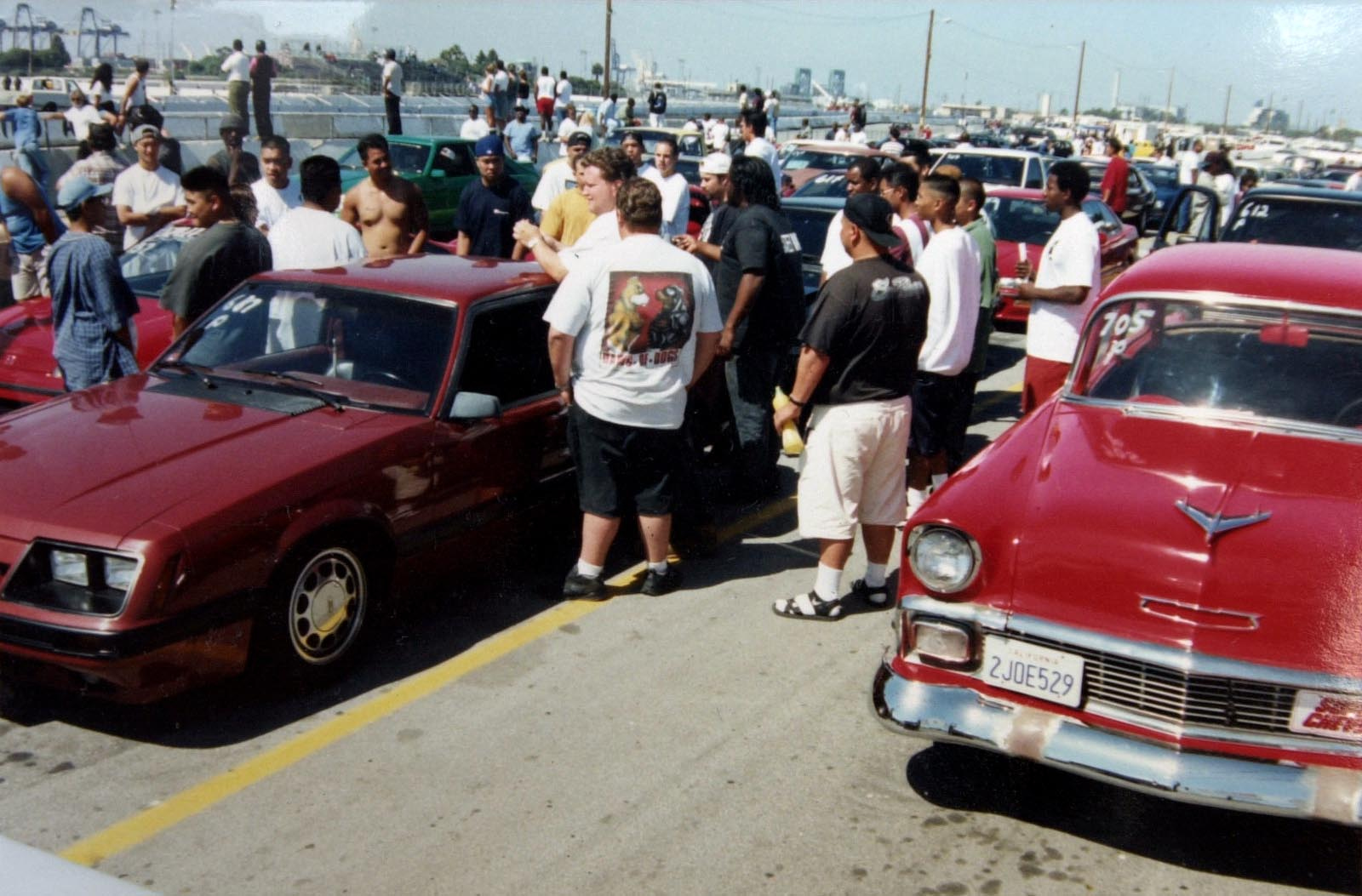
In 1993, Robinson finally convinced the Port to allow him to reopen at Reeves Field. He began holding weekly events that attracted 3,000-4,000 spectators regularly. But the Port’s permission was temporary; the track had to close in 1995 to make way for the LAXT Coal Terminal facility.
(Credit: Rick Meyer Facebook page)
The coal terminal opened in 1997 and closed in 2006. It was abandoned and the land cleared a couple of years later. Throughout it all, Robinson continued to appeal to anyone who would listen to allow the Brotherhood Raceway Park on Terminal Island to reopen. But Port officials and the Harbor Commission remained unyielding.
Big Willie Robinson died from an infection that led to heart failure on May 29, 2012. His wife and longtime racing companion, Tamiko, had died in 2007.
Repeated attempts since then to implement his ideas about establishing a permanent home for street racers have yet to become reality, but his persistence, larger-than-life personality and idealistic ambitions have not been forgotten.
Sources:
“BIg Willie Robinson: 1942-2012: He Brought The Races Together Through Racing,” by Mark Vaughn, Autoweek website, May 20, 2012.
Daily Breeze archives.
Los Angeles Times archives.
“Street Legends: Big Willie Robinson and the Brotherhood of Street Racers International,” by jonjon005, The Symple Speed Garage blog, Oct. 5, 2015.
Wikipedia.


From reader and former street racer Larry Paul:
I used to drag race down there for years, not only in my 68 GTO, but my 67 Firebird, 72 Capri, my parents cars, friends cars etc. It was always a super fun “run what you brung” night with bracket racing and straight up competition.
I am a white 61-year-old who really enjoyed that environment where EVERYONE was welcome and we all shared a common passion for cars and racing. Everyone really did check their “affiliations” at the door and it was an amazing place where everyone really did get along and it truly brought together everyone from every community exactly as you describe in the article. Willie was a really big guy that towered over me, but he was always friendly and welcoming to everyone and kept a “tight ship”. I always felt safe there.
If you have not heard the “Larger than Life” podcast -I strongly recommend you do. In 2019 Daniel Miller created a mini podcast series that I found it to be very engaging and truly great journalism. Everything that I knew from personal experience before the podcast, I found to be incredibly accurate and well researched and he really tells a very complete and full story. I listened to it as soon as I heard about it, and then again on a road trip my wife and kids all listened to it together. It is still on my phone.
https://www.latimes.com/projects/larger-than-life-podcast/
I thanked Daniel in 2019 and again in 2021…and since I live in PV and work in Cypress, I drive over the Vincent Thomas bridge often. From the 1980’s to this day, truly every single time I cross the Vincent Thomas bridge onto terminal island I think of Willie and the Brotherhood Raceway drag strip. I cc’d Daniel on this e-mail.
In 2021 I was trying to start an effort to try to honor him somehow but eventually came up with the idea to get Ferry St. renamed on Terminal island, but my life was very busy then…and with Covid raging it was just not going to happen then. I even had a short conversation with Fabian, but I have too many things on my plate and never got this off the ground, and somehow today I am even busier than I was then.
My ideas that I would still love to see happen is rename Ferry Street to Willie Robinson Drive. If you have any ideas on how to get a grass roots campaign to get road re-named, that would be great.
Thank you again for the great article.
Larry Paul
Oct. 3, 2023
LikeLike
I just read your article today about our President Big Willie Robinson. My name is Donald Galaz, the current spokesman for the National and International Brotherhood of Street Racers. I’d like to see if we could do a follow up story about illegal street racing and our continued efforts to reopen a local place to get the kids off the streets. We recently went to County Board of Supervisors meeting and item number six on the agenda was looking in to the possibility of opening up an organized Raceway. Our efforts have not stopped, we will continue to fight to bring safety to our city and county. We need more local raceways my friend, thank you again for the short story about our President. Because of people you like you his legacy lives on.
Donald “Donco” Galaz
LikeLike