
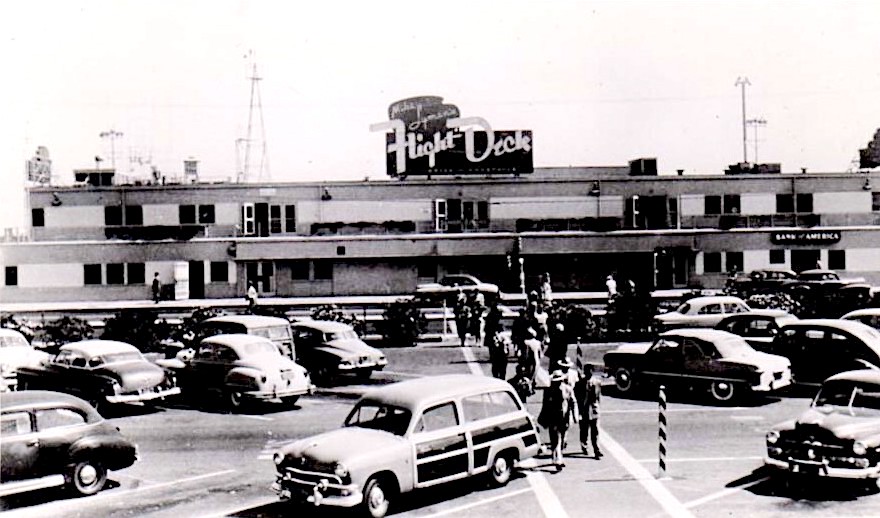
When veteran restaurateur Mike Lyman opened his latest eatery at the Los Angeles Municipal Airport in 1946, he got in on the ground floor.
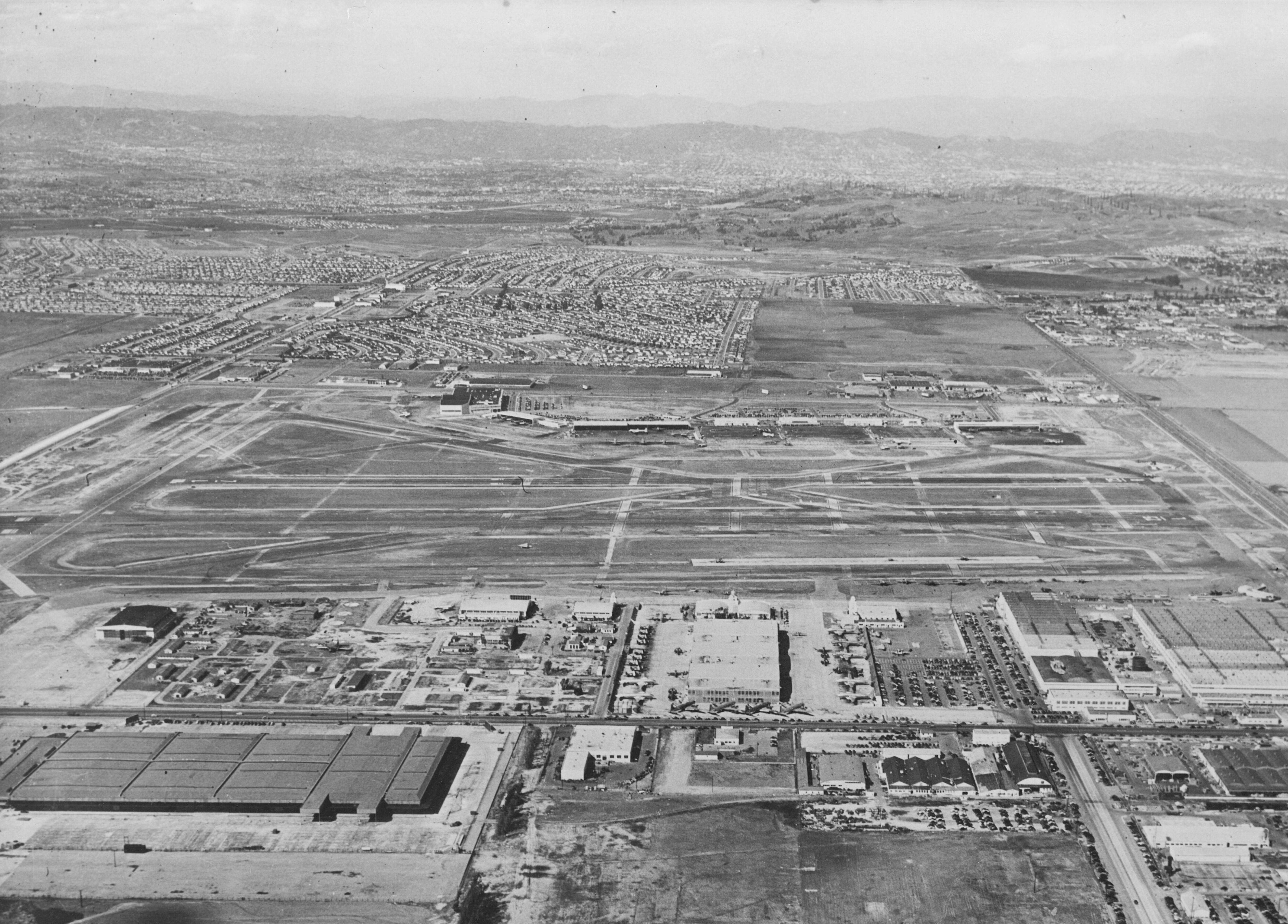
The bond issue authorizing funds for the former Mines Field to be developed into the city’s main airport had just passed in 1945. The major airlines who would be using it, namely American, TWA, Western, United, Pan Am and Southwest, spent 1946 quickly building terminals at the airport in time for the first flights on December 9 of that year.
The airport, renamed Los Angeles International Airport in 1949, had a radically different layout then. The single row of terminals, mostly wooden buildings, was situated east and north of where the modern-day airport terminal loop sits now. The airport’s landing strips then were located along Century Blvd. west of Aviation Blvd.
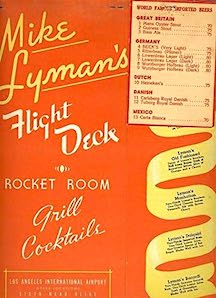
Lyman was awarded the franchise that made Mike Lyman’s Flight Deck the airport’s only full-service restaurant. Despite what I said above, he built it not on the ground floor but on the second (top) floor of the main terminal. Construction began in 1946, and the restaurant opened when the terminal did, on Dec. 9, 1946.
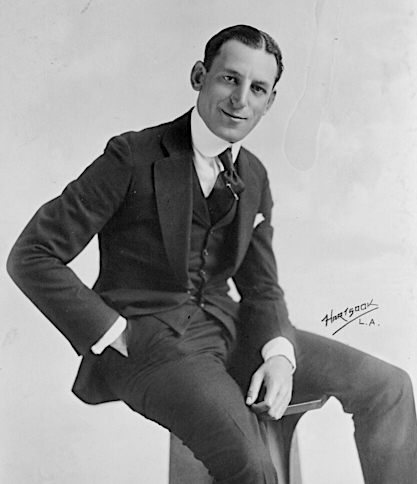
Lyman ran his restaurants with a showman’s flair. Born Michael Simon in Chicago on May 29, 1887, he and his brother, Abe, became vaudeville performers in the early 1900s. (Abe Lyman would go on to be a successful local bandleader.)
Lyman became known for his singing and dancing nightclub act, and went on to make entertainment part of his earliest restaurant ventures, the Sunset Inn in Santa Monica and the Palais Royale on 6th St. in downtown Los Angeles. The latter would later become Mike Lyman’s Grill, a celebrated downtown L.A. showplace restaurant and celebrity hangout.
Lyman’s restaurant ventures gradually began to overshadow his entertainment aspirations. He and his brother William began opening other eateries, including another one in downtown L.A., one in Hollywood, and, later, the Flight Deck at the airport. Under the terms of the agreement to operate the latter, an agreed-upon 10% of its gross revenues reverted to the city of Los Angeles.
Flight Deck customers reached the indoor part of the restaurant, the Rocket Room, by climbing an outdoor flight of stairs. Just as popular was the outdoor open-air observation deck, which ran the length of the restaurant. Mounted coin-operated telescopes were available, and customers could watch planes land and passengers board to their heart’s content.
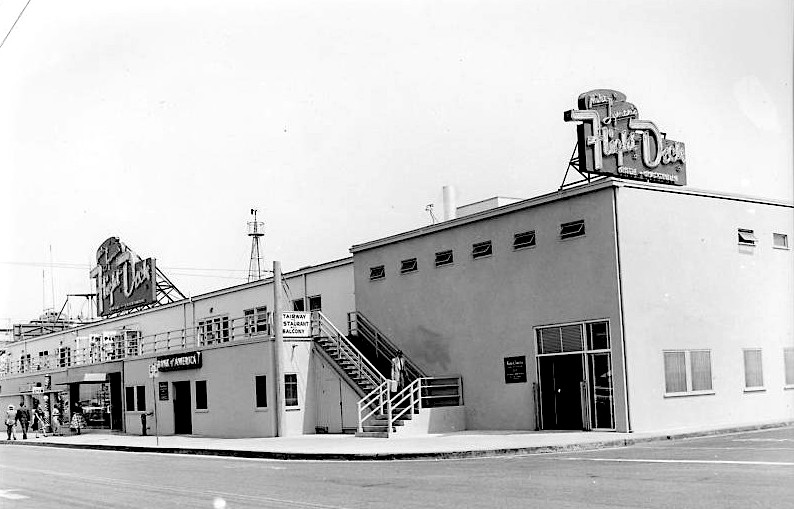
In addition to the restaurant, the multipurpose main terminal at 5900 Avion Ave. also had government offices, including the Federal Aviation Administration, Weather Bureau and Flight Service Station.
The LAPD had its airport office there. The building also housed a Bank of America branch, a coffee shop, a Western Union office, a barbershop, and the first Travelers Aid office ever housed at an airport.
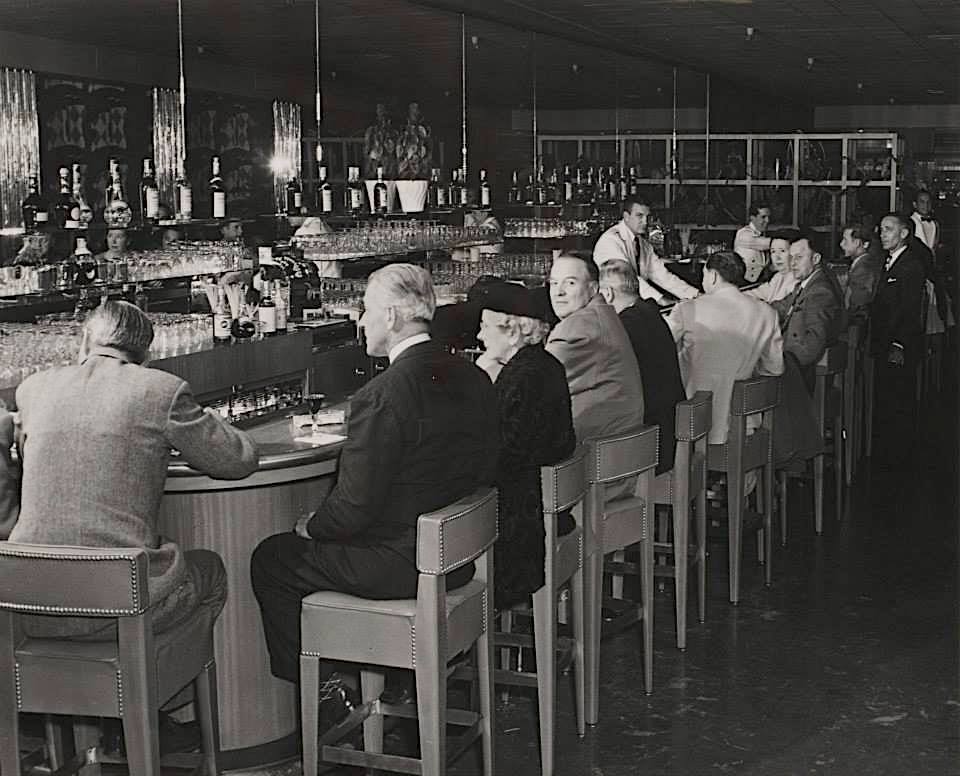
But the Flight Deck was the only restaurant, so it became a natural gathering place for travelers, aviation buffs and, not surprisingly given Lyman’s connections, celebrities. Stargazers had the chance to spot Clark Gable, Joan Crawford, Bob Hope and Groucho Marx, along with former first lady Eleanor Roosevelt and heavyweight boxing champ Joe Louis there.
The Flight Deck’s first few years turned out to be its most glamorous. Sadly, Mike Lyman himself became ill not too long after it opened, first undergoing kidney surgery in 1947. He rebounded briefly but, by 1950, he was bedridden. He underwent two more surgeries before he died on Nov. 29, 1952, at 65.
Mike Lyman’s Inc. continued to operate the restaurants, including the Flight Deck, with Lyman’s brothers William and Albert at the helm. But population growth and the rapid increase in the popularity of air travel at the dawn of the jet age meant big changes arriving at LAX.
The terminals built in 1946 hadn’t been meant to be permanent, but they ended up being used for 15 years. But the writing was on the wall in the latter half of the 1950s. A $59 million bond issue calling for a complete overhaul and modernization of the airport passed in 1956. The jet age literally arrived when a commercial jet landed at LAX for the first time in January 1959.
Over the next five years, the new terminals, many with their own eateries, gradually were built in roughly the same area that they are now. The old rickety buildings were slated to be torn down as the area in which they stood began to be transformed into air cargo facilities.
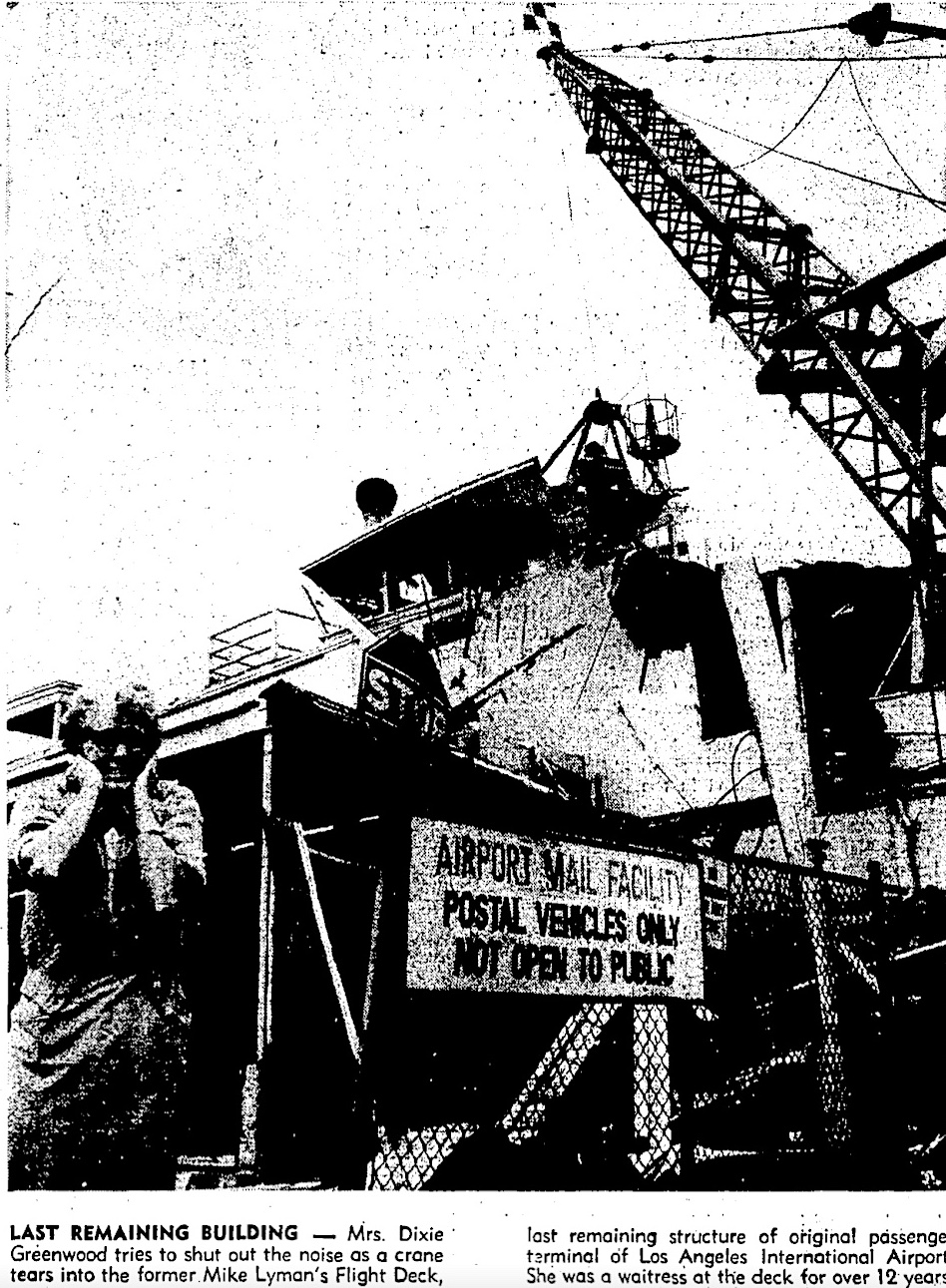
This left the once-central Flight Deck restaurant as a remote outpost far from the airport’s central activities, especially once the newly revitalized LAX opened in 1961. The restaurant soldiered on for a few months, but the completion of the futuristic Theme Building and its bird’s-eye-view restaurant in August 1961 seemed like a signal that the Flight Deck’s days were numbered. It closed for good in March 1962.
The old main terminal building actually survived for several more years as everything around it continued to change. A couple of the old tenants, the barber and the coffee shop, stuck it out after the Flight Deck closed, but even they had left by the time the building finally was razed in June 1969. The 5900 Avion Ave. address now belongs to Mercury Air Cargo Inc.
Sources:
Daily Breeze archives.
Find a Grave website.
LAX: Los Angeles International Airport: From Lindbergh’s Landing Strip to World Air Center, by Tom Moran, CCA Publications, 1993.
“Looking Back: Mike Lyman’s Flight Deck Restaurant First to be Located on Airport Property,” from Aerogramme: Newsletter For the Employees of Los Angeles World Airports, LAWA, May 2014.
Los Angeles Herald archives.
Los Angeles Times archives.


I love the posts about LAX! And some very cool pictures here.
LikeLike