
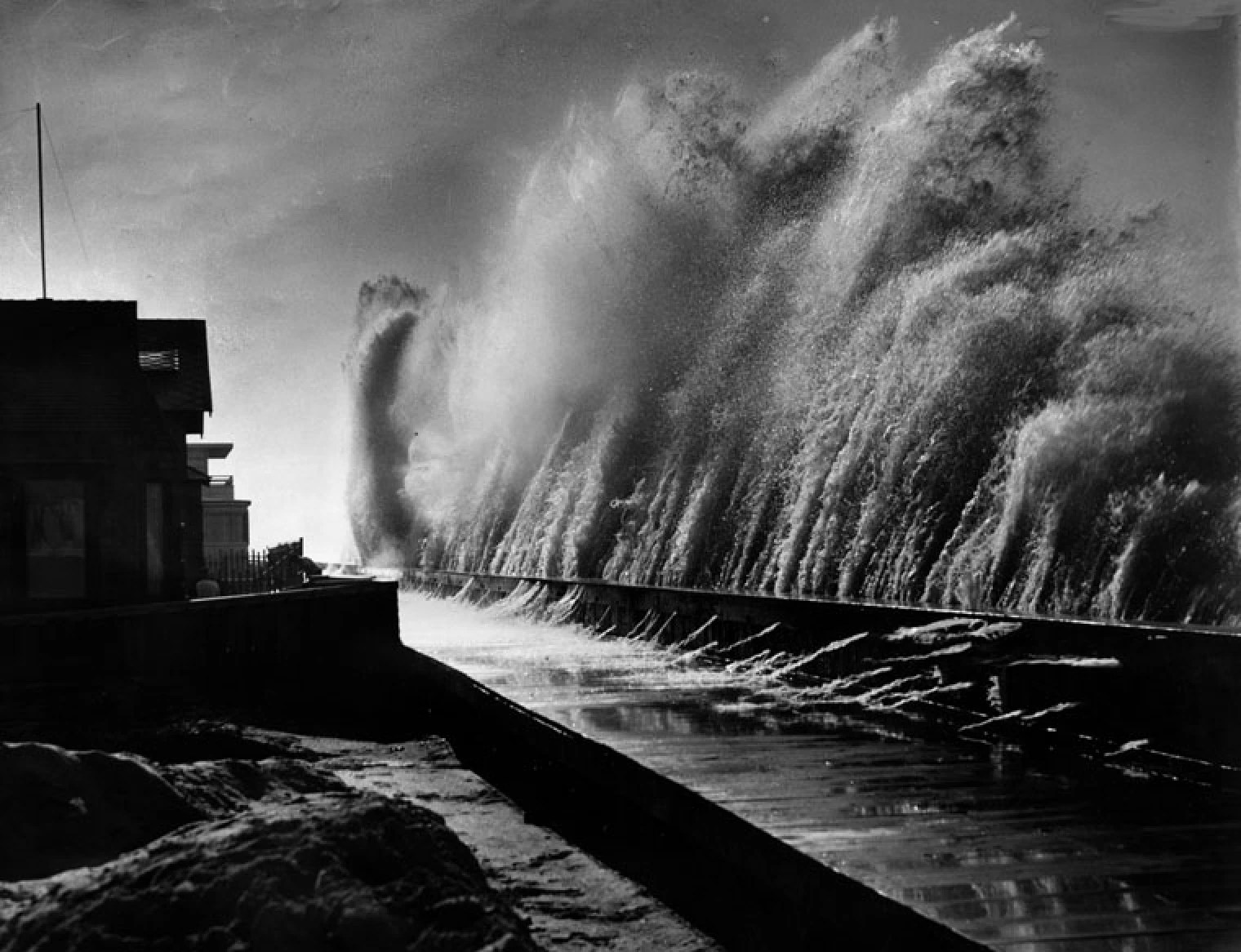
The arrival of a full-on tropical storm in Southern California earlier this week marked the first such meteorological occurrence in the area in 84 years, so a look back at that 1939 storm seems fitting.
September 1939 was by all accounts a wild weather month in the southern part of the state. It began with storms that wreaked havoc in the Imperial Valley, causing flooding that swamped farmlands and disrupted rail and auto traffic.
Next came a blistering heat wave in the middle of the month, with temperatures soaring well above 100 degrees beginning on Sept. 15 and lasting for the next ten days. Los Angeles reported a high of 106 degrees on Sept. 20, with Torrance and Harbor City reporting 104.
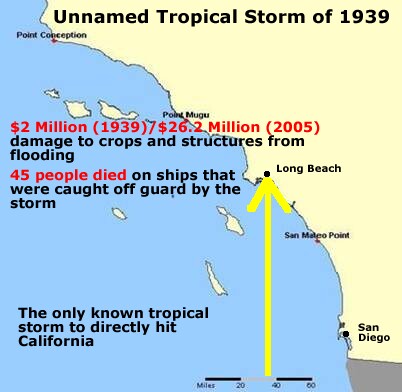
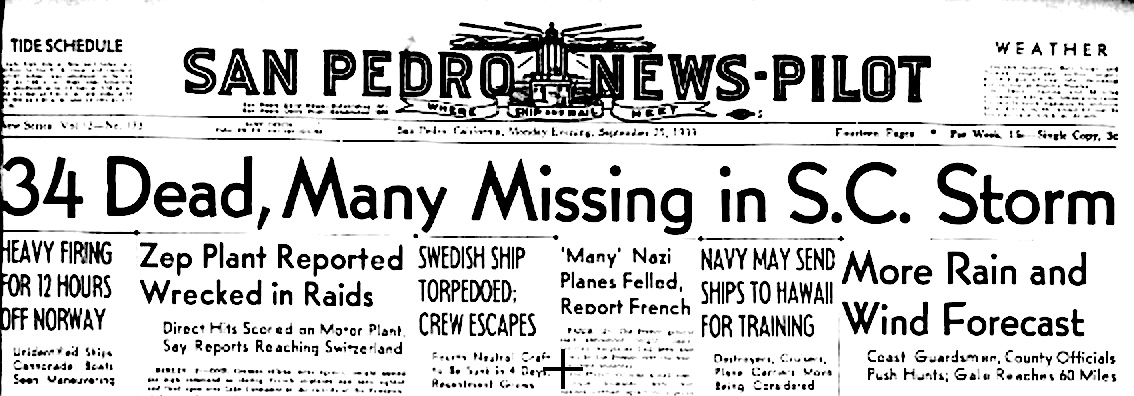
The arrival of a major storm on Sept. 25 at first was met with sighs of relief for causing the dissipation of the heat wave, which had caused approximately 90 deaths in the Los Angeles area.
In those days, weather forecasting was not as sophisticated as it has since become, so the magnitude of the upcoming event had not been impressed fully on area residents, many of whom failed to take the precautions they should have.
The storm came up from the south along the Baja California coast in Mexico and made landfall at the Long Beach coast in the early morning hours of Sept. 25. It brought high winds with it, topping out at 72 mph, along with heavy rain.
The city of Los Angeles received 5.66 inches of rain. Torrance reported 5.48 inches, and Narbonne High School, 4.79 inches, with the Palos Verdes Peninsula recording 5.74 inches. Hard-hit areas like San Pedro and Long Beach didn’t report official rain totals immediately, probably because their gauges were knocked out by the high winds.
Officially, 93 people in the Los Angeles area lost their lives as a result of the storm, 48 on land and 45 at sea. 24 of the deaths at sea occurred when the ocean fishing boat Spray capsized in the ocean off Point Mugu, about eight miles south of Oxnard.
Another fishing boat, the 34-foot Nina, met the same fate nearby. The two people on board died, but the bodies of Noble Metzger and John Seaman of San Pedro would not be recovered until October 18.
The U.S. Coast Guard reported that as many as 34 boats were missing on the day after the storm hit, though all eventually were accounted for.
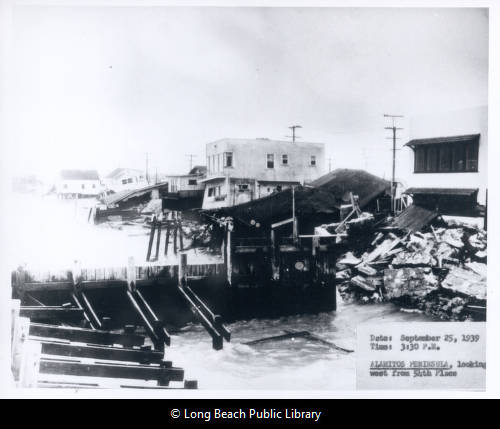
The high number of boats lost underscores the power of the storm’s high winds when it first hit land. The winds soon dissipated over land, but not before doing significant damage, especially to the south-facing beaches and harbors of Los Angeles and eastern Orange County.
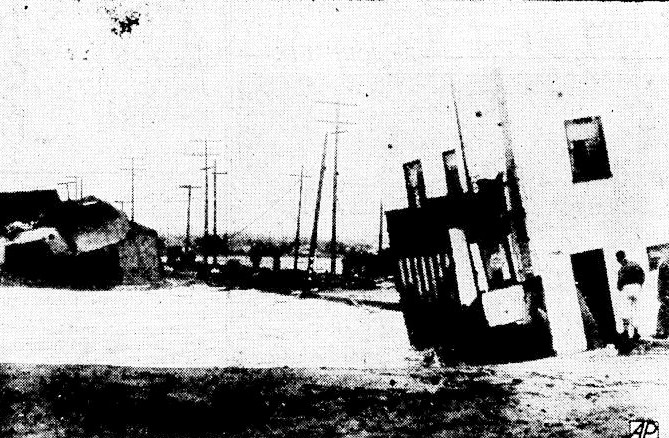
The most significant personal property damage occurred in Long Beach, where at least ten shorefront houses were swept into the sea and 30 more were damaged on the Alamitos Peninsula area of Belmont Shore.
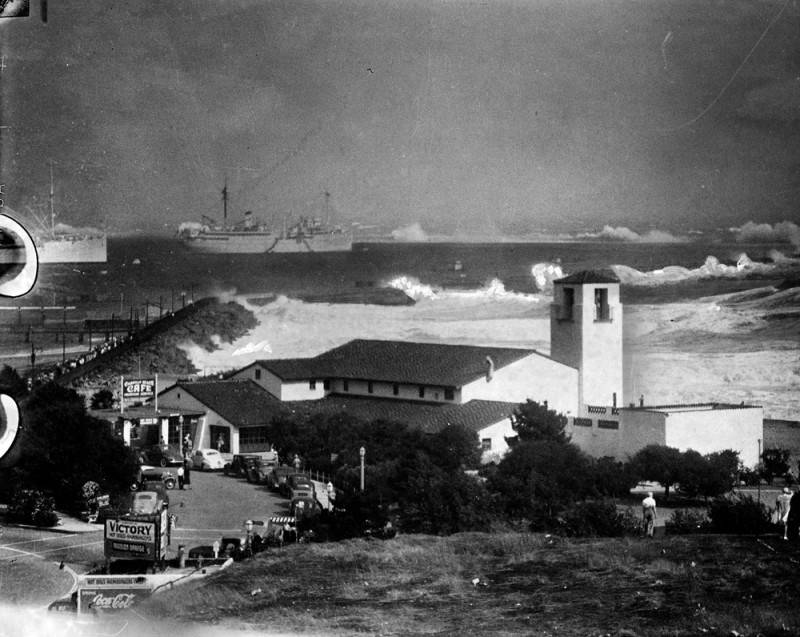
To the west in San Pedro, the infrastructure damage was greater, as there were fewer homes situated directly on the coastline there. The port area took a heavy hit, however, and shipping activities came to a standstill. Power outages occurred in the port, all over the Harbor Area and on the Palos Verdes Peninsula,
The damage was considerable. Pounding waves during high tides destroyed the boardwalk at Cabrillo Beach, and water inundated the bathhouse and the Cabrillo Marine Museum there.
After the storm subsided, it was determined that approximately one third of the beach’s sand had been washed away by high surf. City crews eventually needed to add 10,000 yards of sand to the outer beach to stave off further damage from high tides and surf.
Five yachts foundered at the California Yacht Club in Wilmington, though many more were saved. An early estimate put damage to the boats there at $100,000.
The fence on the east side of the federal prison on Terminal Island was knocked down by large breakers, which also took out a portion of the road leading to the mainland. The warden quickly enlisted prisoners to help repair the damage to the fence.
Engineers estimated that 5,000 feet of the recently built harbor breakwater had been affected by huge storm-driven wave surges, with 2,000 feet of it suffering very serious damage. Boulders weighing up to twelve tons had been knocked off the top of the breakwater, one section of which had been shifted a full four feet out of alignment by the storm.
The violent storm subsided quickly, but left a significant trail of devastation and wreckage. Damage estimates for the greater Los Angeles area reached $2 million, or almost $44 million when adjusted for inflation in 2023.
Among the weather records broken in September 1939 were those for the longest sustained heat wave, and for the most rain in the month of September, all of which fell in the 24-hour period after the tropical storm hit land. The storm’s 5.66 inches shattered the previous high total for rain in September set in 1919, when 1.29 inches fell in Los Angeles.
Sources:
“Has a Hurricane Ever Made Landfall in California?” by Nathan Masters, KCET website, Oct. 15, 2016.
Los Angeles Times archives.
Palos Verdes Peninsula News archives.
San Pedro News Pilot archives.
Torrance Press-Herald archives.
Wikipedia.
(Credit: Long Beach Public Library Digital Archives)

